美的集团

Search documents
从功能消费到情绪消费:2026,人们把家“买”成了什么样?
第一财经· 2026-02-09 06:00
Core Insights - The article emphasizes the transformation in consumer behavior from merely purchasing products to seeking comprehensive "home living solutions" that cater to emotional and experiential needs [1][3][60] Group 1: Consumer Trends - The demand for "ceremony" is shifting inward, focusing on self-care rather than social display, with 40.2% of individuals preferring to spend personal time at home and 77.8% willing to pay a premium for home products that provide emotional value [4][10] - The concept of "meta-scenes" is introduced, breaking down the abstract notion of home rituals into four actionable categories: "reset," "link," "light up," and "renew," which brands can leverage to connect with consumers [6][12] - The trend of "AI personalization" indicates that consumers are willing to invest in smart appliances that understand and meet their needs, moving away from cold, technical specifications to more human-like interactions [14][17] Group 2: Marketing Trends - The integration of online and offline channels is crucial, as consumers prefer immersive experiences in physical stores while valuing the convenience of online shopping [34][35] - Emotional resonance is becoming a key marketing strategy, with brands creating "emotional events" that connect with consumers' feelings rather than relying on traditional advertising methods [40][42] - Products must be contextualized within familiar life scenarios, allowing their functional value to naturally integrate into consumers' daily lives [48][49] Group 3: Future Predictions - The future of smart home technology will focus on "emotional alignment," where devices not only respond to commands but also anticipate user emotions and needs [55][56] - Brands will need to cater to specific consumer segments, offering tailored products that meet the unique demands of different demographics [57] - A shift towards providing "holistic value" will be essential, where brands offer comprehensive solutions that encompass functionality, emotional connection, and service throughout the product lifecycle [58][59]



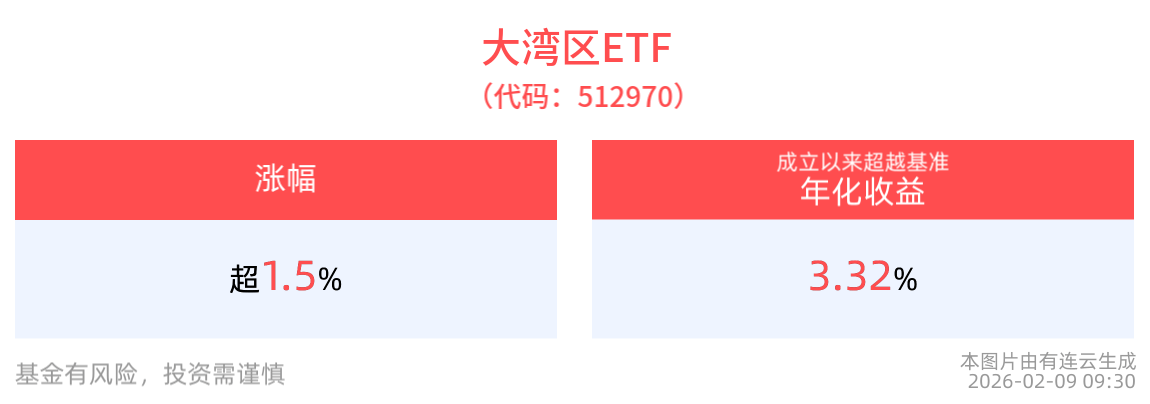
涨超1.5%,大湾区ETF(512970)成立以来超越基准年化收益达3.32%
Sou Hu Cai Jing· 2026-02-09 01:46
Core Viewpoint - The Greater Bay Area ETF (512970) has shown strong performance, with a recent increase of 1.54%, reflecting the positive sentiment towards companies benefiting from the development of the Guangdong-Hong Kong-Macau Greater Bay Area [2][3]. Performance Summary - As of February 9, 2026, the CSI Greater Bay Area Development Theme Index (931000) rose by 1.24%, with notable gains from stocks such as Zhaochi Co. (10.00%), Mingyang Smart Energy (6.28%), and Jiejia Weichuang (5.49%) [2]. - Over the past six months, the Greater Bay Area ETF has accumulated a total increase of 15.19% as of February 6, 2026 [2]. - The ETF's trading volume was recorded at 1061.90 yuan with a turnover rate of 0% during the session [2]. Liquidity and Risk Metrics - The average daily trading volume of the Greater Bay Area ETF over the past week was 861,500 yuan [2]. - The ETF's Sharpe ratio for the past year stands at 1.41, indicating a favorable risk-adjusted return [2]. - The maximum drawdown for the ETF this year is 5.52%, with a relative benchmark drawdown of 0.02% [2]. Fee Structure - The management fee for the Greater Bay Area ETF is set at 0.15%, while the custody fee is 0.05% [2]. Tracking Accuracy - The tracking error for the Greater Bay Area ETF over the past three months is 0.022%, demonstrating effective tracking of the underlying index [2]. Index Composition - The CSI Greater Bay Area Development Theme Index includes a maximum of 50 Hong Kong market securities, 300 companies from the Shanghai-Hong Kong-Shenzhen market, and 100 mainland market securities, all selected based on their alignment with the Greater Bay Area development theme [3]. - As of January 30, 2026, the top ten weighted stocks in the index account for 44.55% of the total index weight, with China Ping An, Luxshare Precision, and BYD among the leading companies [3][4].
沪深300ESGETF南方(560180)开盘涨0.34%
Xin Lang Cai Jing· 2026-02-09 01:37
沪深300ESGETF南方(560180)业绩比较基准为沪深300ESG基准指数收益率,管理人为南方基金管理 股份有限公司,基金经理为李佳亮,成立(2023-04-13)以来回报为18.28%,近一个月回报为-2.59%。 声明:市场有风险,投资需谨慎。本文基于第三方数据库自动发布,不代表新浪财经观点,任何在本文 出现的信息均只作为参考,不构成个人投资建议。如有出入请以实际公告为准。如有疑问,请联系 biz@staff.sina.com.cn。 来源:新浪基金∞工作室 2月9日,沪深300ESGETF南方(560180)开盘涨0.34%,报1.188元。沪深300ESGETF南方(560180) 重仓股方面,贵州茅台开盘涨0.20%,中际旭创涨3.89%,宁德时代涨0.38%,招商银行涨0.00%,中国 平安涨0.82%,美的集团跌0.45%,紫金矿业涨3.50%,长江电力涨0.04%,兴业银行涨0.00%,比亚迪涨 0.76%。 ...




可选消费W06周度趋势解析:海外消费业绩密集发布带动股价波动,A H股期待26年可选消费恢复
海通国际· 2026-02-09 00:30
Investment Rating - The report assigns an "Outperform" rating to multiple companies in the discretionary consumption sector, including Nike, Li Ning, Midea Group, JD Group, Haier Smart Home, Gree Electric, Anta Sports, and many others [1]. Core Insights - The report highlights that overseas consumer earnings releases have led to stock price volatility, with A/H shares anticipating a recovery in discretionary consumption in 2026 [1]. - The performance of various sectors is analyzed, with gaming, U.S. hotels, snacks, and retail showing positive trends, while luxury goods and overseas cosmetics are experiencing declines [4][12]. - The report notes that the gaming sector saw a strong increase in gross gaming revenue, with a year-on-year growth of 24%, exceeding market expectations [6][14]. Sector Performance Summary - **Gaming Sector**: Increased by 5.5%, driven by strong January gross gaming revenue growth and positive earnings from MGM China [6][14]. - **U.S. Hotels**: Also up by 5.5%, with Marriott and Hilton showing positive earnings forecasts [6][14]. - **Snacks**: Grew by 3.6%, with companies like Youyou Foods and Qiaqia Foods reporting significant growth expectations [6][14]. - **Retail Sector**: Increased by 3.5%, led by Walmart and Target, which exceeded market sales forecasts [8][14]. - **Domestic Sportswear**: Rose by 2.6%, with Li Ning benefiting from its partnership with the Chinese Olympic Committee [8][14]. - **Credit Card Sector**: Gained 2.3%, supported by strong earnings from Visa and Mastercard [8][14]. - **Domestic Cosmetics**: Increased by 2.1%, benefiting from overall strength in the beauty and skincare sector [8][14]. - **Luxury Goods**: Slightly up by 0.9%, influenced by a rebound in the U.S. market [8][14]. - **Overseas Cosmetics**: Decreased by 5.7%, with concerns over the sustainability of growth for Estée Lauder [9][15]. - **Pet Sector**: Down by 0.7%, with companies like Guai Bao Pet and Zhongchong Co. experiencing declines [8][14]. - **Gold and Jewelry**: Fell by 1.2%, affected by fluctuations in gold prices [8][14]. Valuation Analysis - The report indicates that the valuation of various sectors remains below their historical averages, with expected P/E ratios for 2025 showing significant discounts compared to the past five years [10].
晓数点丨一周个股动向:最牛股周涨超115% 中际旭创遭抛售超百亿元
Di Yi Cai Jing· 2026-02-08 15:16
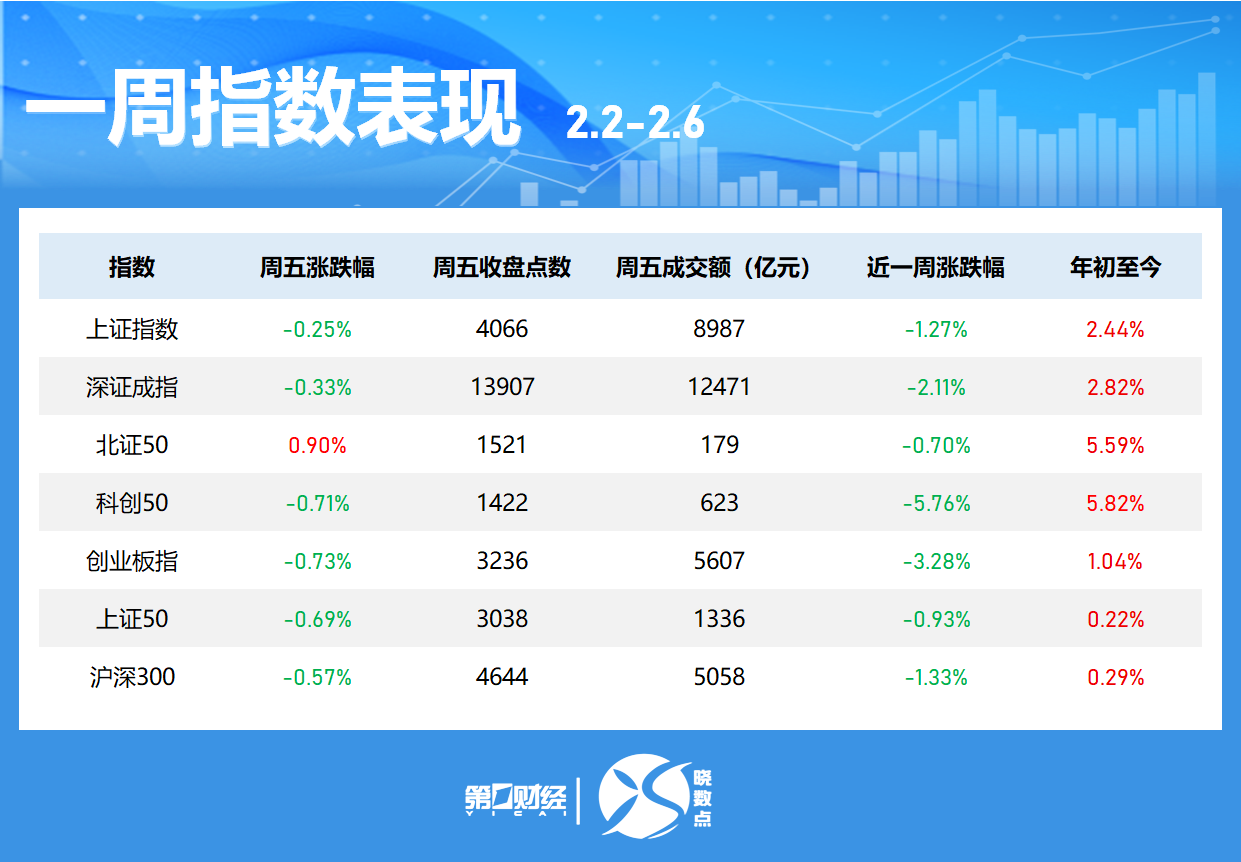
本周(2月2日至6日)三大指数齐跌,沪指累计下跌1.27%,深成指跌2.11%,创业板周跌3.28%。 | 指数 | 周五涨跌幅 | 周五收盘点数 | 周五成交额(亿元) | 近一周涨跌幅 | स्ट | | --- | --- | --- | --- | --- | --- | | 上证指数 | -0.25% | 4066 | 8987 | -1.27% | | | 深证成指 | -0.33% | 13907 | 12471 | -2.11% | | | 北证50 | 0.90% | 1521 | 179 | -0.70% | 5 | | 科创50 | -0.71% | 1422 | 623 | -5.76% | 5 | | 创业板指 | -0.73% | 3236 | 5607 | -3.28% | | | 下班50 | -0.69% | 3038 | 1336 | -0.93% | 0 | | 沪深300 | -0.57% | 4644 | 5058 | -1.33% | | 多图速览>> ►牛熊股:8股涨超40%,最牛股周涨超115% Wind数据显示,本周(2月2日至2月6日)共有8只个股涨幅超40 ...
一周主力丨煤炭板块获资金青睐 中际旭创遭抛售超百亿元




Di Yi Cai Jing· 2026-02-08 15:09
(本文来自第一财经) 按申万一级行业来看,本周(2月2日至2月6日)五个交易日内,煤炭、综合板块获得主力资金青睐。电 子、有色金属、通信、传媒、计算机、机械设备、国防军工等板块遭净流出额居前。其中电子板块遭抛 售近360亿元。 个股方面,本周宁德时代获净流入16.23亿元居首,周涨幅达5.46%。美的集团、中超控股主力净流入分 别为14.66亿元、9.76亿元。净流出方面,中际旭创、新易盛、蓝色光标分别遭抛售108.44亿元、79.41亿 元、67.17亿元。 ...
可选消费W06周度趋势解析:海外消费业绩密集发布带动股价波动,A/H股期待26年可选消费恢复-20260208
Haitong Securities International· 2026-02-08 14:59
Investment Rating - The report assigns an "Outperform" rating to multiple companies in the discretionary consumption sector, including Nike, Li Ning, Midea Group, JD Group, Haier Smart Home, Gree Electric, Anta Sports, and many others [1]. Core Insights - The report highlights that overseas consumer earnings releases have led to stock price volatility, with A/H shares anticipating a recovery in discretionary consumption in 2026 [1]. - The performance of various sectors is analyzed, with gaming, U.S. hotels, snacks, and retail showing positive trends, while luxury goods and overseas cosmetics are experiencing declines [4][12]. - The report notes that the valuation of discretionary consumption sectors remains below the average of the past five years, indicating potential investment opportunities [10]. Sector Performance Summary - **Gaming Sector**: Increased by 5.5%, driven by strong growth in gross gaming revenue and positive earnings from major companies like MGM China [6][14]. - **U.S. Hotels**: Also up by 5.5%, with positive earnings forecasts from Marriott and Hilton [14]. - **Snacks Sector**: Rose by 3.6%, with companies like Youyou Foods and Qiaqia Foods showing strong sales growth [14]. - **Retail Sector**: Increased by 3.5%, led by Walmart and Target, which reported better-than-expected same-store sales [14]. - **Domestic Sportswear**: Grew by 2.6%, with Li Ning benefiting from its partnership with the Chinese Olympic Committee [14]. - **Credit Card Sector**: Up by 2.3%, supported by strong earnings from Visa and Mastercard [14]. - **Domestic Cosmetics**: Increased by 2.1%, benefiting from the overall strength in the beauty and skincare sector [14]. - **Luxury Goods**: Slightly up by 0.9%, influenced by a rebound in the U.S. market [14]. - **Overseas Sportswear**: Increased by 0.7%, with Nike announcing the opening of its first ACG store in Beijing [15]. - **Pet Sector**: Decreased by 0.7%, with companies like Guobao Pet and Zhongchong Co. facing declines [15]. - **Gold and Jewelry**: Down by 1.2%, affected by fluctuations in gold prices [15]. - **Overseas Cosmetics**: Fell by 5.7%, with Estée Lauder experiencing a significant drop [15].
中国科技产品在米兰冬奥批量出圈
第一财经· 2026-02-08 14:09
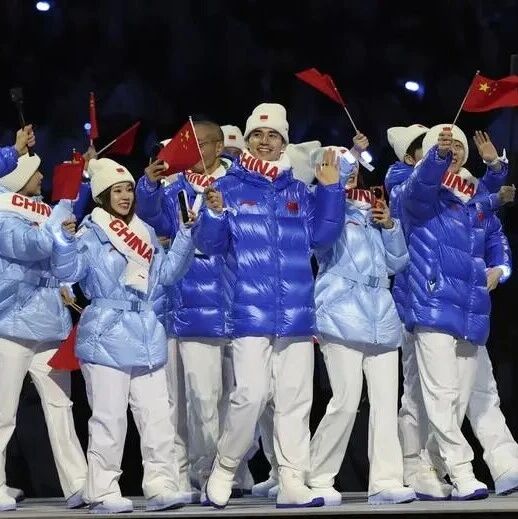
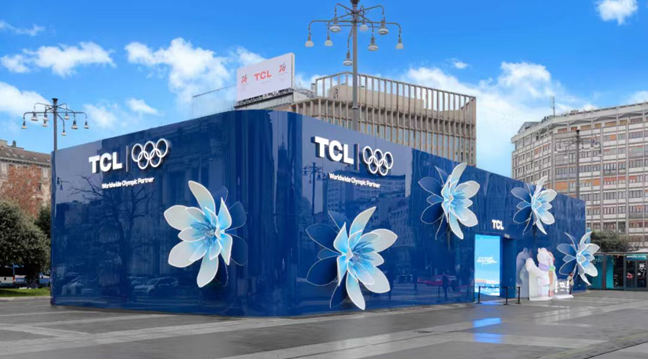
Core Viewpoint - The 2026 Winter Olympics in Milan is showcasing the increasing influence of Chinese technology and brands, positioning it as a "golden window" for Chinese manufacturing to demonstrate its technological prowess on a global stage [3]. Group 1: Chinese Technology Empowering the Olympics - Chinese companies like TCL are enhancing the Winter Olympics experience through technology, with TCL providing various products and technical support across venues [6][7]. - TCL's "Olympic Screen Universe" initiative includes the deployment of hundreds of large-screen TVs and digital signage to improve broadcasting and audience engagement [7]. - The integration of AI technology, such as Alibaba's AI model, is making this Winter Olympics the "smartest" in history, improving operational efficiency for participating countries [8][9]. Group 2: Marketing and Sponsorship by Chinese Brands - TCL has signed prominent athletes like Gu Ailing as global brand ambassadors, leveraging the Olympics to enhance its market presence [11]. - Following the success of the Beijing Winter Olympics, brands like Changhong are increasing their involvement in winter sports, partnering with international events to boost brand visibility [12]. - Various Chinese apparel brands are gaining international exposure through their sponsorship of national teams at the Winter Olympics, showcasing the potential of Chinese brands in global markets [13]. Group 3: Athlete Endorsements and Brand Strategy - Sports stars are becoming popular choices for brand endorsements, with athletes like Gu Ailing and Su Yiming representing multiple brands, enhancing their marketability [14]. - The article emphasizes the need for Chinese brands to enhance creativity in their marketing strategies, particularly in leveraging the personal stories of athletes for deeper engagement [14].

“中国屏”“中国AI” 在米兰冬奥批量出圈,冰雪体育营销加码
Di Yi Cai Jing· 2026-02-08 13:15
Core Insights - The 2026 Winter Olympics in Milan and Cortina is showcasing an increasing presence of Chinese technology products, positioning it as a "golden window" for Chinese manufacturing to demonstrate its technological strength globally [1] - Chinese brands, including TCL, Alibaba, and Anta, are actively participating as sponsors, reflecting their competitive strength and aggressive marketing strategies in the global market [1] Group 1: Chinese Technology Empowerment - TCL has joined the ranks of global partners for the Winter Olympics, integrating its technology and products into the event's operations and user experience [3] - The "Snow Velvet Wonderland" exhibition by TCL at Milan's central train station features innovative products like TVs, air conditioners, and AR/AI glasses, showcasing future technology [3][4] - TCL's "Olympic Screen Universe" initiative includes providing hundreds of large-screen TVs and digital signage for broadcasting, enhancing the viewing experience for athletes and spectators [4] Group 2: AI and Smart Solutions - The Winter Olympics is noted as the "smartest" in history, with Alibaba's AI model enhancing operational efficiency for national Olympic committees across 11 countries [5] - AI technology is also being utilized for high-precision reconstruction of snowy scenes during broadcasts, improving the clarity of fast-paced sports action [5] Group 3: Sports Marketing and Brand Promotion - TCL has signed Chinese freestyle skier Gu Ailing as its global brand ambassador and is sponsoring top athletes, leveraging the Olympics to promote its brand [6] - Other Chinese brands, such as Changhong and Midea, are also increasing their presence in winter sports marketing, with Changhong partnering with the International Ski Federation [7] - Chinese apparel brands are gaining visibility, with teams from various countries wearing outfits from brands like Li Ning and Anta during the opening ceremony [8] Group 4: Athlete Endorsements - Sports stars are becoming popular choices for brand endorsements, with Gu Ailing securing numerous deals post-2022 Beijing Olympics, highlighting the effectiveness of athlete endorsements over entertainment figures [9] - The marketing strategies of Chinese brands are evolving, with a need for more creativity and storytelling in their campaigns to enhance global appeal [9]
港股市场策略展望:春节前后,港股如何反应?
GF SECURITIES· 2026-02-08 11:12
[Table_Page] 投资策略|专题报告 2026 年 2 月 8 日 证券研究报告 [Table_Summary [Table_Title] ] 春节前后,港股如何反应? ——港股市场策略展望 报告摘要: (4)港股天量 IPO 对市场影响不大,影响主要在于 IPO 过后 6 个月 的解禁高峰。典型的例如 11 年年中、15 年下半年、19 年 3 月、21 年 二季度、22 年年中,解禁潮都与港股下跌出现在相似时间段。26 年 3 月主要是有色金属(紫金黄金国际、南山铝业国际)+茶饮(蜜雪冰城) 的解禁潮,中大型规模公司的解禁规模 872 亿港元,高于去年年末的 解禁小高峰。由于港股通账户并不能够参与打新,享受稀缺性公司的 上市红利,却需要承受限售股解禁带来的风险,这可能确实是南向资 金对于 2026 年港股的主要担忧之一。 | [分析师: Table_Author]刘晨明 | | | --- | --- | | | SAC 执证号:S0260524020001 | | | SFC CE No. BVH021 | | | 010-59136616 | | | liuchenming@gf.com.cn ...