
ASML

Search documents
美国人不让建封装厂,特朗普芯片计划陷入困境
半导体行业观察· 2025-06-12 00:42
Core Viewpoint - The article discusses the challenges faced by semiconductor companies in the U.S. due to local opposition and regulatory delays, impacting the construction and operation of new facilities funded by the CHIPS Act. Group 1: Company-Specific Challenges - Amkor's $2 billion chip packaging plant in Peoria, Arizona, faces local resistance due to concerns over water resources and traffic congestion, with residents threatening legal action [2] - Micron's $100 billion DRAM production facility in Clay, New York, has encountered delays in environmental assessments, pushing back the construction timeline originally set for 2024 [3][4] - Micron's facility is expected to be the largest semiconductor plant in the U.S., with a total cleanroom area of 600,000 square feet, but delays could result in significant financial losses of $5 million per day [3] Group 2: Industry Context and Geopolitical Factors - The semiconductor trade, valued at $600 billion, has become a focal point in global discussions on security and economic dominance, with the supply chain being particularly vulnerable due to geopolitical tensions [5] - The U.S. semiconductor strategy has shifted under different administrations, with Biden focusing on investment-driven policies and Trump emphasizing tariffs, leading to contrasting impacts on the industry [7][8] - Chris Miller, a historian and expert on semiconductor trade, highlights the importance of the CHIPS Act in mitigating risks associated with reliance on Taiwanese chip manufacturing, while noting that China's advancements in manufacturing pose ongoing challenges [6][7] Group 3: Future Outlook - The success of Micron's plans to produce 40% of DRAM in the U.S. by the mid-2030s is uncertain due to current project delays [4] - The article emphasizes the need for careful consideration of export controls on advanced semiconductors, as these are critical to maintaining U.S. technological leadership [10]


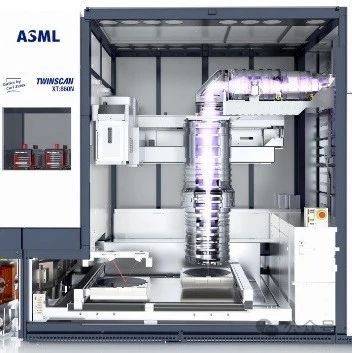
ASML CEO:中国光刻机还有很长的路要走
半导体行业观察· 2025-06-06 01:12
Core Viewpoint - ASML is facing significant geopolitical challenges that could impact its market position and the semiconductor supply chain, particularly due to trade tensions between the US and China [1][2][6]. Geopolitical Challenges - The CEO of ASML, Christophe Fouquet, has expressed concerns that government policies may disrupt supply chains and slow down technological advancements, particularly in AI and semiconductor manufacturing [2][4]. - The company has become a pawn in the geopolitical struggle, with its advanced lithography machines being restricted from export to certain countries, notably China [1][3]. Market Position and Financial Performance - ASML's advanced lithography machines, which cost around $400 million each, are crucial for producing cutting-edge microchips, and the company has a market capitalization of approximately $300 billion [1][5]. - The company reported record revenues of €28.3 billion (approximately $32.3 billion) last year and anticipates sales could reach between €44 billion to €60 billion by 2030 [5]. Supply Chain and Production - ASML's EUV tools require components from hundreds of international suppliers and are considered among the most complex machines ever created, with a supply chain that spans Europe, the US, and Asia [5][6]. - The company is currently expanding its headquarters and is optimistic about the demand for its equipment driven by the AI boom, despite ongoing geopolitical tensions [8]. Trade Policies and Market Impact - The imposition of tariffs and export controls has raised concerns about the sustainability of chip demand and the cost-effectiveness of ASML's machines [6][7]. - The company expects its sales to China to drop from nearly half of its annual revenue to about 25% due to trade restrictions [6]. Strategic Initiatives - ASML is actively lobbying for more support from the EU and Dutch government to mitigate the impacts of US-China trade tensions on the semiconductor industry [4][7]. - The CEO emphasizes the importance of focusing on innovation rather than solely on containment policies against economic competitors like China [7].
Sanmina (SANM) 2025 Conference Transcript
2025-06-04 23:20
Summary of Sanmina's Conference Call Company Overview - **Company**: Sanmina - **Industry**: Electronics Manufacturing Services (EMS) Key Points and Arguments Outsourcing Trends - Current outsourcing trends are favorable for Sanmina, with a shift towards increased outsourcing as companies recover from pandemic-related supply chain issues [5][6] - Growth in end markets is being observed, with Sanmina's results aligning with fiscal year guidance [6] Competitive Advantage in Communications - Sanmina has a long-standing presence in the telecom sector, which has been a stronghold for the company [7][8] - The company is focusing on complex, regulated markets and has capabilities to compete across various customer needs [9] Revenue Growth in Communication Networks - Sanmina's communication networks and cloud infrastructure segments grew approximately 20%, contributing to about 37% of total revenue [12] - Inventory turns have improved, indicating a recovery in the communication networks space [11] Joint Venture in India - Sanmina entered a joint venture with Reliance, where Reliance holds 50.1% but Sanmina retains control [13][14] - The joint venture is focused on various end markets, with significant growth in cloud infrastructure [15] Wireless and 5G Market - The wireless infrastructure market is showing signs of growth, contributing to overall revenue growth [17][18] Cloud Business Expansion - Cloud infrastructure represents about 37% of Sanmina's business, with expectations of 30% CAGR over the next five years [22] - Sanmina announced the acquisition of ZT Systems, which will enhance its capabilities in cloud infrastructure [20][21] Industrial and Other Markets - The industrial segment, which includes medical, defense, and automotive, is growing at low single digits due to inventory absorption challenges [30][31] - The defense business is stable, with long-term contracts providing consistent revenue [34] Automotive Focus - Sanmina is heavily focused on the EV market, expanding beyond infotainment into drivetrain components [38][39] Impact of Tariffs - No significant customer demand impact from tariffs has been observed, but Sanmina is proactively engaging with customers to discuss options [40][41] Capacity and Utilization - Sanmina has capacity to support increased demand, with a revenue capacity exceeding $10 billion [44][45] Financial Outlook - For fiscal year 2025, Sanmina expects high single-digit revenue growth and margin expansion [47][48] - The company maintains a strong balance sheet with no net debt, allowing for strategic acquisitions [49] Operating Leverage - Sanmina is focused on driving operating leverage through revenue growth and investments in vertical integration [52][53] Capital Allocation Strategy - The company prioritizes cash generation and ROI-based investments, shifting focus towards strategic acquisitions like ZT Systems [55][57] Market Perception - Sanmina aims to communicate its diversified business model beyond just telecom, highlighting its resilience and growth potential [58][59] Additional Important Content - Sanmina's gross margin profile has improved even during down years, indicating strong operational management [51] - The company is focused on executing its Q3 guidance and closing the ZT Systems transaction, which is expected to enhance its market position [54]

1.4nm芯片,贵得吓人
虎嗅APP· 2025-06-03 09:58
Core Viewpoint - The semiconductor industry is facing increasing costs and challenges with the introduction of advanced manufacturing processes, particularly TSMC's 1.4nm technology, which is expected to significantly raise production costs and require substantial investments from leading tech companies [3][5][10]. Cost Analysis - TSMC's 1.4nm process is projected to cost up to $45,000 per wafer, representing a 50% increase compared to the 2nm process [5][10]. - The new manufacturing node will utilize second-generation GAA transistors and is expected to improve speed by 15% and reduce power consumption by 30% compared to the 2nm process [7][8]. - The anticipated production of 1.4nm chips is set for 2028, and the technology will not support back-side power delivery [7][8]. Key Customers - Major customers for TSMC's 1.4nm technology are expected to include top-tier companies such as NVIDIA, Apple, MediaTek, Intel, Qualcomm, and Broadcom [12][15]. - NVIDIA's contribution to TSMC's revenue is projected to increase from 5%-10% in 2023 to over 20% by 2025, driven by demand for AI chips [13]. - Apple's orders for TSMC's 2nm technology could reach NT$1 trillion (approximately $33 billion) by 2025, potentially increasing its share of TSMC's revenue significantly [14]. Future Projections - The costs of future wafers are expected to continue rising, with the potential for a 20% increase in lithography costs for future nodes if current power levels for light sources do not improve [18][20]. - The semiconductor industry is closely monitoring the balance between performance improvements and cost increases as new technologies are developed [21].

Nvidia jumps 5% in premarket trading as results spark global chip rally
CNBC· 2025-05-29 09:10
Core Insights - Nvidia shares experienced a 5.22% increase in premarket trading following the release of better-than-expected earnings and revenue, despite facing challenges from U.S. semiconductor export restrictions to China [1][2] Company Performance - Nvidia's strong earnings have positioned it as a bellwether for the semiconductor industry and AI-related stocks, leading to a rally in global semiconductor stocks [2] - The company's positive financial results have had a ripple effect, boosting shares of related companies such as Tokyo Electron, which closed over 4% higher, and SK Hynix, which rose nearly 2% [2] Market Reaction - The rally in semiconductor stocks was observed globally, with notable gains in Europe for companies like ASM International, BE Semiconductor Industries, and ASML, all of which ended in positive territory [2]


中美谈判后,美国的歪招
Sou Hu Cai Jing· 2025-05-26 15:56
Group 1: Trade and Tariffs - The U.S. has announced the initiation of the withdrawal of the "AI diffusion rules" from the Biden administration, strengthening export controls on overseas AI chips, claiming that using Huawei's Ascend AI chips globally may violate U.S. regulations [3] - The U.S. Trade Representative's office plans to impose a 100% tariff on Chinese cranes and 20%-100% tariffs on container and chassis equipment, citing the need to bring shipbuilding back to the U.S. [3] - The U.S. Commerce Department has preliminarily determined that Chinese battery component materials receive "high subsidies," proposing countervailing duties that distort normal market competition into a "government subsidy war" [3] Group 2: Technology and Export Controls - The U.S. has included Huawei's Ascend chips in the category of "violating U.S. export controls," warning global companies against using U.S. AI chips to train Chinese AI models [4] - Reports indicate that the Trump administration is preparing to add multiple Chinese tech companies to the control list, expanding the "entity list" beyond Huawei and ZTE to include chip manufacturers [4] - The U.S. aims to cut off the development of China's tech industry through targeted measures, transforming technology exchange into a "tech cold war" [4] Group 3: U.S. Strategic Misjudgments - The U.S. is driven by political opportunism, with some politicians leveraging anti-China sentiment for political gain, even at the cost of U.S.-China economic relations [5] - The U.S. exhibits "hegemonic anxiety" as China's GDP approaches that of the U.S., attempting to delay China's industrial upgrades through tariffs and technology blockades [5] - The U.S. maintains a zero-sum game mentality, ignoring the deep integration of global supply chains and attempting to preserve its top position in the global value chain through "decoupling" [5] Group 4: Consequences of Unilateral Actions - Historical evidence shows that unilateral sanctions ultimately backfire, as seen in the 2025 trade war where the U.S. imposed a 145% tariff on Chinese goods, leading to significant losses for companies like Tesla and Apple, and increased living costs for American households [6] - The intensified technology blockade has caused companies like NVIDIA and AMD to lose access to the largest AI chip market, prompting China to accelerate the development of its semiconductor industry [7] - The U.S. efforts to form a "semiconductor alliance 2.0" have faced challenges, as countries like South Korea seek exemptions for chip exports to China, and companies like ASML continue to supply China with lithography machines [7]

这个国家,也想台积电去建厂
半导体行业观察· 2025-05-21 01:37
Core Viewpoint - The Irish government has unveiled a semiconductor strategy aligned with the European Chips Act, aiming to enhance its semiconductor industry and position itself as a key player in Europe by creating high-value jobs and attracting significant investments [1][2]. Group 1: Strategic Goals - The primary objective of Ireland's semiconductor strategy is to leverage its existing semiconductor footprint to ensure the security of the European semiconductor supply chain [2]. - The strategy includes plans to attract major manufacturers like Samsung and TSMC to establish factories in Ireland [1]. - By 2040, Ireland aims to support up to 34,500 new semiconductor jobs, as stated by the Minister for Enterprise, Trade and Employment [2]. Group 2: Investment and Infrastructure - The European Chips Act promises to provide €43 billion in policy-driven investments by 2030 to support various initiatives, including next-generation technologies [1]. - Ireland's strategy involves ensuring significant industrial investments, with ambitious plans to establish a leading chip manufacturing facility, two advanced foundries, and an advanced packaging plant [2]. Group 3: Ecosystem Development - Ireland has over 130 semiconductor companies, employing 20,000 people, with an annual export value of €13.5 billion [1]. - The government is committed to enhancing research and development, supporting innovation, and fostering a collaborative open ecosystem in the semiconductor sector [3]. - A comprehensive map of the Irish semiconductor ecosystem has been released to promote connections between research and innovation clusters and to engage the education system to meet the growing talent demand [2].

30多家半导体大厂Q1财报:谁开始好起来了?
芯世相· 2025-05-07 05:36
Core Viewpoint - The global semiconductor sales continue to grow in Q1 2025, but there is a significant performance divergence among major chip manufacturers, influenced by market and product differences, particularly in AI and storage sectors, while automotive chip manufacturers are struggling [1]. Chip Design (Including IDM) - Texas Instruments (TI) reported Q1 revenue of $4.07 billion, a year-over-year increase of 11% and a sequential increase of 2%. The company expects Q2 revenue between $4.17 billion and $4.53 billion [3]. - STMicroelectronics (ST) reported Q1 revenue of $2.52 billion, a year-over-year decline of 27.3%, with a net profit of $56 million, down 89.1% [5]. - NXP's Q1 revenue was $2.84 billion, down 9% year-over-year, with a significant decline in automotive market revenue [6]. - Qualcomm's Q1 revenue reached $10.98 billion, a year-over-year increase of 16.9%, driven by growth in mobile, automotive, and IoT sectors [8]. - MediaTek's Q1 revenue was NT$153.31 billion, up 14.9% year-over-year, exceeding operational targets due to increased market demand [9]. Semiconductor Manufacturing - TSMC's Q1 revenue was $25.53 billion, a year-over-year increase of 35.3%, with a gross margin of 58.8% [42]. - UMC reported Q1 revenue of NT$57.86 billion, a year-over-year increase of 5.9%, with a focus on 22/28nm process technology [46]. - World Advanced's Q1 revenue was NT$11.949 billion, a year-over-year increase of 24%, achieving a net profit of NT$2.414 billion [48]. Chip Distribution - WPG Holdings reported Q1 revenue of NT$248.83 billion, a year-over-year increase of 36.8%, driven by demand from AI and related sectors [58]. - Winstek Technology's Q1 revenue was NT$247.4 billion, a year-over-year increase of 28% [60]. - Arrow Electronics reported a 6% year-over-year decline in sales, totaling $5.3 billion [64]. Domestic Semiconductor Companies - Over 70% of semiconductor companies listed in A-shares reported year-over-year revenue growth in Q1 2025, with 60.63% of companies showing profit increases [35]. - Weir Shares reported a 14.68% year-over-year revenue increase in Q1, with a net profit increase of 55.25% [38]. - Zhaoyi Innovation's Q1 revenue was 1.909 billion yuan, a year-over-year increase of 17.32% [40].



半导体设备:驱动因素、发展趋势、产业链及相关公司(附44页PPT)
材料汇· 2025-04-28 15:16
点击 最 下方 "在看"和" "并分享,"关注"材料汇 添加 小编微信 ,遇见 志同道合 的你 行业|深度|研究报告 2025年4月28日 半导体设备行业深度:驱动因素、发展趋势、 产业链及相关公司深度梳理 半导体设备作为半导体产业链的基石,其发展不仅直接影响芯片制造的效率与质量,更是国家科技实力 与产业安全的关键所在。近年来,全球半导体设备市场规模屡创新高,而中国大陆凭借持续加大的资本 投入,已成为全球最重要的半导体设备市场之一。然而,美系厂商在半导体设备领域的长期垄断,使得 国产设备的崛起之路充满艰辛。在外部压力与内部需求的双重驱动下,国产半导体设备企业正加速技术 突破与市场替代进程,从光刻机、刻蚀设备到薄膜沉积设备、清洗设备等关键领域,国产设备的竞争力 不断提升,市场份额逐步扩大。 本报告将深入剖析半导体设备行业的驱动因素、市场现状、产业链格局以及相关核心企业的发展态势, 旨在为读者了解半导体产业发展提供一份全面、深入的行业洞察。 目录 | 一、行业概述 . | | --- | | 二、市场现状 . | | 三、驱动因素 . | | 四、行业发展趋势 | | 五、产业链分析 | | 六、相关公司 . | ...




中润光学拟收购戴斯光电51%股权 打造国际领先光学技术产品研发平台
Zheng Quan Shi Bao Wang· 2025-04-28 10:38
Core Viewpoint - Zhongrun Optical plans to acquire 51% of Hunan Dais Optical Co., Ltd. to enhance its optical technology research and product development platform, accelerating strategic implementation [1] Group 1: Acquisition Details - The total funding required for the acquisition is 158.10 million yuan, with part of the funds coming from over-raised capital and the rest from self-owned funds and acquisition loans [1] - Dais Optical's projected revenue and net profit for 2024 are 122 million yuan and 1.62 million yuan, respectively, while for Q1 2025, they are expected to be 28.61 million yuan and 1.07 million yuan [1] - The profit commitment for Dais Optical from 2025 to 2027 is a total of 90 million yuan, with specific annual commitments of 21 million yuan for 2025, 29 million yuan for 2026, and 40 million yuan for 2027 [1] Group 2: Dais Optical's Market Position - Dais Optical has established stable partnerships with well-known domestic and international clients across various sectors, including industrial lasers, optical communications, and biomedical applications [2] - The company’s products, such as high-power cylindrical lenses and polarization beam splitters, are widely used in industrial laser applications and automotive LiDAR markets, with major clients including Chuangxin Laser and KAPL [2] - Dais Optical collaborates with numerous research institutions, including Tsinghua University and the Chinese Academy of Sciences, in cutting-edge fields like quantum communication and biomedical applications [2] Group 3: Strategic Implications for Zhongrun Optical - The acquisition is expected to enhance Zhongrun Optical's technical capabilities and core competitiveness in the optical field, allowing for mutual support in product design and manufacturing [3] - The transaction aligns with the company's strategy to strengthen its supply chain and pursue external growth opportunities, which is in line with capital market trends [3] - Zhongrun Optical aims to leverage its platform and resources to seek complementary acquisition targets that can enhance operational efficiency and drive growth [4]