老百姓

Search documents
对话复星联合健康保险赖晓辉:推动社商融合,能让老百姓用上创新药
Xin Lang Cai Jing· 2025-10-17 08:21
Core Insights - The 2025 Sustainable Global Leaders Conference will be held from October 16 to 18 in Shanghai, focusing on the integration of social security and commercial insurance to promote access to innovative drugs for the general public [1][3]. Group 1: Impact of AI on Innovative Drugs and Insurance - AI technology is enhancing the efficiency of innovative drug development, which allows more people to access these drugs [3]. - The accessibility of innovative drugs is a primary concern, ensuring that the public is aware of and can afford these medications [3]. Group 2: Challenges in the Chinese Pharmaceutical Market - Chinese pharmaceutical companies are leading in innovative drug development globally, but many rely on overseas markets for expansion [3]. - High research and development costs of innovative drugs lead to expensive sales, creating barriers for the general public to access these medications, especially under the current cost-control environment of China's healthcare system [3][4]. Group 3: Solutions for Improving Access to Innovative Drugs - The role of commercial insurance is crucial in addressing the accessibility issues of innovative drugs [4]. - There is a need for the integration of social security and commercial insurance, with ongoing research by the National Medical Insurance Center to innovate the catalog of commercial health insurance for innovative drugs [4].



VR重磅盛会,周末袭来!北向资金加仓的概念股出炉(名单)
Zheng Quan Shi Bao Wang· 2025-10-17 00:55
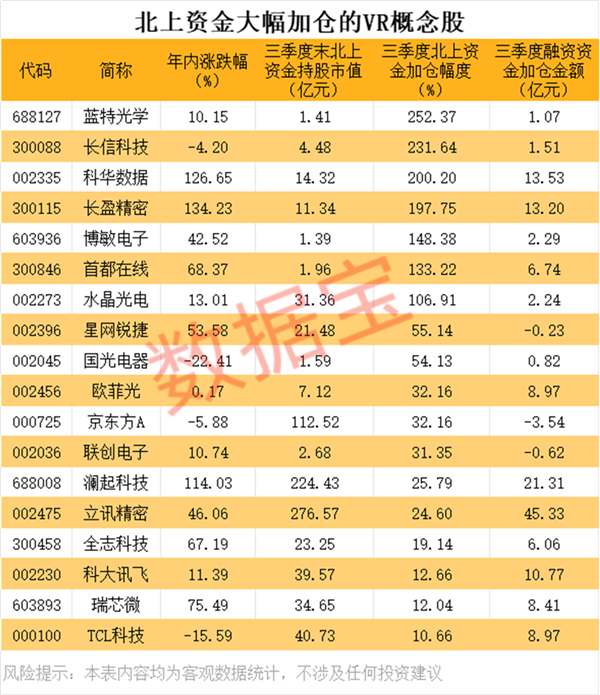
Core Insights - The World VR Industry Conference 2025 will be held from October 19 to 20 in Nanchang, focusing on the integration of VR and AI technologies [1] - The conference aims to create a high-end platform for deep integration of technology and industry, featuring key players in the AI glasses sector [1][2] - Jiangxi Province has rapidly developed its VR industry, with a projected revenue of 110 billion yuan in 2024, marking a 9.34% year-on-year growth [3] Industry Developments - The conference will include five specialized matchmaking sessions and four corporate ecosystem forums, promoting collaboration among industry leaders [2] - Jiangxi Province has become a significant hub for the VR industry, with over 400 VR companies, including major players like Huawei and Alibaba [3] - The National Virtual Reality Innovation Center has made breakthroughs in key technologies such as liquid crystal lens zoom display and gesture tracking since its establishment in 2022 [3] Market Performance - VR-related stocks in the A-share market have seen an average increase of over 28%, with several stocks doubling in price this year [4] - Companies like Suobede and Ruixinwei have reported significant profit increases, with Suobede expecting a net profit growth of 1258.39% to 1313.24% for the first three quarters [4][5] - Northbound capital has significantly increased its holdings in VR concept stocks, with 18 stocks seeing over 10% increases in holdings during the third quarter [5][6]
老百姓被骗倾家荡产,利用比特币做骗局,凭一己之力骗走500亿
Sou Hu Cai Jing· 2025-10-16 08:01
Core Insights - A disabled woman, known as Qian Zhimin, confessed to orchestrating the largest Bitcoin money laundering case globally, involving nearly 50 billion RMB [1] Group 1: Scheme Overview - The scheme began in 2014 when Qian registered a company named "Lantian Ge Rui" in Tianjin under the alias "Hua Hua" [3] - The company launched ten financial products targeting middle-aged and elderly investors, promising daily returns of approximately 160 RMB and a maximum return rate of three times the investment [3] - Between 2014 and 2017, the company raised 43 billion RMB, with an average loss of over 330,000 RMB per victim [3] Group 2: Money Laundering Operations - Qian utilized Bitcoin's anonymity to launder money, investing 1.14 billion RMB to purchase 61,000 Bitcoins from 2014 to 2015 [5] - In the UK, she attempted to buy a luxury property worth 23.5 million GBP using Bitcoin, which triggered anti-money laundering alerts [6] Group 3: Legal Proceedings and Victim Compensation - The UK police froze the Bitcoins, which had appreciated to a value of 49.35 billion RMB by September 2025 [6] - Victims have received less than 13% of their principal back, totaling only 2.8 billion RMB [6] - Legal obstacles complicate the recovery process, with victims potentially recovering a maximum of 24 billion RMB due to UK laws regarding unclaimed assets [8] - A civil recovery process is underway, with 2,500 victims submitting a joint letter to the Chinese Ministry of Public Security [8] Group 4: Industry Implications - The case highlights the emerging trend of virtual currency money laundering, exposing regulatory gaps and increasing challenges in asset recovery due to the cross-border nature of Bitcoin transactions [8]

美国人均GDP已经到了8万美元了,为啥老百姓还是觉得生活很困难?
Sou Hu Cai Jing· 2025-10-15 12:25
Core Insights - The article highlights the disparity between high GDP figures in the U.S. and the reality of income inequality, where a significant portion of wealth is concentrated among the top 1% while the bottom 90% experience sluggish income growth [1][3][13] Economic Disparity - From 1979 to the present, income inequality in the U.S. has widened significantly, with the top 1% capturing most of the economic growth, while the bottom 90% see minimal income increases [1] - The Gini coefficient, a measure of income inequality, increased by approximately 20% from 1980 to 2016, indicating a growing wealth gap [3] - The Federal Reserve reports that income inequality is linked to rising corporate debt, contributing to overall financial fragility [3] Inflation and Cost of Living - Inflation remains a pressing financial challenge for many Americans, with one-third of adults citing it as their top financial concern for 2024 [5] - Housing costs are a major contributor to inflation, accounting for two-thirds of inflationary pressures from 2024 to 2025, with housing prices having risen by 60% over the past six years [5][7] - The average American household is increasingly burdened by housing costs, with 31.3% spending over 30% of their income on housing [5][7] Healthcare Costs - The U.S. has the highest healthcare spending globally, with total expenditures reaching $4.9 trillion in 2023, translating to an average of $14,570 per person, a 7.5% increase from 2022 [9] - Nearly half of adults report finding healthcare costs burdensome, particularly among uninsured and minority populations [9] Education Debt - Student loan debt in the U.S. is projected to reach $1.814 trillion by 2025, affecting approximately 43 million borrowers [11] - The financial strain from education debt is compounded by rising living costs and stagnant wages, creating a cycle of financial difficulty for many households [11][13] Conclusion - The article underscores the disconnect between high GDP figures and the lived experiences of many Americans, suggesting that without addressing these systemic issues, social tensions may escalate [13]

一边是上亿套房空置,一边是老百姓买不起房?老干部提出解决方案
Sou Hu Cai Jing· 2025-10-14 21:20
Core Insights - The Chinese real estate market continues to experience a downward trend, with the average price of second-hand residential properties in 100 cities hovering around 15,088 yuan per square meter, marking the 23rd consecutive month of month-on-month decline [1] - A staggering 98 cities reported price drops in March, with over 90 cities experiencing declines each month for the past 10 months [1] - The number of second-hand housing listings has surged, with cities like Chongqing exceeding 270,000 listings, Tianjin over 190,000, Suzhou around 177,800, and Beijing approximately 147,000 [1] Group 1: Market Conditions - The real estate market is facing a paradox of over 100 million vacant homes while many families with genuine housing needs are unable to afford properties [3][5] - The vacancy rate is reported to be as high as 21.8%, with estimates suggesting that the number of vacant homes could accommodate 300 to 400 million people [3] Group 2: Affordability Issues - In second and third-tier cities, the total price for a 90 square meter property ranges from 1.5 million to 2 million yuan, while in first-tier cities, it escalates to 5 million to 6 million yuan [5] - Local residents typically earn between 3,000 to 6,000 yuan per month, making home ownership a significant financial burden [5] Group 3: Proposed Solutions - Former Vice Minister of Housing and Urban-Rural Development Qiu Baoxing suggests creating a comprehensive mechanism to combat speculative buying and establish a corresponding tax system [7] - The proposed policy framework includes providing affordable housing and shared ownership options to low-income urban families, which could redirect some market demand and encourage speculators to exit [9] - Implementing a property tax or vacancy tax could increase the cost of holding properties, thereby discouraging speculative behavior and promoting more rational use of housing resources [10]

老百姓不消费,经济难回暖,政府反内卷难见效,稳物价还缺这招!
Sou Hu Cai Jing· 2025-10-14 01:57
Group 1 - The photovoltaic industry is facing significant challenges, with 31 major companies in the A-share market reporting revenues of 117.8 billion yuan in Q1 2025, a year-on-year decline of 24.5%, and a net loss of 12.58 billion yuan [1] - The steel industry is experiencing some relief as local authorities reduce excess capacity, leading to a halt in price declines in July, but skepticism remains among workers and small business owners [1] - The automotive industry continues to struggle with a price war that has persisted into May 2023, resulting in a profit margin of only 3.9% in Q1 and negative cash flow [3] Group 2 - Consumer spending is not keeping pace with income growth, with nominal disposable income rising by 5.3% in the first half of 2025, but consumption growth only at 5.1%, indicating a lack of vitality in the market [3] - The CPI turned negative in March, primarily due to food prices, with a year-on-year decline of 0.4% in August, while core CPI shows a mild recovery but remains below the 2% target [5] - The real estate market has not fully stabilized, with slow wealth effect release and unclear expectations leading to a slowdown in private investment [5] Group 3 - The government aims to stabilize the real estate and stock markets to boost consumer confidence, but the actual willingness to spend may not align with wealth recovery [7] - Employment targets have been specified, with an urban unemployment rate of around 5.5% and over 12 million new jobs expected, indicating a focus on government procurement and community positions to support graduates [7] - The supply-side adjustments may temporarily alleviate the price war's impact, but long-term demand instability could hinder companies' willingness to invest [9] Group 4 - To stabilize prices, it is essential not only to address industry chaos but also to increase consumer confidence and spending, requiring a dual approach of supply and demand [11] - The current economic adjustments resemble a surgical procedure, where stabilizing bleeding is crucial, but patient cooperation in recovery is key to success [11] - If policies can effectively connect subsidies, employment, and consumer confidence in Q4, the price target may approach 2%, but missing any link could cool market activity [11]

4大问题不解决,老百姓怎敢消费?只有对症下药才能促进消费
Sou Hu Cai Jing· 2025-10-13 19:07
Core Viewpoint - The global economic downturn has led to weak consumer demand, significantly impacting China's export business, and the long-term sustainable growth of the Chinese economy relies on domestic consumer demand [1][3]. Group 1: Current Economic Challenges - The release of pandemic restrictions has not resulted in a surge in consumer spending, with demand remaining weak, particularly for mid to high-end consumer goods [3][5]. - Despite a rise in bank deposits, there is a growing concern about whether lowering bank deposit rates to zero could effectively stimulate consumer spending [3][5]. Group 2: Underlying Issues Affecting Consumer Demand - The primary challenge is that income growth is not keeping pace with rising prices, leading to increased living costs that restrict actual consumption capacity [6][7]. - High housing prices continue to suppress consumer demand, with the cost of purchasing a home in second and third-tier cities still exceeding 1.5 million yuan, limiting disposable income for other expenditures [9]. - A lack of security and rising concerns about future uncertainties lead residents to prioritize savings over spending, even if deposit rates are reduced [9][10]. - The widening wealth gap exacerbates the low consumer demand, with a small wealthy population having their consumption needs met while the majority face significant limitations in their spending capacity [10].
医药商业行业跟踪报告:线下药店9月月报:行业在政策承压下尚处修复阶段,关注企业经营基本面改善-20251013
Wanlian Securities· 2025-10-13 09:40
Investment Rating - The industry investment rating is "Outperform the Market" [4][36]. Core Insights - The offline pharmacy sector is currently under pressure from healthcare policies and is in a recovery phase, with a focus on improving individual store operational efficiency, which is beneficial for long-term industry health [2][28]. - The offline pharmacy index has seen a decline of 1.70% in September, underperforming the broader market, primarily due to concerns over patient traffic and healthcare revenue loss amid stringent healthcare funding regulations [7][28]. - The valuation of the offline pharmacy sector is at a historical low, with a price-to-earnings ratio of 23.01 as of October 10, 2025, indicating a significant drop from previous years [23][28]. Summary by Sections Market Review - In September, the pharmaceutical sector underperformed the market, with the pharmaceutical index down by 1.71% [11]. - The offline pharmacy sector's performance was notably weak, with a decline of 1.70% compared to other sub-sectors [16]. - Most listed companies in the offline pharmacy sector saw their stock prices drop in September, with significant declines in companies like Huaren Health and Shuyupingmin [21]. Monthly Insights on Offline Pharmacies - The offline pharmacy sector has been underperforming since the second half of 2024 due to ongoing pressure from healthcare policies and concerns about revenue loss [28]. - The long-term trend of prescription outflow remains unchanged, which is expected to drive the growth of the pharmacy sector [28]. - Leading pharmacies are well-positioned to benefit from prescription outflow due to their strong service capabilities and supply chain systems [28]. Valuation Analysis - As of October 10, 2025, the offline pharmacy index's price-to-earnings ratio is at a five-year low, reflecting a significant decline in market confidence [23][28].
战火记忆丨“这才是为老百姓打仗的军队”
Zhong Yang Ji Wei Guo Jia Jian Wei Wang Zhan· 2025-10-13 00:17
Core Points - The article narrates the life and experiences of Yang Hongchang, a veteran who participated in significant historical events such as the Anti-Japanese War and the Korean War, highlighting his dedication and sacrifices for the country [1][2][3][4][5][6][7][8] Group 1: Early Life and Military Involvement - Yang Hongchang was born in 1925 in a poor farming family in Anhui Province and joined the Nationalist army in 1945 to fight against Japanese invaders [1] - He faced numerous challenges during his military training, including physical hardships and the pressure of combat, which he overcame with determination [1][2] - Yang participated in over ten battles during the Anti-Japanese War, sustaining injuries and demonstrating bravery, which earned him recognition from his superiors [2] Group 2: Transition to the People's Liberation Army - After witnessing the treatment of prisoners by the People's Liberation Army, Yang decided to join them, believing they fought for the people [2][3] - He was promoted to squad leader and later to platoon leader, participating in major campaigns such as the liberation of Northwest China [3][4] - Yang's leadership and tactical skills were evident during an assault where he led his team despite being injured [3] Group 3: Service in the Korean War - Yang volunteered for the Chinese People's Volunteer Army in 1951, focusing on logistics and supply during the Korean War [4][5] - He faced life-threatening situations, including air raids, while ensuring the timely delivery of supplies to the front lines [5] - His contributions were recognized with multiple honors, and he remained in Korea for post-war reconstruction until 1956 [5] Group 4: Post-Military Life and Values - After returning to China, Yang transitioned to civilian life, working in various government roles while maintaining his military values of integrity and service [6][7] - He emphasized the importance of hard work and honesty to his children, instilling in them the values he upheld as a soldier [6][7] - Yang expressed pride in his military service and the progress of the nation, feeling fulfilled by his contributions to the country [8]
美元涨人民币跌,这事对咱老百姓影响大不大?
Sou Hu Cai Jing· 2025-10-13 00:02
Core Insights - The recent depreciation of the Chinese yuan against the US dollar has significant implications for both consumers and exporters, with the exchange rate affecting the cost of imports and the revenue from exports [1][3][7]. Exchange Rate Dynamics - The exchange rate operates like a seesaw, where a stronger dollar results in a weaker yuan, influenced by economic stability, interest rates, and investment flows [3][4]. - The US dollar's strength is attributed to multiple interest rate hikes and positive economic data, attracting global capital, while the yuan remains relatively stable due to slower domestic consumption and investment recovery [3][4]. Impact on Consumers - The depreciation of the yuan means higher costs for consumers purchasing imported goods, such as electronics and education expenses, which have increased significantly in yuan terms [3][4]. - For individuals holding dollar-denominated financial products, the appreciation of the dollar translates to gains from currency exchange [3][4]. Export Opportunities - A weaker yuan can benefit domestic exporters, as their products become cheaper for foreign buyers, potentially increasing sales and revenue when converted back to yuan [1][7]. - The current exchange rate scenario presents opportunities for savvy exporters to capitalize on favorable currency conditions [7][8]. Long-term Outlook - The yuan's value is not solely determined by current exchange rates but is a reflection of broader economic conditions, including trade balances and investment flows [6][8]. - The increasing use of the yuan in global trade indicates growing confidence in its stability, suggesting that as long as the domestic economy remains robust, the yuan will maintain its value over the long term [6][8]. Consumer Strategies - Consumers are advised to be strategic about currency exchange, particularly when planning international purchases, and to consider diversifying their investments to mitigate risks associated with currency fluctuations [6][8].