
茶百道

Search documents
中国茶饮,正在美国卷出一个新市场
3 6 Ke· 2025-11-26 01:03
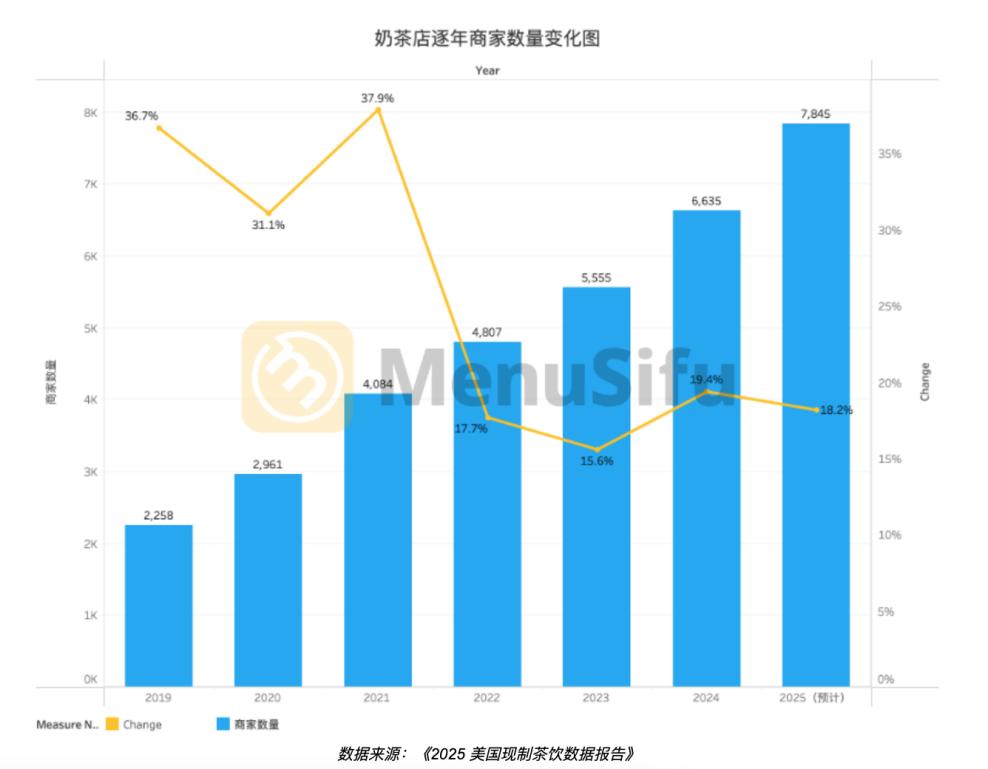
Core Insights - The rise of Chinese tea brands in the U.S. is reshaping consumer habits and creating new market dynamics, with a significant increase in bubble tea shops expected to reach 7,845 by 2025 from 6,636 in 2024 [1][2] - The U.S. bubble tea market is valued at $2.6 billion and is growing at an annual rate of 9.1%, indicating strong potential for expansion [2][3] - No single bubble tea brand currently holds more than 5% market share in the U.S., suggesting a fragmented market with ample opportunities for growth [3] Market Entry Strategies - Heytea aims to position itself as a premium brand, directly competing with Starbucks by opening its first overseas LAB store in Times Square, New York, with a price point of $9.9 per item, which attracted significant customer interest [4] - Bawang Chaji adopts a different approach by pricing its products lower, with a large cup priced at $5.95, aiming to capture a broader consumer base in a competitive market [4] - Mixue Ice Cream and Tea is implementing a dual-coast strategy, opening stores in high-traffic areas like Manhattan and Hollywood, focusing on offering affordable products in premium locations [5] Challenges Faced - High operational costs in the U.S., including rent and labor, pose significant challenges for Chinese tea brands, necessitating higher revenue per store to achieve profitability [8] - The investment required for a single store in the U.S. can exceed $1 million, with substantial costs associated with securing prime locations [8] - Cultural differences and consumer perceptions of tea as a sweet beverage complicate market entry, as American consumers typically prefer higher sugar content in their drinks [9][10] Future Strategies for Success - Successful market entry requires precise location selection, with data indicating that at least 30,000 shopping centers in the U.S. can support bubble tea brands [12] - Product localization is crucial, as American consumers have different taste preferences, with a growing demand for brown sugar and matcha products [14] - Brands are expanding their offerings by bundling tea with other food items, enhancing customer experience and increasing average transaction values [15] Long-term Sustainability - Establishing a localized supply chain is essential for long-term success, with brands like Heytea investing in regional warehouses to control costs and ensure product consistency [16] - Cultural integration and brand value creation are vital, as brands need to offer a unique experience that differentiates them from traditional coffee shops and fast-food tea outlets [17] - The journey for Chinese tea brands in the U.S. is expected to be a long-term endeavor, focusing on gradual brand building and cultural assimilation rather than immediate profits [17]


固体杨枝甘露一天卖出25万份!当液体讲不出新故事,茶饮卷向新赛道
第一财经· 2025-11-25 15:38
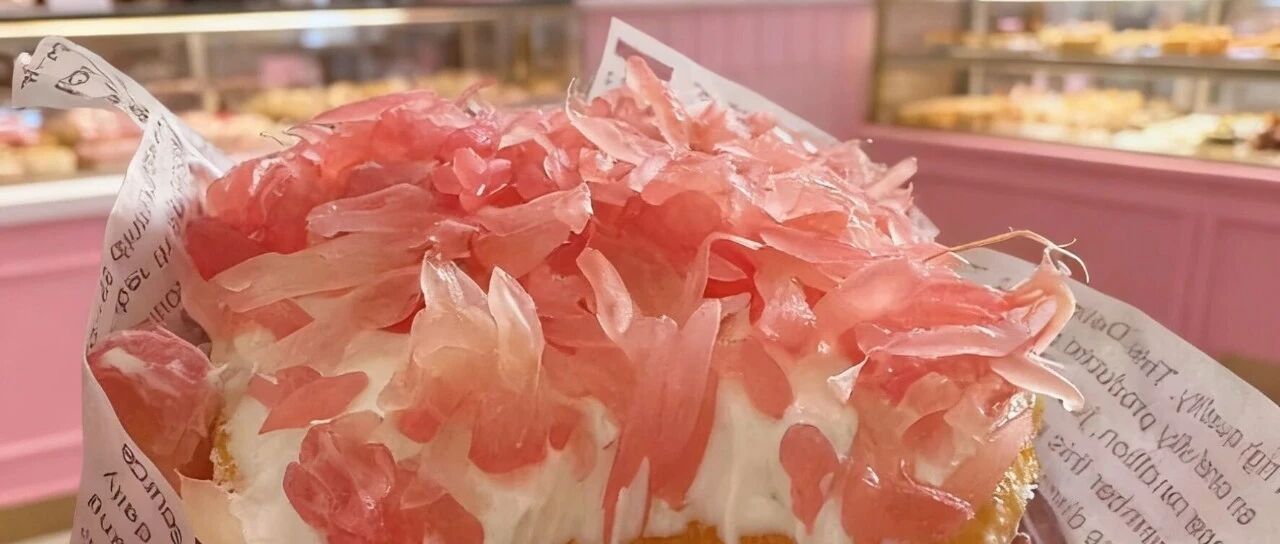
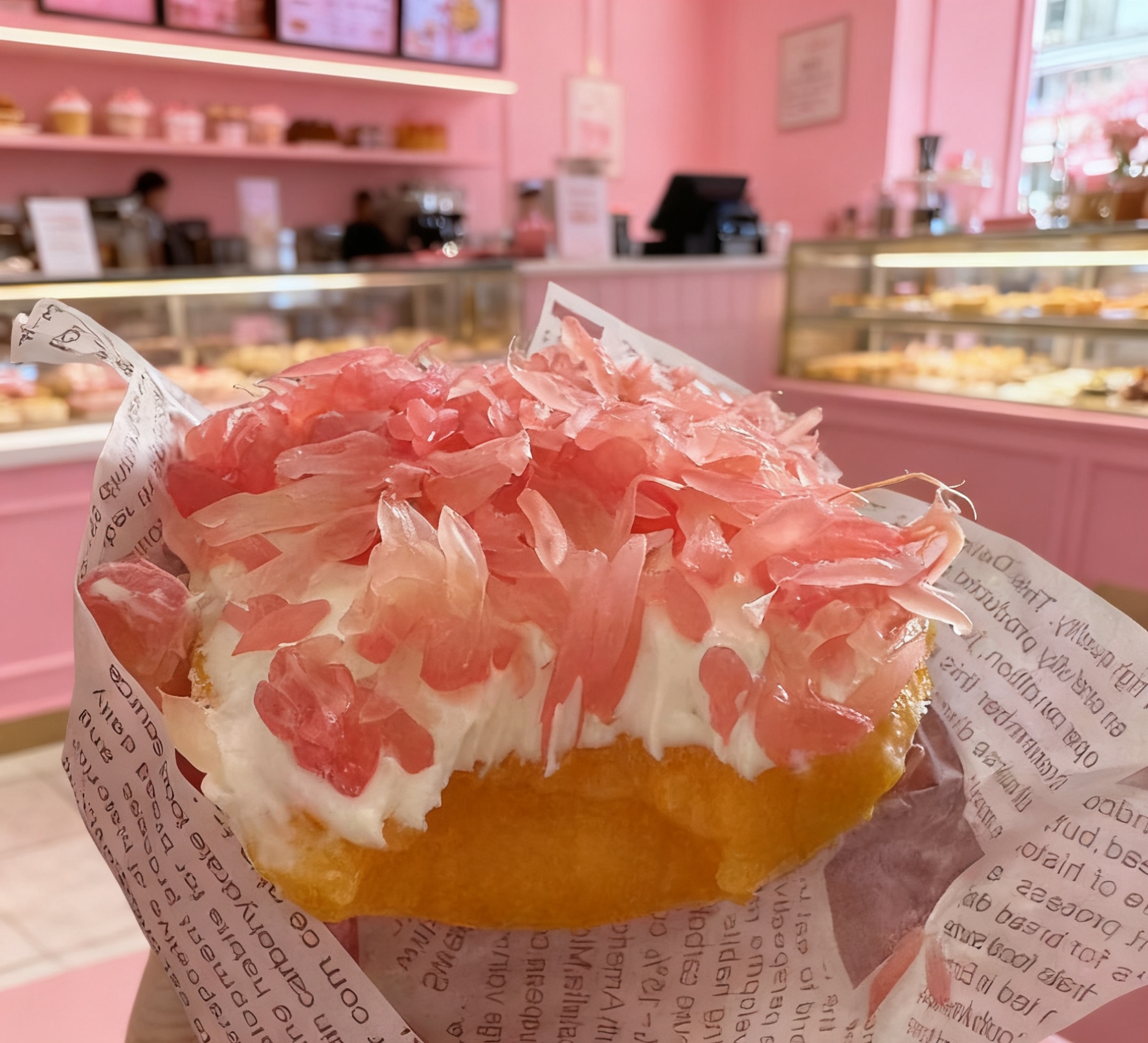
Core Viewpoint - The emergence of "solid mango sago" reflects the new tea beverage industry's struggle to differentiate itself in a saturated market, seeking new growth points through innovative product forms [3][5]. Industry Trends - The solid mango sago has gained significant popularity, with brands like Tea Baidao reporting sales of nearly 250,000 cups on its first day of launch [4]. - Various brands, including Tea Baidao, Hushang Ayi, and others, have introduced their versions of solid mango sago, indicating a trend of cross-industry collaboration and product diversification [4][5]. - The competition in the new tea beverage sector is intensifying, leading to a phenomenon of "old products with new forms" as brands innovate to capture consumer interest [5]. Product Innovation - The solid mango sago features fresh mango, live yogurt, and various toppings, enhancing the product's flavor profile and consumer appeal [4]. - The shift from liquid to solid forms is seen as a necessary evolution in a highly competitive market, allowing brands to extend their product offerings and create new consumption scenarios [5][9]. Market Dynamics - Despite the initial success, the profit margins for solid mango sago are relatively low, with costs associated with ingredients and preparation impacting profitability [7]. - Industry experts express caution regarding the solid mango sago trend, suggesting that while it may offer short-term benefits, it could dilute brand focus and quality in the long run [8][9]. - The transition to solid forms may complicate supply chains and operational efficiency, potentially leading to a decrease in scale advantages for brands [9].
固体杨枝甘露一天卖出25万份!当液体讲不出新故事 茶饮卷向新赛道
Di Yi Cai Jing· 2025-11-25 14:37
Core Insights - The emergence of "solid mango pomelo sago" has become a trending topic on social media, reflecting the new tea beverage industry's struggle for differentiation and growth in a saturated market [1][2] Industry Trends - The solid mango pomelo sago can sell 100-200 cups per day during peak times, with a total national sales volume of nearly 250,000 cups on its first day of launch [2] - Major brands such as Tea Baidao, Hushang Ayi, Yihe Tang, and others have introduced their versions of solid mango pomelo sago, indicating a trend of cross-industry participation [2] - The new product features fresh mango, live bacteria yogurt, and various toppings, enhancing the flavor profile and consumer experience [2] Market Dynamics - The new tea beverage sector is experiencing intensified competition, leading to a phenomenon of "old products with new forms" as brands seek to innovate [3] - The solidification and dessertification of beverages are seen as necessary evolutions in a highly competitive market, pushing brands to explore new growth points and differentiation [3][5] Profitability and Challenges - The profit margin for solid mango pomelo sago is relatively low, with initial pricing at 19 yuan and net earnings around 9-10 yuan per cup after discounts [4] - Concerns exist regarding the potential dilution of brand identity and product quality due to the rush to follow trends, which could impact core product development [5][6] Consumer Behavior - The solid version of mango pomelo sago is perceived as a creative solution to consumer fatigue with liquid beverages, transforming the consumption experience from drinking to eating [5][6] - The trend of sharing creative consumption experiences on social media is driving sales, but there are risks of losing repeat customers who may prefer traditional tea options [6]
固体杨枝甘露一天卖出25万份!当液体讲不出新故事,茶饮卷向新赛道
Di Yi Cai Jing· 2025-11-25 12:37
Core Insights - The emergence of "solid mango sago" as a trending dessert reflects the new tea beverage industry's struggle for differentiation and growth in a saturated market [2][4] - The product has gained significant popularity, with sales reaching approximately 250,000 cups on its first day of launch across the country [3] - Major brands, including Tea Baidao, have introduced their versions of solid mango sago, indicating a competitive rush to capitalize on this trend [3][4] Industry Trends - The new tea beverage sector is experiencing intensified competition, leading to a trend of "solidification" and "dessertization" of drinks as brands seek to innovate and differentiate [7][9] - The introduction of solid products is seen as a necessary evolution in a market where traditional liquid beverages struggle to tell new stories [9] - Analysts suggest that while the trend may dilute brand focus and quality in the short term, it represents a maturation and expansion of the tea beverage category [9] Market Dynamics - Solid mango sago has a relatively low profit margin, with initial pricing around 19 yuan, resulting in net earnings of 9-10 yuan per cup after discounts [8] - The complexity of producing solid products may lead to operational challenges, including increased training and supply chain costs, which could impact overall efficiency [9] - The risk of losing customer loyalty to traditional beverages exists if brands overly focus on solid products, potentially leading to a dilution of brand identity [9]
港股收评:恒科指涨1.2%,科技金融齐升,有色金属股活跃!
Sou Hu Cai Jing· 2025-11-25 08:57
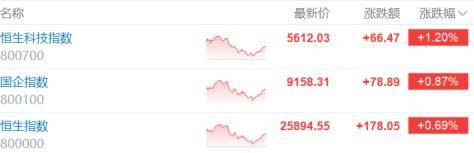
Market Overview - The market sentiment has improved significantly due to easing geopolitical tensions and expectations of interest rate cuts by the Federal Reserve [1] - The Hang Seng Index rose by 0.69%, surpassing 26,000 points at one point, while the Hang Seng China Enterprises Index and the Hang Seng Tech Index increased by 0.87% and 1.2%, respectively [1][2] Sector Performance - Large technology stocks continued to rise, with significant gains in major companies such as Baidu, Xiaomi, Alibaba, and JD.com [4] - Financial stocks, including banks, insurance, and brokerage firms, generally saw increases [2] - Precious metals and non-ferrous metal stocks performed well, driven by the rising expectations of a Federal Reserve rate cut [2][12] Notable Stocks - Baidu's stock price increased by 4.56% after Morgan Stanley raised its target price to $188, citing Baidu's transformation into an AI infrastructure provider [4][5] - Xiaomi's stock rose by 4.35% as its founder invested over HKD 100 million to increase his stake [4][5] - Other notable performers included Bilibili, which rose by 5.22%, and NIO, which increased by 3.04% [5][6] Investment Trends - Southbound funds recorded a net inflow of HKD 11.166 billion, indicating strong investor interest in Hong Kong stocks [9] - The market is expected to recover from recent declines, as the current downturn reflects irrational panic rather than fundamental issues [11] Industry Insights - The battery and lithium battery sectors saw gains, with Tianqi Lithium and Ganfeng Lithium rising over 4% and 3%, respectively [6] - The aviation sector faced pressure, with China Eastern Airlines and Air China experiencing declines due to a significant increase in flight cancellations to Japan [7][8]
一场精心策划的“智商税”,收割了多少想暴富的县城青年
3 6 Ke· 2025-11-25 05:56
"奶茶界真正的新皇"、"小甜水界的唯一真神"、"联动界最高的山和最长的河",你以为这是喜茶或蜜雪冰城的新头衔? 不,网友把这些金光闪闪的称号,慷慨地送给了一个你大概率没听过的品牌:哪吒仙饮。 但可别以为网友是在夸他,其实这全是带着调侃的黑色幽默。 要是你刚好在这家店打工,大概率还会被"灵魂补刀:"这员工也太精明了,专门挑一个没活的店,往那一坐刷一天视频工资就到手了"。 在网友眼中,这家敢和蜜雪冰城正面硬刚、中门对狙的品牌,Bug实在太多了。 名字上明晃晃蹭《哪吒之魔童降世》的IP流量,"仙饮"还被网友调侃是借用了电影里哪吒撒尿给仙人喝的桥段。 而哪吒仙饮背后的加盟套路,才是真正的"槽点富矿"。 社交平台上找蜜雪冰城的加盟方式→被招商忽悠说这是蜜雪冰城的子品牌,自带流量 buff→脑子一热签了合同。 结果选址直接踩大坑,要么人流量少得可怜,要么周边全是奶茶卷王→开业后营业额低迷到怀疑人生,一天卖的钱还不够付房租水电→最后只能含泪关 店。 01 现实中谁不想来杯哪吒仙饮? 哪吒仙饮的门店出现在短视频里,评论区没有好奇,而是齐刷刷开启"预言家模式"。 "三个月后,那就好好告个别吧。" 这句毕业歌词,被网友用作预言新 ...

港股新消费概念股持续走强,古茗、茶百道涨超4%
Mei Ri Jing Ji Xin Wen· 2025-11-25 02:10
Group 1 - The core viewpoint is that new consumption concept stocks in Hong Kong are experiencing a strong performance, with notable increases in share prices for several companies [1][2] Group 2 - Gu Ming (01364.HK) and Cha Bai Dao (02555.HK) have both risen over 4% [1] - Wei Long (09985.HK) and Nai Xue's Tea (02150.HK) have seen nearly a 3% increase [1]
幸运咖成为第三家门店数量破万的咖啡品牌
Jing Ji Guan Cha Wang· 2025-11-24 12:18
2023年,受价格战等因素影响,幸运咖一度门店数量增长速度放缓。2025年初,幸运咖立下要开1万家店的目标,并扩充市场端人员,降低了开店成本。根 据幸运咖的招商政策,不包括店面装修、租金、转让费等费用,开出一家店的费用是12.7万,其中包括1万元的加盟费、6.6万元的设备费用、3.4万元的首批 物料费等。 一位在县城开幸运咖的加盟商说,在当地开一家瑞幸咖啡门店的成本是幸运咖的两倍多,由于门槛低,所以吸引了很多人前来询问怎么开幸运咖。在他看 来,这些人多为餐饮小白,不懂得如何经营一家店。 11月24日,蜜雪集团(2097.HK)旗下咖啡品牌、被视为第二增长曲线的幸运咖宣布其全球门店数量突破1万家,这是中国第三家门店数量破万的咖啡品 牌,前两家是瑞幸咖啡和库迪咖啡。幸运咖主要产品定价在6元—8元,较前两者价位更低。 早在2017年,幸运咖被蜜雪集团入股孵化,成为独立品牌,由郑州一间精品咖啡店主理人负责运营。2020年,蜜雪集团全资收购幸运咖后,从招商部、市场 部、品牌部等部门各抽调一人,组成了幸运咖的早期团队,并立下了"五年再造一个蜜雪冰城"的目标。 上海啡越投资管理有限公司董事长王振东说,幸运咖是首个由茶饮品牌 ...
霸王茶姬、喜茶都在跟,年轻人正捧红一批“地域文旅奶茶”
3 6 Ke· 2025-11-24 03:49
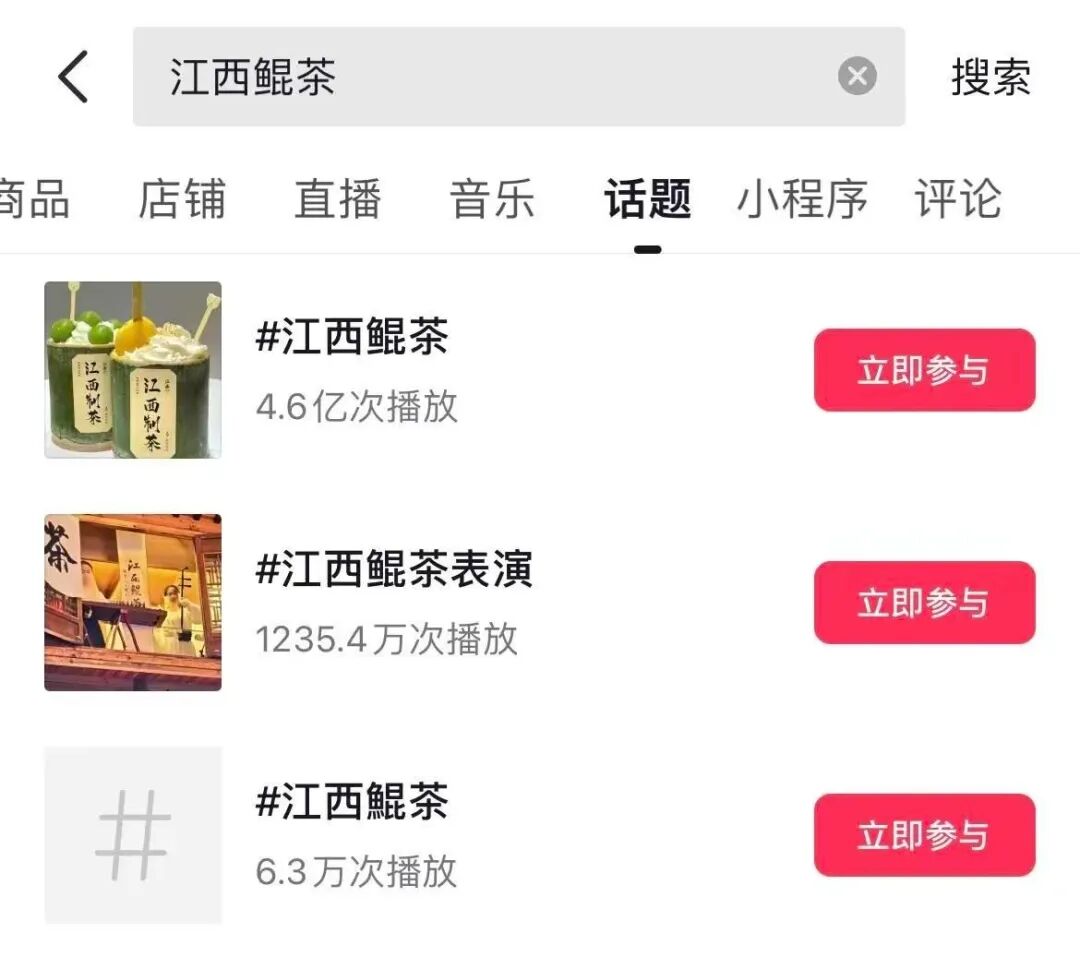
Core Insights - A new wave of tea shops focusing on "regional + cultural tourism" has emerged, gaining popularity among young consumers who view these experiences as essential during their travels [2][10][19] Group 1: Market Trends - Traditional tea shops are struggling with price wars, while those emphasizing regional and cultural tourism are experiencing rapid growth and national expansion [2][6] - For instance, Jiangxi Kuncha has achieved monthly revenues exceeding 1 million yuan at its Wan Shou Gong store, with a total of 20 locations across various cities [4][6] - Similarly, Xuzhou's Yunlong Tea has opened 8 stores, consistently ranking in the top three on local review platforms [4][6] Group 2: Consumer Engagement - The popularity of these tea shops is driven by their ability to create immersive cultural experiences, which resonate well with consumers [10][11] - For example, Kuncha's stores feature traditional decor that reflects local culture, enhancing the overall customer experience [11][12] - The integration of local ingredients into product offerings, such as Kuncha's "瓦罐系列" and Yunlong Tea's "徐州汉茶" series, further strengthens the connection to regional identity [13][14] Group 3: Marketing Strategies - Many tea brands are leveraging collaborations with cultural tourism IPs to enhance their market presence, such as Yi He Tang's partnership with Handan's cultural tourism [14][19] - The trend of co-branding is evident, with brands like Bawang Chaji embedding their products within cultural sites, thus creating a unique selling proposition [14][19] - Social media engagement is significant, with over 50 million posts related to "regional + cultural tourism" tea shops, indicating strong consumer interest [9][10] Group 4: Challenges and Competition - The rapid rise of these tea shops has led to a wave of imitation, resulting in a homogenization of offerings and decor styles across the market [15][18] - The challenge of maintaining unique brand identities is critical, as many shops struggle to differentiate themselves beyond surface-level cultural elements [15][18] - Experts suggest that true differentiation requires a deeper integration of local cultural elements into both product and store design [15][19]
海通国际:首予茶百道(02555)“优于大市”评级 产品创新驱动业务优化
智通财经网· 2025-11-24 02:53
Core Viewpoint - Haitong International initiates coverage on Cha Baidao (02555) with an "outperform" rating and a target price of HKD 9.3, anticipating a recovery in fundamentals by mid-2025 through product innovation, marketing optimization, and franchisee operations after a business adjustment in 2024 [1] Company Background - Cha Baidao, founded by Wang Xiaokun in 2008 in Chengdu, Sichuan, is a leading ready-to-drink tea brand in China, with 8,465 global stores as of 1H25, including 8,444 in China and 21 overseas [1] - The brand holds an 8% market share in China's ready-to-drink tea segment, ranking third by GMV in 2023, and is the second-largest in the mass market segment with a 15.6% market share [1] Business Adjustment and Innovation - The ready-to-drink beverage industry is entering an adjustment phase in 2024, with Cha Baidao optimizing its business model to return to a growth trajectory in 1H25 [2] - The company is restructuring its business around product capabilities, with a dual-team approach in R&D leading to 55 new products launched in 1H25, significantly up from 21 in the same period of 2024 [3] - Marketing strategies are shifting from passive to proactive, with increased advertising spending and enhanced precision marketing to boost customer retention [3] - Operational improvements include optimizing existing franchisees and encouraging expansion into county-level markets, resulting in a shorter payback period for stores by approximately 1-2 months compared to 2024 [3] - Supply chain enhancements have led to next-day delivery for most stores and a broader range of self-produced raw materials [3] Financial Forecast and Valuation - The company anticipates a high base effect in same-store sales due to delivery subsidies in 2025, with potential pressure in 2026 as subsidy levels decrease [4] - Cha Baidao plans to enhance same-store and single-store performance through channel expansion, product diversification, and increased marketing efforts [4] - Recent social security and tax policies are expected to promote a more regulated and sustainable industry, benefiting compliant leading brands like Cha Baidao [4] - Revenue projections for 2025-2027 are estimated at CNY 5.59 billion, 6.00 billion, and 6.55 billion, with adjusted net profits of CNY 840 million, 950 million, and 1.08 billion respectively [4] - The company is assigned a 15X PE valuation for 2025, leading to a target price of HKD 9.3 based on expected growth rates and industry average valuation levels [4]