
蒂森克虏伯

Search documents
蛰伏后的爆发:思灵机器人从工业场景迈向物理AI
Tai Mei Ti A P P· 2025-12-02 00:25
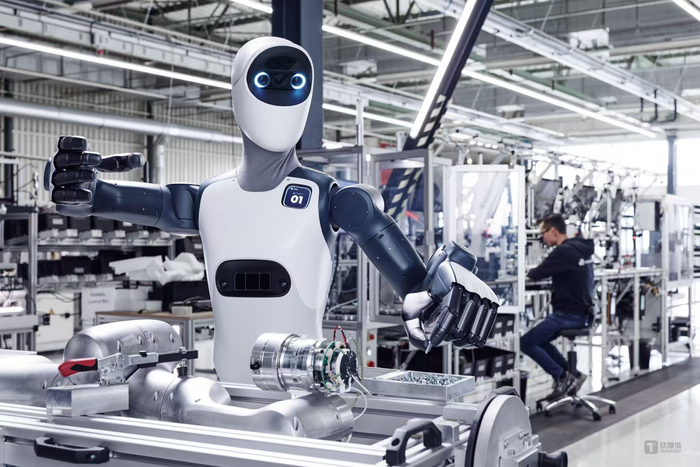
Core Insights - The industrial scene has become a competitive battleground for leading embodied intelligence companies, driven by the global restructuring of supply chains and the manufacturing industry's shift towards smart and flexible operations [2] - A report from Crunchbase indicates that 70% of global robotics funding in 2024 will be directed towards industrial applications, with the International Federation of Robotics (IFR) predicting the industrial robotics market will reach 10 million units by 2030 [2] - Despite the demand, challenges such as precision, stability, durability, and collaboration between machines and humans hinder the widespread adoption of industrial robots [2] Company Overview - Agile Robots, founded in 2018, has gained attention with the release of its full-sized industrial humanoid robot, Agile ONE, and the acquisition of Thyssenkrupp Automation Engineering [3] - The company has completed multiple funding rounds, attracting investments from notable firms such as SoftBank Vision Fund, Sequoia Capital, and Hillhouse Capital, among others [3] - The founder, Dr. Chen Zhaopeng, is a recognized expert in robotics, previously holding a senior position at the German Aerospace Center [3] Product Development - Agile Robots has delivered over 30,000 robots across various industries, including automotive and consumer electronics, achieving a remarkable revenue growth of 100% for seven consecutive years [5] - Agile ONE integrates core technologies developed over years, representing a complete ecosystem for factory automation and embodying the concept of "physical artificial intelligence" [5] - The Agile Hand, a high-freedom dexterous hand, features advanced sensors and control systems, enhancing precision and adaptability in various industrial tasks [7][10] Technological Innovation - The robot's "three-layer brain" architecture distinguishes it from traditional models, enabling complex decision-making, task planning, and precise operations [13] - Agile Robots has developed a vast dataset from over 30,000 deployed robots, enhancing the adaptability and performance of Agile ONE in real-world industrial scenarios [14] - The company emphasizes creating a comprehensive physical AI ecosystem rather than just standalone robots, facilitating collaboration between machines and humans [15][17] Market Expansion - Agile Robots has expanded its offerings beyond traditional industrial applications, venturing into healthcare with its 7-degree-of-freedom medical robot, Diana7 Med, and exploring solutions in agriculture, education, and energy sectors [21][23] - The company has strategically acquired other firms to enhance its industrial robotics ecosystem, including notable companies like Franka and idealworks [19] Conclusion - Agile Robots' journey reflects a commitment to addressing real-world challenges across various sectors, continuously evolving its technology and expanding its market presence while adhering to its mission of linking artificial intelligence with the physical world [25]


德国通胀飙至2.6%!经济支柱崩塌,燃烧成本上涨,欧洲经济要凉?
Sou Hu Cai Jing· 2025-11-29 16:15
Core Viewpoint - The recent surge in Germany's inflation rate to 2.6% in November has raised concerns about the European Central Bank's (ECB) ability to manage economic stability, highlighting the challenges posed by rising costs in tourism and fuel, as well as structural issues within the economy [2][4][23]. Inflation Dynamics - Germany's inflation rate increased to 2.6%, the highest in nine months, defying economists' predictions of a maximum of 2.4% [2][4]. - The inflation rebound is attributed to two main factors: increased demand for travel services and rising fuel costs, indicating strong consumer spending despite the cold weather [6][8]. - The persistence of high inflation is linked to the "stickiness" of service prices, which have not decreased despite previous monetary policy measures [8]. Economic Policy Challenges - The ECB faces a dilemma in addressing inflation in Germany while also considering the economic conditions in Italy and France, which are under pressure from high interest rates [13][19]. - The current economic model in Germany is undergoing significant changes, with reliance on cheap Russian energy and expansive markets now compromised [13][15]. - The ECB's strategy of maintaining interest rates without adjustments reflects a lack of effective solutions to the rising inflation problem [17][19]. Structural Issues - The rise in energy costs is not merely cyclical but structural, with long-term implications for inflation and economic growth [15][25]. - The labor market is experiencing pressures from wage demands due to inflation, leading to potential wage-price spirals that could exacerbate inflationary trends [15][17]. - The economic landscape is further complicated by geopolitical factors, including competition with the U.S. and challenges in sourcing energy, which could lead to increased import costs [22][27]. Long-term Outlook - The current inflation rate of 2.6% signifies deeper structural issues within the European economy, suggesting that high inflation and volatility may persist for an extended period [23][25]. - The combination of rising costs due to globalization, demographic challenges, and climate change-related expenses is expected to keep inflation elevated [25][27].

BILSTEIN以硬核实力拓展中国汽车后市场
Zhong Guo Qi Che Bao Wang· 2025-11-28 09:56
Core Viewpoint - BILSTEIN showcases its commitment to the Chinese automotive aftermarket at the Shanghai Frankfurt Auto Parts Exhibition, emphasizing its advanced suspension technology and solutions, and its strategic focus on local market development [1][5][10] Group 1: Product and Technology Focus - BILSTEIN presents a comprehensive product matrix catering to various needs, including the B4 series, B6 series, and high-performance EVO S/T1/R series, all tested under extreme conditions to ensure high quality [3][4] - The company introduces a suspension maintenance solution that integrates full replacement parts and technical support, enhancing the service experience for repair shops and vehicle owners [4] Group 2: Commitment to Aftermarket - BILSTEIN establishes a dedicated area for new energy vehicle adaptations, showcasing customized suspension kits for high-performance electric vehicles, reflecting its responsiveness to the rapid growth of the Chinese new energy market [4][10] - The company aims to deepen its engagement in the aftermarket, with a focus on e-commerce, digitalization, and artificial intelligence as new growth paths [5][6] Group 3: Strategic Insights - Simon Frick, President of Thyssenkrupp Aftermarket Group, highlights the importance of the Chinese market as a "key market engine" and emphasizes the establishment of a fully localized production facility in Changzhou [7] - BILSTEIN's strategy in China is characterized by a "precision and depth" approach, focusing on delivering high-quality suspension solutions tailored to customer needs [7][10] Group 4: Future Development Goals - BILSTEIN aims to achieve sales growth exceeding market averages while enhancing profitability, supported by a localized operational strategy led by a dedicated team [6][10] - The company plans to expand its product offerings for local new energy vehicles, improve its service network, and enhance digital service capabilities to better serve customers [10]

西媒:德国经济结构正发生深刻转变
Sou Hu Cai Jing· 2025-11-26 08:53
参考消息网11月26日报道 西班牙《经济学家报》网站11月24日发表题为《德国劳动力市场一个被忽略 的数据背后隐藏的经济深刻转变》的文章,作者为马里奥·贝塞达斯。编译如下: 德国的整体经济状况已不再是秘密。强大的工业正受到内部弱点和外部现实的双重打击。外部的"新世 界"摧毁了德国数十年来赖以生存的高附加值出口模式,导致经济陷入瘫痪,政界人士措手不及。 他们急于摆脱困境,尽管柏林试图展现决心或加大投资,但仍然在人们心中埋下了疑虑的种子。社会蔓 延着沮丧情绪。然而,在这层表象之下,德国经济正在发生一场深刻的变革。 当人们看到有关德国工业生存危机的新闻标题时,脑海中浮现的仍然是一个烟囱林立、煤炭堆积如山的 大型工厂的画面。但事实早已不是如此。就像大多数发达经济体一样,服务业在德国国内生产总值 (GDP)中占比较大,目前接近70%,而工业占比仅仅略高于20%。传统工业持续"萎缩",以技术为主的 制造业和服务业都在经历显著的变革。 巴黎国民银行的一项分析指出,2019年底以来欧元区新增的700万个就业岗位中,近四分之一来自技术 和数字领域,德国就是一个典型案例。该银行分析师纪尧姆·德里安指出,"德国或许是这种趋势的最好 ...
德国倒向俄气?欧盟加速俄能源脱钩,德州长逆势宣布:要用俄气
Sou Hu Cai Jing· 2025-11-21 08:12
Group 1 - The core viewpoint of the articles highlights the irreversible decoupling of Russia and Europe in the energy sector, with Germany's energy policy becoming a focal point of public discussion following comments from Saxony's governor advocating for the resumption of Russian gas imports if the Ukraine war ceases [1][3] - Since the outbreak of the Ukraine conflict, the EU has imposed sanctions on Russia, particularly targeting the energy sector, which has historically seen significant reliance on Russian imports, accounting for 45% of natural gas, 30% of oil, and nearly 50% of coal in 2021 [1][3] - The EU's REPowerEU plan was introduced in 2022 to reduce dependence on Russian gas, but its implementation faces challenges due to insufficient infrastructure and the lengthy timeline required for new projects [1][3] Group 2 - Germany, as the economic engine of the EU, has been under significant pressure due to the energy decoupling from Russia, with pre-conflict dependencies of 55% on natural gas, 35% on oil, and 50% on coal [3] - The German government announced a complete halt to Russian energy imports starting in 2023, seeking alternative sources such as Norway and Qatar, but faces difficulties as Norway approaches production limits and Qatar prioritizes long-term contracts with Asia [3] - Energy prices in Germany surged by 40% year-on-year by 2023, leading to increased industrial electricity costs and forcing high-energy industries to reduce production or relocate, exemplified by BASF's closure of domestic chemical production lines for the first time since WWII [3] Group 3 - The energy crisis and inflation in Germany have contributed to a shrinking economy, with the eurozone inflation rate exceeding 10.7%, marking a historical high [3] - The geopolitical landscape of global energy is shifting, with the U.S. expanding LNG exports to the EU, becoming the largest supplier despite high prices exacerbating energy poverty in Europe [3] - Russia is advancing the Power of Siberia-2 gas pipeline project and securing long-term supply contracts with China and India, while the global energy market is increasingly polarized between OPEC+ led by Saudi Arabia and Russia, and the U.S.-led shale oil alliance [3] Group 4 - Germany's energy choices reflect deep-seated contradictions between energy security, economic interests, and political positions, with potential short-term solutions including increased gray imports and expanded renewable energy deployment [5] - A complete detachment from Russian energy reliance will require several years, necessitating the EU to accelerate the construction of a unified energy market and strengthen cooperation with regions like Africa and the Middle East [5] - The success of global energy transition will depend on advancements in technological innovation and the depth of international cooperation [5]
透视破产潮背后的德国经济困局
Xin Hua She· 2025-11-21 02:45
Core Insights - The article highlights a significant wave of bankruptcies in Germany, driven by high energy costs, ineffective corporate transformations, and the impact of U.S. tariffs, leading to a challenging economic environment not seen in years [1][2]. Group 1: Bankruptcy Trends - Multiple research institutions predict that the number of corporate bankruptcies in Germany may reach a record high this year, with a notable increase in applications for bankruptcy [2][3]. - In August, there were 1,979 bankruptcy applications, marking a 12.2% year-on-year increase, with total creditor claims amounting to €5.4 billion, significantly higher than the previous year [3]. - The German Chamber of Commerce anticipates that the total number of bankruptcies for the year will exceed 22,000, the highest in over a decade [3]. Group 2: Impact on Employment - The ongoing bankruptcy wave is leading to significant job losses, with major companies like DHL, Siemens, Thyssenkrupp, and Bosch announcing substantial layoffs, totaling over 25,000 jobs [3]. - Nearly 30% of surveyed companies expect their business conditions to worsen in the coming months, indicating a deteriorating economic outlook [3]. Group 3: Structural Challenges - The bankruptcy trend reflects long-standing structural issues within the German economy, particularly the heavy reliance on medium-sized enterprises and export markets, which are now facing increased pressure from administrative burdens and external tariff barriers [4]. - The vulnerabilities of the entire industrial chain in global competition are becoming increasingly apparent, as liquidity issues and fragile business models are exposed [4]. Group 4: Government Response - In response to the economic downturn and rising bankruptcies, the German federal government aims to revitalize the economy through spending cuts, bureaucratic reduction, and investment stimulation, although the effectiveness of these policies may take time to manifest [5]. - Economic experts suggest that to return to a stable growth trajectory, Germany must enhance productivity, foster innovation, and increase investment, while also addressing the challenges posed by external trade conditions [5].
德国汽车业数万岗位削减,就业人数已降至十多年来的最低水平
第一财经· 2025-11-20 13:26
2025.11. 20 本文字数:2673,阅读时长大约4分钟 作者 | 第一财经 冯迪凡 德国举步维艰的汽车行业再迎风雨。 今年三季度末,整车制造商在机动车及发动机生产领域雇用44.68万人,同比减少3.8%。在汽车供 应行业中,从事车身、上装及拖车制造的供应商就业人数下降4.0%。汽车零部件及配件领域的降幅 更为显著,同期减少11.1%。 20日,德国联邦统计局发布最新数据显示,德国工业近期遭遇了显著的就业岗位流失,其中汽车行 业受冲击尤为严重。由于数万个工作岗位被裁撤,德国汽车行业就业人数已降至十多年来的最低水 平。 具体而言,截至2025年第三季度末,骑车业就业人数较上年同期减少逾48700人,降幅达6.3%,在 员工规模超过20万人的主要工业部门中居首位。 值得注意的是, 在汽车产业内部,供应商受裁员冲击远大于整车制造商。 柏林自由大学现代中国学院客座研究员、中国欧洲学会经济研究分会理事史世伟教授长期在欧洲追踪 德国工业发展和政策。他对第一财经记者表示,德国汽车业在全球各地发展不同,在美国市场面临关 税和销售下降,在中国市场面临电动车的强力竞争,目前也在"卷价格"和试图在生产上流程创新,不 过在欧洲 ...

德国汽车业遇“暴风雨”!数万岗位削减,供应商裁员幅度远超整车制造商
Di Yi Cai Jing· 2025-11-20 11:22
德国汽车行业就业人数已降至十多年来的最低水平。 德国举步维艰的汽车行业再迎风雨。 20日,德国联邦统计局发布最新数据显示,德国工业近期遭遇了显著的就业岗位流失,其中汽车行业受 冲击尤为严重。由于数万个工作岗位被裁撤,德国汽车行业就业人数已降至十多年来的最低水平。 具体而言,截至2025年第三季度末,骑车业就业人数较上年同期减少逾48700人,降幅达6.3%,在员工 规模超过20万人的主要工业部门中居首位。 值得注意的是, 在汽车产业内部,供应商受裁员冲击远大于整车制造商。 柏林自由大学现代中国学院客座研究员、中国欧洲学会经济研究分会理事史世伟教授长期在欧洲追踪德 国工业发展和政策。他对第一财经记者表示,德国汽车业在全球各地发展不同,在美国市场面临关税和 销售下降,在中国市场面临电动车的强力竞争,目前也在"卷价格"和试图在生产上流程创新,不过在欧 洲市场上德国汽车在关税等因素的影响下,仍有相对优势。 供应商裁员幅度远超整车制造商 德国联邦统计局数据显示,德国汽车业从业人数降至72.14万人,创历史新低。此前的低点为2011年第 二季度末(71.8万人)。尽管如此,汽车工业仍是机械工程之后的德国第二大就业部门。 ...

德国财长:低于150欧元的都是垃圾,中国别卖来欧洲,我们不想要
Sou Hu Cai Jing· 2025-11-15 11:10
Group 1 - Germany's finance minister supports imposing high tariffs on Chinese goods to protect local industries, particularly the steel sector, which is facing significant challenges [6][10][22] - Thyssenkrupp plans to lay off 11,000 employees by 2030 and is considering divesting its steel business due to declining production and profitability [4][10] - The German steel industry has seen a decline in production, with steel output down 11.6% and rolled steel production down 8.6% in the first half of 2025 [4][10] Group 2 - The proposed tariff increase could raise import duties on foreign steel to 50%, while reducing tax exemptions by 47%, which may lead to increased costs for German manufacturers reliant on Chinese components [8][14] - Concerns have been raised by various sectors, including small and medium-sized enterprises, about the negative impact of tariffs on supply chains and overall competitiveness [20][22] - The trade relationship between China and Germany is characterized by mutual dependence, with Germany importing €130 billion worth of goods from China in 2024, including critical components for its automotive and machinery sectors [17][20] Group 3 - The German government faces internal divisions regarding the tariff proposal, with significant opposition from various industry groups who fear that tariffs will exacerbate existing challenges rather than provide relief [20][22] - The current energy cost disparity, with German electricity prices being 2 to 4 times higher than China's, is a significant factor contributing to the competitiveness issues faced by German industries [10][12] - Historical examples of cooperation between China and Germany highlight the potential for mutual benefit, suggesting that tariffs may not be the best solution to current industrial challenges [24][26]
美国关税政策冲击德国经济
Ren Min Ri Bao· 2025-11-13 22:10
Group 1 - Germany's exports to the US fell to €101 billion in the first eight months of 2025, a decrease of 6.5% year-on-year, with August exports dropping to €10.9 billion, marking a 20.1% decline, the lowest since November 2021 [1] - The German industrial sector has seen sales decline for eight consecutive quarters, with an overall contraction of 2.1% [1] - Over half of German employees are concerned about job stability, with nearly 20% of companies forced to implement short-time work due to insufficient orders [1] Group 2 - The US tariff policy is identified as a primary reason for the weak export performance, significantly reducing demand for traditional German products such as automobiles, machinery, and chemicals [1] - The automotive industry, a major source of trade surplus, has been directly impacted, with Volkswagen's operating profit down by one-third and Mercedes-Benz's net profit down by 56% in the first half of the year [1] - The German automotive sector is projected to lose approximately 51,500 jobs from July 2024 to June 2025, accounting for nearly 7% of total employment in the industry [1] Group 3 - The US tariffs have severely impacted the German machinery industry, with new tariffs on steel and aluminum derivatives raised to 50%, affecting sectors like electric motors and industrial robots [2] - The German machinery manufacturing association reported that the industry is facing a survival crisis, with production expected to decline for the third consecutive year by 5% [2] - More than half of surveyed companies plan to reduce trade with the US, and about a quarter are considering halting or canceling investments in the US [2] Group 4 - The number of corporate bankruptcies in Germany has been rising, with July seeing the highest number in 12 years, and over 22,000 companies expected to file for bankruptcy this year [3] - Major companies like DHL, Siemens, Thyssenkrupp, and Bosch have announced significant layoffs, totaling approximately 30,000 jobs [3] - The German central bank has indicated that US tariffs and policy uncertainty are suppressing economic growth, particularly in the industrial sector [3] Group 5 - In response to the crisis, the German industrial sector is exploring strategies such as localizing production and optimizing global production layouts to enhance resilience [4] - The German machinery manufacturing association is urging the EU to expedite free trade agreements and raw material partnerships to mitigate supply chain risks [4] - There is a push for companies to transition towards sustainable sectors like artificial intelligence and battery technology to find new growth opportunities [4]