
华勤技术

Search documents
华勤技术(603296.SH):已于2021年取得液冷装置及设备的实用新型专利,并在多款液冷AI服务器中落地应用
Ge Long Hui· 2025-12-04 07:49
Core Viewpoint - The company has obtained a utility model patent for liquid cooling devices and equipment in 2021, which has been applied in multiple liquid-cooled AI servers [1] Group 1: Company Developments - The company has implemented liquid cooling technology in AI servers aimed at both internet and industry clients [1] - Future product planning will focus on advancing more new high-efficiency liquid cooling solutions to enhance performance and energy efficiency during data center deployment [1]

从实验室跑进生产线 人形机器人商业化加速落地
Zheng Quan Shi Bao· 2025-12-04 00:32
Group 1 - The humanoid robot industry is experiencing significant positive developments, with leading companies actively engaging in technology research and commercialization, marking a critical transition phase [1][2] - Major humanoid robot companies are launching new products, such as Tesla's Optimus robot, Zhongqing Robot's T800, and Atom One by Atonomous, indicating a surge in innovation and product availability [2] - The humanoid robot supply chain in China has established a comprehensive layout, with several A-share listed companies entering the mass supply phase, suggesting a robust growth trajectory for the industry [3] Group 2 - The global humanoid robot market is projected to reach approximately $1.017 billion in 2024, with an expected growth to $15 billion by 2030, reflecting a compound annual growth rate (CAGR) of over 56% [3] - The Chinese market is anticipated to grow to 38 billion RMB by 2030, capturing 44.77% of the global market share, highlighting the vast potential for industry expansion [3] - Among humanoid robot concept stocks, 36 companies have seen their stock prices decline by over 20% from their yearly highs, indicating potential undervaluation in the market [4] Group 3 - Among the humanoid robot concept stocks, five companies have a rolling price-to-earnings (P/E) ratio below 30, suggesting they may be undervalued compared to their peers [4] - Zhongding Company has the lowest rolling P/E ratio at 18.18, and it has completed its industrial layout in key components such as joint assemblies and sensors, positioning itself well for future growth [5]

从“实验室”跑进“生产线”人形机器人商业化加速落地
Zheng Quan Shi Bao· 2025-12-03 17:35
Group 1 - The humanoid robot industry is experiencing significant positive developments, with leading companies actively engaging in technological advancements and commercial deployment, marking a critical transition phase [1] - Major humanoid robot companies, including Tesla, Zhongqing Robotics, and Yushu Technology, have recently launched new products and solutions, indicating a shift towards mass production and supply [1] - The Chinese humanoid robot industry has established a complete supply chain, with several A-share listed companies entering the bulk supply phase, suggesting a potential surge in delivery volumes in the coming year [1] Group 2 - The development of embodied intelligence in humanoid robots is evolving from mere functionality to practical usability, with the next 3-5 years being crucial for transitioning from demonstration to reliable commercial use [2] - The global humanoid robot market is projected to grow from approximately $1.017 billion in 2024 to $15 billion by 2030, with a compound annual growth rate exceeding 56%, while the Chinese market is expected to reach 38 billion RMB by 2030 [2] - Among humanoid robot concept stocks, five companies have low valuations, with rolling price-to-earnings ratios below 30, indicating potential investment opportunities [3] Group 3 - Softcom Power has experienced the largest price drop among humanoid robot concept stocks, with a 42.81% decline since its peak in February, despite forming strategic partnerships for technological advancements [3] - The lowest rolling price-to-earnings ratio among the identified stocks is 18.18 for Zhongding Co., which has completed its industrial layout in key components for humanoid robots [3]
从“实验室”跑进“生产线” 人形机器人商业化加速落地
Zheng Quan Shi Bao· 2025-12-03 17:33
Group 1 - The humanoid robot industry is experiencing significant positive developments, with leading companies actively moving towards commercialization and mass supply stages [1][2] - Major humanoid robot companies, including Tesla, Zhongqing Robotics, and Yushu Technology, have recently launched new products and are initiating IPOs and mergers, indicating a shift towards industrialization and capitalization [2][3] - The Chinese humanoid robot industry has established a complete supply chain, with several listed companies entering mass supply phases and expected to see a surge in delivery volumes in the coming year [3] Group 2 - The global humanoid robot market is projected to reach approximately $1.017 billion in 2024 and $15 billion by 2030, with a compound annual growth rate exceeding 56%, while the Chinese market is expected to reach 38 billion RMB by 2030 [3] - Among humanoid robot concept stocks, 36 companies have seen their stock prices decline by over 20% from their yearly highs, with Softcom Power experiencing the largest drop of 42.81% [4] - As of December 3, five humanoid robot concept stocks have rolling price-to-earnings ratios below 30, indicating potential undervaluation in the market [4][5]


商络电子:向中兴等手机终端品牌以及华勤等手机ODM供应商供应电子元器件
Zheng Quan Ri Bao· 2025-12-03 11:13
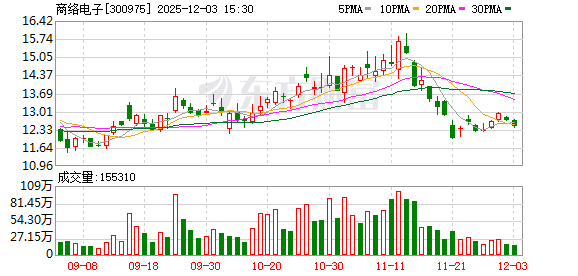
Group 1 - The company, Shangluo Electronics, supplies electronic components to major mobile terminal brands such as ZTE and Weike, as well as ODM suppliers like Huaqin, Longqi, Tianlong, and Luxshare [2]
年度策略报告姊妹篇:2026年通信行业风险排雷手册-20251203
ZHESHANG SECURITIES· 2025-12-03 10:17
Group 1 - The core logic of the report emphasizes optimism for the communication sector in 2026, focusing on opportunities in computing power, telecom operators, and satellite internet [10][11] - The report suggests a stock selection strategy that includes recommendations for companies in various segments such as networking, optical devices, liquid cooling, and copper connections [11] - The report highlights the expected dividend yields for major telecom operators, with China Mobile, China Telecom, and China Unicom projected to have dividend yields of approximately 6.3%, 5.5%, and 5.1% respectively for Hong Kong stocks [11] Group 2 - The report identifies operational risks related to AI demand growth not meeting expectations, which could slow down the conversion speed of enterprise-level AI solutions and affect infrastructure procurement [12][13] - It discusses the potential deterioration of the competitive landscape in AI hardware, as increased capital expenditure by global tech companies may lead to intensified competition [18][19] - The report notes risks associated with the satellite internet sector, particularly regarding the uncertainty of capital expenditure and the maturity of the industry [23][24] Group 3 - The report provides a risk assessment for recommended stocks, including major telecom operators, which are characterized by stable growth, high dividends, and technological growth [30] - It highlights specific risks for individual companies, such as the potential decline in gross margins for Zhongji Xuchuang due to increased competition in the 800G market [31][32] - The report also addresses the risks for companies like Yingwei and Kexin, focusing on market competition and the challenges of expanding into overseas markets [38][40]
红板科技IPO:下游行业单一难免业绩波动风险 积极赊账产能却未打满 是否暴露产品竞争力不足?
Xin Lang Cai Jing· 2025-12-03 08:25
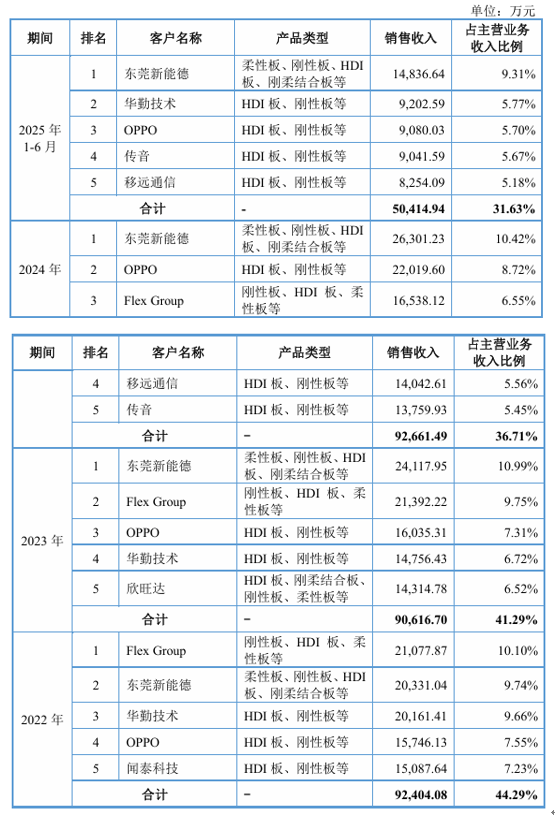
Core Viewpoint - Hongban Technology has received approval from the China Securities Regulatory Commission for its initial public offering (IPO) and plans to list on the Shanghai Stock Exchange, focusing on its PCB business while facing challenges due to high dependence on the consumer electronics sector and low profitability in recent years [1][11]. Group 1: Business Overview - Hongban Technology specializes in the research, production, and sales of printed circuit boards (PCBs), with major products including HDI boards, rigid boards, flexible boards, rigid-flex boards, IC substrates, and similar substrates [1][11]. - The revenue contribution from various product categories in the first half of 2025 is projected to be 61% from HDI boards, 17% from rigid boards, 8% from flexible boards, 6% from rigid-flex boards, and 2% from IC substrates [1][11]. Group 2: Market Position and Client Dependency - Hongban Technology is a key supplier of HDI boards to eight of the top ten global smartphone brands, including OPPO, vivo, and Huawei, which indicates a strong market position but also a high dependency on major clients [2][12]. - The revenue from the consumer electronics sector has consistently accounted for 53%-57% of total revenue, with increasing reliance on major clients like OPPO and Dongguan Xinnengde, whose sales accounted for 10.42% and 8.72% of revenue in 2024, respectively [2][13]. Group 3: Financial Performance and Profitability - The company's gross margin has been volatile, with a decline of 1.26 percentage points to 15.86% in 2023, but is expected to improve to 19% in 2024 due to a higher proportion of HDI business, and further increase to 25.93% in the first half of 2025 as product prices recover [5][17]. - Hongban Technology's gross margin has consistently been 1-4 percentage points lower than the industry average from 2022 to 2024, indicating challenges in achieving competitive profitability [6][18]. Group 4: Capacity Utilization and Industry Comparison - The company's capacity utilization rates have remained below full capacity, recorded at 71.96%, 85.01%, 88.51%, and 88.63% over the past years, suggesting either limited demand for its products or inefficiencies in production [9][21]. - Hongban Technology's revenue scale is significantly smaller than comparable companies, with the average revenue of peer companies being 4 times higher, which limits its ability to leverage economies of scale [8][19]. Group 5: Accounts Receivable Management - The company has a higher proportion of accounts receivable provisions compared to peers, with a consistent 5% provision rate, indicating a potentially lenient accounts receivable management policy [10][22]. - The growth rate of accounts receivable has outpaced revenue growth, raising concerns about the company's credit management and the quality of its customer base [10][22].
探路者6.8亿落子芯片 AI技术+户外场景打开增长空间
2 1 Shi Ji Jing Ji Bao Dao· 2025-12-03 02:54
Core Insights - The company, Tanshan, announced the acquisition of 51% stakes in Beitelai and Shanghai Tongtu for 680 million yuan, aiming to transform into a technology group by leveraging the technological strengths of the acquired companies and focusing on outdoor scenarios for chip commercialization [1][2]. Group 1: Acquisition Details - The acquired companies, Beitelai and Shanghai Tongtu, are established leaders in their respective markets, providing a solid foundation for the acquisition's profitability [2]. - Beitelai has a strong market position in fingerprint recognition chips, holding the top market share in the smart lock sector, and has shown a turnaround in profitability with a revenue of 166 million yuan and a net profit of 17.73 million yuan for the first eight months of 2025 [2]. - Shanghai Tongtu focuses on high-growth display processing and IP licensing, achieving a revenue of 105 million yuan and a net profit of 18.88 million yuan in the same period, indicating significant growth potential [3]. Group 2: Financial Performance and Risk Management - Both companies have established a virtuous cycle of "technological advantage - market share - profit growth," ensuring that the acquisition is not merely a technical concept but backed by financial performance [2]. - Performance guarantees are in place, with cumulative net profit commitments of 150 million yuan for both Beitelai and Shanghai Tongtu from 2026 to 2028, providing a safety net for investors [3]. Group 3: Strategic Synergies - The acquisition is designed to create a synergistic ecosystem, enhancing product complementarity and customer sharing, which is expected to drive revenue growth [4][5]. - The integration of existing products with the new acquisitions will allow Tanshan to offer comprehensive solutions rather than standalone chips, significantly enhancing bargaining power [5][6]. Group 4: Market Position and Growth Potential - Tanshan's existing customer base includes major players like BOE and Liard, while the acquired companies have established relationships with top-tier clients, creating a non-overlapping customer network that can enhance revenue [6]. - The anticipated revenue growth from customer collaboration is estimated to add 20 to 30 million yuan, further solidifying the financial outlook [6]. Group 5: Product Development and Market Strategy - Tanshan plans to leverage its outdoor equipment sales to create a stable internal market for the new chips, addressing specific needs such as low power consumption and durability [7][8]. - The company aims to develop customized chips for outdoor applications, which will not only enhance its product offerings but also open new revenue streams by selling these specialized chips to other outdoor brands [8]. Group 6: Long-term Vision - The integration of chip technology with outdoor applications positions Tanshan favorably in the market, aligning with current trends that favor the fusion of technology and practical applications [8]. - The acquisition strengthens Tanshan's dual business model of "outdoor + chips," enhancing its long-term growth potential and market competitiveness [8].

从夸克眼镜,到豆包手机,为什么巨头扎堆端侧AI?
Hua Er Jie Jian Wen· 2025-12-01 17:34
端侧人工智能(AI)正在崛起:科技巨头扎堆布局,智能终端生态迎来变革窗口。 阿里巴巴上周四发布首款AI眼镜"夸克",售价1899元起,深度整合千问大模型与阿里生态服务。四天 后,字节跳动推出豆包AI手机助手,直接嵌入操作系统底层,实现跨应用比价下单等复杂操作。科技 巨头纷纷加码端侧AI硬件,标志着AI应用正从云端向终端设备快速延伸。 据中信建投估算,2026年手机、PC的AI渗透率有望分别达到45%和62%,端侧AI市场规模预计从2025年 的3219亿元跃升至2029年的1.22万亿元,年复合增长率达40%。上海市经信委一个多月前发布《智能终 端产业高质量发展行动方案》,从政策层面加强端侧AI芯片布局,为产业发展注入强劲动力。 这一波端侧AI浪潮将重塑智能终端生态,从交互方式、系统架构到商业模式的全面升级,有望为上游 芯片、中游硬件、下游软件供应链企业创造新的增长机遇。市场预期智能眼镜销量将从2024年的152万 副增长至2029年的6000万副,成为继智能手机、PC之后的重要AI载体。 端侧AI优势凸显,政策助力产业升级 端侧AI相比云端AI具备显著优势。据高通《混合AI是AI的未来》白皮书分析,端侧AI ...

华勤技术涨2.06%,成交额4.62亿元,主力资金净流入2257.99万元
Xin Lang Cai Jing· 2025-12-01 03:41
Core Viewpoint - Huqin Technology's stock has shown significant volatility, with a year-to-date increase of 27.82% but a recent decline over the past 20 and 60 days, indicating potential market fluctuations and investor sentiment shifts [1][2]. Financial Performance - For the period from January to September 2025, Huqin Technology achieved a revenue of 128.88 billion yuan, representing a year-on-year growth of 69.56%. The net profit attributable to shareholders was 3.099 billion yuan, reflecting a 51.17% increase compared to the previous year [2]. - Since its A-share listing, Huqin Technology has distributed a total of 1.781 billion yuan in dividends [3]. Stock Market Activity - As of December 1, Huqin Technology's stock price was 89.54 yuan per share, with a market capitalization of 90.949 billion yuan. The stock experienced a trading volume of 462 million yuan and a turnover rate of 0.91% [1]. - The stock has seen a net inflow of 22.58 million yuan from major funds, with significant buying and selling activity noted [1]. Shareholder Information - As of September 30, 2025, Huqin Technology had 46,700 shareholders, an increase of 8.31% from the previous period. The average number of circulating shares per person decreased by 7.71% to 12,235 shares [2]. - Among the top ten circulating shareholders, Hong Kong Central Clearing Limited held 34.05 million shares, an increase of 21.62 million shares from the previous period [3]. Business Overview - Huqin Technology, established on August 29, 2005, and listed on August 8, 2023, specializes in the research, design, production, and operation services of smart hardware products. Its revenue composition includes high-performance computing (60.32%), smart terminals (31.93%), AIOT and others (3.95%), and automotive and industrial products (1.24%) [1]. - The company operates within the electronic industry, specifically in consumer electronics and components, with involvement in sectors such as millimeter-wave radar, humanoid robots, automotive electronics, and smart speakers [2].