
茶百道

Search documents
不只聚焦东南亚,茶饮出海迎新战场!茶话弄蜜雪冰城抢滩美国
Nan Fang Du Shi Bao· 2025-11-18 12:53
Core Insights - Multiple tea brands are expanding into the U.S. market, with notable openings from Nayuki, ChaHalo, and TeaByDo, while Mixue is preparing to open its first store in New York's Chinatown [2][6][8] - The U.S. tea market is seen as having significant growth potential, akin to the early stages of the domestic tea market, despite the challenges posed by complex regulations [5][22] - The competitive landscape in Southeast Asia has prompted brands to seek new growth opportunities in the U.S., where the tea market is less saturated compared to coffee [21][36] Market Entry and Expansion - Several tea brands, including ChaHalo and TeaByDo, have opened stores in areas with high Chinese populations, such as Flushing, New York, which is becoming a hub for tea shops [6][8] - Mixue, which has a strong presence in Southeast Asia, is also entering the U.S. market, although it has recently reduced its overseas store count by over 160 due to operational adjustments in Indonesia and Vietnam [2][13] - The U.S. currently has fewer than 8,000 tea shops compared to over 45,000 coffee shops, indicating a potential market gap for tea brands [5][22] Consumer Preferences and Pricing - The pricing of tea drinks in the U.S. ranges from approximately $5.25 to $8.90, which is generally higher than local brands, reflecting the positioning of Chinese tea brands in the market [9][28] - U.S. consumers are increasingly seeking diverse beverage options, moving from coffee to tea, which presents an opportunity for tea brands to capture a growing market segment [28][36] Challenges in the U.S. Market - The complexity of U.S. regulations and the lengthy store setup process, often exceeding one year, pose significant challenges for tea brands entering the market [5][29][33] - Brands must adapt to local consumer preferences and operational requirements, which differ from their home markets, necessitating a tailored approach to product offerings and marketing strategies [30][35] - The high costs associated with compliance, local sourcing, and real estate in prime locations add to the operational challenges faced by tea brands in the U.S. [35][36] Strategic Insights - Brands like ChaHalo are focusing on the U.S. as a key market due to its relatively relaxed competition and strong consumer purchasing power, aligning with the broader strategy of cultural export [9][21] - The entry of tea brands into the U.S. market is expected to continue, particularly in areas with significant Chinese communities, although the pace of expansion may be slower compared to Southeast Asia [36][37]



“解构苹果”全网蹿红,饮品店复刻版来了,一试就上头
3 6 Ke· 2025-11-17 02:18
Core Idea - The "Deconstructed Apple" trend has gained significant popularity on social media, leading to a wave of creative beverage products that reinterpret the traditional apple in innovative ways [1][3][24] Group 1: Trend Overview - The "Deconstructed Apple Martini" originated from a bar in Beijing and features a complex mix of ingredients to simulate apple flavor, sparking a viral challenge among users [1][3] - The trend has expanded to various beverage categories, with independent cafes and tea brands quickly adopting the concept to create unique drinks like "Deconstructed Apple Cold Brew" and "Deconstructed Apple Cream" [4][6][8] - Social media platforms have played a crucial role in promoting these creative products, with influencers and brands sharing videos that garner significant engagement [3][8] Group 2: Product Development Insights - The preparation of "Deconstructed Apple" drinks involves intricate steps, such as creating ice blocks layered with apple slices, which can be time-consuming and space-consuming for larger chains [9][11] - The visual appeal of these drinks is a key selling point, as they are designed to be aesthetically pleasing and shareable on social media, rather than significantly enhancing flavor [11][13] - Independent cafes are better suited to implement these creative concepts due to their flexibility in responding to market trends, while larger chains may find it challenging to replicate the process efficiently [13][14] Group 3: Innovation and Consumer Engagement - The success of the "Deconstructed Apple" trend highlights a broader movement in the beverage industry towards making familiar products feel novel and artistic [15][17] - Brands are increasingly mixing ingredients across categories to create layered flavor experiences, addressing consumer fatigue with traditional offerings [19][21] - Transparency in product ingredients and preparation methods is becoming a trend, allowing consumers to engage more deeply with the products they purchase [21][23]

2025年中国现制咖饮行业发展历程、市场政策、产业链图谱、市场规模、竞争格局及发展趋势分析:“价格战”愈演愈烈[图]
Chan Ye Xin Xi Wang· 2025-11-17 02:05
Core Insights - The coffee consumption market in China is experiencing significant growth, with the ready-to-drink coffee industry projected to reach a market size of 117.7 billion yuan in 2024, reflecting a year-on-year growth of 15.39% [1][8] - Consumer preferences are shifting from occasional indulgence to daily necessity, with motivations evolving from "energizing function" to "flavor experience" and "daily accompaniment" [1][8] - The industry is witnessing a diversification trend, with innovative products and consumption scenarios emerging, alongside a growing emphasis on local coffee bean usage [3][7] Industry Overview - Ready-to-drink coffee is defined as beverages made from coffee beans or powder, combined with water, milk, cream, syrup, and other ingredients, prepared on-site for immediate consumption [2] - The industry has evolved since Starbucks opened its first store in Beijing in 1999, leading to the rise of local brands like Luckin Coffee, which has disrupted the market with competitive pricing [3][5] Market Dynamics - The number of coffee consumers in China is expected to reach 417 million in 2024, marking a 4.47% increase [8] - Female consumers dominate the market, accounting for 65.4%, while Generation Z and Y represent over 90% of the consumer base, with Generation Z being the largest group at 66.1% [8] Policy Environment - The Chinese government has implemented various policies to support the development of the restaurant industry, including ready-to-drink coffee, creating a favorable environment for growth [5] Industry Structure - The supply chain includes raw material suppliers (coffee beans, milk, etc.), equipment suppliers, brand operators, and sales channels [6][7] - Yunnan province is the primary coffee bean production area, contributing over 90% of China's coffee bean output, which supports the industry's growth [7] Competitive Landscape - The market is characterized by intense competition, with over 32,000 new companies registered in the ready-to-drink coffee sector in 2025, and independent brands making up approximately 60.5% of the market [10][11] - Price wars have intensified, leading brands to seek differentiation through supply chain optimization and product innovation [11] Future Trends - Future developments will likely include deeper integration of tea and coffee products, as well as a focus on health-conscious options like low-sugar and plant-based ingredients [13]


“固体杨枝甘露”卖爆了!茶百道日销25万杯,跟不跟?
3 6 Ke· 2025-11-16 22:05
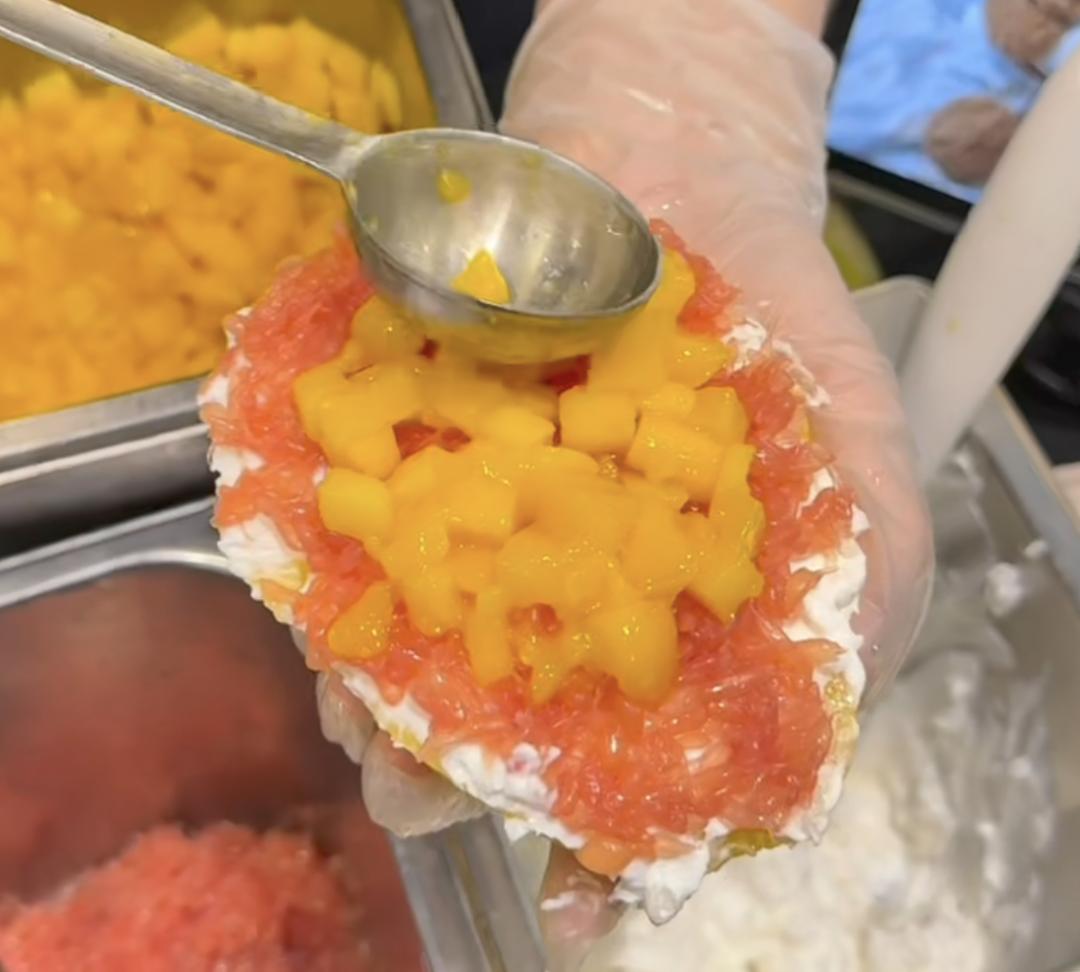
Core Insights - The popularity of "solid mango pomelo sago" has surged in the tea beverage market, following the trend set by "milk skin candied hawthorn" [1][19] - Major brands like 7 Fen Tian and Xian Mang Duo have quickly launched their versions of solid mango pomelo sago, achieving impressive sales figures [3][5] - The product's success reflects a consumer demand for more substantial and comforting food options during economic uncertainty [20] Sales Performance - 7 Fen Tian sold over 10,000 units within three days of launching the solid mango pomelo sago, with some stores selling nearly 300 units in a single day [1][3] - On its first day, the total national sales reached approximately 250,000 cups, leading to stock shortages in many stores [5][10] - Xian Mang Duo reported selling 350 units on its launch day, prompting an early closure due to depleted raw materials [3] Market Response - The rapid success of solid mango pomelo sago has prompted other brands to join the trend, with many seeking to capitalize on the product's popularity [8][10] - Social media buzz around the product has led to over 600 million views on platforms like Douyin, indicating strong consumer interest [7] - Various brands are exploring different versions and adaptations of the product to meet consumer demand [8][19] Consumer Behavior - The trend indicates a shift in consumer preferences towards more substantial and visually appealing food items, as seen with the solid mango pomelo sago's rich ingredients and vibrant presentation [20] - Brands are responding to consumer requests for the product, with some initially hesitant but ultimately deciding to launch due to high demand [12][17] - The phenomenon reflects a broader trend of seeking "comfort food" during challenging economic times, similar to the "ice cream economics" observed in past recessions [20]
食品饮料月月谈电话会
2025-11-16 15:36
Summary of Conference Call on Dairy and Beverage Industry Industry Overview - The dairy industry is experiencing a continuous capacity reduction, with expectations for supply-demand balance improvement by mid to late 2026, leading to potential stabilization in milk prices. As of October, milk prices remained stable at 2.94 yuan per kilogram, with a production loss of approximately 0.2 yuan per kilogram and a loss rate of about 5% [2][2][2]. Key Points on Dairy Companies New Dairy Industry - New Dairy reported a strong performance in October, continuing the trend from Q3, with double-digit growth in low-temperature fresh milk and yogurt. The company is expanding into new channels, achieving significant revenue from collaborations, and is expected to meet its profit margin targets ahead of schedule by 2026 [4][4][4]. Mengniu Dairy - Mengniu's Q3 results met expectations, with stable market share following price reductions on its flagship product. The company anticipates stable revenue and profit margin growth through 2026, with a relatively low valuation providing investment flexibility [5][5][5]. Yili Group - Despite weak overall demand, Yili's low-temperature milk and other segments showed positive growth, with low-temperature white milk exceeding 20% growth. The company is expected to stabilize its liquid milk business by 2026, benefiting from diversified product offerings and channels [6][7][6][7]. Miao Ke Lan Duo and Youran Dairy - Miao Ke Lan Duo is experiencing rapid growth in the B-end market, with significant C-end product launches. The company is expanding its deep processing of dairy products, which is expected to improve profitability. Youran Dairy is increasing fresh milk supply with stable prices, supporting profits, and is projected to enhance profitability further with a reduction in livestock numbers [8][8][8]. Beverage Industry Insights Master Kong - Master Kong's beverage business saw a slight decline in Q3, but the drop has narrowed in October. The company expects to stabilize its beverage business next year, with a focus on promotional activities and potential price adjustments for its one-liter products [9][10][9][10]. Nongfu Spring - Nongfu Spring's water business experienced double-digit growth in October, with its sugar-free tea brand capturing nearly 80% market share. The company is expected to maintain steady revenue and profit growth, making it a strong long-term investment choice [10][10][10]. Dongpeng Beverage - Dongpeng Beverage reported a nearly 30% growth rate, with ambitious annual targets. The company shows significant growth potential from a valuation perspective [10][10][10]. Investment Recommendations - The dairy sector is recommended for investment due to expected improvements in profitability and market conditions by 2026. Companies like Mengniu, Yili, and New Dairy are highlighted for their growth potential and stable valuations [5][7][4][4]. - In the beverage sector, Master Kong and Nongfu Spring are noted for their resilience and growth prospects, making them attractive investment options [9][10][10].






喝奶茶也要配货? 茶百道被指“吃相难看”
新浪财经· 2025-11-15 07:55
Core Viewpoint - The article discusses the recent challenges faced by the tea brand Cha Bai Dao following the launch of its new product, Solid Mango Sago, which has been criticized for issues such as bundling sales and price increases amid performance pressures [2][10]. Product Launch and Sales Issues - The Solid Mango Sago gained significant attention, with reported sales of nearly 250,000 cups on its first day [4]. - However, customers have raised concerns about the product being set as "not available for single order" on delivery platforms, suggesting bundling sales practices [5][6]. - Many stores have shown the product as sold out, leading to accusations of "hunger marketing" [6][10]. Price Increase and Cost Pressures - The price of Solid Mango Sago was increased from 19 yuan to 22 yuan, with a promotional discount bringing the effective price to 21 yuan [9]. - The price hike is attributed to rising costs of key ingredients, particularly the Kate Mango, which has been in short supply [9][10]. Financial Performance and Strategic Adjustments - In the first half of 2024, Cha Bai Dao reported a revenue decline of 10% and a net profit drop of 59.7% compared to the previous year [11]. - The company has since seen a recovery, with total revenue reaching 2.5 billion yuan, a 4% increase year-on-year, and net profit rising to 333 million yuan, a 40% increase [11]. - Cost-cutting measures have included a reduction in R&D expenses and a decrease in employee numbers from 2,319 to 2,133 [11]. Store Expansion and Market Strategy - The pace of store expansion has slowed significantly, with only 59 new stores opened in the first half of 2024, compared to 1,431 new stores in the same period of 2023 [11][12]. - The company is focusing on optimizing store operations, resulting in a reduction of stores in first and second-tier cities while expanding in lower-tier markets [12]. - Cha Bai Dao has also begun to emphasize overseas expansion, opening 21 international stores in various countries [12][13].

喝奶茶也要配货? 茶百道被指“吃相难看”
Xin Lang Ke Ji· 2025-11-15 07:47
Core Insights - The new product "solid mango sago" from Cha Bai Dao has gained significant popularity, with reported sales of nearly 250,000 cups on its launch day [3] - However, the company faces criticism for alleged bundling sales and hunger marketing tactics, as many outlets have set the product as "not available for single order" [5][3] - Cha Bai Dao has also quietly increased the price of this product from 19 yuan to 22 yuan, citing rising costs of core ingredients [7] Financial Performance - In the first half of 2024, Cha Bai Dao reported a revenue decline of 10% and a net profit decrease of 59.7% compared to the previous year [8] - The company has shown signs of recovery in 2024, with total revenue reaching 2.5 billion yuan, a 4% year-on-year increase, and net profit rising to 333 million yuan, a 40% increase [8] - Cost-cutting measures have included a reduction in R&D expenses from 14.5 million yuan to 14.1 million yuan, and a decrease in employee count from 2,319 to 2,133 [8] Store Expansion and Strategy - Cha Bai Dao's store expansion has significantly slowed, with only 59 new stores added in the first half of 2024, compared to a 20.6% increase in the same period last year [8] - The company has closed over 100 stores in first and second-tier cities while expanding in lower-tier cities [10] - The majority of Cha Bai Dao's stores are franchises, with 14 direct-operated stores, and the company has opened 21 overseas locations in markets such as South Korea and Malaysia [10][11]
东吴证券:餐饮行业中外卖与堂食的“黄金平衡点”
Zhi Tong Cai Jing· 2025-11-14 08:43
Core Viewpoint - The report from Dongwu Securities emphasizes the increasing importance of online channels in the restaurant industry, particularly the balance between takeout and dine-in services to enhance profitability and efficiency [1][3]. Group 1: Importance of Online Channels - Online channels are becoming a key growth engine for the restaurant industry, with takeout revenue potentially reaching 60-70% for fast food and coffee sectors, while traditional dining experiences are declining [1][3]. - National restaurant revenue growth is slowing, with a reported increase of only 3.3% year-on-year for the first nine months of 2025, indicating a shift from aggressive expansion to a more stable growth phase [1]. Group 2: Takeout Adaptability Across Different Formats - The adaptability of various restaurant formats to takeout is ranked from highest to lowest: beverages & fast food > casual dining > hot pot, with takeout revenue for coffee and fast food potentially reaching 50-70% [2]. - The adaptability is influenced by the type of service required, frequency of consumption, and the complexity of delivery logistics [2]. Group 3: Balancing Takeout and Dine-in - A healthy takeout ratio is crucial for restaurant brands, as it can significantly improve operational efficiency and brand competitiveness; however, over-reliance on takeout can lead to a loss of brand identity and profitability [3]. - The optimal takeout revenue ratio for fast food and coffee is suggested to be 60-70%, while for traditional dining, it is 30-40% to avoid operational inefficiencies [3]. Group 4: Strategies for Internal Growth - Restaurants should establish a takeout revenue threshold and innovate their takeout offerings while also focusing on building a proprietary membership system to convert external traffic into internal loyalty [4]. Group 5: Investment Recommendations - The industry is rated as "outperforming the market," with a focus on balancing takeout and dine-in strategies tailored to consumer trends and brand positioning [5]. - Recommended companies include Xiaocaiyuan, Guoquan, Guming, Mixue Group, Haidilao, and Yum China, with additional attention on Green Tea Group, Dashihua, Tongqinglou, Guangzhou Restaurant, Jiumaojiu, and Chabaidao [5].

固体杨枝甘露爆火,记者实探多家店卖断货
2 1 Shi Ji Jing Ji Bao Dao· 2025-11-14 07:27
Core Insights - The innovation of "solid beverages" is leading a new trend in tea drink consumption, exemplified by the popularity of "solid mango pomelo sago" on social media [1] - The product has gained significant traction, with reports of daily stock selling out at various online dessert shops [1] Industry Trends - The "solid mango pomelo sago" has become a hot-selling item in physical tea drink stores, with some locations reporting it sold out [1] - At Tea Baidao stores, staff indicated that the product sells out quickly as soon as the core ingredient, mango, is available [1] Pricing Strategy - Multiple dessert shops, including Qifen Sweet and YOMOO, have launched the product, with prices generally ranging from 16 yuan to 34 yuan [1]
“固体杨枝甘露”火了 新茶饮行业已有品牌跟进
Xin Jing Bao· 2025-11-14 03:14
Core Insights - The dessert "solid mango pomelo sago" has become a trending topic on social media, following the popularity of "milk skin candied hawthorn" [1] - The ingredients of the solid version closely resemble those used in popular fresh fruit tea products from new tea brands, prompting consumer requests for an "official version" from these brands [1] - Tea brand Cha Bai Dao quickly launched the solid mango pomelo sago in response to market demand, highlighting the product's appeal and consumer interest [2] Product Details - The solid mango pomelo sago is made with half a mango as the base, layered with yogurt or cream, and includes pomelo pieces and sago, transforming it into a portable dessert [1] - The original mango pomelo sago is a Cantonese dessert made with grapefruit, mango, sago, and coconut milk, known for its sweet and sour flavor profile [1] Market Response - On November 5, Cha Bai Dao released a tutorial on social media for consumers to recreate the dessert using store ingredients, leading to a surge of requests for the product [2] - The solid version was launched in stores and achieved nearly 250,000 cups sold on its first day nationwide, indicating strong consumer demand [2] - The product retains the DIY concept while enhancing it with fresh mango chunks and probiotic yogurt for a richer taste, along with additional ingredients like taro balls, pudding, sago, and pomelo to diversify the flavor profile [2]