Momenta

Search documents
宝马集团获评世界新能源汽车大会“全球新能源汽车创新技术”
Yang Zi Wan Bao Wang· 2025-09-29 08:12
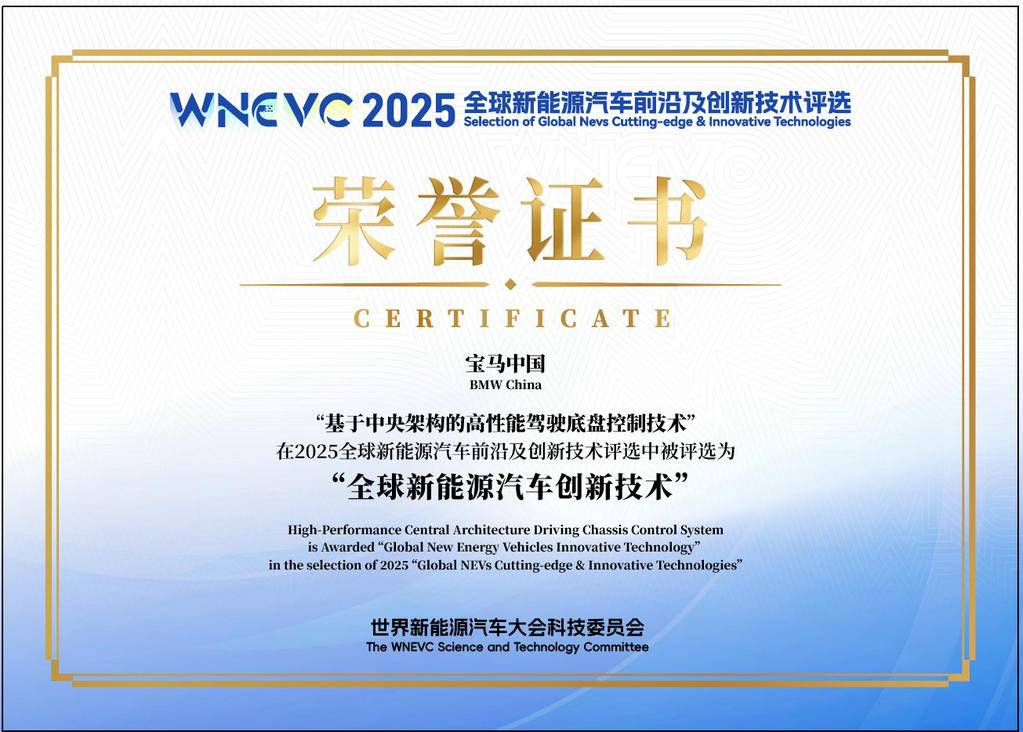
Core Insights - BMW's self-developed "Central Architecture High-Performance Driving Chassis Control Technology," known as the new generation "Driving Control Super Brain," has once again been awarded the "Global New Energy Vehicle Innovation Technology" certificate at the 2025 World New Energy Vehicle Conference (WNEVC) [1][3] - This marks the fifth time BMW Group has received this recognition at the conference, making it the only foreign automaker to achieve this honor for four consecutive years [1][3] Innovation and Technology - BMW Group emphasizes its strong independent R&D capabilities, enabling the company to confidently implement an open technology route across all brands [3] - The upcoming new generation models will showcase advancements in intelligence, safety, and sustainability, reflecting BMW's innovative strength [3] - BMW is the only company in the history of the WNEVC to receive certificates in all three major technology fields: pure electric, hybrid, and hydrogen [3] Strategic Partnerships - BMW is actively collaborating with leading Chinese tech companies such as Alibaba, Huawei, and Momenta to foster a mutually beneficial industrial ecosystem [3] - The rapid digital development in China presents unprecedented cooperation opportunities for the industry [3] Performance and User Experience - The new generation BMW iX3, launched at the 2025 IAA Mobility, aims to provide users with a more precise, efficient, and comfortable driving experience [4] - The "Driving Control Super Brain" integrates four major systems—power transmission, braking, steering, and energy recovery—into a single central control unit, enhancing information processing capabilities by ten times and achieving a system delay of less than 1 millisecond [4][5] Energy Efficiency - The integration of the dynamic performance control system with the "Driving Control Super Brain" allows for superior cornering stability and comfort in congested traffic conditions [5] - The energy recovery efficiency can be improved by up to 60%, with 98% of driving scenarios not requiring traditional braking systems [6] Future Outlook - The new generation represents BMW Group's most forward-looking strategic project, aiming for significant advancements in design, technology, and user experience [7] - By 2027, BMW plans to launch over 40 new or upgraded models globally, each incorporating the innovative genes of the new generation [7]

汽车视点 | 别克“不躺平”:至境首款新车上市,传统合资步入智驾第一梯队
Zhong Guo Jin Rong Xin Xi Wang· 2025-09-29 05:28
Core Viewpoint - Buick's high-end new energy sub-brand "Zhijing" has launched its first mass-produced model, Zhijing L7, with a price range of 169,900 to 219,900 yuan, signaling a strong commitment to transformation in the competitive automotive market [1][2]. Group 1: Product Launch and Market Positioning - The launch of Zhijing L7 just five months after the brand's debut reflects Buick's urgency to adapt and establish its position in the new energy vehicle market [1][4]. - The pricing strategy for Zhijing L7 was determined through intense internal discussions, aiming to set a new benchmark for high configuration and cost-effectiveness in the B-class car segment [2][4]. - Zhijing L7 targets the 200,000 yuan market segment, emphasizing that high-end positioning requires a precise understanding of consumer needs rather than just high prices [1][4]. Group 2: Technological Innovations - Zhijing L7 is positioned in the relatively untapped extended-range sedan market, leveraging Buick's technical foundation to address consumer demand [4][5]. - The vehicle features the "Zhenlong" extended-range system, providing 302 km of pure electric range and 1,420 km of comprehensive range, with minimal performance loss in low battery conditions [5]. - Buick has partnered with Momenta to enhance its intelligent driving capabilities, making Zhijing L7 the first model equipped with the Momenta R6 flying model, which includes advanced features for urban driving scenarios [5][6]. Group 3: Strategic Vision and Future Plans - The rapid development from brand launch to product release within five months showcases Buick's commitment to innovation and product optimization in the new energy sector [7]. - Over the next eight months, the Zhijing brand plans to introduce five new energy vehicles across various categories, indicating a comprehensive product strategy [7]. - The success of the Zhijing brand will serve as a test case for joint venture brands in the new energy era, aiming to effectively combine global automotive expertise with local innovation [7][8].


佟欧福:秉持“奔驰标准”携手中国合作伙伴突破电动时代技术边界
Zhong Guo Qi Che Bao Wang· 2025-09-29 02:59
Core Insights - Mercedes-Benz is committed to a diversified development model that meets market and customer demands during the electric transformation of the automotive industry [2] - The company aims to continue its technological breakthroughs in the electric era by collaborating with Chinese partners and leveraging innovative technologies [3] Group 1: Technological Innovations - Mercedes-Benz was awarded for its innovative axial flux motor technology, which has been applied in the latest Mercedes-AMG GT XX concept car [2] - The Mercedes-AMG GT XX concept car set 25 world records, including traveling 40,075 kilometers at nearly 300 km/h in 8 days, showcasing the company's electric drive capabilities [2] - A modified Mercedes-Benz EQS test vehicle completed a 1,205-kilometer journey without recharging, breaking previous records and demonstrating advancements in solid-state battery technology [4] Group 2: New Model Launches - By 2027, Mercedes-Benz plans to launch over 40 new models globally, including 7 models exclusive to China, covering various drive systems [5] - The upcoming all-electric CLA will feature a new 800-volt electrical architecture and a range of up to 866 kilometers, with an energy consumption of only 10.9 kWh per 100 kilometers [5] - The new electric GLC SUV made its global debut at the Munich Auto Show, featuring a new design language, 800-volt architecture, and the largest screen in Mercedes-Benz history at 39.1 inches [5] Group 3: Strategic Partnerships - Mercedes-Benz is deepening its collaboration with top Chinese tech companies like ByteDance and Momenta to enhance product experiences for Chinese customers [3][6] - The company has established a strong "innovation ecosystem" in China, collaborating with leading firms across various sectors, including Tencent and CATL [6] - The new CLA's advanced driver assistance features were developed by a Chinese research team, highlighting the importance of local innovation [6]

自研+共创,宝马在华构建互利共生产业新生态
Zhong Guo Qi Che Bao Wang· 2025-09-29 02:44
Core Insights - BMW's self-developed "Central Architecture High-Performance Driving Chassis Control Technology," known as the "Driving Control Super Brain," has been awarded the "Global New Energy Vehicle Innovation Technology" certificate at the 2025 World New Energy Vehicle Conference (WNEVC) for the fifth time, making it the only foreign automaker to receive this award for four consecutive years [1][3]. Group 1: Technological Advancements - BMW emphasizes its strong independent R&D capabilities, allowing it to confidently implement an open technology route across all brands, actively developing pure electric, hydrogen fuel cell, plug-in hybrid, and internal combustion engine technologies in parallel [3][5]. - The "Driving Control Super Brain" integrates four major systems—power transmission, braking, steering, and energy recovery—into a single central control unit, enhancing information processing capability by 10 times and achieving a system response time of less than 1 millisecond [6][7]. - The "Dynamic Performance Control System" (DPC) works in conjunction with the "Driving Control Super Brain" to enhance vehicle dynamics, providing excellent cornering stability and seamless braking and restarting capabilities in congested traffic [7]. Group 2: Market Strategy and Collaborations - BMW is actively collaborating with leading Chinese tech companies such as Alibaba, Huawei, and Momenta to foster a mutually beneficial industrial ecosystem, leveraging the rapid digitalization in China to seize unprecedented cooperation opportunities [5][6]. - The company aims to meet diverse consumer needs across different markets by adhering to an open technology route, promoting a green future for personal mobility [5][8]. Group 3: Future Product Plans - The new generation of BMW models, starting with the BMW iX3, signifies a significant leap in design, technology, and user experience, with plans to launch over 40 new or upgraded models globally by 2027 [8].

上汽集团王晓秋:坚决反对“脱钩断链”,上汽是中欧贸易战中国最大受害者
Guan Cha Zhe Wang· 2025-09-29 01:55
Core Viewpoint - The diversification of the electric vehicle (EV) industry is essential, encompassing both varied pathways and global market expansion, while facing challenges such as trade policy barriers and supply chain resilience [1][3]. Group 1: Industry Challenges and Recommendations - The automotive industry is highly globalized, necessitating the maintenance of a multilateral trade system to eliminate trade barriers and foster a fair international market environment [3]. - The chairman emphasized the need for companies to transcend short-term commercial interests by integrating green and low-carbon principles throughout the industry chain to address global climate change [3]. - Recommendations include promoting open cooperation, rejecting "decoupling," and enhancing industrial collaboration to optimize the innovation ecosystem [1][3]. Group 2: Strategic Collaborations and Innovations - SAIC Motor has extended its partnership with Volkswagen until 2040, planning to develop over 20 new products for the Chinese market in the next five years [3]. - Collaborations with cross-industry companies include the launch of the H5 model with Huawei, aiming to set a new benchmark in the 200,000 yuan EV market [4]. - The company is also working with various firms to develop second-generation solid-state batteries and high-performance automotive chips, indicating a strong focus on innovation and technology [4]. Group 3: Market Growth and Future Outlook - The Chinese EV market has experienced significant growth, with a projected penetration rate exceeding 50% this year, marking a shift from exploration and policy cultivation to a market-driven phase of diverse innovation [4][5]. - The trend of mutual learning and collaboration between domestic and foreign automakers is emerging, indicating a dynamic evolution in the industry [5].

魏建军又在发布会放狠话:长城高管敢夸张宣传就要受处分;王健林被限制高消费,知情人士回应;曝Momenta正筹备新一轮融资
雷峰网· 2025-09-29 00:19
Group 1 - Wei Jianjun, chairman of Great Wall Motors, emphasizes the importance of avoiding exaggerated marketing claims in the automotive industry, stating that over-exaggeration can lead to serious safety concerns for consumers [3][5] - He insists on establishing a correct value system within the company to ensure steady and solid growth, highlighting that automobiles are serious durable goods unlike fast-moving consumer goods [3][5] - Great Wall Motors supports smart technology but stresses the need for solid foundational work and thorough validation before implementation [5] Group 2 - Dalian Wanda Group and its legal representative Wang Jianlin have been restricted from high consumption due to economic disputes, with a total execution amount exceeding 5.3 billion yuan [7][8] - The company has faced multiple execution orders, indicating ongoing financial difficulties and disputes with project companies [7][8] - The Shanghai Wahaha drinking water factory has transitioned to a new brand "Hu Xiaowa" after losing the rights to the "Wahaha" trademark, citing the need to adapt for survival [9] Group 3 - Momenta is reportedly preparing for a new round of financing, with a potential valuation of around $6 billion, and has recently partnered with Mercedes-Benz to apply its technology in new electric models [14][15] - The company is recognized as a key player in the intelligent driving sector, alongside other major firms [15] Group 4 - The sales revenue of Pang Donglai has reached 17.12 billion yuan in the first nine months of 2025, surpassing the total sales of 16.9 billion yuan for the entire year of 2024 [10][11] - The company aims to control sales growth to avoid overburdening employees, maintaining a focus on employee well-being [10][11] Group 5 - Xiaomi's YU7 model has seen significant demand, with some customers waiting over three months for delivery, prompting the company to offer gifts to waiting customers [11] - The CEO of Ideal Auto confirmed that both the i8 and i6 models have independent production lines, ensuring sufficient capacity to meet demand [20]




B级车市场杀出新玩家,别克也开始“掀桌子”了
Di Yi Cai Jing· 2025-09-28 22:48
Core Insights - The launch of the Buick Zhijing L7 marks a significant shift in the B-segment car market, with a pricing strategy that directly challenges existing competitors [2][3] - The B-segment is crucial for automakers due to its large market capacity and high profitability, traditionally dominated by joint venture brands [2][4] - Buick aims to combine the strengths of traditional joint venture brands with the innovations of new energy and smart technology, positioning the Zhijing L7 as a potential blockbuster [3][4] Pricing Strategy - The Buick Zhijing L7 is priced between 169,900 to 215,900 yuan, significantly lower than the previous market positioning of 200,000 to 300,000 yuan [2] - This pricing strategy is seen as a direct challenge to both domestic and new energy brands, indicating a shift in competitive dynamics within the market [2] Market Dynamics - The B-segment market has seen a shift where joint venture brands are now adopting defensive strategies, including price reductions, to maintain market share [2] - Despite the rise of new energy vehicles, traditional fuel-powered models like the Passat, Magotan, and Camry still hold significant retail sales positions [2] Technological Advancements - The Zhijing L7 incorporates advanced features such as laser radar, the Momenta R6 flying model, and Qualcomm's latest 8775 chip, with over 300 kilometers of pure electric range [2] - The vehicle's development was led by a local Chinese team, emphasizing a shift towards localized innovation and collaboration with domestic tech firms like Momenta [3] Strategic Shift in Joint Ventures - Joint venture brands are transitioning from a "market for technology" model to a "co-creation" model, focusing on local technology development [4] - Buick's strategy with the Zhijing L7 reflects this shift, aiming to penetrate the B-segment market traditionally dominated by joint venture brands [4]

奥迪中国:以“双品牌”战略坚定推进在华电动化转型
Zhong Guo Qi Che Bao Wang· 2025-09-28 15:38
Core Insights - The seventh World New Energy Vehicle Conference (WNEVC) was held in Haikou, Hainan, showcasing Audi's commitment to the Chinese market with the display of two flagship electric models: Audi Q6L e-tron and Audi E5 Sportback [1][3] - Audi's strategy emphasizes "For China, in China," highlighting the company's determination to deepen its presence in the Chinese market amid increasing competition from local manufacturers [3][4] Market Context - According to CounterPoint Research, domestic manufacturers have captured nearly 90% of the Chinese electric vehicle market in the first half of the year, putting significant pressure on multinational companies like Audi [3] - China is not only the largest automotive market globally but also a key source of technological innovation, making it essential for Audi to focus on this market to navigate the ongoing industry transformation [3] Product Development - The Audi Q6L e-tron, produced on the luxury electric platform PPE, sets new standards in driving performance, charging capabilities, and overall efficiency, featuring a 107 kWh CATL lithium-ion battery and advanced Bank Charging technology [4] - The Q6L e-tron offers a maximum range of 765 kilometers under CLTC conditions, with the ability to add 294 kilometers of range in just 10 minutes of charging, addressing consumer range anxiety [4] Technological Innovations - The Audi E5 Sportback, launched as part of Audi's new brand strategy, features an AI-driven cockpit system with advanced voice recognition and seamless application connectivity, tailored for the Chinese market [5] - Audi has developed a customized advanced driver assistance system for the Q6L e-tron in collaboration with Huawei, making it the first international luxury brand to implement such technology in China [7] Safety and Testing - Audi prioritizes safety, having met new national battery safety standards ahead of their official implementation, and conducts extensive testing under extreme conditions to ensure user safety [7] Strategic Goals - In the past 50 days, Audi has launched five new models, including three electric and two internal combustion engine vehicles, as part of its dual-brand and multi-platform strategy to maintain competitiveness [8] - Audi plans to continue its aggressive product rollout in China, with more new models expected by the end of the year, marking the largest product layout in the brand's history [8]

智能化产业链更新:地平线黑芝麻及一级公司解读
2025-09-28 14:57
Summary of Conference Call Records Industry Overview - The conference call discusses the intelligent driving industry, focusing on the transition from L2 to L4 automation levels, with key players like Xiaopeng, Geely, Horizon Robotics, and Hezhima actively involved in Robotaxi and Robotman businesses [1][2][4]. Key Points and Arguments Regulatory and Technological Developments - The L2 combination driving scheme national standard has been released, with plans for implementation by 2027, indicating a significant regulatory milestone for the industry [2][4]. - Major automotive companies and suppliers are enhancing their capabilities, with new technology iterations expected in Q4, including Huawei ADS 4.0 and Xiaopeng XOS 5.7.7 [3][8]. Company-Specific Insights - **Horizon Robotics**: - Recently completed a second round of financing amounting to approximately 5 billion RMB (over 800 million USD), with limited impact on stock price but presenting investment opportunities [1][4]. - Aims to increase chip shipments from 2 million in the first half of the year to 4 million for the full year, with a target of 5.5 million for next year [3][9]. - Current market valuation is around 150 billion RMB, corresponding to a 30x price-to-sales (PS) ratio, indicating significant growth potential [3][9]. - **Hezhima**: - Recognized as the second-largest intelligent driving chip supplier in China, with a projected revenue growth of 50-60% next year, despite a lower market valuation of 10x PS [1][5]. - Actively expanding its customer base, including international markets and collaborations with Desay SV [1][5]. Market Dynamics - The self-developed algorithms account for half of the intelligent driving algorithm market, with Momenta leading among third-party suppliers, holding a 60-70% market share [1][6]. - Other notable suppliers include Yuanrong Qixing and Qingzhou Technology, primarily founded by AI talents from Baidu [1][6][7]. Financing and Market Position - **Momenta**: - Plans to go public in the US by the second half of 2025, having raised over 1.2 billion USD in cumulative financing, making it the most funded algorithm supplier in the secondary market [3][10]. - **Yuanrong Qixing and Qingzhou Technology**: - Yuanrong has raised over 500 million USD, with significant investments from Great Wall Motors, while Qingzhou has secured over 200 million USD in financing, primarily from Chery [10]. Competitive Landscape - Major automotive companies are diversifying their partnerships for intelligent driving solutions, with companies like BYD, Geely, and Great Wall Motors collaborating with various algorithm suppliers [14][15]. - The next two years are critical for these companies as they transition from primary to secondary markets, with Horizon and Hezhima already listed and Momenta planning to list soon [14][15]. Additional Important Insights - The intelligent driving chip market is expected to see significant growth, with Horizon's high-end chip G6P anticipated to contribute substantially to revenue in the coming year [9]. - The competitive landscape is characterized by a mix of established players and emerging startups, with ongoing technological advancements driving the market forward [8][11][12].

无人配送车半年吸金 35 亿,智驾内卷的受益者
晚点Auto· 2025-09-28 14:31
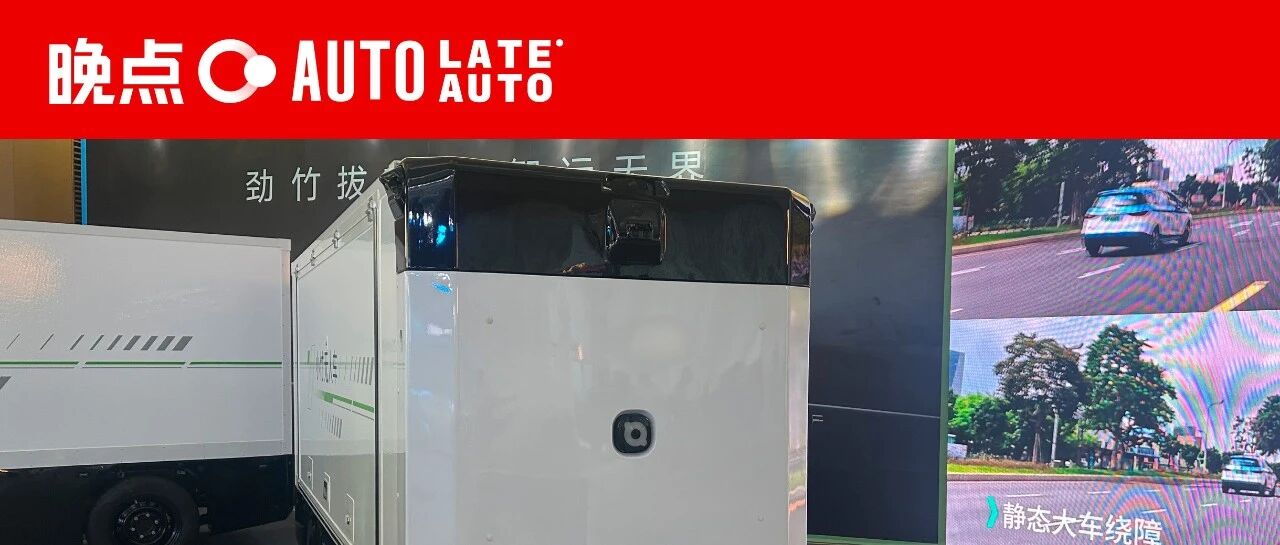
Core Viewpoint - The unmanned delivery vehicle industry is experiencing significant growth driven by user demand, technological advancements, and a shift towards commercial viability, with major companies securing substantial funding and setting ambitious delivery targets [3][4][5]. Group 1: Industry Growth and Funding - The unmanned delivery vehicle sector has attracted over 3.5 billion yuan in funding this year, with companies like New Stone, Nine Senses, and White Rhino leading the charge [4]. - The number of unmanned delivery vehicles in China has just surpassed 6,000 units, with companies aiming to deliver 10,000 units by the end of the year [4][5]. - New Stone has announced the delivery of its 10,000th vehicle, establishing the world's first fleet of this scale [4]. Group 2: Product Development and Market Expansion - Unmanned delivery vehicles are evolving from small models to larger ones with capacities exceeding 5 cubic meters, suitable for fixed-route transportation [5][6]. - The market is expanding beyond the express delivery sector to include instant logistics and urban delivery for fresh produce and pharmaceuticals [6]. - Companies are focusing on standardizing products and defining clear market segments, which is essential for large-scale commercial deployment [6][8]. Group 3: Cost Reduction and Quality Improvement - Companies are adopting automotive-grade quality standards to enhance product durability and reduce operational costs [8][9]. - The cost of unmanned delivery vehicles is decreasing due to advancements in passenger vehicle technology, with high-level driving assistance systems becoming more affordable [9][10]. - New Stone has reduced the number of sensors in its vehicles to cut costs, while other companies are also optimizing their technology to improve efficiency [10]. Group 4: Business Models and Market Strategy - The industry is exploring two primary business models: vehicle sales or leasing and customized development for large clients [11]. - Companies are targeting small and scattered clients to diversify their customer base and reduce dependency on large clients [11][12]. - Competitive pricing strategies are being implemented to lower entry barriers for customers, with some vehicles priced below 150,000 yuan including maintenance [12]. Group 5: Operational Efficiency and Challenges - Operational efficiency is critical for profitability, with companies needing to optimize deployment and maintenance processes [13]. - The cost of operating unmanned delivery vehicles can be significantly reduced through economies of scale, with costs increasing only slightly when scaling from 10 to 100 vehicles in a city [13]. - Regulatory challenges remain, as the legal status of unmanned delivery vehicles is still being defined, impacting their ability to operate at scale [15][16].