
Shein

Search documents
X @Bloomberg
Bloomberg· 2025-07-29 23:15
Trade Policy - Mexico is increasing import taxes on small online purchases [1] - The tax increase targets companies like Chinese retailers Shein and Temu [1] - This action occurs amidst negotiations to avert US tariffs [1]
中国企业品牌出海:乘风破浪,驶向全球新航道
Sou Hu Cai Jing· 2025-07-28 04:01
Core Insights - The trend of Chinese brands going global is gaining momentum, with many companies achieving significant success in international markets, reflecting both the strength of Chinese enterprises and the global demand for Chinese brands [1][24] - The number and scale of Chinese companies venturing abroad have seen explosive growth, with over 3,300 out of 5,356 listed companies in China engaging in overseas business, generating revenue of 8.5 trillion yuan in 2023, a year-on-year increase of 4.35% [2] - The diversification of industries in which Chinese companies are expanding internationally includes traditional sectors like manufacturing and emerging sectors such as technology, renewable energy, and cross-border e-commerce [4] Industry Growth and Trends - The overseas business revenue of Chinese listed companies reached 3.83 trillion yuan in the first half of 2024, marking a year-on-year growth of 12.84%, indicating a rising importance of international markets for revenue generation [2] - Chinese enterprises are increasingly active in various sectors, with notable players like Huawei and Xiaomi in technology, BYD and CATL in renewable energy, and platforms like Shein in cross-border e-commerce [4] Regional Expansion - Chinese companies are focusing on both developed markets like Europe and the U.S. and emerging markets along the Belt and Road Initiative, leveraging local infrastructure needs and market potential [5] - The rapid growth of the internet economy in Southeast Asia and other emerging markets is attracting significant investment from Chinese firms [5] Challenges Faced - Trade protectionism and geopolitical tensions pose significant uncertainties for Chinese companies operating abroad, leading to higher tariffs and market access challenges [6] - Cultural differences and brand perception issues hinder the acceptance of Chinese brands in foreign markets, with many consumers holding stereotypes about product quality [7] Media Coverage and Perception - International media have shown increased interest in the global expansion of Chinese brands, with coverage highlighting their innovations and market strategies [13] - Positive recognition from overseas media regarding the innovation capabilities and product quality of Chinese companies contrasts with skepticism rooted in geopolitical concerns and trade protectionism [14][15] Strategic Recommendations - Chinese companies should define clear brand positioning and core values to effectively communicate their unique selling propositions in international markets [18] - Understanding local cultures and consumer behaviors is crucial for successful market entry and brand acceptance [19] - Enhancing brand visibility through media engagement, social media marketing, and collaborations with local influencers can significantly improve market presence [20] - Continuous improvement in product quality and innovation is essential for maintaining competitiveness in global markets [21] - Establishing localized operational teams can facilitate better market understanding and enhance brand trust among local consumers [22][23]


2025年第29周:服装行业周度市场观察
艾瑞咨询· 2025-07-27 13:45
Core Insights - The luxury goods market is facing challenges with a projected decline in global high-end personal luxury goods market size by 1% to €364 billion in 2024, and further expected decline of 2%-5% in 2025 due to economic downturn and geopolitical tensions [2] - High-end brands are shifting towards a more minimalist aesthetic, reducing logo prominence and focusing on classic tailoring, which may lead to decreased brand recognition and increased homogenization [3] - The rise of functional clothing, such as sun-protective garments, reflects a growing health consciousness and outdoor lifestyle among consumers, with the Chinese apparel industry producing over 70 billion pieces annually [4] - Adult women are increasingly purchasing larger children's clothing sizes due to issues with women's sizing and pricing, indicating a demand for better fit and value in women's fashion [5] - Luxury brands are increasingly investing in film and entertainment to enhance cultural influence, with companies like Saint Laurent and LVMH establishing film production arms [6] - Emerging brands are focusing on natural fibers and traditional craftsmanship, creating unique aesthetic identities amidst a trend of logo-less luxury [8] - The new consumer giants are leveraging emotional value and community recognition to thrive in a competitive market, with brands like Labubu and Mxue Ice City gaining traction [9] - South Asian culture is becoming a source of inspiration for luxury fashion, with brands incorporating traditional craftsmanship into their collections [10] - Street retail is gaining importance as brands seek to connect with consumers through community engagement and experiential shopping [12] - High-end sports brands are taking over core shopping districts as luxury brands withdraw, with a focus on experiential retail [13] - L'Oréal's CEO emphasizes the company's diverse portfolio beyond luxury, highlighting growth in emerging markets and a commitment to innovation [14] - COS has successfully repositioned itself as a mid-range brand by balancing quality and affordability, appealing to the rational consumer [15] - Bosideng reported strong financial performance with an 11.6% revenue increase to ¥25.902 billion and a 14.3% net profit increase to ¥3.514 billion, driven by technological empowerment and supply chain optimization [16] - Nike's new Ava Rover shoe combines technology and design for urban exploration, showcasing a trend towards high-performance casual footwear [17] - Luxury brands are embracing digital transformation through KOLs (Key Opinion Leaders) to enhance consumer engagement and trust [18] - Daydream launched an AI shopping assistant for personalized fashion recommendations, indicating a shift towards technology-driven retail experiences [20] - The luxury sector lost approximately 15 million customers last year, with a significant decline in sales expected in 2024, highlighting the need for brands to rebuild consumer trust [21] - Local luxury brands are gaining popularity, driven by emotional value and competitive pricing, as international brands face challenges [22] - Decathlon's new store in Nanjing adopts an innovative operational model focusing on community engagement and sustainability [24] - Shein is preparing for a potential IPO in Hong Kong, navigating geopolitical risks and supply chain transparency issues [25] - Baozun's acquisition of Sweaty Betty's China operations reflects a strategy to enhance its e-commerce portfolio amid competitive pressures in the activewear market [26] - Pop Mart's expansion into jewelry with its popop brand has generated consumer interest, though market volatility raises questions about long-term sustainability [28]





求购宇树科技老股份额;求购小红书老股份额|资情留言板第166期
3 6 Ke· 2025-07-24 10:12
资产交易市场,信息瞬息万变,消息真假难辨,即使买卖双方花费大量的时间、精力,推动成交往往困 难重重。为了能够帮助买卖双方更快速链接市场信息和潜在交易对手,避免不必要的投入与浪费,我们 特地打造了这样一档栏目。 本文是这个栏目的第166期。如果你对本文提到的相关的交易线索感兴趣,希望接触这些潜在的交易对 手,或者如果你手中直接握有希望交易的资金或者资产,欢迎与我们联系。(邮箱:zcjy@36kr.com) 一、本月新增 1、求购字节跳动公司老股份额(预期估值3150-3200亿美元) 交易价格:预期估值3150-3200亿美元 资产规模:约1-2亿美元份额 交易方式:希望是整个SPV 联系方式:zcjy@36kr.com 2、求购小红书公司老股份额(预期估值380亿美元) 交易价格:预期估值380亿美元 资产规模:约5000万美元份额 交易方式:希望是整个SPV,或没有管理费的LP份额 联系方式:zcjy@36kr.com 3、求购宇树科技公司老股份额(预期估值380亿美元) 交易价格:预期估值150亿美元 资产规模:约5000万美元份额 交易方式:希望直接份额,或没有管理费的LP份额 联系方式:zcjy@36 ...
中美夹缝中,越南踩着钢丝冲刺
创业邦· 2025-07-23 03:13
Core Viewpoint - Vietnam is experiencing significant economic growth, with a GDP growth rate of 7.52% in the first half of 2025, the highest in 15 years, attracting foreign direct investment (FDI) and Chinese companies seeking opportunities in the region [4][5][20]. Economic Growth and Investment - Vietnam's FDI reached approximately $11.72 billion in the first half of 2025, marking an 8.1% year-on-year increase, the highest for the same period from 2021 to 2025 [4]. - The number of newly registered Chinese companies in Vietnam increased by over 30% in the first quarter of 2025 compared to the same period in 2024, with expectations to exceed 1,500 by the end of the year [4][5]. Trade Dynamics - Vietnam has become a significant beneficiary of the US-China trade tensions, acting as an intermediary in trade between the two nations [5][8]. - In 2021, Vietnam's imports from China amounted to $109.9 billion, while exports to the US reached $96.29 billion, highlighting its role as a "gray transshipment" hub [5]. Structural Reforms - Vietnam is undergoing extensive administrative reforms, reducing the number of provinces and districts to enhance governance and economic efficiency, which is referred to as a "century plan" [7][8]. Consumer Market Dynamics - Vietnam's consumer market is characterized by a young population, with an average age of 32.5 years, and a significant portion of the population under 25 years old, driving consumption growth [20][21]. - The retail sales growth rate reached 11.1% in April 2025, with consumption accounting for approximately 63.16% of GDP in 2023, compared to 53.1% in China [20][21]. Challenges and Opportunities - Despite the growth, Vietnam faces challenges in maintaining economic independence while navigating its role as a middleman in global trade [31][32]. - The country is striving to enhance its manufacturing capabilities and reduce reliance on low-value assembly work, but faces competition from other emerging markets [41][44]. Localization and Market Entry - Foreign companies are required to localize their operations in Vietnam to succeed, as evidenced by regulations requiring registration for e-commerce platforms [36][39]. - Successful examples of localization include Haier's AQUA brand, which has established a comprehensive operational network in Vietnam [38][39]. Economic Structure Transition - Vietnam's economy is gradually shifting from agriculture to industry and services, with the share of the primary sector declining over the past decade [49].

中美夹缝中,越南踩着钢丝冲刺
3 6 Ke· 2025-07-22 09:38
Economic Growth - Vietnam's GDP growth rate reached 7.52% in the first half of 2025, marking the highest growth in 15 years [1] - Foreign Direct Investment (FDI) in Vietnam for the first six months of 2025 is estimated at $11.72 billion, a year-on-year increase of 8.1%, representing the highest amount for this period from 2021 to 2025 [1] - The number of newly registered Chinese enterprises in Vietnam in Q1 2025 was 391, a growth of over 30% compared to approximately 300 in the same period of 2024 [1] Trade Dynamics - Vietnam has become a significant beneficiary of the US-China trade tensions, with a notable increase in exports to the US while imports from China have surged [2] - In 2021, Vietnam's imports from China amounted to $109.9 billion, accounting for about 33% of total imports, while exports to the US reached $96.29 billion, a year-on-year increase of 24.9% [2] Market Structure and Reforms - Vietnam is undergoing a significant administrative reform, reducing the number of provinces from 63 to 34, impacting around 250,000 public officials, aimed at enhancing economic efficiency [4] - The government is focusing on anti-corruption measures to stimulate economic vitality [2][4] Demographics and Consumption - Vietnam has a young population with an average age of 32.5 years, and 35% of the population is under 25, which is a crucial driver for long-term economic growth [17] - The consumption rate in Vietnam is high, with consumer spending accounting for approximately 63.16% of GDP in 2023, compared to 53.1% in China [16] E-commerce and Retail Trends - The e-commerce market in Vietnam has seen rapid growth, with online sales increasing from 4.86% in 2019 to 16.67% in 2024, reflecting a compound annual growth rate of 33.65% [20] - Traditional retail channels still dominate, with offline channels accounting for 83.33% of the market, and grocery retail making up 45.58% of that [14] Localization and Market Entry - Foreign companies are required to localize their operations in Vietnam to succeed, as evidenced by the government's recent regulations on e-commerce platforms [30][34] - Haier's successful localization strategy in Vietnam serves as a model for foreign companies looking to penetrate the market [32] Industrial Challenges - Vietnam's manufacturing sector primarily engages in low-value assembly work, lacking the depth of supply chain integration seen in China [36] - The high proportion of small and medium-sized enterprises (96%) in Vietnam limits the overall industrial capacity and resilience [38] Geopolitical Context - Vietnam maintains a delicate balance in its foreign relations, being the only country with comprehensive strategic partnerships with both China and the US [26] - The pursuit of independence and economic vitality remains a priority for Vietnam, as it navigates its historical ties and contemporary economic challenges [28][41]

欧洲的困境:全球贸易体系剧变,深陷中美两国夹击
Sou Hu Cai Jing· 2025-07-21 02:07
Group 1 - The EU finds itself caught between the US and China, struggling to maintain a stable relationship with both while addressing trade imbalances and geopolitical tensions [2][4][6] - EU officials are pushing for a trade agreement with the US to avoid high tariffs that could harm the European economy, while simultaneously urging China to cease its support for Russia and to create a fair competitive environment for European businesses [2][4][5] - Despite tensions, the EU continues to rely on China for industrial raw materials and maintains significant export levels, particularly from Germany, although exports to China have been decreasing [4][5][6] Group 2 - The EU aims to engage with China on a more equal basis, seeking to establish a more transactional relationship while also deepening trade ties with like-minded countries such as Switzerland and Canada [5][6] - The EU is facing challenges due to the US's trade policies, which have disrupted the global trade system, leaving the EU in a defensive position [5][6][9] - China has imposed restrictions on rare earth exports, which are crucial for various industries, impacting European companies that rely on these materials [10][11][12] Group 3 - EU officials are advocating for technology transfer agreements as a condition for Chinese companies entering the European market, reflecting concerns over competitive disadvantages [12][14] - The EU has followed the US in restricting exports of advanced semiconductor equipment to China, leading to strong discontent from the Chinese government [14][15] - The upcoming summit in Beijing is expected to focus on securing more stable rare earth supply channels and addressing the increasing difficulties foreign companies face in China [15][16]
London Stock Exchange parent exploring 24-hour trading launch, FT reports
New York Post· 2025-07-20 20:05
Group 1 - The London Stock Exchange Group (LSEG) is considering the possibility of launching 24-hour trading and extending its trading hours, engaging in discussions about commercial, policy, and regulatory aspects [1][2] - The exploration of extended trading hours includes evaluating technology upgrades, regulatory implications, and the potential impact on liquidity, which is currently concentrated during the opening and closing auctions [2] - LSEG's parent company has faced challenges in attracting new listings, leading to reforms aimed at enhancing competitiveness with exchanges in New York and the European Union post-Brexit [5][7] Group 2 - In March, Nasdaq announced plans for 24-hour trading, joining other exchanges like Cboe Global Markets and Intercontinental Exchange in extending trading hours [3] - LSEG reported stronger than expected first-quarter income, driven by robust growth in its markets division and strong performance across other business segments [4]

欧盟对低价商品下手,150欧元免税政策将取消!
Sou Hu Cai Jing· 2025-07-14 09:59
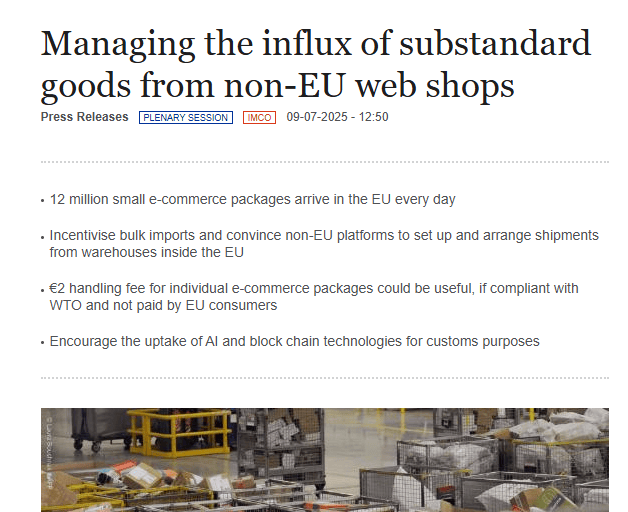
Core Points - The European Parliament has overwhelmingly passed a proposal to regulate non-EU online stores selling non-compliant goods, with a vote of 619 in favor and 26 against [1] - The EU Commission reports that 4.6 billion low-value goods are expected to enter the EU in 2024, with 91% of these packages originating from China [2] Group 1: Tax Policy Changes - The EU has long expressed dissatisfaction with the tax exemption policy for low-value goods, proposing to eliminate this exemption, which has been a key advantage for platforms like Temu and Shein [3] - New regulations will require all goods to pay an average tariff of 10% to 20%, significantly reducing profit margins for low-value items [3] - An example provided indicates that a €50 clothing item will incur an additional cost of €7.5 due to a 15% tariff [3] Group 2: Additional Fees and Compliance - In addition to tariffs, the EU plans to impose an "environmental handling fee" of €1 to €3 per package, potentially exceeding €360,000 annually for sellers processing 1,000 orders daily [4] - The combined effect of tariffs and handling fees could increase overall seller costs by 30% to 50% [5] - All packages must now submit detailed documentation regarding composition and safety certifications prior to customs clearance, leading to longer delivery times [5] Group 3: Global Impact - The EU's actions are part of a broader trend, with the U.S. and Japan also moving to eliminate tax exemptions for low-value imports, signaling a global shift in cross-border e-commerce regulations [9] - The EU's latest data indicates that the number of low-value packages entering Europe in 2024 is expected to double compared to 2023 and triple compared to 2022 [9] Group 4: Industry Adaptation - Major platforms are beginning to adapt to these regulatory changes, with Temu initiating a local warehousing strategy in Europe to mitigate the impact of new rules [12] - Sellers are encouraged to consider using overseas warehouses to reduce tax burdens and improve shipping times [15] - The industry is urged to shift focus from purely low-cost items to higher-quality products with better profit margins, as well as to build brand recognition to withstand rising costs [16]
The Economist-12.7.2025
2025-07-14 00:37
Summary of Key Points from the Document Industry or Company Involved - The document discusses various topics including the venture capital industry, mental health treatments, and the economic situation in Britain, but does not focus on a specific company. Core Points and Arguments 1. **Venture Capital and Unicorns**: There is a race among venture capitalists to create the first $1 trillion startup, raising concerns about potential pitfalls in this pursuit [14][24][79]. 2. **Mental Health and Hormone Therapy**: Hormone therapy is being explored as a treatment for mental health issues, with evidence suggesting that restoring hormone levels can alleviate symptoms of disorders like depression and schizophrenia [135][136][137]. 3. **Economic Situation in Britain**: The UK is described as a "bargain" with undervalued assets and low stock valuations, presenting an opportunity for growth if the government can attract global investors [102][104][110][111]. 4. **Public Finances in Britain**: The Office for Budget Responsibility warns that Britain's public finances are precarious, with underlying public debt at its highest since the early 1960s, and the fiscal outlook remains daunting [83][102]. 5. **Tariffs and Trade Policies**: The document discusses the implications of rising tariffs under the Trump administration, noting that while markets have remained stable, the long-term effects on the economy could be detrimental [116][119][120]. Other Important but Possibly Overlooked Content 1. **Regulatory Concerns in Hormone Therapy**: There is a need for better regulation in the hormone therapy industry to ensure patient safety and efficacy of treatments [140][141]. 2. **Political Dynamics in Thailand**: The political instability in Thailand is highlighted, with a call for fresh elections to ensure a government that can effectively address the country's stagnating economy [126][131][133]. 3. **Public Sentiment on Asylum Policies**: The document reflects on the changing attitudes towards asylum seekers in Western countries, suggesting that current systems are not effective and need reform [95][96][97]. This summary encapsulates the key themes and insights from the document, providing a comprehensive overview of the discussed topics.