Waymo

Search documents
【重磅深度】全球Robotaxi商业化拐点将现,看好国内L4公司出海再扬帆
东吴汽车黄细里团队· 2026-01-11 14:10
Core Viewpoint - The global shared mobility market is undergoing a critical transition from human-driven to automated services, exhibiting significant regional differentiation [4][9]. North America Market - The North American ride-hailing market is dominated by Uber and Lyft, creating a stable pricing power. In the Robotaxi sector, Waymo holds a monopoly while Tesla aggressively disrupts the market. Chinese Robotaxi companies face barriers due to a 2025 U.S. Department of Commerce ban on hardware and software, complicating their commercialization path [4][9][16]. European Market - The European regulatory environment is fragmented and stringent, with local automakers lagging in L4 algorithm development. This creates a unique "hybrid model" opportunity, where "U.S./local platforms + Chinese technology" could break through. Uber and Lyft's collaboration with Baidu Apollo indicates that de-branding technology output is a favorable solution for entering the European market [4][9][16]. Middle East Market - The Middle East presents a unique "three highs and one low" characteristic: high customer spending, high policy support, high infrastructure investment, and low energy costs. Gulf countries are eager to reduce oil dependency, viewing autonomous driving as a national strategy. Chinese companies like WeRide and Pony.ai benefit from dual advantages of road rights and licenses, making it an ideal training ground and commercialization area for overseas expansion [4][9][16]. Southeast Asia Market - The Southeast Asian ride-hailing market is large but has low customer spending. Low labor costs may lead to economic challenges for Robotaxi operations. In the short term, large-scale deployment of Robotaxis is not cost-effective, and two-wheeled vehicles remain mainstream. Singapore, with its high labor costs, may achieve Robotaxi commercialization [4][5][9]. Investment Focus - Focus on the L4 RoboX industry chain, prioritizing B-end software over C-end hardware. Recommended stocks include: - Hong Kong stocks: Xpeng Motors, Horizon Robotics, Pony.ai, WeRide, Cao Cao Mobility, and Black Sesame Technology - A-shares: Qianli Technology, Desay SV, and Jingwei Hirain - Downstream application-related stocks from the Robotaxi perspective include integrated models (Tesla, Xpeng Motors), technology providers with revenue-sharing models (Horizon, Baidu, Pony.ai, WeRide, Qianli Technology), and the transformation of ride-hailing/taxi services (Didi, Cao Cao Mobility, Ruqi Mobility, Dazhong Transportation, Jinjiang Online) [6][9]. Regulatory and Market Barriers - The regulatory landscape for Robotaxis abroad features a dual approach of support and regulation. Companies must assume clear accident liability and purchase sufficient liability insurance. Vehicles must have complete data recording capabilities and undergo third-party safety assessments. Operationally, there are restrictions on operational areas, fleet size, and speed [12][14]. Market Size and Growth - The North American shared mobility market is projected to grow significantly, with the total Gross Transaction Value (GTV) expected to reach billions by 2030. The European market also shows substantial potential, albeit with slower conversion rates. The Middle East is characterized by strong government support, while Southeast Asia presents a high-growth potential due to infrastructure gaps [21][22][27]. Pricing Dynamics - Pricing dynamics vary significantly across regions, influenced by local labor costs and regulatory environments. North America has high labor costs, allowing Robotaxis to survive without extreme price reductions. In contrast, Europe faces stringent labor protections that increase operational costs. The Middle East's pricing is shaped by government-led transportation strategies, while Southeast Asia's ultra-low fares are supported by low labor costs [33][34]. Profitability Disparities - Profitability varies significantly across countries, with developed regions showing higher absolute margins per Robotaxi. Revenue per vehicle in China, UAE, UK, and the US is estimated at approximately $40,000, $90,000, $250,000, and $250,000 respectively, with gross margins reflecting these disparities [34][35].





对话特斯拉FSD跨美第一人:4400公里“零接管”,手没碰过方向盘
Mei Ri Jing Ji Xin Wen· 2026-01-11 12:39
Core Insights - The journey of David Moss across the United States using Tesla's Full Self-Driving (FSD) system demonstrates the potential of achieving fully autonomous driving without the need for LiDAR technology [2][9] - The trip covered 2,732.4 miles (approximately 4,397 kilometers) without any human intervention, marking a significant milestone in the development of autonomous driving technology [2][6] Group 1: Journey Details - David Moss initiated his journey from a Tesla restaurant in Los Angeles to Myrtle Beach, South Carolina, taking approximately 20 hours over two days [4][6] - The FSD system managed various challenging conditions, including low visibility fog, sudden rain, and complex urban traffic, without any incidents [5][6] - Moss maintained an average speed of about 120 kilometers per hour, with a maximum speed of 136 kilometers per hour, while taking approximately 12 hours of rest during the trip [6][8] Group 2: Technology Insights - Moss transitioned from being a LiDAR salesperson to a proponent of Tesla's "pure vision" approach, believing that full autonomy does not necessarily require LiDAR [9] - The FSD system has evolved significantly, with the latest version (FSD V14.2) allowing for complete control in various driving scenarios, including city driving and charging station navigation [8] - Despite the success of the journey, there are ongoing debates in the industry regarding the effectiveness of Tesla's vision-based system compared to multi-sensor fusion approaches like those used by Waymo [9][10] Group 3: Challenges and Regulatory Issues - The journey highlights the challenges of achieving commercial viability for fully autonomous driving, including the need to address rare edge cases and regulatory hurdles [10][12] - Current regulations classify Tesla's FSD as a Level 2 driver assistance system, requiring driver supervision, which complicates public perception and regulatory alignment [11][12] - The lack of a comprehensive regulatory framework for autonomous driving in the U.S. poses significant challenges for the industry, with many executives citing regulation as a major bottleneck for deployment [12][13]

2026’s Top Tech ETF Is Little Known, Cheap, Perfectly Positioned, and Ready To Rally
Yahoo Finance· 2026-01-10 15:30
Group 1 - The core theme of the news is the transition of autonomous vehicles from pilot programs to commercial operations, highlighted by NVIDIA's partnerships with Mercedes-Benz and a robotaxi alliance with Lucid and Uber [1] - Waymo plans to expand its services to 12 new cities this year, aiming for over one million weekly rides, indicating significant growth in the autonomous vehicle sector [1] - The iShares Self-Driving EV and Tech ETF (IDRV) provides exposure to the entire autonomous vehicle value chain, holding $168 million in assets and trading at a P/E ratio of around 13, which is considered low for a technology ETF [2][4] Group 2 - IDRV's asset allocation includes major players in the autonomous vehicle ecosystem, such as Tesla (4.7%), Rivian (3.9%), and BYD (3.9%), showcasing a diversified investment approach [2][3] - The fund's equal-weight methodology limits single-company risk, with the top holding representing only 4.7% of assets, which is crucial given the competitive landscape of the autonomous vehicle market [3] - IDRV has outperformed the S&P 500 and Nasdaq-100 over the past year, returning 32% compared to the S&P 500's 18% and Nasdaq-100's 22% [6]
全球Robotaxi商业化拐点将现,看好国内L4公司出海再扬帆
Soochow Securities· 2026-01-10 07:04
Investment Rating - The report maintains a positive outlook on the commercialization of Robotaxi, particularly for domestic L4 companies expanding internationally [2]. Core Insights - The global shared mobility market is undergoing a critical transition from human-driven to automated services, with significant regional disparities [2]. - North America is characterized by a duopoly of Uber and Lyft, with regulatory barriers hindering the entry of Chinese Robotaxi companies [2][11]. - Europe faces fragmented regulations and a technological gap, creating opportunities for a hybrid model combining American platforms with Chinese technology [2][11]. - The Middle East presents a unique opportunity with high customer spending, strong policy support, and low energy costs, making it an ideal market for Chinese companies [2][11]. - Southeast Asia has a large but low-margin ride-hailing market, where Robotaxi may struggle to achieve cost-effectiveness in the short term [2][11]. Summary by Sections Global Robotaxi Market Overview - The report highlights the dual nature of regulatory policies in overseas markets, which generally support Robotaxi development while imposing strict safety and operational requirements [7]. North American Shared Mobility Market - The North American ride-hailing market is dominated by Uber and Lyft, with a significant regulatory barrier for non-local Robotaxi companies [11][39]. - The market has evolved into a dual monopoly, with Uber holding a 76% market share and Lyft 24% as of March 2024 [45]. - The report notes that Waymo has established a dominant position in the Robotaxi market, with a fleet of approximately 2,500 vehicles and a weekly order volume exceeding 250,000 [58][60]. European Shared Mobility Market - The European market is characterized by high competition and stringent regulatory requirements, making entry challenging for foreign companies [11]. Middle Eastern Shared Mobility Market - The Middle East is seen as a blue ocean for Robotaxi, with significant government support and a unique market structure that favors shared mobility [11]. Southeast Asian Shared Mobility Market - The report indicates that the Southeast Asian market is dominated by local players, and Robotaxi may not be economically viable in the short term due to low customer spending [11]. Investment Opportunities - The report suggests focusing on the L4 RoboX industry chain, recommending investments in software and hardware companies, as well as downstream application and upstream supply chain players [2].

东吴证券:全球Robotaxi商业化拐点将现 看好国内L4公司出海再扬帆
Xin Lang Cai Jing· 2026-01-10 04:59
Core Viewpoint - The global shared mobility market is undergoing a critical transition from human-driven to automated systems, exhibiting significant regional differentiation [1] North America - The North American ride-hailing market is dominated by Uber and Lyft, which have solidified their pricing power [1] - In the Robotaxi sector, Waymo holds a monopoly, while Tesla is aggressively entering the market [1] - Chinese Robotaxi companies face challenges due to a 2025 U.S. Department of Commerce ban on hardware and software, complicating their commercialization paths [1] Europe - The regulatory environment in Europe is fragmented and stringent, causing local automakers to lag in L4 algorithm development [1] - This situation creates a unique "hybrid model" opportunity, where "U.S./local platforms + Chinese technology" could break through [1] - The collaboration of Uber and Lyft with Baidu Apollo indicates that technology output without branding may be a superior solution for penetrating the European market [1] Middle East - The Middle East presents a unique "three highs and one low" characteristic: high customer spending, high policy support, high infrastructure investment, and low energy costs [1] - Gulf countries are eager to reduce their dependence on oil and view autonomous driving as a national strategy [1] - Chinese companies like WeRide and Pony.ai are benefiting from dual advantages of road rights and licenses, making this region an ideal training ground and commercialization area for overseas expansion [1] Southeast Asia - The ride-hailing market in Southeast Asia is large but has low customer spending, with low labor costs leading to potential cost disadvantages for Robotaxi [1] - In the short term, large-scale deployment of Robotaxi is not cost-effective, and two-wheeled vehicles remain the mainstream option [1] - Singapore, with its high labor costs, may achieve Robotaxi commercialization [1]

自动驾驶巨头,63亿购买具身入场券
具身智能之心· 2026-01-10 03:22
Core Viewpoint - Mobileye, a leading global supplier of autonomous driving solutions, is entering the field of embodied intelligence by acquiring a humanoid robotics company, Mentee Robotics, for $6.3 billion [4]. Group 1: Industry Developments - The acquisition by Mobileye signifies a significant investment in humanoid robotics, highlighting the growing intersection between autonomous driving and embodied intelligence [4]. - NVIDIA has been advancing the development of embodied intelligence-related models and infrastructure, including the GR00T series models and embodied simulation frameworks [7]. - Tesla has been focusing on the development of its Optimus humanoid robot, indicating that a substantial portion of its future profits will come from this robotics business [8]. Group 2: Market Trends - Companies like Waymo are actively developing embodied intelligence technologies, and there are reports of Xiaopeng Robotics planning to achieve mass production this year [9]. - Major automotive manufacturers in China, such as Geely, BYD, SAIC, and GAC, are increasingly establishing or investing in various humanoid robotics companies [9]. - The technological similarities in perception, localization, and planning between autonomous driving and embodied intelligence suggest that cross-industry integration will become more frequent [10].
直击CES:“AI正急切地走出屏幕”
Xin Lang Cai Jing· 2026-01-10 00:55
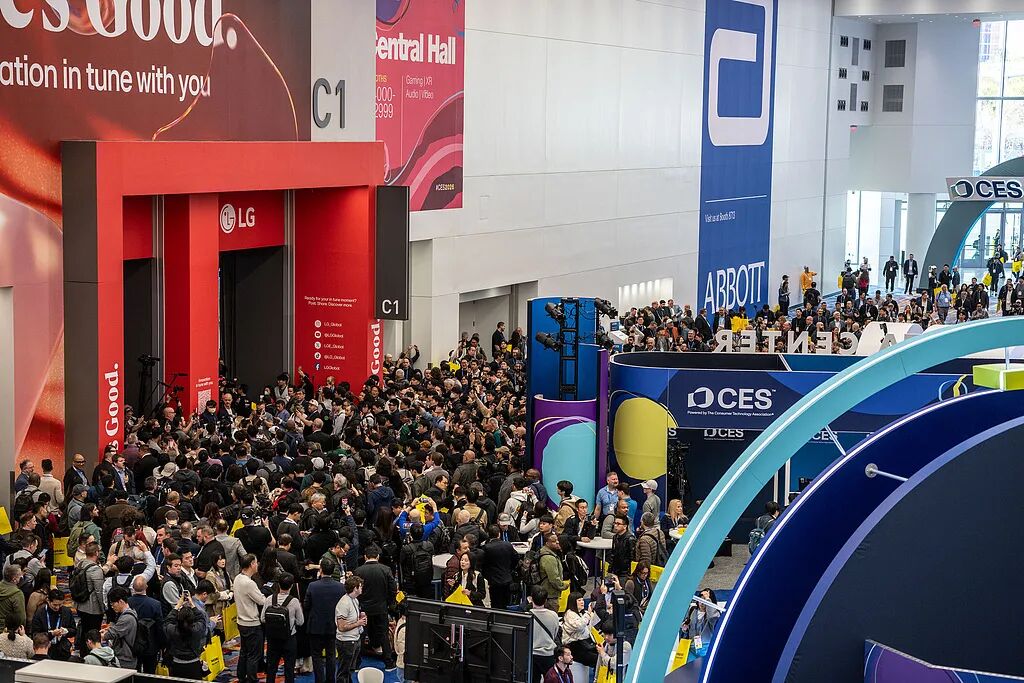
Core Insights - The CES 2023 showcased a significant shift towards consumer-oriented technology, emphasizing the integration of AI into everyday products and experiences [5][20][21] - Chinese companies made a notable impact at CES, with a strong presence in robotics and AI applications, reflecting a growing trend of innovation and market engagement [15][17][18] Group 1: Event Overview - CES is described as a "global technology spring festival," attracting a diverse audience including tech professionals and curious consumers [3][5] - The event is characterized by a more accessible and consumer-friendly atmosphere, moving away from purely business-focused interactions [5][10] Group 2: AI and Robotics - AI applications were prominently featured, with a focus on practical implementations such as robots performing various tasks and AI-enhanced wearable devices [7][9] - The number of robotic exhibitors increased significantly, with a dedicated theme area for "embodied intelligence" [7][15] Group 3: Chinese Companies' Participation - Over 1,200 Chinese exhibitors participated, making up approximately 30% of the total, with a strong emphasis on innovation and market readiness [15][17] - Many Chinese startups showcased their products for the first time, indicating a shift towards proactive international engagement [12][13] Group 4: Market Trends and Consumer Engagement - The feedback from international markets has been overwhelmingly positive, with many products exceeding expectations in terms of interest and potential sales [13][18] - The focus has shifted from merely showcasing AI capabilities to demonstrating measurable value in real-world applications [20][22] Group 5: Competitive Landscape - The event highlighted the competitive dynamics between major AI nations, with Chinese companies focusing on commercialization while U.S. firms emphasized foundational technologies [17][18] - The presence of Korean companies also contributed to the competitive landscape, showcasing strengths in smart manufacturing and AI applications [17][18] Group 6: Future Directions - The integration of AI into physical products is seen as a key trend, with a focus on creating embedded capabilities that enhance user experiences [20][21] - The concept of digital twins is emerging as a foundational element for AI applications in industrial settings, facilitating design and optimization processes [22]
聊一聊AI硬件和软件
傅里叶的猫· 2026-01-09 15:58
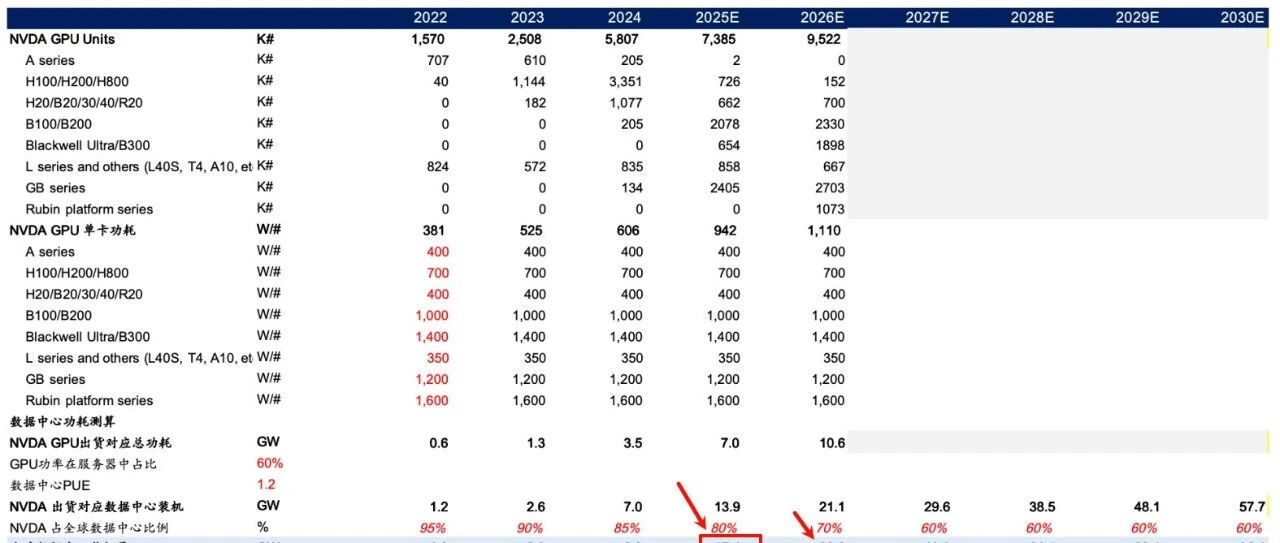
Group 1: AI Hardware Market - The recent performance of AI hardware is not strong, but the US stock market's hardware sector showed some resilience [1] - The memory shortage is exaggerated; a report from Macquarie suggests that the new DRAM capacity in the next two years can only support about 15GW of AI data center construction, which may delay global AI expansion plans [3] - A different perspective from a memory industry expert indicates that the capacity could support 20GW and 33GW this year and next year, respectively [5] - The global data center installation capacity is projected to reach 17.4GW by 2025, with an expected increase to 30.2GW this year [5] - Due to memory constraints, the growth of AI data centers (AIDC) will not be as rapid as anticipated, contributing to the recent decline in hardware market sentiment [7] Group 2: AI Software and Applications - The AI software and application market is exceeding many expectations, with a positive outlook for AI applications this year [8] - The government is intensifying support for AI policies, with initiatives in various sectors like healthcare, education, and manufacturing, aiming for quantifiable goals by 2026 [9] - Major tech companies are competing for AI traffic entry points and ecosystem development, with strategies focusing on both consumer (C-end) and business (B-end) markets [10][11] - For the C-end, companies are enhancing user engagement and monetization capabilities, while for the B-end, they are driving cloud revenue through developer ecosystems [12] - The competition has extended to physical scenarios, with companies like Waymo and Tesla accelerating their efforts in ROBOTAXI [13] - Key technological advancements in AI models are expected to focus on world models, native multimodality, and self-evolving agents, with significant breakthroughs anticipated by 2026 [14][15] - The core competitiveness of AI application companies lies in their ability to integrate technology quickly and effectively into specific scenarios, achieving commercial viability [15]


智能汽车ETF(159889)盘中涨超1.7%,产业趋势与政策进展受关注
Mei Ri Jing Ji Xin Wen· 2026-01-09 06:59
Core Insights - The smart car ETF (159889) saw an intraday increase of over 1.7%, driven by industry trends and policy developments [1] - According to招商证券, 2026 is projected to be a breakout year for the smart driving and Robotaxi industries, with ongoing market attention on these trends [1] - Nvidia's release of the open-source VLA model Alpamayo 1 signifies a pivotal moment for physical AI, with unmanned taxis expected to be among the first beneficiaries [1] Industry Developments - Waymo is expected to exceed 450,000 weekly orders by 2025, while Tesla's Robotaxi operations are expanding in Austin, with Full Self-Driving (FSD) technology likely to validate the gradual transition from Level 2 to Level 4 [1] - Pony.ai has achieved single-vehicle profitability in Guangzhou, and WeRide has obtained a fully autonomous driving commercial license in the UAE [1] - Regulatory advancements are indicated by the establishment of national standards for L3 access permits and autonomous driving regulations, suggesting a faster pace of progress in legislation [1] Market Dynamics - The smart car ETF (159889) tracks the CS Smart Car Index (930721), which selects listed companies involved in smart driving and vehicle networking from the A-share market, covering the entire industry chain from hardware to software [1] - The index's constituent stocks are concentrated in the electronics, computer, and automotive sectors, providing a comprehensive reflection of the overall performance of the smart car-related industries [1]
目标反复横跳!特斯拉FSD承诺再度泡汤,马斯克又提新条件
Huan Qiu Wang Zi Xun· 2026-01-09 01:51
Core Viewpoint - Tesla CEO Elon Musk's goal for fully autonomous driving (FSD) has once again failed to materialize, with the promise of launching an unsupervised autonomous taxi service by the end of 2025 not being met [1][4] Group 1: Current Status of FSD - Tesla is currently only piloting its "autonomous taxi" service in Austin and San Francisco, which still requires staff oversight and an emergency stop switch, and is not open to all users [4] - The population in the pilot cities is far from reaching 50% of the total U.S. population, as previously promised by Musk [4] Group 2: Data Requirements and Adjustments - Musk has adjusted the requirement for achieving "safe unsupervised driving" to 10 billion miles of driving data, while Tesla's FSD system has only accumulated slightly over 7 billion miles [4] - The threshold for data needed for regulatory approval has been raised from 6 billion miles in 2016 to 10 billion miles currently, raising questions about the feasibility of Musk's previous commitments [4] Group 3: Legal and Competitive Landscape - Tesla's legal team is believed to play a crucial role in decision-making, as the current FSD system is classified as a Level 2 supervised system, which limits the company's liability in accidents [4] - Once the system transitions to unsupervised driving, Tesla will face significant liability pressures, especially as competitors like Waymo have already obtained licenses for unsupervised autonomous driving, leading to market skepticism about Tesla's technological capabilities [4]