百威亚太

Search documents
吴向东推“牛市”,珍酒能牛吗?
3 6 Ke· 2025-08-28 06:44
Core Viewpoint - The Chinese liquor industry, particularly the baijiu sector, is facing significant growth challenges, prompting major players to explore the high-end craft beer market as a potential new growth avenue [1][5]. Group 1: Industry Challenges - Baijiu companies are experiencing declining sales and increasing inventory pressures, with a reported 1.8% decrease in national baijiu production in 2024 [1][4]. - The core consumer demographic for baijiu is becoming more conservative, with younger consumers showing a preference for beer and low-alcohol beverages [1][5]. - For example, the sales volume of the core product of Zhenjiu has been consistently declining from 14,761 tons in 2021 to 12,284 tons in 2024 [3]. Group 2: Shift to Craft Beer - Major baijiu brands, including Zhenjiu, Moutai, and Luzhou Laojiao, are entering the craft beer market, targeting the mid-to-high-end segment [2][5]. - Zhenjiu's new craft beer, "Niu Shi," is priced at 88 yuan per 375ml bottle, reflecting a strategy to leverage brand premium and distribution advantages [2][5]. - The shift to craft beer is seen as a way to attract younger consumers and diversify revenue streams amid declining baijiu sales [5][14]. Group 3: Operational Differences - The operational models for baijiu and beer are fundamentally different, with beer relying on high volume and rapid turnover, while baijiu focuses on high margins and inventory management [6][9]. - The distribution channels for baijiu are established on high-profit margins, whereas beer distribution is competitive and requires extensive market penetration [9][12]. - Zhenjiu's craft beer is produced through a contract manufacturing arrangement, raising concerns about quality control and brand integrity [10]. Group 4: Strategic Implications - The introduction of craft beer may serve more as a strategic tool for Zhenjiu to manage inventory and stabilize prices rather than a genuine attempt to compete in the beer market [11][14]. - The pricing strategy for "Niu Shi" aligns with traditional baijiu sales tactics, suggesting that the craft beer may function as a "social currency" to facilitate baijiu sales [13][14].

Shengfeng Development Limited Announces Unaudited 2025 First Half Financial Results
Prnewswire· 2025-08-27 14:33
Core Viewpoint - Shengfeng Development Limited reported a 16.0% year-over-year increase in total revenue, driven by enhanced partnerships and expanded service offerings in the logistics sector [1][6]. Financial Highlights - Total Revenue: Increased from approximately $227.1 million for the six months ended June 30, 2024, to approximately $263.4 million for the same period in 2025, marking a 16.0% increase [6]. - Gross Profit: Rose by approximately 14.2% from about $21.1 million in 2024 to approximately $24.1 million in 2025, with gross margins slightly decreasing from 9.3% to 9.1% [6]. - Net Income: Increased by 19.3% from approximately $5.0 million in 2024 to approximately $6.0 million in 2025 [6]. - Operating Expenses: Increased by approximately 12.0% from about $14.5 million in 2024 to approximately $16.3 million in 2025 [6]. - General and Administrative Expenses: Increased by approximately 15.0% from about $11.7 million in 2024 to approximately $13.4 million in 2025, driven by higher employee salaries and benefits [6]. Cost and Expense Overview - Selling and Marketing Expenses: Remained stable at approximately $2.9 million for both periods [6]. - The increase in general and administrative expenses was necessary to support expanded operations and a higher revenue base [6]. Operational Highlights - Transportation Services: Net revenues increased by approximately 17.1% from about $217.5 million in 2024 to approximately $254.7 million in 2025, primarily due to expanded services with existing clients [7]. - Warehouse Storage Management Services: Revenues decreased by approximately 14.8% from about $8.3 million in 2024 to approximately $7.1 million in 2025, attributed to a strategic focus shift towards transportation services [7]. CEO Commentary - The CEO highlighted the strong performance in the first half of 2025, emphasizing deepened collaborations with key clients in priority sectors and a focus on high-growth verticals [6][9]. - The company aims to enhance service capabilities in core sectors while driving operational excellence [10]. Outlook - Shengfeng plans to sustain growth and improve margins in the second half of 2025 by leveraging its logistics network and innovative solutions to serve a broader range of industries [10]. Company Overview - Shengfeng Development Limited is a contract logistics company in China, established in 2001, providing integrated logistics solutions across 382 cities in 32 provinces as of June 30, 2025 [11].


恒指收跌304点,内需股部分走强
Guodu Securities Hongkong· 2025-08-27 01:48
Core Insights - The Hang Seng Index closed down 304 points or 1.18% at 25,524, with significant selling pressure in the A-shares market contributing to the decline [3] - Among 85 blue-chip stocks, 66 declined while 18 rose, indicating a mixed performance in the market [4] - Domestic demand stocks showed strength, with notable gains in companies like Master Kong (00322) up 3.4% and Mengniu Dairy (02319) up 1.9% [4] Economic and Industry Dynamics - Hong Kong's exports in July increased by 14.3% year-on-year, surpassing expectations, with total export value reaching HKD 446.3 billion [7] - The import value for July also rose by 16.5% year-on-year, totaling HKD 480.4 billion, leading to a tangible trade deficit of HKD 34.1 billion [7] - The Investment Promotion Agency is actively working to attract high-quality technology companies to Hong Kong, emphasizing its role as an international financial center [8] Company News - Qingdao Beer (00168) reported a 7.2% increase in mid-year profit to RMB 3.904 billion, with revenue rising by 2.11% to RMB 20.491 billion [11] - Lingbao Gold (03330) announced a significant profit increase of 335% to RMB 664 million, with revenue up 82.02% to RMB 7.793 billion [12] - Zijin Mining (02899) reported a 54% increase in mid-year profit to RMB 23.292 billion, with revenue rising by 11.5% to RMB 167.711 billion [14]
中国必需消费品8月价格报告:多数品类价格再次回落
Haitong Securities International· 2025-08-26 14:44
Investment Rating - The report assigns an "Outperform" rating to multiple companies in the consumer staples sector, including Moutai, Wuliangye, Luzhou Laojiao, and others, indicating a positive outlook for these stocks [1]. Core Insights - The report highlights a general decline in wholesale prices across most categories of consumer staples, particularly in the baijiu segment, with significant price drops noted for Moutai and Wuliangye [3][32]. - It emphasizes the structural opportunities arising from policy catalysis in the consumer staples sector, suggesting that investors should focus on these potential growth areas [3]. Summary by Sections Price Trends - Recent wholesale prices for Moutai show a decrease, with Feitian Moutai (case) priced at 1845 yuan, down 70 yuan from the previous month, and a year-to-date decline of 395 yuan [32]. - Wuliangye's eighth-generation price remains stable at 920 yuan, with no change since the beginning of the year [32]. - The report notes that the prices of various baijiu brands have shown a downward trend, with year-on-year declines for many products [4][32]. Discount Trends - Discounts on mass-market consumer goods have widened, particularly for liquid milk, soft drinks, infant formula, seasonings, and beer, indicating a shift in consumer purchasing behavior [19][30]. - The average discount rate for liquid milk decreased from 79.1% to 74.8%, while soft drinks saw a drop from 91.8% to 88.3% [19][30]. - The report provides a detailed overview of discount rates across various categories, showing a general trend of increasing discounts in the consumer staples market [20][21].






蝶变四十年,百威雪津杯酒见峥嵘!
Sou Hu Wang· 2025-08-26 09:28
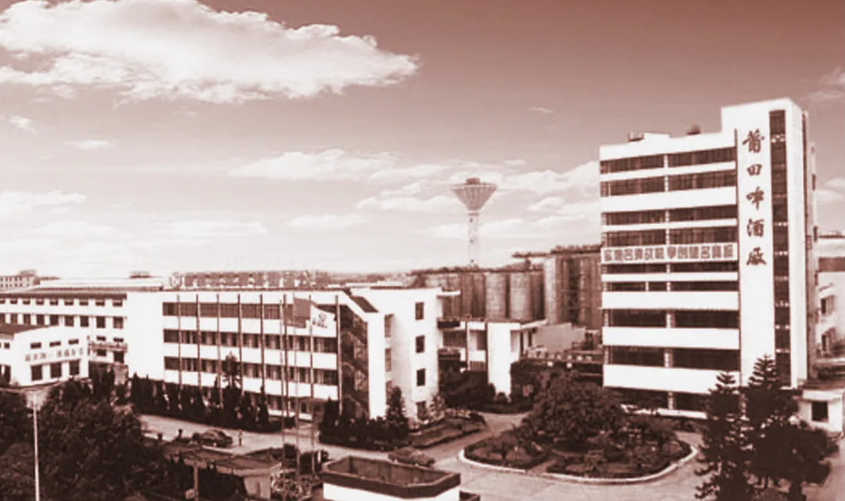
Core Viewpoint - The article highlights the evolution and success of Fujian Xuejin Beer Co., Ltd., emphasizing its transformation from a small local brewery to a significant player in the global beer market through strategic partnerships and technological advancements [1][5][6]. Company Development - The establishment of the brewery in 1983 marked the beginning of a significant industrial journey for the city of Putian, with an initial investment of 56 million yuan, which was a substantial gamble for the local community [1][3]. - The brewery faced early challenges with its product "Hailian" but overcame them by seeking expertise and adapting to local tastes, leading to the successful launch of its first pure draft beer in 1999 [3][5]. - The partnership with Anheuser-Busch InBev in 2006 is described as a pivotal moment, allowing Xuejin to retain its brand while benefiting from global best practices and management systems [5][6]. Technological Advancements - The construction of a new state-of-the-art brewery in 2017, covering 1,200 acres, represents a significant investment in modern technology, including a production capacity of 2 million tons, making it the largest single-site brewery globally [6][8]. - The brewery employs advanced technologies such as 5G and has implemented sustainable practices, achieving zero wastewater discharge and transforming industrial waste into economic resources [6][12]. Industry Impact - The brewery's success has led to the establishment of related industries, including glass bottle manufacturing and can production, contributing to local economic growth and job creation [13]. - The brewery has become a cultural and tourism hub, attracting 250,000 visitors annually to the Budweiser China Beer Museum and promoting local beer culture through various events and establishments [13][14]. Future Prospects - By 2025, Putian is expected to be recognized as "China's Beer Manufacturing City," with the Budweiser Xuejin factory playing a central role in this transformation [13][16].
青岛啤酒,努力不务正业
Xin Lang Cai Jing· 2025-08-26 07:17
Core Insights - Qingdao Beer Museum achieved a total visitor count of over 15 million since its opening, generating at least 700 million yuan in ticket revenue, despite its annual revenue being negligible compared to the main business of Qingdao Beer [1][2] - The beer industry is facing a downturn, with Qingdao Beer reporting a revenue decline of 5.3% in 2024, totaling 32.138 billion yuan, while net profit increased by only 1.81% [4][5] - The company has been diversifying into non-core areas such as cultural IPs and high-end products, which do not directly contribute to beer sales, as a response to the stagnant beer market [3][9] Financial Performance - In 2024, Qingdao Beer’s revenue decreased by 5.3% compared to the previous year, marking a rare occurrence in its nearly 30-year history [4] - The company’s net profit for 2024 was 4.345 billion yuan, showing a modest increase of 1.81% [4] - Revenue from various regions, including Shandong and South China, also saw declines, with some areas experiencing drops as high as 24.2% [4] Market Trends - The beer industry has been in decline since 2017, with production levels dropping from a peak of 44.015 million kiloliters in 2017 to around 35 million kiloliters in recent years [6] - Capital market predictions for Qingdao Beer have been pessimistic, with forecasts for revenue and net profit being downgraded by Citibank [5] - The overall beer market is characterized by intense competition and a lack of differentiation among brands, leading to a focus on channel capabilities rather than product attributes [14][15] Strategic Initiatives - Qingdao Beer has launched several high-end products, including "One World Legend," priced comparably to premium liquors, as part of its strategy to target the high-end market [9][10] - The company is also investing in cultural initiatives and experiences, such as the Qingdao Beer Museum, to enhance brand visibility and cultural significance [1][13] - Despite the challenges, Qingdao Beer continues to explore diverse business avenues to maintain engagement with consumers and strengthen its market position [7][17]

凌激副部长兼国际贸易谈判副代表会见百威亚太首席执行官程衍俊
Shang Wu Bu Wang Zhan· 2025-08-25 07:18
Core Insights - The meeting between the Vice Minister of Commerce and the CEO of Budweiser APAC highlights China's position as a major consumer market with active demand for goods and services [1] - Budweiser plans to increase investments in China, focusing on green and low-carbon initiatives to meet the diverse needs of Chinese consumers [1] Group 1 - The Chinese market is recognized as Budweiser's largest globally, with business steadily improving in the region [1] - The Chinese government encourages Budweiser to enhance supply chain resilience and efficiency through green and digital production [1] - Budweiser aims to provide healthy and high-quality products and services to Chinese consumers [1]

跨界“搅局者”来了 白酒巨头进军啤酒圈
Zheng Quan Shi Bao· 2025-08-21 22:06
Core Viewpoint - Major Chinese liquor companies, including Wuliangye and Zhenjiu Lid, are entering the craft beer market to tap into the potential of a rapidly growing sector, as traditional beer faces significant challenges [1][7]. Industry Overview - The Chinese beer market is undergoing a structural adjustment, with production declining for five consecutive years, reaching 35.21 million kiloliters in 2024, a 30% decrease from the peak of 50.62 million kiloliters in 2013 [2]. - The market is highly concentrated, with five major players—China Resources Beer, Tsingtao Brewery, Budweiser APAC, Yanjing Beer, and Chongqing Beer—holding over 90% of the market share [2]. - The low-end beer market is shrinking, while mid-range and premium products are expected to drive future growth [2]. High-End Beer Market - High-end beer is experiencing significant growth, with China Resources Beer’s net profit increasing from 2.094 billion yuan in 2020 to 4.739 billion yuan in 2024, and Tsingtao Brewery’s net profit rising from 2.201 billion yuan to 4.345 billion yuan in the same period [2][3]. - Chongqing Beer reported a slight increase in revenue from high-end products, while Yanjing Beer saw a 9.32% increase in revenue from mid-to-high-end products [3]. Craft Beer Market Growth - The craft beer segment is rapidly expanding, with the market size projected to grow from 42.8 billion yuan in 2022 to 68 billion yuan in 2024, reflecting a compound annual growth rate of 26.7% [4]. - By 2025, the craft beer market is expected to exceed 104 billion yuan, driven by changing consumer preferences towards quality over quantity [4]. Profitability and Consumer Trends - Craft beer typically has a gross margin of 55% to 65%, which is 15% to 20% higher than industrial beer [5]. - The Z generation is becoming the main consumer group, seeking quality and unique experiences, which is driving the growth of the craft beer market [5][6]. White Liquor Companies Entering Craft Beer - White liquor giants are entering the craft beer market, with Zhenjiu Lid launching its first high-end craft beer product, "Bull Market News," which gained significant attention during its live-stream launch [7]. - Wuliangye has also introduced its craft beer brand "Fire Wheel," priced at 19.5 yuan per bottle, aiming to penetrate the mid-to-high-end craft beer market [7]. - Luzhou Laojiao has been active in the craft beer sector since 2021, focusing on high-end craft beer and expanding its market presence [8]. Strategic Insights - The entry of white liquor companies into the craft beer market leverages existing brand resources and distribution networks, seeking new growth opportunities [8]. - Analysts suggest that these companies should adopt differentiated strategies to avoid direct competition with established beer giants, focusing on high-end branding and leveraging mature distribution channels [8].
跨界“搅局者”来了白酒巨头进军啤酒圈
Zheng Quan Shi Bao· 2025-08-21 18:32
Core Viewpoint - Major Chinese liquor companies are entering the craft beer market, aiming to tap into a rapidly growing segment of the beer industry, which is projected to exceed 100 billion yuan by 2025 [1][4]. Industry Overview - The Chinese beer market is undergoing significant structural adjustments, with overall production declining. In the first half of 2025, production from large-scale breweries was 19.04 million kiloliters, a year-on-year decrease of 0.3% [2]. - Traditional beer production has been declining for five consecutive years, with 2024 production at 35.21 million kiloliters, down 30% from the peak of 50.62 million kiloliters in 2013 [2]. - The market is highly concentrated, with five major players—China Resources Beer, Tsingtao Brewery, Budweiser APAC, Yanjing Beer, and Chongqing Beer—holding over 90% of the market share [2]. - The low-end beer market is shrinking, while mid-range and premium products are expected to drive future growth [2]. High-End Beer Performance - High-end beer products are experiencing growth, with Chongqing Beer reporting a 0.04% increase in revenue from high-end products (priced above 8 yuan) to 5.265 billion yuan [3]. - Yanjing Beer saw a 9.32% increase in revenue from mid-to-high-end products, reaching 5.536 billion yuan, with their gross margin improving by 6.25 percentage points to 51.71% [3]. Craft Beer Market Growth - The craft beer segment is rapidly expanding, with the market size projected to grow from 42.8 billion yuan in 2022 to 68 billion yuan in 2024, reflecting a compound annual growth rate of 26.7% [4]. - By 2025, the craft beer market is expected to surpass 104 billion yuan, driven by changing consumer preferences towards quality over quantity [4]. Profitability and Consumer Trends - Craft beer generally has a gross margin of 55% to 65%, which is 15% to 20% higher than that of industrial beer [5]. - The Z generation (born 1995-2009) is becoming the main consumer group, shifting the focus from traditional social drinking to personal enjoyment and quality experiences [5][6]. White Liquor Companies Entering Craft Beer - Major liquor companies like Zhenjiu Lidou and Wuliangye are launching craft beer products to capture market share. Zhenjiu Lidou's "Niu Shi News" craft beer gained significant attention during its launch, with over 190 million views online [7]. - Wuliangye's new craft beer brand "Fenghuolun" is priced at 19.5 yuan per bottle, marking its entry into the mid-to-high-end craft beer market [7]. - Luzhou Laojiao has been active in the craft beer sector since 2021, focusing on high-end craft beer products and expanding its market presence [8]. Strategic Insights - The entry of liquor companies into the craft beer market leverages existing brand resources and distribution networks, aiming for new growth opportunities [8]. - Analysts suggest that these companies should adopt differentiated strategies to avoid direct competition with established beer giants, focusing on high-end branding and leveraging mature distribution channels [8].
华润啤酒总裁赵春武:啤酒要由“大”变“小”
2 1 Shi Ji Jing Ji Bao Dao· 2025-08-21 13:37
Core Viewpoint - The beer market is not shrinking significantly despite the reduction in bottle sizes and the closure of breweries, as evidenced by stable sales figures and the performance of major players like China Resources Beer [1][3] Group 1: Market Trends - The capacity of beer bottles has decreased from 500ml to smaller sizes like 330ml and 250ml, indicating a shift in consumer preferences [1] - National Bureau of Statistics data shows that major beer producers sold 19.04 million kiloliters of beer in the first half of the year, with a year-on-year decline of only 0.3% [1] - Beer consumption has remained stable, with annual sales fluctuations of less than 1% in recent years [1] Group 2: Company Performance - China Resources Beer reported a revenue of 23.9 billion yuan in the first half of the year, a 0.8% increase year-on-year, and a net profit of 5.78 billion yuan, up 23% [3] - The company achieved a 2% increase in sales volume, reaching approximately 6.5 million kiloliters, despite a slight industry-wide decline [3] - For the first time, China Resources Beer surpassed Budweiser APAC in revenue and profit in the Asia-Pacific market [3][4] Group 3: Competitive Landscape - Budweiser APAC experienced a significant decline in revenue and profit, with a nearly 10% drop in sales in China, which is much worse than the industry average [4] - Other beer companies like Yanjing Beer and Chongqing Beer showed varying performance, with Yanjing's net profit increasing by 45% [4] Group 4: Strategic Shifts - The beer industry is shifting from a focus on large single products to catering to niche, diverse, and premium consumer demands [2][3] - China Resources Beer is leveraging data to better understand consumer preferences, allowing for quicker product development and adaptation [9] - The rise of regional beer brands is linked to cultural confidence and consumer loyalty, with some brands experiencing significant sales growth [9][10] Group 5: Retail Dynamics - The proportion of beer sales through retail channels has increased, with retail now accounting for 60% of sales, while the share from dining channels has decreased [10][12] - The company is capitalizing on the opportunities presented by new retail formats, contrasting with Budweiser APAC's struggles in the dining sector [10][12]