辉瑞

Search documents
深夜突发!刚刚,暴跌超41%!
Zheng Quan Shi Bao· 2025-08-19 15:17
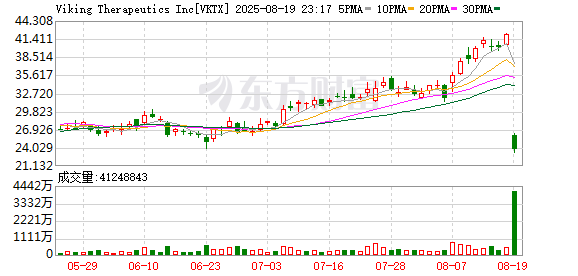
Market Overview - On August 19, U.S. stock indices showed mixed results, with the Dow Jones up by 0.64%, while the S&P 500 and Nasdaq fell by 0.01% and 0.66% respectively [2] - Investors are awaiting Federal Reserve Chairman Jerome Powell's speech at the upcoming global central bank conference [4] Federal Reserve Insights - The theme of this year's Jackson Hole conference is "Labor Market Transformation: Demographics, Productivity, and Macroeconomic Policy," reflecting recent changes in the U.S. labor market [4] - Powell faces a challenging economic situation, balancing signs of a cooling labor market against inflation pressures from tariff policies [4] - There is an 83% probability that the Federal Reserve will cut interest rates by 25 basis points in September, according to the FedWatch tool [4] Intel's Stock Surge - Intel's stock surged by nearly 12% after receiving significant investments from the Trump administration and SoftBank Group, ultimately rising over 8% [6][8] - The Trump administration is expected to acquire approximately 10% of Intel's shares, potentially providing around $10 billion to support Intel's revival strategy [6] - SoftBank Group agreed to purchase $2 billion in Intel shares, aiming to leverage Intel's chip manufacturing technology for AI applications [8] Viking Therapeutics' Stock Plunge - Viking Therapeutics' stock plummeted over 41% due to disappointing mid-stage trial data for its experimental oral weight loss drug [10] - The drug VK2735 showed a maximum weight loss of 12.2%, but 28% of participants dropped out of the trial within three months, undermining confidence in its competitiveness against products from Eli Lilly and Novo Nordisk [10][12] - Other pharmaceutical companies have also faced stock declines due to underwhelming results from weight loss drug trials, highlighting the significant scientific challenges in this field [12]


深夜突发!刚刚,暴跌超41%!
证券时报· 2025-08-19 15:15
Market Overview - The U.S. stock market showed mixed results with the Dow Jones up by 0.64%, while the S&P 500 and Nasdaq fell by 0.01% and 0.66% respectively as investors await Federal Reserve Chairman Jerome Powell's speech at the global central bank conference [1][3]. Federal Reserve Insights - The upcoming Jackson Hole conference from August 21 to 23 focuses on "Labor Market Transformation: Demographics, Productivity, and Macroeconomic Policy," reflecting recent significant changes in the U.S. labor market [3]. - Powell faces a challenging economic situation with signs of a cooling labor market indicating potential economic slowdown, while tariffs from the Trump administration are exacerbating inflation, complicating interest rate decisions [3]. - Market expectations suggest an 83% probability of a 25 basis point rate cut in September, with Powell likely to emphasize the Fed's independence from the administration during his final Jackson Hole appearance [3]. Intel's Stock Surge - Intel's stock price surged by nearly 12% after receiving substantial investments from the Trump administration and SoftBank Group, ultimately rising over 8% [5]. - The Trump administration is expected to acquire approximately 10% of Intel's shares, potentially providing around $10 billion to support Intel's revival strategy led by CEO Pat Gelsinger [7]. - SoftBank Group has agreed to purchase $2 billion in Intel shares, aiming to leverage Intel's chip manufacturing technology for artificial intelligence applications, while also increasing its stake in Nvidia [8]. Viking Therapeutics' Stock Decline - Viking Therapeutics' stock plummeted over 41% following disappointing mid-stage trial results for its experimental oral weight loss drug, VK2735, which showed only a 12.2% weight reduction in patients [10]. - Approximately 28% of participants dropped out of the trial within three months, raising concerns about the drug's competitiveness against products from Eli Lilly and Novo Nordisk [10]. - Other pharmaceutical companies have also faced stock declines due to underwhelming results from weight loss drug trials, highlighting the significant scientific challenges in this emerging market [11].

多款救命药有望商保报销 保费怎么定是关键
经济观察报· 2025-08-16 13:32
Core Viewpoint - The article discusses the introduction of the commercial insurance innovative drug directory in China, which supplements the basic medical insurance directory and aims to include high-priced innovative drugs that provide significant clinical value and patient benefits [2][10]. Summary by Sections Introduction of the Commercial Insurance Innovative Drug Directory - The National Healthcare Security Administration announced a list of drugs that passed the initial review for the commercial insurance innovative drug directory, with a total of 121 drugs, over half of which are cancer or rare disease medications [2][5]. - The directory is expected to include high-priced drugs, such as CAR-T therapies costing over 1 million yuan per injection and gene therapies priced around 98,000 yuan per injection [2][4]. Drug Approval and Characteristics - To qualify for the commercial insurance innovative drug directory, drugs must either be newly approved from January 1, 2020, to June 30, 2025, or have indications included in the national rare disease directory by June 30, 2025 [5]. - Among the 121 drugs, 57 are imported, accounting for 47%, with notable entries from companies like Pfizer and Johnson & Johnson [5]. Focus on Cancer and Rare Diseases - The majority of drugs that passed the initial review are cancer treatments, with over 40 entries, followed by 35 for rare diseases [5][6]. - The article highlights the potential for the directory to alleviate payment challenges for rare disease medications, with companies actively submitting applications [6]. Pricing and Negotiation Challenges - The pricing negotiation process for drugs in the commercial insurance directory remains uncertain, as it involves collaboration between the National Healthcare Security Administration, commercial insurers, and pharmaceutical companies [12][13]. - The article notes that the commercial insurance directory may serve as a "double insurance" for companies, allowing them to apply for both the basic medical insurance and the commercial insurance directories simultaneously [9]. Future Considerations and Recommendations - The article suggests that the implementation of the commercial insurance innovative drug directory requires further exploration and refinement, with recommendations for pilot programs in specific insurance products [14]. - It emphasizes the need for insurance companies to develop reasonable pricing mechanisms and improve data integration with basic medical insurance to enhance their pricing strategies [13][14].

歌礼制药-B(1672.HK):美国临床进展顺利 期待临床数据读出
Ge Long Hui· 2025-08-16 01:00
Core Viewpoint - Songlei Pharmaceutical-B has announced the completion of the Phase IIa study for its small molecule oral GLP-1R agonist ASC30, targeting obesity or overweight subjects, indicating rapid clinical advancement in a competitive market [1][2]. Group 1: Clinical Progress - ASC30 is the first and only small molecule GLP-1R agonist developed by the company that can be administered either orally once daily or via subcutaneous injection once monthly. The company initiated the Phase IIa clinical trial in early July and enrolled 125 subjects in just over a month, showcasing high efficiency. The treatment period lasts for 13 weeks, with top-line data expected in Q4 2025. Currently, the fastest progress in the global small molecule GLP-1 development pipeline is by Eli Lilly with Orforglipron, which has submitted an FDA application, while Pfizer has abandoned its small molecule GLP-1 pipeline, placing ASC30 in a competitive catch-up position [1]. Group 2: Potential and Safety Profile - ASC30 demonstrates potential to become a Best in Class (BIC) treatment due to its safety profile and rapid weight loss capabilities. According to data presented at the ADA conference from the Phase I MAD study, the average weight loss after four weeks was 6.4%. No severe adverse reactions, such as hepatotoxicity, were observed, and treatment-emergent adverse events (TEAEs) were mild, with no vomiting reported at doses of 2mg and 5mg. This positions ASC30 favorably in the market [1]. Group 3: ASC47 Development - ASC47, another small molecule THRβ agonist developed by the company, is designed for monthly injection and is currently in clinical trials in combination with semaglutide for treating obesity. ASC47 targets adipose tissue and is expected to provide synergistic effects when used with GLP-1, helping to reduce muscle loss while enhancing weight loss efficacy. The design of ASC47 allows for convenient monthly administration alongside GLP-1 [2]. Group 4: Financial Forecast - The company anticipates increased overseas clinical investment, projecting R&D expenses of 415 million, 487 million, and 540 million yuan for 2025, 2026, and 2027, respectively. The net profit attributable to the parent company is forecasted to be -372 million, -467 million, and -562 million yuan for the same years. Given the rapid clinical progress of ASC30 and ASC47, the company is positioned to achieve Best in Class potential in the small molecule weight loss drug development space, leading to a "Buy" investment rating [2].
海外消费周报:银河娱乐2Q25业绩点评-20250815
Shenwan Hongyuan Securities· 2025-08-15 11:35
Investment Rating - The report maintains a "Buy" rating for Galaxy Entertainment, highlighting the resilience of the gaming industry and the long-term growth potential of the company [6]. Core Insights - Galaxy Entertainment achieved a net revenue of HKD 12 billion in Q2 2025, representing an 8% quarter-on-quarter increase and a 10% year-on-year increase. The adjusted EBITDA was HKD 3.2 billion, with a 7% quarter-on-quarter increase but a 1% year-on-year decline. Key revenue metrics have recovered to 82%, 130%, 138%, and 31% of 2019 levels for total gross revenue, mass market revenue, slot machine revenue, and VIP turnover, respectively [6][8]. - The company has a net cash position of HKD 30.3 billion as of June 30, 2025, and announced an interim dividend of HKD 0.70 per share, with a payout ratio of 58%, up from 50% in 2024 [6][8]. Summary by Sections 1. Overseas Social Services - Galaxy Entertainment's Q2 2025 performance shows a recovery in various revenue streams, with EBITDA returning to 79% of 2019 levels. The Capella Hotel is in trial operation, with full opening expected soon. The Macau Galaxy Phase IV project is progressing, with completion expected in 2027 [6][8]. 2. Overseas Pharmaceuticals - The 2025 medical insurance directory and commercial insurance innovative drug directory preliminary review has been published, with 534 out of 718 submissions passing the initial review. The new directory includes several CAR-T products and other innovative drugs [10][12]. 3. Domestic Pharmaceutical Companies - Crystal Holdings expects a revenue of at least HKD 500 million in H1 2025, a year-on-year increase of approximately 387%. In contrast, Jinxin Reproductive expects a net loss of no more than HKD 1.09 billion due to asset impairments [11][12]. 4. Overseas Pharmaceutical Company Updates - Insmed's DPP-1 inhibitor, BRINSUPRI, has received FDA approval for treating non-cystic fibrosis bronchiectasis. Novartis's BAFF-R monoclonal antibody has met primary endpoints in two Phase III studies for treating active Sjögren's syndrome [13][14]. 5. Investment Recommendations - The report suggests focusing on innovative drugs and pharmaceutical companies with strong clinical pipelines, including companies like BeiGene, Innovent Biologics, and others [15]. 6. Market Performance - The Hang Seng Healthcare Index rose by 3.50%, outperforming the Hang Seng Index by 1.75 percentage points, indicating a positive market sentiment towards healthcare stocks [8].

国产减肥药加速突围:如何与进口药竞争?是否还有BD预期?
Xin Lang Cai Jing· 2025-08-11 23:50
Group 1 - Xinda Biologics announced the official launch of its dual receptor agonist, Masitide, for weight management, which is the first GCG/GLP-1 dual receptor agonist approved for long-term weight control in adults in China [1] - Clinical data shows that Masitide can achieve a weight reduction of 21%, over 80% reduction in liver fat content, and significant improvements in cardiovascular and metabolic indicators [1] - The GLP-1 weight loss drug market has seen significant growth, with Novo Nordisk's semaglutide generating $16.5 billion in revenue and Eli Lilly's tirzepatide generating $14.7 billion in the first half of 2025 [1] Group 2 - The trend in GLP-1 weight loss drug development is shifting towards multi-target, long-acting, and oral formulations, with many domestic innovative pharmaceutical companies actively participating [2] - The popularity of GLP-1 drugs has been fueled by endorsements from high-profile individuals, leading to increased public interest and demand for these medications [3] - The market for GLP-1 drugs in China is estimated to be between 40 billion to 50 billion yuan, with significant potential for generic drugs as original patents expire [5] Group 3 - The competitive landscape for GLP-1 weight loss drugs is evolving, with various products entering the market, and companies need to adapt their commercialization strategies to succeed [6][9] - Regulatory requirements for GLP-1 products in China are stringent, necessitating large-scale clinical trials, which poses challenges for many companies [7] - Partnerships and business development (BD) opportunities are emerging as companies seek to expand their market presence internationally, with notable agreements already in place [8]

科学减重时代已至,GLP-1千亿美元市场迎争夺战
2 1 Shi Ji Jing Ji Bao Dao· 2025-08-11 11:36
Core Insights - The obesity rate among Chinese adults has surpassed 50%, with projections indicating that by 2030, the population affected will reach 515 million people [1] - Obesity is not only a health issue but also a significant social burden, with metabolic syndromes linked to obesity causing economic losses exceeding 100 billion yuan annually [1] - The Chinese government has elevated weight management to a national public health strategy, emphasizing the need for systematic solutions rather than merely reducing weight numbers [2][6] Policy and Government Initiatives - The "Healthy China 2030" initiative includes major actions to address obesity and related health issues [1] - A "Weight Management Year" program has been launched, aiming for standardized management and scientific support for weight loss [1][2] - The government plays a crucial role in guiding policies related to weight management, which is essential for addressing chronic diseases linked to obesity [2] Market Dynamics and Drug Development - The GLP-1 drug market is expected to reach a significant scale, with projections suggesting a market size of 100 billion USD by 2030 [7] - Major players in the GLP-1 market include Novo Nordisk and Eli Lilly, which together dominate nearly 90% of the market share [3] - Local companies are also making strides, with innovative drugs like "Masitide" showing promising results in reducing visceral fat and improving metabolic syndrome indicators [4][5] Clinical Insights and Drug Efficacy - The prevalence of abdominal obesity in China is linked to various metabolic diseases, necessitating targeted solutions [3] - GLP-1 drugs have shown significant efficacy in weight loss and improving related health conditions, with some products achieving over 170% year-on-year revenue growth [3][4] - The market for weight loss drugs is diversifying, with both oral and injectable options available, each with distinct mechanisms and benefits [5] Competitive Landscape - The competition in the GLP-1 market is intensifying, with several companies, including domestic firms, preparing to enter the market as patents expire [10] - Companies are exploring new therapeutic areas for GLP-1 drugs, expanding beyond traditional uses for diabetes and obesity to include cardiovascular diseases and other conditions [9] - The development of biosimilars and new formulations is gaining momentum, with recent approvals indicating a robust pipeline in the domestic market [9][10]
海外消费周报:百胜中国2Q25业绩点评-20250810
Shenwan Hongyuan Securities· 2025-08-10 14:17
Investment Rating - The report maintains a "Buy" rating for Yum China, with a target price raised from 440 HKD to 450 HKD [2][9]. Core Insights - Yum China reported Q2 2025 revenue of 2.8 billion USD, a year-on-year increase of 4%, and core operating profit of 300 million USD, up 14% year-on-year, exceeding expectations due to better-than-expected restaurant profit margins [2][9]. - The company added 336 new stores in Q2, bringing the total to 16,978, with KFC and Pizza Hut contributing 12,238 and 3,864 stores respectively [2][9]. - Capital expenditure per store for KFC and Pizza Hut decreased to 1.4 million and 1.1-1.2 million respectively, attributed to optimization of investment per square meter and an increase in mini store formats [2][9]. - Same-store sales for KFC increased by 1% year-on-year, while Pizza Hut saw a 2% increase, with KFC's average transaction value rising by 1% to 38 CNY [2][9]. Summary by Sections 1. Yum China Q2 2025 Performance - Revenue reached 2.8 billion USD, a 4% increase year-on-year [2][9]. - Core operating profit was 300 million USD, reflecting a 14% year-on-year growth [2][9]. - The company opened 336 new stores, totaling 16,978, with KFC and Pizza Hut having 12,238 and 3,864 stores respectively [2][9]. 2. Store Expansion and Investment - KFC and Pizza Hut's capital expenditure per store decreased to 1.4 million and 1.1-1.2 million respectively [2][9]. - The company entered approximately 300 new cities in the past 12 months, with KFC and Pizza Hut reaching over 2,400 and 900 cities respectively [2][9]. 3. Same-Store Sales Performance - KFC's same-store sales increased by 1%, with average transaction value up by 1% to 38 CNY [2][9]. - Pizza Hut's same-store sales rose by 2%, with average transaction value down by 13% to 76 CNY, but transaction volume increased by 17% [2][9].
狂砸4643亿!跨国巨头,正疯抢中国创新药
首席商业评论· 2025-08-10 03:26
Core Viewpoint - The article discusses the increasing trend of multinational pharmaceutical companies acquiring innovative drug assets from Chinese companies, highlighting the financial implications and strategic motivations behind these transactions [4][6][14]. Group 1: Acquisition Trends - On July 28, Heng Rui Medicine announced a licensing agreement with GlaxoSmithKline (GSK) for the global exclusive rights to the HRS-9821 project, excluding certain regions, with an upfront payment of $500 million and potential milestone payments totaling up to $12 billion [4]. - The first half of the year saw multinational pharmaceutical companies invest 464.3 billion yuan in Chinese innovative drugs, indicating a surge in acquisition activity [6][13]. - Notable transactions include Pfizer's acquisition of a PD-1/VEGF bispecific antibody from 3SBio for a total of $4.8 billion, marking a significant trend in the "buy-buy-buy" strategy among global pharma [8][9]. Group 2: Business Development (BD) Strategy - The article explains that the BD strategy in the pharmaceutical industry involves acquiring or licensing innovative drugs to enhance product pipelines and market reach, as developing new drugs internally is often costly and risky [14][17]. - The average cost and time to develop a new drug can reach $2-3 billion and take 10-15 years, with a success rate of less than 10% in clinical trials [14][17]. - The increasing number of BD transactions reflects a shift towards external sourcing for drug development, with the number of global pharmaceutical transactions rising from 358 in 2015 to 743 in 2024 [19]. Group 3: Chinese Innovation Drug Market - Multinational companies are increasingly recognizing the value of Chinese innovative drugs, which are often of high quality and lower cost compared to similar products in developed markets [22][25]. - As of August 2024, China has 910 new drugs approved, with 40 new Class 1 drugs launched in 2024 alone, and over 5,380 drugs in the pipeline, representing more than one-third of the global total [25][28]. - The cost of developing innovative drugs in China is significantly lower, estimated at 20-30% of the costs in the U.S., making Chinese assets attractive for acquisition [25][28]. Group 4: Strategic Licensing - Chinese pharmaceutical companies often choose to license their drugs to multinational firms rather than outright selling them, allowing for upfront payments, milestone payments, and ongoing royalties [28]. - This strategy enables Chinese firms to quickly recoup investments and fund further research while retaining domestic rights to their products [28]. - The article emphasizes the potential for Chinese companies to not only "borrow" resources but also to eventually "build" their own capabilities in the global market [28].


全球制药行业成本压力上升,多家企业宣布减员计划
第一财经· 2025-08-08 11:07
Core Viewpoint - The global pharmaceutical industry is facing a downturn in the capital market due to uncertain policies from the Trump administration, leading to increased cost pressures from tariffs and drug price negotiations. Major pharmaceutical companies are announcing cost-cutting measures and layoffs in their recent quarterly reports [2][4]. Group 1: Market Performance - The S&P 500 healthcare sector index, with a total market value of nearly $5 trillion, has declined by approximately 5% this year, while the S&P 500 index has increased by over 7%. The net outflow of funds from U.S. healthcare stocks has surpassed that of any other sector [2]. - The price-to-earnings (P/E) ratio for the healthcare industry has dropped from nearly 20 times a year ago to about 16 times, with Merck and Bristol-Myers Squibb's expected P/E ratios at 8.7 and 7.4, respectively, both below the industry average [4]. Group 2: Cost-Cutting Measures - Merck has announced a cost-cutting and layoff plan aimed at saving $3 billion annually by 2027, with an expected cost increase of $200 million due to current tariff levels. The plan includes $1.7 billion in savings from administrative, sales, and R&D expenses [4]. - Pfizer has initiated a significant cost-cutting plan, targeting approximately $4.5 billion in net savings by the end of 2025 and $7.2 billion by the end of 2027. The company is also in discussions with U.S. officials regarding drug price reductions [5][6]. - Moderna is facing financial challenges, with its stock price down over 75% from its pandemic peak, and has announced a 10% workforce reduction, aiming to cut annual operating expenses by $1.5 billion by 2027 [7]. Group 3: Future Growth and Challenges - The pharmaceutical industry is confronting a wave of patent expirations in the next two to three years, with nearly $200 billion in sales from drugs exceeding $5 billion annually set to lose patent protection before 2030 [10]. - Companies are increasingly focusing on their drug pipelines to drive future growth. Novo Nordisk is investing in late-stage clinical trials for oral semaglutide and Alzheimer's treatments, while Moderna is developing a melanoma vaccine [9][10]. - The trend of large-scale acquisitions in the pharmaceutical sector has decreased significantly, with companies now favoring smaller acquisitions to achieve higher returns. Chinese innovative drugs are gaining attention for their investment value [11].