信达生物

Search documents
聚焦创新药出海高增赛道 恒生生物科技ETF广发(159169)发售
Sou Hu Cai Jing· 2026-02-02 02:20
Core Insights - The biotechnology industry is rapidly developing and is a key direction for global technological revolution and industrial upgrading, with innovative drugs being a core engine aligned with the "Healthy China" strategy [1] - By 2026, the Hong Kong stock market's biotechnology sector is expected to see a significant increase in merger and acquisition activities, with Goldman Sachs predicting record-high global pharmaceutical and biotechnology M&A volumes [1] - The Chinese biotechnology sector is currently driven by a combination of policy benefits, capital support, and technological breakthroughs, with a shift in regulatory focus from cost control to encouraging quality innovation [1][2] Industry Trends - There is a persistent demand for the diagnosis and treatment of diseases such as cancer and cardiovascular conditions, supported by increased consumer payment capacity and rising healthcare expenditures, providing substantial growth opportunities for the industry [2] - The industry is transitioning from "broad innovation" to "differentiated innovation and international development," with a significant number of innovative drugs expected to be approved in China by 2025 [2] - In 2025, 76 innovative drugs are projected to be approved in China, with over 80% being domestic innovations, and a record total of over $130 billion in licensing transactions for innovative drugs [2] Investment Opportunities - The Hang Seng Biotechnology Index (HSBIO.HI) highlights the investment value of high-purity and scarce biotechnology companies, focusing on leading firms in the sector with a low overlap with traditional pharmaceuticals [3] - The index includes 30 leading biotechnology companies listed in Hong Kong, with a significant portion of its weight concentrated in the top ten stocks, including WuXi Biologics and BeiGene [3] - The Guangfa Hang Seng Biotechnology ETF, launched to facilitate efficient investment in core biotechnology assets, offers T+0 trading and low fees, positioning it as an attractive option for investors looking to capitalize on the sector's growth [3][4]
掘金港股生物科技核心资产 广发恒生生物科技ETF正在发售
Sou Hu Cai Jing· 2026-02-02 00:57
在相关指数中,恒生生物科技指数(HSBIO.HI)以"高纯度"和稀缺性凸显配置价值。指数精选30家纳 入港股通、市值领先的生物科技公司,覆盖18A规则上市的龙头企业,剔除传统制药,集中布局小核 酸、双抗、细胞治疗等A股相对稀缺的前沿技术平台,AH股重合度小于20%,具有差异化配置价值。指 数成分股100%属于医疗保健业,前十大权重股占比约70%,网罗药明生物、百济神州、信达生物等生 物技术和药品龙头。业绩表现高弹性,截至1月29日,恒生生物科技指数近一年涨幅达82.2%,显著跑 赢医疗医药板块同类指数。 为便利投资者高效布局港股生物科技核心资产,广发基金于2月2日至6日推出广发恒生生物科技ETF (场内简称:恒生生物科技ETF广发,代码:159169)。该ETF支持T+0交易,无QDII额度限制,低门 槛更便捷,整体费率在同类跨境ETF中处于低档位。随着生物科技景气度回升、港股流动性优势显现, 恒生生物科技ETF有望助力投资者高效把握中国生科企业在全球化进程中的结构性机遇。 近年来,生物科技产业加速发展,已成为全球科技革命与产业升级的重要方向。创新药作为行业核心引 擎,与"健康中国"战略高度契合,也是培育新质 ...
医药生物行业跨市场周报(20260201):持续关注AI医疗相关投资机会-20260201
EBSCN· 2026-02-01 12:36
Investment Rating - The report maintains a rating of "Buy" for the pharmaceutical and biotechnology sector [5]. Core Insights - The report emphasizes the continuous focus on investment opportunities related to AI in healthcare, driven by the growth of Tencent's AI applications and the need for data-driven solutions in medical settings [2][21]. - The investment logic centers around "data closed-loop" and "scene demand," highlighting AI's role as a core productivity driver in healthcare under the dual pressures of cost control and technological advancements [22]. - The report outlines a three-stage clinical value investment strategy, focusing on innovative drug chains and medical devices, with specific recommendations for companies in these sectors [3][27]. Summary by Sections Market Review - Last week, the A-share pharmaceutical and biotechnology index fell by 3.31%, underperforming the CSI 300 index by 3.39 percentage points and ranking 22nd among 31 sub-industries [1][15]. - The Hong Kong Hang Seng Medical Health Index also declined by 2.98%, lagging behind the Hang Seng Index by 4.69 percentage points [1][15]. R&D Progress - Recent developments include new drug applications from companies such as Hengrui Medicine and Innovent Biologics, with ongoing clinical trials for various products [30]. Key Companies and Valuation - The report provides a detailed earnings forecast and valuation table for key companies, recommending "Buy" for several firms including Innovent Biologics, WuXi AppTec, and Mindray Medical [4][27]. AI Healthcare Investment Focus - The report identifies several core areas for AI in healthcare, including AI drug development, medical imaging, chronic disease management, and surgical robotics, emphasizing the importance of proprietary data and business scenarios for competitive advantage [22][24]. Annual Investment Strategy - The report suggests that the investment focus should increasingly emphasize the clinical value of pharmaceuticals, with a positive outlook on innovative drug chains and high-end medical devices [3][26].



签下185亿美元超级大单,石药为何反遭抛售?“聪明钱”悄然借道港股通创新药ETF(520880)埋伏
Xin Lang Cai Jing· 2026-02-01 11:42
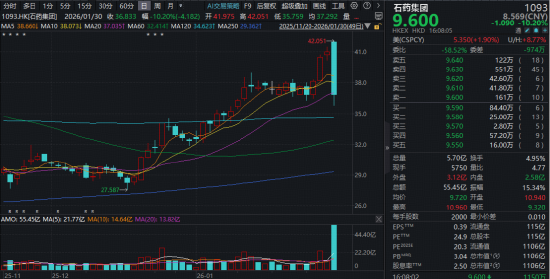
中国创新药出海BD再获里程碑式突破! 1月30日,石药集团宣布已与全球生物制药领导者阿斯利康签订战略研发合作与授权协议,以利用集团 专有的缓释给药技术平台及多肽药物AI发现平台,开发创新长效多肽药物。若后续所有研发及销售里 程碑均达成,石药集团方面有权获得总计高达185亿美元的款项。 据不完全统计,本次交易刷新了中国药企BD交易总金额最高纪录,超过了此前启德医药与 Biohaven&AimedBio达成的一笔130亿美元交易。其12亿美元的预付款,仅次于此前三生制药与辉瑞就 PD-1/VEGF达成的数额。 不过,二级市场反应不佳,石药集团股价高开低走,盘中一度狂泻近13%,收跌10.2%。什么原因?分 析人士指出,或系多方面因素叠加影响。 从石药集团股价近日表现来看,市场可能提前定价。在此次协议公告前,石药集团已连续多日强势上 涨,尤其在1月28日,股价单日大涨6.14%创年内新高。公告发布后,部分资金可能选择获利了结,形 成"利好兑现"式抛压。 从业绩贡献来看,尽管协议总金额高达185亿美元,但预付款为12亿美元,其余173亿美元为研发与销售 里程碑付款,需在未来数年、多个临床阶段成功推进后方可兑现,短期现 ...

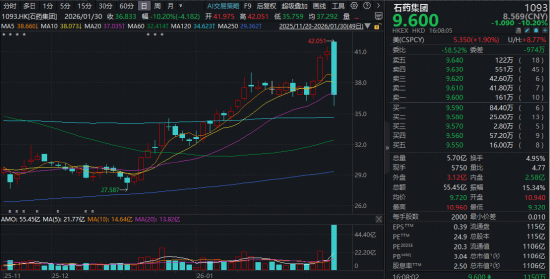
石药集团创纪录BD反致股价“跳水”,185亿美元天价交易为何吓坏市场?
Hua Xia Shi Bao· 2026-01-31 09:01
Core Viewpoint - The strategic collaboration between CSPC Pharmaceutical Group and AstraZeneca, valued at up to $18.5 billion, was met with unexpected market skepticism, leading to a significant drop in stock prices for both companies involved [2][4][7]. Group 1: Strategic Collaboration Details - CSPC Pharmaceutical Group announced a strategic partnership with AstraZeneca to co-develop innovative long-acting peptide drugs based on CSPC's drug delivery technology and AI discovery platform [3][4]. - The agreement includes a $1.2 billion upfront payment, up to $3.5 billion in research milestone payments, and $13.8 billion in sales milestone payments, along with a double-digit revenue share based on annual net sales [4][5]. - This deal surpasses the previous record of $11.4 billion set by Innovent Biologics and Takeda in 2025, marking a new high for outbound licensing in China's biopharmaceutical sector [4]. Group 2: Market Reaction and Concerns - Following the announcement, CSPC's stock fell by 9.82% to HKD 9.64 per share, while its closely related company, New Horizon Health, saw a drop of 15.72% [2][7]. - Analysts suggest that the market's negative reaction stems from concerns over the details of the deal and the companies' fundamentals, indicating that the perceived benefits may not align with the actual risks involved [7]. - The milestone payments are contingent on successful clinical trials and market performance, raising questions about the viability of CSPC's projects in a competitive landscape [7][8]. Group 3: Product and Competitive Landscape - The core asset in this collaboration is SYH2082, a long-acting weight management drug currently in Phase I clinical trials, targeting GLP-1R and GIPR receptors [8][9]. - The competitive landscape for GLP-1 drugs is intensifying, with major players like Eli Lilly and domestic companies rapidly advancing their own dual-target and multi-target drugs [9][10]. - CSPC's late entry into the clinical phase with SYH2082 presents challenges in efficacy differentiation and safety optimization, which will be critical for its future competitiveness [10]. Group 4: Financial Context and Implications - CSPC's decision to pursue this significant licensing deal comes at a time when its financial performance is under pressure, with a reported revenue decline of 12.32% year-on-year for the first three quarters of 2025 [11]. - New Horizon Health stands to benefit from the upfront payment, which will help alleviate its cash flow issues as it anticipates a significant net loss in 2025 due to high R&D expenditures [12].

ADC子行业专题研究:生物医药深度报告:国产ADC药物即将迎来高光时刻
Guohai Securities· 2026-01-30 13:34
评级:中性(维持) 曹泽运(证券分析师) 李畅(证券分析师) S0350525110001 S0350524010004 caozy@ghzq.com.cn lic05@ghzq.com.cn 证券研究报告 2026年01月30日 医药生物 生物医药深度报告:国产ADC药物即将迎来高光时刻 ——ADC子行业专题研究 最近一年走势 相关报告 《医药生物行业动态研究:中国独立医学实验室行业的先行者(中性)*医药生 物*曹泽运,林羽茜》——2026-01-27 《医药生物行业动态研究:AI药研或引产业革命,JPM大会再推行业新峰(中 性)*医药生物*曹泽运,林羽茜》——2026-01-20 相对沪深300表现 | 表现 | 1M | 3M | 12M | | --- | --- | --- | --- | | 医药生物 | 2.0% | -2.7% | 21.1% | | 沪深300 | 2.1% | 1.3% | 24.5% | 请务必阅读报告附注中的风险提示和免责声明 2 -9% 0% 9% 19% 28% 37% 2025/02/05 2025/05/06 2025/08/04 2025/11/02 医药生物 ...
185亿美元!石药集团创纪录BD落地,股价反跌10%,什么情况?
Xin Lang Ji Jin· 2026-01-30 11:32
Core Viewpoint - The strategic collaboration between Shijiazhuang Pharmaceutical Group and AstraZeneca marks a significant milestone in the outbound business development (BD) of Chinese innovative drugs, with a potential total payment of up to $18.5 billion, setting a new record for BD transactions in the Chinese pharmaceutical industry [1][3]. Group 1: Transaction Details - Shijiazhuang Pharmaceutical has signed a strategic R&D cooperation and licensing agreement with AstraZeneca, utilizing its proprietary sustained-release drug delivery technology and peptide drug AI discovery platform to develop innovative long-acting peptide drugs [1]. - The total potential payment of $18.5 billion includes an upfront payment of $1.2 billion, with the remaining $17.3 billion contingent on achieving various R&D and sales milestones over the coming years [3]. Group 2: Market Reaction - Despite the significant deal, Shijiazhuang Pharmaceutical's stock experienced a sharp decline, dropping nearly 13% intraday and closing down 10.2%, attributed to profit-taking after a strong pre-announcement stock performance [1][3]. - The overall market sentiment was also negative, with major indices in Hong Kong, including the Hang Seng Index and the Hang Seng Biotechnology Index, falling over 2%, impacting the performance of other leading Chinese biopharmaceutical companies [3]. Group 3: Industry Outlook - Analysts suggest that the core logic of domestic innovative drugs remains solid, indicating a favorable window for investment as the BD of Chinese companies accelerates and the price gap for innovative drugs between China and the U.S. narrows, presenting significant long-term growth potential [5]. - The Hong Kong Stock Connect innovative drug ETF (520880) has seen substantial net subscriptions, indicating ongoing investor interest despite recent market volatility [4].
《医药出海新图景》:一年吸金超千亿美元
3 6 Ke· 2026-01-30 10:32
Core Viewpoint - The report highlights that China's biopharmaceutical industry is transitioning from a "cost advantage" to "innovation-driven" growth, with overseas expansion becoming a second growth curve for innovative drug companies, indicating a shift from "heavy R&D" to "strong commercialization" [1][3]. Group 1: Industry Growth and Financial Performance - By the first three quarters of 2025, China's innovative drug sector revenue reached 48.83 billion yuan, reflecting a year-on-year growth of 22.1% [3]. - The total amount of foreign licensing for Chinese innovative drugs exceeded 100 billion USD in the first ten months of 2025, averaging nearly 300 million USD per day in international capital for Chinese original innovative drugs [3]. - Several companies have turned losses into profits, marking a period where the profitability of the Chinese biopharmaceutical industry is entering a realization phase [3]. Group 2: Evolution of Export Structure - The report outlines a significant transformation in China's biopharmaceutical exports, moving from low-value raw materials to high-value formulations, innovative drugs, and high-end medical devices [6][13]. - The overseas market strategy has diversified, focusing on consolidating developed markets while exploring emerging markets, with the U.S. remaining a primary target for innovative drugs [6][8]. Group 3: Outbound Strategies and Models - Chinese biopharmaceutical companies have developed a diverse set of outbound strategies, including independent expansion, co-development, licensing-out, NewCo models, and distribution agency, evolving from simple equity transactions to deeper participation in the global value chain [9][11]. - The limitations of traditional licensing-out models are becoming apparent, while Co-Co and NewCo models facilitate deeper involvement in global R&D, registration, and commercialization processes [9][11]. Group 4: Future Trends and Strategic Recommendations - The report identifies four key trends for 2026 and beyond: continuous evolution of technological frontiers, a shift from equity transactions to strategic symbiosis, the growing importance of emerging markets, and enhanced collaborative effects across the industry chain [14]. - Companies are encouraged to build long-term capabilities in compliance, commercialization, and brand image, moving from "industry outbound" to "global brand building" [17][18].
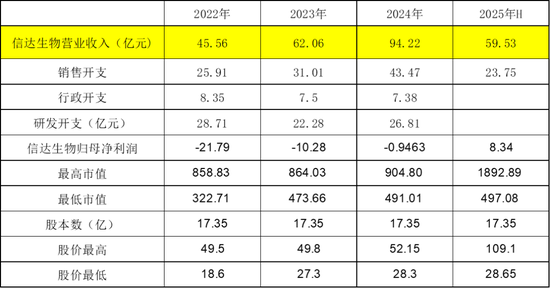
从信达生物、恒瑞医药和百济神州,看Biopharma的估值区间
Xin Lang Cai Jing· 2026-01-30 08:57
| | 2022年 | 2023年 | 2024年 | 2025年H | | --- | --- | --- | --- | --- | | 信达生物营业收入(亿元) | 45. 56 | 62.06 | 94. 22 | 59. 53 | | 销售开支 | 25.91 | 31.01 | 43. 47 | 23.75 | | 行政开支 | 8.35 | 7.5 | 7.38 | | | 研发开支(亿元) | 28. 71 | 22.28 | 26.81 | | | 信达生物归母净利润 | -21.79 | -10.28 | -0.9463 | 8.34 | | 最高市值 | 858.83 | 864.03 | 904.80 | 1892.89 | | 最低市值 | 322.71 | 473.66 | 491.01 | 497.08 | | 股本数(亿) | 17.35 | 17.35 | 17.35 | 17.35 | | 股价最高 | 49.5 | 49.8 | 52.15 | 109.1 | | 股价最低 | 18.6 | 27.3 | 28.3 | 28.65 | 来源:理忱视野 在《从Biotech ...
中国药企的并购大时代来了?
3 6 Ke· 2026-01-29 12:48
Group 1 - The core point of the article highlights the acceleration of domestic pharmaceutical mergers and acquisitions (M&A), with companies like Kanghua Biotech and China Biopharmaceutical leading the trend [1][5][8] - Kanghua Biotech announced its acquisition of Nameixin through capital increase and equity transfer, marking a significant move in the domestic M&A landscape [1] - The trend of M&A in China's innovative drug sector is seen as a response to the need for companies to enhance their capabilities and integrate resources [5][7] Group 2 - Historically, M&A activities in China's innovative drug sector have been limited due to various factors, including the ambition of biotech companies to grow independently and the insufficient quality of innovations [4][3] - The financial strength of domestic pharmaceutical companies is relatively lower compared to their international counterparts, with leading domestic firms holding around $20 billion in cash compared to over $300 billion for top global firms [4] - Recent M&A activities, although smaller in scale compared to international deals, indicate a shift towards realizing the value of existing capabilities within leading domestic companies [5][6] Group 3 - The M&A trend is driven by the need for domestic companies to leverage their clinical development and commercialization capabilities, as seen in the case of Kanghua Biotech and Nameixin [6][7] - The integration of resources through M&A is expected to enhance the competitive edge of domestic firms, allowing them to quickly fill technological gaps and expand their product pipelines [8][9] - The acceleration of internal circulation in the industry is anticipated to create a more favorable ecosystem for both large pharmaceutical companies and smaller biotech firms, fostering innovation and addressing unmet clinical needs [9][10]