三全食品

Search documents
三全食品(002216) - 关于对外投资设立境外子公司及孙公司的公告
2025-07-21 11:30
三全食品股份有限公司 关于对外投资设立境外子公司及孙公司的公告 本公司及董事会全体成员保证信息披露内容的真实、准确和完整,没有虚假记载、误导 性陈述或重大遗漏。 证券代码:002216 证券简称:三全食品 公告编号:2025-030 (一)对外投资基本情况 一、对外投资概述 三全食品股份有限公司(以下简称"三全食品"或"公司") 为进一步完 善公司全球化战略布局,快速推动海外业务发展进程,公司根据整体战略规划, 拟在中国香港设立全资子公司、由香港子公司在开曼群岛投资设立一家全资子公 司,由开曼孙公司出资在澳大利亚设立孙公司,最终投资建设澳大利亚生产基地 并进行澳大利亚、新西兰及东南亚市场开拓。 本次对外投资总额约为2.8亿澳元,主要用于设立及运营境外公司、固定资 产购置(包括厂房购买、研发技术中心建设、设备采购、全自动冷库建设及冷链 物流车辆购置等)、基础设施改造、营销体系建设、流动资金等相关事项,实际 投资金额以中国及当地主管部门批准金额为准。 为确保对外投资事项顺利实施,董事会授权总经理陈希先生全权代表公司签 署、执行与本次对外投资相关的文件,并办理或在授权范围内转授权其他人员办 理本次对外投资相关事宜。 ...

三全食品(002216) - 第九届董事会第二次会议决议公告
2025-07-21 11:30
三全食品股份有限公司 第九届董事会第二次会议决议公告 证券代码:002216 证券简称:三全食品 公告编号:2025-029 本公司及董事会全体成员保证信息披露内容的真实、准确和完整,没有虚假记载、误导 性陈述或重大遗漏。 为进一步完善公司全球化战略布局,快速推动海外业务发展进程,公司根据 整体战略规划,拟在中国香港设立全资子公司、由香港子公司在开曼群岛投资设 立一家全资子公司,由开曼孙公司出资在澳大利亚设立孙公司,最终投资建设澳 大利亚生产基地并进行澳大利亚、新西兰及东南亚市场开拓。 本次对外投资总额约为 2.8 亿澳元,主要用于设立及运营境外公司、固定资 产购置(包括厂房购买、研发技术中心建设、设备采购、全自动冷库建设及冷链 物流车辆购置等)、基础设施改造、营销体系建设、流动资金等相关事项,实际 1 一、董事会会议召开情况 1、三全食品股份有限公司(以下简称"公司")第九届董事会第二次会议通 知于 2025 年 7 月 11 日以电话、传真、电子邮件、书面等方式通知全体董事及高 级管理人员。 2、本次会议于 2025 年 7 月 21 日上午 9:30 在公司会议室以现场会议方式召 开。 3、本次会议应到 ...
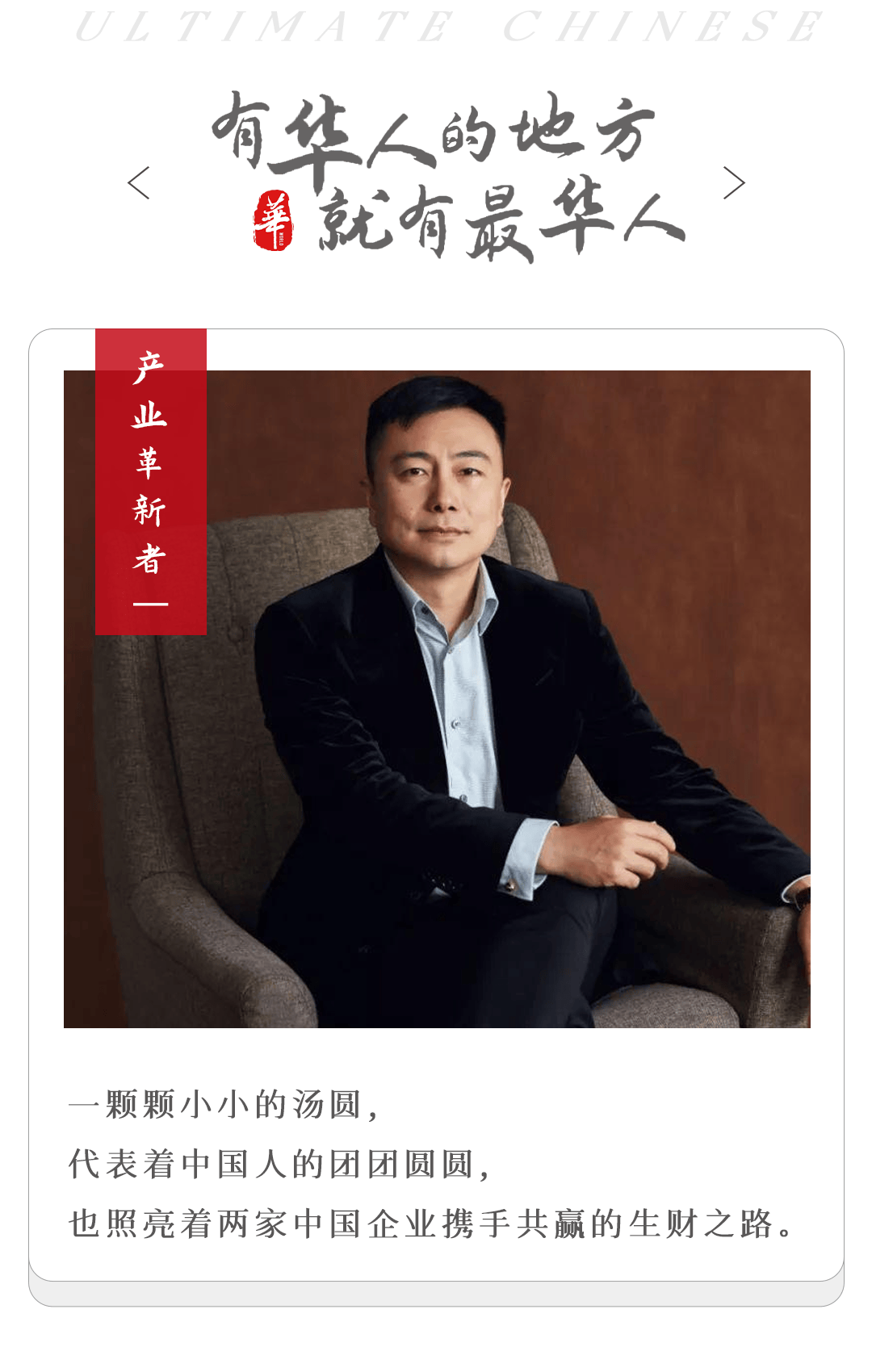
他把汤圆卖到全球第一,背后是两大巨头的“一笑泯恩仇”
Sou Hu Cai Jing· 2025-07-21 09:26
Core Viewpoint - The article highlights the journey of Si Nian Food, emphasizing its growth into a leading frozen food manufacturer in China and its strategies to overcome market biases and competition, particularly with its rival San Quan [5][8][50]. Company Overview - Si Nian Food has become one of the largest frozen food manufacturers in China, selling over 10 billion dumplings and 30 billion tangyuan in the past year, with products exported to over 50 countries and regions [5][50]. - The company was founded by Li Wei and CEO Wang Peng, who initially entered the market by producing tangyuan to compete with San Quan, which was already established in the frozen food sector [11][15]. Market Position and Competition - Si Nian and San Quan, both headquartered in Zhengzhou, initially had a fierce rivalry but later formed a cooperative relationship to strengthen their market position against foreign competitors [8][24]. - The two companies successfully collaborated to capture market share from Taiwanese brands, utilizing strategies like offering bulk packaging and competitive pricing [25][28]. Product Development and Innovation - Si Nian has expanded its product line from tangyuan and dumplings to include a variety of frozen foods such as buns, wontons, and hot pot products, reflecting a comprehensive approach to the frozen food market [32][34]. - The introduction of the "Shi Shi Ru Yi" tangyuan in 2023, which achieved over 100 million in sales within three months, showcases the company's focus on innovation and appealing to younger consumers [42]. International Expansion - Si Nian has made significant strides in international markets, particularly in the U.S., where it established a production base to navigate strict import regulations and enhance its distribution capabilities [43][48]. - The U.S. factory has become a key strategic asset, allowing Si Nian to significantly increase its market presence and sales in North America, with products now available in major retail chains [50]. Strategic Vision - Wang Peng emphasizes a long-term vision for the company, focusing on maintaining high standards for food safety and health while innovating to meet consumer demands [50]. - The cooperative spirit between Si Nian and San Quan is seen as a model for domestic companies to work together to enhance their competitiveness in the global market [50].

整个社会都在喊没钱了,为什么这些公司反而年赚百亿?
创业家· 2025-07-20 10:35
Core Viewpoint - The article discusses how certain industries are thriving despite a general perception of economic downturn, highlighting eight sectors that present significant business opportunities in a low-desire society [3][4]. Group 1: Key Industries - **Second-hand Economy**: The second-hand luxury market in Japan, represented by companies like Daikokuya, has seen a surge in revenue. In China, platforms like Hongbulin and Panghu are experiencing similar growth [6][7][9]. - **Pet Economy**: Despite declining birth rates, spending on pets is increasing, with brands like Inaba in Japan and Guobao in China seeing strong sales. The pet healthcare sector is also expanding significantly [10][11][13][14]. - **Adult Care**: The adult diaper market in Japan has surpassed $10 billion, indicating a growing potential for similar products in China, driven by an aging population [15][16][17]. - **Health Food and Beverages**: Changes in population structure and rising health awareness have led to the success of sugar-free products and functional beverages in both Japan and China [20][21]. - **Beauty Economy**: The demand for beauty products remains strong, with companies like Jinbo Bio achieving high market valuations through collagen products, indicating a persistent consumer interest in beauty [23]. - **Outdoor and Leisure**: The outdoor equipment market is thriving, with brands in China experiencing rapid sales growth, reflecting a desire for leisure activities despite economic constraints [24]. - **Emotional Economy**: Brands like Labubu and Rio are capitalizing on the need for emotional comfort, showing that consumers are willing to spend on experiences that provide joy [24][25]. - **Lazy Economy**: The trend towards convenience is evident in the growth of frozen food brands and smart home appliances, which cater to a generation with less time for cooking [28][29][30]. Group 2: Market Insights - The article emphasizes that even in a low-desire economy, there are significant opportunities for those willing to invest in counter-cyclical sectors. It encourages stakeholders to recognize and act on these emerging trends [32].

经济越来越差,这八大行业越赚爆!
创业家· 2025-07-17 10:10
Core Insights - The article discusses how certain industries are thriving despite the prevailing narrative of economic hardship, highlighting eight sectors that present significant business opportunities in a low-desire society [3][4]. Group 1: Key Industries - The second-hand economy is booming, with companies like Dabaiku in Japan and Hongbulin in China seeing substantial revenue growth as consumers turn to second-hand luxury goods [8][6]. - The pet economy is flourishing, with brands like Inaba and Guobao experiencing strong stock performance, as consumers prioritize spending on pet products over traditional family expenses [9][10]. - The adult care market, exemplified by Unicharm's success in Japan, is projected to grow significantly in China, driven by an aging population [14][16]. - Health food and beverage sectors are expanding, with brands like Dongfang Shuye and Jianchun capitalizing on the rising health consciousness among consumers [19][20]. - The beauty economy remains robust, with products like collagen supplements and home beauty devices achieving high sales, indicating a persistent demand for beauty solutions [23]. - Outdoor and leisure products are gaining traction, with brands like Snow Peak and Kailas seeing increased sales as consumers seek outdoor experiences [25]. - The emotional economy is on the rise, with brands like Labubu and Rio catering to consumers' desires for comfort and enjoyment [27][28]. - The convenience economy is thriving, with frozen food brands and smart home appliances addressing the needs of younger generations who prioritize time-saving solutions [32][33]. Group 2: Market Trends - The article emphasizes that even in a low-desire period, there are significant opportunities for companies that can identify and invest in counter-cyclical sectors [36]. - The upcoming seminar aims to provide insights into the methodologies of successful consumer giants in Japan and China, focusing on efficiency, demand reconstruction, and capital strategies [37].



9个河南人,撑起中国食品半边天
36氪· 2025-07-11 15:25
Core Viewpoint - The article highlights the significant contributions of nine prominent figures from Henan in various sectors of the food industry, showcasing their innovative spirit and resilience in building successful brands that have become integral to China's food landscape [4][37]. Group 1: Seasoning Industry - Wang Shouyi transformed a family seasoning recipe into a national brand, "Wang Shouyi Thirteen Spices," achieving annual sales of 5 billion with a registered capital of 80 million by 2003 [6][8]. - The brand emphasizes quality control, sourcing specific ingredients from designated regions, ensuring high standards [7][9]. Group 2: Instant Food Industry - Yao Zhongliang revitalized the struggling Bai Xiang brand, turning it into a leading player in the instant food market by recruiting skilled talent and aggressively marketing the product [10][12]. - Bai Xiang has become a significant competitor in the instant food sector, contributing to Henan's food industry reputation [13]. Group 3: Beverage Industry - Zhang Hongchao founded "Mixue Ice City," which quickly gained popularity for its affordable and delicious beverages, expanding through a strict franchise model [14][16]. - The brand has successfully entered international markets, with notable sales performance in its first overseas store [16]. Group 4: Alcohol Industry - Zhang Tieshan established Jin Xing Beer, focusing on quality and differentiation in a market dominated by foreign brands, achieving a 65% market share in Henan [20][21]. - The brand has expanded nationally and is recognized for its quality and competitive pricing [20]. Group 5: Snack Industry - Shi Jubin founded "Haoxiangni," leading the red date industry with innovative products and a focus on quality sourcing, achieving over 30% market share [22][24]. - The brand promotes red date culture and has successfully penetrated international markets [24]. Group 6: Candy Industry - Zhao Qisan launched Jin Si Hou candy, which became popular with its milk candy, achieving sales exceeding 2 billion in 2008 [25][27]. - The brand has expanded its operations and continues to innovate with new products [27]. Group 7: Frozen Food Industry - Chen Zemin founded Sanquan Foods, pioneering the frozen food category in China with innovative products like frozen dumplings and tangyuan [28][30]. - The company has grown to become a leader in the frozen food sector, significantly impacting the industry [31]. Group 8: Ice Cream Industry - Zhang Zhenqing established Tianbing, focusing on affordable and high-quality ice cream, gaining a substantial market share in the cold drink sector [32][34]. - The brand emphasizes product innovation and consumer accessibility [34]. Group 9: Meat Industry - Wan Long led Shuanghui through a significant transformation, achieving over 180 billion in annual revenue and a 25% market share in the meat industry [36]. - The company has expanded globally, becoming a major player in the meat processing sector [36].



【行业前瞻】2025-2030年中国自热火锅行业发展分析
Sou Hu Cai Jing· 2025-07-10 11:06
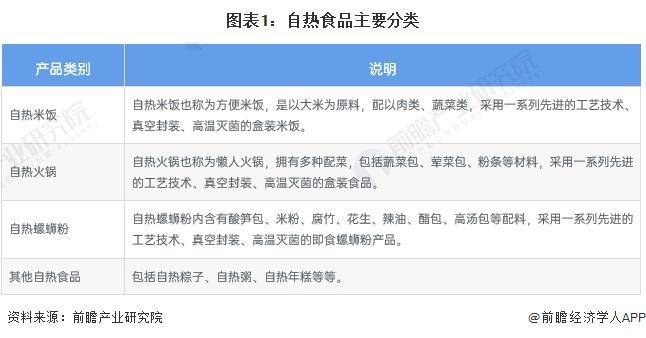
Group 1: Industry Overview - The main listed companies in the industry include Shuanghui Development, Anjii Food, Guangzhou Restaurant, Sanquan Foods, Qianwei Central Kitchen, Jinzi Ham, Haixin Food, Weizhi Xiang, and Haidilao [1] - The hot pot market in China is expected to reach a scale of 617.5 billion yuan in 2024, with a year-on-year growth of 5.6%, which is higher than the overall growth rate of the catering industry [3] Group 2: Self-Heating Hot Pot Market - Self-heating hot pot is a significant segment of self-heating food, designed for quick reheating and convenience, featuring various ingredients such as vegetables, meat, and noodles [2] - The self-heating hot pot market has seen a significant decline in market share, with the top five companies holding a combined market share of 83.73% as of Q4 2024, indicating a high level of market concentration [5] - The self-heating hot pot market in China is projected to account for over 70% of the total self-heating food market, with its market size exceeding 3 billion yuan in 2021 [7]
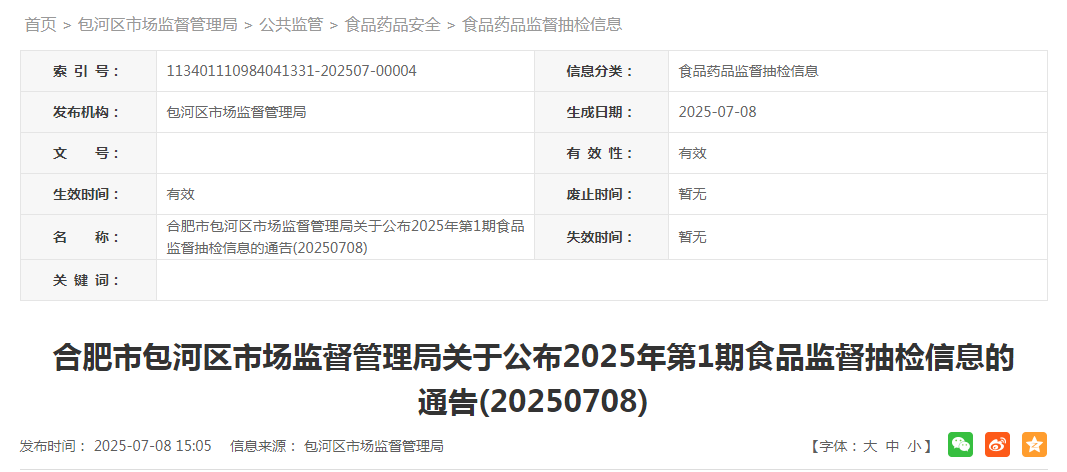
合肥市包河区市场监督管理局关于公布2025年第1期食品监督抽检信息的通告
Zhong Guo Zhi Liang Xin Wen Wang· 2025-07-09 08:44
Group 1 - The announcement from the Hefei Baohe District Market Supervision Administration details the first food safety inspection results for 2025, highlighting both non-compliant and compliant products [2][4][5] - Several products were found to exceed the permissible limits for certain substances, specifically the presence of "咪鲜胺和咪鲜胺锰盐" in various food items, with detected levels of 0.445 mg/kg, 1.20 mg/kg, and 1.25 mg/kg, while the acceptable limit is ≤0.3 mg/kg [4][5][6] - The report includes a list of compliant products, such as "润香豆沙粽" and "毛峰茶," which passed the safety inspections, indicating a focus on maintaining food quality standards [5][6][7] Group 2 - The inspection results are part of ongoing efforts to ensure food safety and compliance within the region, reflecting the regulatory body's commitment to public health [2][3] - The report categorizes products into compliant and non-compliant, providing transparency and accountability in food safety practices [5][6] - The findings may influence consumer trust and purchasing decisions, as well as impact the reputation of the businesses involved in the food supply chain [4][5][6]
2025Q2线下零售速报
3 6 Ke· 2025-07-08 08:17
Overall Summary - The offline retail consumption situation for Q2 2025 shows a general decline in sales across major categories such as food, beverages, alcohol, and daily chemicals, although the rate of decline has narrowed compared to previous quarters [2][4][6]. Group 1: Retail Performance Overview - The analysis is based on data from the "Shangma Ying Brand CT," which monitors offline retail across various city levels and includes over 30,000 brands and 14 million product barcodes [2]. - The overall sales revenue for Q2 2025 is down approximately 7% year-on-year, with a better performance in order volume compared to average spending, indicating consumer pressure on budgets and prices [4][6]. - The price index for food, beverages, alcohol, and daily chemicals shows a gradual recovery, but remains under pressure, with most categories below the baseline index of 100 [4][6]. Group 2: Key Category Insights - In the food category, frozen products like frozen sausages have shown significant market share growth, while dairy products are stabilizing after previous declines [13][22]. - The beverage category has seen strong growth in sports and plant-based drinks, with some products exceeding 30% year-on-year growth, although the overall market remains competitive [17][29]. - The snack category is experiencing a decline in market share due to health trends and new retail formats, with significant drops in sales for various subcategories [14][22]. Group 3: Consumer Behavior and Trends - The average spending per order has increased for certain categories like ready-to-drink juices and plant-based beverages, indicating a shift in consumer preferences towards higher-quality products [34][35]. - The average purchase quantity per order has decreased across all selected categories, suggesting a trend towards larger packaging or a focus on value [40]. - The competitive landscape is intensifying, particularly in the frozen food and beverage sectors, with numerous brands vying for market share [46][47].


大学老师辞职卖鱼丸,年入150亿,港股IPO
创业邦· 2025-07-08 03:23
Core Viewpoint - Anjiu Food, a leading player in the frozen food industry, has recently listed on the Hong Kong Stock Exchange, becoming the first company in the sector to achieve dual listing in both A and H shares, showcasing its significant growth and market position [1]. Group 1: Company Overview - Anjiu Food, originating from Fujian, has experienced substantial growth since its A-share listing in 2017, with revenue increasing from 4.26 billion to 15 billion over eight years, driven by its focus on hot pot frozen products and prepared dishes [1]. - The company has achieved remarkable success with 39 products generating over 100 million in sales, significantly outpacing competitors like Si Nian Food and San Quan Food [1]. Group 2: Recent Performance - In the first quarter of this year, Anjiu Food reported its first decline in performance, particularly in the prepared dishes segment, indicating potential challenges ahead [2]. - The company plans to utilize the funds raised from its recent listing primarily for overseas expansion, targeting Southeast Asia and North America, which may reshape the global frozen food competitive landscape [2].