蜜雪集团

Search documents
2026年港股消费服务投资策略:把握确定性,关注边际改善
Shenwan Hongyuan Securities· 2025-11-13 09:42
Group 1: Macau Gaming Industry - The gaming revenue in Macau for 2025 is expected to exceed expectations, with high-end consumption showing resilience due to supply constraints. Monthly gaming revenue from April to July consistently surpassed expectations, with October's gross gaming revenue reaching 24.1 billion MOP, a year-on-year increase of 16% [4][12] - Visitor numbers in Macau are projected to approach 2019 levels, with total inbound visitors from January to September 2025 reaching 29.67 million, a year-on-year increase of 14%, recovering to 98% of 2019 levels [12][13] - The gaming sector is experiencing upward momentum, with the gross gaming revenue recovering to 88% of 2019 levels in Q3 2025, driven by a 13% year-on-year increase [7][9] - The valuation of gaming companies is currently at low levels, presenting potential investment opportunities [15][18] Group 2: Online Travel Industry - The online travel industry is experiencing stable growth, with domestic residents' travel numbers increasing by 18% year-on-year in the first nine months of 2025, and travel spending rising by 12% [30][31] - The competitive landscape in the online travel sector remains stable, with high entry barriers due to supply chain and customer service advantages [32][33] - Tongcheng Travel is expected to see gradual improvement in profit margins, with a 14% year-on-year increase in core OTA business revenue in Q2 2025 [41][42] Group 3: Restaurant Industry - The restaurant sector is currently in a recovery phase, with the growth rate of social retail dining revenue lagging behind overall social retail growth [50][51] - The chain rate in China's restaurant services is steadily increasing, projected to rise from 15% in 2020 to 24% in 2025, although it remains below the global average of 35% [53][54] - Companies like Mixue and Gu Ming are experiencing high growth rates due to rapid store expansion and effective marketing strategies [59][60]


“双11”大促期间 服务消费热点频现 “AI+电商”模式屡次被提及
Mei Ri Jing Ji Xin Wen· 2025-11-13 06:08
Core Insights - The Hong Kong stock market's consumer sector experienced fluctuations, with the consumer ETF (513230) showing a slight decline. Notable performers included Samsonite, which surged over 21%, while companies like Wynn Macau and Miniso faced significant declines [1] Group 1: Market Performance - The consumer ETF (513230) tracks the CSI Hong Kong Stock Connect Consumer Theme Index, encompassing major players in the internet e-commerce and new consumption sectors, including Pop Mart, Lao Pu Gold, and Miniso, alongside tech giants like Tencent and Alibaba [2] - During this year's "Double 11" shopping festival, total online retail sales reached nearly 2.4 trillion yuan, marking a new high with a year-on-year growth of over 10% [1] Group 2: Consumer Trends - The "Double 11" event is shifting from a product-driven model to one focused on services, experiences, and emotional value, reflecting changing consumer preferences [1] - The integration of AI technology in e-commerce is becoming increasingly prominent, with platforms aiming to leverage AI to create a "second growth curve" [1]
餐饮行业专题报告:餐饮外卖业务,蜜糖还是砒霜?
Guoxin Securities· 2025-11-13 05:13
Investment Rating - The report maintains an "Outperform" rating for the restaurant industry [4]. Core Insights - The restaurant industry is transitioning from extensive expansion to a new phase of steady growth, with a 3.3% year-on-year increase in cumulative revenue from January to September 2025, which is lower than the growth rate of social retail sales [14][15]. - The importance of online channels, particularly food delivery, is increasingly recognized as traditional shopping district advantages diminish and foot traffic conversion rates decline [20][26]. - Different restaurant formats exhibit varying degrees of adaptability to food delivery, with beverage and fast food categories showing the highest compatibility, while hot pot restaurants have the lowest [33][39]. Summary by Sections New Changes - The online channel's significance is becoming more pronounced, with a 22.8% share of the national restaurant revenue attributed to the food delivery market, which is projected to reach approximately 1.3 trillion yuan in 2024 [20][21]. - The number of new shopping centers opened in 2024 fell to a ten-year low, indicating a retreat of traditional shopping district advantages [15]. Adaptability of Different Formats - The adaptability of various restaurant formats to food delivery is ranked as follows: beverage and fast food > casual dining > hot pot, with delivery revenue proportions reaching 60-70% for fast food and beverages, while casual dining ranges from 15-40% [33][39]. - The compatibility of restaurant formats with food delivery is influenced by the type of consumer demand, frequency of consumption, and the complexity of supply and delivery [36][39]. Balancing Delivery and Dine-in - A healthy balance between delivery and dine-in is crucial for restaurant brands, with optimal delivery revenue proportions estimated at 30-40% for casual dining and up to 60-70% for fast food and beverages [2][3]. - Brands that overly rely on delivery may risk losing brand recognition and profitability, emphasizing the need for a strategic approach to manage both channels effectively [2][3]. Investment Recommendations - The report recommends focusing on companies that can effectively balance online and offline strategies, highlighting brands like Xiaocaiyuan, Gu Ming, and Meituan-W as key players in the industry [4][8].
“双11”大促期间,服务消费热点频现,“AI+电商”模式屡次被提及
Mei Ri Jing Ji Xin Wen· 2025-11-13 03:14
Group 1 - The Hong Kong stock consumer sector experienced fluctuations, with the consumer ETF (513230) showing a slight decline as of the report time [1] - Notable performers included Samsonite, which surged over 21%, while companies like Wynn Macau and Miniso faced significant declines [1] - The "Double 11" shopping festival saw online retail sales reach nearly 2.4 trillion yuan, marking a new high with a year-on-year growth of over 10% [1] Group 2 - The consumer ETF (513230) tracks the CSI Hong Kong Stock Connect Consumer Theme Index, encompassing a wide range of sectors including new consumption leaders and major internet e-commerce players [2] - The ETF includes companies like Pop Mart, Lao Pu Gold, and major tech firms such as Tencent and Alibaba, highlighting a strong tech-consumer integration [2]

覆盖电商、潮玩、新茶饮等赛道,港股消费ETF(513230)或与“双十一”大促形成共振
Sou Hu Cai Jing· 2025-11-13 02:40
Group 1 - The Hong Kong consumer sector is experiencing slight fluctuations, with the Hong Kong Consumer ETF (513230) down nearly 0.5% as of the report [1] - Notable performers include Samsonite, which surged over 18%, and other companies like Lao Pu Gold and Techtronic Industries, which rose over 2% [1] - The total transaction value for Tmall's Double 11 reached 540.3 billion yuan, showing steady growth compared to last year, while JD's 11.11 sales exceeded 349.1 billion yuan, marking a historical high [1] Group 2 - The recent policies from the Ministry of Finance and the National Bureau of Statistics indicate a focus on boosting consumption, with the CPI rising by 0.2% year-on-year, reversing the previous month's decline [1] - The new tax exemption policy effective from November 1 includes popular categories like mobile phones and sports goods, benefiting related companies in the Hong Kong consumer chain [1] - The digital economy is being emphasized in the "14th Five-Year Plan," promoting the integration of digital and real economies, which is expected to enhance AI applications [2]
万亿销售的“双十一”大促背后,港股消费和科技板块正在“等风来”
Zhi Tong Cai Jing· 2025-11-13 01:58
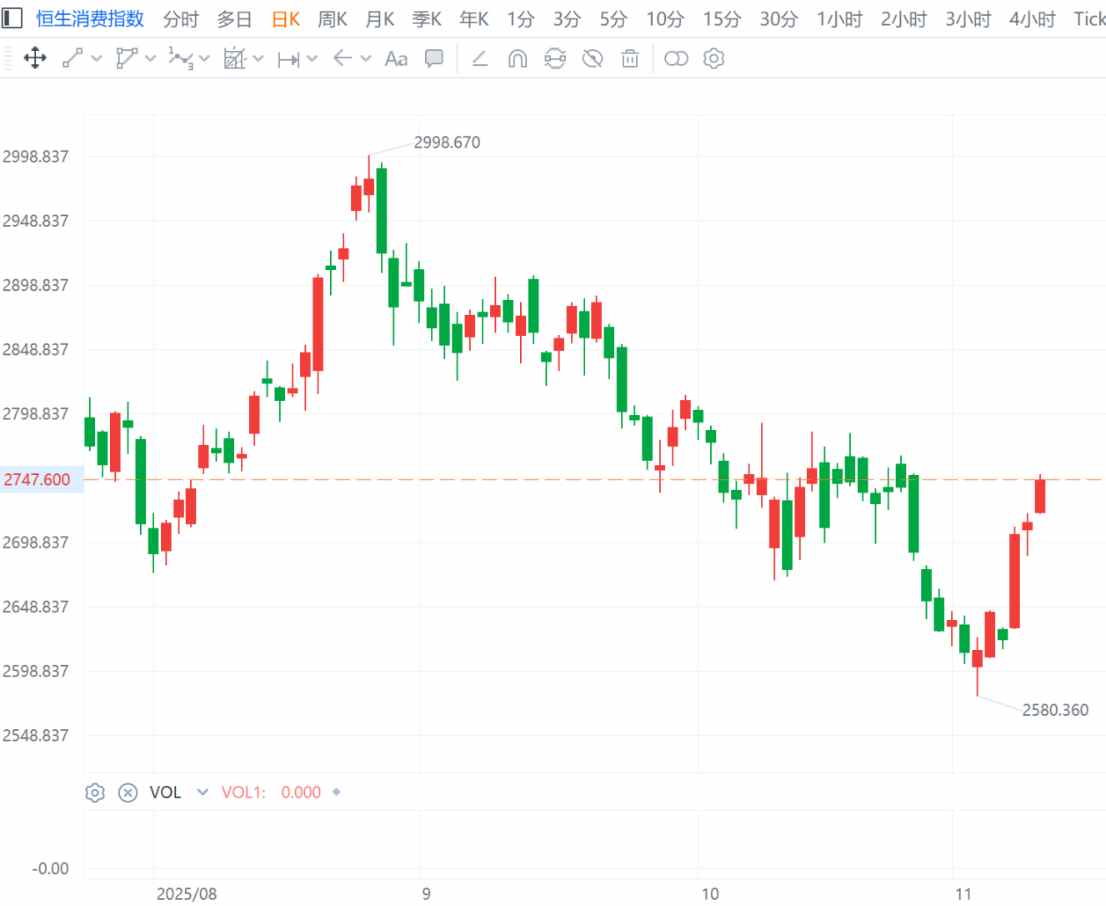
Group 1: E-commerce Performance - Tmall's Double 11 total transaction volume reached 540.3 billion yuan, showing steady growth compared to last year; JD's 11.11 cumulative order amount exceeded 349.1 billion yuan, setting a historical record, with both platforms surpassing 890 billion yuan combined [1] - The overall online retail sales during this year's Double 11 reached nearly 2.4 trillion yuan, a new high with a year-on-year growth of over 10% [1] - Douyin's live-streaming sales exceeded 41,000 merchants, with a year-on-year growth of 500%, indicating the vibrancy of the live e-commerce channel [1] Group 2: Consumer Sector Recovery - The Hang Seng Consumer Index has rebounded nearly 6 trading days since hitting a low of 2580.36 points [2] - The consumer sector in Hong Kong covers e-commerce, trendy toys, new tea drinks, and national tide beauty products, with service consumption accounting for over 60%, resonating with the current Double 11 promotions [4] - The Hang Seng Consumer Index's PE-TTM is only 17.79 times, at a historical low valuation, indicating a significant cost advantage for allocation [5] Group 3: AI and E-commerce Integration - The "AI + E-commerce" concept was frequently mentioned during this year's Double 11, with platforms like Taobao planning for full AI implementation by 2025 [6] - Taobao launched several free AI shopping and search features, including "AI Assistant" and "AI Universal Search," aimed at enhancing user shopping experiences [7] - Major internet technology companies in Hong Kong, such as Tencent and Alibaba, have significantly increased their capital expenditures in AI, with a combined growth of 131% to 116.6 billion yuan in the first half of the year [8] Group 4: Market Trends and Valuation - The Hang Seng Internet Technology Index's PE (TTM) is at 21.89 times, within the 17.18% valuation percentile over the past decade, indicating potential for valuation improvement [10] - Recent policies are expected to catalyze the digital economy and promote the integration of AI into practical applications, enhancing the growth prospects for the internet technology sector [10] - The recent influx of southbound capital into Hong Kong stocks, totaling 6.654 billion HKD, reflects investor confidence in the consumer sector driven by policy support and positive sales performance during Double 11 [5]

汉堡王“解约”土耳其团队,找蜜雪股东救场
阿尔法工场研究院· 2025-11-13 00:07
Core Viewpoint - CPE Yuanfeng is investing $350 million into Burger King China to establish a joint venture, aiming to expand the brand's presence in the Chinese market significantly by increasing the number of stores from approximately 1,250 to over 4,000 by 2035 [4][5][16]. Group 1: Investment and Partnership - CPE Yuanfeng will hold about 83% of the joint venture, while Restaurant Brands International (RBI) will retain approximately 17% [5]. - The partnership includes a 20-year master development agreement granting exclusive rights to develop the Burger King brand in China [5]. - CPE Yuanfeng, established in 2008, has a total asset management scale exceeding 150 billion yuan and has previously invested in several successful consumer brands [8][10]. Group 2: Market Performance and Challenges - Burger King has been underperforming in China, with a system sales figure of $700 million (approximately 5 billion yuan) in 2024, ranking eighth among its top international markets [15]. - The average sales per store in China were only $400,000 (around 2.9 million yuan), the lowest among the top ten international markets [15]. - Compared to competitors like KFC and McDonald's, Burger King's market entry was delayed, and its expansion has been slower due to its mid-to-high-end positioning [15][16]. Group 3: Strategic Direction - The collaboration with CPE Yuanfeng reflects RBI's urgent need to revitalize Burger King's business in China [12][16]. - The management team of Burger King China has been localized, with new executives from major international food brands, indicating a shift towards more localized operations [16]. - Future strategies will focus on product development and brand marketing to find market breakthroughs [17].

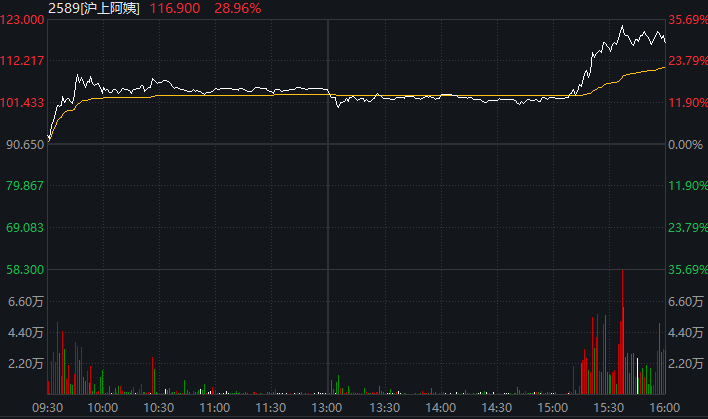
港股收盘丨恒指涨0.85% 沪上阿姨涨近29%
Xin Lang Cai Jing· 2025-11-12 13:15
Core Viewpoint - The Hang Seng Index closed up by 0.85%, while the Hang Seng Tech Index increased by 0.16%, indicating a positive market sentiment driven by gains in pharmaceutical and real estate stocks, as well as a strong performance from new consumption concept stocks [1] Group 1: Market Performance - The Hang Seng Index experienced a rise of 0.85% [1] - The Hang Seng Tech Index saw an increase of 0.16% [1] Group 2: Sector Performance - Pharmaceutical and real estate stocks led the gains in the market [1] - New consumption concept stocks showed strong performance, with notable increases in specific companies [1] Group 3: Notable Company Performances - "沪上阿姨" surged nearly 29% [1] - "毛戈平", "锅圈", and "蜜雪集团" each rose over 3% [1]
突然暴涨!新消费巨头 尾盘异动
Zheng Quan Shi Bao· 2025-11-12 12:14
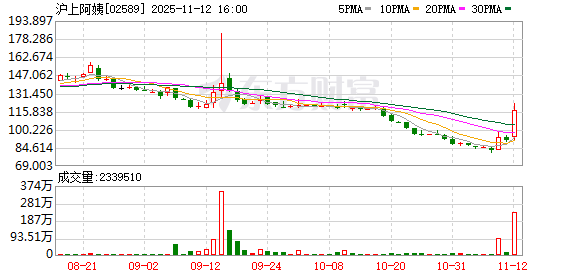
Core Viewpoint - The stock of Hu Shang A Yi has shown significant volatility, with a recent surge of nearly 29% after a period of decline since its IPO, indicating a potential recovery phase for the company [1][4]. Company Developments - Hu Shang A Yi announced a ten-year H-share incentive plan, with a cap of 5% of the total share capital, aimed at incentivizing core talent through restricted stock [3]. - The company is launching a sub-brand "Tea Waterfall" targeting Generation Z and students, focusing on products priced below 10 yuan, which differentiates it from the main brand [3]. - The brand has expanded its store count to 10,739, a net increase of 1,303 stores since June, achieving its "10,000 store plan" [5]. Financial Performance - The latest financial report for the first half of 2025 shows a gross profit of 572 million yuan, a 10.4% increase from the previous year, with a gross margin of 31.4% [5]. - Daily average GMV per store has shown a decline from 4,109 yuan in 2022 to 3,753 yuan in 2024, indicating potential challenges in sales performance [5]. Industry Context - The new tea beverage industry is transitioning from rapid growth to a more mature phase, with a shift from "barbaric growth" to "refined cultivation," suggesting increased competition among leading companies [6]. - The growth rate predictions for Hu Shang A Yi's revenue from 2025 to 2027 are 28%, 19%, and 15%, respectively, with net profit growth rates of 46%, 33%, and 17%, indicating a downward trend [6].
突然暴涨!新消费巨头,尾盘异动
Zheng Quan Shi Bao· 2025-11-12 12:00
Core Viewpoint - The stock of Hu Shang A Yi (02589.HK) has shown significant volatility, with a recent surge of nearly 29% after a period of decline since its listing, indicating a potential recovery phase for the company [1] Group 1: Stock Performance - Hu Shang A Yi's stock price rose by 28.96% to HKD 116.9 per share, after peaking at a 35% increase during trading [1] - Since its low point, the stock has rebounded over 45% [1] Group 2: Business Initiatives - The company announced a ten-year H-share incentive plan, with a cap of 5% of total share capital, aimed at incentivizing core talent through restricted stock [3] - A new subsidy policy for franchisees in the tea and coffee sectors has been introduced, offering up to 50,000 yuan for opening new stores [3] - Hu Shang A Yi plans to launch a sub-brand "Tea Waterfall" targeting Gen Z and students, focusing on products priced below 10 yuan, with a promotional campaign featuring celebrity endorsement [3] Group 3: Store Expansion and Challenges - The total number of Hu Shang A Yi stores has reached 10,739, an increase of 1,303 stores from 9,436 in June [3] - Despite the expansion, franchisees are facing profitability challenges, with reported revenue rates of only 50%-60% and some stores operating at a loss even with monthly revenues of 300,000 yuan [3] Group 4: Financial Performance - The gross profit for the first half of 2025 was 572 million yuan, a 10.4% increase from 518 million yuan in the same period last year, with a gross margin of 31.4% [4] - Historical data shows average daily GMV per store was 4,109 yuan in 2022, 4,270 yuan in 2023, and is projected to decline to 3,753 yuan in 2024 [4] Group 5: Industry Context - The challenges faced by Hu Shang A Yi reflect a broader trend in the new tea beverage industry, transitioning from rapid growth to a more refined operational focus [5] - The industry is moving from a "Spring and Autumn" period to a "Warring States" period, with growth rates slowing and increasing competition among leading companies [5] - Revenue growth forecasts for Hu Shang A Yi from 2025 to 2027 are projected at 28%, 19%, and 15%, with net profit growth rates of 46%, 33%, and 17%, indicating a downward trend [5]