银华基金

Search documents
债券ETF跟踪:信用债类ETF大幅净流入
ZHONGTAI SECURITIES· 2025-11-24 12:27
Report Summary 1. Report Industry Investment Rating No information about the industry investment rating is provided in the report. 2. Core Viewpoints - Bond - type ETFs had significant net inflows in the past week, with credit - type ETFs leading the way, and large cumulative net inflows throughout the year [3]. - The net values of various bond ETF products recovered significantly in the past week, with some products performing well and others showing different trends [4]. - Credit - bond ETFs and science - innovation bond ETFs had certain increases in unit net value, and their discount rates were at specific levels [5]. 3. Summary by Relevant Catalogs 3.1 Funds Flow - As of November 21, 2025, bond - type ETFs had a total net inflow of 12.729 billion yuan in the past week. Interest - rate, credit, and convertible - bond ETFs had net inflows of 3.538 billion yuan, 6.636 billion yuan, and 2.555 billion yuan respectively. Among credit - type ETFs, short - term financing, corporate bonds, and urban investment bonds had net inflows of 2.598 billion yuan, 1.269 billion yuan, and 1.212 billion yuan respectively, while market - making credit bonds had a net outflow of 252 million yuan, and science - innovation bonds had a net inflow of 1.809 billion yuan. - As of November 21, 2025, the cumulative net inflows of interest - rate, credit, and convertible - bond ETFs for the year were 74.2 billion yuan, 445.363 billion yuan, and 25.137 billion yuan respectively, with a total of 544.7 billion yuan [3]. 3.2 Net Value Performance - Throughout the week, the net values of various bond ETF products recovered significantly. As of November 21, 2025, the 5 - year local - bond ETF and 10 - year local - bond ETF performed well, rising 0.15% and 0.14% respectively. The government - financial bond ETF and 0 - 4 local - bond ETF both rose 6BP. Treasury - bond ETFs and state - development - bond ETFs performed steadily. Convertible - bond ETFs and Shanghai - Stock - Exchange convertible - bond ETFs fell 1.72% and 1.37% respectively last week [4]. 3.3 Performance of Credit - Bond ETFs and Science - Innovation Bond ETFs - As of November 21, 2025, the median unit net values of credit - bond ETFs and science - innovation bond ETFs were 1.0126 and 1.0008 respectively, rising 0.01% and 0.02% throughout the week. Among credit - bond ETFs, Dacheng Credit - Bond ETF performed well, rising 0.04%. Among science - innovation bond ETFs, Fuguo, Boshi, and JingShun Science - Innovation Bond ETFs performed relatively well. As of November 21, 2025, the median discount rate of credit - bond ETFs was 25BP, and that of science - innovation bond ETFs was 22BP [5]. 3.4 Credit - Type ETF Duration Tracking - As of November 21, 2025, the holding durations of short - term financing ETFs, corporate - bond ETFs, and urban - investment - bond ETFs were 0.40 years, 1.84 years, and 2.21 years respectively. Among market - making credit - bond ETFs, the median holding durations of products tracking the Shanghai - market - making corporate - bond and Shenzhen - market - making corporate - bond indexes were 3.789 years and 2.87 years respectively. Among science - innovation bond ETFs, the median holding durations of products tracking the AAA science - innovation bond, Shanghai - AAA science - innovation bond, and Shenzhen - AAA science - innovation bond indexes were 3.47 years, 3.56 years, and 3.24 years respectively [8]. 3.5 Report Abstract - Last week, the ChinaBond New Composite Index rose 0.03% throughout the week. Short - term pure - bond and medium - long - term pure - bond funds rose 0.02% and 0.02% respectively. The ChinaBond AAA Science - Innovation Bond Index and the Shanghai Stock Exchange Benchmark Market - Making Corporate - Bond Index rose 0.03% and 0.03% respectively [7].
A股震荡“翻倍基”仅剩两成,ETF狂揽千亿逆势加仓
Di Yi Cai Jing· 2025-11-24 12:16
Core Insights - The A-share market has experienced significant volatility, with the Shanghai Composite Index dropping below key support levels, leading to a decline of nearly 5% in just over a week [1][4] - Active equity funds have faced substantial performance declines, with nearly 90% reporting negative returns in the fourth quarter, and over 30% experiencing declines exceeding 10% [2][3] - In contrast, the ETF market has seen a surge in inflows, with over 102.8 billion yuan entering stock ETFs in the fourth quarter, reversing a trend of outflows from the previous quarter [3] Group 1: Market Performance - The Shanghai Composite Index fell to 3836.77 points, with a cumulative decline of 4.78% over the last seven trading days [4] - Active equity funds have seen a dramatic reduction in performance, with only 23% of previously high-performing funds remaining in positive territory [2] - The decline in active funds is attributed to a significant market correction, particularly affecting sectors like AI and pharmaceuticals that had previously attracted substantial investment [2][3] Group 2: ETF Market Dynamics - The ETF market has attracted significant capital, with 102.8 billion yuan net inflow in the fourth quarter, marking a stark contrast to the nearly 50 billion yuan outflow in the previous quarter [3] - Notable inflows have been observed in broad-based ETFs, with specific products like the Southern CSI 500 ETF and the E Fund ChiNext ETF seeing net inflows exceeding 40 billion yuan [3] - Defensive investment strategies have gained traction, with funds focused on low volatility and free cash flow attracting significant capital, indicating a preference for stable assets in a turbulent market [3] Group 3: Future Market Outlook - Analysts suggest that the current market volatility may present long-term investment opportunities in sectors with strong fundamentals, despite short-term challenges [5][6] - The ongoing adjustments in market sentiment are expected to continue, with a focus on sectors such as technology, consumption, and high-end manufacturing as potential growth areas [6] - The overall outlook remains cautiously optimistic, with expectations of a gradual upward trend in the A-share market, supported by structural improvements in the domestic economy and favorable monetary conditions [6]
资金“抄底”了,大举净流入
Zhong Guo Zheng Quan Bao· 2025-11-24 12:12
Group 1: ETF Performance - Aerospace and satellite-themed ETFs showed strong gains, with multiple products rising over 4% on November 24 [4] - The Satellite ETF (563230) surged by 3.79%, with its share increasing nearly 50% since the end of September, making it the top performer among similar ETFs [4] - The technology-focused Nasdaq ETF (159509) experienced a significant premium of 19.23% after resuming trading following a one-hour suspension [3][10] Group 2: Market Trends - The market saw a significant adjustment last week, but there was a "bottom-fishing" trend with substantial net inflows into several broad-based ETFs [2][7] - The lithium carbonate futures contract hit a limit down, negatively impacting market expectations for related companies, leading to a decline in rare metals and energy-related ETFs [5] - Despite recent adjustments, the long-term development logic of the new energy sector remains solid, supported by policy, market demand, and performance recovery [5] Group 3: Fund Flows - Notable net inflows were recorded for several broad-based ETFs, including the CSI 500 ETF, which saw a net inflow of 57.78 billion [9] - The Hang Seng Technology and CSI 50 ETFs also ranked high in net inflows for November, indicating investor interest in these sectors [9] - Active trading was observed in various currency and bond ETFs, with the Silver Day ETF (511880) achieving a transaction volume exceeding 20 billion [7][8]

ETF周评|近五百亿资金趁大跌抄底,哪些ETF成了香饽饽
Sou Hu Cai Jing· 2025-11-24 10:44
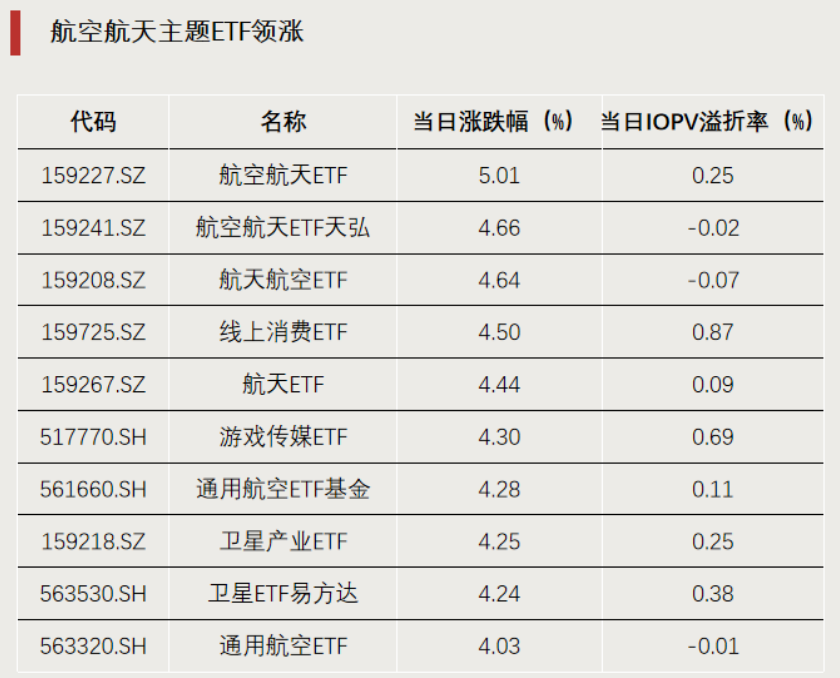
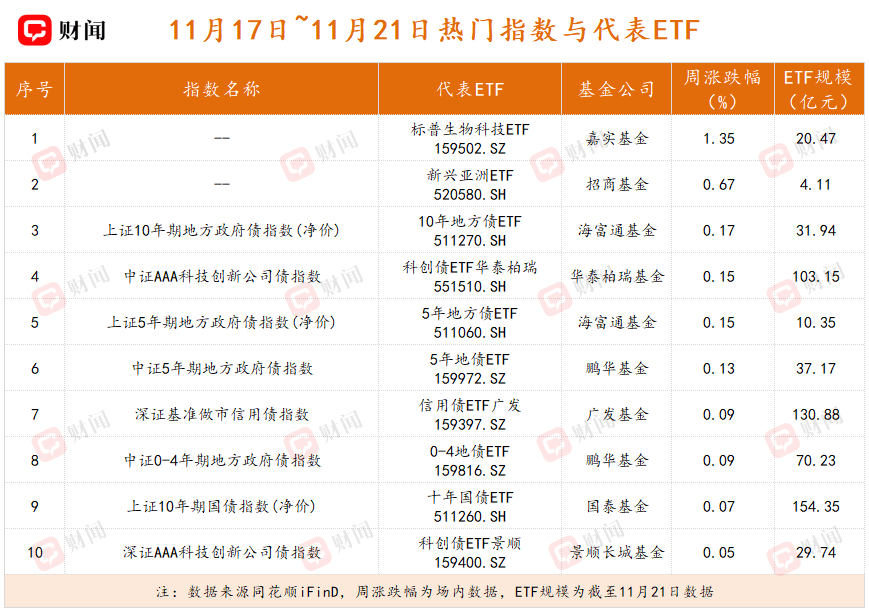
Market Overview - The A-share market experienced significant adjustments from November 17 to November 21, with the Shanghai Composite Index falling below 4000 points and a cumulative decline of 3.9% [1] - The Shenzhen market showed even weaker performance, with the Shenzhen Component Index down 5.13% and the ChiNext Index down 6.15% [2] - The Hong Kong market also faced pressure, with the Hang Seng Index dropping over 5% during the same period [2] ETF Performance - All stock-type ETFs in the market saw declines, particularly those related to new energy sectors like photovoltaic and lithium batteries, with 23 ETFs dropping over 10% [3] - The leading ETFs in decline were the Sci-Tech Innovation New Energy ETF (588960.SH) and the Sci-Tech New Energy ETF (588830.SH), with weekly declines of 13.44% and 13.17%, respectively [3] - Only 52 ETFs managed to rise, with the S&P Biotechnology ETF (159502.SZ) being the sole ETF to increase by more than 1%, up 1.35% [4] Fund Flows - The overall market saw a net inflow of 981.24 billion yuan into ETFs, with stock-type ETFs attracting the most significant inflow of 494.70 billion yuan [6] - On November 21, despite the market downturn, stock-type ETFs received a substantial net inflow of 357.95 billion yuan, with total trading volume reaching 1558.48 billion yuan, a 40.89% increase from the previous week [6] - Major contributors to the inflow included the CSI 300 ETF (510300.SH) and the CSI 500 ETF (510500.SH), each with net inflows exceeding 30 billion yuan [6] Sector-Specific Trends - Industry and thematic ETFs experienced notable outflows, with the Bank ETF (512800.SH) seeing a net outflow of 13.56 billion yuan, the only ETF with outflows exceeding 10 billion yuan [7] - Other cyclical ETFs, such as the Chemical ETF (159870.SH) and Coal ETF (515220.SH), also faced significant outflows of 9.64 billion yuan and 9.26 billion yuan, respectively [7] ETF Size Changes - Despite the inflow into broad-based index ETFs, the market volatility led to a reduction in the sizes of major ETFs, with the CSI 300 ETF and the CSI 500 ETF both shrinking by over 100 billion yuan [11] - As of November 21, the sizes of the two ETFs were reported at 2901.18 billion yuan and 4117.08 billion yuan, respectively [11] Top Performing ETFs - The top 10 ETFs by net inflow included the CSI 500 ETF (510500.SH) with an inflow of 57.78 billion yuan, followed by the Hua Bao Tian Yi ETF (511990.SH) with 51.79 billion yuan [9] - Other notable ETFs in the top inflow list included the ChiNext ETF (159915.SZ) and the CSI 300 ETF (510300.SH), with inflows of 46.78 billion yuan and 44.62 billion yuan, respectively [9] Bottom Performing ETFs - The Bank ETF (512800.SH) led the outflows with a decrease of 13.56 billion yuan, followed by the Chemical ETF (159870.SH) and Coal ETF (515220.SH) with outflows of 9.64 billion yuan and 9.26 billion yuan [10] - Other ETFs experiencing significant outflows included the 5G Communication ETF (515050.SH) and Financial Technology ETF (159851.SZ) [10]
新能源ETF上周领跌,传媒ETF回撤较少丨ETF基金周报
2 1 Shi Ji Jing Ji Bao Dao· 2025-11-24 03:10
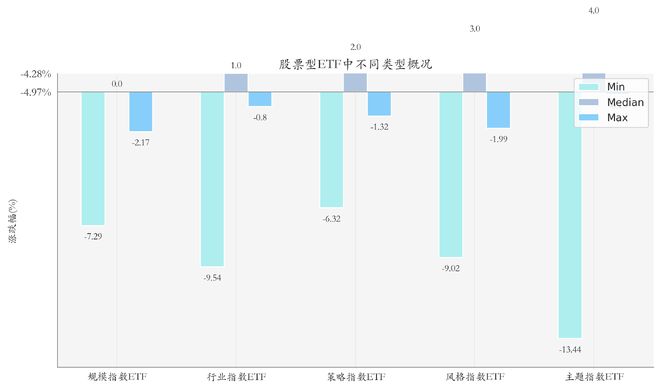
Market Performance - The Shanghai Composite Index fell by 3.9% last week, closing at 3834.89 points, with a high of 3992.4 points [1] - The Shenzhen Component Index decreased by 5.13%, ending at 12538.07 points, with a peak of 13251.78 points [1] - The ChiNext Index dropped by 6.15%, closing at 2920.08 points, with a maximum of 3137.07 points [1] - Major global indices also declined, with the Nasdaq Composite down 2.74%, the Dow Jones Industrial Average down 1.91%, and the S&P 500 down 1.95% [1] - In the Asia-Pacific region, the Hang Seng Index fell by 5.09%, and the Nikkei 225 Index decreased by 3.48% [1] ETF Market Performance - The median weekly return for stock ETFs was -4.56% [2] - The highest weekly return among scale index ETFs was -2.17% for the CCB SSE 50 ETF [2] - The highest weekly return among industry index ETFs was -0.8% for the FTSE China 800 Bank ETF [2] - The highest weekly return among strategy index ETFs was -1.32% for the Harvest CSI 300 Dividend Low Volatility ETF [2] - The highest weekly return among theme index ETFs was -0.15% for the Penghua CSI Media ETF [2] ETF Liquidity and Fund Flows - Average daily trading volume for stock ETFs increased by 32.1%, and average daily turnover rose by 6.8% [6] - The top five stock ETFs with the highest fund inflows included the Huatai-PB CSI 300 ETF with an inflow of 3.876 billion yuan [8] - The top five stock ETFs with the highest fund outflows included the Hua Bao CSI Bank ETF with an outflow of 321 million yuan [8] Financing and Margin Trading - The financing balance for stock ETFs increased from 47.722 billion yuan to 50.553 billion yuan [9] - The highest financing buy amount was for the E Fund ChiNext ETF, totaling 801 million yuan [9] ETF Market Size and Composition - The total size of the ETF market reached 55,994.97 billion yuan, a decrease of 1,305.99 billion yuan from the previous week [13] - Stock ETFs accounted for 64.0% of the total ETF market size, with a total size of 35,817.94 billion yuan [15] - The number of stock ETFs in the market was 1,065 out of a total of 1,355 ETFs [10] New ETF Issuance - No new ETFs were issued last week, but eight new ETFs were established, including the Harvest Hang Seng Technology ETF and the Penghua Hang Seng Biotechnology ETF [16] Institutional Insights - Pacific Securities highlighted the importance of advancements in AI foundational model technology, particularly in e-commerce and advertising sectors [16] - Galaxy Securities noted the potential of AI video and social ecosystems, emphasizing the shift towards ecological construction and scene penetration in various industries [17]
募集规模创近三年新高,FOF市场显著回暖
Zhong Guo Ji Jin Bao· 2025-11-23 14:17
Core Insights - The FOF market has seen significant expansion this year, with fundraising reaching a three-year high, driven by favorable policies, market conditions, and product offerings [1][2]. Fundraising and Market Performance - As of November 21, 2023, 69 new FOFs have been established this year, raising a total of 692.36 billion yuan, marking a substantial increase compared to 38 FOFs and less than 40 billion yuan raised last year [2]. - The total market size of FOFs reached 1,933.37 billion yuan by the end of Q3 2023, reversing a three-year decline and showing a growth of over 46% compared to the end of last year [2]. Performance Metrics - Over 90% of FOFs have reported positive unit net value growth this year, with an average growth rate of 12.25% [3]. - The positive performance of A-shares has attracted more funds into FOFs, creating a virtuous cycle of good performance attracting more investments [3]. Future Development Potential - Public fund companies believe that FOFs have vast future development potential due to their multi-asset allocation advantages [4]. - The trend of shifting from single-asset investments to diversified multi-asset allocations is seen as irreversible, driven by the need for wealth management and increased awareness of retirement investments [4]. Investment Strategy Recommendations - Investors looking to use FOFs for asset allocation should prioritize products that cover multiple asset classes to diversify risk [5]. - It is advised to focus on long-term annualized returns and drawdown control rather than short-term gains, especially in volatile market conditions [5].
募集规模创近三年新高,FOF市场显著回暖
中国基金报· 2025-11-23 14:15
Group 1 - The FOF market has seen significant expansion this year, with fundraising reaching a three-year high of approximately 69 billion yuan, compared to 38 funds established last year [3][4] - As of the end of Q3, the total market size of FOFs reached 193.34 billion yuan, marking a 46% increase compared to the end of last year, reversing a three-year decline [5] - Over 90% of FOFs have reported positive annual net asset value growth, with an average growth rate of 12.25% [6] Group 2 - The positive performance of A-shares has attracted more funds into FOFs, creating a virtuous cycle of good performance attracting investment [6] - Policy support for long-term capital entering the market, including the implementation of personal pension systems, has created favorable conditions for FOF development [6] - The low interest rate environment has led investors to seek low-volatility, high-diversification products, further supporting the recovery of FOF issuance [6] Group 3 - Public fund companies believe that FOFs have vast development potential due to their multi-asset allocation advantages [8] - The trend of shifting from single-asset bets to diversified multi-asset allocations is becoming irreversible, driven by the upgrading of wealth management needs and increased awareness of retirement investment [8] - FOFs are expected to continue attracting funds from traditional bank wealth management products due to their ability to provide better returns while controlling drawdowns [8] Group 4 - Investors looking to use FOFs for asset allocation should prioritize products that cover multiple asset classes to diversify risk [9] - It is advised not to judge FOFs solely based on short-term returns but to focus on long-term annualized returns and drawdown control capabilities [9] - In times of market volatility and uncertainty, a systematic investment approach may be beneficial for participating in FOFs [9]

股票型ETF单周缩水超1100亿元 这两类产品却成避风港 | ETF规模周报
Mei Ri Jing Ji Xin Wen· 2025-11-23 05:35
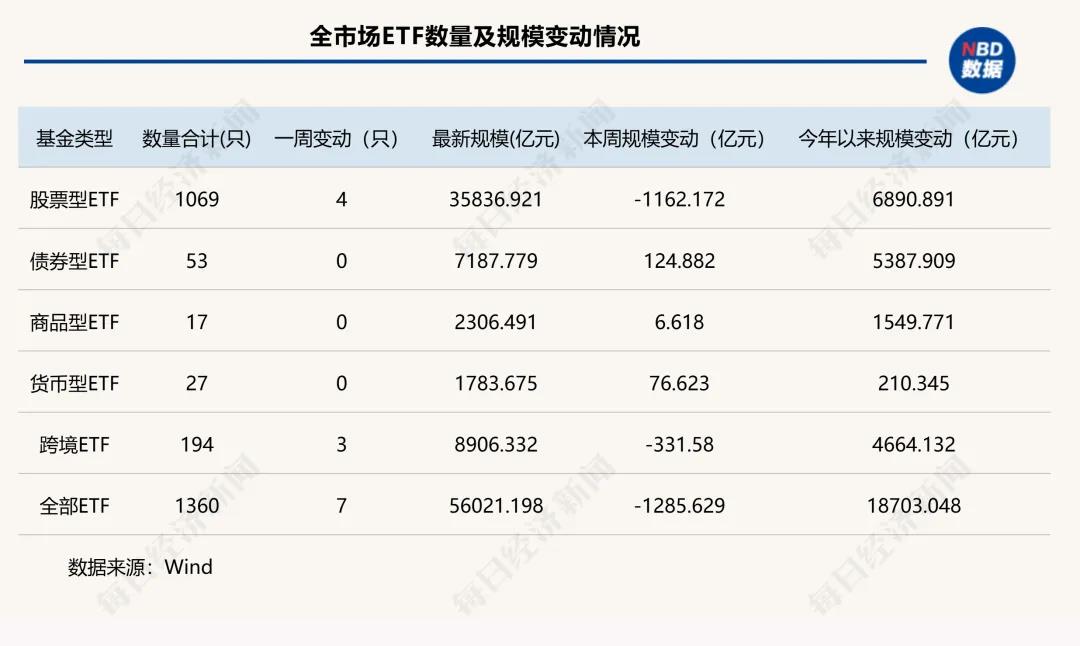
Market Overview - A-shares experienced a significant adjustment from November 17 to November 21, with the CSI 300 index dropping by 3.77%, the ChiNext index falling by 6.15%, and the STAR 50 index decreasing by 5.54% [1] - The Hong Kong stock market also faced declines, with the Hang Seng Index down by 5.09% and the Hang Seng Tech Index dropping by 7.18% [1] ETF Market Dynamics - The ETF market saw a "mass migration" of funds, with stock ETFs shrinking by over 110 billion yuan in a week, particularly the CSI 300 index-linked products which lost 42.2 billion yuan, accounting for over 36% of the total shrinkage [1][2] - Conversely, fixed income and gold-related products emerged as safe havens, with bond ETFs increasing by 12.4 billion yuan, reaching a total of 718.7 billion yuan, marking a year-to-date growth of 538.7 billion yuan, nearly tripling in size [1][17] - Commodity ETFs maintained growth momentum, surpassing 230 billion yuan in total size, with a year-to-date increase exceeding 200% [1] ETF Size and Performance - As of November 22, the total number of listed ETFs reached 1,360, with a total size significantly reduced to 5.6 trillion yuan, reflecting a weekly decrease of 128.56 billion yuan [2][3] - Stock ETFs saw a weekly reduction of 116.22 billion yuan, with broad-based index ETFs experiencing a sharp decline of 72.55 billion yuan, accounting for over 60% of the total shrinkage [2][3] Index-linked ETF Performance - The CSI 300 index-linked ETFs saw a reduction of 42.29 billion yuan, bringing their total size down to 1.1496 trillion yuan, contributing significantly to the overall decline in stock ETFs [4][6] - Despite the overall shrinkage, some index-linked ETFs, such as those linked to the Hang Seng Tech Index, experienced net inflows, indicating a "buy the dip" mentality among investors [2][4] Fund Management Insights - Major fund management companies faced significant losses, with four firms losing over 10 billion yuan in ETF size, including Huaxia Fund and E Fund, which saw reductions of 20.24 billion yuan and 27.78 billion yuan, respectively [8][10] - In contrast, Hai Futong Fund experienced a notable increase of 4.57 billion yuan, primarily due to the strong performance of its short-term bond ETF, which surpassed 70 billion yuan in size [8] Year-to-Date Growth Trends - Year-to-date, the CSI 300 index, SGE Gold 9999 index, and Hang Seng Tech index-linked ETFs have seen growths of 164.32 billion yuan, 136.83 billion yuan, and 99.68 billion yuan, respectively [7][11] - Conversely, the China Securities 500 index and STAR 50 index-linked ETFs have experienced significant year-to-date declines of 65.40 billion yuan and 13.11 billion yuan, respectively [7] Regulatory Updates - The Shanghai and Shenzhen Stock Exchanges have issued revised guidelines for ETF naming conventions, requiring that ETF names include the core elements of the investment target and the fund manager's abbreviation, with a deadline for compliance set for March 31, 2026 [16]
第十九届深圳国际金融博览会圆满闭幕 参展机构、人次实现双增长
2 1 Shi Ji Jing Ji Bao Dao· 2025-11-22 03:45
Core Insights - The 19th Shenzhen International Financial Expo showcased significant growth, attracting 47,400 attendees from 25 countries, marking a 58% increase in visitor numbers compared to the previous year [1] - The expo featured over 50 thematic events and announced 18 new industry policies and product results, with a total of 33 financing project roadshows, achieving an intended financing amount of 1.055 billion yuan [1][6] Industry Participation - A total of 288 institutions participated in the expo, representing a diverse range of sectors including banking, insurance, securities, private equity, and fintech, reflecting an 80% year-on-year increase [3] - Major financial institutions such as China Bank, Agricultural Bank, and HSBC showcased their latest products and services, highlighting the expo's growing influence in the financial sector [3] Financial Technology Highlights - Over 30 fintech companies, including WeBank and Kingdee Technology, presented cutting-edge technologies and innovations, with Huawei collaborating with 12 partners to demonstrate advanced financial ICT infrastructure [4] - The introduction of a "Government Guidance Fund Special Exhibition Area" aimed to create new pathways for industry-finance integration [4] Policy and Innovation - The expo's theme, "New Heights in Industrial Finance, Empowering the Future with Science and Technology," emphasized Shenzhen's commitment to high-quality industrial financial development [5] - Key policy announcements included the Shenzhen Financial Management Bureau's action plan for building a global fintech center and various initiatives in cross-border finance and green bonds [5] Investment and Financing Activities - The integration of various industry funds and associations facilitated 33 financing project roadshows, resulting in an intended financing amount of 1.055 billion yuan, showcasing Shenzhen's approach to industry-finance synergy [6] - The expo served as a platform for deepening the integration of finance with the real economy, promoting international cooperation and showcasing financial development achievements [6]

ETF市场日报 | 权益资产全面回调,下周一将有两只产品上市
Sou Hu Cai Jing· 2025-11-21 08:20
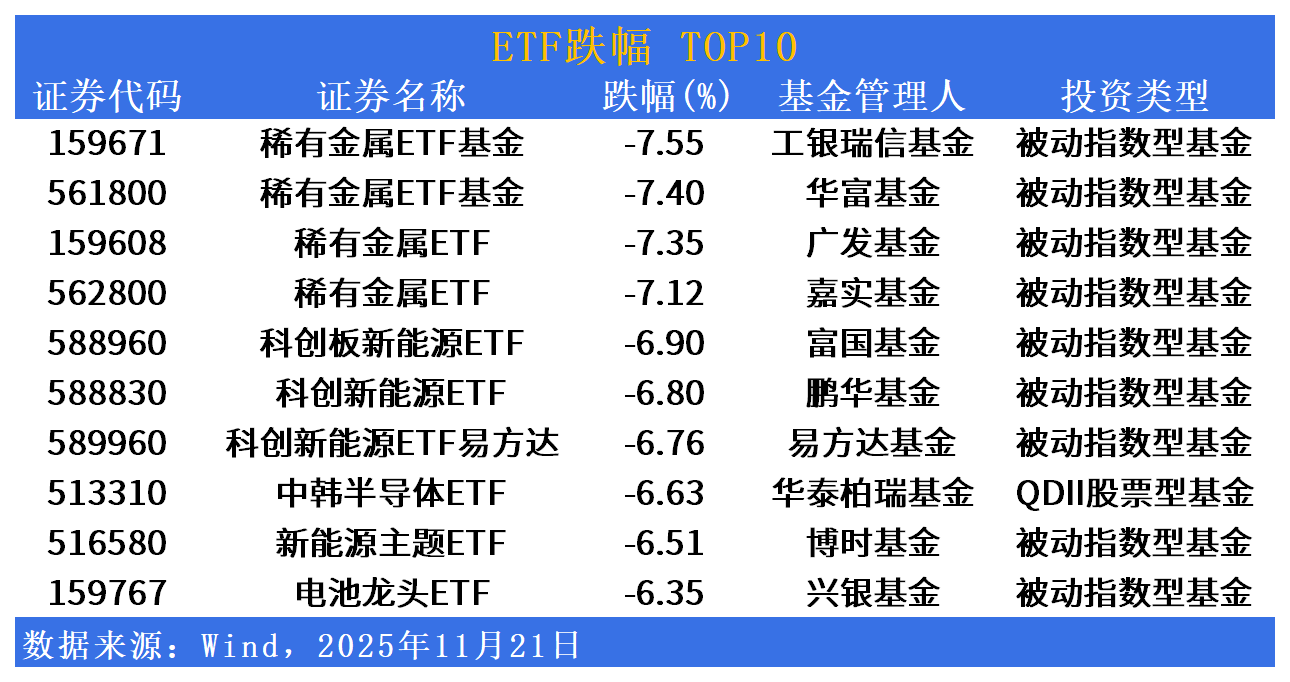
Market Overview - The A-share market experienced a significant decline, with the Shanghai Composite Index dropping by 2.45%, the Shenzhen Component Index falling by 3.41%, and the ChiNext Index decreasing by 4.02% [1] - The total trading volume in the Shanghai and Shenzhen markets reached 1.9657 trillion [1] Sector Performance - The media sector showed resilience, with specific ETFs such as Media ETF (159805) and Media ETF (512980) leading the gains [2] - Conversely, rare metals and new energy-related ETFs faced notable declines, with the top 10 ETFs in this category experiencing drops of up to 7.55% [3] Economic Outlook - According to Zheshang Securities, 2026 is expected to be a year of strong economic performance in China, with a focus on technological self-reliance and new productivity cultivation [2] - Shenwan Hongyuan anticipates that the "15th Five-Year Plan" period will be a critical time for comprehensive reform, with nominal GDP recovery expected to improve corporate profitability [2] Lithium Battery Sector - Dongwu Securities predicts that the lithium battery sector will exceed expectations in Q4, with a projected growth rate of 25-30% for 2026 [4] - The sector is expected to see a 10-20% increase in production in Q4, with a year-on-year growth of 30% [4] ETF Activity - The Silver Hua Daily ETF (511880) recorded the highest trading volume at 21.2 billion, followed by other ETFs such as Short-term Bond ETF (511360) and Huabao Tianyi ETF (511990) [5] - The turnover rate for the Korean Semiconductor ETF (513310) was the highest at 108% [5] Upcoming ETF Launches - Two new ETFs are set to launch next week, including the Food ETF (563850), which tracks the CSI All Food Index, and the Bosera Industrial Software ETF (159108), focusing on industrial digital transformation [6][7] - The E Fund Hang Seng Automotive ETF (159121) will also launch, targeting the recovery of the Hong Kong automotive sector and opportunities in new energy vehicles [7]