宝钢股份

Search documents
金融支持高碳产业转型:从资金供给到战略协同
Guan Cha Zhe Wang· 2026-01-06 12:05
Group 1 - The global carbon pricing rules and new Nationally Determined Contributions (NDC) targets are pressing high-carbon industries in China, such as steel and shipping, to accelerate their transformation efforts [1] - Financial institutions need to evolve from traditional funding providers to strategic partners that actively participate in industrial transformation to support decarbonization and gain competitive advantages [1][2] - The mismatch between transformation needs and financial supply structures is evident, with companies facing challenges in managing carbon assets and securing long-term funding for low-carbon transitions [2][4] Group 2 - The shipping industry is focusing on low-carbon transformation through technologies like hydrogen and ammonia, but financial institutions struggle to support early-stage projects due to a lack of measurable evaluation metrics [3][5] - Leading financial institutions are innovating by breaking traditional business boundaries and developing new financial products and collaborative models to support industrial transformation [4][5] - There is a need for a collaborative ecosystem involving government, industry, finance, and research to address data gaps and uncertainties in assessing new technologies [6]
如何展望钢铁成本和供给侧的催化和节奏?
Changjiang Securities· 2026-01-06 04:44
Investment Rating - The investment rating for the steel industry is Neutral, maintained [9] Core Insights - The report highlights that the expansion of low-cost capacities, such as Simandou and the four major mines, is expected to drive long-term declines in iron ore prices. A significant drop in prices is anticipated in March and April, with current iron ore inventories at historical highs, suggesting a potentially larger decline [2][6] - The steel industry is experiencing a reduction in supply pressure due to self-initiated production cuts, leading to a slight improvement in profitability despite weak demand in the construction steel sector. Total steel demand is supported by resilient plate demand, with a year-on-year decline of 3.57% and a month-on-month decline of 0.56% in apparent consumption [4][5] - The report emphasizes the importance of supply-side policies aimed at reducing low-end exports and eliminating outdated capacities, with a focus on environmental and energy efficiency evaluations expected to be completed by the end of 2025 [2][6] Summary by Sections Cost Analysis - The black industrial chain's profits are largely captured by iron ore, with total profits estimated at 4,127 billion for iron ore, 337 billion for coking coal, and 1,264 billion for steel, representing 72%, 6%, and 22% of total profits respectively. The majority of iron ore is imported, leading to a significant outflow of profits overseas [5] - The Simandou project is expected to begin production by the end of 2025, with anticipated sales of 30 million tons from the northern mine and 5 to 10 million tons from the southern mine in 2026, contributing to a projected 4.3% increase in global iron ore supply [5] Supply Analysis - The report indicates that the steel industry is focused on reducing excess capacity, with policies aimed at "grading management and eliminating the weak" expected to be implemented in 2026. Non-compliant enterprises may face significant production cuts, highlighting the importance of regulatory compliance [6] - The report notes that the overall steel inventory has decreased by 2.70% week-on-week, while year-on-year it has increased by 12.34%, indicating a gradual reduction in inventory levels [4]
全球疯抢中国变压器
首席商业评论· 2026-01-06 04:07
Core Viewpoint - The global transformer shortage is becoming a significant issue as demand surges due to increasing electricity needs and the transition to renewable energy sources, with China emerging as the largest beneficiary of this crisis [5][11]. Group 1: Transformer Demand and Supply - The demand for transformers has skyrocketed, with the U.S. experiencing a 116% increase in power transformer supply gaps since 2019, and a 41% increase for distribution transformers [5]. - Europe plans to invest €584 billion to expand its power grid but is hindered by transformer shortages [5]. - China's transformer exports have surged, with a total export value of 29.711 billion yuan in the first eight months of 2025, marking a 65.39% increase to Asia, 28.03% to Africa, and over 138% to Europe [7]. Group 2: Reasons for Transformer Shortage - The shortage is attributed to aging power systems in Europe and the U.S., with 31% of U.S. transmission equipment and 46% of distribution facilities exceeding their service life [9]. - The rapid rise of new industries, particularly in AI and renewable energy, has further intensified the demand for transformers [9]. - The global push for green energy requires significantly more transformers for solar, wind, and hydroelectric power plants compared to traditional coal-fired plants [9]. Group 3: China's Position in the Transformer Market - China controls 60% of the global transformer production capacity and has seen a dramatic increase in transformer export prices, averaging around $20,800 per unit [7][13]. - The establishment of the China Electrical Equipment Group in 2021 has consolidated major players in the transformer industry, enhancing China's competitive edge [12]. - China is the leading producer of oriented silicon steel, a critical material for transformers, with a production volume of 3.0325 million tons in 2024, significantly outpacing Japan and the U.S. [13]. Group 4: Historical Context and Development - China's journey in the transformer industry began in the 1980s, facing significant technological and equipment challenges, relying heavily on imports [15]. - A pivotal moment occurred in 1986 when a domestically produced transformer outperformed an imported one, marking a turning point in China's high-end transformer manufacturing capabilities [17]. - The development of ultra-high voltage technology has allowed China to establish a vast network of power transmission, with over 40,000 kilometers of ultra-high voltage lines by 2025 [19]. Group 5: China's Energy Landscape - By 2025, China is projected to become the first country to achieve a trillion kilowatt-hours of electricity generation in a single month, highlighting its dominance in global energy production [21]. - China has successfully achieved universal electricity access, contrasting with countries like India, where millions still lack stable power [22]. - The country's advancements in various energy sectors, including hydropower, solar, and nuclear energy, position it as a leader in the global energy landscape [24].


长江江苏“第一站”,十年守护见初心
Nan Jing Ri Bao· 2026-01-06 02:43
南京,是万里长江进入江苏的"第一站",也是江苏落实长江大保护的"第一关"。2016年1月,推动 长江经济带发展座谈会在重庆召开,"共抓大保护、不搞大开发"成为长江全流域的共识。十年来,习近 平总书记前往长江上、中、下游调研,先后在重庆、武汉、南京、南昌4次主持召开座谈会,为推动长 江经济带发展把脉定向。 这十年,南京牢记殷殷嘱托,以习近平生态文明思想和习近平总书记关于推动长江经济带发展系列 重要讲话精神为指引,在"还江于民"实践中探索人水和谐新路径,在"与江共生"转型中构建绿色发展新 格局,奋力书写"沧桑巨变"的扬子风华。 生态改善:岸线焕新颜,碧水映金陵 冬天的长江有着独特的魅力,辽阔的水面泛着波光。漫步江边,还有一份不期而遇的惊喜——长江 江豚频频现身主城区滨江段,市民可在鼓楼滨江绿道、鱼嘴湿地公园等地近距离观测。 长江江豚被人们亲切地称为"微笑天使",是长江生态系统的指示性物种。过去因工业和船舶污染, 长江水质恶化,江豚种群数量逐渐下降,同步带来的还有鱼虾减少,渔民们曾一度陷入迷茫。 转折出现在2016年。"共抓大保护、不搞大开发"号角吹响,南京积极响应,整治沿岸捕鱼养殖工业 企业,浦口区100多名渔民 ...
自由现金流ETF(159201)冲击4连涨,最新规模达88.61亿元,创成立以来新高
Xin Lang Cai Jing· 2026-01-06 02:37
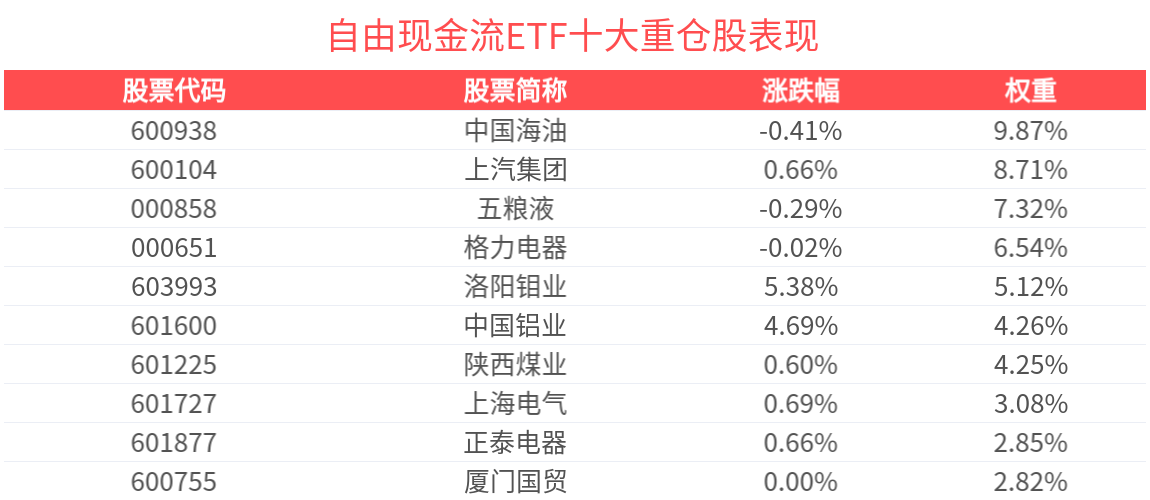
Group 1 - The core viewpoint of the news is the performance and growth of the National Index of Free Cash Flow and its associated ETF, indicating strong investor interest and positive market trends [1][2]. - As of January 5, 2026, the Free Cash Flow ETF has seen a net inflow of 4.43 billion yuan over the past three days, with a total share count reaching 7.246 billion and a total scale of 8.861 billion yuan, marking a new high since its inception [1]. - The Free Cash Flow ETF has achieved a 19.26% increase in net value over the past six months, with a historical monthly return of up to 7% and a 100% probability of profit for a six-month holding period [1]. Group 2 - The National Index of Free Cash Flow closely tracks the performance of companies with high and stable free cash flow levels in the Shanghai and Shenzhen stock exchanges, with the top ten weighted stocks accounting for 51.95% of the index [2]. - The top ten stocks in the National Index include China National Offshore Oil Corporation, SAIC Motor, Gree Electric Appliances, and others, reflecting a diverse range of industries [2]. - The management fee for the Free Cash Flow ETF is 0.15%, and the custody fee is 0.05%, which are among the lowest in comparable funds [4].
中国基础材料-2026 年展望:供应将成差异化关键-China basic materials_ 2026 outlook - supply to set the path apart
2026-01-06 02:23
Summary of Key Points from the Conference Call Industry Overview - **Industry Focus**: Chinese Basic Materials - **2026 Outlook**: Expected stable year for Chinese commodity demand with growth rates ranging from -1.3% to +2.0% year-over-year, improving sequentially from 2H25A [1][24] Core Insights and Arguments - **Demand Growth**: - Chinese copper and aluminum demand projected to grow by 2.0% and 0.8% respectively in 2026E, a deceleration from 1H25A but approximately 3% better than 2H25A [21][27] - Demand for lithium is expected to remain strong due to energy storage systems (ESS) [21] - Cement and steel demand under pressure due to weakened infrastructure activities, though government financing may improve conditions [22] - **Supply Dynamics**: - Solid supply/demand balance for most commodities, but strong pricing in 2025 may lead to changes in supply outlook [2] - Supply discipline is challenged in aluminum, while lithium shows signs of accelerated supply response; copper supply is expected to remain tight [2][17] - Anti-involution policies in oversupplied segments may improve industry capacity utilization by 10% [3] - **Acquisitions and Strategic Shifts**: - Increased acquisitions and asset injections by large state-owned enterprises (SOEs) in coal, steel, and other sectors, reflecting strategic repositioning [4] Commodity-Specific Insights - **Cement**: Positive outlook with expected recovery in capacity utilization from 49% to 60% by end of 2026E due to capacity closures [17] - **Coal**: Stable pricing anticipated due to balanced demand and supply [18] - **Copper**: Continued strong pricing expected due to limited supply growth [17] - **Lithium**: Market expected to tighten in 1H26E before easing in 2H26E, with potential for a balanced market depending on supply responses [17] - **Steel**: Margins expected to remain depressed with slower capacity work [17] - **Gold**: Forecasted price to reach US$4,900/oz by Dec-2026, supported by central bank purchases [20] Important but Overlooked Content - **Investment Ratings**: - Positive ratings maintained for Zijin-H/A, CMOC-H/A, and Anhui Conch-H/A; cautious stance on Ganfeng-H/A and Tianqi-H/A [16] - Upgrades for most coal names to NEUTRAL from Sell, indicating a more constructive view on coal [16] - **Market Dynamics**: - The contribution from the property sector to steel and cement demand is now limited, accounting for only 7-8% [22] - Expectations of flat coal demand driven by stable coal-fired power generation [23] - **Key Assumptions for Demand Estimates**: - Infrastructure investment growth projected at 4% for 2026E, with traditional infrastructure expected to grow by 1% [26] This summary encapsulates the critical insights and projections regarding the Chinese basic materials industry, highlighting both opportunities and risks for investors.





趋势研判!2025年中国供暖设备行业政策、产业链、市场规模、重点企业及发展趋势:供暖设备向节能环保与智能化转型,市场规模将增长至686.56亿元[图]
Chan Ye Xin Xi Wang· 2026-01-06 01:17
Industry Overview - The Chinese heating equipment industry has experienced robust growth driven by rising living standards and supportive government policies. Consumer demand has shifted from basic heating functions to higher energy efficiency, smart control, and environmental features [1][5] - The market size of China's heating equipment industry is projected to grow from 40.082 billion yuan in 2020 to 62.101 billion yuan in 2024, with a compound annual growth rate (CAGR) of 11.57%. By 2025, the market size is expected to reach 68.656 billion yuan [1][9] Policy Support - National policies in energy conservation and clean energy have created a favorable environment for technological upgrades and market expansion in the heating equipment sector. For instance, initiatives promoting sewage source heat pump technology and clean heating solutions are being implemented [5][11] - The continuous expansion of urban centralized heating areas, which grew from 8.309 billion square meters in 2017 to 12.094 billion square meters in 2024, provides a solid market demand foundation for the heating equipment industry, with a CAGR of 5.51% [5][6] Industry Chain - The heating equipment industry chain consists of upstream raw materials and components, including steel, copper, aluminum, and various other materials. The midstream involves the manufacturing of heating equipment, while the downstream includes applications in sectors like real estate [6][7] - Key raw materials such as steel, copper, and aluminum are essential for constructing core structures and functional components of heating equipment. The production of these materials has been increasing, with steel output rising from 1.05 billion tons in 2017 to 1.4 billion tons in 2024, and copper output increasing from 1.867 million tons to 2.350 million tons in the same period [7][8] Market Trends - The heating equipment industry is moving towards higher efficiency, environmental sustainability, and smart technology integration. Future trends include the deep integration of heating systems with renewable energy sources, such as heat pumps and solar energy, to achieve near-zero carbon operations [11][12] - The industry is also expected to see advancements in smart technology, transitioning from automated control of individual devices to autonomous decision-making and collaborative optimization across entire heating systems [12][13] - Customization and diversification of heating solutions will be key, with tailored products and services designed for different climates, building types, and user needs, enhancing overall energy efficiency and user experience [13][14] Key Companies - Major players in the industry include international brands like Vaillant, Bosch, and Ariston, which dominate the high-end market, and domestic leaders like Wanhe and Sunflower, which focus on mid-range and mass-market segments [9][10] - Wanhe Electric, a notable company in the heating equipment sector, reported a revenue of 5.524 billion yuan in the first three quarters of 2025, reflecting a year-on-year growth of 5.54% [10][11]


——金属&新材料行业周报20251229-20260102:金属价格延续强势,看好春季行情-20260105
Shenwan Hongyuan Securities· 2026-01-05 13:22
Investment Rating - The report maintains a positive outlook on the metal and new materials industry, indicating a strong spring market [2]. Core Insights - The report highlights that the non-ferrous metal index has outperformed the CSI 300 index, with a year-to-date increase of 94.73%, surpassing the CSI 300 by 77.07 percentage points [6]. - The report emphasizes the upward trend in various metal prices, with copper prices increasing by 122.97% year-to-date, and lithium prices also showing significant growth [10]. - The report suggests that the demand for copper is expected to remain strong due to increased investments in power grids and AI data centers, which will likely support higher price levels in the long term [5]. Market Overview - The Shanghai Composite Index rose by 0.71%, while the Shenzhen Component Index increased by 0.29% during the week [5]. - The non-ferrous metal index increased by 3.31%, outperforming the CSI 300 by 3.39 percentage points [6]. - The report notes that precious metals have seen a year-to-date increase of 79.89%, while aluminum and energy metals have risen by 70.62% and 103.31%, respectively [10]. Price Changes - The report details price changes for various metals, with copper prices increasing by 2.14% week-on-week and 41.69% year-on-year, while aluminum prices rose by 1.18% week-on-week and 17.40% year-on-year [16]. - Lithium prices have shown significant increases, with battery-grade lithium hydroxide rising by 15.98% week-on-week [18]. Inventory and Supply - The report indicates that domestic copper social inventory increased by 4.5 thousand tons, reaching 239 thousand tons, while exchange inventories also saw a rise [31]. - The report highlights that the supply of cobalt remains tight due to export restrictions from the Democratic Republic of Congo, leading to an increase in cobalt prices [5]. Company Valuations - The report provides valuations for key companies in the industry, with Zijin Mining's stock price at 35.40 yuan per share and a projected PE ratio of 29 for 2024 [19]. - Other notable companies include Shandong Gold at 40.19 yuan per share with a PE ratio of 71, and China Aluminum at 13.02 yuan per share with a PE ratio of 18 [19].



高盛调整对兖矿能源、中煤能源等公司评级
Xin Lang Cai Jing· 2026-01-05 12:59
转自:智通财经 【高盛调整对兖矿能源、中煤能源等公司评级】智通财经1月5日电,高盛将兖矿能源A股评级上调至中 性,目标价12元;将宝钢股份评级下调至中性,目标价7.40元;将中煤能源A股评级上调至买进,目标 价15元;高盛公司将中国铝业A股评级下调至卖出,目标价9.10元。 ...
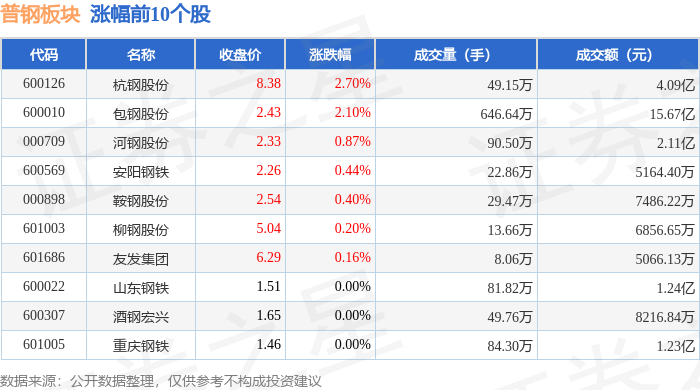
普钢板块1月5日跌0.7%,武进不锈领跌,主力资金净流入2575.74万元
Zheng Xing Xing Ye Ri Bao· 2026-01-05 09:02
Group 1 - The steel sector experienced a decline of 0.7% on January 5, with Wujin Stainless Steel leading the drop [1] - The Shanghai Composite Index closed at 4023.42, up 1.38%, while the Shenzhen Component Index closed at 13828.63, up 2.24% [1] - Key stocks in the steel sector showed varied performance, with Hangang Co. rising by 2.70% and Baogang Co. increasing by 2.10% [1] Group 2 - Wujin Stainless Steel saw a significant drop of 10.04%, with a trading volume of 426,500 shares and a transaction value of 363 million yuan [2] - Other notable declines included Sangang Min Guang at -2.73% and Baosteel at -2.28% [2] - The overall net inflow of funds in the steel sector was 25.76 million yuan, with retail investors showing a net outflow of 41.90 million yuan [2] Group 3 - Major stocks like Baogang Co. and Baosteel had significant net inflows from institutional investors, with Baogang Co. receiving 88.19 million yuan [3] - Retail investors showed negative sentiment towards several stocks, with significant outflows from Huazhong Steel and Hangang Co. [3] - The data indicates a mixed sentiment in the steel sector, with institutional investors favoring certain stocks while retail investors are withdrawing [3]