
良品铺子

Search documents
休闲食品板块9月29日跌0.7%,ST绝味领跌,主力资金净流出8615.89万元
Zheng Xing Xing Ye Ri Bao· 2025-09-29 08:39
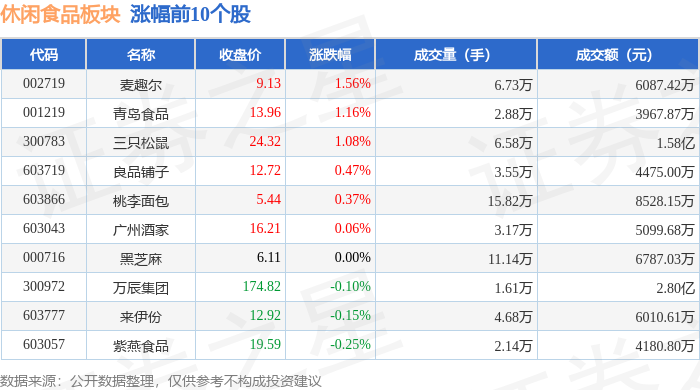
Market Overview - The leisure food sector experienced a decline of 0.7% on September 29, with ST Juewei leading the drop [1] - The Shanghai Composite Index closed at 3862.53, up 0.9%, while the Shenzhen Component Index closed at 13479.43, up 2.05% [1] Individual Stock Performance - Notable gainers included: - Maiqu'er (002719) with a closing price of 9.13, up 1.56% and a trading volume of 67,300 shares [1] - Qingdao Food (001219) closed at 13.96, up 1.16% with a trading volume of 28,800 shares [1] - Three Squirrels (300783) closed at 24.32, up 1.08% with a trading volume of 65,800 shares [1] - Major decliners included: - ST Juewei (603517) closed at 12.90, down 3.37% with a trading volume of 235,800 shares [2] - Ximai Food (002956) closed at 20.06, down 3.14% with a trading volume of 64,700 shares [2] - Huang Shang Huang (002695) closed at 12.66, down 2.54% with a trading volume of 81,300 shares [2] Capital Flow Analysis - The leisure food sector saw a net outflow of 86.16 million yuan from institutional investors, while retail investors had a net inflow of 90.67 million yuan [2][3] - Specific stock capital flows indicated: - Ximai Food (002956) had a net inflow of 7.40 million yuan from institutional investors [3] - Qingdao Food (001219) saw a net inflow of 5.42 million yuan from institutional investors [3] - Three Squirrels (300783) experienced a net inflow of 4.47 million yuan from institutional investors [3]

良品铺子回应上半年亏损:系主动降价让利、淘汰低效门店等所致
Bei Ke Cai Jing· 2025-09-28 11:45
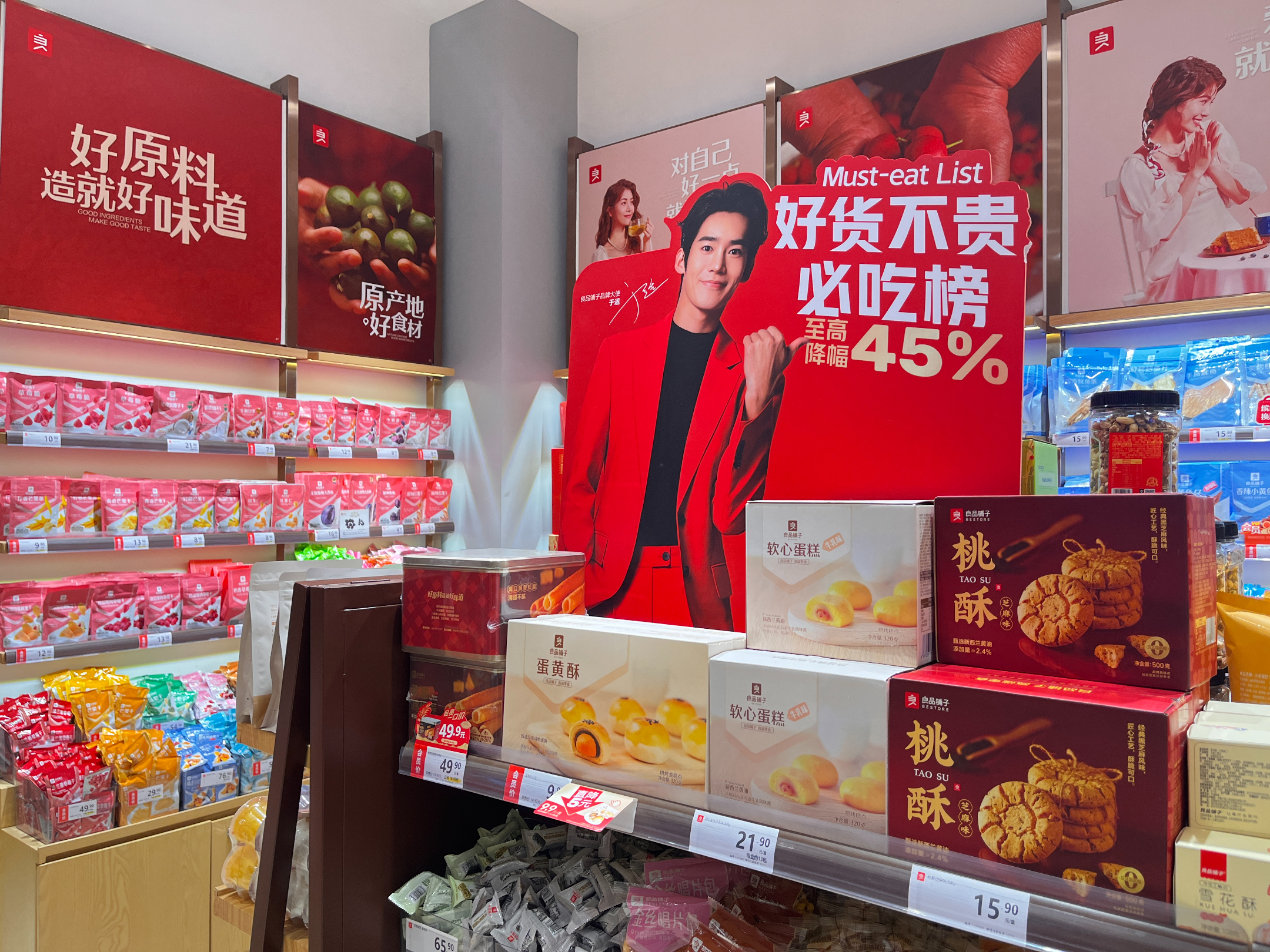
Core Viewpoint - The company reported a decline in net profit for the first half of 2025, attributing the loss to multiple factors including price reductions, store closures, and decreased government subsidies and investment income [2]. Group 1: Financial Performance - The company's net profit performance declined in the first half of 2025 due to proactive measures such as price cuts and the elimination of inefficient stores [2]. - The gross profit margin was affected by adjustments in product pricing and structure during the reporting period [2]. - The net cash flow from operating activities increased, primarily due to a decrease in sales scale and total profit, alongside reduced tax payments [2]. Group 2: Strategic Adjustments - The company has been optimizing and adjusting its product offerings, which included lowering prices on certain products [2]. - There has been a focus on cost control, leading to a reduction in employee compensation and other cash outflows related to business activities [2].

粽子也要出海?五芳斋寻求港股上市,A股市值已缩水三成
Guan Cha Zhe Wang· 2025-09-28 11:25
Core Viewpoint - Wufangzhai, a Chinese traditional food company, is planning to list its shares in Hong Kong to enhance its international presence and diversify its capital platform, amid challenges in domestic growth and market competition [1][2]. Group 1: Company Overview - Wufangzhai was founded in 1921 and is known for its glutinous rice products, being recognized as a "Chinese Time-honored Brand" and one of the "Top 100 Catering Enterprises in China" [1]. - The company has established production bases in Jiaxing and Chengdu, along with a nationwide marketing network that includes 496 stores as of June 30, 2025 [1]. Group 2: Financial Performance - Wufangzhai's market capitalization is currently below 3.5 billion yuan, having decreased nearly 30% since its initial public offering [2]. - The company reported a revenue growth of 7.04% and a net profit growth of 19.74% in 2023, but experienced declines in both revenue and net profit in 2022 and 2024 [2]. - In 2024, Wufangzhai's revenue was 2.251 billion yuan, down 14.57% year-on-year, with a net profit of 142 million yuan, also down 14.24% [2]. Group 3: Business Strategy - The company is pursuing an "A+H" dual-platform listing strategy to address growth bottlenecks and enhance its international strategy [2]. - Wufangzhai has expanded its international footprint by establishing subsidiaries in countries such as Singapore, Japan, the UK, France, and Australia, with a focus on exporting its glutinous rice products [3]. Group 4: Market Challenges - The glutinous rice product market is highly competitive, with brands like Liuyishou and Qianji entering the space, leading to a decline in Wufangzhai's core product revenue [2]. - The company's overseas revenue was only 15.47 million yuan in 2024, accounting for just 0.7% of total revenue, and further decreased to 6.27 million yuan in the first half of 2025 [3]. Group 5: Quality Control and Compliance - Wufangzhai faces challenges in maintaining product quality, as evidenced by a recent incident involving a batch of mooncakes that were recalled in South Korea due to contamination [5]. - The company operates with a model that includes outsourcing approximately 16.43% of its glutinous rice products, which raises quality control concerns [5]. Group 6: Strategic Moves - Wufangzhai has initiated a share buyback of 200,000 shares, representing 0.10% of its total share capital, as a move to manage its market value amid low stock prices [6]. - The upcoming Hong Kong listing is seen as a potential opportunity for value re-evaluation and to boost investor confidence, especially given the underperformance in the A-share market [6].

【最全】2025年中国轻食行业上市企业全方位对比(附业务布局汇总、业绩对比、业务规划等)
Qian Zhan Wang· 2025-09-28 07:40
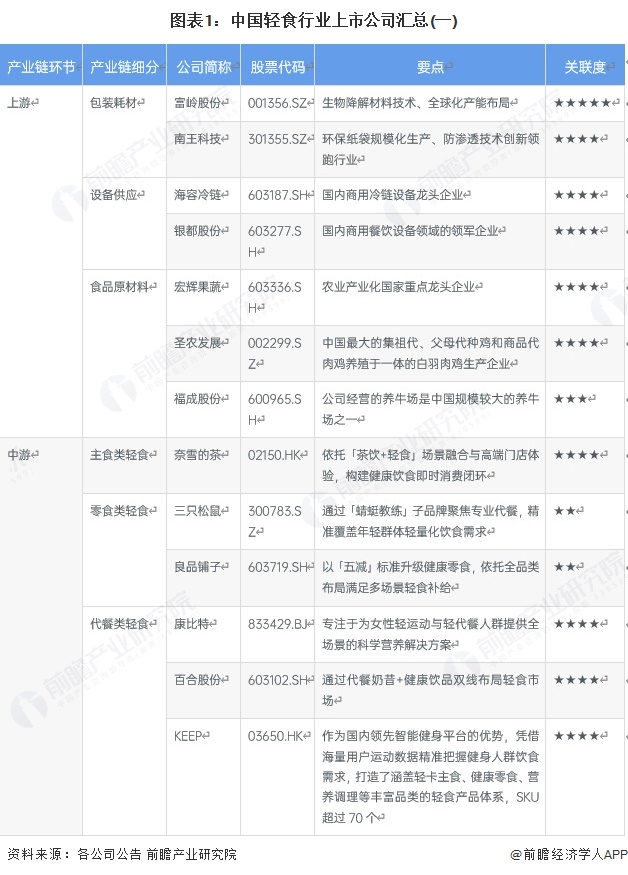
Core Insights - The article discusses the current landscape of the light food industry in China, highlighting the limited number of publicly listed companies and their cross-industry expansions into the light food sector [1][6]. Group 1: Overview of Listed Companies - The light food industry has few listed companies, with many being cross-industry brands such as Nayuki Tea, Three Squirrels, and others venturing into the light food market [1]. - Key players include Nayuki Tea (02150.HK), Three Squirrels (300783.SZ), and others, each focusing on different segments of the light food market [1][2]. Group 2: Company Profiles and Financials - Nayuki Tea is projected to generate 49.2 billion yuan in revenue in 2024, focusing on a health-oriented dining experience [4]. - Three Squirrels is expected to achieve 106.2 billion yuan in revenue, targeting the casual snack market with its sub-brands [4]. - Farmer Spring leads with 428.96 billion yuan in revenue, while Baihe Co. has the lowest at 8.01 billion yuan [8]. Group 3: Business Strategies and Market Positioning - Nayuki Tea and KEEP target young professionals and fitness enthusiasts, offering specialized stores and meal options to meet all-day light food needs [9][10]. - Three Squirrels and Liangpinpuzi focus on low-calorie snacks for the general health-conscious market, while West Oats and Taoli Bread cater to fitness consumers with nutritious and convenient food options [9][10]. - Companies like Kangbiter and Baihe Co. provide products aimed at sports enthusiasts, focusing on body management and post-exercise nutrition [9][10]. Group 4: Sales Channels and Performance - Nayuki Tea operates a balanced online and offline sales strategy, with over 1,453 stores and a significant presence on delivery platforms [11]. - Three Squirrels primarily focuses on online sales, while companies like Taoli Bread and Farmer Spring rely more on offline channels [11]. - In 2024, Nayuki Tea's energy bowl packages are expected to sell over 29.2 million units, showcasing strong market demand [12][13]. Group 5: Future Plans and Innovations - Companies are planning to expand their light food offerings through new store formats, product innovations, and enhanced distribution channels [15]. - Nayuki Tea plans to launch a new store type, "Nayuki Green," focusing on low-calorie and healthy options for urban consumers [10].



2025“乐购湖北 金秋潮荟”消费季启幕
Ren Min Wang· 2025-09-28 06:31
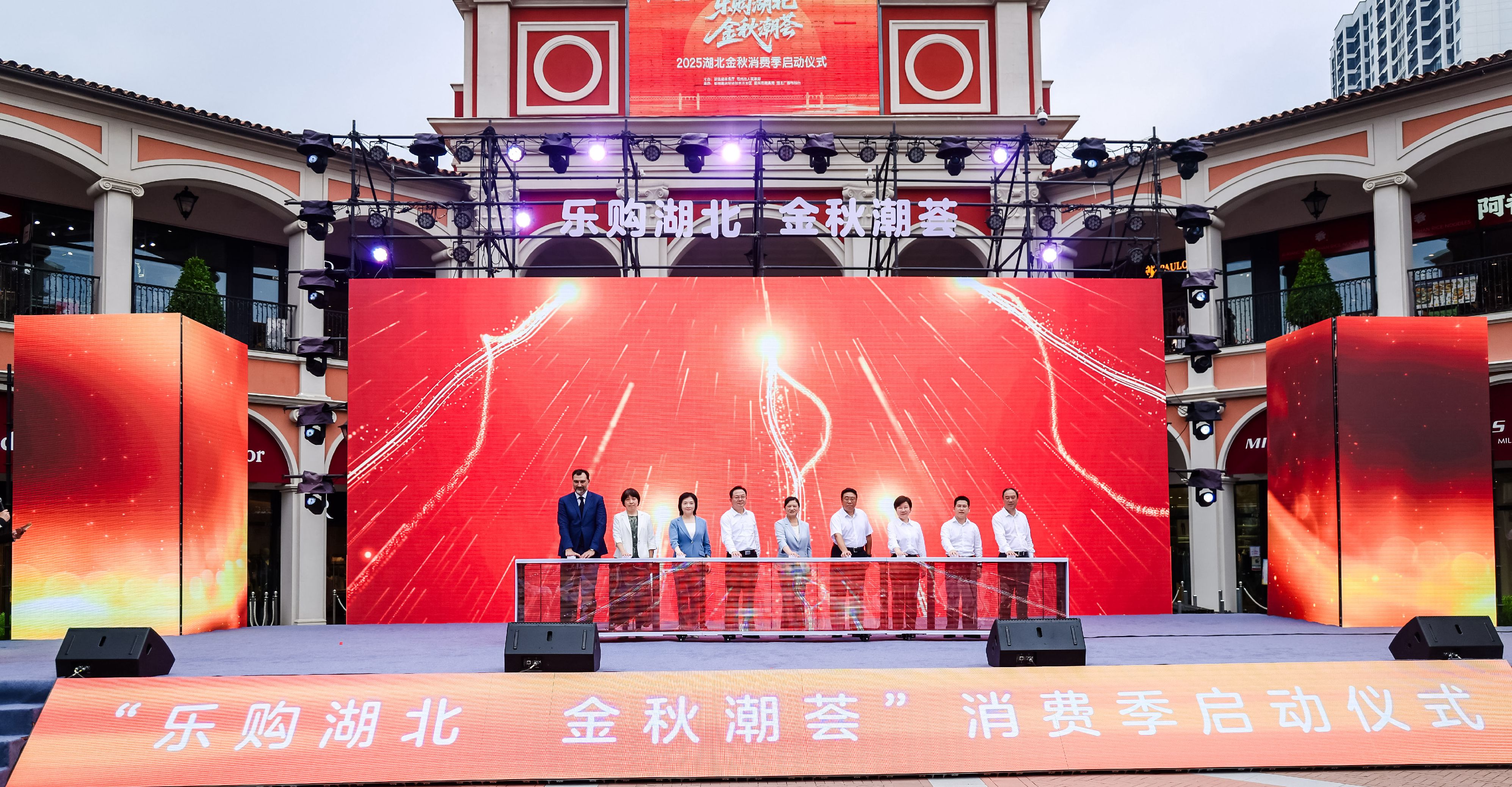
Core Points - The "2025 'Shop Hubei Autumn Tide' Consumption Season" was launched in Ezhou, focusing on six major consumption areas: automotive, home furnishings, dining, shopping districts, domestic products, and digital intelligence [1][4] - The initiative aims to stimulate consumer potential and meet the diverse needs of the public through high-quality supply and over 1 billion yuan in subsidies [1][4] Group 1: Automotive Sector - The province continues the vehicle trade-in policy, promoting a "thousands of counties and ten thousand towns" electric vehicle consumption season [4] - Various promotional activities include the Xiangyang International Auto Show and car purchase vouchers in multiple cities, with over 1 billion yuan in new car purchase subsidies offered [4] Group 2: Home Furnishings - Events such as the "Golden Consumption Season" in Huangshi and the third Jingzhou Home Expo provide significant discounts and one-stop services for home improvement [4] Group 3: Dining and Local Cuisine - The event features a selection of local delicacies and culinary events across 17 cities, promoting local food culture and enhancing the night economy [5] Group 4: Shopping Districts - The launch of the "Hubei Departure Tax Refund Consumption Map" covers 115 tax refund stores, with various promotional activities in shopping malls and outlets [5] Group 5: Domestic Products - Local brands are actively participating in the consumption season, offering special products and promotions to enhance the appeal of domestic goods [5] Group 6: Digital and Financial Support - The second round of "Hubei Consumption Coupons" is being distributed, with platforms like JD.com and Meituan providing additional subsidies [6] - Financial institutions are offering special consumer loans and credit card promotions to support the consumption season [6] Group 7: Community Services - The event will also include the third "National Quarter-Hour Convenient Living Service Month," focusing on community welfare and services for the elderly and children [6]

控制权变更纠纷成业绩会焦点,良品铺子回应经营未受重大影响
Guo Ji Jin Rong Bao· 2025-09-26 11:10
若本次交易顺利完成,良品铺子控股股东将由宁波汉意变更为长江国贸。 9月26日下午,良品铺子召开2025年半年度业绩说明会,公司控制权变更事宜因涉及多方权益与诉讼争议,成为了投资者关注焦点。 回溯事件脉络,7月,良品铺子突发公告,公司控股股东宁波汉意及其一致行动人良品投资,拟以10.46亿元总价向武汉国资长江国贸转让合计21%股 份。同时,公司二股东达永有限也拟以4.45亿元的价格向长江国贸转让其持有的8.99%股权。 业绩会上,多位投资者围绕与广州轻工的股权纠纷进展接连提问,希望了解事件最新动态及对公司的潜在影响。 对此,良品铺子总经理杨红春并未透露更多细节,仅表示"公司将根据法律法规的规定及时进行信息披露,敬请广大投资者注意投资风险"。 同时杨红春强调,该事项对公司生产经营和当期损益无重大影响。"公司目前各项业务经营情况正常,并将继续围绕公司发展战略,提升公司可持续发 展及盈利能力,为公司和股东创造更大价值。" 左宇摄 然而,这一控制权转让进程却意外受阻。此前已与宁波汉意签署《协议书》、就控制权转让有过接触的广州国资广州轻工,对上述股权转让事项明确提 出反对,并已就此发起诉讼。受此影响,良品铺子控制权转让事 ...
食饮吾见 | 一周消费大事件(9.22-9.26)
Cai Jing Wang· 2025-09-26 08:49
Group 1: Company Strategies and Developments - Bright Dairy is enhancing its product offerings by launching new products like Youbei 5.0 ultra-fresh milk and high-protein products to meet consumer demand and stabilize market share [1] - ST Juewei is currently operating normally and aims to apply for the removal of risk warnings after fulfilling certain conditions, following a regulatory investigation [2] - Jinzi Ham plans to invest up to 300 million RMB to acquire up to 20% equity in Zhongsheng Microelectronics, recognizing the growth potential in the AI and optical communication sectors [3] Group 2: Regulatory and Market Updates - The State Council's Food Safety Office has issued directives to ensure food safety during the upcoming National Day and Mid-Autumn Festival, focusing on the regulation of seasonal food products [4] - Changjiang International Trade Group's acquisition of Good Products has received unconditional approval from the market supervision authority, with the share transfer agreement set at 12.34 RMB per share [5][6] - Wanchen Group has submitted an application for H-share listing on the Hong Kong Stock Exchange, with the process still subject to regulatory approvals [11][12] Group 3: Retail and Consumer Trends - Bawang Tea has opened its largest "Super Tea Warehouse" in Hong Kong and plans to launch over ten new stores in the coming months to expand its market presence [7] - Yonghui Supermarket has completed the renovation of its Daxing District store, adopting the "Fat Donglai model" and significantly increasing the proportion of new products [9] - Pang Donglai clarified that the design cost for its Mid-Autumn Festival mooncake packaging was 3.72 million RMB, countering claims of a 10 million RMB expense [10]


2025年1-8月全国农副食品加工业出口货值为1404.7亿元,累计下滑5.5%
Chan Ye Xin Xi Wang· 2025-09-26 03:47
相关报告:智研咨询发布的《2025-2031年中国农副食品加工专用设备制造行业市场动态分析及发展前 景研判报告》 数据来源:国家统计局,智研咨询整理 知前沿,问智研。智研咨询是中国一流产业咨询机构,十数年持续深耕产业研究领域,提供深度产业研 究报告、商业计划书、可行性研究报告及定制服务等一站式产业咨询服务。专业的角度、品质化的服 务、敏锐的市场洞察力,专注于提供完善的产业解决方案,为您的投资决策赋能。 上市公司:黑芝麻(000716),双汇发展(000895),千味央厨(001215),青岛食品(001219),三 全食品(002216),得利斯(002330),金字火腿(002515),洽洽食品(002557),五芳斋 (603237),安井食品(603345),绝味食品(603517),惠发食品(603536),有友食品 (603697),良品铺子(603719),来伊份(603777),桃李面包(603866) 根据国家统计局数据可知:2025年8月全国农副食品加工业出口货值为168.5亿元,同比下降9.6%;2025 年1-8月全国农副食品加工业累计出口货值为1404.7亿元,累计同比下降5.5%。 ...

业绩爆发式增长,年入超300亿,万辰集团强势冲刺“港交所量贩零食第一股”?
Zhi Tong Cai Jing· 2025-09-25 12:55
Core Viewpoint - The competition for the first snack stock on the Hong Kong Stock Exchange is intensifying, with Wanchen Group entering the market after its successful transformation from a mushroom producer to a leading discount snack retailer [1][10]. Company Overview - Wanchen Group, established in 2011, initially focused on the research, cultivation, and sales of edible mushrooms, particularly enoki mushrooms. It became the "mushroom first stock" after listing on the ChiNext in 2021 [1]. - The company has expanded into the discount snack store sector, merging with brands like "Liu Xiaocan" and "Lai Youpin" to form the new Wanchen Food Group, significantly altering the industry landscape [1][9]. Market Position - Wanchen Group holds a leading position in China's snack and beverage market, with its brand "Hao Xiang Lai" being the first discount snack brand in China to exceed 10,000 stores [2]. - The company has achieved rapid growth, with revenue projections for 2022, 2023, and 2024 at RMB 5.49 billion, RMB 92.94 billion, and RMB 323.29 billion, respectively, reflecting year-on-year growth rates of 1592.9% and 247.8% [2][3]. Store Network and Membership - As of June 30, 2025, Wanchen Group's store network has surpassed 15,000 locations across 29 provinces and municipalities in China, with over 1.5 million registered members [3]. - The company reported an average monthly active member spending frequency of 2.9 times as of August 2025 [3]. Competitive Advantages - Wanchen Group emphasizes both scale and efficiency, sourcing approximately 95% of its products directly from brand manufacturers, which allows for competitive pricing—20-30% lower than similar products in supermarkets [5]. - The product range includes 12 core categories, with over 4,000 SKUs selected from a vast inventory, ensuring a diverse offering that meets consumer demand [6]. Industry Growth Potential - The snack and beverage industry is projected to reach RMB 4 trillion by 2024, with discount snack retail expected to grow at a compound annual growth rate of 36.5% from 2024 to 2029 [8]. - Factors such as rising disposable income and the evolving consumer preference for snacks as a "fourth meal" are driving this growth, making the discount snack sector a key focus for retail development [8]. Competitive Landscape - The competitive landscape is characterized by major players like "Ming Ming Hen Mang" and emerging brands such as "Liang Pin Pu Zi" and "Tian Chao," creating a challenging environment for Wanchen Group despite its leading position [10]. - The company plans to use funds from its Hong Kong listing to expand its store network, enhance product offerings, and improve logistics and digital infrastructure [10]. Conclusion - Wanchen Group's successful entry into the discount snack market and its rapid growth position it well to capitalize on the industry's long-term benefits, although it faces ongoing competitive pressures that will test its operational efficiency and profitability [11].
新股前瞻|业绩爆发式增长,年入超300亿,万辰集团强势冲刺“港交所量贩零食第一股”?
智通财经网· 2025-09-25 12:51
Core Viewpoint - The competition for the first snack stock on the Hong Kong Stock Exchange is intensifying, with Wanchen Group and Mingming Hen Mang both vying for market leadership in the snack retail sector [1][10]. Company Overview - Wanchen Group, established in 2011, initially focused on the research, cultivation, and sale of edible mushrooms, becoming the "mushroom first stock" after its A-share listing in 2021 [1]. - The company has transitioned into the snack discount store sector, merging with brands like "Liu Xiaocan" and "Lai You Pin" to form a new entity, Wanchen Food Group, significantly altering the industry landscape [1]. Market Position - Wanchen Group holds a leading position in China's snack and beverage market, with its brand "Hao Xiang Lai" being the first retail brand in China to exceed 10,000 stores [2]. - The company has expanded its store network to over 15,000 locations across 29 provinces and municipalities in China by mid-2025 [3]. Financial Performance - Wanchen Group's revenue has shown explosive growth, with figures of RMB 5.49 billion, RMB 92.94 billion, and RMB 323.29 billion for 2022, 2023, and 2024 respectively, reflecting year-on-year growth rates of 1592.9% and 247.8% [2]. - The company reported a net profit of RMB 8.61 billion in the first half of 2025, a significant increase of 532% year-on-year [2]. Product Strategy - The company maintains a diverse product portfolio across twelve core categories, offering over 4,000 SKUs, with each store typically stocking around 1,800 to 2,000 SKUs [5]. - Wanchen Group's pricing strategy allows it to offer products at 20-30% lower prices than similar products in supermarkets and convenience stores, enhancing its competitive edge [5]. Industry Dynamics - The snack and beverage industry is projected to reach RMB 4 trillion by 2024, with the discount snack retail segment expected to grow at a compound annual growth rate of 36.5% from 2024 to 2029 [8]. - The shift in consumer behavior towards value for money and the expansion into lower-tier cities present significant growth opportunities for Wanchen Group [8][9]. Competitive Landscape - The competitive environment is characterized by major players like "Mingming Hen Mang" and "Liangpin Puzi," with several smaller brands also emerging rapidly [10]. - Despite its leading position, Wanchen Group faces substantial competition, necessitating continuous improvement in operational efficiency and profitability to maintain its market share [11].