茶百道

Search documents
芋泥火了!线上话题14亿浏览,茶百道新品首日热销20万杯
Xin Lang Cai Jing· 2025-10-17 06:46
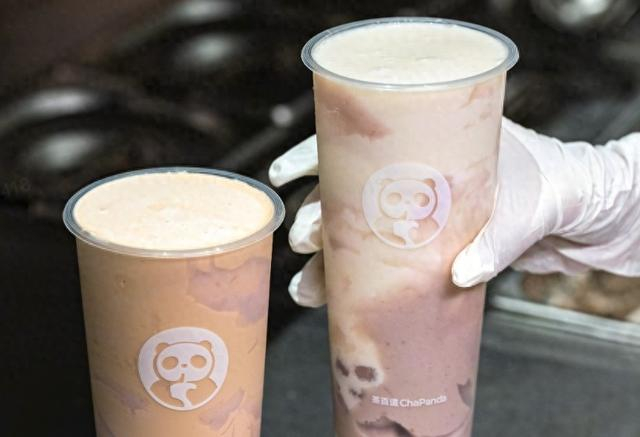
Core Insights - The new tea beverage brands are launching autumn and winter seasonal products, with a focus on hot drinks like taro-based beverages, which have gained popularity among consumers as temperatures drop [1][3] - The "Super Thick Taro" series from Cha Bai Dao has seen significant sales, with nearly 200,000 cups sold on its first day of launch, particularly favored in northern regions like Beijing and Jilin [1][3] - Social media discussions around taro products have surged, with nearly 1.4 billion views on Xiaohongshu and over 4 million discussions, indicating a strong consumer interest [1] Company Insights - Cha Bai Dao's "Super Thick Taro Milk Green" and "Super Thick Taro Milk Tea" utilize different tea bases to cater to diverse consumer preferences, featuring high-quality taro from Fujian and rich dairy ingredients for enhanced flavor [3] - The "Super Thick Taro" series has become a national best-seller, with modifications in preparation to include diced taro, providing a unique texture that appeals to consumers [3] - The trend of introducing taro products earlier in the season aligns with the current consumer preference for rich, creamy beverages, reflecting a shift in market strategy among tea brands [3]

新茶饮卷完口味卷健康!“养生奶茶”成行业新战场
Qi Lu Wan Bao· 2025-10-14 02:35
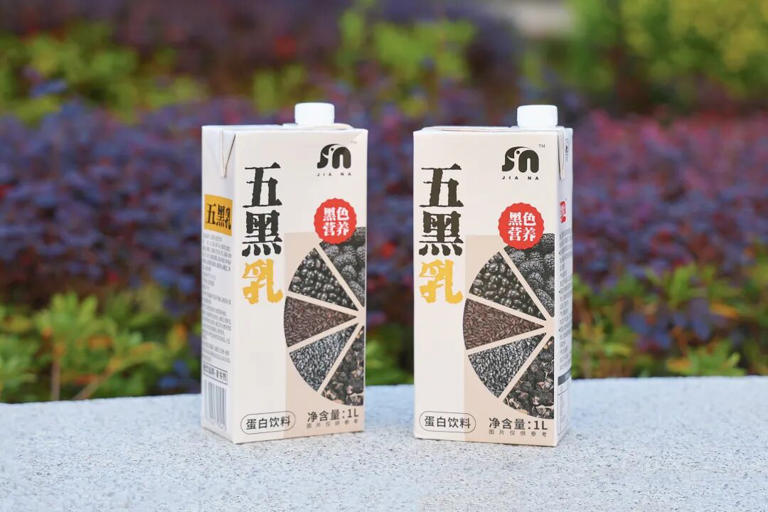
Core Insights - The new tea beverage market is shifting focus from taste to health, with leading brands like Hu Shang A Yi and Cha Bai Dao launching health-oriented product lines to capture high-value growth opportunities in a competitive landscape [1][5][6] Group 1: Market Trends - The emergence of "health tea" reflects a growing consumer awareness of health, with terms like "anti-sugar," "low-calorie," and "functional foods" gaining traction, particularly among young female consumers [5][6] - Social media discussions around "health tea" and "natural beauty water" indicate a strong market demand for healthier beverage options [5] Group 2: Product Innovations - Hu Shang A Yi's new "light health" series incorporates traditional health ingredients into freshly made tea, while Cha Bai Dao's "light series" emphasizes low sugar and functional additives like collagen and probiotics [4] - Other brands, including Shu Yi Shao Xian Cao and Gu Ming, are also enhancing their menus with health-focused labels, indicating a significant shift towards health-oriented products [4] Group 3: Competitive Dynamics - The competitive logic in the new tea beverage industry is evolving from a focus on taste and speed of new product launches to emphasizing ingredient value and consumption scenarios [6] - Brands are now investing in ingredient sourcing, scientific formulation, and even involving nutrition consultants in product development to establish consumer confidence in sustainable consumption [6]
茶酒融合催生“微醺”新赛道,新茶饮品牌争饮“昼夜”经济
Qi Lu Wan Bao· 2025-10-14 02:35
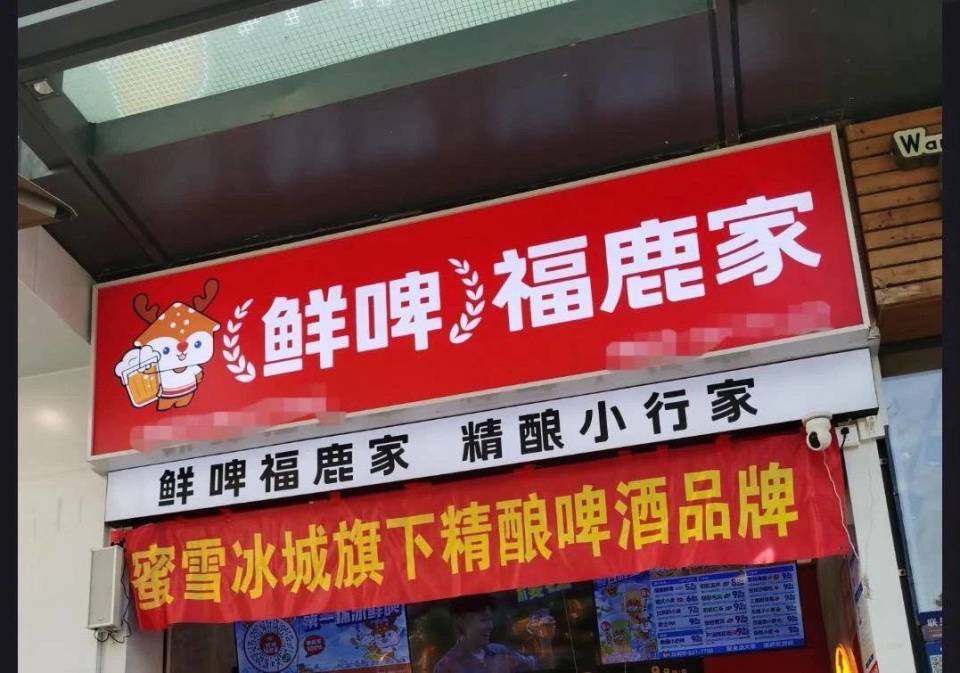
Core Insights - The emergence of a new "tipsy" trend in the domestic consumption market is driven by the blending of daytime tea drinks and nighttime alcoholic beverages, with brands like Cha Baidao and Tea Yan Yue Se leading the charge into this crossover market [2][4] Group 1: Market Trends - The return of Cha Baidao's classic liquor milk tea has achieved impressive sales, with nearly 120,000 cups sold on the first day, indicating strong consumer interest in tea-alcohol fusion products [3][4] - The market for craft beer is rapidly growing, with projections suggesting it will exceed 100 billion yuan by 2025, providing an attractive crossover opportunity for tea brands [4] Group 2: Consumer Preferences - Younger consumers are increasingly favoring light, low-alcohol beverages, which aligns well with the offerings of new tea drinks, creating a synergy between the two markets [4][5] - The pricing strategy for these new products is aimed at being accessible, with most items priced between 15 to 25 yuan, lowering the barrier for consumers to try these innovative drinks [3] Group 3: Business Strategies - The success of the "tea + alcohol" model requires a shift from mere product mixing to deeper scene-based operations, enhancing user engagement through community-focused experiences [5] - Brands are encouraged to innovate continuously and ensure product quality to transform this trend from a temporary market phenomenon into a sustainable business model [5]
当茶遇见酒,能调出什么新口味|经济观察
Chang Sha Wan Bao· 2025-10-13 23:40
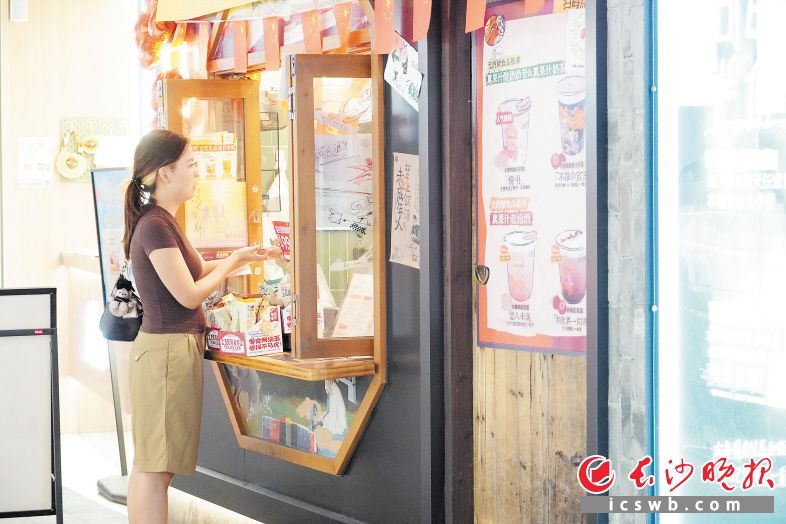
Core Insights - The fusion of tea and alcohol is becoming a popular trend among urban consumers, with brands like Cha Baidao and Mixue Group exploring this "micro-drunk economy" by introducing alcoholic beverages into their offerings [2][6][10] Industry Trends - The new tea beverage market is transitioning from a blue ocean to a red ocean, with the market size expected to exceed 350 billion yuan by 2024, while the top five brands hold nearly 40% market share [6] - The craft beer market in China is projected to grow from 20 billion yuan in 2020 to 80 billion yuan by 2024, with a compound annual growth rate exceeding 30% [6] - Traditional alcohol brands are recognizing the need to attract younger consumers, with a focus on lightweight, portable beverages that align with the preferences of the 85-94 age group [6][10] Consumer Behavior - The combination of tea and alcohol is appealing to consumers, with products like "Drunken Step on the Road" and various fruit-infused alcoholic teas gaining traction [4][5] - The price range for these new alcoholic tea products is generally between 15 to 25 yuan, making them accessible to a broader audience [7] Market Opportunities - The integration of alcohol into tea beverages represents an opportunity for both new tea brands and traditional alcohol companies to expand their consumer base and explore new growth avenues [6][10] - Brands are encouraged to create engaging consumption scenarios and emotional connections with consumers to enhance brand loyalty and market presence [9][10]
9块9成过去时,咖啡价格战卷到2块9
36氪· 2025-10-13 10:13
Core Viewpoint - The coffee industry is undergoing a significant price war, leading to a drastic reduction in coffee prices and reshaping consumer expectations and market dynamics [4][5][6]. Price War Dynamics - Two years ago, brands like Luckin and Kudi set coffee prices at 9.9 yuan, but new tea brands like Guming and Cha Baidao have pushed prices down to the 4 yuan range [6][10]. - Major players including Starbucks have also joined the price reduction trend, with Starbucks reducing prices on several products by an average of 5 yuan, marking a significant shift in their pricing strategy [6][8]. - The competition has evolved into a full-scale industry battle, with various brands engaging in aggressive promotions and price cuts [7][8]. Consumer Behavior and Market Impact - The introduction of low-priced coffee has become the norm, with consumers able to purchase coffee for as low as 0.5 yuan through delivery platforms [7][18]. - The price war has led to a redefinition of coffee's value, with high-end brands struggling to maintain profitability and some even resorting to selling their businesses [8][23]. - The coffee market has seen a significant increase in the number of stores, but also a high rate of closures, with over 50,000 coffee shops exiting the market in the past year [23]. Brand Strategies and Responses - Guming has launched aggressive pricing strategies, offering coffee at 4.9 yuan, significantly undercutting competitors like Luckin and Kudi [11][12]. - Other tea brands, such as Cha Baidao, are also entering the low-price coffee market, indicating a trend where tea brands are diversifying into coffee to capture new market segments [12][13]. - Luckin and Kudi have responded to the price war by introducing their own low-priced coffee options, with Luckin offering promotions that bring prices down to as low as 2.9 yuan [14][18]. Industry Outlook - The coffee industry is becoming increasingly segmented, with a variety of price points catering to different consumer preferences [24]. - The long-term sustainability of the coffee market will depend on the development of supply chains and the ability of companies to adapt to changing consumer demands [24].



假日经济“带火”新茶饮
Jing Ji Wang· 2025-10-13 09:18
Core Insights - The autumn season has traditionally been a peak sales period for milk tea, with the recent National Day and Mid-Autumn Festival holidays driving significant sales growth for new tea brands [1] - New tea brands are experiencing remarkable sales increases, with some locations seeing growth exceeding 2000% during the holiday period [1] Sales Performance - Tea brand Cha Bai Dao reported that many of its stores nationwide saw sales increase by over 1000% during the holiday [2] - Different regions showed varying preferences for tea types, with fresh fruit tea being more popular in Jiangsu, Guangdong, and Jiangxi, while fresh milk tea was favored in Sichuan, Hubei, and Shandong [2] - Lesser-known tourist destinations have gained popularity, with cities like Jiayuguan and Bayannur entering the top ten for sales growth during the holiday [2] Transportation Hubs - The integration of commerce and transportation has transformed transport hubs into comprehensive "travel supply stations," leading to significant sales increases for stores located in airports, high-speed rail stations, and service areas [2] - Cha Bai Dao reported that sales at its stores in transportation hubs nearly doubled during the holiday, with one store in Xingtai, Hebei, seeing a 700% increase in daily revenue compared to previous periods [2] Brand Expansion - Sweetlala reported a sales increase of over 50% across its stores nationwide from October 1 to 7, with key regions like Anhui and Hebei seeing growth exceeding 137.7% [3] - Nai Xue's Tea has recently opened its first store in the U.S. in Flushing, New York, achieving a remarkable revenue of approximately $87,000 (around 620,000 RMB) in its first three days, setting a record for new store openings [3]
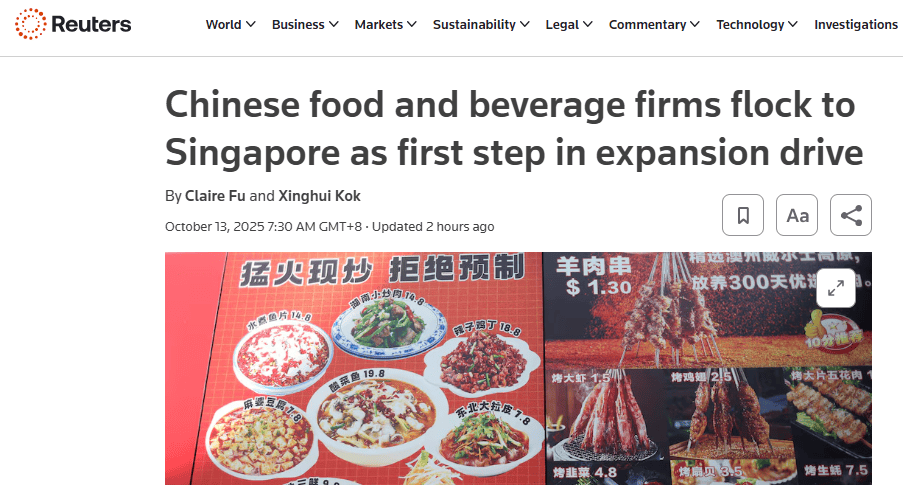
中国餐饮品牌掀起“新加坡热”
Sou Hu Cai Jing· 2025-10-13 06:42
Core Insights - Chinese food and beverage companies are increasingly expanding overseas, with Singapore emerging as a primary testing ground for global expansion due to domestic consumption challenges, intense price competition, and profit compression [1][3] Group 1: Market Trends - As of August this year, approximately 85 Chinese restaurant brands have opened 405 stores in Singapore, a significant increase from 32 brands and 184 stores in the same period last year, marking a doubling in both brand and store numbers [3] - The domestic market's "involution" is a key driver for this overseas expansion, as the Chinese consumption market remains sluggish amid real estate downturns and external trade pressures [3] Group 2: Strategic Advantages - Singapore's unique advantages, such as its similar Chinese cultural background and mature consumer market, make it an ideal "springboard" for Chinese brands aiming to enter Southeast Asia and beyond [3] - Successful brands are bringing refined operational models and substantial capital, with examples like Cha Yan Yue Se utilizing automated equipment to customize drinks in 8 seconds and Michelin-starred restaurants like Yong Fu Hui entering with millions in investment [4] Group 3: Local Market Impact - The influx of Chinese brands is causing disruption in the local market, with organizations like "Singapore Tenants United for Fairness" expressing concerns over the unfair advantages these brands have due to their strong capital backing [4] - Critics worry that the surge of Chinese restaurants may dilute Singapore's organic dining culture, highlighting the tension between local businesses and incoming foreign brands [4] Group 4: Future Outlook - Despite the controversies and increasing local competition, the trend of Chinese restaurant brands expanding into Singapore appears to be irreversible, as it represents a crucial step for these companies seeking growth and survival in a challenging domestic market [4]
万联晨会-20251013
Wanlian Securities· 2025-10-13 00:37
Core Insights - The A-share market experienced a decline, with the Shanghai Composite Index falling by 0.94% to 3,897.03 points, and the Shenzhen Component Index dropping by 2.7% [1][7] - The total trading volume in the Shanghai and Shenzhen markets reached 2.52 trillion yuan, with sectors such as building materials, coal, and textiles leading the gains, while electronics, power equipment, and computers faced losses [1][7] - The Hong Kong Hang Seng Index closed down 1.73% at 26,290.32 points, reflecting a broader trend of declines across major global indices, including a 1.9% drop in the Dow Jones and a 3.56% drop in the Nasdaq [1][7] Industry Analysis Beverage Industry - The new tea beverage market is transitioning from rapid growth to a focus on value, with increasing competition leading to a shift from high-priced, heavily marketed products to more sustainable, frequent consumption models [9][12] - The market is expected to see a concentration of power among leading companies that can effectively manage supply chains and target lower-tier markets, which remain key growth areas [9][12] - Companies are encouraged to innovate products to meet health demands and explore overseas markets while maintaining cost control and operational efficiency [9][12] Food and Beverage Manufacturing - The profit of major industrial enterprises in China showed a positive growth of 0.9% year-on-year for the first eight months of 2025, with significant improvements noted in August, where profits increased by 20.4% compared to the previous month [14][15] - Within the consumer goods sector, essential food and beverage manufacturing industries reported positive profit growth, while optional consumption sectors remained subdued [14][15] - The report suggests focusing on sectors like liquor, dairy, and beverages, which are expected to benefit from macroeconomic policies and declining raw material costs [16][17] Blood Products Industry - The blood products sector underperformed the market, with a 4.86% decline in September, attributed to short-term performance pressures and market sentiment shifts [18][19] - The industry is facing challenges such as price declines and cash flow pressures, but long-term prospects remain positive as leading companies consolidate and enhance their operational capabilities [18][19] - Key focus areas include the integration of upstream plasma resources and the development of high-margin products to improve revenue structures [20]
食品饮料行业周报:板块轮动拉升消费,餐饮链催化延续-20251012
Huaxin Securities· 2025-10-12 15:34
Investment Rating - The report maintains a "Recommended" investment rating for the food and beverage sector [9][58]. Core Insights - The report highlights that the white liquor sector is experiencing marginal improvements in sales during the double festival period, although it remains under pressure year-on-year. Channel inventory has slightly decreased but is still at a relatively high level, leading to anticipated pressure on wholesale prices as companies focus on controlling volume to maintain prices [6][56]. - The consumer sector is rebounding, driven by capital switching and favorable data from the National Day holiday. The report notes a significant increase in cross-regional mobility, with an estimated 2.432 billion people traveling during the holiday, a historical high [7][57]. - The beverage sector is performing strongly, with a focus on new consumption opportunities amid retail channel transformations. The report suggests monitoring companies like Heytea, Cha Bai Dao, and others in the tea beverage segment [8][58]. Summary by Sections Industry News - In September, Douyin's liquor sales increased by 58% month-on-month, and JD Seven Fresh reported a 109% year-on-year increase in liquor sales during the double festival period [5][18]. - The report mentions the official release of the twelve fragrance standard sample and various company developments, including Guizhou Moutai's focus on integrating tourism and liquor sales [5][18]. Company Feedback - The report provides insights into the performance of key companies, noting that the white liquor sector is under pressure but suggests focusing on high-dividend leaders like Guizhou Moutai and Wuliangye, as well as more elastic stocks like Jiu Gui Jiu and She De Jiu Ye [6][9]. - The report also emphasizes the importance of the tea beverage sector, particularly during the National Day holiday, and suggests monitoring companies like Mi Xue and Gu Ming [7][58]. Key Company and Profit Forecasts - The report includes a table of key companies with their stock prices, earnings per share (EPS), and price-to-earnings (PE) ratios, recommending a "Buy" rating for all listed companies, including Guizhou Moutai, Wuliangye, and others [59].




9块9成过去时,咖啡价格战卷到2块9
凤凰网财经· 2025-10-12 12:36
Core Viewpoint - The coffee industry is experiencing a significant price war, with prices dropping to as low as 2.9 yuan, leading to intense competition among brands and a redefinition of coffee's market value [3][4][18]. Group 1: Price War Dynamics - Two years ago, brands like Luckin Coffee and Kudi initiated a price war, setting coffee prices at 9.9 yuan, which has now evolved into a new phase where brands like Guming and Cha Baidao are offering coffee for 4 yuan and above [3][5][6]. - In 2025, a second wave of price competition was ignited by new tea brands, with Guming launching a campaign offering coffee starting at 4.9 yuan, effectively halving the previous price point [6][7]. - The price war has led to a situation where high-end brands like Starbucks have also reduced prices, with average reductions of around 5 yuan per product [3][4][18]. Group 2: Impact on Brands - The aggressive pricing strategies have forced traditional coffee brands to adapt, with Luckin Coffee and Kudi responding to the new low-price entrants by launching their own promotions, such as 5.9 yuan coffee [10][12]. - The entry of new players like Lucky Coffee, which offers coffee as low as 2.9 yuan, has further intensified the competition, leading to a significant increase in order volumes for some stores [15][16]. - The overall market has seen a decline, with over 50,000 coffee shops closing in the past year, indicating that the price war is unsustainable for many players [18][19]. Group 3: Consumer Behavior and Market Trends - Consumer expectations for coffee pricing have shifted dramatically, with many now viewing 4 yuan as a reasonable price point for coffee [6][10]. - The blurring lines between coffee and tea products have led to increased competition, with brands like Cha Baidao also entering the low-price coffee market [8][12]. - The industry is becoming increasingly segmented, with different price points catering to diverse consumer preferences, highlighting the need for brands to innovate and invest in their supply chains to remain competitive [19].