三全食品

Search documents
甜粽子和咸粽子都没人吃了?
虎嗅APP· 2025-05-30 13:23
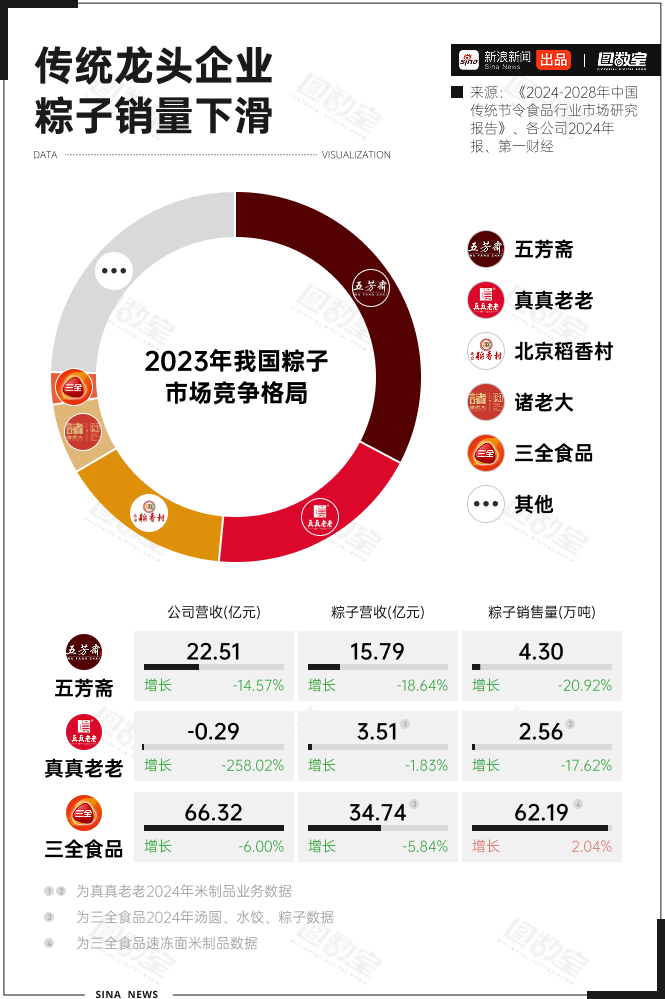
Core Viewpoint - The traditional zongzi brands are experiencing a decline in sales despite the overall growth of the zongzi market in China, indicating a shift in consumer preferences towards new and innovative products [3][5][11]. Group 1: Market Performance of Leading Brands - Major zongzi brands such as Wufangzhai and Zhenzhenlaolao reported significant revenue declines in 2024, with Wufangzhai's revenue down by 14.57% and zongzi revenue down by 18.64%, resulting in a nearly 20% drop in sales volume [6]. - Zhenzhenlaolao faced a net loss of 29 million yuan in 2024, worsening from a loss of 8.1 million yuan in 2023, with its rice product sales, including zongzi, declining by 17.62% [6]. - Despite the poor performance of these leading brands, the overall zongzi market in China is still expanding, with projections indicating a market size exceeding 10 billion yuan in 2024 and expected to reach 11 billion yuan by 2025 [10][11]. Group 2: Shifts in Consumer Behavior - The traditional offline retail channels are struggling, with sales of packaged zongzi in these channels dropping by 34.53% in revenue and 26.78% in sales volume compared to the previous year [13]. - In contrast, online sales of zongzi are thriving, with some trendy products selling out quickly, indicating a shift in consumer purchasing habits [13]. - The number of SKUs available in offline channels has decreased from 4,092 last year to 2,657 this year, reflecting a decline in consumer interest in traditional retail [13]. Group 3: New Competitors and Flavor Innovations - The zongzi market is witnessing a flavor revolution, with innovative flavors capturing over 30% market share and showing significant growth [20]. - New flavors such as durian, taro, and low-sugar options are becoming popular among younger consumers, while traditional flavors are losing ground [20]. - The trend towards healthier options is evident, with predictions that the market share for healthy zongzi will exceed 40% by 2030, contrasting sharply with traditional high-calorie recipes [20].



内蒙古 赤峰市市场监督管理局关于公布2025年粽子专项抽检情况的通告〔2025〕7号
Zhong Guo Zhi Liang Xin Wen Wang· 2025-05-30 06:26
Core Viewpoint - The Chifeng Market Supervision Administration conducted a special inspection of zongzi (rice dumplings) ahead of the Dragon Boat Festival to ensure food safety, with all tested samples passing quality checks [3][4]. Group 1: Inspection Results - A total of 25 batches of zongzi were randomly selected from major supermarkets, chain bakeries, and cake shops in Chifeng and surrounding areas for testing [3]. - The inspection included tests for sweeteners, preservatives, total bacterial count, and coliform bacteria, with all results meeting safety standards [3]. Group 2: Consumer Guidance - Consumers are advised to purchase zongzi from reputable sources, check for packaging integrity, and ensure proper storage conditions for frozen products [4]. - It is recommended to steam or boil zongzi thoroughly before consumption and to store opened packages appropriately, with a maximum room temperature storage of 2 hours [4]. - Special populations, such as diabetics and those with digestive issues, should control their intake of zongzi due to its high glycemic index [4]. - Consumers should be vigilant about their purchases and report any food safety issues to the authorities [4].
甜粽子和咸粽子都没人吃了?
Hu Xiu· 2025-05-30 04:12
Core Viewpoint - The traditional zongzi market is experiencing a decline in sales for leading brands, despite the overall market size expanding to over 100 billion yuan in 2024, indicating a disparity between market growth and brand performance [1][11][12]. Group 1: Market Performance of Leading Brands - Major brands such as Wufangzhai reported a revenue decline of 14.57% in 2024, with zongzi sales down by 18.64% and a volume decrease of approximately 20% [5]. - Zhenzhenlaolao, the second-largest brand, faced a net loss of 29 million yuan in 2024, worsening from a loss of 8.1 million yuan in 2023, with a 17.62% drop in sales across rice products, including zongzi [6]. - Sanquan Foods, while primarily focused on frozen rice and noodle products, also reported negative growth in revenue from zongzi and other frozen products, impacting overall company performance [8]. Group 2: Market Trends and Consumer Behavior - Despite the struggles of leading brands, the overall zongzi market is projected to grow, with estimates suggesting it will reach 110 billion yuan by 2025 [11]. - Sales of packaged zongzi in traditional retail channels dropped by 34.53% year-on-year during a two-week period in May 2025, with the number of SKUs also decreasing significantly [13]. - In contrast, online sales of zongzi are thriving, with some trendy varieties selling out quickly, indicating a shift in consumer purchasing behavior [14]. Group 3: New Consumption Trends - The zongzi market is undergoing a flavor revolution, with innovative flavors capturing over 30% market share and showing significant growth [20]. - New flavors such as durian, taro, and low-sugar options are gaining popularity among younger consumers, while traditional flavors still hold some market presence [21][23]. - The trend towards healthier options is evident, with predictions that the market for healthy zongzi will exceed 40% by 2030, contrasting sharply with traditional high-calorie recipes [23][24].
预见2025:《2025年中国预制菜行业全景图谱》(附市场现状和发展趋势等)
Qian Zhan Wang· 2025-05-30 02:13
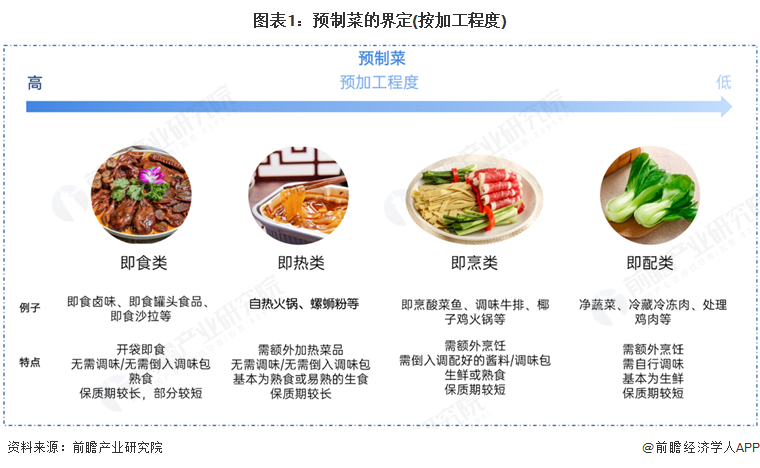
Industry Overview - The pre-prepared food, also known as pre-prepared dishes, is defined as packaged meals made from one or more edible agricultural products, which undergo industrial pre-processing without preservatives and are ready to be consumed after heating [1][3] - The pre-prepared food industry can be categorized into four types based on processing degree and subsequent handling: ready-to-eat, ready-to-heat, ready-to-cook, and ready-to-assemble [1] Industry Chain Analysis - The production enterprises in China's pre-prepared food industry are mainly divided into self-produced and commissioned processing categories [3] - Key upstream participants include agricultural producers, initial processing companies, and packaging manufacturers, while downstream participants consist of various consumer outlets and logistics companies [6] Industry Development History - The pre-prepared food industry in China has evolved since the 1990s, with significant growth during the COVID-19 pandemic from 2020 to 2023, driven by changes in consumer behavior [9] - The industry is currently in a phase of enhanced food safety regulation and innovation to meet diverse consumer demands [9] Industry Policy Direction - The Chinese government has issued multiple policies to support and regulate the pre-prepared food industry, focusing on food safety management, production base construction, and cold chain logistics improvement [11] Current Industry Status - The market size of China's pre-prepared food industry has expanded significantly, growing from 244.5 billion yuan in 2019 to 516.5 billion yuan in 2023, with an average annual growth rate exceeding 20% [14] - The industry's gross profit margin has been declining, from 20.07% in 2018 to an estimated 13.79% in 2024, due to increased competition [16] Competitive Landscape - The majority of pre-prepared food production companies are concentrated in East and Central China, particularly in Shandong and Henan provinces, which account for a significant portion of the industry [21] - Leading companies in the industry include Shuanghui Development and Anjijia Food, with annual revenues exceeding 10 billion yuan [23] Future Industry Trends - The pre-prepared food industry is expected to continue its rapid growth, with market size projected to exceed 600 billion yuan by 2025, driven by urbanization, consumer demand upgrades, and agricultural industrialization [25] - The industry is moving towards standardization, diversification, and full-chain integration, with a focus on enhancing supply chain efficiency and food safety standards [26]
冰城双节“粽”享新意:非遗潮玩遇童趣 消费市场掀热浪
Xin Lang Cai Jing· 2025-05-29 12:35
Core Viewpoint - The upcoming Dragon Boat Festival coinciding with Children's Day is expected to boost consumer activity in Harbin, enhancing the festive atmosphere and driving sales across various sectors [1][9]. Group 1: Consumer Trends - Traditional festive foods such as zongzi, salted duck eggs, and mung bean cakes are becoming popular among consumers, with brands innovating in flavors and packaging [3][4]. - Notable brands like Laodingfeng are introducing diverse and nutritious zongzi flavors, including "Rose Bean Paste Zongzi" and "Purple Rice and Fragrant Taro Zongzi," while also using higher-quality Northeast glutinous rice this year [3][4]. - Sales of traditional zongzi gift boxes have declined, with consumers preferring loose zongzi instead [4][6]. Group 2: Promotional Activities - Retailers are launching discounts and promotions, particularly in children's clothing stores, to attract families celebrating both festivals [9]. - Various brands, including Sanquan and Simian, are showcasing different types of zongzi in supermarkets, contributing to a vibrant shopping atmosphere [6]. Group 3: Cultural and Recreational Events - The dual celebration of the Dragon Boat Festival and Children's Day is expected to enhance outdoor activities, with many citizens participating in traditional celebrations and tourism [12]. - Harbin's scenic spots are organizing creative events to draw visitors, with a reported 2% increase in flight bookings for the holiday compared to last year [13]. - Events such as the "Non-Heritage Shopping Month" and various cultural performances are set to enrich the consumer experience during the holiday [12][13].
上榜的国民级消费品牌众多!河南“中”在哪儿?
Sou Hu Cai Jing· 2025-05-29 04:03
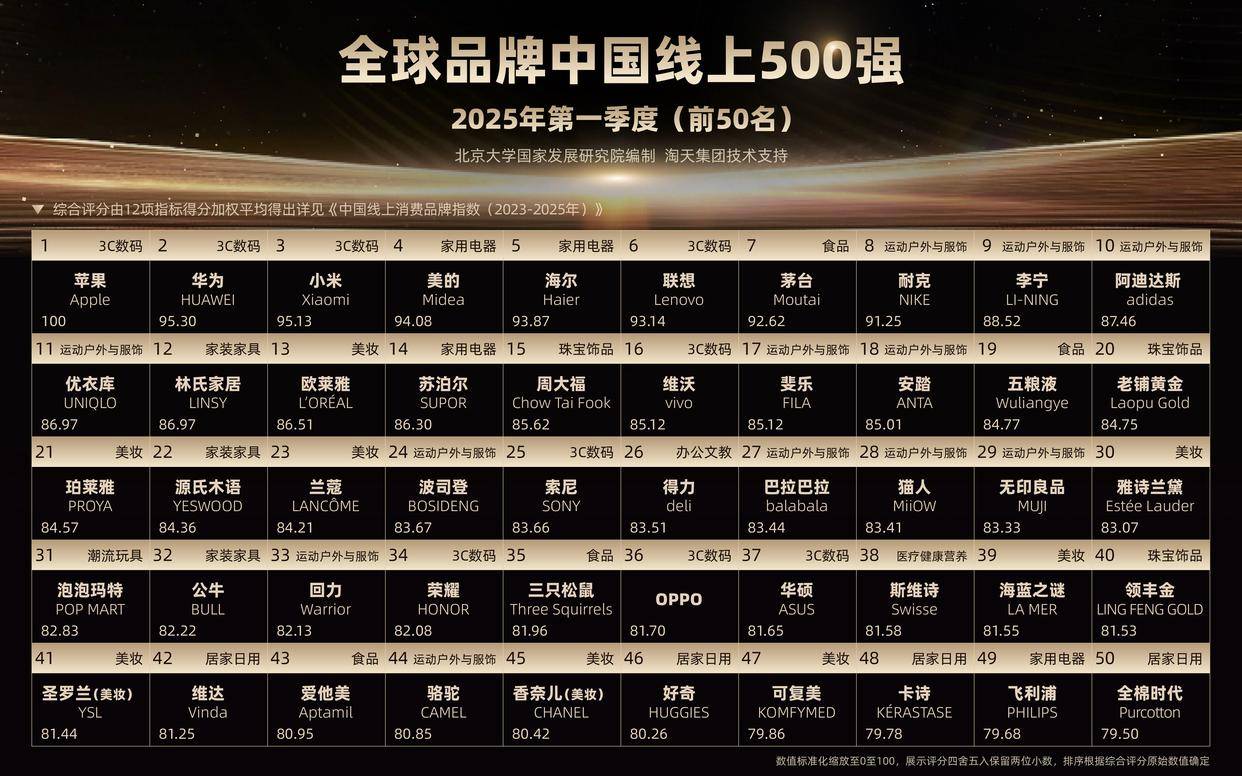
Group 1 - The article highlights the emergence of a new consumer landscape in China, showcasing the "Henan phenomenon" where 10 brands from Henan province made it to the top 1000 brands, ranking 11th among mainland provinces [1][3] - The CBI500 list, developed by Peking University and supported by Alibaba's Taotian Group, will be updated quarterly to reflect real-time quality consumption trends in China [1][9] - The index indicates a stable growth trend in Chinese online consumer brands, with the average score increasing from 59.42 in Q1 2023 to 63.38 in Q1 2025, suggesting an improvement in consumer purchasing quality [9][10] Group 2 - Henan's brands, including Deyou, Bai Xiang, and Shuanghui, dominate the food category, reflecting the province's status as a major grain production area, contributing about 10% of the national grain output [3][4] - The article emphasizes the innovative strategies of brands like Shuanghui and Wei Long, which have successfully transformed local snacks into nationally recognized products through standardization and branding [4][5] - The rise of local brands in Henan is attributed to their ability to adapt to consumer trends and leverage e-commerce platforms for broader market reach [6][8] Group 3 - The introduction of the "new sharpness" metric in the CBI500 list highlights the growth potential of local brands, with Deyou achieving a score of 72.87 and a significant increase in young consumer engagement [6][10] - Brands like Yunyima and Tiankongshu have successfully targeted niche markets, demonstrating the diverse innovation landscape in Henan beyond the food industry [7][8] - The article concludes that the combination of innovation, data utilization, and market diversification is driving the growth of Henan's brands, positioning them for both national and international success [6][10]


端午粽子步入销售高峰,产品创新瞄准健康化
Bei Ke Cai Jing· 2025-05-28 13:32
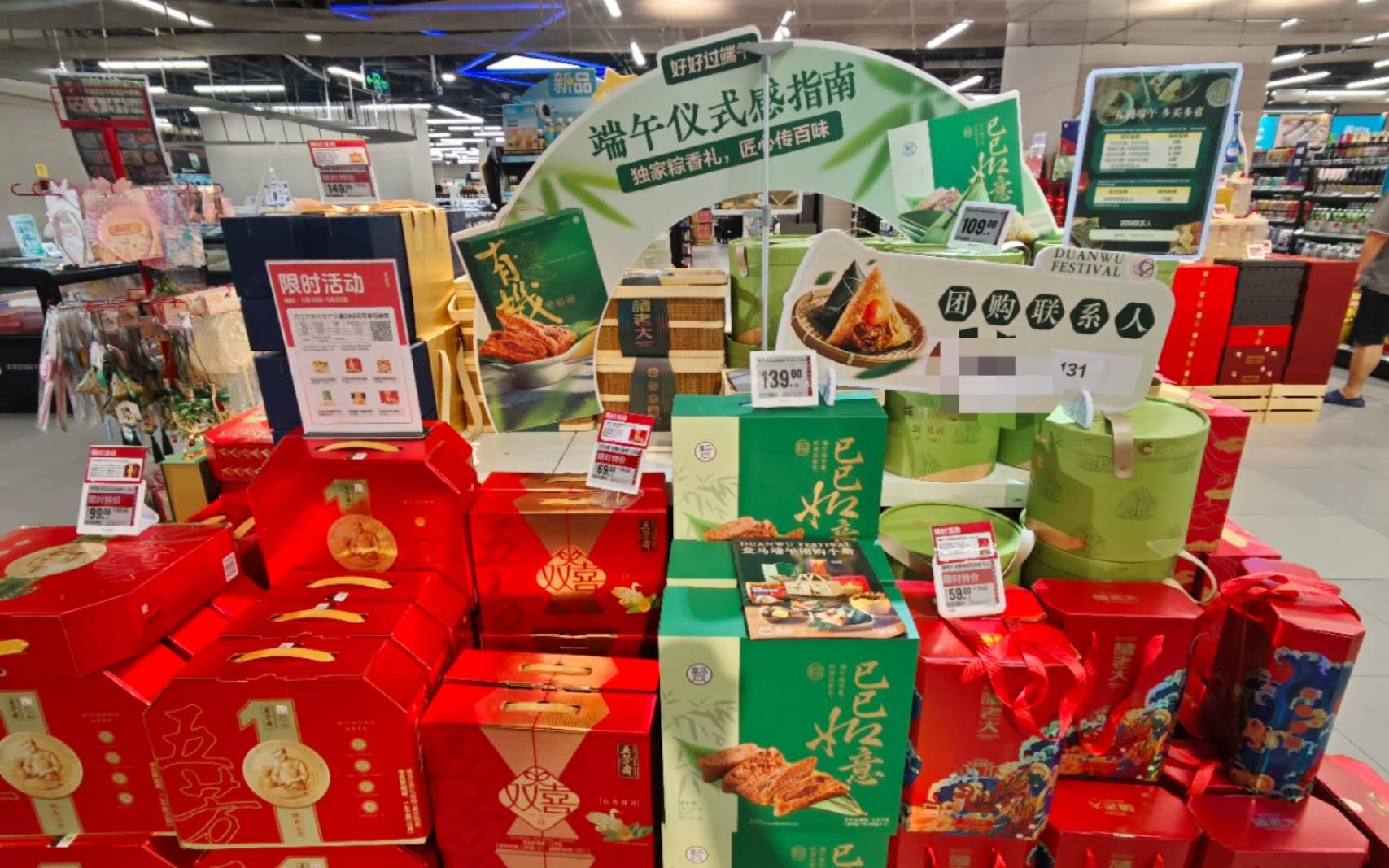
Core Viewpoint - The zongzi market is experiencing a sales peak as the Dragon Boat Festival approaches, with various brands adapting to health trends and consumer preferences for value-oriented products [1][10]. Market Trends - Zongzi sales are significantly increasing, with Boxed Zongzi sales at Hema showing a week-on-week growth rate of 300%, and Dingdong Maicai expecting a year-on-year sales increase of over 20% [1][6]. - The market is seeing a shift towards healthier options, with an increase in small packaged vacuum zongzi and products made from whole grains and low glycemic index ingredients [1][8][9]. Product Innovations - Major brands like Beijing Daoxiangcun and Si Nian Foods are introducing new flavors and healthier options, such as low-sugar and low-oil zongzi, to cater to changing consumer preferences [8][9]. - Beijing Daoxiangcun has launched new products like the "京酱肉丝粽" and "五色粽," which incorporate traditional elements and innovative flavors [8]. Competitive Landscape - The zongzi market is characterized by intense competition, with over 5,000 small zongzi workshops and a fragmented market structure [10][12]. - Major players like Wufangzhai hold a market share of approximately 30%, while Si Nian Foods ranks among the top three in supermarket sales [10][11]. Sales Performance - Despite a general slowdown in the frozen food sector, zongzi sales remain stable due to their seasonal nature, with companies like Si Nian Foods expecting overall market growth to be weak but stable compared to last year [10][11]. - The overall market size for zongzi is estimated to be between 80 billion to 100 billion yuan, with a slight decrease in the number of related enterprises [10][11].


端午节新老口味粽子“舌尖争霸”,青岛脂渣粽子强势出圈
Qi Lu Wan Bao· 2025-05-28 13:04
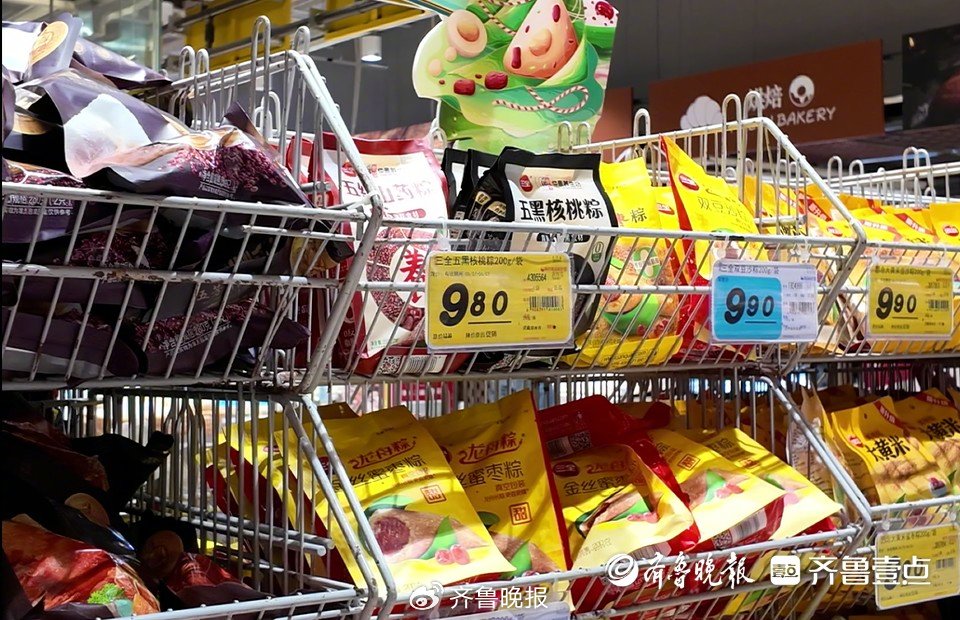
Group 1 - The upcoming Dragon Boat Festival has led to a surge in sales for the Qingdao zongzi market, with traditional flavors continuing alongside innovative products like red tea and green bean wine zongzi [1][2] - Popular brands such as Wufangzhai and Sanquan are competing in the market, with fresh, handmade zongzi being favored over vacuum-packed options by consumers [1][2] - Sales of zongzi gift boxes have increased, particularly among younger consumers, indicating a strong demand for traditional flavors for gifting purposes [2][4] Group 2 - New and unique flavors of zongzi, such as those offered by Starbucks and local shops, are attracting younger customers, showcasing a blend of traditional and modern tastes [2] - The price range for zongzi varies, with bulk zongzi priced around 15 yuan per pound, while gift boxes range from 60 to 400 yuan, highlighting the importance of pricing in consumer purchasing decisions [4] - The popularity of specific flavors, such as jasmine Longjing zongzi, contrasts with less popular options like durian zongzi, indicating that taste and price significantly influence consumer choices [4]
北京市粽子专项抽检合格率达100%
Bei Jing Shang Bao· 2025-05-28 11:07
北京商报讯(记者 付斌)5月28日,北京市市场监督管理局联合朝阳区市场监管局对商场超市、批发市 场、等场所开展专项检查,共抽取62批次粽子,覆盖20家主要品牌,抽检合格率达100%。 与此同时,北京市市场监管局发布了粽子选购食用提示,指导消费者正确选购和食用粽子。 建议消费者从正规渠道购买粽子,选择储藏条件良好、符合卫生标准的商场、超市和食品集中交易市 场。在选购时,要仔细查看粽子包装上厂名、厂址、生产日期和保质期等信息是否清晰完整,注意包装 是否存在破损、漏气或胀袋现象。购买速冻粽子时,务必确认其处于低温状态。 在贮存粽子时,要按照标签所示的储存条件进行保存,并依标示的食用方法加工食用。散装粽子建议按 需购买,做到现吃现买,以防变质。生熟粽子应分开贮存,熟制打开后的粽子在室温下放置不宜超过2 小时。 食用粽子时,冷藏或冷冻过的粽子必须彻底加热后方可食用,吃剩的粽子不宜反复加热,若发现馅料发 酸、发苦或口味异常,切勿食用。 通过电商或直播平台选购预包装粽子时,主动向商家索要、留存真实有效的标签标识信息。线上、线下 购物,消费者都要及时向商家索要、留存购货凭证,同时保留线上订单记录、商家聊天记录等相关凭 证。如 ...
端午经济|粽子头部企业业绩下滑:线下销售遇冷, 线上渠道却卖得不错
Di Yi Cai Jing· 2025-05-27 11:51
Group 1 - The traditional zongzi market is undergoing significant changes, with major brands like Wufangzhai and Zhenzhenlaolao experiencing sales declines, while e-commerce platforms like Pinduoduo see a surge in sales [1][2][5] - Wufangzhai reported a revenue of 2.251 billion yuan for 2024, down 14.57% year-on-year, with zongzi sales specifically declining by 18.64% to 1.579 billion yuan [2] - The overall sales of packaged zongzi in traditional retail channels dropped by 34.53% in the two weeks leading up to the Dragon Boat Festival compared to the previous year, indicating a shift in consumer purchasing behavior [4] Group 2 - E-commerce platforms are thriving, with Pinduoduo reporting a 300% increase in zongzi sales, and Tmall seeing a 70% increase in transaction value during the 618 shopping festival [5][8] - The trend towards health-conscious products is evident, with low-GI zongzi gaining popularity among consumers, reflecting a broader shift towards healthier eating habits [8][9] - The fragmentation of distribution channels is becoming more pronounced, with traditional food companies needing to innovate and adapt to meet diverse consumer demands [6]