
古茗

Search documents
奶茶的盖子,全网吵翻了?
3 6 Ke· 2025-12-15 03:29
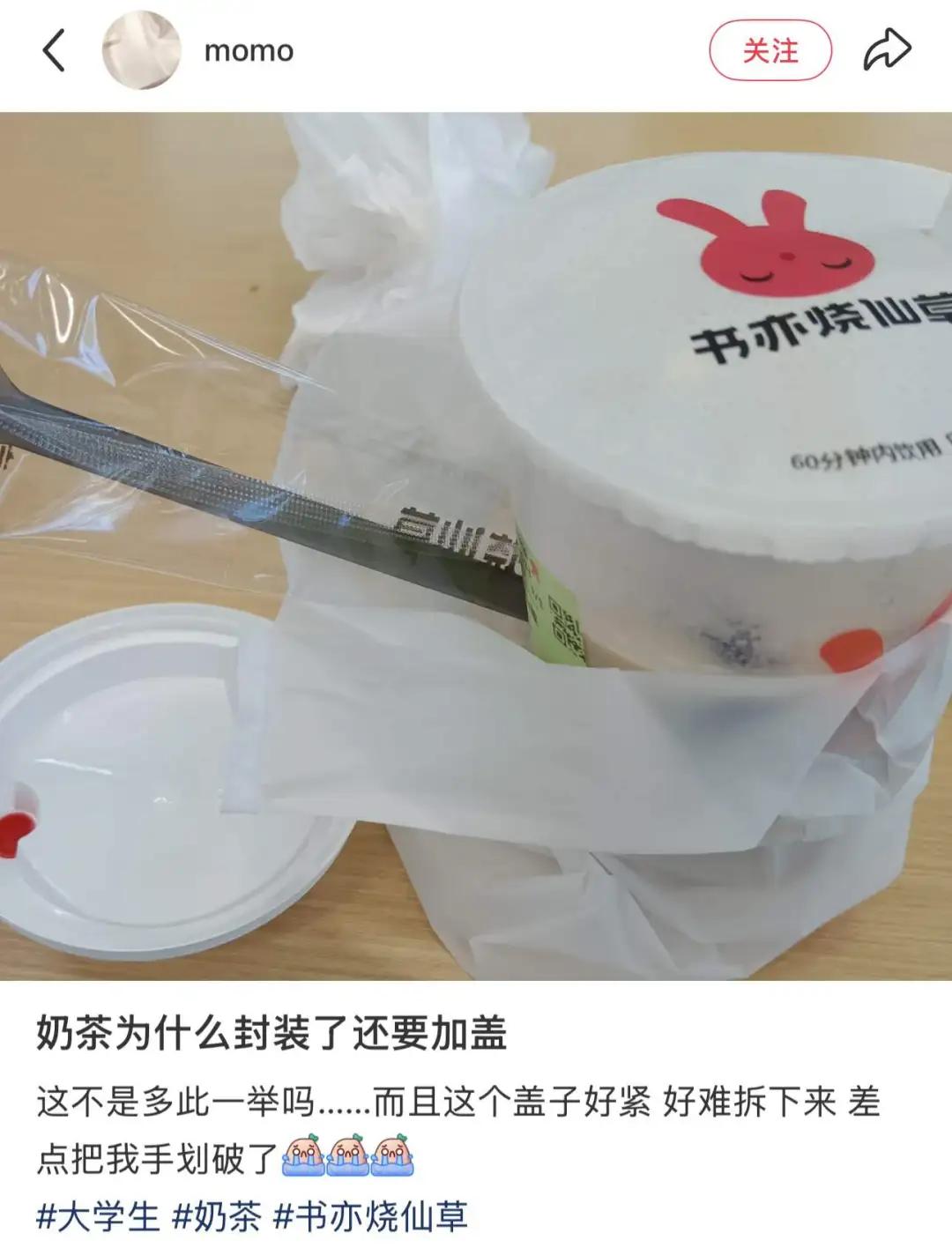
一杯奶茶,双重防护? 最近,奶茶"塑封+外盖"的双重包装成了网友热议的焦点。不少人发现奶茶明明已经用塑封膜紧紧封死,杯口却还是套着一个独立杯盖,看着多此一举。 更让人糟心的是,很多外盖扣得异常紧实,抠开时费不少劲不说,边缘锋利的塑料还容易划伤手指。明明是喝奶茶的轻松时刻,反倒先添了份开盖烦恼。 图源:小红书@momo(已获授权) 奶茶都已经塑封了,为什么还要再加个盖子? 奶茶都是双重封口? 现在,大多数奶茶的封口采用的都是"塑封膜 + 独立杯盖"的设计形式。 霸王茶姬的大部分饮品,比如伯牙绝弦、醒时春山等多款原叶鲜奶茶均是塑封膜+杯盖的配置。制作时会先通过自动封口机将塑封膜紧紧贴合杯口,然后 再套上一个黑色杯盖。 其他品牌像茶百道、沪上阿姨、古茗等也常采用类似的塑封膜再加杯盖的形式。 图源:小红书@桃桃年糕呀;@— —(均已获授权) 图源:小红书@Morpheus(已获授权) 蜜雪冰城的部分饮品也是如此,一般先以塑封膜密封杯口,随后套上杯盖。据网友分享,杯盖主要有红色和透明两种设计样式。 图源:小红书@五行nl;@枯木逢春(均已获授权) 图源:小红书@今天也没睡醒;@多维性别谜之脑;@好菜的喵(均已获授权) ...

批零社服行业2026年投资策略:景气向上,把握修复+成长双主线
GF SECURITIES· 2025-12-15 01:32
Core Insights - The report emphasizes two main investment directions for 2026: recovery sectors focusing on profit inflection points and growth sectors targeting high revenue increases [4][19][20] Recovery Sectors - The duty-free sector is showing signs of recovery with favorable policies enhancing consumption, including expanded product categories and improved shopping convenience [4][19] - The hotel industry is expected to see a gradual improvement in RevPAR, with business and leisure demand stabilizing, indicating a potential operational turning point in Q4 or next year [4][19] - The tourism sector remains resilient despite macroeconomic pressures, with increasing travel volumes and government initiatives aimed at boosting consumption in various travel themes [4][19] Growth Sectors - The beauty industry is experiencing intensified competition, with a focus on channel value reconstruction and brand establishment [4][20] - The gold and jewelry sector is witnessing a recovery, driven by new product launches and an increasing focus on high-end market competition [4][20] - The cross-border e-commerce sector is expected to rebound, supported by stable policies and a decrease in shipping costs, with strong demand from the U.S. market [4][20] Key Company Recommendations - For duty-free, China Duty Free Group is recommended for its long-term growth potential, with attention to Wangfujing and Zhuhai Duty Free Group [4] - In the hotel sector, companies like Jinjiang Hotels, Atour, and Huazhu are highlighted for their growth prospects [4] - In tourism, companies such as Three Gorges Tourism and Changbai Mountain are suggested for monitoring acquisition and new business developments [4] - The beauty sector includes recommendations for brands like Maogeping and Proya, focusing on channel strategies [4] - For gold and jewelry, companies like Chow Tai Fook and Lao Pu Gold are recommended for their market positioning [4] - In retail, companies like Yonghui Supermarket and Xinhua Department Store are noted for their recovery potential [4]




存量博弈 消费破局新十年
Mei Ri Jing Ji Xin Wen· 2025-12-14 12:57
Core Insights - The report emphasizes that the future of economic development will focus on quality improvement and resource optimization rather than mere expansion, highlighting the importance of innovation and long-term vision in navigating the current economic landscape [1] Group 1: Market Trends - The consumption industry is experiencing a clear trend of differentiation under the backdrop of stock competition, with the coffee and tea sectors becoming focal points for capital investment [3] - The domestic tourism industry is thriving, with nearly 5 billion domestic trips recorded in the first three quarters of the year, marking an 18% year-on-year increase [3] Group 2: Capital Dynamics - Foreign brands in the coffee and tea market are shifting from a global expansion model to a localized strategy, with significant investments from local partners, exemplified by Starbucks' collaboration with local capital [4] - The upcoming IPO wave in the new tea beverage sector is expected to enhance the supply chain and digital capabilities of various brands, leading to a pronounced "Matthew Effect" in the industry [5][6] Group 3: Global Expansion - New tea brands are poised for international expansion, leveraging their strong domestic market presence and operational capabilities, with a focus on regional management and product health [7] Group 4: Competitive Landscape - Major platforms like JD and Taobao are engaging in a fierce subsidy battle in the instant retail market, with total subsidies reaching approximately 65 billion to 90 billion yuan in the first half of 2025 [8] - The intense competition in the tea and coffee sectors has led to a paradox where increased orders do not necessarily translate to higher profits, as many brands struggle with low-margin orders [9] Group 5: Industry Evolution - The restaurant chain penetration rate in China has reached 25%, with a significant increase in new stores in lower-tier markets, indicating a shift in consumer demand towards branded and standardized dining experiences [10] - The rise of "small town tourism" reflects a changing consumer preference, with travelers seeking value and emotional resonance rather than just popular destinations [18][20] Group 6: Policy and Consumer Behavior - The cross-border tourism market in China is experiencing a dual prosperity driven by favorable policies and enhanced supply capabilities, with inbound tourism showing a 14.9% year-on-year increase [11][12] - The growth of tax refund stores and payment channels is stimulating outbound shopping, with tax refund sales increasing by 97.5% year-on-year [16] Group 7: New Service Models - The emergence of new service roles like "accompanying tours" reflects a shift in tourism services from functional to emotional, catering to consumers' desire for deeper experiences [24] Group 8: Cultural Integration - The integration of sports events with tourism is creating new consumption scenarios, as seen in the Jiangsu Super League, which has successfully linked sports with local tourism [21][22][23] Conclusion - The Chinese consumption market is navigating a path of quality enhancement and diversified breakthroughs, with the tea and coffee sectors undergoing significant transformations and the tourism industry capitalizing on policy advantages and changing consumer preferences [26]

新消费行业周报(2025.12.8-2025.12.12):11月CPI同比上涨0.7%,林清轩更新招股书-20251214
Hua Yuan Zheng Quan· 2025-12-14 04:22
Investment Rating - The industry investment rating is "Positive" (maintained) [1] Core Viewpoints - The report highlights the robust growth of emerging consumer goods, reflecting the new consumption concepts developed by the younger generation in the current social environment. Understanding this new consumption narrative is crucial for capturing the growth of new consumer companies [4][15] - The report suggests focusing on high-quality domestic brands with strong professionalism and innovation in the beauty and skincare sector, such as Mao Geping and Shangmei [4][15] - In the gold and jewelry sector, it recommends attention to leading brands in the ancient gold segment that are favored by younger consumers, such as Laopu Gold and Chaohongji [4][15] - For trendy toys, companies with successful experience in IP creation and operation, like Pop Mart, are highlighted [4][15] - In the ready-to-drink tea segment, it advises focusing on strong brand power and extensive business coverage of leading tea brands like Mixue Group and Guming [4][15] Summary by Relevant Sections Industry Performance - In November, the Consumer Price Index (CPI) increased by 0.7% year-on-year, with the rise primarily driven by food prices turning from decline to increase. The CPI's year-on-year growth rate expanded by 0.5 percentage points compared to the previous month, marking the highest level since March 2024 [4] - The report tracks the performance of the new consumption sector, noting a weekly decline of 1.64% in the beauty and personal care sector and a 0.21% decline in the retail sector from December 8 to December 12, 2025 [7] Key Industry Data - In October, the retail sales of clothing and textiles increased by 6.3% year-on-year, cosmetics by 9.6%, and gold and silver jewelry by 37.6% [11][17] - The report indicates that the retail sales of beverages rose by 7.1% year-on-year in October [17]
外卖大战熄火,茶饮品牌谁裸泳,谁狂奔?
凤凰网财经· 2025-12-12 13:08
Core Viewpoint - The article discusses the impact of a subsidy war in the takeaway tea beverage market, highlighting the contrasting fortunes of different brands as the subsidies end and the industry faces a seasonal downturn [3]. Group 1: Impact of Subsidy Withdrawal - After the cessation of subsidies, many tea shops experienced a dramatic drop in orders, with some reporting as few as ten orders a day compared to previous highs of 70-100 orders [4][6]. - The decline in orders is attributed to seasonal factors and consumer fatigue, with some brands managing to stabilize their sales while others face significant challenges [5][6]. - The overall takeaway market saw a significant shift, with brands like "茉莉奶白" and "一点点" also feeling the effects of reduced consumer interest post-subsidy [6]. Group 2: Winners and Losers in the Market - "古茗" emerged as a notable winner during the subsidy war, rapidly expanding its store count from approximately 9,914 to over 12,000, but is now facing operational pressures as daily sales struggle to meet previous highs [7][8]. - "蜜雪冰城" is identified as the biggest winner, reporting a 39.3% year-on-year revenue increase to 14.87 billion yuan and a net profit growth of 44.1% to 2.72 billion yuan, benefiting from efficient cost management [8]. - Conversely, "奈雪的茶" illustrates the "increased revenue without increased profit" dilemma, with 48.1% of its revenue reliant on takeaway orders, leading to a 14.4% decline in overall revenue [9][10]. Group 3: Industry Dynamics and Challenges - The tea beverage industry is undergoing a rapid transformation, with a net increase of 26,000 stores in the third quarter, while approximately 150,000 stores have closed in the past year, indicating a significant shakeout [10]. - The competitive landscape has intensified, with brands forced to expand rapidly and engage in price wars, leading to a phenomenon of "internal competition" that threatens profitability [10]. - The article emphasizes that while the subsidy war temporarily reshaped consumer price expectations, the long-term sustainability of such strategies remains questionable as brands grapple with high operational costs and market saturation [10].

中央经济工作会议解读:内需主导放在首位,关注消费布局机会
Tai Ping Yang Zheng Quan· 2025-12-12 13:07
Investment Rating - The report does not provide a specific industry rating but emphasizes a positive outlook for the food and beverage sector based on the central economic work conference's focus on domestic demand and consumption opportunities [5][6]. Core Insights - The central economic work conference highlighted the importance of domestic demand, aiming to boost consumption through various initiatives, including income distribution reforms and the removal of unreasonable consumption restrictions, which is expected to benefit the food and beverage sector [6][7]. - The report suggests that the food and beverage industry could see structural opportunities in 2026, driven by high-growth companies and favorable policy directions [7]. Sub-industry Ratings - No specific ratings are provided for sub-industries such as liquor, beverages, and food [3]. - Recommended companies include: - Guizhou Moutai: Buy - Shanxi Fenjiu: Hold - Guming: Buy - Mixue Group: Hold - Ximai Food: Buy - Dongpeng Beverage: Buy - Wancheng Group: Buy - Pop Mart: Buy - Yanjing Beer: Hold - Dashihua: Buy [3][11]. Recommended Companies and Earnings Forecast - The report includes earnings forecasts for recommended companies, indicating expected growth in EPS from 2024 to 2027 for each company, with Guizhou Moutai projected to have an EPS of 80.79 in 2027 [11].




港交所最新发声,餐饮上市潮要凉了?
Sou Hu Cai Jing· 2025-12-12 10:54
Core Viewpoint - The Hong Kong Securities and Futures Commission and the Hong Kong Stock Exchange have issued a joint letter addressing the decline in the quality of recent IPO applications and non-compliance issues, highlighting the need for improved standards in the IPO process [1][3]. Group 1: Regulatory Concerns - The letter identifies three main issues: poor quality of listing documents, inadequate responses to regulatory inquiries, and disorganized execution of the IPO process, leading to delays [1]. - The Hong Kong Stock Exchange aims to ensure timely and rigorous review of new listing applications while maintaining high standards and quality [3]. Group 2: IPO Market Trends - The Hong Kong IPO market has seen significant growth, with 100 companies listed from January 1 to December 11, representing a 58.74% year-on-year increase, and total IPO fundraising exceeding 270 billion HKD, a 223.75% increase [3]. - The restaurant sector has been particularly active in this IPO wave, with several brands successfully listing, including Mi Xue Bing Cheng and Gu Ming [4][5]. Group 3: Factors Driving Restaurant IPOs - The urgent need for capital exit has driven many restaurant brands to pursue IPOs, as investors seek to realize returns from previous funding rounds [4]. - Increased competition in the industry has led top brands to seek new growth avenues through IPO financing [5]. - Stricter listing requirements in the A-share market have shifted many restaurant companies' focus towards Hong Kong for their IPOs [5]. Group 4: Implications for Future Listings - The recent regulatory reminders may signal a tightening of IPO standards, potentially impacting the prospects of companies still in the queue for listing [6]. - The current environment suggests that the restaurant IPO wave may be slowing down, as most top-quality companies have already gone public [7]. Group 5: Recommendations for Companies - Companies should focus on building differentiated competitive advantages through product innovation, supply chain efficiency, and brand culture [9]. - There is a need to enhance compliance awareness and improve the quality of information disclosure, ensuring financial data accuracy and sustainable business models [9]. - Companies should optimize their capital structure to reduce reliance on IPO financing, exploring diverse funding channels to maintain operational stability [9].
茶饮巨头纷纷涉足早餐市场,你早餐怎么吃
Yang Zi Wan Bao Wang· 2025-12-12 08:25
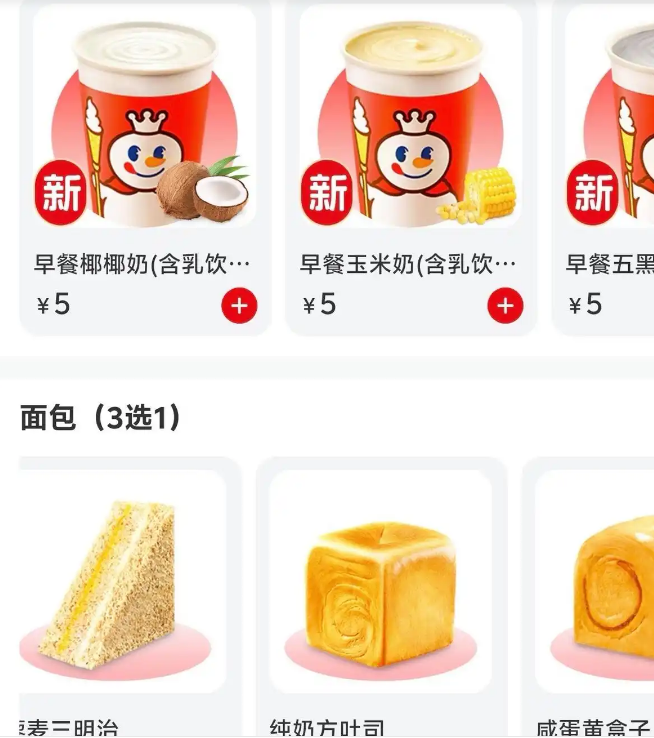
Core Insights - The company, Mixue Ice Cream, has begun testing a breakfast menu in select cities including Hangzhou, Xi'an, and Dalian, with offerings such as breakfast milk and bread sets priced at 7.9 yuan [1][2][4] - The breakfast initiative is currently limited to a few cities and is aimed at the morning commuter demographic, with some consumers appreciating the value of the breakfast set while others question its price competitiveness compared to traditional breakfast options [2][4] Group 1 - The breakfast menu includes four types of milk priced at 5 yuan each and a breakfast set that combines milk with bread for 7.9 yuan [1] - The breakfast offerings are currently available in select locations and have not been widely rolled out, indicating a cautious approach to market testing [2] - Consumer feedback highlights a mix of positive reception regarding the convenience and value of the breakfast set, while some express skepticism about its pricing compared to traditional breakfast items [4] Group 2 - Other tea brands such as Heytea and Nayuki have previously explored breakfast offerings, with Heytea launching a breakfast series in 2019 and Nayuki following suit in 2020, indicating a trend within the industry [5] - Nayuki's breakfast sales reportedly increased by approximately 620% in the first half of 2025 compared to 2024, showcasing the potential for growth in this segment [5] - Industry experts suggest that if Mixue's breakfast trial proves successful, it could serve as a critical growth driver for the company amid challenges in the tea beverage market [5]
政策领航内需,消费赛道或将持续强势,港股消费ETF(513230)现涨近1.5%
Mei Ri Jing Ji Xin Wen· 2025-12-12 06:40
Core Viewpoint - The Hong Kong stock market is showing strength, particularly in the consumer sector, with the Hong Kong Consumer ETF (513230) rising nearly 1.5% as of midday, driven by positive performance from major holdings [1] Group 1: Economic Policy and Market Impact - The Central Economic Work Conference held on December 10-11, 2025, outlined eight key economic tasks for 2026, prioritizing "domestic demand as the main driver" for economic growth [1] - The conference emphasized the importance of measures such as boosting consumption, increasing urban and rural residents' income, expanding the supply of quality goods and services, and optimizing policies related to large-scale equipment updates and trade-in programs [1] - According to Zhongyin Securities, the focus on domestic demand is expected to be a significant support for consumption growth from the perspective of the social services industry [1] Group 2: Consumer Sector Performance - The Hong Kong Consumer ETF (513230) tracks the CSI Hong Kong Stock Connect Consumer Theme Index, which includes leading companies in internet e-commerce and new consumption sectors [1] - Major holdings in the ETF include Old Puh Gold, Miniso, and other new consumption leaders, as well as internet e-commerce giants like Tencent, Alibaba, and Xiaomi, covering nearly all areas of Hong Kong's consumer market [1]
中国银河证券:消费行业需要重视“十五五”规划 对消费行业2026年海外业务的发展持乐观观点
智通财经网· 2025-12-12 03:36
Core Viewpoint - The report from China Galaxy Securities emphasizes the importance of the "14th Five-Year Plan" for the consumption industry, highlighting the need to focus on medium- to long-term consumption goals and the specific policies related to consumption expected to be implemented by 2026 [1][2]. Group 1: Policy Developments - The Central Economic Work Conference held on December 10-11, 2025, underscored the need to prioritize domestic demand and build a strong domestic market, implementing actions to boost consumption and develop plans for increasing urban and rural residents' income [2][4]. - The government has been actively promoting various policies to stimulate consumption, including the introduction of a special fund of 150 billion yuan for consumption upgrades and an additional 300 billion yuan in 2025 for similar initiatives [3][4]. Group 2: Consumption Trends - The report anticipates significant changes in service consumption by 2026, with a more favorable outlook compared to goods consumption, driven by recent policies aimed at enhancing service consumption and removing unreasonable restrictions in the consumption sector [1][3]. - The retail sales growth rate showed a year-on-year increase of 2.9% in October 2025, although it experienced a slight month-on-month decline of 0.1 percentage points, indicating ongoing challenges in the consumption market [3]. Group 3: Investment Recommendations - The report suggests focusing on high-dividend quality companies during market style shifts, as well as companies with alpha potential in various segments, including new consumption in the social service sector and food and beverage industries [5]. - Specific recommendations include companies like Gu Ming and Da Mai Entertainment in the new consumption sector, and Midea Group and Haier Smart Home in the home appliance sector, which are noted for their high dividend yields [5].
