
韩束

Search documents
突破1亿用户的韩束,用23年"长期主义"构筑世界级美妆品牌
Ge Long Hui· 2026-01-28 02:05
Core Insights - The article emphasizes the competitive landscape of the Chinese beauty market, where domestic brands like Han Shu are striving to establish their identity against international giants through long-term commitment to product quality and innovation [4][6][21] - Han Shu's approach to long-termism is highlighted as a model for domestic beauty brands, focusing on self-research, production capabilities, and a commitment to quality over short-term marketing strategies [6][21][23] Group 1: Long-term Commitment - Han Shu has achieved a user base of over 100 million, showcasing its long-term strategy and commitment to quality [6] - The brand has invested over 1 billion yuan annually in research and development since 2021, with projections to reach 1.8 billion yuan by 2024, representing 2.7% of its revenue [8] - The establishment of overseas R&D centers in 2016 marked a strategic move to integrate global technological advancements into its product offerings [8] Group 2: Innovation and Production - Han Shu has developed an "open innovation R&D platform" to foster collaboration across various fields, enhancing its product innovation capabilities [8][11] - The company has invested over 1.2 billion yuan in its AI-driven smart factory, which is the first of its kind in the domestic beauty industry, emphasizing its commitment to quality and efficiency [12][15] - The integration of advanced technologies in production processes ensures product safety and quality control, establishing a robust operational framework [15] Group 3: Brand Expansion and Social Responsibility - Han Shu aims to expand from skincare to a full range of beauty products, including makeup and personal care, with a focus on delivering high-quality products to a broader audience [16][18] - The brand is committed to building a sustainable public welfare system, addressing social issues, and evolving into a value-driven brand [18][20] - Han Shu's future plans include actively participating in industry standards and scientific communication, positioning itself as a leader in the beauty sector [20][21] Group 4: Lessons for Domestic Brands - Han Shu's journey illustrates that long-termism is a dynamic process requiring continuous evolution and adaptation [21][23] - The brand's development can be categorized into three phases: establishing a solid foundation, maximizing efficiency through systemic growth, and leading in value creation and social recognition [22] - The article concludes that true long-termism is rooted in substantial investment, systematic intelligence, and resonating values, serving as a valuable lesson for all domestic brands [23]

美妆品牌,集体逃亡
远川研究所· 2026-01-27 13:05
过去几年,中国化妆品行业杀红了眼,人人都在打逆风局时,韩束却贡献了一场堪称经典的翻身仗。 淘宝称王的时代里,韩束也曾坐过冷板凳。它冠名过《非诚勿扰》,请吴亦凡鹿晗做过代言,但由于把 资源主要投进了线下,在天猫上连前20名都挤不进。 转折出现在2022年前后,曾经的微商王者突然变了画风,GMV一脚迈进60亿俱乐部,成为冉冉升起 的"国货之光",母公司上美集团的股价也开始抬头,2025年11月较最低点翻了5倍。 咸鱼翻身的功臣只有两个字: 抖音 。 2023年,韩束和抖音主播合作的短剧爆红,8月起韩束冲上抖音美妆榜首,开启长达14个月的霸榜。 2025年,韩束抖音GMV的保持双位数增长。青眼数据显示,2025年化妆品线上交易额排行榜中韩束 位居第二,仅次于欧莱雅[1]。 | 排名 | 品牌 | 排名 | 品牌 | | --- | --- | --- | --- | | 1 | 欧莱雅 | 11 | OLAY | | 2 | 韩東 | 12 | 自然堂 | | 3 | 珀菜雅 | 13 | 谷園 | | 4 | 兰蔻 | 14 | 后 | | 5 | 雅诗兰黛 | 1 ટ | 薇诺娜 | | 6 | 海蓝之谜 | ...

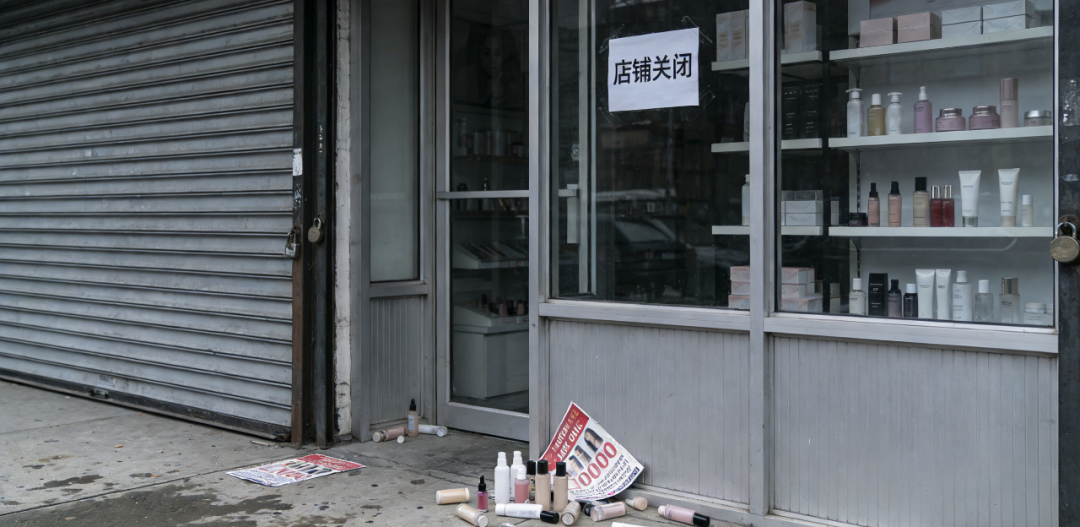
卷不动了,又一TOP卖家清仓闭店
Xin Lang Cai Jing· 2026-01-26 11:10
Core Viewpoint - The closure of the Taobao store "Dai Gua Xiao Huo Ban," a personal beauty agent shop with 450,000 followers, highlights the increasing challenges faced by e-commerce businesses in the beauty industry due to intensified competition, regulatory pressures, and rapid changes in e-commerce strategies [2][3][14]. Group 1: Store Performance and Closure - "Dai Gua Xiao Huo Ban" announced it will completely delist all products by the end of February, with remaining inventory being cleared at a 30% discount [2][26]. - The store has a diverse product range, including popular domestic beauty items, with prices mostly between tens to hundreds of yuan, targeting a budget-conscious consumer base [4][28]. - Despite being a top performer with 458,000 followers and over 300,000 annual sales, the store's overall rating is only 4.5, lagging behind 88% of its peers, primarily due to low logistics speed [8][32][34]. Group 2: Industry Challenges - The beauty e-commerce sector is experiencing a wave of store closures, with many previously successful shops shutting down due to economic and psychological pressures [14][38]. - The operational environment for e-commerce is becoming increasingly difficult, with many merchants forced to sell products at cost price to attract customers, leading to unsustainable revenue [16][40]. - Issues such as high return rates and strict consumer protection policies are exacerbating the challenges for small beauty shops, making it hard to maintain profitability [17][41]. Group 3: Market Dynamics and Future Outlook - Despite the closures, the overall potential for the Chinese cosmetics market remains strong, with projections indicating a market size exceeding 170 billion yuan by 2028, maintaining a compound annual growth rate of over 8% [20][44]. - The market is witnessing a polarization, with large brands like Proya and Han Shu continuing to grow, while smaller players struggle unless they find a unique positioning [21][45]. - Strategies for survival in the current market include focusing on product quality, offering tailored solutions, and targeting niche markets to build a loyal customer base [22][46].


硅谷精英疯打中国肽
3 6 Ke· 2026-01-23 03:16
Core Viewpoint - The article discusses the rising trend of peptide injections among Silicon Valley elites, highlighting the unregulated and experimental nature of this practice, which is largely driven by the desire for enhanced physical performance and anti-aging effects. Group 1: Peptide Injection Trend - Silicon Valley elites are purchasing peptide compounds from Chinese factories and self-administering them, often in social settings, reflecting a culture of experimentation and a desire for improved health and performance [2][3][5]. - The most popular peptide, Semaglutide, is known for its weight loss effects, attracting many users due to its affordability compared to FDA-approved products [6][8]. - Reports indicate that the import of hormones and peptide compounds from China to the U.S. reached approximately $328 million in the first three quarters of 2025, nearly double the amount from the same period in 2024, indicating strong market demand despite safety concerns [6][8]. Group 2: Market Dynamics in China - In contrast to the injection trend in the U.S., the Chinese market primarily focuses on topical peptide products, with skincare products accounting for 89.68% of the peptide market share [9][10]. - The Chinese peptide market is projected to grow from 2.17 billion yuan in 2024 to 4.67 billion yuan by 2029, indicating a significant growth phase for the industry [17]. - Major Chinese brands like Han Shu have successfully integrated peptides into their skincare lines, achieving a market share of 34.59% in the peptide skincare segment [11][13]. Group 3: Manufacturing and Innovation - China has established itself as the global manufacturing hub for peptide products, benefiting from technological advancements and a complete industrial chain [18][20]. - Companies like Hanyu Pharmaceutical and Jiangsu Nuotai Biotech are leading the way in peptide production, with Hanyu achieving a production capacity of over ten tons annually [22][20]. - The total output value of China's peptide industry is expected to reach 247.6 billion yuan by 2030, with a projected annual growth rate of 18.4% [22].



美宝莲官宣代言翻车了?
3 6 Ke· 2026-01-21 00:26
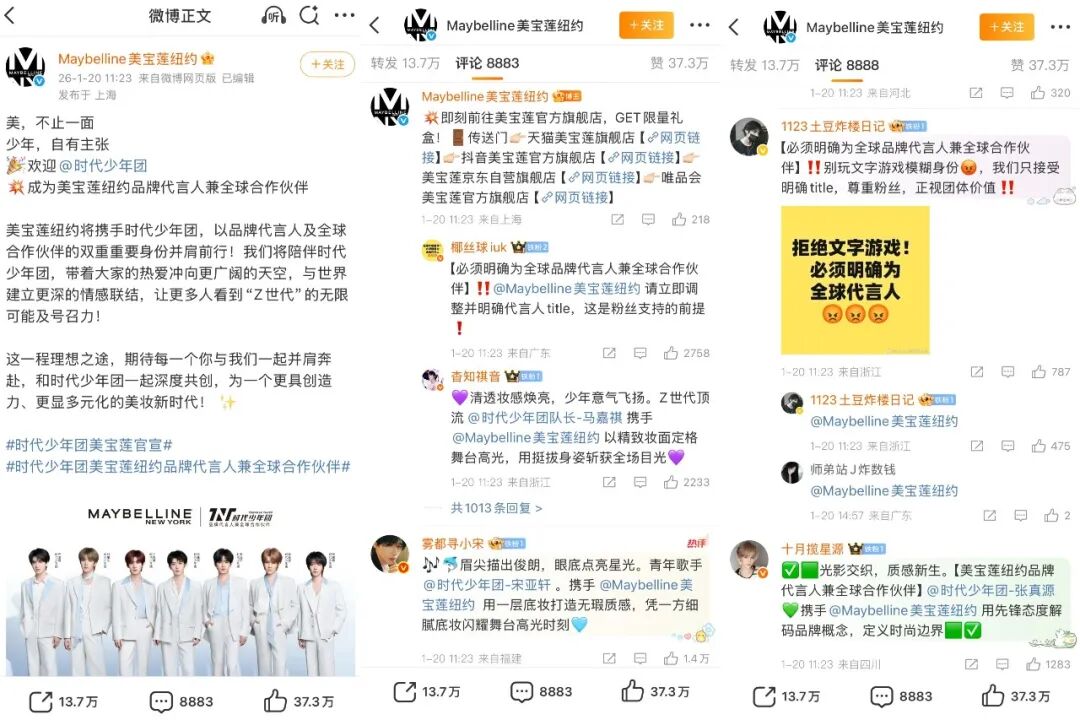
2026年开年,美妆品牌的明星代言战率先打响,SANSI三式×Angelababy、巴黎欧莱雅×李冰冰、Fenty Beauty×宋雨琦等重磅合作密集释出,试图借流量效 应撬动市场声量。 但请明星代言是把双刃剑。不久前,美宝莲纽约Maybelline(下文简称"美宝莲")在预热与顶流青少年偶像团体时代少年团合作时,因代言头衔设置引发粉 丝强烈不满与抵制。即便品牌后续妥协调整了头衔文案,却依旧没能满足部分粉丝对"全球代言人"身份的诉求,最终陷入持续争议的舆论漩涡。 因粉丝不满头衔,美宝莲仅售礼盒1000+? 就在昨日(1月20日),美宝莲于微博、小红书等官方社交平台正式官宣,时代少年团出任品牌代言人及全球合作伙伴。这一"品牌代言人+全球合作伙伴"的 双头衔配置,亦是美宝莲在代言人合作模式上的首次全新尝试。 官宣消息一经释出,迅速引爆社交舆论。截至发稿,相关官宣博文累计转发量突破13.7万,点赞数逼近40万大关,话题热度持续走高。 值得关注的是,聚美丽在评论区留意到,部分粉丝对此次官宣的头衔表述提出质疑。粉丝明确表示,品牌需将头衔精准界定为"全球品牌代言人兼合作伙 伴",并呼吁品牌方尽快修正表述、明确身份。同时还 ...
4653亿,化妆品卖爆了
3 6 Ke· 2026-01-20 01:12
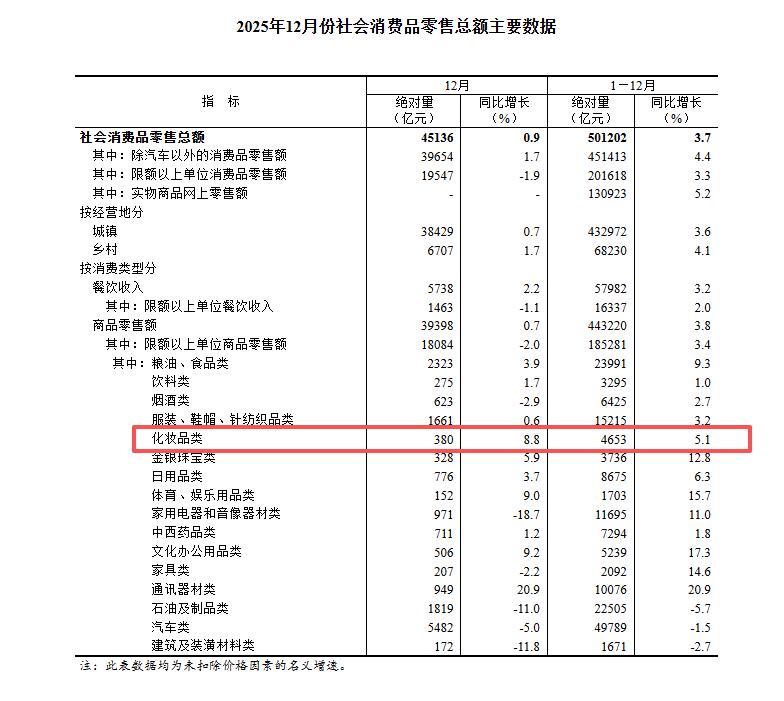
Group 1 - The core viewpoint of the articles indicates that the cosmetics retail sector in China has shown signs of recovery, with retail sales increasing after a decline in previous years [1][4][10] - In December 2025, cosmetics retail sales reached 38 billion yuan, marking an 8.8% year-on-year growth, while the total retail sales for the year amounted to 465.3 billion yuan, reflecting a 5.1% increase [1][4][6] - The overall retail sales of consumer goods in China for 2025 were reported at 501.2 billion yuan, with a growth rate of 3.7%, indicating that the cosmetics sector outperformed the broader market [2][4][6] Group 2 - The cosmetics retail sector has demonstrated resilience, with a consistent upward trend in sales since July 2025, achieving six consecutive months of year-on-year growth [7][10] - The growth in cosmetics retail sales is attributed to a combination of factors, including a relatively low base from the previous year and the impact of promotional events like Double Eleven [2][4][6] - The market share of domestic brands in the cosmetics sector has increased to 57.03%, while foreign brands have seen a decline to 42.97% [11][12] Group 3 - The online sales channel for cosmetics has grown by 9.36%, accounting for 56.06% of total sales, while offline sales increased by 2.38% [11] - The skincare and makeup categories are leading in market size, with sales of 472.48 billion yuan and 169.25 billion yuan respectively, both showing growth [12] - The import of beauty and personal care products has shown a decline in total value, indicating a shift in consumer preference towards domestic products [13] Group 4 - The cosmetics industry is facing challenges, with a significant number of companies going bankrupt or ceasing operations, highlighting a competitive market environment [16][17] - Despite the challenges, there is optimism for 2026, with industry experts emphasizing the importance of innovation and product quality for growth [16][18] - Companies are increasingly looking to expand into overseas markets, particularly in Southeast Asia, to mitigate domestic competition [16][18]
马年品牌短片比AI还“抽象”
3 6 Ke· 2026-01-20 00:28
Core Insights - The article discusses the innovative marketing strategies employed by various brands for the upcoming Year of the Horse, highlighting the use of humor and abstract concepts in advertisements [5][6][19] Group 1: Brand Strategies - Yili has successfully engaged with internet users by incorporating suggestions for their advertising campaign, featuring actress Ma Yili, which reflects a trend of interactive marketing [8][10] - Mengniu has opted for a different approach by assembling a trio of popular figures to create a narrative that resonates with younger audiences, focusing on the theme of good fortune [12][14] - Jin Zai's collaboration with actress Liu Xiaoqing showcases a modern short-drama marketing style, integrating popular cultural references to enhance viewer engagement [14][15] Group 2: Advertising Trends - The concept of "abstract" has emerged as a key theme in this year's advertising, with brands prioritizing creativity and engagement over traditional storytelling [6][8] - The rise of AI-generated content has prompted brands to emphasize the "human touch" in their advertisements, showcasing genuine emotions and relatable narratives [15][19] - The blending of various content types in advertisements is becoming more prevalent, allowing for a richer and more diverse storytelling approach [17][19]



韩束经历考验,上美谋求战略转型
3 6 Ke· 2026-01-19 13:05
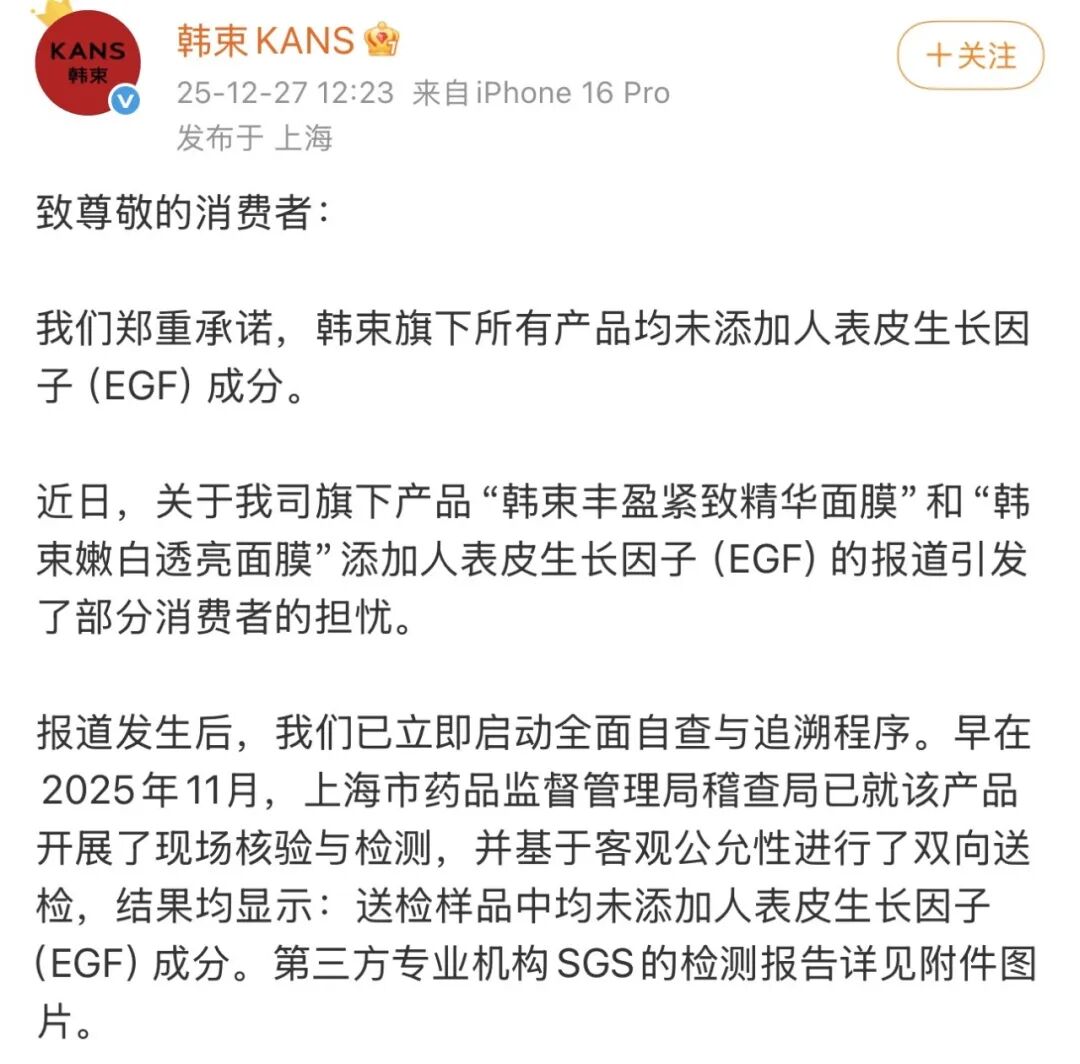
Core Insights - The domestic beauty brand Han Shu is currently facing challenges, including a controversy over product ingredients and executive turnover, which reflects broader scrutiny in the beauty industry [1][3][4] Group 1: Ingredient Controversy - Han Shu's two facial mask products were reported by CCTV to contain epidermal growth factor (EGF), leading to public concern despite the company's claims of compliance [4][6] - EGF is primarily used in medical applications, and its use in cosmetics is prohibited in China due to safety concerns, prompting Han Shu to withdraw the affected products and issue a statement asserting no EGF was added [6][9] - The discrepancy between testing results from CCTV and Han Shu's own tests raises questions about the detection methods used, highlighting the lack of standardized testing for EGF in cosmetics [7][8] Group 2: Business Performance and Strategy - Han Shu has experienced significant growth, with revenue reaching 5.591 billion yuan in 2024, marking over a threefold increase in two years, making it a key driver for its parent company, Shangmei [10][11] - The brand's strategy of focusing on single products and leveraging platforms like Douyin has led to its dominance in the beauty sector, achieving a GMV of 33.4 billion yuan in 2023 [11][13] - However, the company's reliance on Han Shu, which accounted for 82.3% of revenue in 2024, poses risks, as any issues with the brand could directly impact overall performance [15][16] Group 3: Market Challenges and Future Directions - The growth rate of Han Shu has begun to slow, with a 14.3% increase in revenue for the first half of 2025, indicating a need for transformation and diversification [17][18] - To reduce dependency on Han Shu, Shangmei is accelerating the development of multiple brands, with new brand Newpage achieving a revenue of 397 million yuan in the first half of 2025, growing by 146.5% [18][20] - The company is also pursuing globalization, entering Southeast Asian markets with tailored products, but faces challenges in brand recognition and local market adaptation [20][21] Group 4: Innovation and Long-term Goals - The shift from a marketing-driven approach to a technology-driven strategy is crucial for Han Shu to enhance its product offerings and address consumer skepticism regarding domestic brands [21][22] - The company aims to achieve a revenue target of 10 billion yuan by 2025, with ongoing investments in research and development to support this goal [21][22]
2026年1月15日18时财经热点资讯信息分享
Sou Hu Cai Jing· 2026-01-18 07:48
Group 1 - Xibei's CEO Jia Guolong admits that the company will close a large number of stores [2] - The Central Bank of China projects an increase of 16.27 trillion yuan in RMB loans for the year 2025 [2][4] - The State Grid plans to invest 4 trillion yuan in building a new power system during the 14th Five-Year Plan [2] Group 2 - The founder of the "Dead or Alive" app responds to its removal from app stores [4] - The Central Bank indicates there is still room for further cuts in reserve requirements and interest rates this year [4] - Han Shu has been reported for adding banned ingredients, leading to collective complaints [4]
黑猫投诉12月数据说:考研元旦预订致OTA投诉量上涨 机酒相关投诉占比超八成
Xin Lang Cai Jing· 2026-01-15 02:32
Group 1 - The core point of the article highlights the significant increase in consumer complaints across various sectors, particularly in the OTA and food industries, driven by specific events and issues [1][12] - As of December 2025, the Black Cat Complaints platform has received nearly 31.95 million valid consumer complaints, with about 24.75 million responses from companies and approximately 20.99 million complaints resolved [1][12] - In December alone, there were nearly 790,000 valid complaints, indicating a notable rise in consumer dissatisfaction [1][12] Group 2 - The OTA sector saw a substantial increase in complaints, reaching nearly 14,000 in December, a month-on-month growth of 23.48%, largely due to hotel bookings for exams and New Year travel demands [2][13] - Complaints related to flight bookings accounted for over 6,300 cases, making up 45.54% of OTA complaints, with issues such as high cancellation fees and lack of compensation for flight changes being prominent [3][14] - Hotel booking complaints exceeded 5,100, representing 36.86% of OTA complaints, with consumers expressing concerns over unfulfilled cancellation policies and unsatisfactory hygiene conditions [3][14] Group 3 - In the airline sector, complaints reached nearly 4,500 in December, reflecting a 17.16% increase, with issues related to cancellation and change fees constituting nearly 60% of these complaints [4][16] - Specific complaints regarding flight cancellations or delays accounted for approximately 620 cases, representing 13.77%, while complaints about ticket price drops were around 580, making up 12.92% [4][16] - Among the top ten airlines, companies like China Southern Airlines and China Eastern Airlines had a 100% complaint response rate, while Shenzhen Airlines and Capital Airlines had response rates below 10%, indicating poor complaint handling [5][17] Group 4 - The food sector experienced a dramatic increase in complaints, with nearly 5,000 cases reported in December, a staggering 137.21% increase, largely due to issues surrounding MKAN products [6][18] - MKAN's complaints alone reached 3,200, accounting for nearly 65% of food-related complaints, highlighting significant consumer backlash [6][18] - The exposure of illegal additives in Han Shu products led to a rapid rise in complaints, with 980 cases reported within just five days following the news [7][19]