Rokid

Search documents
汇丰上调智能眼镜市场预期 2040年规模将达2000亿美元 用户量增幅超18倍
Sou Hu Cai Jing· 2026-01-15 16:43
Core Insights - HSBC has significantly raised its growth forecast for the global smart glasses market, predicting it will reach $200 billion by 2040, making it one of the fastest-growing segments in smart devices [3] - The user base is expected to explode from 15 million in 2025 to 289 million, representing an increase of over 1800% [3] Market Growth and Trends - 2025 is identified as a pivotal year for the smart glasses market, marking a transition to large-scale growth, with global shipments expected to reach 4.065 million units in the first half of 2025, a year-on-year increase of 64.2% [4] - The domestic market shows even higher enthusiasm, with Tmall's smart glasses category sales surging by 2500% during the 2025 "Double Eleven" shopping festival, and JD.com achieving a tenfold increase in sales volume [4] Supply and Demand Dynamics - The growth is driven by coordinated efforts on both supply and demand sides, with major tech companies like Apple, Huawei, Google, and Meta investing heavily in R&D to accelerate product iterations [4] - The integration of AI features has significantly enhanced product usability, with 75.5% of consumers expressing a willingness to purchase, activating a broad first-time buyer market [4] Technological Innovations - Key technological breakthroughs in 2025 include advancements in display technology, such as improved Micro-LED brightness and full-color MicroOLED for enhanced visual experiences [5] - Weight reduction innovations, such as resin diffraction waveguide technology, have enabled some new products to weigh under 40 grams, comparable to regular sunglasses, greatly improving wearability [5] Application Scenarios - The application of smart glasses is expanding from consumer to industrial sectors, with functionalities like navigation projection, immersive entertainment, and educational visualization becoming essential tools [5] - In industrial applications, scenarios such as remote surgical guidance, industrial equipment maintenance support, and AR tourism guidance are demonstrating significant practical value [6] Competitive Landscape - The smart glasses market is entering a "hundred glasses battle" phase, with participants including tech giants, specialized hardware manufacturers, and internet companies [6] - Meta's collaboration with Ray-Ban on the Ray-Ban Meta has become a bestseller, with projected sales of 2.24 million units in 2024, validating the market viability of non-display AI glasses [6] Cost and Ecosystem Development - Increased competition is driving collaborative upgrades across the supply chain, with core optical components like waveguide modules and Micro-LEDs seeing cost reductions of 40% [6] - Future hardware costs are expected to drop below 150 yuan, while ecosystem development is becoming a competitive focus, with manufacturers partnering with navigation, payment, and music platforms to create seamless smart experiences [6] Future Outlook - The growth potential of smart glasses is not only based on the proliferation of existing functionalities but also on revolutionary changes in human-computer interaction [7] - Innovations in interaction modes, such as "spatial bookmarks" and "information layering," are anticipated to reshape business models and social governance, with smart glasses poised to replace traditional eyewear and become the next core smart terminal by 2040 [7]


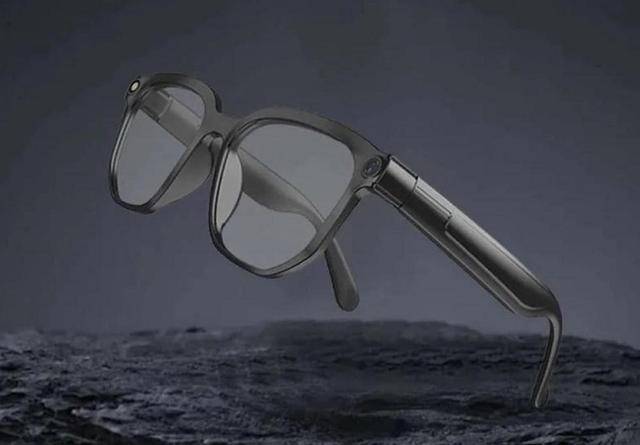
退货率30%,AI眼镜成“大厂丑儿子”?
3 6 Ke· 2026-01-15 10:06
Core Insights - The evolution of smart wearable devices is expanding from wrists and fingers to the nose bridge, marking the beginning of a "battle of hundreds of glasses" [2] - 2025 is defined as the "Year of AI Glasses," with numerous consumer-grade products set to launch, driving rapid growth in the global smart glasses market [3][4] - The competition will intensify in 2026 as more tech giants enter the market, with Google, Apple, and ByteDance announcing their AI glasses projects [5] Market Overview - In 2024, AI glasses sales are projected to be 1/125 of smartwatches, but with a staggering year-on-year growth of 533% [6] - The global shipment of AI glasses in 2024 is expected to reach 152,000 units, while the total shipment of wearable devices (smartwatches and bands) is estimated at 190 million units [10] - Morgan Stanley predicts that by 2028, global AI glasses shipments could reach 35 million units, with a compound annual growth rate of 96% [11] Product Categories - AI audio glasses combine headphones with glasses, focusing on high-quality audio and voice assistant features, making them the most accessible form of smart glasses [7] - AI camera glasses include first-person perspective recording capabilities, appealing to social media users and content creators [8] - AI+AR glasses incorporate augmented reality features, overlaying virtual information onto the real world [9] Consumer Trends - The Double Eleven shopping festival in 2025 saw a 25-fold increase in smart glasses sales on Tmall, indicating strong consumer interest [12] - AI glasses are categorized as a high-growth segment alongside AI smartphones and learning devices, with sales growth exceeding 100% [12] - The market's enthusiasm is driven more by marketing efforts from major companies than by widespread consumer demand [29] Sales Performance - Xiaomi and Rokid are leading in sales, with Xiaomi's glasses priced at 1,899 yuan and Rokid's at 4,299 yuan, targeting different consumer segments [33] - Popular features among consumers include real-time translation, first-person shooting, high-definition calls, and smart voice assistants [34] - Despite high sales, the average return rate for AI glasses is around 30%, indicating potential issues with consumer satisfaction [32][38] Challenges and Future Outlook - The main challenges for AI glasses include balancing weight, computing power, and battery life, often referred to as the "impossible triangle" [44] - The lack of physical retail experiences contributes to high return rates, as potential buyers face information asymmetry [45] - The industry is exploring the concept of "necessity" for AI glasses, questioning whether their functionalities can support daily use like smartphones [46]



META预计增加智能眼镜投入-如何看产业链机会
2026-01-15 01:06
Summary of Meta's Smart Glasses and AR Industry Insights Industry Overview - The smart glasses market is currently in its early stages, with global sales remaining at the million-unit level due to high prices and weight limitations. It is expected to reach tens of millions in sales within 3 to 5 years [3][12] - The AR glasses market is projected to achieve approximately 1 million units in global sales by 2025, with contributions from domestic manufacturers like Rokid and Thunderbird [12] Key Insights on Meta - Meta plans to significantly increase its investment in AI smart glasses, targeting a production of 20 million units by 2026, which represents a multiple growth compared to 2025 [1][2] - The company is reducing expenditures in the metaverse sector while focusing on smart glasses and wearable devices, viewing them as critical future entry points [2] - Meta's contribution to the global AI smart glasses market (non-display) is expected to exceed 5 million units in 2025, capturing a major market share [11] Product Development and Market Trends - The release of Meta's mixed reality (MR) product has been postponed to Q1 2027 due to hardware maturity and design changes, but there are optimistic sales expectations for this product [2] - The CES event showcased innovations in smart glasses from various domestic manufacturers, focusing on lightweight designs, camera capabilities, and communication features [4][5] Future Directions for Smart Glasses - Future development of smart glasses will focus on: 1. Lightweight designs to enhance comfort 2. Improved battery life 3. Enhanced ecosystem compatibility with other devices and applications 4. Breakthroughs in display technology, with a gradual shift towards display-equipped versions [6][7] Competitive Landscape - In 2025, Meta's assembly volume is projected to reach between 8 to 10 million units, while competitors like LOKI and Xiaomi are expected to sell around 300,000 to 500,000 units each [8] - Major tech companies, including Amazon, Google, Huawei, and Samsung, are anticipated to launch their smart glasses products in 2026, indicating a competitive market landscape [8] Investment Opportunities - Investment opportunities in the smart glasses industry are concentrated in high-value segments such as: - Chips (especially SOC) - Camera modules - PCB soft boards - Module and PCBA assembly production companies [15][16] - The lens technology for smart glasses is critical, with the best solutions currently being integrated bonding techniques that require high precision [18][19] Challenges in Display-Equipped Smart Glasses - Display-equipped smart glasses face challenges such as higher costs (typically above 3,000 yuan) and increased weight, which hinder widespread adoption [9][10] Conclusion - The smart glasses and AR market is poised for significant growth, with Meta leading in production and innovation. The industry is expected to evolve rapidly, driven by technological advancements and competitive pressures from various players.
开源证券:AI 成 CES2026 主旋律 硬件产业链迎上行周期
Ge Long Hui· 2026-01-14 05:51
Group 1: AI Integration and Hardware Innovation - AI remains the main theme of CES 2026, with a significant shift from software to physical world integration, empowering various AI terminals [1] - Generative AI is driving a new wave of innovation, with AI smartphones and AI PCs expected to benefit from consumer upgrade cycles, entering an upward trend [1] - AI glasses and embodied intelligent robots have transitioned from the "0 to 1" stage to the "1 to N" stage, with product shipments anticipated to maintain rapid growth [1] Group 2: AI Chip Development - Major tech companies like NVIDIA, AMD, Intel, and Qualcomm showcased advancements in AI chips at CES 2026, with continuous iteration in chip architecture and manufacturing processes [1] - NVIDIA announced the full production of the Vera Rubin platform, integrating six key chips and achieving a tenfold reduction in AI inference costs [1] - AMD's Helios platform, based on MI455X, demonstrated a tenfold performance improvement over previous generations, gaining recognition from leading clients like OpenAI [1] Group 3: Traditional Consumer Electronics - Lenovo introduced innovative AI PCs with rollable screens and foldable designs, enhancing AI interaction experiences through its "hybrid AI" strategy [2] - Dell and HP upgraded their flagship AI PC products, significantly improving edge AI performance [2] - Samsung and Honor showcased advancements in AI smartphones, with Samsung presenting a foldable OLED display and Honor unveiling the world's first robot phone [2] Group 4: New AI Terminals - New AI terminals, particularly AI glasses, are innovating rapidly, with Chinese brands leading the charge [2] - Thunderbird showcased the world's first eSIM smart AR glasses, marking a shift towards independent communication for AR devices [2] - AI models are moving beyond software, enabling personalized applications in emotional companionship, health, and pet care, indicating a new phase for the AI terminal industry [2] Group 5: Automotive and Robotics - NVIDIA's open-source Alpamayo system is lowering the development threshold for Level 4 autonomous driving, while Chinese automakers like Geely and Great Wall are advancing full-stack autonomous driving solutions towards mass production [3] - Innovations in mobility are diversifying, with products like the Strutt smart wheelchair and Verge solid-state battery electric motorcycle reshaping future travel experiences [3] - Embodied intelligence is gaining traction, with NVIDIA's Jetson Thor chip and Isaac platform fostering an open ecosystem, while Boston Dynamics and LG are pushing for large-scale industrial applications [3]


AI动态跟踪系列(十三)端侧AI:AI重塑智能硬件
Ping An Securities· 2026-01-13 09:28
Investment Rating - The industry investment rating is "Outperform the Market" [1][24]. Core Insights - The report highlights the significant breakthroughs in lightweight smart glasses and the emergence of "embodied intelligence" in robotic vacuum cleaners, showcasing the deep integration of AI with hardware at CES 2026 [2][4][5]. - AI is driving the upgrade of IoT across all scenarios, with strong support from chip manufacturers like Rockchip, Amlogic, and Tailing Micro, which are showcasing their capabilities in various fields [15][18]. - The report emphasizes the importance of AI in transforming smart hardware, suggesting that the integration of AI technology will enhance user experience and drive hardware upgrades [22]. Summary by Sections Smart Glasses and Robotic Vacuum Cleaners - The CES 2026 showcased lightweight smart glasses, with products like MoJie weighing only 25g and XGIMI at 28.9g, marking a significant reduction in weight through innovative optical technology and materials [6][10]. - The report notes that the application of smart glasses is expanding into various verticals such as professional translation, entertainment, outdoor sports, health maintenance, education, and industrial inspection, enhancing their competitive edge [8][9]. AI-Driven IoT and Chip Support - Rockchip presented a range of AI-driven IoT solutions, including consumer electronics and robotics, emphasizing the shift from passive to active service in hardware [15][18]. - Amlogic's focus on local computing and privacy-first solutions aims to enhance the performance of smart devices, with new chips like S905X5 and A311D2 set to launch in early 2026 [19][20]. - Tailing Micro's TL322X chip is designed to support high-end wireless gaming peripherals, showcasing advancements in wireless technology and low latency [21]. Investment Opportunities - The report suggests that investors should pay attention to the upgrade opportunities in smart hardware driven by AI, particularly in main control chips and semiconductor materials, as the demand for intelligent products continues to grow [22].


国泰海通:多家中国智能眼镜企业参展CES 全球智能眼镜出货量维持高速增长
Zhi Tong Cai Jing· 2026-01-13 06:25
Group 1 - The core viewpoint of the report highlights the significant presence of Chinese companies at CES 2026, with 16 out of 23 exhibitors in the AI glasses category being from China, indicating a strong market focus and innovation in this sector [1][3] - The CES 2026 event showcased approximately 4,300 companies from over 160 countries, with Chinese exhibitors accounting for about 22% of the total, second only to the United States [2] - The report emphasizes the shift in AI development from "digital intelligence" to "physical AI," marking a trend towards deeper integration of AI with hardware [2] Group 2 - Several Chinese smart glasses companies made notable announcements at CES, including Thunderbird's launch of the X3Pro Project eSIM glasses, which support independent functions like calls and real-time AI translation [3] - ByteDance's "Doubao" AI glasses are set to enter the shipping phase, with plans for multiple configurations, including a no-screen version expected to launch in Q1 2026 [3] - Alibaba's Quark glasses sold out of new inventory by December 23, and an OTA upgrade was implemented on December 31, enhancing features like payment and translation [3] Group 3 - The industry trend indicates a focus on lightweight designs, with mainstream products now weighing between 30-50 grams, aiming to return to everyday accessory status [4] - The integration of multimodal technologies is driving AI from passive responses to proactive services, encompassing audio, visual, and tactile experiences [4] - AI glasses are evolving into independent smart terminals capable of functions like calls, internet connectivity, and complex AI computations [4] Group 4 - Global smart glasses shipments are projected to grow by 110% year-on-year in the first half of 2025, maintaining a high growth trajectory [5] - The inclusion of smart glasses in national subsidy programs is expected to provide additional market growth opportunities [5] - A recent policy announcement by the National Development and Reform Commission and the Ministry of Finance includes smart glasses in a new consumer subsidy initiative, which is anticipated to drive further demand [5] Group 5 - Recommended stocks in the sector include Kangnait Optical (02276), Doctor Glasses (300622), and Aishide (002416), with Tianyin Holdings (000829) also mentioned as a relevant stock [6]




智能眼镜行业跟踪报告:智能眼镜:多厂商发力,走向规模化应用
GUOTAI HAITONG SECURITIES· 2026-01-12 15:23
Investment Rating - The report assigns an "Overweight" rating for the smart glasses industry [4]. Core Insights - The CES 2026 event highlighted the integration of AI with hardware, indicating a shift towards "Physical AI" [2][5]. - The smart glasses sector is experiencing rapid growth, with global shipments increasing by 110% year-on-year in the first half of 2025 [17]. - The inclusion of smart glasses in national subsidy policies is expected to drive further growth [21]. Summary by Sections Industry Overview - The CES 2026 showcased approximately 4,300 exhibitors from over 160 countries, with 942 Chinese exhibitors, representing 22% of total participants [5]. - Major Chinese brands like Thunderbird Innovation and Rokid are making significant advancements in smart glasses technology [5][6]. Product Developments - Thunderbird Innovation launched the X3 Pro Project eSIM, enabling independent communication capabilities [5]. - Rokid introduced the Rokid Style, weighing only 38.5g, featuring an open AI ecosystem [6]. - ByteDance's "Doubao" AI glasses are set to enter the market, with various configurations planned for release [9]. Market Trends - The trend towards lightweight designs is evident, with many products now weighing between 30-50g [15]. - AI glasses are evolving into independent smart devices capable of complex functions like communication and AI processing [15]. - The market is seeing a shift from basic audio glasses to more advanced AI-integrated models, with AI glasses' shipment share rising from 46% to 78% [17]. Investment Recommendations - The report recommends investing in companies such as Kangnait Optical, Doctor Glasses, and Aishide, with Tianyin Holdings also mentioned as a relevant target [21][24].
国泰海通|批零社服:智能眼镜:多厂商发力,走向规模化应用
国泰海通证券研究· 2026-01-12 14:01
Core Insights - The article emphasizes the emergence of "Physical AI," indicating a shift towards the deep integration of AI with hardware, as highlighted by NVIDIA's CEO Jensen Huang at CES 2026 [1]. Group 1: CES 2026 Overview - CES 2026 took place in Las Vegas, featuring approximately 4,300 exhibitors from over 160 countries, with 942 Chinese exhibitors, accounting for about 22% of the total [1]. - Major companies are accelerating their strategies in the smart glasses sector, which is still in a growth phase and maintaining high market vitality [1]. Group 2: Smart Glasses Developments - 23 exhibitors related to AI glasses were present, with 16 from China, including brands like Thunderbird Innovation, Rokid, and ByteDance [2]. - Thunderbird launched the X3 Pro Project eSIM smart glasses, capable of independent functions such as calls and real-time AI dialogue [2]. - Rokid introduced the Rokid Style smart glasses, weighing only 38.5g, supporting an open AI ecosystem [2]. - ByteDance's "Doubao" AI glasses are set to enter the shipping phase, with plans for multiple configurations [2]. - Alibaba's Quark glasses sold out their new inventory by December 23, with an OTA upgrade scheduled for December 31 [2]. Group 3: Industry Trends - The design of smart glasses is shifting towards lightweight models, with mainstream products weighing between 30-50g [3]. - Multi-modal technology integration is driving AI to transition from passive responses to proactive services, encompassing audio, visual, and tactile experiences [3]. - The market is seeing a trend towards vertical scene layouts, leading to a highly segmented product ecosystem focused on specialization and customization [3]. - Smart glasses are evolving into independent smart terminals capable of functions like calls, internet connectivity, and complex AI computations [3]. - Global smart glasses shipments are projected to grow by 110% year-on-year in the first half of 2025, indicating sustained high growth [3]. - The inclusion of smart glasses in national subsidy programs is expected to provide additional market growth [3].

AI眼镜迈入独立智能终端时代,开始接管手机核心功能
Hua Er Jie Jian Wen· 2026-01-12 09:19
Core Insights - Smart glasses are transitioning from smartphone accessories to independent smart terminals, integrating eSIM communication modules and multimodal AI technology to take over core functions like calls, connectivity, and complex computations [1][2] Group 1: Industry Trends - The introduction of AI glasses as a focal point at CES 2026, with 23 exhibitors, 16 of which are from China, indicates a significant shift towards independent communication capabilities, breaking the reliance on smartphones [1][2] - The concept of "Physical AI" proposed by NVIDIA's CEO signifies a shift in AI development focus from the digital realm to hardware integration that can interact with the physical world [1][2] Group 2: Product Developments - Rayneo's X3 Pro Project eSIM, the first smart glasses supporting eSIM, allows users to make calls and access AI services independently from smartphones or WiFi [2] - Rokid's new AI smart glasses, Rokid Style, emphasize an open ecosystem, featuring a dual-chip design for enhanced functionality and a 12-hour battery life [2][3] Group 3: Market Dynamics - Counterpoint's data shows a 110% year-on-year increase in global smart glasses shipments in the first half of 2025, with AI glasses accounting for 78% of the total [1][8] - Meta leads the market with a 73% share, while the proportion of AI-enabled glasses has surged from 46% in the first half of 2024 to 78% in the same period of 2025 [8] Group 4: Policy Support - China's new policy includes smart glasses in the "trade-in" subsidy program, offering a 15% subsidy for purchases under 6000 RMB, which is expected to boost consumer demand and accelerate market penetration [11]

为什么深圳硬件圈都在谈论千问?
雷峰网· 2026-01-12 03:34
Core Viewpoint - The article emphasizes that AI has transitioned from being a mere functional plugin to a fundamental system capability, marking a significant shift in the hardware innovation landscape as large models become the default capability in smart devices [2][9]. Group 1: AI Hardware Landscape - The AI hardware landscape is witnessing a resurgence, with over 200 mainstream hardware manufacturers participating in events like the Alibaba Cloud Tongyi Intelligent Hardware Expo and CES, showcasing a variety of AI applications [3][4]. - The integration of large models, such as Qianwen, into over 1,000 smart devices across 76 categories indicates a strong industry signal that AI is moving beyond screens into the physical world [4][12]. Group 2: Historical Challenges - The AI hardware sector has faced significant challenges over the past decade, including uncontrollable model capabilities, difficult commercial logic, and high engineering complexity, which have hindered the successful implementation of AI in hardware [8][9]. Group 3: Turning Point in AI Hardware - Recent exhibitions signal a turning point for AI hardware, shifting the focus from showcasing model capabilities to system engineering, indicating that AI is now a reliable and efficient foundational capability [9][10]. - Alibaba Cloud's development of a multimodal interaction development kit allows manufacturers to integrate core model capabilities with various interaction technologies, significantly lowering the barriers for hardware selection and adaptation [10][11]. Group 4: Qianwen as a Universal Foundation - Qianwen has emerged as a universal foundation for AI hardware, with Alibaba Cloud collaborating with all AI hardware categories, indicating a shift from single-function AI to comprehensive system capabilities [14][15]. - The comprehensive AI capabilities provided by Qianwen address key pain points in AI hardware implementation, creating a complete ecosystem from models to tools and platforms [16][21]. Group 5: Market Impact and Future Outlook - The AI hardware market in China has surpassed 1.1 trillion yuan, marking a transition from conceptual exploration to large-scale implementation [12]. - The integration of over 1,000 smart devices with Qianwen signifies a clear signal that AI is deeply connecting with the physical world, transforming hardware into intelligent systems that continuously learn and evolve [23][24].