
中芯国际

Search documents
中芯国际:中性”评级-20260214
Ubs Securities· 2026-02-13 09:45
Investment Rating - The report maintains a "Neutral" rating for Semiconductor Manufacturing International Corporation (SMIC) [1] Core Insights - UBS has raised the revenue forecast for SMIC for 2026 to 2029 by 4% to reflect greater domestic opportunities and improved supply-demand dynamics, but has lowered the profit forecast by 8% to 18% due to higher depreciation burdens [1] - The target price is set at HKD 76, based on a projected price-to-book ratio of 3.3 times over the next 12 months, with a long-term return on equity of 11.3% [1] - SMIC's net profit for the last quarter increased by 4.5% quarter-on-quarter, exceeding previous guidance of a 0% to 2% increase and market expectations of a 1.3% increase, driven by slight growth in wafer shipments and average selling prices [1] - The gross margin was reported at 19.2%, aligning with the guidance range of 18% to 20%, but below the market expectation of 20% [1] Revenue and Capacity Outlook - With the 8-inch chip capacity utilization exceeding 100% and the 12-inch chip capacity nearing full operation, management forecasts that capital expenditures this year will remain at USD 8.1 billion, with a projected capacity increase of 40k wafers per month for 12-inch capacity by year-end to meet strong domestic demand from fabless companies [1] - SMIC aims to focus on expanding in areas with tight supply, such as BCD chips, memory, and memory-related products [1] - Management predicts that sales will remain flat in the first quarter, with a gross margin expected to be between 18% and 20%, and sales growth anticipated to exceed the industry average for the year [1] Depreciation and Margin Pressure - The report indicates that due to ongoing business expansion, management expects depreciation expenses to increase by 30% year-on-year this year, maintaining high levels into next year, which will further pressure gross margins [2] - UBS currently forecasts a gross margin of 20% for the first quarter and 21.2% for the entire year, with depreciation pressure expected to be offset by a more favorable pricing environment [2]

芯片公司,大幅砍单
半导体芯闻· 2026-02-13 09:35
Core Viewpoint - The sharp rise in memory prices and subsequent panic buying have severely impacted the demand for entry-level and mid-range electronic products, leading to a significant reduction in orders from IC design companies and a polarized development in the foundry industry [1] Group 1: Memory Price Surge and Its Impact - The core issue stems from an imbalance in supply and demand in the memory market, with DRAM and 3D NAND flash memory prices experiencing significant increases due to panic buying from downstream customers [1][2] - The impact of rising memory prices is asymmetric, with entry-level and mid-range markets being the most affected, as manufacturers in these segments face dual pressures of supply tightness and rising chip prices [1][2] Group 2: Supply Chain Adjustments - Anticipating poor terminal sales, IC design companies are adjusting their orders to foundries, leading to a notable decline in orders for mid-range smartphone processors [2] - The AI boom is structurally affecting memory capacity, with data centers expected to consume 70% of global memory chip capacity by 2026, prompting manufacturers to shift focus to high-margin memory products for AI servers [2][3] Group 3: Competitive Landscape and Future Outlook - Major memory manufacturers are prioritizing AI-related memory production, limiting the capacity for standard consumer-grade memory, which puts entry-level products at a disadvantage in the resource competition [3] - The market outlook remains uncertain, with short-term price pressures on entry-level electronic products expected to persist as long as memory prices remain high, leading to subdued shipment volumes [3][4] - By 2026, a critical juncture is anticipated, with potential growth opportunities for the domestic industry as the demand for memory in data centers peaks, though the impact on the consumer market remains to be seen [4]

中国半导体行业展望
Zhong Cheng Xin Guo Ji· 2026-02-13 09:14
Investment Rating - The semiconductor industry is rated as "stable improvement" for the next 12 to 18 months, with potential for upward adjustments based on demand growth from automotive electronics and artificial intelligence [5][7]. Core Insights - The semiconductor industry in China is expected to benefit from effective industrial support policies, accelerating domestic substitution processes, and a stable upward trend in credit quality [5][8]. - The competition in the semiconductor industry remains a key national focus, with ongoing support for high-end breakthroughs and supply chain management [7][9]. - The recovery of the semiconductor industry is driven by the mild recovery in consumer electronics and rapid development in automotive electronics and artificial intelligence [19][24]. - The global semiconductor sales reached approximately $697.18 billion in 2025, with a year-on-year growth of 11.22%, indicating a new recovery cycle after a previous downturn [20][24]. - The domestic semiconductor market in China is projected to reach $210.88 billion in 2025, growing by 14.68% year-on-year, driven by AI and automotive electronics [24]. Industry Fundamentals Analysis - The semiconductor industry is supported by a comprehensive policy framework that includes national and local government initiatives aimed at enhancing self-sufficiency and technological breakthroughs [9][10]. - The production of integrated circuits in China reached 484.3 billion units in 2025, a year-on-year increase of 87.28%, with exports also showing significant growth [11][24]. - The industry is characterized by a high degree of concentration, with the top ten chip design companies holding over 65% of the market share globally, predominantly led by U.S. firms [30][31]. Credit Performance of Industry Enterprises - The overall financial performance of the semiconductor industry has improved, with revenue, profit, and operating cash flow showing growth, while debt levels remain manageable [29]. - The industry has not experienced any bond extensions or defaults, indicating a stable credit environment [29]. - The chip design sector has seen rapid growth, particularly in AI chip manufacturers, which have outperformed other segments [31].



中芯国际涨0.30%,成交额40.21亿元,后市是否有机会?
Xin Lang Cai Jing· 2026-02-13 08:19
Core Viewpoint - Semiconductor manufacturing company SMIC has received investment from the National Integrated Circuit Industry Investment Fund, holding 1.61% of the total share capital, indicating strong governmental support for the company and the industry [2]. Company Overview - SMIC is the largest integrated circuit manufacturing enterprise group in mainland China, known for its advanced technology and comprehensive support [2]. - The company specializes in wafer foundry services based on various technology nodes and platforms, providing design services, IP support, and photomask manufacturing [2]. - As of September 30, 2025, SMIC reported a revenue of 49.51 billion yuan, a year-on-year increase of 18.22%, and a net profit of 3.82 billion yuan, up 41.09% year-on-year [5]. Market Performance - On February 13, SMIC's stock rose by 0.30%, with a trading volume of 4.02 billion yuan and a turnover rate of 1.72%, bringing the total market capitalization to 935.50 billion yuan [1]. - The stock's average trading cost is 122.58 yuan, with current price levels between resistance at 125.50 yuan and support at 111.80 yuan, suggesting potential for range trading [4]. Institutional Holdings - As of September 30, 2025, the top ten circulating shareholders of SMIC include several ETFs, with notable reductions in holdings from major funds like E Fund and Huaxia [6][7].
中芯国际(00981):穿越周期波动
citic securities· 2026-02-13 08:02
Investment Rating - The report aligns with the views of CITIC Securities and maintains a positive outlook on SMIC, indicating that the company's performance is expected to meet market expectations [5][6]. Core Insights - SMIC's Q4 2025 performance and Q1 2026 guidance are in line with expectations, with a revenue increase of 4.5% quarter-on-quarter to $2.49 billion, surpassing the guidance of 0%-2% [6]. - The company anticipates that the supply of consumer electronic storage chips will ease within 9-12 months due to new capacity ramp-up and inventory release [7]. - Capital expenditures for 2026 are projected to remain flat at $8.1 billion, while depreciation expenses are expected to rise by 30% year-on-year [8]. Summary by Sections Financial Performance - Q4 2025 revenue reached $2.49 billion, with a gross margin of 19.2%, which is within the guidance range of 18%-20% [6]. - The Q1 2026 revenue guidance is expected to remain stable at $2.49 billion, with a gross margin forecasted between 18%-20% [6]. Capital Expenditure and Depreciation - Capital expenditures for 2025 were $8.1 billion, exceeding guidance due to strong customer demand and geopolitical uncertainties affecting equipment delivery [8]. - The company plans to increase its 12-inch wafer capacity by 40,000 pieces per month in 2026, while maintaining high capacity utilization to mitigate depreciation pressure [8]. Market Dynamics - The report highlights that SMIC will benefit from the deepening domestic substitution of mature and advanced process chips [9]. - Factors such as improved yield rates in advanced processes and progress in domestic deep ultraviolet lithography (DUV) are seen as catalysts for growth [10].
暴拉!最猛散户进场扫货
Ge Long Hui· 2026-02-13 07:20
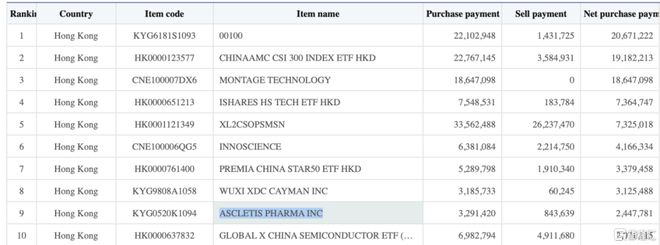
Group 1 - The core viewpoint of the news highlights the significant surge in Chinese AI model stocks, particularly with companies like Zhiyu and MiniMax experiencing substantial price increases, with Zhiyu rising over 130% in five trading days and MiniMax increasing over 40% in the same period [1] - The launch of new AI models such as GLM-5 by Zhiyu and Minimax 2.5 by MiniMax is expected to drive further interest and investment in the sector, with additional models from Alibaba and ByteDance anticipated to be released around the Chinese New Year [1] - Korean retail investors are actively purchasing Chinese AI model stocks, indicating a shift in investment preferences towards emerging technology companies, as evidenced by their buying patterns in the Hong Kong stock market [2][4] Group 2 - Data from the Korea Securities Depository shows that Korean investors have favored stocks like MiniMax and various ETFs related to Chinese technology and semiconductors, reflecting a strong interest in these sectors [2][3] - The Korean stock market has seen a remarkable increase, with the composite index rising by 130% since 2025, largely driven by a few major stocks like Samsung Electronics and SK Hynix, which have contributed significantly to the overall market performance [6][7] - The trend of Korean retail investors converting their currency to invest in foreign markets, including the Chinese stock market, has raised concerns about the depreciation of the Korean won, as highlighted by the Bank of Korea [10][11]




闪存巨头甩出业绩王炸!港A存储芯片股应声大涨
Ge Long Hui· 2026-02-13 07:03
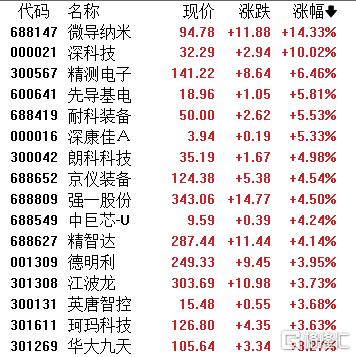
Group 1: Market Performance - The semiconductor and memory chip sectors in A-shares experienced significant gains, with stocks like Weidao Nano rising over 14% and Deep Technology hitting the daily limit [1][2] - In the Hong Kong market, semiconductor and chip stocks were also active, with Aixin Yuanzhi increasing by over 15% [3][4] Group 2: Financial Performance of Key Players - Kioxia reported a strong financial performance for Q3 of FY2025, achieving revenue of 543.6 billion yen, a year-on-year increase of 20.8% and a quarter-on-quarter increase of 21.3% [5][6] - The company expects operating profit for FY2025 to reach between 709.57 billion yen and 799.57 billion yen, significantly exceeding market expectations [7] Group 3: Market Trends and Demand - The demand for AI computing power is driving strong growth in the memory chip sector, with significant price increases expected for NAND flash memory [8] - The global semiconductor sales are projected to reach $791.7 billion in 2025, a 25.6% increase from 2024, with expectations of surpassing $1 trillion in 2026 [9] - The semiconductor equipment market is anticipated to grow, with TSMC planning capital expenditures of $52 billion to $56 billion in 2026, a substantial increase from $40.9 billion in 2025 [9]
拜登态度变了?ITC调查中企1年后,宣布美企指控无效:已予以驳回
Sou Hu Cai Jing· 2026-02-13 07:03
一开始,这个案件看似是一起关于侵权的普通诉讼,但实际上却暴露了美国企业与美国政府联合施压的一个典型例子,试图通过行政手段削弱中国企业的市 场竞争力。我们曾经看到华为、中兴等企业也经历过类似的遭遇,它们被美国当局与私企联手进行打压,但立讯精密与那些企业不同,它的情况似乎更为复 杂且具有耐性。 经过一年多的调查,最终ITC的裁决结果出乎意料地宣布,安费诺的指控完全站不住脚,被彻底驳回。于是,立讯精密在这一波联手围攻中成功挺了过来。 那么,问题来了,为什么这家企业能够在美国政府与企业的双重压力下,最终全身而退呢?难道拜登政府的对华政策有所改变? 答案并不复杂,首先,立讯精密作为一个精密制造商,其核心竞争力并不完全依赖于尖端技术,而是建立在中国制造业的优势基础上。可以说,它本质上只 是一个代工厂,和美国的技术巨头并没有直接的技术对抗,所以美国的制裁措施,对它的影响远没有对华为和中芯国际那样深远。 ITC,全名美国国际贸易委员会,是一个专门为美国企业利益护航的机构,特别是通过打压外国企业,维护本国市场的利益。事实上,ITC的任务就是要盯 住那些可能威胁到美国企业竞争力的国际公司。而就在拜登总统上台的第二天,ITC就宣布 ...

国产算力发展迎拐点性机遇,数字经济ETF(560800)红盘微扬
Xin Lang Cai Jing· 2026-02-13 06:49
Group 1 - The core viewpoint of the articles highlights the positive outlook for the semiconductor industry, with global sales expected to grow by 22.5% to reach $772 billion in 2025 and potentially approach $1 trillion in 2026, driven by AI and data center demands [1][2] - The digital economy ETF closely tracks the CSI Digital Economy Theme Index, which includes companies involved in digital infrastructure and high digitalization applications, reflecting the overall performance of digital economy-related securities [2] - The top ten weighted stocks in the CSI Digital Economy Theme Index account for 52.9% of the index, indicating a concentration in key players such as Dongfang Wealth, Cambricon, and SMIC [2] Group 2 - The report from CITIC Securities anticipates a high certainty in computing power development by 2026, with supernode technology reaching a pivotal opportunity, and an increase in competitiveness among domestic computing power manufacturers [2] - The AI data centers exhibit a high coupling of energy flow, thermal flow, and data flow, with technological upgrades like full-link liquid cooling and NVLink interconnect architecture accelerating the evolution of computing infrastructure towards high density and energy efficiency [1]

开源量化评论(121):港股CCASS优选20组合的年度回顾及最新持仓
KAIYUAN SECURITIES· 2026-02-13 06:43
- The "Hong Kong CCASS Preferred 20 Portfolio" was constructed using a two-step screening method: "select brokers first, then select stocks"[3][4] - The first step involves selecting top-performing brokers by standardizing and equally weighting their excess Sharpe ratio and monthly win rate, then selecting the top 10 brokers[4][16] - The second step involves equally distributing funds to the 10 selected brokers, aggregating their latest holdings, and retaining the top 20 stocks by weight for equal allocation[5][17] - The portfolio has shown significant outperformance over the Hang Seng Index, with an annualized excess return rate of 19.3% and an excess Sharpe ratio of 2.45 over the period from 2020 to 2025[3][12][15] - The portfolio demonstrated defensive characteristics during market adjustments, achieving a positive return of 2.05% from October 8, 2025, to December 31, 2025, while the Hang Seng Index fell by 4.47% and the Hang Seng Technology Index dropped by 15.32%[3][12] - The latest holdings of the portfolio as of February 2026 include a low valuation and high dividend yield configuration, with the banking and non-bank financial sectors accounting for about 45%, the energy sector about 10%, and the technology and internet sectors about 20%[6][19][22] Portfolio Performance Metrics - Annualized return: 19.3%[15] - Annualized volatility: 7.9%[15] - Sharpe ratio: 2.45[15] - Maximum drawdown: -7.6%[15] - Monthly win rate: 75.3%[15]