
Temu

Search documents
BrandOS榜单发布:重回增长通道,中国品牌加速走出去要关注这些趋势
Sou Hu Wang· 2025-07-21 03:37
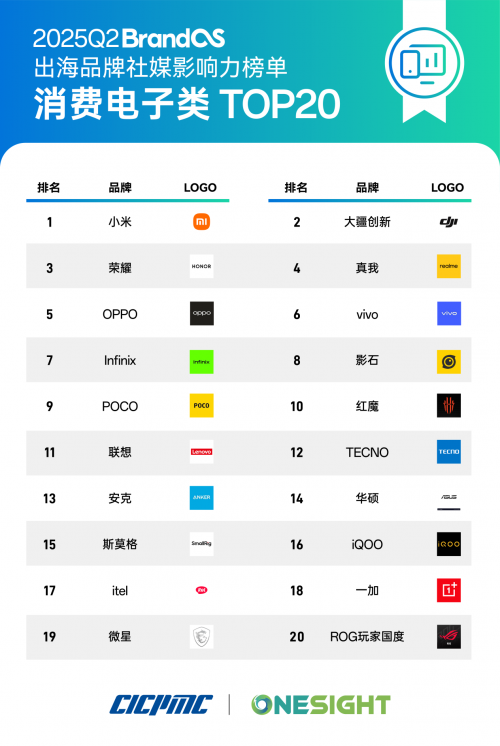
Core Insights - The BrandOS Overseas Brand Social Media Influence Ranking for Q2 2025 was jointly released by OneSight and the China International Multinational Corporation Promotion Association (CICPMC), marking the first non-commercial ranking of Chinese brands' performance on overseas social media since its inception in 2019 [1] - The ranking utilizes a new evaluation system based on real-time data from major overseas social media platforms, focusing on follower scale, interaction effectiveness, and content creation capabilities across eight core sectors, including consumer electronics, automotive, home appliances, new energy, and intelligent manufacturing [1][2] Group 1: Social Media Trends - The white paper accompanying the ranking provides an in-depth analysis of global social media platform innovations and rule adjustments, highlighting five key trends: immersive experiences, open AI tools, deep community interactions, upgraded search logic, and innovative advertising formats [2] - Major social platforms are accelerating their foray into immersive interactive spaces, with Google and Meta making significant advancements in virtual and augmented reality advertising and content creation tools [3] Group 2: Marketing Strategies - Brands are encouraged to adopt an "experience as marketing" strategy by transitioning product stories and user experiences into 3D or virtual spaces, particularly targeting younger audiences through platforms like Roblox [4] - The rise of AI creative tools is transforming content production, enabling brands to leverage AI for video structuring, script generation, and multilingual dubbing, thus enhancing market adaptability [5][7] Group 3: Community Engagement - Social platforms are shifting focus from information flow to community co-creation, enhancing user engagement through improved desktop experiences and interactive features [8] - Brands should prioritize community interaction by initiating discussions based on product experiences and emotional resonance, fostering user-generated content (UGC) [9] Group 4: Search and Discovery - Social and content platforms are evolving search functionalities from passive query tools to proactive discovery engines, with Google and YouTube implementing AI-driven search recommendations [10] - Brands need to optimize content for structured and semantic relevance to enhance visibility and engagement in search results [11] Group 5: Advertising Innovations - New advertising formats are emerging that reduce user ad fatigue, with WhatsApp and YouTube introducing less intrusive promotional methods [12][13] - Brands should adapt to these low-disruption advertising environments by creating personalized and contextually relevant content [14] Group 6: Industry Rankings - The Q2 2025 BrandOS Overseas Brand Social Media Influence Ranking highlights top brands across various sectors, including retail, new energy, and intelligent manufacturing, showcasing their social media performance [15][18][19][20]

欧洲的困境:全球贸易体系剧变,深陷中美两国夹击
Sou Hu Cai Jing· 2025-07-21 02:07
Group 1 - The EU finds itself caught between the US and China, struggling to maintain a stable relationship with both while addressing trade imbalances and geopolitical tensions [2][4][6] - EU officials are pushing for a trade agreement with the US to avoid high tariffs that could harm the European economy, while simultaneously urging China to cease its support for Russia and to create a fair competitive environment for European businesses [2][4][5] - Despite tensions, the EU continues to rely on China for industrial raw materials and maintains significant export levels, particularly from Germany, although exports to China have been decreasing [4][5][6] Group 2 - The EU aims to engage with China on a more equal basis, seeking to establish a more transactional relationship while also deepening trade ties with like-minded countries such as Switzerland and Canada [5][6] - The EU is facing challenges due to the US's trade policies, which have disrupted the global trade system, leaving the EU in a defensive position [5][6][9] - China has imposed restrictions on rare earth exports, which are crucial for various industries, impacting European companies that rely on these materials [10][11][12] Group 3 - EU officials are advocating for technology transfer agreements as a condition for Chinese companies entering the European market, reflecting concerns over competitive disadvantages [12][14] - The EU has followed the US in restricting exports of advanced semiconductor equipment to China, leading to strong discontent from the Chinese government [14][15] - The upcoming summit in Beijing is expected to focus on securing more stable rare earth supply channels and addressing the increasing difficulties foreign companies face in China [15][16]
泡泡玛特预告上半年利润至少增3.5倍;消费电子产业链加速出海,赴港上市布局全球|36氪出海·要闻回顾
36氪· 2025-07-20 13:16
Core Insights - The article highlights significant developments in various companies and industries, focusing on their expansion strategies and financial performance. Group 1: Company Performance and Financial Projections - Pop Mart anticipates a profit increase of at least 350% for the six months ending June 30, 2025, compared to the same period last year, with revenue expected to grow by no less than 200% [4] - MiniMax has nearly completed a new financing round of approximately $300 million, bringing its valuation to over $4 billion [11] - Anker Innovations is exploring overseas share issuance to enhance its global strategy and brand influence [5] Group 2: Strategic Partnerships and Market Expansion - LoBo Fast Run has formed a strategic partnership with Uber to deploy thousands of autonomous vehicles globally, expanding its services beyond China and the U.S. [4] - Tea Baidao has opened its first two stores in Singapore, offering 18 beverage options priced between 2.5 and 6.9 Singapore dollars [4] - Jianlibao has established a regional headquarters in Hong Kong, planning to enter Southeast Asian markets, including Indonesia, Malaysia, and Vietnam [5] Group 3: Industry Trends and Growth - The consumer electronics supply chain is accelerating its globalization efforts, with companies like Lens Technology and Luxshare Precision pursuing listings in Hong Kong [8] - China's industrial robot exports surged by 61.5% in the first half of the year, reflecting the country's growing capabilities in high-tech manufacturing [8] - TikTok Shop has launched a new program to support Southeast Asian cross-border merchants, enhancing its market presence [7] Group 4: International Trade and Economic Indicators - China's total goods trade in the first half of the year reached 21.79 trillion yuan, with exports growing by 7.2% [9] - The average annual growth rate of China's foreign investment has exceeded 5%, maintaining a top-three position globally [10] - The export of dolls and animal toys from China surpassed 13.31 billion yuan in the first four months of the year, marking a 9.6% increase [9]

周受资给加拿大工业部长写信,请求紧急面谈;估值 6.5 亿美元,这个产品做成了“美版公众号”丨Going Global
创业邦· 2025-07-20 10:37
Core Insights - The article highlights significant developments in the global expansion of companies, particularly focusing on TikTok's negotiations in Canada, Blackstone's withdrawal from the TikTok US acquisition, and the rapid localization efforts of Temu in the UK [3][5][9][11]. Group 1: TikTok Developments - TikTok is urgently seeking negotiations with the Canadian government to avoid the shutdown of its local operations, which were ordered due to national security concerns [5]. - Blackstone has reportedly exited the consortium aimed at acquiring TikTok's US operations, adding uncertainty to the ongoing negotiations [9]. Group 2: Temu's Expansion - Temu plans to increase the proportion of local orders in the UK to 50% by the end of 2025, currently boasting 22 million users in the region [11]. - The platform has seen a 68% year-over-year increase in global monthly active users, reaching 417 million, with Latin America showing a remarkable 122% growth [11][12]. Group 3: SHEIN and Manus - SHEIN's India app has surpassed 2 million downloads within six months of its relaunch, with over 20,000 products available on the platform [14]. - Manus has disclosed its technical experiences while transitioning to overseas markets but did not address the reasons for its exit from China [16][17]. Group 4: Company Challenges - The lawnmower robot company Supoman has filed for bankruptcy, attributed to technological stagnation and declining market share [19]. - Inditex plans to reintroduce its budget brand Lefties in France to compete with low-cost rivals like SHEIN [25]. Group 5: Investment and Financing - Several Chinese venture capital firms are restarting USD fundraising, targeting over $2 billion, focusing on AI and new consumer sectors [32][34]. - Substack has completed a $100 million Series C funding round, increasing its valuation by nearly 70% since 2021 [34][35]. Group 6: Market Entries and Regulations - Couche-Tard has abandoned its $47 billion acquisition of Seven & i Holdings due to negotiation breakdowns [27]. - Thailand has classified 19 e-commerce platforms, including Shopee and Lazada, as "high-risk," subjecting them to mandatory regulations [31].

中国公司全球化周报|泡泡玛特预告上半年利润至少增3.5倍/消费电子产业链加速出海,赴港上市布局全球
3 6 Ke· 2025-07-20 04:34
Company Developments - LoBoKuaiPan has formed a strategic partnership with Uber to deploy thousands of autonomous vehicles globally, expanding its services beyond the US and mainland China [2] - Pop Mart anticipates a profit increase of no less than 350% for the six months ending June 30, 2025, compared to the same period last year, with revenue growth expected to be no less than 200% [2] - ChaBaiDao has opened its first two stores in Singapore, offering 18 beverage options priced between 2.5 and 6.9 Singapore dollars (approximately 14 to 38.6 RMB) [2] - Jianlibao has established a regional headquarters in Hong Kong and is preparing to enter the Southeast Asian markets of Indonesia, Malaysia, and Vietnam, while also expanding to Australia, Canada, and the US [3] - Anker Innovations is researching overseas share issuance to enhance its global strategy and brand image, although no specific plans have been confirmed yet [3] - AUX Electric has submitted a listing application to the Hong Kong Stock Exchange, with overseas markets becoming a key focus for its growth [3] - Bourn Optical is reportedly considering restarting its IPO plans in Hong Kong, having begun preliminary discussions with advisors [4] - Temu plans to enter the German food market, aiming to expand its product offerings in Europe [4] - TikTok Shop has launched the Q3 Southeast Asia Cross-Border Merchant Flywheel Plan PLUS, upgrading five policies to assist merchants in going overseas [5] - Meta is set to invest hundreds of billions in artificial intelligence, with expectations to become the first to launch a 1GW+ supercluster [5] - OpenAI has released ChatGPT Agent, capable of autonomous thinking and tool selection for complex tasks [5] Macro Policy & Industry Trends - The consumer electronics industry is accelerating its globalization efforts, with companies like Lens Technology and Luxshare Precision pursuing listings in Hong Kong to enhance their global presence [6] - China's industrial robot exports grew by 61.5% in the first half of the year, reflecting the country's innovation in the robotics sector [6] - In the first four months of this year, China's exports of dolls and animal toys exceeded 10 billion RMB, reaching 13.31 billion RMB, with a growth rate of 9.6% [7] - China's total goods trade imports and exports increased by 2.9% year-on-year in the first half of the year, with exports growing by 7.2% [7] - China's foreign investment has seen an average annual growth rate of over 5%, maintaining a top-three position globally [7] Investment & Financing - MiniMax has nearly completed a new financing round of approximately $300 million, with a post-financing valuation exceeding $4 billion [9] - Zhiyuan Robotics has received strategic investment from Charoen Pokphand Robotics, marking the beginning of its global expansion [9] - XPeng Huitian has completed a $250 million Series B financing round to support the development and commercialization of its flying cars [10] - Blue Dot Touch has completed nearly 100 million RMB in Series B financing, aimed at product development and overseas market expansion [10]


中亚电商热:147亿美元市场里的中国玩家
凤凰网财经· 2025-07-18 11:32
Core Viewpoint - The article discusses the growing opportunities for Chinese businesses in Central Asia, particularly in Uzbekistan and Kazakhstan, as they seek to expand into emerging markets amid geopolitical tensions and saturation in Southeast Asia [2][4][24]. Group 1: Market Growth and Opportunities - The e-commerce market in Kazakhstan is projected to reach 60.13 billion USD in 2024, with a year-on-year growth of 33% [3]. - Uzbekistan's e-commerce market is expected to maintain a compound annual growth rate of 122% from 2021 to 2024, with future growth anticipated to exceed 40% [3][4]. - The number of Chinese nationals in Uzbekistan has increased from over 30,000 in 2018 to approximately 200,000, indicating a significant rise in business activities [2]. Group 2: Economic and Demographic Insights - Kazakhstan's GDP per capita is projected to grow from 11,486 USD in 2023 to 13,117 USD in 2024, reflecting a growth rate of 14.20% [12]. - Uzbekistan's GDP increased from 86.14 billion USD in 2017 to 103.01 billion USD in 2023, with an average annual growth rate of 5.7%-6% [24]. - Uzbekistan has the highest birth rate in Central Asia, contributing to a growing demand for consumer goods, particularly in the mother and baby product categories [29]. Group 3: E-commerce Landscape - The Central Asian e-commerce market is expected to reach 14.7 billion USD in 2024, comparable to Saudi Arabia's e-commerce market size [32]. - Local e-commerce platforms like Kaspi and Uzum dominate the market, with Uzum having over 23 million registered users [29][34]. - Chinese e-commerce platforms such as Taobao and Temu are expanding their presence in Kazakhstan, leveraging local logistics and consumer preferences [14][37]. Group 4: Consumer Behavior and Preferences - Kazakh consumers exhibit a tendency towards forward and installment purchasing, with a notable lack of savings among many [17]. - There is a growing demand for diverse and high-quality products, with local consumers increasingly valuing brand recognition and quality assurance [19][28]. - Social media platforms like Instagram and TikTok are becoming popular for marketing and e-commerce, with innovative sales strategies emerging [19]. Group 5: Challenges and Strategic Considerations - The e-commerce market in Central Asia requires brands to adapt to local consumer needs and cultural differences, emphasizing the importance of product quality and service [32][34]. - The logistics landscape is evolving, with local platforms requiring sellers to establish local companies for smoother operations [34][37]. - The economic structures and payment systems vary significantly between Kazakhstan and Uzbekistan, necessitating tailored approaches for each market [38][39].

中亚电商热:147亿美元市场里的中国玩家
Sou Hu Cai Jing· 2025-07-18 08:44
Core Insights - The increasing presence of Chinese entrepreneurs in Central Asia, particularly in Uzbekistan, has led to a significant rise in local service costs, such as translation and hospitality [1] - The Central Asian e-commerce market is experiencing rapid growth, with Kazakhstan leading the way, while Uzbekistan shows strong potential for future expansion [2][3] - The geopolitical landscape is shifting, with Chinese companies looking towards emerging markets in Central Asia as opportunities arise from tensions in other regions [1][22] Group 1: Market Dynamics - In 2024, Kazakhstan's e-commerce market is projected to exceed 60.13 billion USD, reflecting a 33% year-on-year growth [2] - Uzbekistan's e-commerce market is expected to maintain a compound annual growth rate of 122% from 2021 to 2024, with future growth anticipated to exceed 40% [2] - The total GDP of Uzbekistan increased from 86.138 billion USD in 2017 to 103.012 billion USD in 2023, with an annual growth rate of 5.7%-6% [15] Group 2: Consumer Behavior - Kazakhstani consumers are experiencing a wave of consumption upgrades, with a notable preference for online shopping and installment payments [10] - In Uzbekistan, the average nominal wage as of September 2024 is 817.2 USD, with many locals working multiple jobs to supplement their income [10] - The demand for diverse product categories is high, particularly in e-commerce, where local consumers are seeking quality and brand recognition [13][18] Group 3: E-commerce Infrastructure - Kazakhstan has a well-developed digital payment infrastructure, with platforms like Kaspi QR widely used, while Uzbekistan is still developing its banking and payment systems [27] - Local e-commerce platforms such as Kaspi and Uzum dominate the market, with specific requirements for cross-border sellers to establish local presence [24][26] - The logistics sector in Kazakhstan is rapidly evolving, with a focus on efficient delivery systems to meet the growing e-commerce demand [26] Group 4: Strategic Opportunities - The geographical proximity of Kazakhstan to China positions it as a strategic hub for trade, especially with the implementation of the Eurasian Economic Union [29] - The high birth rate in Uzbekistan creates a strong market for baby products and family-oriented goods, while the cultural context influences purchasing behavior [19][21] - The rise of social media and influencer marketing in Kazakhstan presents new avenues for e-commerce growth, particularly among younger consumers [10][22]


毛燕珊:跨境电商“她”实践 共话女性创业发展新路径
Sou Hu Cai Jing· 2025-07-18 00:04
Core Insights - The forum held on July 16, 2025, in Nanning, Guangxi, focused on the theme "Empowerment, Sharing, Innovation: AI and Women's Development," discussing the opportunities and challenges AI presents for women and promoting cooperation among women’s organizations in China and ASEAN [1] Group 1: Impact of Cross-Border E-Commerce - The rapid development of cross-border e-commerce has made global products easily accessible, transforming shopping habits and enhancing quality of life [3] - Consumers are increasingly valuing personalization, quality, and convenience, leading to a decrease in brand loyalty and a willingness to try new products [3] - New shopping models like social e-commerce and live-streaming have made the shopping experience more interactive and entertaining [3] Group 2: Advantages and Challenges for Women in Cross-Border E-Commerce - Women possess unique advantages in cross-border e-commerce, including keen market insight, strong communication skills, and resilience in entrepreneurship [3][4] - Challenges faced by women include a lack of international business knowledge and time management pressures due to balancing work and family responsibilities [4] Group 3: Recommendations for Aspiring Female Entrepreneurs - It is advised that aspiring female entrepreneurs start small and focus on niche markets, leveraging their strengths in social media to enhance brand visibility [5] - Joining women entrepreneur networks for resource sharing and support is recommended to avoid isolation in the entrepreneurial journey [5] Group 4: Utilizing AI in Cross-Border E-Commerce - To maximize value in cross-border e-commerce, it is suggested to provide policy support, such as specialized training and funding for female entrepreneurs [7] - Strengthening industry collaboration through support programs for female sellers on platforms like Taobao and Temu is essential [7] - Continuous learning and personal branding are crucial for female entrepreneurs to adapt to new technologies and market trends [7] Group 5: Overall Perspective - Cross-border e-commerce offers a vast platform for women, and through collaborative efforts in policy, technology, and community support, female entrepreneurs can create significant value in the global market [8]


美国零售巨头学Temu做“工厂直发”,胜算几何?
Hu Xiu· 2025-07-17 10:53
Core Viewpoint - Target is testing a "factory direct shipping" model to address declining performance, emulating Temu's fully managed logistics approach to reduce operational costs and enhance price competitiveness [1][4][15]. Group 1: Performance Challenges - Target is facing significant challenges including rising labor costs, fluctuating store traffic, weak demand, and poor inventory management [5]. - In Q1, Target's net sales were $23.8 billion, down from $24.5 billion in the same period of 2024, with inflation leading to reduced consumer spending on non-essential items [6]. - CEO Brian Cornell noted a decline in consumer confidence over five consecutive months and potential tariff uncertainties impacting performance [7]. - In-store sales dropped by 5.7% in Q1, with inflation pressures causing a significant decrease in consumer spending per visit [8]. - Target's stock has fallen over 25% this year, partly due to consumer backlash following the company's decision to end diversity and inclusion practices [9]. Group 2: Strategic Shift - Target's current shipping method involves routing products through distribution centers or stores before reaching consumers, which the new model aims to streamline [11]. - The "factory direct" model is expected to reduce logistics steps, potentially lowering prices and increasing market share in discount retail [12][13]. - The focus on apparel and home goods aligns with Temu's strategy, making this shift seem logical given the longer logistics times associated with factory shipping [13]. Group 3: Industry Context and Competition - The shift to a "factory direct" model raises questions about its effectiveness, with experts suggesting it may not significantly benefit Target [14]. - Target's price competition is challenged by Walmart and Amazon, which have superior supply chain capabilities and logistics networks [15]. - The removal of the $800 import tax exemption and Temu's shift towards domestic warehousing may increase costs for Target, complicating its strategy [15]. - Target's brand positioning as "Cheap Chic" may conflict with a focus on low-cost products, risking brand dilution and customer loss [15]. - Competitors like Walmart and Amazon are enhancing their logistics and customer engagement strategies, further intensifying the competitive landscape [16].

Prime Day创纪录收官!卖家却疯狂吐槽?
Sou Hu Cai Jing· 2025-07-15 04:30
Core Insights - Amazon's Prime Day event achieved record sales and volume, surpassing any previous four-day sales cycle, with significant contributions from third-party sellers [1][3] - Despite the increase in order volume, many sellers expressed dissatisfaction with profit margins, indicating a shift in market demand where consumers are more price-sensitive [3][6] Group 1: Sales Performance - During the Prime Day event from July 8 to 11, 2025, online spending in the U.S. reached $24.1 billion, a 30.3% increase year-over-year, exceeding previous expectations [2] - Mobile shopping became the dominant channel, accounting for 53.2% of consumer purchases, with total spending via mobile devices reaching $12.8 billion [2] - Significant sales growth was observed in categories such as children's clothing (250% increase), home security products (185% increase), and refrigerators/freezers (160% increase) compared to June 2025 [2] Group 2: Seller Challenges - Over 60% of sales on Amazon's platform came from third-party sellers, yet many reported declining profit margins despite increased order volumes [3][5] - The average discount during Prime Day ranged from 11% to 24%, with clothing discounts reaching 24%, higher than the previous year's 20% [5] - Sellers faced pressure from increased discount requirements, competition from other platforms, and Amazon's own price cuts, leading to a "Matthew effect" where larger sellers benefit at the expense of smaller ones [5] Group 3: Post-Promotional Effects - Following Prime Day, many sellers reported a significant drop in sales, with some experiencing a 50% reduction in order volume [7][9] - Amazon introduced a new "cool-off" period requiring products that participated in Prime Day promotions to refrain from further promotional activities for a specified duration, raising concerns among sellers about future promotional eligibility [9][12]

