
华鲁恒升

Search documents
装置降负 硫酸铵市场反弹
Zhong Guo Hua Gong Bao· 2025-12-17 09:23
近期,国内硫酸铵市场受企业装置运行降负影响,价格高位运行。生意社监测数据显示,12月12日山东地区硫酸铵价格运行平 稳,其中己内级硫酸铵主流价在1150~1250元(吨价,下同),焦化级硫酸铵主流价在950~1050元。对于后市,业内人士普遍认为 将进入震荡调整阶段。 生产降负 价格上扬 隆众资讯分析师石璐指出,硫酸铵虽为副产品,但产能规模可观,能为企业贡献丰厚利润,特别是在主产品持续亏损的状态下。 今年10月,己内酰胺产品每吨亏损上千元,但部分厂家可以通过副产硫酸铵获得的收益来弥补亏损,一定程度上缓解了经营压 力。 为扭转行业"内卷"局面、保障产业持续健康发展,11月己内酰胺主流厂家多次落实减产保价措施。数据显示,12月5日全国己内 级硫酸铵装置开工率降至76.79%,比11月初下降8.72个百分点;按照己内级硫酸铵年产能1210万吨折算,日产量减少约3200吨。 随着己内酰胺装置开工降负措施落地,己内酰胺价格快速反弹,己内级硫酸铵价格也顺势拉高,企业逐步减亏且盈利改善。生意 社商品行情分析系统显示,11月26日己内级硫酸铵市场均价达1096元,较月初上涨5.79%;之后主流厂家继续上调价格,12月5日 市 ...


锂矿携手电解液齐涨,化工50ETF(516120)午后强势拉升涨超3.5%,成分股超92%上涨
Mei Ri Jing Ji Xin Wen· 2025-12-17 06:52
Group 1 - The three major indices rose significantly, with the Shanghai Composite Index increasing by over 1% and the ChiNext Index rising by more than 2.5%, leading to nearly 2,500 stocks in the market experiencing gains [1] - Sectors such as lithium mining, lithium battery electrolytes, and rare metals saw the highest increases, indicating strong market interest in these areas [1] - The Chemical 50 ETF (516120) rose by 3.53% in the afternoon session, with a cumulative increase of over 46% since April 8, 2023, and over 92% of its constituent stocks reported gains [1] Group 2 - Key stocks in the Chemical 50 ETF include Wanhu Chemical, Salt Lake Shares, and Tianqi Lithium, which have shown significant price increases, with Salt Lake Shares rising over 8% and Tianqi Materials over 7% [1] - The chemical industry is expected to enter a recovery phase, driven by global supply dynamics and AI demand, with specific growth anticipated in electronic chemicals and new energy materials due to technological advancements and policy support [1] - The Chemical 50 ETF closely tracks a comprehensive chemical index that includes leading stocks across various sub-sectors, providing investors with a means to access the overall opportunities in the chemical sector [2]
ETF盘中资讯 | 碳酸锂价格创一年新高!化工板块继续猛攻,化工ETF(516020)涨超2%!行业拐点将至?
Sou Hu Cai Jing· 2025-12-17 05:41
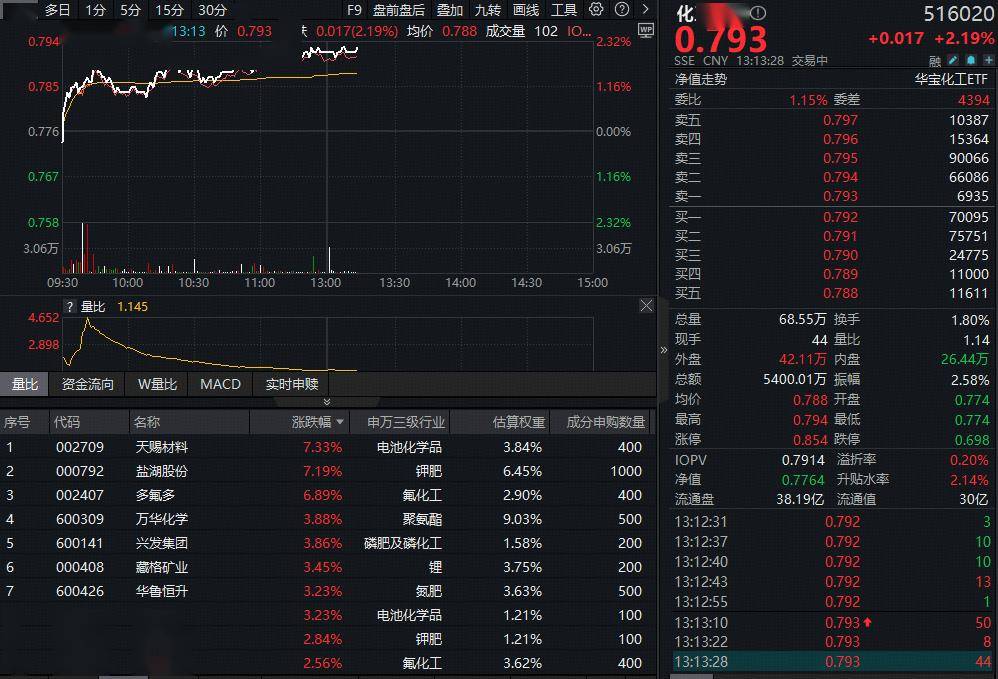
Group 1 - The chemical sector is experiencing a strong upward trend, with the chemical ETF (516020) showing a maximum intraday increase of 2.32% and currently up by 2.19% [1] - Key stocks in the sector, such as Tianqi Lithium and Salt Lake Potash, have seen significant gains, with both rising over 7%, while other companies like Wanhua Chemical and Xingfa Group have increased by over 3% [1][2] - Lithium carbonate prices have reached a new high, increasing by 1,170 CNY to 97,100 CNY per ton, marking a five-day consecutive rise, with a total increase of 4,440 CNY in the last five days [2][3] Group 2 - The chemical sector still presents a favorable valuation, with the chemical ETF's underlying index price-to-book ratio at 2.33, which is relatively low compared to the past decade [3] - The demand for chemical products is expected to grow due to various industries, including real estate, automotive, and textiles, with policies aimed at expanding domestic demand during the 14th Five-Year Plan period [3] - The chemical industry is transitioning from a focus on scale expansion to high-quality growth, aided by industry self-regulation and policy collaboration [3] Group 3 - The chemical ETF (516020) provides an efficient way to invest in the chemical sector, with nearly 50% of its holdings in large-cap leading stocks, allowing investors to capitalize on strong market trends [4] - The ETF covers various sub-sectors within the chemical industry, including phosphate and nitrogen fertilizers, fluorochemicals, and lithium battery materials, providing a comprehensive investment opportunity [4]





华安证券:化工行业反内卷推动周期复苏 国产替代引领成长主线
智通财经网· 2025-12-17 04:08
Core Viewpoint - The report from Huazhong Securities highlights the peak of domestic silicon production capacity, the exit of overseas manufacturers, and the potential recovery of the polyester chain's prosperity due to concentrated production capacity in the polyester filament sector [1][3]. Group 1: Industry Trends - Domestic silicon production capacity has reached its peak, while leading companies are driving industry recovery as overseas manufacturers continue to exit [1][3]. - The PTA production capacity expansion is nearing its end, leading to a concentration in polyester filament production capacity, which is expected to improve the prosperity of the polyester chain [1][3]. - The price of caprolactam has dropped to a low point, prompting the industry to initiate self-driven anti-involution measures [3]. - The raw material price index has rebounded after hitting a bottom, with frequent safety incidents causing significant risks to the global supply chain of key pesticides [3]. - The price of spandex has remained below the cost line, leading to widespread industry losses, but a slowdown in new capacity releases may optimize the supply structure and drive price recovery [3]. - The vitamin market is expected to see significant price increases in 2024 due to a tightening global supply [3]. Group 2: Investment Opportunities - The report emphasizes two main investment themes: anti-involution and domestic substitution, particularly in the context of global macroeconomic uncertainties and a slowdown in chemical capital expenditures [2][4]. - The biobased materials sector is receiving strong support from national policies, with companies accelerating technological breakthroughs and industrialization [4][6]. - The lubricating oil additive sector is witnessing rapid technological advancements among domestic companies, with several high-end products achieving international certification [4][6]. - The electronic ceramics market is seeing strong demand driven by AI and automotive sectors, with domestic manufacturers making breakthroughs in MLCC production [4][6]. - The exit of 3M from the fluorinated liquids market is reshaping the competitive landscape, with domestic manufacturers expected to increase their market share [4][6]. - The explosive growth of AI servers is driving demand for electronic-grade polyphenylene ether, with domestic manufacturers achieving technological breakthroughs and entering key supply chains [4][6].

2026年度制冷剂配额核发,双氧水、R125涨幅居前 | 投研报告
Zhong Guo Neng Yuan Wang· 2025-12-17 04:03
Market Performance - The basic chemical index decreased by 2.19% from December 6 to December 12, while the CSI 300 index fell by only 0.08%, indicating that the basic chemical sector underperformed the CSI 300 by 2.12 percentage points, ranking 26th among all sectors [1][2] - The top-performing sub-industries included rubber additives (4.50%), adhesives and tapes (2.95%), non-metallic materials III (1.04%), synthetic resins (0.68%), and other rubber products (0.37%) [1][2] Chemical Price Trends - The top five products with the highest weekly price increases were hydrogen peroxide (14.67%), R125 (13.33%), hydrochloric acid (Shandong) (12.50%), domestic vitamin E (8.33%), and raw salt (5.77%) [3] - The top five products with the largest weekly price declines were liquid chlorine (-33.33%), NYMEX natural gas (-22.31%), R22 (-13.89%), hydrochloric acid (Jiangsu) (-12.50%), and R134a (-8.33%) [3] Industry Dynamics - The Ministry of Ecology and Environment announced the issuance of production, use, and import quotas for ozone-depleting substances and hydrofluorocarbons (HFCs) for 2026, with a total production quota of 797,800 tons, a slight increase of 5,963 tons from 2025 [4] - The production quotas for R134a, R245fa, R32, and R125 will increase by 3,272, 2,918, 1,171, and 351 tons respectively, while R143 and R227ea will see reductions of 1,255 and 517 tons [4] - The high demand for third-generation refrigerants is expected to continue, with prices remaining elevated; as of December 12, the market prices for R32, R125, and R134a in East China were 63,300, 45,000, and 57,500 yuan per ton, respectively [4] - The production of air conditioners and automobiles in China showed growth, with cumulative production from January to October 2025 reaching 230 million units and 27.325 million vehicles, representing year-on-year increases of 3% and 11% respectively [4] Price Adjustments in the Industry - Several leading companies in the light stabilizer sector have announced price increases of approximately 10% to address long-standing issues of irrational price competition [5] - The price adjustments were initiated by major players such as Lianlong and followed by others like Suqian Liansheng and Tiangang Additives [5] Investment Recommendations - Focus on the refrigerant sector, as the supply-demand balance is expected to improve, with price levels likely to rise; recommended companies include Jinshi Resources, Juhua Co., Sanmei Co., and Yonghe Co. [6] - Attention is also suggested for the chemical fiber sector, with recommended companies being Huafeng Chemical, Xin Fengming, and Taihe New Materials [6] - Other quality targets include Wanhua Chemical, Hualu Hengsheng, Luxi Chemical, and Baofeng Energy [6] - The tire sector is highlighted with recommendations for Sailun Tire, Senqilin, and Linglong Tire [6] - In the agricultural chemicals sector, recommended companies include Yara International, Salt Lake Co., Xingfa Group, Yuntianhua, and Yangnong Chemical [6] - Quality growth targets include Blue Sky Technology, Shengquan Group, and Shandong Heda [6] Industry Rating - The basic chemical industry maintains an "overweight" rating [7]
硫酸铵:装置降负 市场反弹
Zhong Guo Hua Gong Bao· 2025-12-17 03:49
Core Viewpoint - The domestic ammonium sulfate market is experiencing high prices due to reduced operational capacity of production facilities, with expectations of entering a phase of price fluctuation and adjustment [1][5]. Group 1: Market Conditions - As of December 12, ammonium sulfate prices in Shandong are stable, with mainstream prices for caprolactam-grade ammonium sulfate ranging from 1150 to 1250 RMB per ton, and coke-grade ammonium sulfate priced between 950 and 1050 RMB per ton [1]. - The production capacity of ammonium sulfate is expected to exceed 28 million tons this year, driven by the rapid release of by-product capacity from caprolactam and other processes [2]. - The operating rate of caprolactam-grade ammonium sulfate plants dropped to 76.79% by December 5, a decrease of 8.72 percentage points from early November, resulting in a daily production reduction of approximately 3200 tons [2]. Group 2: Price Trends - The price of caprolactam-grade ammonium sulfate increased by 5.79% to an average of 1096 RMB on November 26, and further rose by 14.19% to 1183 RMB by December 5 [3]. - Despite the price increase, downstream manufacturers are cautious in their purchasing, leading to a short-term balance in supply and demand [4]. Group 3: Export Dynamics - China's ammonium sulfate exports are on the rise, with a projected volume exceeding 16 million tons in 2024, marking a 20% year-on-year increase [4]. - The main export destination is Brazil, and the province of Fujian has seen significant export growth, with a 58.79% increase in export value in the first three quarters of the year [4]. - However, the international market is entering a demand off-season, and recent anti-dumping measures from Mexico may negatively impact exports [4]. Group 4: Future Outlook - Industry experts predict that the ammonium sulfate market will enter a phase of fluctuation and adjustment, influenced by seasonal demand and upstream pricing pressures [5][6]. - The ongoing losses in caprolactam production may lead to further reductions in operational capacity, while demand from sectors like compound fertilizers and industrial applications remains stable [6].
化工行业2026年度投资策略:周期破晓,关注反内卷政策与国产替代两大主线
Huaan Securities· 2025-12-17 02:53
Investment Strategy Overview - The report emphasizes two main investment themes for the chemical industry: anti-involution policies and domestic substitution, which are expected to drive recovery and growth in the sector [4][5][6] Anti-Involution and Cycle Recovery - The report suggests that the chemical industry is at a turning point, with anti-involution measures leading to a recovery in the cycle. Key areas include the peak of new capacity in organic silicon, the end of PTA capacity expansion, and a rebound in prices for certain chemicals due to supply chain disruptions [4][5] - The China Chemical Product Price Index (CCPI) has decreased significantly, dropping to 3865 points by November 30, 2025, down 16.37% from early 2024 and 10.71% from the beginning of 2025 [4][20] Domestic Substitution as a Growth Driver - Domestic substitution is highlighted as a key growth driver, with significant support from national policies for bio-based materials and advancements in technology leading to a more robust domestic supply chain [4][6] - The report identifies several companies positioned to benefit from these trends, including KaiSai Bio and RuiFeng New Materials, which are making strides in bio-based materials and lubricant additives, respectively [5][6] Market Dynamics and Price Recovery - The report notes that while the chemical market is experiencing a downturn, certain segments are expected to see price recovery due to improved supply-demand dynamics and reduced capacity expansion [4][22] - Specific chemical products have shown varied price movements, with some experiencing significant declines while others are stabilizing or recovering [22] Manufacturing Sector Recovery - The manufacturing sector is showing signs of recovery, which is anticipated to support the chemical industry. The report mentions that the real estate market is stabilizing, and automotive production has increased, indicating a potential uptick in demand for chemical products [25][33] Capital Expenditure Trends - Capital expenditure growth in the chemical industry is slowing, with a notable decline in new projects. The report indicates that the total construction in progress for the chemical sector was 327.57 billion yuan in Q3 2025, down 17.64% year-on-year [34][39] Inventory and Consumption Trends - High inventory levels in the chemical sector are being addressed as consumer demand begins to recover. The report suggests that the inventory-to-revenue ratio for the basic chemical industry was 0.62 in Q3 2025, indicating a slight increase from the previous year [41][42] Profitability and Financial Performance - The report highlights a recovery in profitability for the chemical industry, with gross margins and return on equity (ROE) showing improvement in Q3 2025 compared to previous periods [56][60] - Specific sub-sectors, such as agrochemicals and fluorochemicals, have demonstrated significant profit growth, with some exceeding 100% year-on-year increases [55][56]


中金2026年展望 | 油气化工:曙光已现,景气回暖
中金点睛· 2025-12-16 23:50
Core Viewpoint - The petrochemical industry has been in a downturn for approximately 3.5 years, but with a decline in capital expenditure and the accelerated exit of outdated overseas capacity, the industry is expected to enter a low-growth phase. The self-discipline within the industry is accelerating the recovery of product profitability, and the anticipated growth in demand from sectors like new energy suggests a potential turning point for the chemical industry cycle [2][3][11]. Industry Performance - The chemical price index and profit margins are currently at low levels, with a 10.3% decline in the chemical product price index from early 2025, placing it at the 10.4% percentile since 2012. The profit margin for chemical raw materials and products from January to October 2025 is at 4.14%, the lowest since 2017. The gross and net profit margins for petrochemical companies in Q3 2025 are 15.9% and 4.6%, respectively, also among the lowest in recent years [6][12]. Supply Dynamics - Capital expenditure for petrochemical companies decreased by 18.3% and 10.1% in 2024 and Q1-Q3 2025, respectively. The construction of new projects has also seen a decline, with a 13.2% year-on-year drop in Q3 2025. The growth rate of fixed assets and ongoing projects is at its lowest since Q1 2018, at 6.8% [3][7]. The exit of 11 million tons of outdated capacity in Europe from 2023 to 2024 is expected to alleviate global supply-demand imbalances [7]. Demand Outlook - The demand for chemical products is expected to remain resilient, with a focus on the recovery of the U.S. real estate market. The domestic demand for chemical products is projected to grow, supported by policies aimed at achieving around 5% economic growth in 2026. Early-cycle products like chemical fibers are anticipated to see rapid growth in consumption from 2020 to 2024 [12][14]. Investment Opportunities - The industry is expected to see a turning point, with favorable supply-side factors and rapid growth in demand for materials in the new energy sector. The valuation of chemical companies is currently low, with significant profit growth expected in 2026 for leading companies. The chemical fiber industry, particularly PTA and polyester filament, is expected to experience a cyclical upturn in 2026 [15][25].
己内酰胺:供应偏紧撑价格,高位盘整待破局
Zhong Guo Neng Yuan Wang· 2025-12-16 10:35
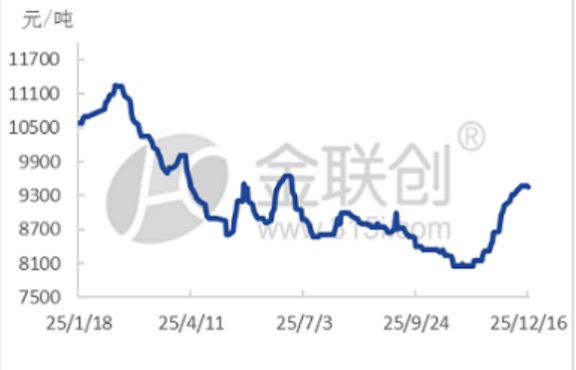
Core Viewpoint - The domestic caprolactam market is experiencing a strong fluctuation due to tight supply and cautious purchasing behavior from downstream enterprises [1][4]. Supply Side - Production cuts and maintenance are frequent, leading to low operating levels in the industry. Several caprolactam plants have reduced their operational loads or are undergoing maintenance, resulting in a significant decrease in overall production capacity [3]. - Specific operational statuses include: - Balin Hengyi's caprolactam plant operating at 60-70% capacity - Hunan Petrochemical's 600,000 tons/year plant at 70% capacity - Nanjing Fubon Tech's 200,000 tons CPL plant is currently offline for maintenance with no confirmed restart date [3]. - The overall operating rate in the industry has dropped to around 70%, leading to a supply shortage that supports price increases [5]. Demand Side - Downstream PA6 polymer enterprises are adopting a cautious purchasing attitude due to high caprolactam prices. They are only purchasing based on immediate production needs, which limits the market demand and slows down price increases [4][6]. - The cautious procurement behavior is a response to the high raw material costs, preventing large-scale stockpiling and thus alleviating some pressure on prices [4]. Market Outlook - The tight supply situation is expected to continue supporting caprolactam prices, with overall production and operating levels unlikely to see significant adjustments in the near term [5]. - Despite the supportive supply conditions, downstream PA6 market faces challenges in passing on high costs, which may pressure profit margins and lead some polymer enterprises to reduce production loads [6]. - The market is anticipated to maintain a high-level consolidation phase, with prices unlikely to drop significantly but also lacking strong upward momentum due to demand constraints [6].
供应端扩产高峰已过,“反内卷”助力景气度回升
Bank of China Securities· 2025-12-16 07:16
Investment Rating - The report assigns a "Strong Buy" rating for the chemical industry, indicating a positive outlook for investment opportunities [2]. Core Insights - The chemical industry is currently at the bottom of the cycle, with the "anti-involution" trend expected to accelerate the optimization of the competitive landscape, driving an upward trend in industry prosperity. Leading companies are likely to see improvements in both profitability and valuation, with recommendations for companies such as Wanhua Chemical, Hualu Hengsheng, China Petroleum, Baofeng Energy, and New Hope Liuhe [3]. - The report highlights the importance of self-discipline in production cuts within sub-industries like polyester filament, agrochemicals, fluorochemicals, and organosilicon, recommending companies such as Tongkun Co., New Fengming, Lier Chemical, and others [3]. - The refining industry, currently at a cyclical low, is expected to benefit from the elimination of backward production capacity, leading to a rapid recovery in prosperity, with recommendations for China Petroleum, Hengli Petrochemical, and others [3]. Summary by Sections Supply Side - The peak of capacity expansion has passed, with fixed asset investment in the chemical raw materials and chemical products manufacturing industry showing a negative year-on-year growth for the first time in nearly five years as of June 2025. The total fixed assets of listed companies in the basic chemical industry reached 14,628.58 billion yuan, a year-on-year increase of 15.56% [14][46]. - The construction of new projects has also seen a downturn, with the amount of ongoing projects decreasing by 15.11% year-on-year as of Q3 2025 [46]. Demand Side - Domestic demand is expected to be boosted by stimulus policies, while exports of chemical products continue to grow. The demand from downstream industries such as real estate, automotive, and textiles is showing positive trends [3][14]. - The resilience of chemical product exports is highlighted, with the export quantity index for the chemical raw materials and chemical products manufacturing industry reaching 122.40 as of September 2025 [3]. Global Industry Landscape - The report notes a shift in the global industrial landscape, with Chinese chemical companies enhancing their competitiveness. In 2023, China's chemical sales reached 2,238.1 billion euros, accounting for 43.1% of the global market [3][14]. - The report emphasizes the ongoing adjustments in the global chemical industry, with many overseas chemical production capacities exiting the market due to high costs and aging facilities, thereby strengthening the competitive position of domestic companies [3]. Policy and Industry Self-Regulation - The "anti-involution" actions initiated in 2024, including self-regulation and production cuts by industry associations and leading companies, are expected to help restore product prices and profits [3]. - The report discusses various policies aimed at energy conservation and carbon reduction, which are likely to optimize supply and improve product structures in the petrochemical industry [3].

