华润啤酒

Search documents
增利难增收?5家头部啤酒企业掌门人揭秘破局关键
Mei Ri Jing Ji Xin Wen· 2025-11-17 14:37
Core Insights - The beer industry is experiencing a slowdown in overall growth, with companies facing challenges in increasing profits while revenues remain stagnant [2][8] - The recent "Double 11" shopping festival saw significant online sales for major beer brands, but the competitive landscape is shifting towards high-end products and diverse consumption scenarios [2][6] Group 1: Market Trends - Major beer brands like Tsingtao, Budweiser, and Yanjing dominated online sales during "Double 11," with Tsingtao's exclusive 211ml small white beer seeing a nearly 4-fold increase in sales [2] - The beer market is transitioning from a speed competition to a focus on high-end products and diverse consumption scenarios, indicating a need for innovation and adaptation [2][8] Group 2: Product Innovation - Companies are focusing on product innovation to meet changing consumer demands, with new categories like non-alcoholic and low-calorie beers gaining traction [3][9] - Carlsberg China emphasizes the importance of high-end products and fine management, while Budweiser Asia Pacific highlights the need for technological advancements in brewing processes [4][5] Group 3: Consumption Scenarios - The traditional consumption scenarios for beer are weakening, prompting companies to explore new experiences such as outdoor activities and urban street culture [6][7] - Tsingtao Beer is creating experiential venues like museums and beer gardens to enhance consumer engagement, while Carlsberg is aligning its brands with specific dining experiences [6][7] Group 4: Industry Outlook - Despite the current challenges, the long-term growth potential of the Chinese beer market remains strong, with a focus on quality and innovation [8][9] - Industry leaders stress the importance of collaboration and shared efforts to drive innovation and quality improvements across the sector [9]




“双11”线上赚吆喝,啤酒业却仍“增利难增收”?5家头部酒企掌门人揭秘破局关键
Mei Ri Jing Ji Xin Wen· 2025-11-17 10:40
Core Insights - The recent "Double 11" shopping festival saw significant sales growth in the beer market, with brands like Tsingtao, Budweiser, and Yanjing leading in sales on platforms like JD.com and Tmall [1][2] - Despite the online sales boom, the overall growth rate of beer manufacturers is slowing down, indicating a challenging environment for profit growth amidst fierce competition [1][5] - Industry leaders are focusing on product innovation and exploring new consumption scenarios to adapt to changing consumer demands and market dynamics [2][3][4] Industry Trends - The beer market is experiencing new growth characteristics influenced by economic conditions, demographic changes, and evolving consumer habits, particularly among Gen Z, single-person households, and the elderly [2][5] - Companies are launching regional specialty products and expanding their product lines to include non-beer beverages, aiming to capture new growth opportunities [2][4] - The shift towards high-end products remains a key focus, with companies like Carlsberg China emphasizing refined management and long-term strategies to meet consumer expectations for quality [3][6] Market Challenges - The beer industry faces pressures from overcapacity, demand slowdown, and price declines, leading to a competitive landscape where traditional consumption scenarios are weakening [5][7] - Companies are urged to innovate and adapt to new consumption environments, such as outdoor and urban settings, to remain relevant [5][6] - Financial reports indicate that major A-share beer companies experienced a total revenue of approximately 61.5 billion yuan and a net profit of about 9.3 billion yuan in the first three quarters, with some companies facing revenue declines [6][7] Future Outlook - Despite current challenges, the Chinese beer market is still viewed as having significant long-term growth potential, being the largest beer market globally [6][7] - Industry leaders stress the importance of collaboration and long-term investment in product innovation, quality enhancement, and consumer education to navigate the evolving market landscape [7]
致明天,焕新责任竞争力《2025企业社会责任竞争力指数报告》在京发布
Jing Ji Guan Cha Wang· 2025-11-17 07:56
Core Insights - The report titled "2025 Corporate Social Responsibility Competitiveness Index Report" was released, highlighting a transformative shift towards responsibility renewal, value reshaping, and governance upgrades as China approaches the end of its 14th Five-Year Plan and prepares for the 15th [2][5] - The report introduces the "Five Forces Model of Responsibility," which includes dimensions such as environmental compliance, social contribution, governance standards, innovation drive, and communication impact, providing measurable and actionable value coordinates for enterprises [2][5] - The report outlines nine major trends in corporate social responsibility (CSR) for 2025, covering areas like ESG governance, supply chain collaboration, corporate globalization, and responsibility communication [2][5] Group 1: Corporate Responsibility Trends - CSR has evolved from a peripheral issue to a core strategic element for companies, becoming a key factor in building competitive advantage [3] - The 15th Five-Year Plan is seen as a critical period for economic transformation, where responsibility competitiveness is essential for long-term sustainability and market reputation [5][21] - The report identifies leading companies in CSR practices, including Sinopec, Huawei, and McDonald's, showcasing their commitment to social responsibility and sustainable development [9][15] Group 2: Key Statements from Industry Leaders - Industry leaders emphasize that social responsibility is no longer an optional task but a fundamental requirement for survival and growth in the current economic landscape [5][9] - Companies like Panasonic and McDonald's are integrating environmental responsibility into their core business strategies, with Panasonic establishing 14 "zero CO2 factories" in China [11][15] - The importance of employee engagement in driving innovation and responsibility is highlighted, with companies like Goldwind Group implementing platforms to foster creative ideas from employees [13] Group 3: Future Directions - The report indicates that the upcoming Five-Year Plan will present new opportunities for companies to enhance their responsibility practices and contribute to sustainable development [22] - Companies are encouraged to adopt innovative solutions to address social issues, as seen in the initiatives by Hong Kong and China Gas, which aim to transform service models into comprehensive support systems for communities [22] - The ongoing collaboration between various stakeholders, including media and enterprises, is crucial for advancing CSR practices and achieving a more sustainable future [22]

食品饮料行业周报:CPI催化预期,底部价值凸显-20251117



Haitong Securities International· 2025-11-17 07:10
Investment Rating - Investment advice indicates a sector recovery catalyzed by recent CPI data, focusing on growth and supply-demand inflection points [5][16]. Core Views - The report emphasizes the importance of consumer goods growth, particularly in beverages, snacks, and food ingredients, while also highlighting structural opportunities in the baijiu sector [5][16]. - CPI data shows a positive trend with October CPI year-on-year at +0.2% and core CPI at +1.2%, indicating a recovery in domestic demand [6][16]. - The baijiu industry is undergoing accelerated clearing, with expectations for improved sales and inventory adjustments leading into 2026 [7][16]. - Consumer goods are expected to benefit from stabilization and recovery, with a focus on low valuation and high dividend stocks [8][16]. Summary by Sections Investment Recommendations - Recommended baijiu stocks include Shanxi Xinghuacun Fen Wine Factory, Gujing Distillery, and stable targets like Kweichow Moutai and Wuliangye [5][16]. - Beverage growth is highlighted with recommendations for Eastroc Beverage and Nongfu Spring, alongside low valuation stocks like China Foods and Tingyi [5][16]. - Snack and food ingredient stocks recommended include Bailong Chuangyuan, Yankershop Food, and Three Squirrels [5][16]. - Beer recommendations include Yanjing Brewery and Tsingtao Brewery, while condiment stocks like Haitian Flavoring & Food are also suggested [5][16]. Baijiu Sector Insights - The baijiu sector is experiencing a significant adjustment, with industry destocking still in progress and a focus on promotional sales for 2026 [7][16]. - Recent sales data from JD.com shows a +18% year-on-year increase in liquor sales during the Double 11 shopping festival, indicating a positive market response [7][16]. Consumer Goods Outlook - Consumer goods are expected to see growth as the mainline, with structural differentiation evident in beverages, snacks, and health products [8][16]. - The report notes that companies with product innovation and channel expansion will have growth advantages, particularly in the context of recent service and non-food price recoveries [8][16].
餐饮供应链专题报告:需求触底改善,重启成长价值
CMS· 2025-11-17 07:06
Investment Rating - The report maintains a positive investment rating for the restaurant supply chain sector, suggesting increased attention due to signs of demand recovery and growth potential for quality companies [2][38]. Core Insights - The restaurant supply chain sector is experiencing a shift where companies are transitioning from being mere supporters to active drivers of innovation and demand, highlighting the importance of R&D and innovation capabilities [10][22]. - The industry is witnessing a structural opportunity as the chain restaurant rate continues to rise, with expectations for further growth in the coming years [18][10]. - Current valuations in the sector are at historically low levels, indicating potential for recovery as demand improves [30][34]. - The report emphasizes the importance of mergers and acquisitions as companies seek to enhance their competitive positions and bind key customers [22][24]. Summary by Sections Industry Status - Overall demand in the restaurant sector remains weak, but signs of recovery are evident, particularly during holiday periods [10][11]. - The restaurant supply chain industry is projected to maintain a compound annual growth rate of over 15% in the next three years, outperforming the broader restaurant market [14][10]. Company Changes - Companies are increasingly focusing on R&D and innovation to meet the evolving demands of chain restaurants, which require standardized and stable supply [22][10]. - Mergers and acquisitions are being utilized to strengthen customer relationships and enhance resource capabilities [24][22]. - New retail channels are being explored to drive growth, with companies expanding into high-end and online markets [25][10]. Valuation Analysis - The current valuation of the sector is below the 20th percentile of the past decade, suggesting significant upside potential as demand recovers [34][30]. - The report notes that the valuation decline over the past five years has been primarily due to reduced demand and high initial valuations [30][34]. Investment Recommendations - The report suggests increasing focus on specific companies such as Haidilao, Angel Yeast, and others, which are expected to benefit from demand recovery and improved operational performance [38][39].



再论浮法玻璃冷修的拐点
2025-11-16 15:36
Summary of the Float Glass Industry Conference Call Industry Overview - The float glass industry is facing overcapacity, with a projected reduction of nearly 20% in production lines by 2024, dropping from 249 to 220 lines [2][3] - The market remains sluggish, with limited effects from policy stimuli, high inventory levels, and increased pressure from winter holidays [1][2] - National glass prices have converged, with prices in Northeast China dropping to 850 RMB/ton and in South China ranging from 1,000 to 1,200 RMB/ton [1][7] Key Points and Arguments - **Production Line Dynamics**: New production lines are primarily large-capacity (900 tons or more), while many old, small-capacity, and high-energy-consuming lines are expected to be phased out, totaling approximately 20,000 to 30,000 tons [5][17] - **Profitability by Fuel Type**: - Natural gas-powered small-capacity lines are consistently losing money - Coal gas lines are near breakeven, while petroleum coke lines are experiencing periodic losses [6][17] - **Reasons for Not Cold Repairing**: Companies are reluctant to halt production due to: - Long industry cycles and expectations of market recovery - Policy expectations and local government resistance - The need to maintain cash flow to meet bank loan obligations [1][4][7] - **Market Sentiment**: Despite some companies expecting a market turnaround, the reality is that both futures and spot prices are undermining confidence [7][21] Additional Important Insights - **Inventory Management**: Companies are primarily using price wars to reduce inventory, but downstream processing plants are cautious about winter storage due to financial risks [8][9] - **Future Price Trends**: Prices are expected to continue declining in the coming months, with a lack of strong willingness for large-scale production halts [9][21] - **Policy Impact**: Regional policies, such as coal-to-gas initiatives, have limited effectiveness due to the low concentration of the float glass industry [10][11] - **Cash Flow Risks**: Some companies are facing cash flow issues or bankruptcy risks, with reports of companies using glass as payment for construction projects [20][22] Conclusion - The float glass industry is currently in a challenging phase characterized by overcapacity, low prices, and significant financial pressures on many companies. The outlook for 2026 remains bleak, with expectations of continued supply-demand imbalances and low pricing levels [21][22]
大摩闭门会-双十一之后,如何看消费趋势?
2025-11-16 15:36
Summary of Key Points from Conference Call Records Industry Overview - **Consumer Confidence Stabilization**: Consumer confidence has shown signs of stabilization over the past two quarters, aligning with the retail data trends from October. High-income groups and high-tier cities exhibit strong consumption willingness, particularly in luxury goods, which have been recovering since September [1][2][4]. - **Diverse Consumer Spending**: Spending on sports goods, electronics, and daily necessities has slightly increased, while domestic short-distance travel plans have also risen. However, overall consumer spending improvement remains limited [1][2][5]. - **High-End Consumption Recovery**: The high-income demographic is sensitive to capital market returns, which directly influences their consumption behavior. The luxury goods market is showing early signs of recovery since September [1][4]. Company-Specific Insights - **Atour Hotel Retail Growth**: Atour Hotel has achieved significant growth through its retail business, which now accounts for over 40% of total revenue. The company expects retail revenue to exceed 800 million yuan during the 2025 Double Eleven shopping festival, representing over 60% year-on-year growth [1][7]. - **E-commerce Platform Strategies**: Online retail growth slowed in October, with platforms employing subsidy strategies to lower prices. This pressure is expected to ease next year, aiding the stability of e-commerce platforms [1][8]. Market Performance - **Home Appliance Market Slowdown**: The home appliance market saw a 15% year-on-year sales decline in October, influenced by high base effects from previous year’s trade-in promotions. The smartphone market performed relatively well but could not offset the decline in home appliances [3][10][11]. - **Gold and Jewelry Industry Changes**: The industry has been affected by VAT reforms, increasing raw material costs by 6-7%. Major brands have raised prices by 5-7% to pass on costs, which may benefit larger brands while pushing smaller retailers out of the market [3][24][26]. Recommendations and Future Outlook - **Investment Recommendations**: In the beer sector, China Resources Beer is recommended, while in the restaurant sector, Baisheng China and Haidilao are suggested. The clothing and footwear supply chain, particularly Shen Zhou, is also highlighted as a potential investment opportunity [1][6]. - **Consumer Goods and E-commerce Trends**: Price-sensitive consumer goods are expected to recover first as pressure on prices eases. The overall consumer spending environment remains cautious, with a focus on high-end and essential goods [1][5][12]. Additional Insights - **Bubble Mart's Market Position**: Bubble Mart has seen a significant stock price increase due to rapid IP expansion but has recently faced a 30% pullback. The company is focusing on increasing plush production capacity to meet demand without oversaturating the market [15][19]. - **Textile and Knitted Shoe Industry Outlook**: The industry faces uncertainty due to tariff adjustments affecting end prices. However, low inventory levels in North America may lead to a replenishment demand in 2026, supported by upcoming events like the World Cup [20][21]. This summary encapsulates the key insights and trends discussed in the conference call, providing a comprehensive overview of the current market landscape and future expectations across various sectors.

食品饮料月月谈电话会
2025-11-16 15:36
Summary of Conference Call on Dairy and Beverage Industry Industry Overview - The dairy industry is experiencing a continuous capacity reduction, with expectations for supply-demand balance improvement by mid to late 2026, leading to potential stabilization in milk prices. As of October, milk prices remained stable at 2.94 yuan per kilogram, with a production loss of approximately 0.2 yuan per kilogram and a loss rate of about 5% [2][2][2]. Key Points on Dairy Companies New Dairy Industry - New Dairy reported a strong performance in October, continuing the trend from Q3, with double-digit growth in low-temperature fresh milk and yogurt. The company is expanding into new channels, achieving significant revenue from collaborations, and is expected to meet its profit margin targets ahead of schedule by 2026 [4][4][4]. Mengniu Dairy - Mengniu's Q3 results met expectations, with stable market share following price reductions on its flagship product. The company anticipates stable revenue and profit margin growth through 2026, with a relatively low valuation providing investment flexibility [5][5][5]. Yili Group - Despite weak overall demand, Yili's low-temperature milk and other segments showed positive growth, with low-temperature white milk exceeding 20% growth. The company is expected to stabilize its liquid milk business by 2026, benefiting from diversified product offerings and channels [6][7][6][7]. Miao Ke Lan Duo and Youran Dairy - Miao Ke Lan Duo is experiencing rapid growth in the B-end market, with significant C-end product launches. The company is expanding its deep processing of dairy products, which is expected to improve profitability. Youran Dairy is increasing fresh milk supply with stable prices, supporting profits, and is projected to enhance profitability further with a reduction in livestock numbers [8][8][8]. Beverage Industry Insights Master Kong - Master Kong's beverage business saw a slight decline in Q3, but the drop has narrowed in October. The company expects to stabilize its beverage business next year, with a focus on promotional activities and potential price adjustments for its one-liter products [9][10][9][10]. Nongfu Spring - Nongfu Spring's water business experienced double-digit growth in October, with its sugar-free tea brand capturing nearly 80% market share. The company is expected to maintain steady revenue and profit growth, making it a strong long-term investment choice [10][10][10]. Dongpeng Beverage - Dongpeng Beverage reported a nearly 30% growth rate, with ambitious annual targets. The company shows significant growth potential from a valuation perspective [10][10][10]. Investment Recommendations - The dairy sector is recommended for investment due to expected improvements in profitability and market conditions by 2026. Companies like Mengniu, Yili, and New Dairy are highlighted for their growth potential and stable valuations [5][7][4][4]. - In the beverage sector, Master Kong and Nongfu Spring are noted for their resilience and growth prospects, making them attractive investment options [9][10][10].




食品饮料行业点评:近期更新反馈:固本强基,趋时驭势
GOLDEN SUN SECURITIES· 2025-11-16 09:39
Investment Rating - The report maintains an "Accumulate" rating for the food and beverage industry, indicating a positive outlook for investment opportunities in this sector [5]. Core Insights - The food and beverage industry is experiencing a transformation driven by health-conscious consumer trends, product innovation, and channel expansion, with companies actively enhancing their product offerings and exploring overseas markets [1][9]. - In the liquor segment, the supply side is undergoing continuous changes to seek growth, while the demand side is gradually recovering, highlighting the absolute investment value in the industry [2][3]. - The beverage sector is focusing on product innovation and network expansion to uncover growth potential, with a strong emphasis on health upgrades and premiumization [4][7]. Summary by Relevant Sections Liquor Industry - **Water Well**: The company is optimizing its product matrix and plans to launch a new high-end product in 2025, focusing on brand collaboration and expanding its terminal network [2]. - **Jiu Gui Jiu**: The brand is implementing a strategic focus on brand depth and product line simplification, with expectations for improved sales performance [3]. - **She De Jiu Ye**: The company is maintaining its core strategy while expanding its product offerings, particularly in e-commerce, to drive growth [3]. Beverage Industry - **Kang Shi Fu**: The company is committed to innovation and quality, focusing on expanding its product range to meet diverse consumer needs [4]. - **Unified Enterprises**: The company is experiencing stable performance with a focus on product innovation and market expansion, particularly in the instant noodle and beverage segments [7]. - **Hua Run Beverage**: Short-term performance is under pressure due to competition, but long-term growth prospects remain strong due to the essential nature of its products [7]. Health and Wellness Trends - **Anqi Yeast**: The company is targeting over 10% revenue growth, with a focus on expanding its overseas market presence and maintaining cost advantages [9]. - **Xian Le Health**: The company is advancing its global strategy and product innovation to capture new consumer trends, with a focus on high-margin products [9]. - **Jian Yi Health**: The company is enhancing its probiotic offerings and expanding its product lines to meet evolving consumer demands [10]. Overall Market Trends - The food and beverage industry is witnessing a shift towards healthier products and innovative marketing strategies, with companies adapting to changing consumer preferences and exploring new growth avenues [1][4].


古越龙山有点“啤”,跨界混搭会是突围正解吗?
Xin Lang Cai Jing· 2025-11-14 02:55
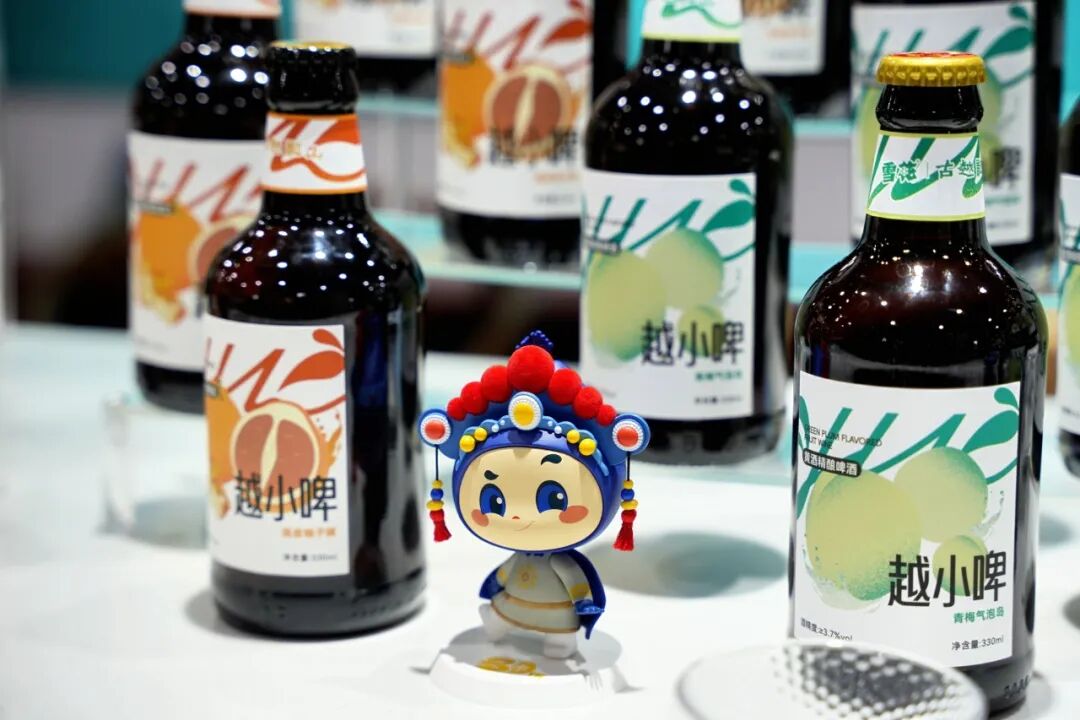
Core Viewpoint - The collaboration between Guyue Longshan and China Resources Beer to launch "Yue Xiao Pi" represents a strategic attempt to innovate and attract younger consumers in the face of declining performance and increasing competition in the yellow wine market [1][8]. Group 1: Product Launch and Features - "Yue Xiao Pi" is a cross-category product that combines elements of yellow wine and beer, featuring two flavors: Qingmei Sparkling Island and Chenpi Pomelo Shop, with an alcohol content of ≥3.7% vol [3][4]. - The product aims to appeal to younger consumers by adopting a lighter drinking style and modern packaging similar to beer bottles, moving away from the traditional heavy perception of yellow wine [4][10]. - Previous attempts at product innovation include the launch of a craft yellow beer that generated over 10 million yuan in orders within the first month, although it has since become less visible on major e-commerce platforms [4][7]. Group 2: Market Performance and Competition - Guyue Longshan's recent financial performance shows a decline, with a revenue drop of 8.11% and a net profit decrease of 34.07% in the first three quarters of the year, leading to a loss of its position as the leading yellow wine brand to Kuaijishan [8][10]. - Over the past decade, Kuaijishan has outpaced Guyue Longshan in growth, with Kuaijishan's revenue increasing from 859 million yuan to 1.631 billion yuan, a growth rate of approximately 8.99%, compared to Guyue Longshan's 4.47% [8][10]. - The competitive landscape is intensifying, with Kuaijishan launching innovative products like sparkling yellow wine and leveraging social media for marketing, prompting Guyue Longshan to follow suit with its own new offerings [10][11]. Group 3: Strategic Partnerships and Future Outlook - The partnership with China Resources Beer is seen as a strategic move for Guyue Longshan to leverage the latter's extensive distribution network and operational expertise to expand its market reach beyond its traditional base in Jiangsu, Zhejiang, and Shanghai [10][11]. - The collaboration has generated positive market reactions, with Guyue Longshan's stock price rising following the announcement, indicating investor optimism about the potential success of the cross-category product [10][11]. - Industry analysts emphasize that the success of "Yue Xiao Pi" will depend on effective channel management and whether the partnership can translate the beer channel's advantages into increased sales for yellow wine [10][15].