长城汽车

Search documents
长城、上汽、东风1月销量公布,出口成共同亮点
Jing Ji Guan Cha Wang· 2026-02-03 12:34
Group 1 - In January 2026, Great Wall Motors sold 90,300 new vehicles, representing a year-on-year increase of 11.59% but a month-on-month decline of 27.18% [1] - Overseas sales for Great Wall Motors increased by 43.77% year-on-year [1] - The Haval brand sold 50,500 vehicles, up 4.03% year-on-year; the Wey brand sold 7,873 vehicles, up 57.24%; and the Tank brand sold 14,500 vehicles, up 12.92% [1] Group 2 - SAIC Motor Group did not disclose overall sales figures, but some business units reported data [1] - SAIC Passenger Vehicle's Roewe and MG brands had retail sales exceeding 78,000 units, a year-on-year increase of 9.8% [1] - SAIC-GM Wuling's global sales in January reached 105,800 units, while SAIC-GM's terminal deliveries were 51,000 units, up 8.2% year-on-year [1] Group 3 - Dongfeng Motor's Lantu brand delivered 10,500 vehicles in January, a year-on-year increase of 31% [1] - Yipai Technology's sales reached 21,300 vehicles, a significant year-on-year increase of 145% [1] - The Mengshi brand sold 1,008 vehicles, marking a year-on-year growth of 300% [1]



同比普涨、环比普跌,1月车企销量“开门红”成色不足
经济观察报· 2026-02-03 12:15
进入2026年1月后,新能源汽车购置税开始减半征收,车企购 置税兜底政策也随之结束。另外,1月各地具体的购车补贴细 则尚未全部出台,导致消费者存在观望情绪,影响了车市终端 销售情况。 作者:王帅国 封图:图虫创意 2月1日,各家车企相继发布了1月销量。从整体上看,汽车行业实现2026年"开门红",大多数车 企1月销量同比取得正增长,但这一同比增长是由于2025年春节在1月,去年同期的新车销售基数 较低。 环比数据上,大多数车企1月销量下滑明显,主要原因在于2025年12月新能源汽车还享受购置税 全额减免政策,同时车企为年底冲量,在12月出台了许多其他优惠政策。进入2026年1月后,新 能源汽车购置税开始减半征收,车企购置税兜底政策也随之结束。另外,1月各地具体的购车补贴 细则尚未全部出台,导致消费者存在观望情绪,影响了车市终端销售情况。 广汽集团1月销量为11.66万辆,同比增长18.47%,环比下滑37.79%。其中自主品牌销量超4.9 万辆,同比增长87.58%;海外销量同比增长68.59%。分品牌来看,昊铂+埃安销量2.16万辆, 同比大增171.63%;传祺品牌销量2.77万辆,同比增长51.06%; ...




苹果登顶!2025胡润中国品牌榜发布
Shen Zhen Shang Bao· 2026-02-03 12:15
2月3日,胡润研究院发布《2025胡润中国品牌榜》,榜单首次纳入进入中国市场并服务于中国消费者的非中国品牌。根据榜单,苹果以1.11万亿元的品牌 价值登顶最具价值品牌;贵州茅台以7950亿元品牌价值位居第二,稳居中国品牌价值榜首;微信品牌价值增长最多,稳居第三名,同时取代抖音成为最具 价值中国民营品牌。以苹果为首的消费电子行业超越酒类,成为榜单中价值最高的行业,酒类依旧是中国本土品牌价值最高的行业。 榜单显示,上榜品牌数量从300强扩容至500强。317个品牌的价值较上一年增长,其中包含212个新上榜品牌;153个品牌价值下降;35个品牌价值保持不 变;另有16个品牌落榜。上榜门槛为20亿元人民币,总价值近8.8万亿元人民币。69%的上榜品牌提供实体产品,31%的品牌提供软件或服务。其中,源自 中国的品牌占比76%,非中国品牌占比24%。 看推文多多留言 有机会获商报君送出的礼品 朋友们千万别错过! ↓↓↓ 上榜品牌的中国总部,覆盖73个城市。其中,上海以136个品牌居首,品牌总价值近2.9万亿元人民币;北京紧随其后,拥有104个品牌,品牌总价值近1.8 万亿元人民币;深圳位列第三,拥有41个品牌,品牌总价值 ...


销冠易主,小鹏垫底,车市开年大洗牌
Guo Ji Jin Rong Bao· 2026-02-03 10:41
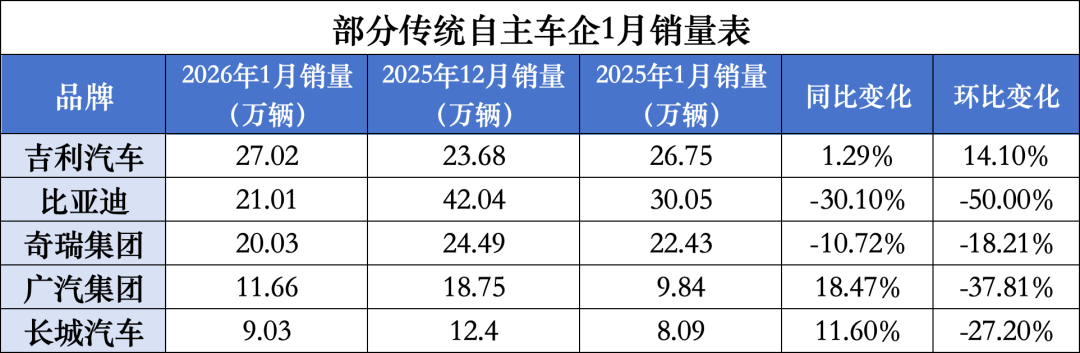
Core Insights - January saw a significant reshuffling in the domestic automotive market, with new energy vehicle (NEV) purchase tax reinstatement and demand being pulled forward due to promotions leading to changes in rankings among new players [1] - New energy vehicle companies showed a clear divergence in January sales, with Zeekr, NIO, and Xiaomi Auto experiencing over 90% year-on-year growth, while Li Auto and Xpeng faced declines [1][2] Sales Performance - Hommage Zhixing delivered 57,900 vehicles in January, with the AITO brand contributing 40,000 units, accounting for 69.1% of total deliveries [2] - Xiaomi Auto delivered over 39,000 vehicles, marking a 95% year-on-year increase, despite a 22% month-on-month decline [2] - Leap Motor's January deliveries reached 32,100 units, with plans to hit a sales target of 1 million vehicles in 2026 [2] - Li Auto's deliveries were 27,700 units, entering a self-adjustment phase due to supply chain issues affecting production [3] - NIO delivered 27,200 vehicles, with a significant year-on-year increase of 163% driven by the new ES8 model [3] - Xpeng delivered approximately 20,000 vehicles, focusing on new product launches for 2026 [4] Traditional Automakers - Geely topped the sales chart in January with 270,200 units sold, a 1.29% year-on-year increase and a 14.08% month-on-month increase, driven by the Zeekr brand [5][6] - BYD's sales fell to 210,100 units, a 30.11% year-on-year decline, primarily due to weak domestic demand [6] - GAC Group reported sales of 116,600 units, an 18.47% year-on-year increase, although it faced a 37.81% month-on-month decline [7][8] - Chery Group's total sales were 190,000 units, down 10.7% year-on-year, with only the Chery brand showing growth [8] - Great Wall Motors sold 90,300 vehicles, an 11.60% year-on-year increase, with a notable 30% growth in NEV sales [9]


在销量最冷的季节,为什么国产豪华车反而卖得更好?
3 6 Ke· 2026-02-03 10:31
Group 1: Market Trends - The Chinese automotive industry is experiencing a seasonal overall decline, with major automotive groups like BYD and Chery reporting a year-on-year sales drop of 30% and nearly 11% respectively in January [1] - New energy vehicle sales from companies like XPeng and Li Auto also saw significant declines, with year-on-year decreases of 34% and 7.5% respectively [1] - Despite some companies achieving year-on-year growth, the growth rates have significantly narrowed, with declines of 30%-60% observed in month-on-month comparisons [1] Group 2: Luxury Vehicle Demand - The luxury vehicle segment is witnessing a "golden age," with NIO's ES8 model showing a remarkable year-on-year delivery increase of 96.1% in January, contributing to nearly 64.9% of NIO's total deliveries [3] - The demand for high-priced models is driven by new national subsidy policies favoring vehicles priced above 16.67 million yuan, which incentivizes consumers to opt for higher-end models [4] - The trend is reflected across various brands, with BYD's high-end models like the Fangchengbao experiencing a 247% increase in sales, while GAC's premium brand Aion also saw a 171.63% growth [6] Group 3: Supply Chain Challenges - The automotive industry is facing rising costs for key components and electronic parts, with memory chip prices expected to significantly impact profit margins [12] - The price of essential raw materials such as copper, aluminum, and lithium carbonate has also surged, potentially leading to increased vehicle prices or reduced profit margins for manufacturers [14] - Companies are aware that the rising costs may not be fully absorbed by the supply chain, leading to potential price hikes or margin compression if sales volumes do not stabilize [14] Group 4: Future Product Plans - Several automotive companies have announced new product plans for their 8-series and 9-series models in 2026, indicating a continued focus on high-end offerings [10] - NIO plans to launch the ES9, while other brands like Zeekr and Xiaomi are also preparing to introduce new high-end models [10] - The introduction of L3-level assisted driving technology and changes in subsidy policies are expected to further benefit high-end vehicle market penetration [14]

汽车视点 | 销量环比下滑超20%,单车成本激增7000元:2026车市开局承压
Xin Hua Cai Jing· 2026-02-03 10:12
Core Viewpoint - The overall automotive market in China experienced a significant month-on-month decline in January 2026, influenced by changes in tax policies and early consumer demand, while year-on-year sales remained relatively stable [1]. Group 1: Sales Performance - In January 2026, the retail sales of narrow passenger vehicles in China were approximately 1.8 million units, representing a month-on-month decrease of 20.4% and a slight year-on-year increase of 0.3% [1]. - Major traditional automakers like SAIC and Geely outperformed BYD, with SAIC selling 327,000 vehicles (up 23.9% year-on-year) and Geely selling 270,200 vehicles (up 1.3% year-on-year) [2]. - BYD's sales fell to 205,500 vehicles, a month-on-month decline of 49% and a year-on-year decrease of about 30% due to high base effects and product line adjustments [2]. Group 2: New Energy Vehicle (NEV) Trends - NEV sales in January were approximately 800,000 units, showing a year-on-year decline of 40.2%, but a month-on-month increase of 7.5% [1]. - New entrants like Xiaomi and Hongmeng Zhixing saw significant growth, with Xiaomi's sales increasing by 95% year-on-year to over 39,000 units [4]. - NIO delivered 27,200 vehicles, a year-on-year increase of 96%, with the new ES8 model being a major contributor [5]. Group 3: Cost Pressures - The automotive industry is facing rising costs, with single vehicle costs increasing by 4,000 to 7,000 yuan due to surging prices of key materials like lithium, aluminum, and DRAM [6][7]. - The price of battery-grade lithium carbonate rose from 75,700 yuan per ton at the beginning of 2025 to 146,600 yuan per ton by February 3, 2026, marking an increase of approximately 94% [6]. - UBS reported that the cost increases could compress profit margins significantly, with potential reductions of 33% to 93% in profits for vehicles priced at 150,000 yuan [7]. Group 4: Strategic Directions - To counteract rising costs and stagnant demand, automakers are focusing on international expansion, with Chery exporting 119,600 vehicles in January, accounting for nearly 60% of its total sales [8]. - BYD's overseas sales surpassed 100,000 units, a year-on-year increase of 43.3%, while Geely's exports exceeded 60,000 units, showing a growth of over 120% [8]. - Companies are also targeting the high-end market, with new flagship models being launched, indicating a competitive shift towards premium offerings [10][11]. Group 5: Market Outlook - The automotive market is expected to face challenges in the short term, with a recovery point likely not becoming clear until March or after the first quarter [12]. - The automotive consumption index for January 2026 was reported at 31.1, reflecting a cautious consumer sentiment influenced by various factors [12]. - Overall, the automotive industry is entering a "deep water zone" in 2026, with strategies for international expansion, high-end market penetration, and cost efficiency being critical for future positioning [12].

中信、华泰、国泰等十大券商高目标个股曝光!62股被赋予50%上行预期!
私募排排网· 2026-02-03 10:00
Core Viewpoint - The A-share market is expected to enter a slow bull phase in 2025, with major indices significantly rising. As the annual report preview window approaches in early 2026, institutional investors are likely to focus on stocks with long-term growth potential and valuation revaluation space [2][3]. Group 1: Target Price Insights from Citic Securities - Citic Securities has identified 12 stocks with a target price increase of over 50%, indicating a recovery in market confidence. The focus is on sectors that can articulate a logical recovery narrative, particularly in consumer and real estate chains [2][3]. - Among the stocks covered, the highest target price increase is for Baili Tianheng, with a target price of 1322 CNY compared to a closing price of 269.69 CNY, representing a potential upside of 390.19% [3][4]. Group 2: Target Price Insights from Huatai Securities - Huatai Securities has identified 15 stocks with a target price increase of over 50%, focusing on sectors with sustainable recovery capabilities, particularly in price increase chains, high-end manufacturing, and AI [5][6]. - The highest target price increase is for Tianci Materials, with a target price of 80.5 CNY compared to a closing price of 40.04 CNY, indicating a potential upside of 101.05% [6]. Group 3: Target Price Insights from Guotai Junan - Guotai Junan has identified 13 stocks with a target price increase of over 50%, with China Railway leading at a target price of 9.07 CNY against a closing price of 5.37 CNY, representing a potential upside of 68.90% [8][9]. - The firm emphasizes the long-term potential of the "transformation bull" market, supported by improved regulatory governance and economic transformation [8]. Group 4: Target Price Insights from GF Securities - GF Securities has identified three stocks with significant target price increases, including Pudong Development Bank with a target price of 15.65 CNY compared to a closing price of 10.06 CNY, indicating a potential upside of 55.57% [10][11]. - The firm anticipates a strong seasonal market effect during the spring, particularly around the Chinese New Year [10]. Group 5: Target Price Insights from Guotai Securities - Guotai Securities has identified three stocks with target price increases over 50%, including Betta Pharmaceuticals with a target price of 71.95 CNY against a closing price of 45.70 CNY, representing a potential upside of 57.44% [13][15]. - The firm highlights the importance of technology and overseas expansion as key drivers for future growth [13]. Group 6: Target Price Insights from Dongwu Securities - Dongwu Securities has identified three stocks with the highest target price increases, including Tianci Materials with a target price of 79.20 CNY compared to a closing price of 40.40 CNY, indicating a potential upside of 97.80% [19][20]. - The firm expects a strong performance in the market as it transitions towards technology and cyclical sectors [19]. Group 7: Target Price Insights from Guojin Securities - Guojin Securities has identified China Pacific Insurance as the only stock with a target price increase over 50%, with a target price of 73.18 CNY against a closing price of 44.36 CNY, representing a potential upside of 64.97% [16][18]. - The firm believes that the insurance sector is entering a new cycle of growth driven by both volume and price increases [16].





主机厂原材料涨价后续影响分析 | 投研报告
Zhong Guo Neng Yuan Wang· 2026-02-03 09:51
华源证券近日发布汽车行业周报:2020年以来汽车原材料价格的明显上涨主要分为两轮:第一轮为2020 年(尤其2020Q3开始)~2022年(主要截至2022Q1),彼时汽车主要原材料价格出现普涨,其中碳酸锂 涨幅居前,电池级碳酸锂价格由2020Q3的平均4万元/吨涨至2022Q4的平均55万元/吨;第二轮则为 2025Q4以来的碳酸锂、六氟磷酸锂等电池原材料及铜、铝等价格的上涨。 以下为研究报告摘要: 投资要点: 我们判断,车企可能通过小幅涨价或改款增配等温和方式向消费者转移部分原材料涨价的成本,更多还 是向上游传导及主机厂自身消化涨价成本,单车盈利也将会受到拖累。本轮原材料涨价的背景与此前的 最大差异点(尤其对新能源车而言)在于,2020~2022年新能源渗透率仍处于较低水平(2020~2022年 新能源零售渗透率分别为6%、15%、28%),新能源乘用车销量处于快速提升阶段(2021~2022年新能 源乘用车零售同比增速分别为169%、90%),而2025年新能源渗透率已达54%。此外,2026年还将面临 新能源购置税补贴退坡、以旧换新补贴退坡等多重负面冲击,即补贴退坡已经推升了消费者购车成本 (当然,2 ...
20万元 家用2.0T动力车型盘点
Zhong Guo Zhi Liang Xin Wen Wang· 2026-02-03 09:27
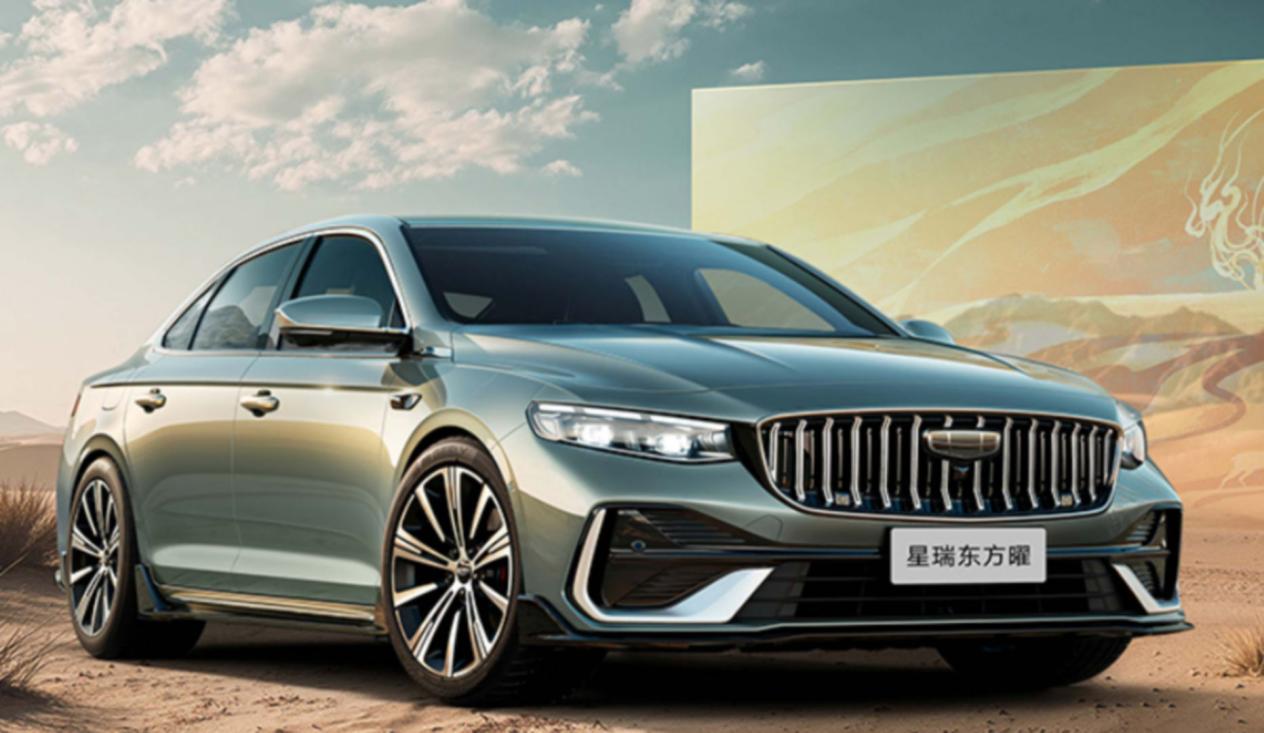
上至奔驰G级、宝马7系这种百万级豪车,中级的奔驰A45 AMG,奥迪S3一类的性能机器,入门的别克君威、领克01这类运动型家用车,2.0T的发动机屡见 不鲜,它动力强劲、技术成熟、适配广泛受无数消费者追捧。本文盘点了10万元-20万元的部分家用2.0T动力车型,看看哪款更适合你的需求。 吉利星瑞 2026款 东方曜 2.0TD 霄汉版 指导价:11.87万元 星瑞基于CMA架构打造,同平台代表车型包括沃尔沃XC40、吉利星越L等。除了强劲的动力表现外,这个平台的底盘操控性方面也有突出的表现。 星瑞轴距达到2800mm,长度超过传统A级车型,接近B级车水平,后排腿部头顶都有充足余量。整车长宽高达到4825×1869×1469(mm),纯家用场景下, 空间表现优秀。 2026款吉利星瑞东方曜搭载JLH-4G20TDH发动机,这款发动机基于沃尔沃Drive-E发动机平台,与领克03+同源,最大功率高达200kW(272马力),峰值扭 矩400牛米,匹配爱信8AT变速箱,零百加速仅需6.5秒,极速可达215km/h,动力配置方面表现出色。同时,WLTC油耗为7.15L/100km,需要加注95号汽 油。 外观方面,星 ...
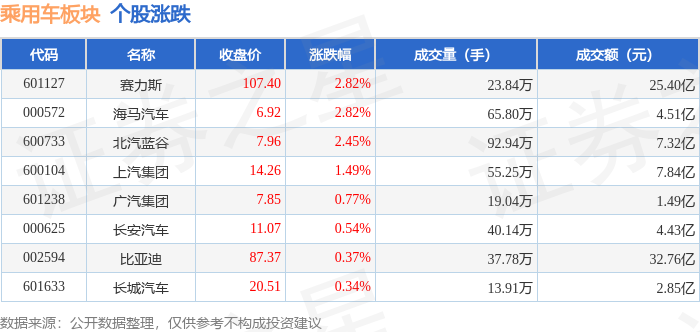
乘用车板块2月3日涨1.12%,赛力斯领涨,主力资金净流出1.17亿元
Zheng Xing Xing Ye Ri Bao· 2026-02-03 09:03
Group 1 - The passenger car sector increased by 1.12% on February 3, with Seres leading the gains [1] - The Shanghai Composite Index closed at 4067.74, up 1.29%, while the Shenzhen Component Index closed at 14127.1, up 2.19% [1] - Key stocks in the passenger car sector showed varied performance, with Seres and Haima Auto both rising by 2.82% [1] Group 2 - The net outflow of main funds in the passenger car sector was 117 million yuan, while retail investors saw a net inflow of 314 million yuan [1] - Detailed fund flow data indicated that Seres had a main fund net inflow of 172 million yuan, but retail investors had a net outflow of 85 million yuan [2] - BYD experienced a significant net outflow of 379 million yuan from main funds, despite a retail net inflow of 386 million yuan [2]