
黑芝麻智能

Search documents
港股异动 | 黑芝麻智能(02533)跌超4% 预计上半年亏损净额不超过8亿元
智通财经网· 2025-08-25 06:18
Core Viewpoint - Black Sesame Intelligence (02533) issued a profit warning, expecting a revenue of over RMB 250 million for the six months ending June 30, 2025, which represents a growth of over 38% compared to the same period in 2024, but anticipates a net loss of no more than RMB 800 million due to various factors including employee stock-based compensation and R&D expenses [1][1][1] Financial Performance - The company expects to record a revenue exceeding RMB 250 million for the six months ending June 30, 2025, marking a growth of over 38% year-on-year [1][1][1] - Anticipated net loss for the same period is projected to be no more than RMB 800 million [1][1][1] Cost Factors - The expected loss is primarily attributed to stock-based compensation expenses of no less than RMB 200 million due to employee awards [1][1][1] - Additional costs arise from R&D efforts in high-level assisted driving and solutions [1][1][1] - The conversion of preferred shares to common shares post-listing has led to a decrease in the fair value gains of financial instruments [1][1][1] Acquisition Progress - Black Sesame Intelligence is progressing with the acquisition of an AI systems chip and solutions business, with due diligence and auditing activities ongoing [1][1][1] - The target company continues to operate under its original management team, which is expected to remain post-acquisition and will be responsible for ongoing operations and management [1][1][1] - Discussions are actively taking place regarding corporate governance and performance targets for the target company after the acquisition [1][1][1]

中泰国际每日晨讯-20250825
ZHONGTAI INTERNATIONAL SECURITIES· 2025-08-25 03:39
Market Overview - The Hang Seng Index rose by 0.3% last week, closing at 25,339 points, while the Hang Seng Tech Index increased by 1.9% to 5,647 points[1] - Average daily trading volume increased by 3.6% to HKD 280.4 billion, with a net inflow of HKD 17.8 billion through the Stock Connect[1] - The real estate, utilities, energy, and materials sectors saw declines between 0.6% and 2.2%, while consumer discretionary and information technology sectors rose by 1.6%[1] Economic Dynamics - The US manufacturing PMI rose to 53.3, indicating expansion, while the services PMI slightly decreased to 55.4, remaining at a high level[2] - Price pressures persist, with the purchasing price index soaring to 67.1, indicating ongoing inflation risks[2] Industry Insights - Xpeng Motors reported better-than-expected earnings, leading to a 13.1% increase in its stock price last Friday[3] - The healthcare sector saw a 0.9% increase in the Hang Seng Healthcare Index, with notable performances from companies like China Biologic Products and WuXi Biologics[4] Company Performance - Yancoal Australia reported a 61.2% drop in net profit for H1 FY25, with revenue down 14.8% to AUD 268 million[6] - The company expects a rebound in coal prices in H2 FY25, with average prices projected to decline by 7.1% for thermal coal and 20.7% for metallurgical coal[7] Forecast Adjustments - Target price for Yancoal Australia adjusted from HKD 38.55 to HKD 34.70, reflecting a 22.9% upside potential[9] - HanSung Pharmaceutical's revenue for H1 2025 increased by 14.3% to RMB 7.43 billion, with net profit rising by 15.0% to RMB 3.14 billion[12]
智驾芯片平台竞争白热化,本土方案商加速技术迭代
Zhong Jin Zai Xian· 2025-08-25 02:57
Group 1 - The demand for intelligent driving is driving fierce competition among chip platforms, with local companies like Horizon Robotics and Black Sesame Intelligence releasing next-generation smart driving chips that achieve breakthroughs in computing power and energy efficiency [1] - The latest smart driving chips maintain cost advantages while significantly improving computing power density, with Horizon's Journey 6 series chips supporting 20 TOPS computing power, a 60% performance increase and a 25% reduction in power consumption compared to the previous generation [1] - The rapid iteration of chip platforms is enhancing the performance of intelligent driving systems and reducing costs, enabling mainstream chips to support advanced features like high-speed NOA and memory parking, which will accelerate the penetration of intelligent driving functions into economic models priced at 100,000 to 150,000 yuan [1] Group 2 - The market share of local intelligent driving chips has surpassed 40% in the first half of this year, with expectations to reach 50% by 2026, indicating the growing importance of local supply chains in the intelligent driving sector [1] - The collaboration between solution providers like Four-dimensional Map New and chip companies will further promote the popularization of intelligent driving technology and cost optimization [1] - The intelligent driving chip platform is evolving towards high performance, low power consumption, and low cost, laying a solid foundation for the large-scale commercialization of intelligent driving technology [2]

18C特专科技专题:2025年仍无一单18C企业上市 希迪智驾估值90亿亏损却高达5.8亿元
Xin Lang Zheng Quan· 2025-08-25 02:55
Core Viewpoint - The market for 18C specialized technology companies in Hong Kong has shifted dramatically from a period of high demand in 2024 to a current state where no IPOs have been completed in 2025, highlighting the challenges these companies face in commercial validation and market expectations [1][9]. Group 1: Market Dynamics - In 2024, 18C specialized technology companies like Jingtai Technology and Hezhima Intelligent were highly sought after, but by 2025, the market has seen no completed IPOs among the 12 companies that have submitted applications [1][9]. - The Hong Kong Stock Exchange implemented reforms on September 1, 2024, lowering the minimum market capitalization requirements for specialized technology companies, with commercialized companies' thresholds reduced from HKD 60 billion to HKD 40 billion [1][9]. Group 2: Company Performance - Three listed 18C companies have shown varied performance, with Jingtai Technology's stock price increasing by 93% since its IPO, while Hezhima Intelligent has seen a decline of 31% [2][6]. - Jingtai Technology raised a total of HKD 32.2 billion through two rounds of financing, significantly exceeding its IPO fundraising of HKD 10.4 billion [4]. - Hezhima Intelligent's stock price fell sharply after a secondary offering at a discount to its IPO price, reflecting concerns over its financial performance and lack of clarity in earnings forecasts [6]. Group 3: Financial Metrics - Jingtai Technology's R&D spending was substantial, with 2024 expenditures at HKD 4.18 billion, representing 157% of its revenue [8]. - Hezhima Intelligent reported a revenue of RMB 4.74 billion for 2024, but also disclosed a significant adjusted net loss of RMB 13.04 billion, raising questions about its profitability despite revenue growth [6][11]. - The company Yujiang, despite being the smallest at IPO with a market cap of HKD 75 billion, has seen its stock price rise by 188%, although its financial performance remains weak with a net loss of RMB 0.95 billion [7][10]. Group 4: Future Outlook - The 12 companies that have submitted IPO applications in 2025 have met the commercial revenue threshold of HKD 2.5 billion, but many are struggling with weak fundamentals and unclear commercialization paths [11]. - Companies like Xidi Zhijia and Wuyi Vision are facing regulatory pressures and have yet to receive feedback from the securities regulatory authority, indicating potential challenges in their IPO processes [12].

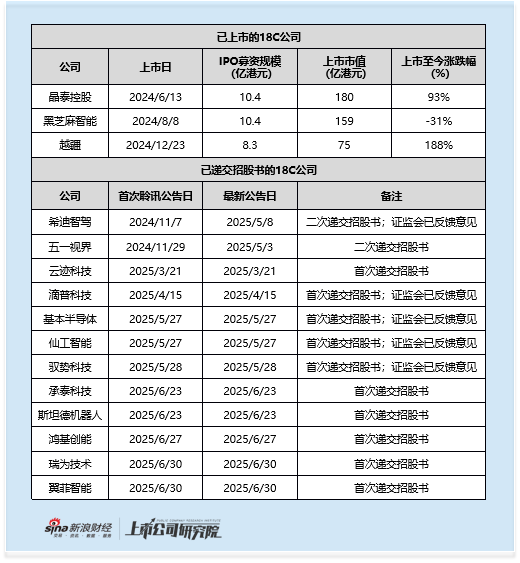
18C特专科技专题:越疆上市涨超188% 业绩表现平平 研发投入仅不到20%
Xin Lang Zheng Quan· 2025-08-25 02:55
Core Viewpoint - The Hong Kong stock market has seen a significant shift in the IPO landscape for specialized technology companies, particularly those in AI, semiconductors, and autonomous driving, with no successful IPOs for 18C companies in 2025 despite initial enthusiasm in 2024 [1][9]. Group 1: Market Dynamics - In 2024, 18C specialized technology companies were highly sought after, but by 2025, the market has not seen any completed IPOs among the 12 companies that have submitted applications [1][9]. - The Hong Kong Stock Exchange implemented reforms on September 1, 2024, lowering the minimum market capitalization requirements for 18C companies, with commercialized companies' thresholds reduced from HKD 60 billion to HKD 40 billion, and non-commercialized companies from HKD 100 billion to HKD 80 billion [1][9]. Group 2: Company Performance - Three listed 18C companies have been active in secondary market financing, with Crystal Technology raising HKD 32.2 billion through two rounds of fundraising, significantly exceeding its IPO fundraising scale [4]. - Black Sesame Intelligence has experienced a 31% decline in stock price since its IPO, despite a positive earnings forecast, with actual performance falling short of market expectations [6]. - Yujiang, the smallest company by market capitalization at IPO, has seen its stock price increase by 188%, but its financial performance remains weak, raising concerns about its R&D investment levels [7][8]. Group 3: Financial Metrics - Crystal Technology's R&D expenditure was HKD 4.18 billion in 2024, accounting for 157% of its revenue, while Black Sesame Intelligence's R&D spending was HKD 14.35 billion, representing 302.6% of its revenue [8]. - Yujiang's R&D expenditure was only HKD 0.72 billion in 2024, which is just 19.2% of its revenue, indicating a potential deviation from the core attributes of specialized technology companies [8]. Group 4: IPO Challenges - Despite the lowered thresholds for IPOs, many companies face challenges due to weak fundamentals and unclear commercialization paths, with 9 out of 12 companies only recently meeting the commercialization revenue threshold [11]. - Companies like Xidi Zhijia and Wuyi Vision have submitted their applications again but have not made significant progress, reflecting ongoing regulatory pressures [12].
18C特专科技专题:黑芝麻智能为唯一破发企业 2024年业绩预告掩藏亏损情况
Xin Lang Zheng Quan· 2025-08-25 02:53
Group 1 - The core viewpoint of the articles highlights the significant shift in the Hong Kong stock market regarding the 18C specialized technology companies, with a notable decline in IPO activity and increasing challenges for these companies to commercialize successfully [1][9][11] - In 2024, the Hong Kong Stock Exchange implemented reforms that lowered the minimum market capitalization requirements for 18C companies, with commercialized companies' threshold reduced from HKD 60 billion to HKD 40 billion, and non-commercialized companies from HKD 100 billion to HKD 80 billion [1][9] - Despite the lowered thresholds, the market has seen no successful IPOs for 18C companies in 2025, with 12 companies having submitted applications but facing significant hurdles in the current market environment [9][11] Group 2 - Three listed 18C companies have engaged in active fundraising through secondary offerings, with Crystal Technology raising a total of HKD 32.2 billion, significantly exceeding its IPO fundraising scale [4] - Black Sesame Intelligence has experienced a 31% decline in stock price since its IPO, despite a positive earnings forecast, indicating a disconnect between market expectations and actual performance [6] - Yujiang, the smallest company by market capitalization at IPO, has seen its stock price increase by 188%, yet its financial performance remains weak, raising concerns about its sustainability as a specialized technology firm [7][11] Group 3 - The financial performance of the listed 18C companies shows a disparity between revenue growth and profitability, with many companies struggling to maintain a balance between innovation and short-term financial results [12] - Research and development expenditures among the companies vary significantly, with Crystal Technology and Black Sesame Intelligence investing heavily compared to Yujiang, which has reduced its R&D spending [8][12] - The overall market sentiment towards 18C companies remains cautious, as evidenced by the lack of successful IPOs and the challenges faced by companies in meeting both market expectations and regulatory requirements [9][11]
18C特专科技专题:晶泰科技上市后一个月内两次闪电配售 增发规模为IPO规模三倍
Xin Lang Zheng Quan· 2025-08-25 02:50
Core Viewpoint - The Hong Kong stock market has seen a significant shift in the IPO landscape for specialized technology companies, particularly those in AI, semiconductors, and autonomous driving, with no successful IPOs for 18C companies in 2025 despite previous enthusiasm in 2024 [1][9]. Group 1: Market Dynamics - In 2024, 18C specialized technology companies were highly sought after, but by 2025, the market has not seen any completed IPOs among the 12 companies that have submitted applications [1][9]. - The Hong Kong Stock Exchange implemented reforms on September 1, 2024, lowering the minimum market capitalization requirements for specialized technology companies, with commercialized companies' thresholds reduced from HKD 60 billion to HKD 40 billion [1][9]. Group 2: Company Performance - Three listed 18C companies have shown varied performance, with Crystal Technology Holdings experiencing a 93% increase since its IPO, while Black Sesame Intelligence has seen a 31% decline [2][6]. - Crystal Technology raised a total of HKD 32.2 billion through two rounds of financing, significantly exceeding its IPO fundraising [4]. - Black Sesame's performance has been hindered by a lack of clarity in its earnings report, leading to a drop in stock price post-IPO [6]. Group 3: Financial Metrics - Crystal Technology's R&D spending has been substantial, with 2024 expenditures at HKD 4.18 billion, representing 157% of its revenue [8]. - In contrast, the R&D spending of other companies like Chengdian is significantly lower, raising concerns about their innovation capabilities [8]. - The financial outlook for companies like Xi Di Zhijia shows a revenue increase of 207% but a widening loss, raising market skepticism about its sustainability [11]. Group 4: Future Outlook - Despite the lowered thresholds for IPOs, many companies still face challenges due to weak fundamentals and unclear commercialization paths [11]. - The ongoing regulatory scrutiny and market conditions may further complicate the IPO process for the remaining 12 companies [12].
智驾免费背后车企的经济账
Zhong Guo Qi Che Bao Wang· 2025-08-25 02:30
Core Viewpoint - The automotive industry is experiencing a shift towards "intelligent driving equality," leading to discussions on whether advanced driving assistance systems should be charged or offered for free [2][6]. Group 1: Industry Trends - The transition from 2G to 5G has made mobile data services a basic consumer good, influencing the automotive sector to consider similar models for intelligent driving features [2]. - Companies like BYD are advocating for "intelligent driving equality," aiming to make advanced driving technologies accessible to a broader consumer base [3][4]. - The introduction of various intelligent driving solutions, such as BYD's "Tian Shen Zhi Yan" and XPeng's AI driving features, reflects a trend towards standardizing these technologies across all vehicle models [3][4]. Group 2: Business Models - The industry is divided into two main camps regarding the commercialization of intelligent driving: those advocating for free access and those supporting a paid model [6][7]. - Tesla and Huawei represent the "charging camp," focusing on monetizing software services through one-time purchases or subscriptions, which has proven to be a lucrative model [6][7]. - A middle-ground approach is emerging, where companies embed hardware and offer software on a subscription basis, balancing hardware sales with potential software revenue [7][8]. Group 3: Cost Considerations - The cost of hardware for advanced driving systems is significant, with estimates ranging from 15,000 to 30,000 yuan per vehicle, impacting the profitability of companies adopting free models [9][10]. - R&D costs for advanced driving technologies are substantial, with leading companies investing billions annually, necessitating a sustainable business model to recoup these investments [9][10]. - The pressure to offer free intelligent driving features is leading to cost-cutting measures within the supply chain, affecting suppliers' margins [10][11]. Group 4: Future Outlook - The sustainability of the "intelligent driving free" model is under scrutiny, as companies must find a balance between cost absorption and future revenue generation [11][12]. - Some companies are beginning to see success through cost reduction strategies and scaling, indicating a potential path to profitability [12]. - The industry is expected to evolve towards a model where user experience and real value become the primary competitive factors, rather than just pricing strategies [13].



港股开盘:恒指涨1.06%,恒生科指涨1.49%,蔚来涨超14%,东风集团股份宣布私有化跳空大涨近70%
Sou Hu Cai Jing· 2025-08-25 01:35
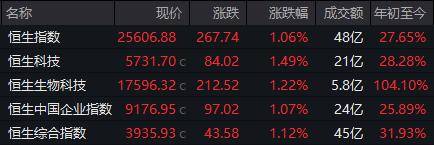
Market Performance - The Hang Seng Index opened up by 1.06% at 25,606.88 points, with the Hang Seng Tech Index rising by 1.49% to 5,731.7 points, and the China Enterprises Index increasing by 1.07% to 9,176.95 points [1][2] - Major tech stocks saw significant gains, with Alibaba up 2.03%, Tencent up 1.42%, and JD.com up 2.14% [2] Company News - Sunshine Insurance reported a total premium income of 80.814 billion yuan, a year-on-year increase of 5.7%, and a net profit of 3.389 billion yuan, up 7.8% [6] - China Coal Energy's revenue decreased by 19.9% to 74.436 billion yuan, with a net profit drop of 31.5% to 7.325 billion yuan [6] - TCL Electronics saw a revenue increase of 20.4% to 54.777 billion yuan, with a net profit growth of approximately 67.8% to 1.09 billion yuan [6] - Chongqing Bank reported interest income of approximately 15.37 billion yuan, up 6.72%, and a net profit of about 3.19 billion yuan, up 5.39% [6] - Huachen Automotive's net profit increased by 15% to 1.7 billion yuan, with revenue rising by 8.4% to 5.617 billion yuan [7] - Black Sesame Intelligence issued a profit warning, expecting a mid-term loss not exceeding 800 million yuan [8] - Greentown China reported a profit attributable to shareholders of 210 million yuan, a decrease of 89.74% year-on-year [9] - Zhaojin Mining reported a profit attributable to shareholders of approximately 1.44 billion yuan, an increase of about 160.44% [10] Institutional Insights - China Galaxy Securities noted that the potential for a Federal Reserve rate cut could lead to increased foreign capital inflow into the Hong Kong stock market, suggesting a focus on sectors with better-than-expected interim performance and those benefiting from favorable policies [11] - Huatai Securities indicated that foreign capital may continue to increase allocation to the Chinese market due to improving domestic fundamentals and potential appreciation of the RMB [12]

鲍威尔加入鸽派阵营 东风集团股份拟被溢价私有化
Xin Lang Cai Jing· 2025-08-24 23:24
Company News - Sunshine Insurance reported a total premium income of 80.814 billion yuan, a year-on-year increase of 5.7%; net profit reached 3.389 billion yuan, up 7.8% [8] - China Coal Energy recorded a revenue of 74.436 billion yuan, a year-on-year decrease of 19.9%; net profit was 7.325 billion yuan, down 31.5% [9] - TCL Electronics achieved a revenue of 54.777 billion HKD, a year-on-year increase of 20.4%; net profit was 1.09 billion HKD, up approximately 67.8% [10] - Jianfa International Group reported a revenue of 34.17 billion yuan, a year-on-year increase of 4.3%; net profit was 914 million yuan, up 11.8% [11] - Chongqing Bank's interest income was approximately 15.37 billion yuan, a year-on-year increase of 6.72%; operating income was 7.527 billion yuan, up 8.24%; net profit was approximately 3.19 billion yuan, up 5.39% [12] - Times Electric reported a revenue of approximately 12.214 billion yuan, a year-on-year increase of 17.95%; net profit was approximately 1.6715 billion yuan, up 12.93% [13] - CITIC Resources recorded a revenue of 9.382 billion HKD, a year-on-year increase of 137.9%; net profit was 152 million HKD, down 57% [14] - Brilliance China reported a net profit of 1.7 billion yuan, a year-on-year increase of 15%; revenue was 561.7 million yuan, up 8.4% [15] - Zhaojin Mining reported a net profit of approximately 1.44 billion yuan, a year-on-year increase of approximately 160.44% [17] - Greentown China reported a profit attributable to shareholders of 210 million yuan, a year-on-year decrease of 89.74% [16] Industry Insights - The semiconductor, media and entertainment, and telecommunications equipment sectors showed significant strength, while the financial, real estate, home appliance, and coal industries experienced some pullback [7] - The rapid growth of intelligent computing demand is driven by the development of artificial intelligence, with China's total computing power scale growing at an annual rate of around 30% [3] - The Ministry of Industry and Information Technology plans to guide local areas in the reasonable layout of intelligent computing facilities to improve supply quality and meet the needs of emerging and future industries [3] - The internet platform pricing behavior rules aim to regulate pricing behaviors, protect consumer and operator rights, and promote healthy development of the platform economy [4]
