奈雪的茶

Search documents
淘宝和饿了么将上线团购业务
Guan Cha Zhe Wang· 2025-09-19 07:44
Core Insights - Alibaba's Taobao Flash Sale and Ele.me are launching an in-store merchant group buying business, initially focusing on food and beverage offerings [1] - The pilot program for the group buying service will start on September 20 in key business districts of Shanghai, Shenzhen, and Jiaxing, with plans to expand to major first- and second-tier cities nationwide [1] - The group buying service will feature a unified supply from Taobao Flash Sale and Ele.me, accessible through Taobao, Alipay, and Gaode, which are Alibaba's major traffic platforms [1] Group Buying Business Details - The first batch of group buying categories includes high-frequency consumer items such as beverages, Chinese cuisine, pastries, fast food, and local snacks [1] - Notable brands participating in the initial launch include national chains like Nayuki Tea, Zunbao Pizza, and Tao Tao Ju, as well as local brands like Xunxiangji and Xuji Seafood [1] - The team responsible for the in-store group buying business is primarily based at Ele.me, consisting of several hundred members [1] Strategic Moves by Alibaba - On September 10, Alibaba's Gaode launched the world's first travel behavior-based ranking product, Gaode Street Ranking, indicating a strategic push into the in-store business [1] - This initiative aims to reshape the evaluation system for offline services, positioning Gaode, which has 170 million daily active users, as a super entry point for lifestyle services [1] - Alibaba is intensifying its focus on in-store business development, reflecting a broader strategy to enhance its service offerings in the offline market [1]



传淘宝闪购和饿了么将上线到店的商家团购业务
智通财经网· 2025-09-19 07:33
Core Insights - Alibaba's Gaode Map has launched the "Gaode Street Ranking," and within 10 days, Taobao Flash Sale and Ele.me will introduce a merchant group buying service, prioritizing dining group purchases [1] - The group buying service will start on September 20 in Shanghai, Shenzhen, and Jiaxing, targeting major commercial areas, with plans to expand to first- and second-tier cities nationwide [1] - The service aims to leverage the peak order day of Taobao Flash Sale's instant delivery service, coinciding with the Golden Week holiday traffic surge [1] Company Initiatives - Taobao Flash Sale and Ele.me will offer the same group buying deals across three major platforms: Taobao, Alipay, and Gaode, maximizing traffic within Alibaba's ecosystem [1] - The initial group buying categories will include high-frequency consumer items such as beverages, Chinese cuisine, pastries, fast food, and local snacks [1] - Notable brands participating in the initial rollout include national chains like Nayuki Tea and Domino's Pizza, as well as local brands like Xunxiangji and Xuji Seafood [1]
一大批奶茶店,正陷入倒闭风波
Hu Xiu· 2025-09-19 07:29
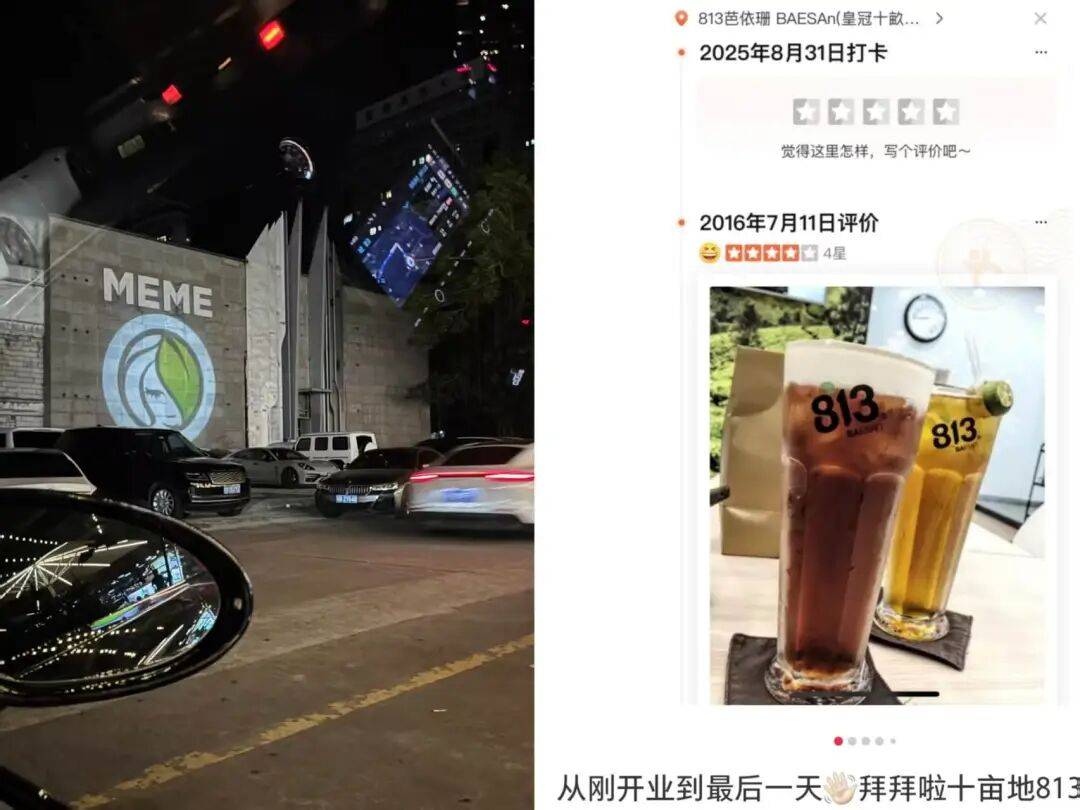
Core Viewpoint - The recent wave of closures among both established and emerging bubble tea brands indicates a significant market reshaping, transitioning from quantity-driven expansion to a focus on quality and operational efficiency [1][18][31]. Group 1: Brand Closures - Numerous bubble tea brands, including the newly popular PinkShake and the long-standing 813 Baishan, have recently closed stores, with PinkShake shutting down all locations just over a year after opening [2][3][4]. - Seven Bus, once a leading brand in Xiamen, has seen its store count plummet from over 400 to fewer than 20, highlighting the rapid decline of even previously successful brands [9]. - OONE CCUP also announced the closure of its Ningbo store just a year after opening, reflecting a broader trend of closures across the industry [10]. Group 2: Market Trends - The bubble tea industry is experiencing a significant contraction, with 15.7 million stores disappearing in the past year, marking the highest closure rate in the sector [17]. - As of mid-2025, the total number of bubble tea stores across 26 major brands has only increased by 858, indicating a stagnation in growth [16]. - The market is shifting from a growth phase to a consolidation phase, with many mid-tier brands facing closure while top brands continue to expand [11][15]. Group 3: Financial Performance - Nayuki Tea reported a revenue of 2.178 billion yuan in the first half of 2025, a 14.4% decrease year-on-year, primarily due to the closure of underperforming stores [13]. - The company closed 160 stores in the first half of 2025, including 132 direct-operated and 28 franchise locations, as part of its restructuring efforts [14]. Group 4: Competitive Landscape - The competitive landscape is increasingly defined by quality and operational efficiency rather than mere expansion, with brands needing to focus on supply chain management and product differentiation to survive [31][32]. - The market is witnessing a shift towards "survival of the fittest," where only brands that can adapt to changing consumer preferences and maintain quality will thrive [18][21].
餐饮商家,集体上演“擦边餐”
投中网· 2025-09-19 02:37
Core Viewpoint - The article discusses the rise of "borderline economy" in the restaurant industry, where dining experiences are increasingly combined with entertainment elements to attract younger consumers, reflecting a shift in consumer preferences towards social and interactive dining experiences [5][10]. Summary by Sections Emergence of "Borderline Economy" - The restaurant industry is witnessing a trend where dining is paired with performances, as seen in establishments like Haidilao, which has introduced night-themed dining experiences featuring DJs and interactive performances to draw in customers [5][7]. - This shift is a response to the challenges of attracting young consumers, as traditional food offerings alone are no longer sufficient [5][9]. Consumer Experience and Engagement - Young consumers, particularly those born in the 1990s and 2000s, are seeking not just food but a comprehensive experience that includes social interaction and entertainment [9][10]. - The popularity of Haidilao's night-themed restaurants has led to significant social media engagement, with over 10 million views on Xiaohongshu and 9 million on Douyin [7]. Historical Context and Evolution - The combination of dining and entertainment is not new, with historical precedents in ancient marketplaces and tea houses, but current implementations are more aggressive and visually oriented [8]. - The article highlights that while entertainment can enhance the dining experience, it cannot replace the fundamental quality of food [12][19]. Risks and Challenges - The article points out that while the "borderline" approach may generate short-term interest, it poses risks for long-term sustainability, as seen in the decline of restaurants like Staneemeehoi and Hooters, which relied heavily on provocative marketing strategies [12][13]. - Regulatory scrutiny is increasing, with establishments facing penalties for inappropriate entertainment content, indicating a potential backlash against overly provocative dining experiences [12][14]. Alternative Approaches - A new trend of culturally rich performances is emerging, where dining experiences incorporate local traditions and culinary practices, providing a more authentic and sustainable model for attracting customers [17][19]. - The article emphasizes that successful "performance dining" should enhance rather than overshadow the quality of food, ensuring that the core dining experience remains appealing [20].

奶茶品牌,开卷养生
Guan Cha Zhe Wang· 2025-09-18 12:45
Core Insights - The new tea beverage industry is undergoing a transformation from "tasty" to "healthy," with health and wellness becoming mainstream consumer demands [1][2] - The market size of China's new tea beverage industry is projected to reach 354.72 billion yuan in 2024 and exceed 400 billion yuan by 2028 [1] - Over 40% of consumers indicate that "health risks" are a primary reason for potentially reducing their purchases of ready-made tea beverages [1] Industry Trends - The competition in the new tea beverage sector is shifting from a "traffic battle" to a "value battle," with consumers increasingly concerned about health attributes and nutritional content [2] - A survey shows that 49.4% of consumers worry about health impacts from new tea beverages, while 42.2% fear weight gain [2] - The rise in mental health issues, such as anxiety and depression, is influencing consumer preferences towards healthier beverage options [2] Product Innovations - Brands like "沪上阿姨" are launching initiatives such as the "五色慢养" plan, which combines traditional health wisdom with modern tea experiences [3][4] - New products emphasize health benefits, such as high fiber and low burden, with examples including "五黄高纤慢养瓶" and "五黑焕发慢养瓶" [4] - Other brands are also innovating, with "喜茶" introducing a "light milk tea" series and "奈雪的茶" focusing on functional beverages [4] Challenges and Opportunities - The industry faces challenges in balancing health benefits with taste, as reducing sugar and fat may impact flavor [5] - There is a lack of unified standards for "healthy tea beverages," leading to quality inconsistencies in the market [5] - Consumer education on health and nutrition is necessary to correct misconceptions about healthy eating [5] Future Outlook - The competition in the tea beverage industry will evolve to encompass product innovation, supply chain management, standardization, and consumer education [6]

什么样的商业模式最有价值?
创业家· 2025-09-18 10:13
Core Viewpoint - The most valuable business model for product creation is the "long tail on both ends," where buyers are small and medium-sized enterprises (SMEs) and sellers are long-tail suppliers. This model maximizes value, as exemplified by Alibaba. Conversely, the least valuable model is "big on both ends," serving only large clients [1]. Group 1: Product Innovation and Market Insights - The success of Japanese manufacturing since the 1980s serves as a model for emerging economies, emphasizing the transformation of technology into user-perceived value. For instance, Sony's Walkman addressed the need for portable music, while Uniqlo's success stemmed from comfortable basics and innovative materials [6]. - AI is reshaping the essence of consumption by redefining product value through algorithms. Future champions in consumption will be those who perfectly integrate demand with algorithms, as seen in products like Plaud's recording card and Haivivi's toys [6]. - The course will explore how to innovate products and manage supply chains by learning from companies like Sony, Uniqlo, and Muji, focusing on turning technology into user-friendly products [7]. Group 2: Strategies for Market Competition - In a saturated market, the course will analyze how to become a new leader in niche segments amidst brand competition. The rise of AI algorithms will be discussed in the context of creating new product categories [8]. - Globalization requires Chinese brands to deeply integrate local market needs with Chinese supply chain capabilities, moving from simple exportation to localized coexistence [9][10]. - The course will highlight the importance of balancing localization and standardization in global markets, emphasizing that successful overseas expansion involves understanding and addressing local consumer needs [10][11]. Group 3: Course Structure and Expert Insights - The course spans three days, focusing on product innovation, market strategies, and global expansion. It features insights from industry leaders like 牛文文, 朱啸虎, and 前田悟, who will share their expertise on leveraging AI and consumer insights for growth [12][13][17]. - Participants will learn about the importance of rapid market testing and the need to avoid the illusion of technical perfection, emphasizing the necessity of validating demand quickly [14]. - The course will also cover how to maintain product quality while ensuring affordability, as demonstrated by Muji's product development philosophy [22].


餐饮商家,集体上演“擦边餐”
Xin Lang Cai Jing· 2025-09-18 04:00
Core Insights - The article discusses the emerging trend of combining dining with entertainment in the restaurant industry, particularly focusing on the "borderline economy" where restaurants incorporate performances to attract customers [1][6][8] - The shift in consumer preferences, especially among younger generations, emphasizes the need for a comprehensive experience that includes social interaction and entertainment, rather than just food [4][12] Industry Trends - The integration of performance elements in dining experiences is rapidly being adopted across various restaurant brands, such as Hai Di Lao and others, to enhance customer engagement and drive foot traffic [1][2][3] - Hai Di Lao has launched a "night snack" theme store that has gained significant attention, with over 10 million views on Xiaohongshu and 9 million on Douyin, leading to the opening of nearly 30 such stores in major cities [2][3] Financial Performance - The restaurant industry is facing significant financial pressures, with several well-known brands reporting losses in 2024, including Nayuki's Tea with a net loss of 919 million yuan and Xiaobing Xiaobing with a revenue of 4.755 billion yuan and a total loss of 401 million yuan [3][6] Consumer Behavior - The "experience generation" of consumers, particularly those born in the 1990s and 2000s, seeks not only food but also social and entertainment experiences, driving restaurants to innovate beyond traditional offerings [4][5] - The perception of value has shifted, with consumers willing to pay for multi-faceted experiences that combine dining with entertainment, as seen in the popularity of Hai Di Lao's new offerings [5][12] Risks and Challenges - The reliance on "borderline" entertainment strategies poses risks, as evidenced by the closure of previously successful establishments like Staneemeehoi in Bangkok and Hooters in the U.S., highlighting the potential pitfalls of such marketing approaches [6][7] - Regulatory scrutiny is increasing, with incidents of restaurants being penalized for inappropriate performances, indicating that the sustainability of the "borderline economy" is uncertain [7][8] Future Directions - A new trend of "positive performance" is emerging, where restaurants incorporate culturally rich and meaningful entertainment that enhances the dining experience without compromising food quality [9][10] - Successful models are focusing on integrating local culture and culinary traditions into performances, creating a more authentic and engaging dining experience [10][12]
国证国际港股晨报-20250917
Guosen International· 2025-09-17 06:33
Group 1 - The core viewpoint of the report indicates a divergence in the Hong Kong stock indices, with a high probability of interest rate cuts by the Federal Reserve [2][6] - The Hong Kong stock market saw mixed performance, with the Hang Seng Index down by 0.03%, the Hang Seng China Enterprises Index up by 0.02%, and the Hang Seng Tech Index up by 0.56% [2] - The report highlights a significant increase in market turnover, reaching HKD 294.07 billion, with short-selling accounting for 12.75% of total trading volume [2] Group 2 - The report anticipates a 7.0% year-on-year increase in domestic tourism revenue per person during the National Day holiday, with an 8.3% increase in the number of trips [9] - It notes that the average spending per trip is expected to decline slightly by 1%, a reduction from earlier quarters [9] - The report emphasizes the importance of customer spending recovery as a key indicator for the tourism sector's performance [8] Group 3 - The report identifies strong performance in the consumer sector, with notable increases in stock prices for companies like Ctrip Group (up 4.09%) and Meituan (up 3.03%) [4] - The report also highlights a robust performance in the robotics sector, driven by the announcement of an open-source architecture by Yush Robot, leading to significant stock price increases for companies like DCH Holdings (up 16.74%) [4] - Conversely, the internet healthcare sector experienced declines, with stocks like Ping An Good Doctor down by 5.44% [5] Group 4 - The report indicates that the U.S. stock market experienced a collective decline, with the S&P 500 down by 0.13% and the Nasdaq down by 0.07% [6] - It mentions strong retail sales data in the U.S., with a 0.6% month-on-month increase in overall retail sales, which alleviated recession concerns [6] - The report notes that the market is anticipating a 95% probability of a 25 basis point rate cut by the Federal Reserve [6]
为什么老板一定要亲自干点“脏活”
虎嗅APP· 2025-09-16 14:05
Core Viewpoint - The article emphasizes the disconnect between the narratives presented by company executives and the actual operations within their organizations, highlighting the risks for investors who may be misled by these grand narratives [6][7]. Group 1: Executive Awareness and Accountability - Many executives may not fully understand the day-to-day operations of their companies, leading to a gap between their perceptions and reality [14][15]. - The article cites the Boeing 737 MAX crisis as an example where executives were unaware of serious safety issues due to bureaucratic reporting structures [16][17]. - It argues that CEOs should engage directly with lower-level operations to maintain accountability and avoid detachment from the realities of their businesses [25]. Group 2: Investor Risks - Investors often rely on information provided by executives, which can be misleading, as they may be caught up in the same narratives as the executives [7]. - The article warns that a significant portion of corporate information is filtered through executives, making it crucial for investors to critically assess the validity of these narratives [7]. - It highlights the case of Wells Fargo's fake accounts scandal, where executives claimed ignorance of widespread misconduct, suggesting a willful ignorance of operational realities [21][22]. Group 3: Corporate Culture and Ethics - The article discusses the importance of corporate culture and the potential for unethical practices to arise when executives prioritize results over processes [20][24]. - It suggests that high-pressure sales environments can lead to unethical behavior, as seen in the Wells Fargo case, where employees felt compelled to meet unrealistic targets [23]. - The author expresses concern over CEOs who become overly idealistic and disconnected from the operational challenges faced by their companies [18][19].


六大新茶饮巨头半年“捞金”超55亿,靠外卖撑起“半边天”?
Xin Lang Cai Jing· 2025-09-16 08:20
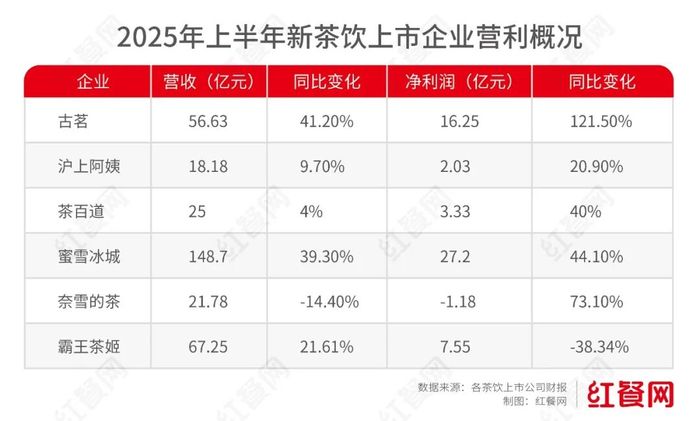
Group 1 - The core viewpoint of the article highlights the strong performance of major tea beverage brands in the first half of 2025, with total revenue exceeding 33 billion yuan and net profits surpassing 5.5 billion yuan despite a challenging market environment [1][2] - Six major tea brands reported significant revenue growth, with Mixue Ice City achieving 14.87 billion yuan in revenue and 2.72 billion yuan in net profit, reflecting year-on-year increases of 39.3% and 44.1% respectively [2][3] - The takeaway from the performance indicates that delivery services have become a crucial driver for revenue growth among tea brands, with platforms like JD.com reporting over 100 million orders for brands like Mixue Ice City within four months of launching [5][6] Group 2 - The industry is witnessing a trend of closing unprofitable stores, with over 2,500 franchise locations shut down by leading tea brands in the first half of the year, as companies shift focus from expansion to improving profitability [9][11] - Companies like Nayuki Tea and Guming have adopted strategies to enhance operational efficiency by closing underperforming stores while focusing on direct-operated models, resulting in improved sales performance [11][12] - The strategy of targeting lower-tier markets remains a priority, with brands like Guming increasing their store presence in second-tier and below cities, which now account for 81% of their total stores [12][13] Group 3 - Major tea brands are diversifying their product offerings, with coffee becoming a common strategic choice, as seen with Guming and others integrating coffee into their existing store formats [13][15] - Nayuki Tea has launched a new light food and beverage concept, expanding its product range to include healthy options and all-day dining, thereby broadening its consumer appeal [18] - The exploration of new store formats and product lines is seen as a key strategy for brands to capture additional market share and adapt to varying consumer needs across different city tiers [17][18]