Momenta

Search documents
净利暴跌近三成,宝马用电车背水一战
2 1 Shi Ji Jing Ji Bao Dao· 2025-08-04 10:13
Core Insights - BMW's sales in China continue to decline, exacerbated by tariff impacts, with a reported 15.5% drop in the first half of the year [2][3][7] Financial Performance - In the first half of 2025, BMW's global sales exceeded 1.2 million units, a slight decrease of 0.5% year-on-year [1] - Revenue for the first half of the year was €67.685 billion, down 8% year-on-year, while net profit fell by 29% to €4.015 billion [2] - The EBIT margin for the automotive business decreased by 2.4 percentage points to 6.2% [2] Market Performance - The Chinese market was the largest single market decline for BMW, with deliveries dropping to 318,000 units [2][7] - Despite overall declines, BMW's electric vehicle sales rose, with over 220,000 pure electric vehicles delivered, a 15.7% increase year-on-year [4] - In Europe, BMW's electric vehicle penetration rate reached 34.8%, with a market share close to 40% in the first half of the year [5] Strategic Initiatives - BMW is focusing on electric vehicle development, investing over €4 billion in R&D for new generation technologies and the Neue Klasse platform [6] - The company plans to launch 40 new models by 2027, emphasizing electric vehicles [6] - BMW is collaborating with local Chinese suppliers to enhance its technology offerings and adapt to local market demands [9] Challenges and Outlook - Tariff pressures are expected to continue affecting BMW's profitability, with a projected EBIT margin decline of approximately 1.25% for 2025 [9][10] - Competition from local Chinese brands is intensifying, with expectations of continued sales declines in the Chinese market [11]
技术补课、产品补齐、渠道补强,BBA蓄势反扑
Zhong Guo Qi Che Bao Wang· 2025-08-04 01:55
Core Insights - The German luxury car trio, BMW, Mercedes-Benz, and Audi (BBA), is facing unprecedented challenges in the transition to electric and intelligent vehicles, particularly in the Chinese market [2][7] - BBA is launching a comprehensive counterattack by collaborating with local tech firms, introducing electric models tailored for Chinese consumers, and enhancing their retail strategies [2][4][7] Intelligent Technology Development - BMW has partnered with Momenta to develop a China-specific intelligent driving solution, while Mercedes-Benz and Audi have also engaged with Momenta and Huawei, respectively [3] - BBA's strategies reflect different paces and considerations in their transformation, with Audi's collaboration with Huawei being the most extensive [3] - Sales data indicates a significant decline in BBA's performance in China, with BMW's sales down 15.5%, Mercedes-Benz down 14%, and Audi down 16.78% in early 2025 [3] Electric Vehicle Strategy - BBA is intensifying its electric vehicle (EV) offerings, with Mercedes-Benz planning to launch 10 pure electric models in the next two years, and BMW's Neue Klasse platform set to produce its first model in China by 2026 [4] - The electric vehicle strategy shows strong localization, with tailored designs and features for the Chinese market [4] - Despite maintaining a leading position in the fuel vehicle market, BBA's share in the 300,000 yuan and above segment has dropped from 72% in 2021 to 39% in 2025 [4] Channel and Service Innovation - BBA is transforming its retail strategies to enhance customer experience, with initiatives like Mercedes-Benz's EQ experience center and BMW's future mobility experience center [4] - The traditional dealership model is being re-evaluated to meet the demands of the electric vehicle era [4] Competitive Challenges - BBA faces significant challenges in building sustainable competitive advantages, including high costs, changing consumer perceptions, and the need for an integrated ecosystem [5][6] - The cost of BBA's electric models is generally 20% higher than that of domestic brands, with specific examples highlighting the cost disparity [6] - Consumer preferences are shifting towards intelligent technology, with 47% of younger buyers prioritizing smart features over brand prestige [6] Strategic Adjustments - BBA is adjusting its strategies in China by empowering local teams and establishing design centers to better understand consumer preferences [6][7] - These strategic shifts reflect a deeper recognition of the Chinese market, although the effectiveness of these changes will take time to assess [6][7]


销量遇冷、增收不增利,跨国车企在华开始“卷”智驾
Bei Jing Shang Bao· 2025-08-03 12:31
Core Insights - Major multinational automakers such as Volkswagen, Mercedes-Benz, and Nissan are facing dual challenges of declining sales and shrinking profits in the Chinese market in the first half of 2025 [1][3] - The rise of domestic new energy vehicle manufacturers has intensified competition, prompting many brands to adjust their strategies and slow down their electrification efforts [1][6] - Intelligent driving technology has emerged as a focal point for automakers to boost performance, leading to collaborations with Chinese companies like Huawei and Momenta [1][7] Sales and Profit Trends - The phenomenon of "increased revenue without increased profit" has become a common issue for major automakers in the first half of 2025, with significant sales declines reported across various brands [3][4] - Volkswagen delivered 1.31 million vehicles in the first half of 2025, a decrease of 2.3% year-on-year, while Mercedes-Benz's global sales fell by 8% to 1.0763 million vehicles [3][4] - Nissan's global sales in the first fiscal quarter of 2025 were 707,000 vehicles, down 10.1%, and the company reduced its production capacity in China from 1.5 million to 1 million vehicles due to a 12.2% sales drop [3][4] Financial Performance - Volkswagen's sales revenue remained stable at €158.4 billion, but its operating profit fell by about one-third to €6.7 billion, with a 29% decline in Q2 profit [4] - Stellantis reported a net income of €74.3 billion, down 13%, with a net loss of €2.3 billion compared to a net profit of €5.6 billion in the previous year [4] - General Motors experienced a slight revenue increase of 0.2%, but net profit decreased by 20.9% to $4.68 billion [5] Shift in Strategy - The competitive landscape has shifted, with traditional automakers needing to innovate and reshape their brands to adapt to the current market [1][9] - Many multinational companies are adopting a "parallel oil and electric" strategy, recognizing that internal combustion engine vehicles remain a significant source of revenue [6][7] - The transition to electrification is facing delays, with companies like Porsche and Audi scaling back their electric vehicle targets [7] Collaboration and Innovation - Collaborations with Chinese automotive supply chain companies are seen as a way for multinational automakers to leverage local innovation and enhance their competitiveness in the Chinese market [8] - The focus on intelligent driving technology is becoming a critical battleground, with many automakers partnering with Chinese tech firms to enhance their offerings [7][8] - Experts suggest that while these strategies may provide temporary relief, a fundamental shift in development strategy is necessary for long-term success in the Chinese market [8][9]
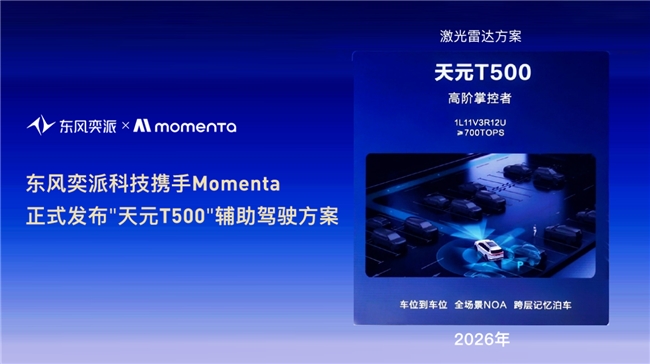
东风奕派科技携手Momenta正式发布“天元T500”辅助驾驶方案
Sou Hu Wang· 2025-08-03 07:55
Core Insights - Dongfeng Yipai Technology officially launched the "Tianyuan T500" advanced driving assistance system, developed in collaboration with Momenta, aimed at enhancing user experience in assisted driving [1][3] - The "Tianyuan T500" system utilizes a one-stage end-to-end flywheel model, providing comprehensive coverage for various driving scenarios including highways, parking, and urban environments, ensuring a safe and reliable driving experience [3] - The new model equipped with the "Tianyuan T500" system is expected to be released in 2026, indicating a strategic focus on future mobility solutions [3] Company Strategy - Dongfeng Yipai is building an ecosystem called "Yipai+" by collaborating with various partners, including leading technology service providers like Momenta, to enhance the new energy travel landscape [3] - The CEO of Momenta highlighted that the partnership with Dongfeng Yipai represents a significant milestone in the strategic transformation of Dongfeng Group towards electrification and intelligence, aiming for high-quality development in the Chinese automotive industry [3]
4000人了,我们搭建了一个非常全栈的自动驾驶社区!
自动驾驶之心· 2025-08-03 00:33
Core Viewpoint - The article discusses the current state and future prospects of the autonomous driving industry, highlighting the shift towards embodied intelligence and large models, while questioning whether traditional autonomous driving technologies are becoming obsolete [2][3]. Group 1: Industry Perspectives - Some professionals have transitioned away from autonomous driving, believing that the technology stack has become homogenized, with only end-to-end and large models remaining viable [2]. - Those still observing the field are reluctant to leave their current high-paying jobs and lack reliable resources in the embodied intelligence sector [3]. - Many individuals remain committed to the autonomous driving field, viewing it as the most promising path towards achieving general embodied intelligence [3]. Group 2: Industry Challenges - The current state of mass production in autonomous driving is perceived as somewhat chaotic, with existing solutions not yet fully refined before new ones are rushed to market [3]. - The article suggests that the past hype around autonomous driving may have been beneficial, allowing for a more focused approach to solidifying mass production capabilities [3]. Group 3: Future Directions - The future of mass production in autonomous driving is expected to be unified, multi-modal, and end-to-end, requiring full-stack talent who are knowledgeable in perception, planning, prediction, and large models [3]. - The community aims to bridge the gap between academia and industry, facilitating communication and collaboration to advance the field [3][6]. Group 4: Community Initiatives - The "Autonomous Driving Heart" knowledge platform has created a comprehensive ecosystem for sharing academic and industrial insights, including job opportunities and technical resources [5][12][14]. - The platform has organized various resources, including over 40 technical routes and numerous open-source projects, to assist both newcomers and experienced professionals in the field [5][15][16]. Group 5: Educational Resources - The community provides a well-structured entry-level technical stack and roadmap for beginners, as well as valuable industry frameworks and project plans for those already engaged in research [10][12]. - Continuous job postings and sharing of opportunities are part of the community's offerings, aimed at building a complete ecosystem for autonomous driving [14].
Momenta辅助驾驶方案,南半球首秀
Shang Hai Zheng Quan Bao· 2025-08-01 01:09
Core Insights - Momenta's IM AD driver assistance system has officially launched in Australia with the IM5 and IM6 models, marking the first deployment of its technology in the Southern Hemisphere [1] - The company has established partnerships with major global automakers, continuously increasing the number of cooperative models and delivery volumes [1][3] - Momenta aims to enhance its driver assistance solutions for global partners, including Zhiji, leveraging its end-to-end flywheel model [1][3] Company Developments - Momenta is one of the first companies to achieve mass production of end-to-end large models, with the IM AD system designed to quickly adapt to various driving environments, including Australia [3] - The company has previously collaborated with Zhiji to enter the UK market, showcasing the IM5 and IM6 models at the Goodwood Festival of Speed in July [3] - A strategic partnership with Uber was announced in May, focusing on introducing autonomous vehicles to the Uber platform and commercializing Robotaxi services in Europe by early 2026 [3] Strategic Direction - Momenta's product strategy is based on a "one flywheel, two legs" approach, combining data-driven intelligent driving assistance with autonomous Robotaxi development [5] - The company plans to launch an end-to-end flywheel model based on reinforcement learning in the second half of 2025, which will explore new driving behaviors in simulated environments [5] - Momenta aims to achieve L4-level autonomous driving with a focus on safety, targeting a safety standard at least ten times greater than human drivers [5] Industry Trends - Chinese autonomous driving companies are increasingly expanding internationally, with several firms, including Momenta, forming strategic partnerships with Uber to explore diverse market opportunities [7] - Companies like WeRide and RoboTaxi are rapidly scaling their operations, with WeRide's fleet in Abu Dhabi tripling since 2024 and plans for commercial operations in Dubai and Saudi Arabia [7][8] - Xiaoma Zhixing has obtained Robotaxi licenses in multiple countries and is advancing its commercial operations in Dubai, with plans for full autonomous operations by 2026 [8]
4000人了,死磕技术的自动驾驶黄埔军校到底做了哪些事情?
自动驾驶之心· 2025-07-31 06:19
Core Viewpoint - The article emphasizes the importance of creating an engaging learning environment in the field of autonomous driving and AI, aiming to bridge the gap between industry and academia while providing valuable resources for students and professionals [1]. Group 1: Community and Resources - The community has established a closed loop across various fields including industry, academia, job seeking, and Q&A exchanges, focusing on what type of community is needed [1][2]. - The platform offers cutting-edge academic content, industry roundtables, open-source code solutions, and timely job information, streamlining the search for resources [2][3]. - A comprehensive technical roadmap with over 40 technical routes has been organized, catering to various interests from consulting applications to the latest VLA benchmarks [2][14]. Group 2: Educational Content - The community provides a series of original live courses and video tutorials covering topics such as automatic labeling, data processing, and simulation engineering [4][10]. - Various learning paths are available for beginners, as well as advanced resources for those already engaged in research, ensuring a supportive environment for all levels [8][10]. - The community has compiled a wealth of open-source projects and datasets related to autonomous driving, facilitating quick access to essential materials [25][27]. Group 3: Job Opportunities and Networking - The platform has established a job referral mechanism with multiple autonomous driving companies, allowing members to submit their resumes directly to desired employers [4][11]. - Continuous job sharing and position updates are provided, contributing to a complete ecosystem for autonomous driving professionals [11][14]. - Members can freely ask questions regarding career choices and research directions, receiving guidance from industry experts [75]. Group 4: Technical Focus Areas - The community covers a wide range of technical focus areas including perception, simulation, planning, and control, with detailed learning routes for each [15][29]. - Specific topics such as 3D target detection, BEV perception, and online high-precision mapping are thoroughly organized, reflecting current industry trends and research hotspots [42][48]. - The platform also addresses emerging technologies like visual language models (VLM) and diffusion models, providing insights into their applications in autonomous driving [35][40].
独家丨前毫末智行产品副总裁蔡娜已加入Momenta
雷峰网· 2025-07-30 13:56
Core Viewpoint - The article discusses the recent hiring of Cai Na, a key employee from Haomo Zhixing, by Momenta, highlighting the strategic importance of her experience in passenger vehicles and autonomous logistics vehicles for Momenta's growth and development [1][2][6]. Group 1: Company Developments - Cai Na's addition to Momenta is seen as a significant recruitment move, given her background in product development at Haomo Zhixing, which is closely associated with Great Wall Motors [1][3]. - Since 2025, several executives from Haomo Zhixing have faced rumors of departure, indicating potential instability within the company [3]. - Haomo Zhixing was established in November 2019 and has been a key player in Great Wall Motors' intelligent driving initiatives, with significant early funding of nearly 1 billion yuan in A-round financing by the end of 2021 [4]. Group 2: Challenges Faced - Haomo Zhixing has encountered delays in mass production projects, such as the Weipai Mocha, which has cast doubt on its urban NOA (Navigation on Autopilot) progress [4]. - The company has struggled with strict decision-making processes within Great Wall Motors, leading to missed opportunities in the market [4][5]. - In 2024, Great Wall Motors made a substantial investment in Yuanrong Qihang, further complicating Haomo Zhixing's position as it competes for resources and attention [5]. Group 3: Momenta's Growth Prospects - Momenta has secured partnerships with major automotive brands, including BMW, to develop intelligent driving solutions tailored for the Chinese market, enhancing its market position [6]. - The company aims to achieve profitability by 2026 and is actively working on various projects, including investments in electric heavy trucks and autonomous driving technology [7]. - With a strong pipeline of mass production projects and delivery capabilities, Momenta is expected to generate significant revenue in 2024 [6][7].

投资400亿,投出12家上市公司,却不退出?首席投资官李黔揭秘比亚迪投资理念
Sou Hu Cai Jing· 2025-07-30 03:15
Core Insights - BYD's future investment strategy focuses on selective, substantial investments, emphasizing continuous support and empowerment of its portfolio companies [2][8] - The company has invested in approximately 100 projects with a total investment amount of 40 billion yuan, resulting in 12 companies going public and 10 more under IPO review [2][8] - BYD's investment team aims to identify companies that can create synergistic effects with BYD, enhancing its overall ecosystem [2][4] Investment Strategy - The investment approach is characterized by prioritizing high-quality companies, heavy investments, and ongoing support, particularly in cutting-edge technologies and international markets [8][9] - BYD is actively participating in strategic placements and has a long-term investment horizon, focusing on collaboration rather than merely seeking exit opportunities [8][9] Focus Areas - The company is concentrating on smart technology, internationalization, and high-end product development, with a particular emphasis on the electric vehicle sector [2][9] - BYD has identified lithium iron phosphate batteries as having significant growth potential, especially after the reduction of subsidies in the new energy sector [7][9] Notable Investments - A key investment example is Hunan Youneng, the largest manufacturer of lithium iron phosphate materials, which has become a leading supplier for BYD [4][7] - BYD has invested in various sectors, including AI applications, chip development, and robotics, indicating a broad investment strategy across the automotive technology landscape [9][10] Market Expansion - BYD's overseas sales have seen rapid growth, with over 240,000 units sold in 2023 and projections of 410,000 units in 2024 and 900,000 to 1 million units by 2025 [12][18] - The company is establishing manufacturing bases abroad, which will enhance local supply chains and support the internationalization of Chinese automotive brands [13][18] Brand Development - The Tengshi brand, a luxury line under BYD, has achieved significant sales milestones and is positioned as a key player in the high-end market [17][18] - Tengshi's innovative technologies and features have garnered international recognition, contributing to BYD's brand image enhancement [17][18]


投资400亿,投出12家上市公司,却不退出?首席投资官李黔揭秘比亚迪投资理念
创业邦· 2025-07-30 03:10
Core Viewpoint - BYD's future investment direction focuses on selective and substantial investments, emphasizing continuous follow-up investments and empowerment in cutting-edge technologies, international expansion, and critical supply chain areas [2][11]. Investment Strategy - BYD has invested in approximately 100 projects with a total investment amount of 40 billion yuan, with 12 companies already listed and 10 more undergoing IPO review [3]. - The investment team at BYD aims to find companies that can create synergistic effects with BYD, enhancing the overall ecosystem [3][6]. - The investment strategy is centered around smart technology, internationalization, and high-end development [3][11]. Smart Technology Focus - The transition from electrification to smart technology is highlighted as the next phase in the automotive industry, with BYD investing in various innovative startups in this field [3][15]. - BYD's investment spans the entire smart technology chain, from AI applications to algorithms and chips, with plans to extend into semiconductor manufacturing and new materials [15][16]. Case Study: Hunan Youneng - Hunan Youneng, the world's largest manufacturer of lithium iron phosphate materials, is a classic example of BYD's successful investment strategy, showcasing the potential of lithium iron phosphate batteries over ternary lithium batteries [8][10]. - BYD's strategic investment in Hunan Youneng has led to its rise as a leading supplier of lithium iron phosphate materials, demonstrating the effectiveness of BYD's investment approach [10][12]. International Expansion - BYD's overseas sales have seen rapid growth, with over 240,000 units sold in 2023 and projections of 410,000 units in 2024 and 900,000 to 1 million units in 2025 [20]. - The internationalization of Chinese automotive brands, led by BYD, is creating significant opportunities for local supply chains in overseas markets [20][21]. High-End Brand Development - Tengshi, BYD's key high-end brand, has achieved significant sales milestones and is positioned as a crucial element in BYD's high-end strategy [4][24]. - Tengshi's innovative technologies and products, such as the Tengshi N9, are gaining international recognition and contributing to BYD's brand image enhancement [24][25][26].