三星

Search documents
传音控股(688036):“非洲之王”利润腰斩!成本暴涨,对手偷家,护城河见底
市值风云· 2026-02-06 11:04
Investment Rating - The report indicates a significant decline in the investment outlook for Transsion Holdings, with a projected net profit drop of 54.11% to 2.546 billion yuan for 2025, raising concerns about its market position and future growth potential [2][35]. Core Insights - Transsion Holdings, known as the "King of Africa," has seen its profits halved due to soaring costs and increased competition, particularly from Chinese rivals entering the African market [2][35]. - The company's revenue for 2025 is expected to decline by 4.58% to 65.568 billion yuan, marking a departure from previous growth trends [34]. - Transsion's market share in Africa remains strong at over 40%, but its growth rate has slowed significantly, with competitors like Xiaomi and Honor rapidly increasing their market presence [11][28]. Summary by Sections Company Overview - Transsion Holdings primarily focuses on mobile phone sales, with nearly 94% of its total revenue of 68.715 billion yuan in 2024 derived from this segment [6][34]. - The company has established a strong foothold in the African market, where it has a market share exceeding 40% in smartphones, and ranks third globally in mobile phone shipments with a 14% market share [11][34]. Competitive Landscape - The competitive dynamics in the African smartphone market have shifted, with major Chinese brands like Xiaomi and Honor aggressively targeting this previously overlooked region, leading to increased pressure on Transsion [24][28]. - Transsion's growth has been hindered by rising costs in the supply chain, particularly for storage components, which have significantly impacted its profit margins [15][18]. Future Prospects - Transsion is attempting to pivot towards AI technology as a new growth narrative, with plans to integrate AI features into its products and develop an AI ecosystem [40][42]. - Despite these ambitions, the company faces challenges in differentiating its AI offerings from those of established competitors, raising questions about the viability of its new strategy [46][48]. - The diversification into other product lines, such as tablets and smart home devices, has shown some growth but still represents a small portion of total revenue, indicating a need for further development to achieve scale [48][50].

全球手机均价首破2900元,谁在为“涨价潮”买单?
Zhong Guo Jing Ying Bao· 2026-02-06 10:48
Core Insights - A "price increase storm" is sweeping the global smartphone market, with the average selling price (ASP) expected to exceed $400 for the first time by Q4 2025, reaching $424, driven by a 13% year-on-year revenue growth to a record $143 billion, despite only a 5% increase in shipment volume [1][2] Group 1: Market Trends - The high-end trend remains the core driver of the smartphone market, with consumers purchasing more expensive devices, indicating a shift from "scale expansion" to "value expansion" in the industry [1] - Apple emerges as the biggest winner, with a 23% year-on-year revenue growth and a market share of 59%, significantly benefiting from the iPhone 17 series and an increase in Pro version sales [2] - The pricing pressure is more pronounced among domestic brands, with Xiaomi experiencing a 9% revenue decline and an 11% drop in shipment volume, while OPPO saw a 23% revenue increase due to its high-end product lines [2][3] Group 2: Price Increase Drivers - The price hikes are attributed to soaring supply chain costs, particularly in memory chips, with DRAM prices skyrocketing by 171.8% year-on-year and LPDDR5X memory prices increasing by over 110% [4] - The rising costs of flagship processors, such as Qualcomm's Snapdragon 8 Gen 2, which costs $280, have also contributed to the overall increase in smartphone prices [4][5] - The AI wave is squeezing production capacity, with priority given to AI and server needs over smartphone production, further exacerbating the situation [4][5] Group 3: Industry Implications - The price increase trend is expected to continue, with forecasts suggesting the global smartphone ASP will reach $412 by 2029, driven by high-end market growth and rising component costs [5] - The current price surge presents an opportunity for industry reshuffling, where weaker brands may be eliminated, while those achieving technological breakthroughs can establish a foothold in the high-end market [6] - Consumers are advised to adjust their purchasing strategies, considering longer upgrade cycles and focusing on previous flagship models or mid-range devices that offer competitive features [6]
存储三巨头“霸王条款”来了!
国芯网· 2026-02-06 10:42
Core Viewpoint - The semiconductor industry is experiencing a significant shift from fixed pricing to dynamic pricing models, particularly in the memory chip sector, driven by supply constraints and market volatility [2][4]. Group 1: New Contract Models - Major memory manufacturers like Samsung, SK Hynix, and Micron are introducing a new contract model with "post-settlement" clauses, allowing suppliers to adjust payments based on market prices even after delivery [2]. - This shift indicates a fundamental change in the pricing mechanism of the memory industry, moving away from traditional fixed-price contracts [2]. Group 2: Buyer-Seller Dynamics - Buyers, including large tech companies like Apple, are seeking long-term contracts to ensure stable supply for expanding AI infrastructure, but many contracts are now being shortened to quarterly or monthly terms due to limited inventory and price volatility [4]. - The market dynamics have shifted from a buyer's market to a seller's market, with suppliers gaining more leverage in negotiations [4]. Group 3: Price Increases - Reports indicate that Samsung and SK Hynix have raised the prices of LPDDR chips for iPhones in the first quarter, with Samsung's prices increasing by over 80% and SK Hynix's by approximately 100% [4]. - Even major buyers like Apple are facing challenges in maintaining their traditional bargaining power due to the current supply shortages, which may lead to further price increases for upcoming products [4].



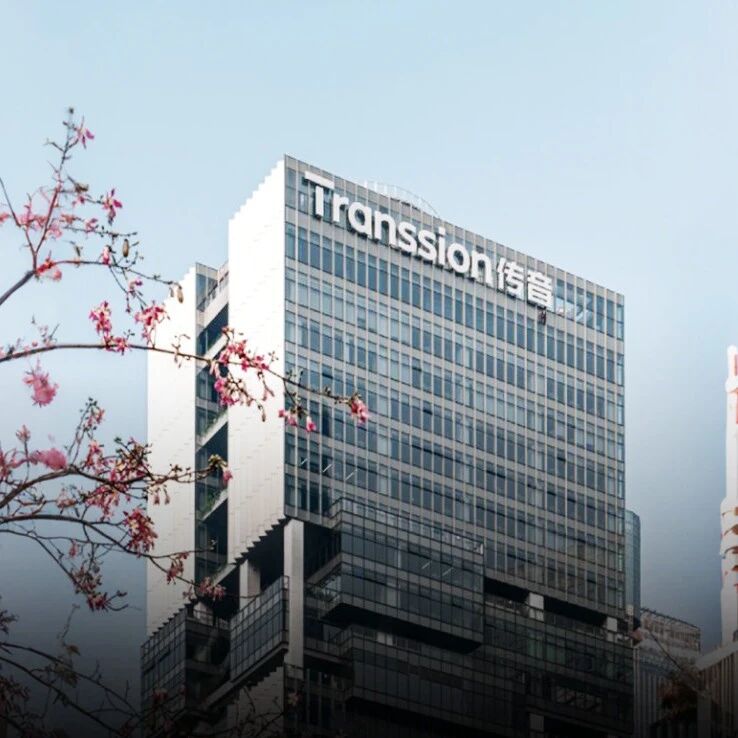
“非洲之王”利润腰斩!传音控股:成本暴涨,对手偷家,护城河见底
市值风云· 2026-02-06 10:09
Core Viewpoint - Transsion Holdings is facing significant challenges as its profitability declines sharply, with a projected net profit of 2.546 billion yuan for 2025, a year-on-year drop of 54.11%, alongside a slight revenue decrease of 4.58% [3][20][24]. Group 1: Company Overview - Transsion Holdings primarily operates in the mobile phone market, with nearly 94% of its 67.715 billion yuan revenue in 2024 coming from mobile phone sales [5][6]. - The company has established a strong presence in Africa, holding over 40% market share in the African smartphone market and ranking first in Pakistan and Bangladesh with market shares of over 40% and 29.2%, respectively [6][7]. - Transsion's success is attributed to its localized product offerings and extensive marketing network, which have created a strong customer base in Africa [9]. Group 2: Financial Performance - The company's gross margin has declined from 21.3% in 2024 to 18.59% in Q3 2025, marking a five-year low, with net profit margins dropping to 4.4% [11]. - The average gross margin for the first three quarters of 2025 was 19.5%, indicating that the company earns less than 50 yuan in net profit for each smartphone sold at around 1,000 yuan [11]. - Transsion's revenue for 2025 is expected to be 65.568 billion yuan, reflecting a 4.58% decline from the previous year, breaking its previous growth trend [20]. Group 3: Market Competition - The competitive landscape in Africa has intensified, with major Chinese brands like Xiaomi and Honor increasing their focus on the region, leading to a slowdown in Transsion's growth [13][15]. - In 2024, Transsion's shipment growth rate in Africa slowed to 10%, while competitors like Xiaomi and realme experienced growth rates of 38% and 89%, respectively [15]. - By 2025, Transsion's ranking in the global smartphone market has dropped, with the company no longer appearing in the top five, indicating increased competition and market share erosion [18]. Group 4: Strategic Initiatives - In response to declining performance, Transsion is pivoting towards AI technology, emphasizing its commitment to AI development in its recent IPO application, with plans to integrate AI features into its products [25][26]. - The company aims to create an AI ecosystem to enhance user engagement and generate continuous revenue, although its current AI capabilities are still in the early stages compared to competitors [30][31]. - Transsion is also diversifying its product offerings beyond smartphones, including tablets, TWS earbuds, and smart home devices, which generated 4.68 billion yuan in revenue in 2024, but still represent less than 10% of total revenue [31][32].
涨价了你得补钱!三大存储巨头拟推“短期合同+后结算”模式
Hua Er Jie Jian Wen· 2026-02-06 08:40
Core Insights - The global memory chip market is undergoing a significant transformation in pricing rules, with major suppliers like Samsung, SK Hynix, and Micron adopting a new contract model that shortens contract durations and introduces "post-settlement" clauses [1][2] Group 1: Pricing Mechanism Changes - Traditional pricing models for memory products, such as DRAM and NAND, are being disrupted, moving from fixed prices determined at the start of contracts to dynamic pricing that allows adjustments based on market conditions even after delivery [2] - The introduction of "post-settlement" clauses enables suppliers to capture price increases, effectively transferring market risk entirely to buyers [2] - Contract durations have significantly shortened, with many agreements now lasting only a quarter or even a month, despite buyers seeking longer contracts for stable supply [2] Group 2: Impact on Major Tech Companies - Even large tech companies like Apple, which typically secure long-term supply agreements, are not immune to price increases, as current supply shortages limit their ability to lock in prices beyond mid-2026 [3] - In the first quarter, Samsung and SK Hynix raised the prices of LPDDR for iPhones, with Samsung's prices increasing by over 80% and SK Hynix's by approximately 100% [3] - Major memory manufacturers are tightening control over customer orders, requiring disclosure of end customers and order volumes to prevent stockpiling and overbooking, further solidifying the seller's market [3]

图数室|冬奥氪金,从夯到更夯
Xin Lang Cai Jing· 2026-02-06 08:25
Group 1 - The core idea of the article highlights the evolution of Olympic sponsorship, showcasing how it has transformed from a concentrated model to a multi-layered approach, reflecting the deep connection between the Olympics and the economic landscape of the times [2][4][11] - The number of global partners for the Olympics has increased significantly, from 6 in the 2002 Salt Lake City Winter Olympics to 12 in the 2018 PyeongChang Winter Olympics, indicating a doubling of sponsorship opportunities [2][4] - The Beijing 2022 Winter Olympics exemplified an efficient sponsorship model with only 46 sponsors generating a record revenue of $1.838 billion, averaging nearly $40 million per sponsor, compared to 86 sponsors and $649 million in revenue for the previous PyeongChang Olympics [11][15] Group 2 - The sponsorship structure for the Beijing 2022 Winter Olympics included various levels such as official partners, sponsors, and suppliers, featuring both international brands like Intel and local companies like China Post, showcasing a blend of global and local economic forces [4][5] - The upcoming 2026 Milan Winter Olympics will introduce a new "senior partner" tier, integrating national strategic enterprises, which reflects a trend of deeper collaboration between Olympic branding and local industries [7][9] - The impact of Olympic sponsorship extends beyond immediate sales, serving as a platform for brands to demonstrate technological capabilities and build long-term brand equity through consumer engagement and emotional connections [15]

电视行业,为什么总被科技潮流“遗忘”?
Xin Lang Cai Jing· 2026-02-06 07:20
文|深观商业 开年的第一个月,传统电视行业被两份截然不同的公告彻底搅动:一边是TCL高歌猛进,将索尼这一昔 日的彩电霸主收入囊中,而另一边,曾经的"彩电大王"创维集团,却在同一天按下了暂停键——宣布拟 私有化退市,寄希望于光伏业务。 从前沿技术中找到改变电视市场低迷的突破口,一直是电视巨头们的共同战略,甚至在整个家电市场, 也是如此。 2024年3月,中国家电及消费电子博览会(AWE2024)上,AI的"龙卷风"席卷了整个家电行业,而在电 视领域,AI电视成了厂商们"秀肌肉"的重要品类。比如海信重磅发布自研星海大模型,推出全新 ULEDX全场景的AI计算画质平台以及多款旗舰新品,长虹电视则展出基于AI技术智慧研发成果的长虹 壁画+电视,其他知名电视厂商如LG、TCL、创维等,也已推出AI 电视。 当时,ChatGPT的诞生和更新持续引领AI技术热潮,Sora的问世更是惊艳全球,创造了新一轮高潮,如 何与AI融合几乎成为了各行业的必答题。所以,电视厂商拥抱新技术的热情也空前高涨,由此出现了 家电及消费电子博览会上的那一幕。 AI电视是一个新产物,它究竟会长成什么样需要行业、需要时间去定义,然而现在略显尴尬的是, ...



招商证券:预计2026全年存储供给偏紧状态持续 产业链公司整体展望乐观
智通财经网· 2026-02-06 07:18
智通财经APP获悉,招商证券发布研报称,2026年一季度以来,各类存储产品价格环比急剧上涨,目前 在能见度范围内今年存储价格持续上涨可期,同时2026年全球新增供给有限,预计存储紧缺趋势将延续 至2027年。在价格与需求共振情况下,今年海内外存储将迎来业绩释放大年,后续市场价格趋势和各环 节公司业绩增长持续性是核心关注点,建议关注存储+设备+产业链三大核心环节相关公司。 招商证券主要观点如下: 库存端:产业链库存呈现显著的分化特征,原厂库存紧张将贯穿2026全年 原厂库存水位持续回落,服务器DRAM与NAND紧缺趋势预计将贯穿2026全年,奠定长期卖方市场基 础;中下游台厂与中国内地厂商普遍积极备货,其中中国内地模组厂Q3库存累计同比高增34%创历史 新高,以应对2026年供需缺口,后续有望在价格上行周期中通过低成本库存重估,释放巨大的利润弹 性。 价格端:AI产能挤占效应导致供需缺口持续扩大,26Q1合约价环比高增 现货价格方面,虽然DDR4价格首次出现小幅回调,但原厂供应停滞支撑整体价格维持高位,并不影响 整体价格走势;合约价格方面,在服务器强劲需求拉动下呈现急剧上涨态势,预计26Q1DRAM与 NAND ...

【买卖芯片找老王】260206 华邦/美光/英飞凌/TI/TDK
芯世相· 2026-02-06 04:47
Core Viewpoint - The article discusses the challenges of managing excess inventory in the semiconductor industry, highlighting the financial burden of storage and capital costs associated with unsold materials, while promoting a service that facilitates quick sales of surplus stock [1][8]. Group 1: Inventory Management - A significant amount of excess inventory, specifically 100,000 units, incurs monthly storage and capital costs of at least 5,000, leading to a potential loss of 30,000 if held for six months [1]. - The company offers a platform for selling surplus materials, claiming to have served 22,000 users and can complete transactions in as little as half a day [8]. Group 2: Inventory Listings - The article lists various semiconductor components available for sale, including: - 30,000 units of W25Q40CLWI from Winbond, manufactured in 2022 [4]. - 2,000 units of MT29F64G08AECDBJ4-6ITR:D from Micron, manufactured in 2021 [5]. - 1800 units of S29GL128P11FFIV20A from Spansion, manufactured in 2021 [5]. - The total inventory includes over 5,000,000 chips across more than 1,000 models and 100 brands, with a total inventory value exceeding 100 million [7]. Group 3: Purchase Requests - The article also includes a list of requested components, such as: - 10,000 units of K4AAG165WA-BCTD from Samsung [6]. - 50,000 units of W25Q80DVSSIG from Winbond, with a manufacturing year of 25+ [6]. - This indicates ongoing demand for specific semiconductor components in the market [6].


东北证券:建筑装饰行AI推动CAPEX景气周期 洁净室充分受益
智通财经网· 2026-02-06 02:44
Group 1 - Cleanroom engineering serves as a foundational support for advanced manufacturing, with a high concentration in the high-end market [2] - The domestic cleanroom market is projected to reach 286.8 billion yuan in 2024, with over half allocated to electronics, and the unit area cost expected to rise to 0.66 million yuan per square meter [2] - The global semiconductor investment remains robust, with significant domestic space for localization, as China's integrated circuit self-sufficiency rate was only 18.3% as of 2022 [2][4] Group 2 - The HBM market is rapidly expanding, with a forecasted size of 30 billion USD by 2026 and a compound annual growth rate of approximately 100% from 2023 to 2026 [3] - Major players in the HBM industry, including SK Hynix, Samsung, and Micron, dominate the market, holding 54%, 39%, and 7% market shares respectively in 2024 [3] - Global semiconductor capital expenditure is expected to exceed 200 billion USD by 2026, with cleanroom size projected at 217.2 billion yuan [4] Group 3 - The demand for cleanrooms in the medical sector is expected to grow steadily, with the cleanroom market projected to increase from 6.78 billion yuan in 2013 to 23.5 billion yuan in 2024 [6] - The number of hospitals in China has grown from 24,709 in 2013 to 38,355 in 2023, driving the expansion of medical cleanroom facilities [6] - Investment opportunities are identified in companies such as Yaxing Integration, Shenghui Integration, Huakang Cleanroom, Bocheng Co., and Meiyu Technology [6]