千禾味业

Search documents
海天味业(603288):稳中有进,份额提升,改善延续
HTSC· 2025-04-03 09:54
Investment Rating - The report maintains an "Accumulate" rating for the company with a target price of 51.20 RMB [7][8]. Core Views - The company has shown steady progress with an increase in market share, achieving revenue of 26.9 billion RMB and net profit of 6.34 billion RMB for 2024, reflecting year-on-year growth of 9.5% and 12.8% respectively [1][4]. - The company is expected to continue benefiting from favorable policies and demand recovery, with a focus on channel and product expansion to further enhance market share [1][4]. Summary by Sections Financial Performance - For 2024, the company reported revenue of 26.9 billion RMB, net profit of 6.34 billion RMB, and non-recurring net profit of 6.07 billion RMB, representing year-on-year increases of 9.5%, 12.8%, and 12.5% respectively [1]. - In Q4 2024, revenue reached 6.5 billion RMB, with net profit and non-recurring net profit at 1.53 billion RMB and 1.45 billion RMB, showing year-on-year growth of 10.0%, 17.8%, and 17.1% respectively [1]. Product Performance - Revenue from soy sauce, seasoning sauce, oyster sauce, and other products for 2024 was 13.76 billion RMB, 2.67 billion RMB, 4.62 billion RMB, and 4.09 billion RMB, with year-on-year growth rates of 8.9%, 10.0%, 8.6%, and 16.8% respectively [2]. - The company plans to increase its focus on the catering and lower-tier markets in 2025, aiming for volume growth despite price pressures [2]. Profitability and Cost Management - The gross profit margin for 2024 improved by 2.3 percentage points to 37.0%, driven by lower raw material costs and economies of scale [3]. - The net profit margin for 2024 increased by 0.7 percentage points to 23.6%, with expectations for continued cost advantages in 2025 [3]. Future Outlook - The company is expected to maintain its leading market position and continue to increase its market share through ongoing channel reforms and product expansion strategies [4]. - Earnings per share (EPS) forecasts for 2025 and 2026 have been slightly raised to 1.28 RMB and 1.42 RMB, respectively, with a new EPS estimate for 2027 at 1.59 RMB [4].
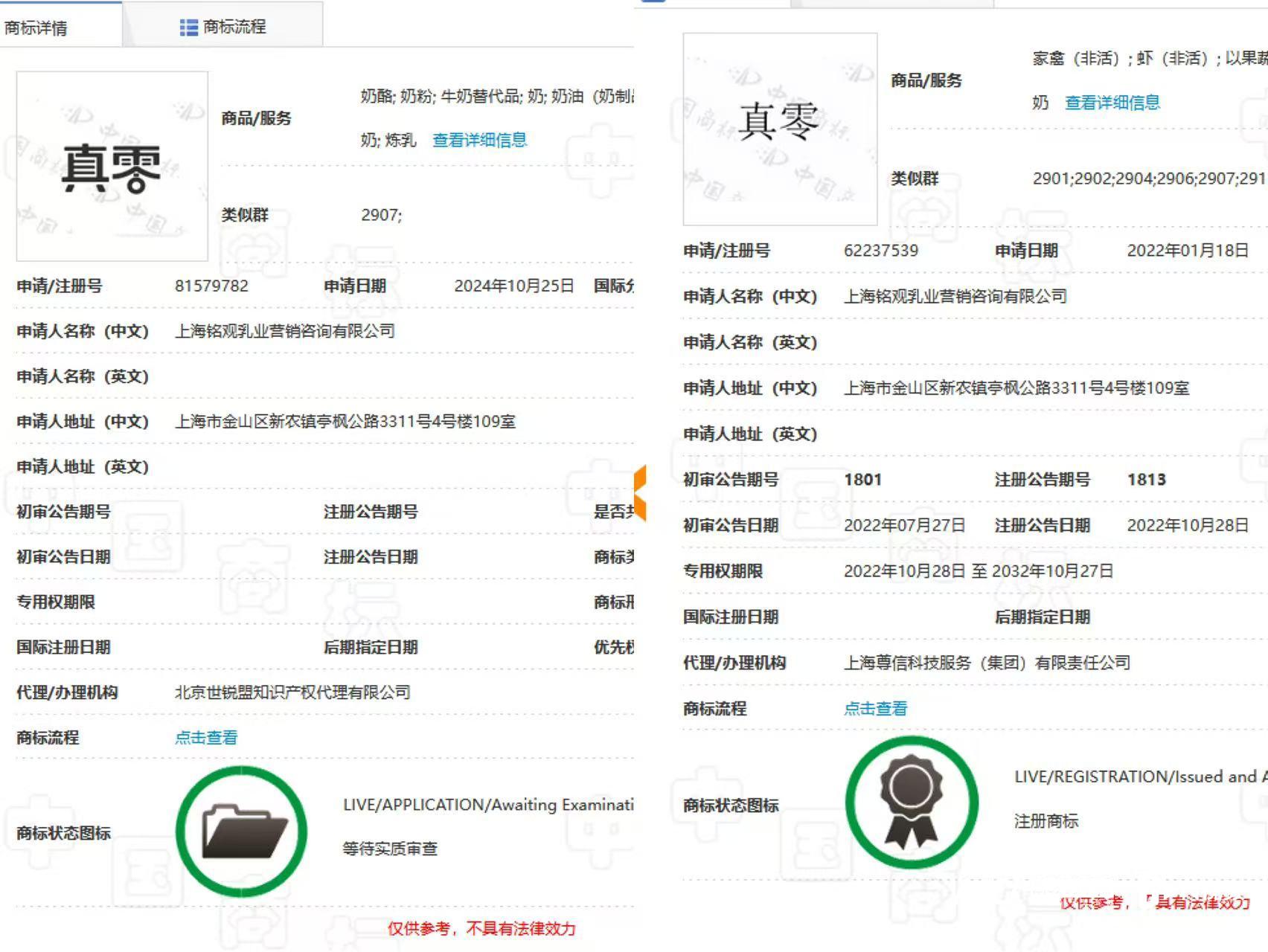
真零酸奶的“真零”是注册商标?悠纯乳业:零添加糖,不更名
Nan Fang Du Shi Bao· 2025-04-02 09:56
Core Viewpoint - The recent trademark disputes involving "Zhenling" yogurt from Youchun Dairy have raised concerns, particularly regarding the use of terms like "zero" and "no added sugar" in product marketing, especially in light of new national standards prohibiting such claims starting March 16, 2027 [1][12]. Trademark Registration and Company Background - Youchun Dairy's "Zhenling" yogurt has applied for multiple trademarks, including "Zhenling," "zero," and "no sugar added," with one "Zhenling" trademark successfully registered among 65 food category trademarks [2][6]. - The brand is associated with Shanghai Mingguan Dairy Marketing Consulting Co., which was founded in 2003, and co-founder Luo Xing holds a 30% stake in the company [2][6]. Regulatory Changes and Industry Impact - A new national standard (GB 7718-2025) prohibits the use of terms like "zero added" and "no added" for prepackaged foods, set to take effect in 2027, allowing companies a two-year adjustment period [12][13]. - Industry experts argue that the overemphasis on "no additives" can mislead consumers and disrupt market order, as most foods cannot be completely free of additives [12]. Company Position and Marketing Strategy - The founder of "Zhenling" yogurt has stated that "zero" signifies the company's zero tolerance for sugar and additives, promoting a clean ingredient list [8][12]. - Despite the new regulations, Youchun Dairy has indicated that it will not change the brand name "Zhenling," and customer service has stated that the product contains only milk and probiotics [1][12]. Legal Considerations - Legal experts suggest that if "Zhenling" yogurt does not prominently advertise "zero added" claims, it may not violate the new regulations, provided that the product does not contain the corresponding ingredients [13].

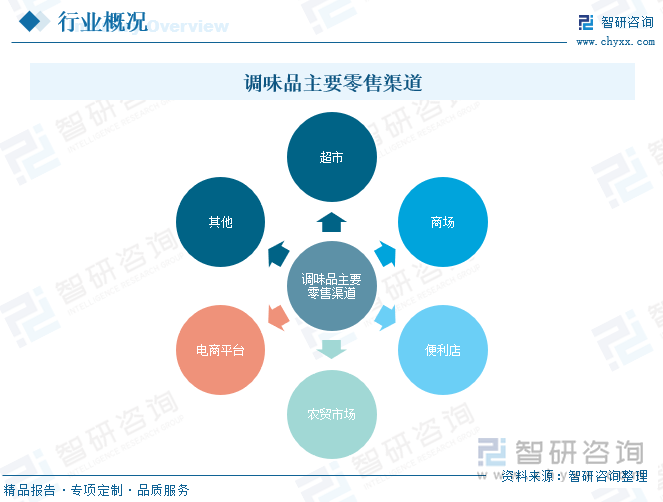
2025年中国调味品零售行业市场政策、产业链、市场现状、竞争格局及趋势研判:海天味业龙头优势明显[图]
Chan Ye Xin Xi Wang· 2025-04-02 02:19
Core Viewpoint - The retail market for condiments in China is expected to reach 171.69 billion yuan in 2024, with a year-on-year growth of 4.1%, driven by diverse consumer demands, the strong recovery of the catering industry, and the formation of ecosystems related to prepared dishes [1][11]. Market Overview - Condiments are essential in enhancing the flavor, aroma, and appearance of dishes, contributing to health and appetite stimulation. They include salty, sour, sweet, umami, and spicy agents, such as salt, soy sauce, vinegar, and spices. Retail channels for condiments include supermarkets, convenience stores, and e-commerce platforms [2]. Market Policies - The Chinese condiment industry has seen stricter regulations, with various policies aimed at promoting high-quality and standardized development, including the 2023 National Standard Project Guidelines and food safety management measures [4][6]. Industry Chain - The condiment retail industry consists of three main segments: upstream (production and manufacturing), midstream (retail), and downstream (consumption market, including catering and household use) [7]. Consumption Structure - The catering market accounts for over 40% of condiment consumption, with high demand for product stability and cost-effectiveness. The household market represents approximately 34.7%, focusing on brand, quality, and variety [9]. Competitive Landscape - The condiment market in China features diverse competition across various segments. For instance, in the soy sauce market, the top five brands include Haitian, Qianhe, and Lee Kum Kee, with Haitian holding over one-third of the market share. The hot pot seasoning market is led by Yihai International, while the pickled vegetable market is dominated by Wujing [12][13]. Key Companies - Major players in the condiment retail industry include Haitian Flavor Industry, Angel Yeast, Xue Tian Salt Industry, and Yihai International. In the first half of 2024, Haitian reported a revenue of 14.16 billion yuan, leading the market, followed by Angel Yeast and Xue Tian Salt Industry with revenues of 7.18 billion yuan and 3.02 billion yuan, respectively [13][16]. Development Trends - Future trends indicate a growing consumer focus on health attributes, leading to increased demand for low-sodium, low-sugar, and organic condiments. There is also a rising interest in novel flavors and convenience products, such as recipe-based seasoning packs, catering to the fast-paced lifestyle of modern consumers [21].
天味食品:2024年收入同比增长10.4%,全渠道布局逐渐完善-20250331
Guoxin Securities· 2025-03-31 01:10
Investment Rating - The investment rating for the company is "Outperform the Market" [6][4][17] Core Views - The company achieved a total revenue of 3.476 billion yuan in 2024, representing a year-on-year growth of 10.41%, with a net profit attributable to shareholders of 625 million yuan, up 36.77% year-on-year [1][9] - The online channel maintained a high growth rate, with online revenue reaching 600 million yuan, a year-on-year increase of 51.7%, driven by the continued expansion of the "Shicui" product line [2][9] - The company's gross profit margin improved by 2.0 percentage points to 39.8% in 2024, attributed to scale effects, business structure optimization, and declining raw material prices [3][12] - The integration of the brand "Jia Dian Zi Wei" is expected to enhance the company's capabilities in the consumer market [3][15] Summary by Sections Financial Performance - In 2024, the company reported total revenue of 34.76 billion yuan, a 10.41% increase year-on-year, and a net profit of 6.25 billion yuan, up 36.77% year-on-year [1][9] - The fourth quarter of 2024 saw revenue of 11.12 billion yuan, a 21.57% increase year-on-year, and a net profit of 1.92 billion yuan, up 41.03% year-on-year [1][9] Channel Performance - Offline and online channel revenues for 2024 were 2.87 billion yuan and 600 million yuan, respectively, with year-on-year growth of 4.4% and 51.7% [2][9] - The "Shicui" product line generated approximately 280 million yuan in revenue in 2024, achieving about 90% of its performance commitment [2][9] Operational Efficiency - The company's selling and administrative expense ratios decreased to 13.0% and 5.3%, respectively, indicating improved operational management efficiency [3][12] - The non-GAAP net profit margin increased by 3.5 percentage points to 16.3% in 2024, reflecting enhanced profitability from acquisitions and improved efficiency across channels [3][12] Future Outlook - The company has slightly raised its profit forecast, expecting revenues of 38.5 billion yuan and 42.2 billion yuan for 2025 and 2026, respectively, with year-on-year growth rates of 10.8% and 9.5% [4][15] - The expected earnings per share (EPS) for 2025, 2026, and 2027 are projected to be 0.66 yuan, 0.73 yuan, and 0.78 yuan, respectively [4][5]

合川老农民:味精谣言背后,是一场更大的利益和话语之战
Guan Cha Zhe Wang· 2025-03-30 06:53
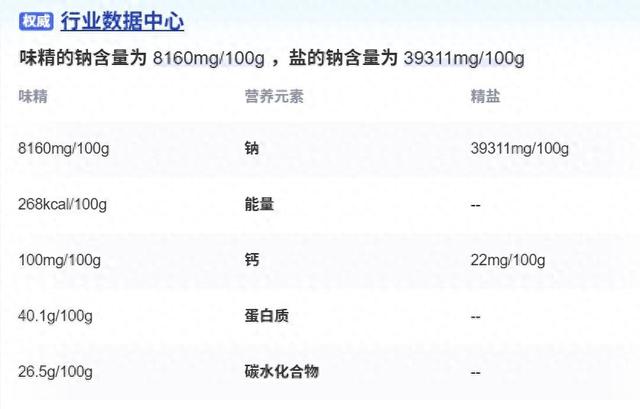
Core Viewpoint - The article discusses the resurgence of Lianhua MSG, a Chinese brand, after overcoming negative perceptions and rumors about MSG's health risks, highlighting the importance of accurate information and effective marketing strategies in the food industry [1][19]. Group 1: Health and Safety of MSG - MSG, primarily composed of monosodium glutamate, is deemed safe by organizations like WHO and FAO, with extensive research supporting its safety as a food additive [3][4]. - Common health concerns regarding MSG, such as its potential carcinogenicity and links to hair loss or obesity, lack scientific backing, and MSG contains less sodium than table salt [5][6]. - The nutritional comparison shows MSG has 8160mg of sodium per 100g, significantly lower than table salt's 39311mg per 100g, indicating that using MSG can help reduce sodium intake [6]. Group 2: Historical Context of MSG in China - MSG was first isolated by Japanese chemist Ikeda Kikunae in 1908, leading to its commercialization as "Ajinomoto" [8][10]. - The production of MSG in China began with Wu Yunchu's water hydrolysis method in 1923, which broke Japan's monopoly and established domestic production [10][12]. - Lianhua MSG emerged as a leading brand in the 1980s, achieving a market share of 43% and becoming the first MSG stock in China by 1998 [12][19]. Group 3: Market Dynamics and Competition - The entry of multinational companies promoting "chicken essence" in the early 2000s led to a significant decline in MSG's market share, as these companies successfully rebranded consumer perceptions [12][14]. - The negative portrayal of MSG was exacerbated by the "Chinese restaurant syndrome" narrative, which originated from a 1968 letter in a medical journal, despite MSG being recognized as safe by the FDA since 1959 [15][16]. Group 4: Revival Strategies for Lianhua MSG - Post-bankruptcy, Lianhua MSG utilized new media to reshape consumer perceptions, showcasing production processes and innovative product ideas like "MSG cocktails" and "MSG ice cream" [19][24]. - The company reported over 100 million in net profit in 2024, indicating a successful turnaround and revaluation of the brand in the market [19][24]. Group 5: Food Safety and Public Perception - The article emphasizes the need for rigorous food safety regulations and accurate public information to combat misinformation and restore consumer trust in domestic products like MSG [20][24]. - It advocates for a multi-faceted approach to food safety communication, combining traditional and new media to effectively educate the public about the safety and benefits of MSG [24][25].

这种“擦边”,收割了多少咬牙花钱的中产
凤凰网财经· 2025-03-29 14:11
近日,#千禾0商标被指误导消费者零添加#冲上热搜,千禾味业被推上风口浪尖。 今年3月,《消费者报道》杂志对13款宣称"零添加"的酱油进行了检测,结果发现12款检出镉,7款检出总砷。其中,千禾御藏本酿380天酱油中检 测出0.0110mg/kg的镉,这款酱油瓶身上印有"千禾0"字样,但并未明确标注为"零添加"产品。 因此,不少消费者表示,看到千禾酱油瓶身上的"千禾0"字样,自然而然地认为这是"零添加"产品,结果却发现"千禾0"只是一个商标,而非真正 的"零添加"。 而为了平息消费者的"怒火",3月20日,千禾味业曾发布声明称,"千禾0"商标是其零添加产品的重要标识,不存在误导消费者的行为,但承认让消 费者产生了误会,并对此深表歉意。类似"XX0"的商标还有海天味业、简爱酸奶、壹号土猪肉。据了解,海天味业已成功注册了10个与"海天0"相关 的商标,其中包括6个"海天0"商标和4个"海天0+"商标;"简爱酸奶"将"其他没了"注册为商标,暗示无添加剂;"壹号土猪肉"等均通过拆分商标名 称,让消费者误以为是"土特产"。 有消费者吐槽道,这类操作本质是利用消费者对商标法的认知盲区,通过模糊商品描述与商标的界限,制造信息 ...

“零添加”不能用了 专家:回应行业发展刚需,具有三重作用
Mei Ri Jing Ji Xin Wen· 2025-03-29 11:13
Core Viewpoint - The new regulations issued by the National Health Commission and the State Administration for Market Regulation prohibit the use of terms like "no additives" and "zero additives" in food labeling, aiming to enhance transparency and consumer rights in the food industry [1][2][3]. Group 1: Impact of New Regulations - The new regulations are expected to have a deterrent, purifying, and guiding effect on the food industry, addressing the need for industry standards and curbing misleading marketing practices [2][3]. - The regulations will force companies to clearly label specific additives, promoting transparency and aligning with international standards, which may drive improvements in production processes [2][3]. Group 2: Case Study of Qianhe Flavor Industry - The "Qianhe 0" trademark controversy highlights the potential risks of misleading branding, as the company faced scrutiny over its claims of "zero additives" after a product was found to contain trace amounts of cadmium [3][4]. - Qianhe Flavor Industry's chairman emphasized that the "Qianhe 0" trademark is intended to distinguish zero-additive products, but there are compliance risks if the branding does not accurately reflect the product's contents [4][5]. Group 3: Industry Response and Compliance - Food companies are urged to balance brand promotion with regulatory compliance, ensuring that marketing claims do not mislead consumers [5][6]. - The industry is under increasing regulatory scrutiny, with a focus on adhering to strict standards and avoiding exaggerated claims that could lead to consumer misunderstanding [5][6].
“零添加”成调味乳品零食等营销卖点!海天、金龙鱼等回应
Nan Fang Du Shi Bao· 2025-03-29 10:42
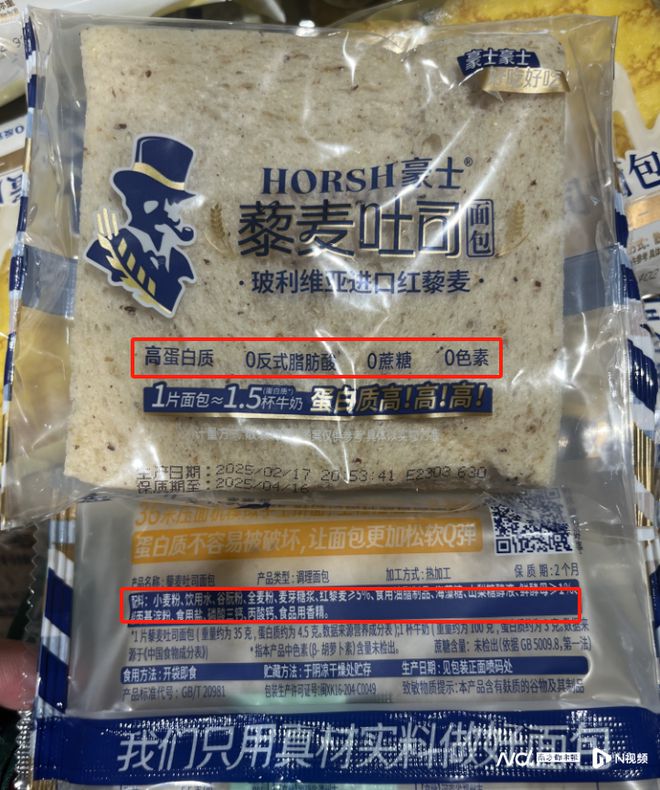
Core Viewpoint - The new food safety standards prohibit the use of terms like "zero added" and "not added" on pre-packaged foods, aiming to address misleading marketing practices in the industry. The implementation date is set for March 16, 2027, allowing companies a two-year transition period to comply [1][2][11]. Group 1: New Regulations - The newly released standards include 59 food safety national standards and amendments, specifically targeting misleading marketing language in pre-packaged food labeling [2][11]. - The revised GB 7718-2025 standard explicitly bans terms synonymous with "not added," such as "zero added" and "no added," to prevent consumer misunderstanding [2][13]. Group 2: Industry Response - Companies like Haidilao, Jinlongyu, and Qianhe have expressed support for the new regulations, indicating a commitment to comply and improve transparency in product labeling [11][12]. - The new regulations are expected to shift the industry focus from "label marketing" to "quality competition," encouraging companies to enhance product development and quality [11][12][14]. Group 3: Marketing Practices - Many brands, including Hao Shi and Wei Chuan, have been found to label products as "zero added" while containing other sugars or additives, highlighting the prevalence of misleading marketing in the industry [3][4][6]. - The dairy sector also sees widespread use of "zero added" claims, with brands like Nayuki and Mengniu promoting products as "zero sugar" or "zero fat," despite containing other forms of sugar [6][7]. Group 4: Consumer Misunderstanding - The marketing of "not added" products has created consumer misconceptions about the safety and quality of food products, leading to increased anxiety over the use of food additives [13][14]. - Experts argue that the new regulations will help consumers return to a more scientifically informed understanding of food safety, reducing the confusion caused by misleading claims [13][14].
“油中茅台”金龙鱼为何跌落神坛?
Sou Hu Cai Jing· 2025-03-28 12:57
Core Viewpoint - The company "Golden Dragon Fish" (金龙鱼) is facing its most severe operational challenges since its listing, with significant declines in revenue and profit, reflecting broader structural issues in the traditional grain and oil industry [2][3]. Financial Performance - In 2024, the company reported a revenue of 238.87 billion yuan, a year-on-year decline of 5.03%, and a net profit of 2.50 billion yuan, down 12.14% year-on-year [2][3]. - The net profit has decreased for four consecutive years, with a cumulative reduction of nearly 60% since its peak in 2020 [2][3]. - The gross profit margin slightly increased by 0.52 percentage points to 5.35%, but the net profit margin fell to a record low of 1.03% [3]. - The company's operating costs account for 99.9% of its revenue, with raw material costs exceeding 90%, indicating minimal profit retention [3]. Brand Image and Trust Issues - The company has faced multiple brand crises, including involvement in a rice adulteration scandal and concerns over supply chain safety due to incidents with mixed oil products [4]. - These events have significantly damaged the brand's reputation and raised consumer concerns about product quality [4]. Operational Challenges - The company operates 80 production bases, but the utilization rates for oil refining and packaging are only 42.2% and less than one-third, respectively [5]. - The expansion strategy has led to increased fixed asset depreciation, negatively impacting net profits by 120 million yuan [5]. - The central kitchen business has not met expectations, with low revenue contribution and underutilized production capacity [5]. Industry Context - The per capita consumption of cooking oil in China has reached 25 kg/year, surpassing the World Health Organization's recommendation, indicating a saturated market [6]. - The grain and oil market has experienced three consecutive years of negative growth, with local brands gaining market share through competitive pricing strategies [6]. - Despite holding over 40% market share, the company's traditional business is being eroded by competitors with differentiated products and strategies [6]. Market Valuation and Investment Risks - The company's price-to-earnings ratio (TTM) stands at 82 times, significantly higher than the industry average, indicating potential overvaluation [7]. - The stock price has plummeted nearly 80% from its peak of 145.62 yuan per share to 32.09 yuan [7]. - A proposed share swap with a competitor may face regulatory scrutiny due to its significant market share implications and associated tax costs, complicating potential synergies [7].

食品报道如何摆平“添加剂焦虑”
Xin Jing Bao· 2025-03-28 10:01
文 | 王可(新京报传媒研究院) 超市货架上各种大大的"零添加"字样会逐渐成为历史,而食品报道中的科学共识和公众认知,仍在为摆 平公众的"添加剂焦虑"而不断努力。 01 谣言影响认知 3月27日,国家卫生健康委会同国家市场监督管理总局发布新修订的《食品安全国家标准 预包装食品标 签通则》(GB 7718-2025)(以下简称"新标准"),明确规定预包装食品不得使用"不添加""零添加"等 用语对食品配料进行特别强调。 明确禁止食品包装使用"零添加""不添加"等标签,旨在遏制行业误导性营销,引导消费者理性看待食品 添加剂。 但随着一些自媒体对于"科技与狠活"的跟风炒作,以及过度强调"天然=安全,人工=有害"的认知,大众 对于"添加剂安全"的焦虑已经被放大。 即便合规添加剂经严格评估,但公众仍普遍认为"零添加"更安全,这种认知偏差自然带来了消费场景中 的情绪驱动。 这种心理使得即使食品报道中反复辟谣,谣言仍能通过社交平台快速传播。因此,媒体需要超越简单的 政策解读,弥合科学共识与公众认知的巨大鸿沟。 "零添加"式的营销,充满了套路。最典型的譬如,某款饮料标签上写了"不添加蔗糖",但其实蔗糖只 是"糖"的一种,同时果 ...