
招商银行

Search documents
258亿元春节红包压轴,沪市两个多月现金分红近3500亿
Di Yi Cai Jing Zi Xun· 2026-02-05 12:37
Group 1 - The total cash dividends distributed by nearly 20 companies in the Shanghai market before the Spring Festival will amount to 25.8 billion yuan, with the total dividends expected to exceed 347.6 billion yuan by the end of 2025 [1] - As of February 5, 2025, 321.8 billion yuan has already been distributed, with Industrial Bank set to distribute over 11.9 billion yuan on February 6, 2025, at a rate of 0.565 yuan per share (tax included) [1] - The banking sector is the main contributor to cash distributions before the Spring Festival, with nine banks announcing a total of nearly 70 billion yuan in dividends for the first half of 2025 [1] Group 2 - The change in the dividend rhythm and frequency among bank stocks reflects the implementation of the "pre-Spring Festival dividend" policy, enhancing investor experience by providing clearer cash returns [2] - Traditional companies, including Yangtze Power and Darentang, are also distributing cash dividends before the Spring Festival, with Yangtze Power set to distribute over 5.1 billion yuan on February 12, 2025 [2] - Darentang announced a cash dividend of 2.45 yuan per share, totaling 1.887 billion yuan, with a cumulative cash dividend of 5.117 billion yuan since its listing in 2001 [2] Group 3 - Jianfa Co. announced a cash dividend of 2.00 yuan per 10 shares, totaling approximately 579.9 million yuan, which accounts for 50.49% of its net profit for the first three quarters of 2025 [3] - The continuous strengthening of cash dividend regulations and disclosure requirements by regulatory authorities is enhancing shareholder return awareness among listed companies [3] - Investors are increasingly focusing on companies that can withstand economic cycles while consistently returning value to shareholders, marking a significant path for value investment [3]




银行股,资金出手了
3 6 Ke· 2026-02-05 11:21
Core Viewpoint - A significant market shift occurred as global funds fled from technology stocks and precious metals, leading to a notable decline in major indices and a surge in bank stocks as a safe haven for investors [1][2][3]. Group 1: Market Reactions - On February 4, U.S. tech stocks experienced a sharp decline, with the Nasdaq dropping over 2% and major companies like Nvidia, Meta, and Tesla falling more than 3%. AMD saw a staggering drop of 17.3%, marking its largest single-day decline in nearly nine years [1][3]. - The panic spread to A-shares and Hong Kong stocks, with sectors like solar energy and precious metals witnessing significant sell-offs. Silver futures plummeted nearly 20% at one point, exacerbating market fears [2][5]. - Despite the overall market turmoil, the banking sector in A-shares rose by 2.1%, with all 42 bank stocks closing in the green, indicating a flight to safety among investors [2][10]. Group 2: Capital Flows - Southbound funds recorded a net purchase of over 22 billion HKD, with major Chinese banks like ICBC, CMB, and CCB becoming core targets for accumulation [3][13]. - A significant shift in capital is underway, with funds moving from tech and precious metals to banks, which are perceived as having a higher safety margin [3][9]. Group 3: Banking Sector Performance - The banking sector is supported by strong earnings growth and historically low valuations, making it an attractive option for risk-averse investors [15][20]. - As of February 4, several banks reported robust earnings, with Qingdao Bank, Hangzhou Bank, and others showing significant profit increases, further solidifying the sector's appeal [16][18]. - The banking sector's average dividend yield ranges from 4.87% to 5.2%, significantly higher than the 10-year government bond yield of around 2%, enhancing its attractiveness in a low-interest-rate environment [21][22]. Group 4: Future Outlook - The recent market volatility raises questions about whether the declines in tech stocks and precious metals will lead to further panic selling. However, the influx of funds into bank stocks suggests a potential shift in market sentiment [23].






银行股,资金出手了!
Ge Long Hui· 2026-02-05 10:50
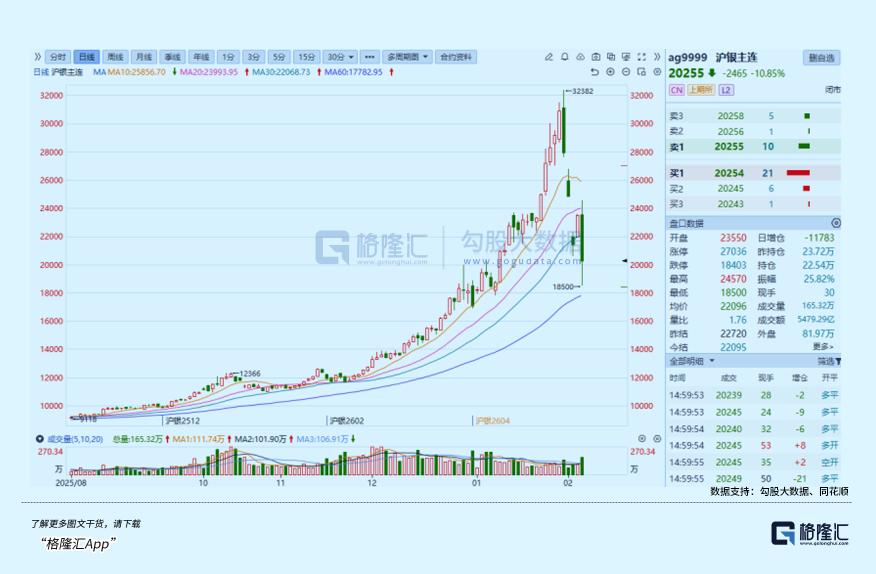
一夜之间,全球资金上演"夺命大逃亡",市场风向似乎全变了。 2月4日晚,美股科技股引发崩盘潮,纳指大跌超2%,英伟达、Meta、特斯拉等科技权重集体下挫超3%,AMD更是单日狂泻 17.3%,创近9年来最大跌幅,直接抹平2026年全年涨幅。 恐慌情绪蔓延至A股、港股市场,今天光伏、电网设备、油气开采设备等近期大涨的热门赛道应声跳水。 更不巧的是,前两天才暴力反弹的贵金属板块今天再次"闪崩",白银期货甚至一度跌近20%,进一步刺激市场恐慌情绪。 就在市场一片哀嚎之际,银行板块逆势崛起!截至A股收盘,银行板块整体上涨2.1%,42只银行股全线飘红,厦门银行罕见 涨停,多只城商行涨幅超3%,六大行也纷纷筑底企稳。 南向资金同步扫货,单日净买入超220亿港元,工商银行、招商银行、建设银行等内银股成加仓核心标的。 一场由避险资金主导的"乾坤大挪移",正在资本市场激烈上演! 01 科技+贵金属双杀,避险资金慌不择路 这轮市场巨震,导火索是美股科技股密集利空带来的估值泡沫破裂。 昨晚AI算力龙头AMD的业绩增长表现足够亮眼,但由于略低于部分分析师最乐观的预期,直接造成了单日狂泻17.3%,创下 2017年5月以来最大单日跌 ...


牛市中掉队的邮储银行,或迎来逆袭
虎嗅APP· 2026-02-05 10:17
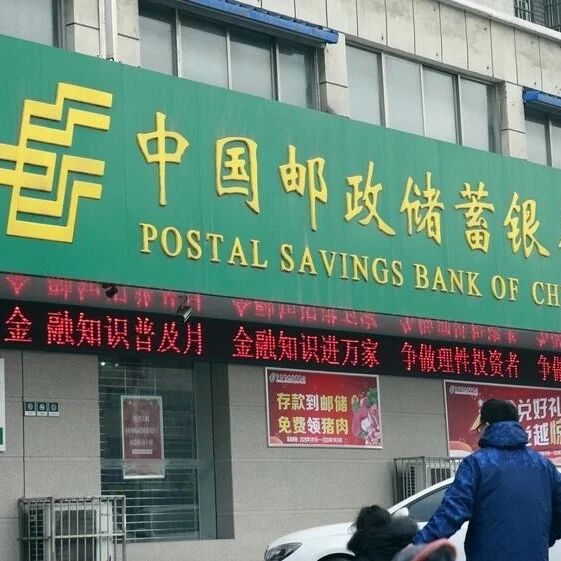
Core Viewpoint - The article discusses the underperformance of Postal Savings Bank compared to other major banks in a generally bullish market for bank stocks in 2025, highlighting the challenges it faces in terms of valuation and business structure [2][3][4]. Group 1: Performance Comparison - In 2025, Agricultural Bank of China saw a stock price increase of 52.66%, while Postal Savings Bank only increased by 0.67%, slightly outperforming Bank of Communications at 0.37% [2][3]. - As of January 2026, Postal Savings Bank's price-to-book (PB) ratio was 0.6, significantly lower than Agricultural Bank's 0.86 [4]. Group 2: Financial Metrics - For the first three quarters of 2025, Postal Savings Bank reported a revenue growth of 1.82% and a net profit growth of 0.98%, placing it in the middle tier among state-owned banks [5]. - The bank led the six major banks in asset expansion speed during the same period, indicating competitive project acquisition capabilities [9]. Group 3: Risk and Asset Quality - Despite a relatively low non-performing loan (NPL) ratio, Postal Savings Bank has seen a rising trend in NPLs, with the ratio increasing from 0.9% at the beginning of the year to 0.94% by Q3 2025 [14][13]. - The bank's reliance on retail loans, which constitute over 50% of its credit portfolio, has exposed it to risks as retail loan demand declines [12][11]. Group 4: Strategic Changes and Leadership - The recent appointment of Lu Wei as the new president is expected to bring a shift in strategy, focusing on corporate banking to complement the bank's retail strengths [28][19]. - The article suggests that the transition to a more balanced business model will take time and may not yield immediate results [34][33]. Group 5: Wealth Management and Corporate Banking - Postal Savings Bank's wealth management capabilities are limited, with a significant portion of its assets under management (AUM) still in low-risk products, which restricts income potential [21][23]. - The bank's corporate loan growth has been strong, but it still lags behind major competitors in absolute scale and business capability [27][26]. Group 6: Future Outlook - The article posits that while the new leadership may bring hope for improvement, the bank's structural challenges will require gradual adjustments rather than quick fixes [34][30]. - The expectation is for a gradual enhancement in performance, focusing on corporate banking and wealth management, while addressing the risks associated with retail loans [36][34].

银行股,资金出手了!
格隆汇APP· 2026-02-05 10:15
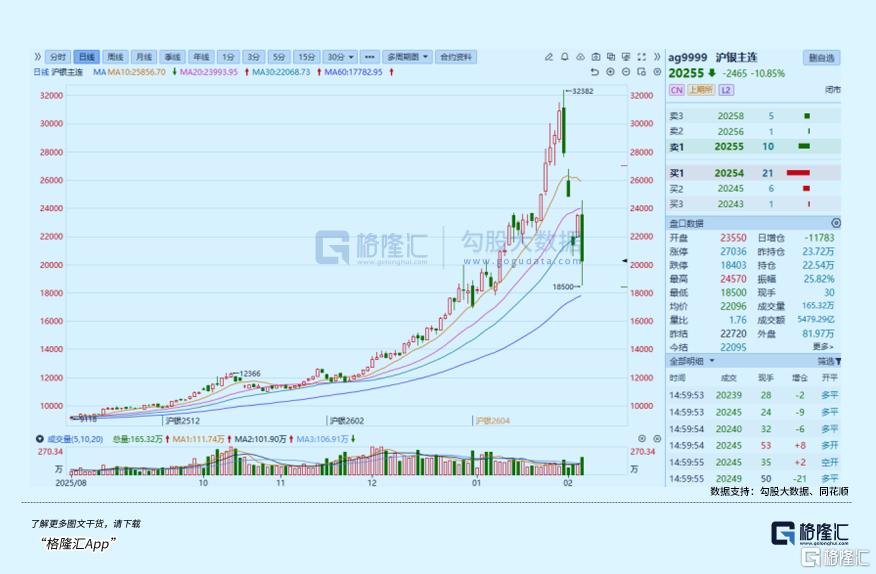
Core Viewpoint - A significant market shift is occurring, characterized by a mass exodus of funds from technology and precious metals sectors, with a notable influx into bank stocks as a safe haven amid rising panic and volatility [2][5][21]. Group 1: Market Dynamics - The U.S. tech stocks experienced a sharp decline, with the Nasdaq dropping over 2%, and major companies like Nvidia, Meta, and Tesla falling more than 3%. AMD saw a staggering drop of 17.3%, marking its largest single-day decline in nearly nine years [2][5]. - Panic spread to A-shares and Hong Kong stocks, with sectors like solar energy and oil equipment witnessing significant sell-offs. Precious metals, which had recently rebounded, also faced a sharp decline, with silver futures plummeting nearly 20% in a single day [3][5]. - The market turmoil was triggered by negative news affecting U.S. tech stocks, leading to a valuation bubble burst. Despite AMD's strong performance, its results fell short of the most optimistic analyst expectations, resulting in a drastic stock price drop [5][6]. Group 2: Bank Sector Resilience - In contrast to the broader market, the banking sector saw a rise, with A-share bank stocks collectively increasing by 2.1%. All 42 bank stocks closed in the green, with Xiamen Bank hitting a rare limit-up and several city commercial banks rising over 3% [3][15]. - Southbound funds significantly targeted bank stocks, with a net purchase exceeding 22 billion HKD, focusing on major banks like ICBC, CMB, and CCB as core investment targets [4][20]. - The banking sector is viewed as a "safe haven" due to its strong earnings growth and historically low valuations, making it an attractive option for risk-averse investors [21][22]. Group 3: Earnings and Valuation - Recent earnings reports from several banks indicate robust growth, with Qingdao Bank, Hangzhou Bank, and Shanghai Pudong Development Bank showing significant increases in net profits. For instance, Qingdao Bank reported a net profit of 51.88 billion CNY, a 21.66% year-on-year increase [23][25]. - The banking sector has undergone a six-month correction, leading to a new valuation bottom. The sector's price-to-earnings ratio stands at a low 6.7 times, and the average dividend yield is between 4.87% and 5.2%, making it appealing in a low-interest-rate environment [27][28]. - Institutional interest in bank stocks is rising, with over 370 institutions conducting research on 11 listed banks, indicating a strategic shift towards these stocks amid market volatility [28][29].



低开高走,港股三大指数全线飘红!小米、百度、美团等齐涨,黄金股跳水!南向资金净买入超249亿港元
Mei Ri Jing Ji Xin Wen· 2026-02-05 09:04
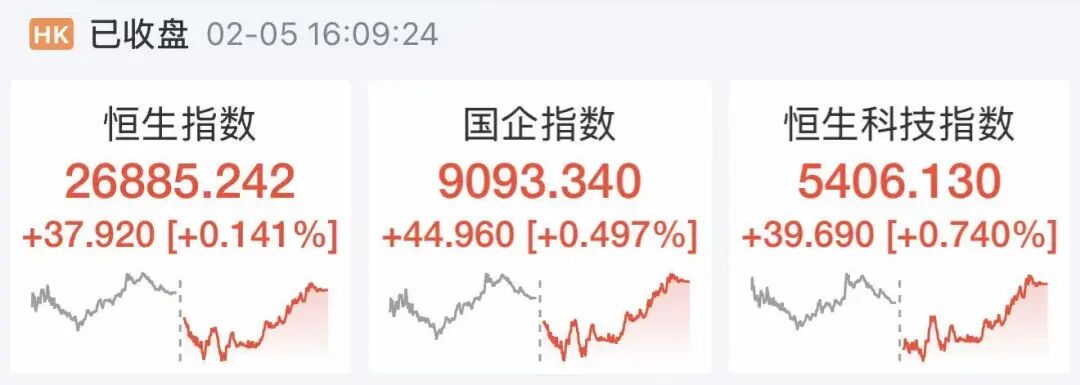
后市展望: 华安基金认为,近期市场呈现显著的风格轮动特征,前期强势的科技成长板块与红利价值风格形成明显的"跷跷板"效应,红利板块在经历前期回调后,其 高股息、低估值的"性价比"优势再度凸显,结合当前持续宽松的货币政策、渐起的顺周期复苏预期,以及保险等长期资金的配置需求,港股通红利板块具 备明确的布局价值,后续有望迎来市场风格再平衡与基本面改善形成的"戴维斯双击"。 2月5日,港股三大指数低开后震荡走高。截至收盘,恒生指数涨0.141%,国企指数涨0.497%,恒生科技指数涨0.74%。南向资金净买入超249亿港元。 | 新能源车企、航空、电信、生物医药、内银、物流等概念走强;有色金属、商业航天、光通讯、芯片、光伏太阳能等概念走弱。 | | --- | | 科网股午后回暖,联想涨超3%,小米、百度涨超2%,美团涨超1%;黄金股普跌,赤峰黄金(600988)跌超5%。 | | | 美团-W | 93.800 | +1.791% | 36.8亿 | | --- | --- | --- | --- | --- | | | 03690 | | | | | 8 | 泡泡玛特 | 242.400 | +2.192% | 5 ...


大行评级丨中银国际:中国银行业估值具吸引力,首选工行
Ge Long Hui A P P· 2026-02-05 08:47
Core Viewpoint - The report from BOC International indicates that the Chinese banking sector remains stable with attractive valuations, maintaining an "overweight" rating, with a preference for Industrial and Commercial Bank of China (ICBC) [1] Group 1: Investment Outlook - Investors are expected to focus on H-shares of banks this year due to their low valuations and solid fundamentals, with an anticipated dividend yield of approximately 5.46%, which is significantly higher than the one-year RMB deposit rate of 1.5% and the one-year HKD deposit rate of about 3% [1] - Looking ahead to 2026, it is anticipated that policymakers will continue to promote accommodative monetary policy and proactive fiscal policy, leading long-term investors to closely monitor H-share bank stocks [1] Group 2: Preferred Stocks - Among Chinese bank stocks, ICBC is favored due to its relatively low valuation compared to peers [1] - Recommendations include "buy" ratings for Agricultural Bank of China (1288.HK), China Merchants Bank (3968.HK), China Construction Bank (0939.HK), Postal Savings Bank of China (1658.HK), and China Everbright Bank (6818.HK) [1]
智通AH统计|2月5日
智通财经网· 2026-02-05 08:20
Core Viewpoint - The report highlights the current premium rates of AH shares, with Northeast Electric (00042), Zhejiang Shibao (01057), and Sinopec Oilfield Service (01033) leading in premium rates, while CATL (03750), China Merchants Bank (03968), and Hansoh Pharmaceutical (01276) are at the bottom of the list [1]. Premium Rate Rankings - The top three AH shares by premium rate are: - Northeast Electric (00042) with a premium rate of 815.25% - Zhejiang Shibao (01057) with a premium rate of 354.93% - Sinopec Oilfield Service (01033) with a premium rate of 295.40% [1]. - The bottom three AH shares by premium rate are: - CATL (03750) with a premium rate of -11.82% - China Merchants Bank (03968) with a premium rate of -2.30% - Hansoh Pharmaceutical (01276) with a premium rate of 1.62% [1]. Deviation Values - The top three shares with the highest deviation values are: - Goldwind Technology (02208) with a deviation value of 21.73% - Jinyu Group (02009) with a deviation value of 19.04% - Sinopec Oilfield Service (01033) with a deviation value of 18.76% [1]. - The bottom three shares with the lowest deviation values are: - Zhejiang Shibao (01057) with a deviation value of -41.23% - Junda Co., Ltd. (02865) with a deviation value of -39.46% - Yangtze Optical Fibre and Cable (06869) with a deviation value of -26.61% [1]. Additional Insights - The report includes a detailed table of the top and bottom AH shares by premium rate and deviation value, providing a comprehensive overview of the current market situation [2].
中银国际:内银市净率仍低、股息率有吸引力及估值或进一步提升 维持H股增持评级
Zhi Tong Cai Jing· 2026-02-05 08:09
智通财经APP获悉,中银国际发表报告,维持H股内银业增持评级等,现时该券商覆盖的内银H股的平 均市净率约为0.54倍(基于2026年预期市净率),仍处于过去10年该板块历史估值区间的下限,认为今年 投资者仍将更加关注内银H股板块,该板块估值较低,基本面稳健,2026年预期股息率约5.46%,相较 中国1年期及10年期国债的收益率分别为1.29%及1.81%,内地一年期人民币存款利率1.5%,香港一年期 港元定存息约为3%而言颇具吸引力。 展望2026年,鉴于政策制定者可能继续推行宽松的货币政策和积极的财政政策,长期投资者将继续密切 关注内银H股板块。该券商指,工商银行 (01398) 是在该板块中的首选,在于其估值在同业中相对较 低。该券商同时亦建议投资者买进农业银行 (01288) 、招商银行 (03968) 、建设银行 (00939) 、邮储银行 (01658) 及光大银行 (06818) 。 对于今年1月,内银H股表现跑输恒指同期升幅,中银国际指,原因是投资者热衷买进高贝塔系数(股价 波动幅度大于整体大市)的股票,展望未来,认为投资风格可能会更加平衡。 2026年,政策制定者可能 会继续推动宽松的货币政 ...
银行业2025年报业绩前瞻:盈利改善,不良平稳,优质城商行或超预期
Shenwan Hongyuan Securities· 2026-02-05 08:08
Investment Rating - The report maintains a positive outlook on the banking industry, indicating that high-quality city commercial banks may exceed expectations [1]. Core Insights - The report forecasts that listed banks will exhibit "stable revenue and gradually improving profit growth" characteristics in 2025, with a projected revenue growth of 0.9% year-on-year and a recovery in net profit growth to 1.9% [3]. - Performance differentiation among various types of banks is expected, with city commercial banks showing superior results, while state-owned banks and leading joint-stock banks maintain stable positive growth [3]. - Key drivers for stable profit growth include narrowing interest margin declines, improved market sentiment, and stable asset quality ensuring credit costs do not significantly erode profits [3]. Summary by Sections Revenue and Profit Forecast - Listed banks are expected to see a revenue growth of 0.9% in 2025, with net profit growth recovering to 1.9% [3]. - State-owned banks are projected to have a revenue growth of 1.5%, while joint-stock banks are expected to see a revenue decline of 1.8% [3]. - City commercial banks in regions like Jiangsu and Zhejiang are anticipated to maintain high single-digit profit growth, with some banks achieving double-digit growth [3]. Non-Interest Income and Market Conditions - Non-interest income is influenced by market conditions and the timing of revenue recognition by banks, with a projected recovery in 2025 due to a low base from 2024 [3]. - The report notes that banks are likely to see a 3% year-on-year growth in non-interest income in the first half of 2025 and 4.6% by the end of the third quarter [3]. Interest Income and Credit Growth - Interest income is expected to stabilize as banks manage their asset pricing and liability costs effectively, with a projected decline in interest margin narrowing to about 10 basis points [4]. - Credit growth is anticipated to remain stable, with a focus on corporate lending, while retail lending shows weaker performance [3]. Asset Quality and Provisioning - The report indicates that the non-performing loan (NPL) ratio for listed banks is expected to remain stable at around 1.22% [4]. - The provisioning coverage ratio is projected to decrease slightly to 236%, with banks advised to focus on those with low NPL generation and high provisioning ratios [4]. Investment Recommendations - The report suggests focusing on high-quality banks that are likely to recover towards a price-to-book (PB) ratio of 1, particularly city commercial banks with strong credit growth [4]. - It highlights the potential for dividend yields to attract investors, with a current dynamic dividend yield of approximately 4.8% [4].
