
卫龙

Search documents
山姆突然“暴雷”,3亿中产彻底怒了
Xin Lang Cai Jing· 2025-07-19 02:24
Core Viewpoint - The recent controversy surrounding Sam's Club and the introduction of the "low-sugar Holi-Ryu pie" has sparked discussions about the brand's commitment to providing a differentiated shopping experience for its middle-class members, which has been compromised by the influx of common products and the removal of high-quality items [1][5][7] Group 1: Product Strategy and Consumer Reaction - Sam's Club has traditionally focused on high-end, unique products to attract middle-class consumers willing to pay membership fees for a premium shopping experience [1][14] - The introduction of the "low-sugar Holi-Ryu pie" has received over 300 negative reviews from consumers, primarily due to concerns about its actual sweetness and the presence of trans fats [5][8] - The removal of popular, high-repurchase items like sun cakes and low-sugar egg yolk pastries in favor of more common brands has led to consumer dissatisfaction, questioning the value of the membership [7][9] Group 2: Quality Control Issues - Sam's Club has faced multiple quality control issues in 2025, including reports of foreign objects in food products, which have contributed to a growing distrust among consumers [8][9] - Complaints regarding food safety have surged, with over 8,000 complaints reported in 2024, 40% of which were related to food safety concerns [8][9] Group 3: Business Expansion and Challenges - Rapid expansion has led to challenges in maintaining quality control, with plans to open 10 new stores in 2025, bringing the total to nearly 60 [10][12] - The company's local sourcing rate exceeds 70%, which has complicated quality management as the scale of operations grows [10][12] - Financially, while Sam's Club reported a sales figure of 100 billion yuan and 2 billion yuan in membership fees in 2024, there are concerns about slowing sales growth, which has dropped from 15% to single digits [12][10] Group 4: Competitive Landscape - Competitors like Hema and Costco are intensifying pressure on Sam's Club by innovating their product offerings and enhancing customer engagement [12][10] - The retail industry is evolving, and consumers are increasingly prioritizing product quality and uniqueness over mere brand prestige [16][14]


“背刺”中产的山姆,已经妥协了
Hua Er Jie Jian Wen· 2025-07-18 12:10
Core Viewpoint - Sam's Club is facing a trust crisis due to the recent removal of exclusive or private label products in favor of more common consumer brands, which contradicts its original value proposition of high-quality and scarce products [2][4][10] Group 1: Product Strategy and Consumer Trust - Sam's Club quietly removed popular exclusive products like sun cakes and rice puddings, replacing them with widely available brands, leading to accusations of "product selection downgrade" [2][4] - The shift in product offerings has raised concerns among consumers about the value of their membership, as they expect high-quality and unique products in exchange for their membership fees [5][10] - The controversy highlights a fundamental challenge in Sam's Club's business model, where the need for broader product coverage may compromise brand uniqueness and quality [2][24] Group 2: Membership Value Perception - Consumers perceive a decline in membership value as the uniqueness of products diminishes, prompting them to reconsider the worth of their membership fees [6][10] - The annual membership fee of 260 yuan (680 yuan for premium members) is seen as a barrier that should provide access to exclusive products, but the recent changes have led to dissatisfaction among members [5][9] - Complaints about reduced member benefits, such as the cancellation of value-added services, further exacerbate the perception of declining membership value [9] Group 3: Competitive Landscape - Sam's Club is under increasing pressure from competitors like Costco and local players such as Hema, which are aggressively targeting the same consumer base [3][21] - The competitive environment is intensifying, with Costco's differentiated product strategy and Hema's rapid growth posing significant challenges to Sam's Club's market position [20][21] - The emergence of new competitors, such as Pang Donglai, which offers high-quality service without membership fees, adds to the competitive pressure on Sam's Club [22][23] Group 4: Business Growth and Expansion Challenges - Sam's Club has experienced rapid growth, with sales reaching over 800 billion yuan in 2023 and projected to exceed 1 trillion yuan in 2024 [13][14] - The expansion strategy has led to increased pressure on each new store to perform, potentially driving a shift towards more mainstream products to meet sales targets [24] - The balance between rapid expansion and maintaining product quality is becoming a critical issue for Sam's Club as it navigates its growth trajectory [24][25]
山姆选品变化背后
Sou Hu Cai Jing· 2025-07-18 05:46
Core Viewpoint - The recent changes in product selection at Sam's Club have raised concerns among consumers about the perceived decline in the quality and uniqueness of offerings, shifting from "global premium goods" to more common supermarket brands [3][4][10]. Group 1: Product Selection Changes - Sam's Club has removed several popular items, including Haldirams and Wei Long products, from its shelves, leading to consumer dissatisfaction and inquiries about the rationale behind this shift [3][4]. - The removal of these items has sparked discussions on social media, with many consumers questioning the value of their membership fees due to the perceived decline in product quality [3][4]. - Despite the removal of certain products, other items from traditional domestic brands remain available, indicating a potential shift in product strategy [5][6]. Group 2: Strategic Implications - The change in product selection may be linked to a recent management shift within Sam's Club China, with new leadership potentially influencing the direction of product offerings [12][13]. - The company has been expanding rapidly, opening 6-7 new stores annually, which may necessitate a broader range of products to cater to a more diverse membership base [14]. - The competitive landscape in the retail sector is evolving, with many traditional supermarkets looking to Sam's Club for lessons in quality retailing and membership models [14][15]. Group 3: Market Positioning - Sam's Club's unique selling proposition relies on a strong supply chain and stringent product selection standards, which are crucial for maintaining its competitive edge in the membership retail market [14]. - The company has historically emphasized differentiation in its product offerings, avoiding common items found in other stores to maintain its premium positioning [10][11]. - As consumer preferences evolve, the company may need to adapt its product development strategy to include both premium and popular domestic brands to meet diverse consumer demands [11][12].

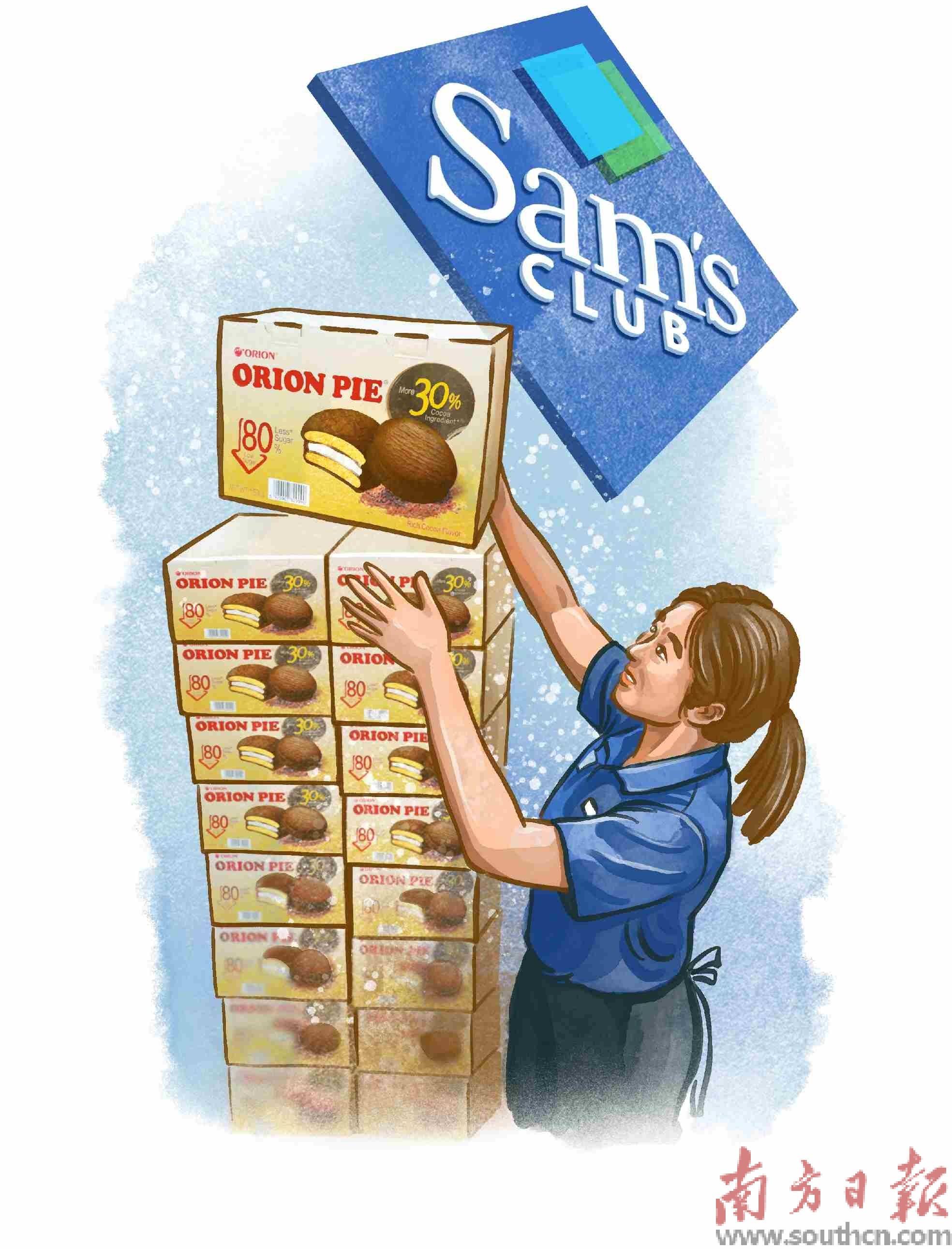
山姆下架“口碑尖货”上架“大众品牌”,会员价值缩水引质疑
Qi Lu Wan Bao· 2025-07-17 13:44
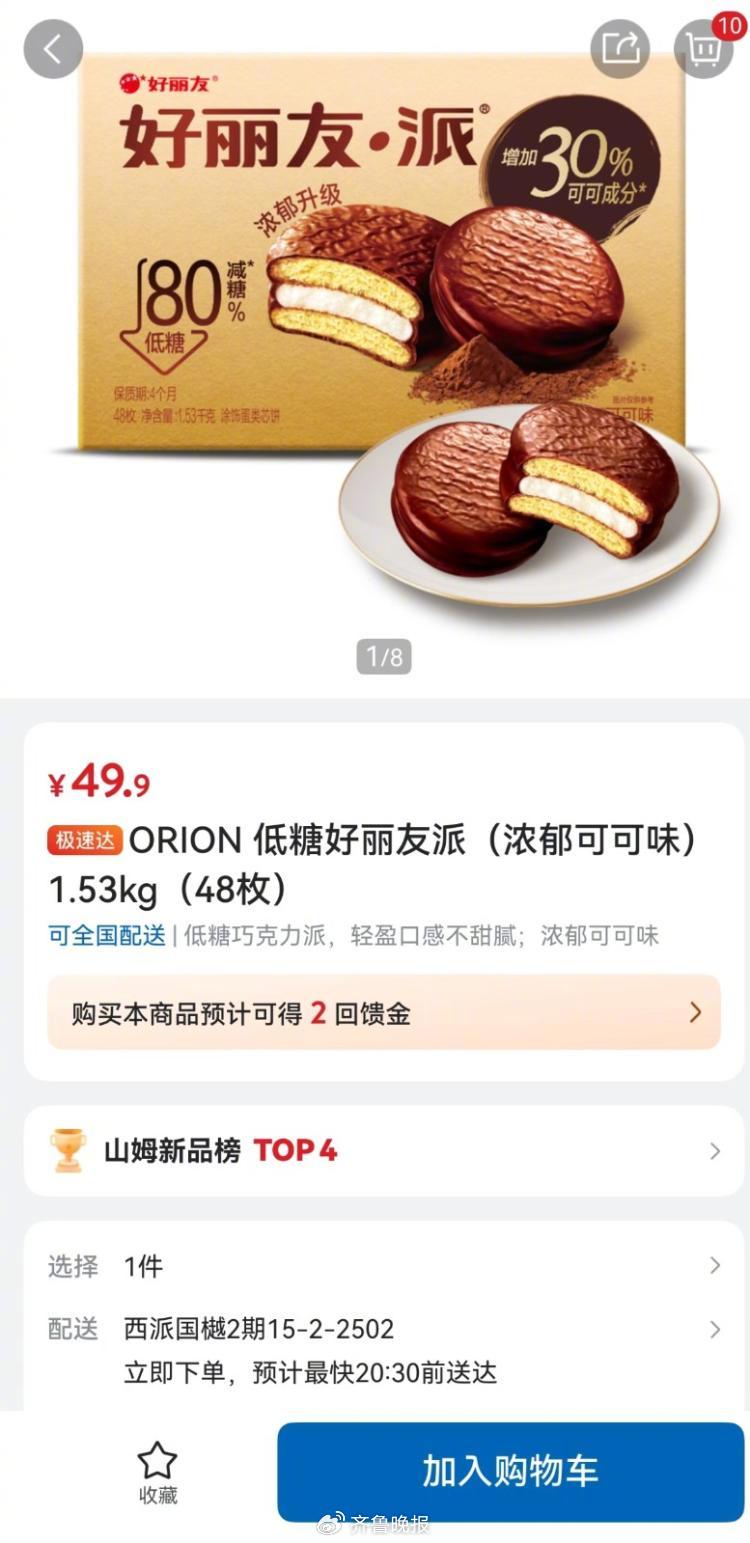
Core Viewpoint - Sam's Club has initiated a silent product replacement campaign, removing several exclusive items and replacing them with more common brands, leading to significant backlash from its membership base [1][4][10] Group 1: Product Changes - Sam's Club has quietly removed popular exclusive products such as Taiwanese-style sun cakes and low-sugar egg yolk pastries, replacing them with widely available brands like Orion and Wei Long [1][4] - The new products, including a low-sugar Orion cake, were marketed as improvements, claiming an 80% reduction in sugar and a 30% increase in cocoa content [6][7] Group 2: Member Reactions - Members expressed dissatisfaction, feeling that the quality of products has declined and that the unique selection that differentiated Sam's Club from regular supermarkets is disappearing [4][10] - Many members have voiced their concerns on social media, leading to a trending topic regarding the perceived decline in product quality and selection [4][10] Group 3: Financial Implications - Sam's Club charges an annual membership fee of 260 yuan for regular members and 680 yuan for premium members, with over 500,000 active members in China contributing to significant annual revenue [9] - The average annual spending required to break even on the membership is now estimated at 13,000 yuan, equating to an additional 5.2% "membership tax" on each purchase [9][10] Group 4: Business Model Concerns - The shift in product selection raises questions about the core value proposition of the membership model, as members expect unique products that cannot be found elsewhere [10] - Industry analysts suggest that maintaining a diverse and high-quality product range is essential for sustaining member loyalty and competitive advantage against e-commerce platforms [10]
山姆背刺中产,一天就认怂了
36氪· 2025-07-17 10:04
Core Viewpoint - The article discusses the trust crisis faced by Sam's Club due to recent product selection changes, leading to member dissatisfaction and concerns about the quality of offerings [1][8][18]. Group 1: Product Selection Changes - Sam's Club has recently removed popular products like Sun Cakes and Rice Puddings, replacing them with more common brands such as Low Sugar Holi You Pie and Wei Long Spicy Strips [1][5]. - The introduction of Low Sugar Holi You Pie, which claims to have reduced sugar by 80% and increased cocoa content by 30%, has received negative feedback from consumers who found it too sweet [6][8]. - The controversy is not just about the new products but also about the brand's past issues, particularly Holi You's "dual standard" ingredient controversy in 2022, which has damaged its reputation [8][16]. Group 2: Member Reactions - Members expressed anger on social media, feeling that they are being treated as "chives" (a term for being taken advantage of) by receiving products available at regular stores instead of exclusive offerings [3][10]. - Some members are reconsidering their membership renewals due to the perceived decline in product quality and exclusivity [8][10]. - Complaints about the selection strategy have gained traction, with members feeling that the value of their membership is diminishing as the uniqueness of products decreases [10][18]. Group 3: Management and Strategy Changes - The timing of the product selection controversy coincides with a leadership change at Sam's Club, with Andrew Miles retiring and Jane Ewing taking over as president [13][16]. - Despite rumors suggesting that the management change led to a decline in quality control, it has been clarified that the new president is still an international executive [15][16]. - Sam's Club is undergoing aggressive expansion, with plans to open eight new stores in 2025, which may pose challenges for maintaining product quality [16][24]. Group 4: Competitive Landscape - The competitive landscape is intensifying, with Costco and local brands like Hema and Pang Dong Lai posing significant challenges to Sam's Club's market position [22][24]. - The uniqueness of Sam's Club's offerings has been diluted, impacting the profitability of resellers who rely on exclusive products [22][24]. - The essence of the membership model is being questioned as the perceived value of exclusive product access diminishes, leading to concerns about the sustainability of the business model [18][24].
260 元会员费买了个寂寞?山姆货架上的好丽友们,戳破多少中产的精致幻觉?
Sou Hu Cai Jing· 2025-07-17 09:54
Core Viewpoint - The trust crisis at Sam's Club arises from the introduction of common brands, leading to member dissatisfaction and a decline in perceived value of the membership [1][3][10] Group 1: Membership and Brand Perception - Sam's Club has positioned itself as a symbol of middle-class identity in China, with over 5 million effective members and annual membership revenue exceeding 1.3 billion yuan [2] - The introduction of common brands like Holley Friend and Xu Fu Ji has sparked outrage among members, who feel deceived by the perceived downgrade in product quality [1][3][4] Group 2: Product Quality and Consumer Trust - The launch of the "low-sugar special edition" Holley Friend cake, which was criticized for its taste, has further damaged the brand's image and member trust [3][5] - Reports of food safety issues, such as suspected worm eggs in pork and live insects in milk, have raised concerns about product quality and safety [7][9] Group 3: Management and Strategic Changes - A shift in management has led to a significant reduction in the proportion of imported goods from 42% to 28%, raising concerns about quality in favor of cost-cutting [6][10] - The cancellation of member benefits, such as the right to purchase premium products and changes in cashback rules, has contributed to a sense of diminished value among members [8][9] Group 4: Social Media and Public Response - The hashtag Sam's Selection Downgrade has garnered over 10 million views on social media, indicating widespread discontent among members [1] - Sam's Club's response to the backlash has been criticized for lacking empathy, further alienating its customer base [9][10]
美国6月CPI上涨2.7%,中国二季度手机出货量下降 | 财经日日评
吴晓波频道· 2025-07-16 16:07
Group 1: Economic Indicators - The U.S. June CPI rose by 2.7% year-on-year, the highest since February, slightly exceeding expectations of 2.6% and up from 2.4% in the previous month [1] - Core CPI for June increased by 2.9% year-on-year, meeting expectations but slightly higher than the previous value of 2.8% [1] - The probability of a 25 basis point rate cut by the Federal Reserve in September is estimated at 62%, with expectations of nearly two cuts by the end of the year [1] Group 2: Smartphone Market in China - In Q2 2025, China's smartphone market shipments declined by 4% year-on-year, ending six consecutive quarters of growth, with total shipments at 69 million units [3] - Huawei regained the top position with 12.5 million units shipped, holding an 18.1% market share, while other major brands like Vivo, OPPO, and Apple saw declines in shipments [3][4] - The decline in shipments is attributed to cautious market sentiment and the end of government subsidies, leading manufacturers to reduce inventory pressure [4] Group 3: Local Asset Management Companies - The Financial Regulatory Bureau released new regulations for local asset management companies (AMCs) to clarify business scope and improve risk management [5][6] - The regulations aim to prevent AMCs from engaging in activities that could increase financial risks, such as facilitating new hidden debts [7] - The focus is on ensuring AMCs serve local economies effectively while adhering to defined operational boundaries [6][7] Group 4: Geely's Acquisition of Zeekr - Geely announced the acquisition of all remaining shares of Zeekr, with a total cash consideration of approximately $2.399 billion [8] - Zeekr is projected to achieve revenues of 75.913 billion yuan in 2024, a 46.9% increase year-on-year, while its net loss is expected to narrow by 29.9% [8] - The acquisition is part of Geely's strategy to consolidate its electric vehicle brands and reduce internal competition [9] Group 5: Apple’s Foldable iPhone Development - Apple has decided to use Samsung's display technology for its first foldable iPhone, moving away from in-house development due to slow progress [10][11] - The foldable iPhone is expected to enter production by late 2025, with Samsung providing the core display components [10] - This shift reflects Apple's cautious approach to emerging technologies and the need to maintain its competitive edge in the market [11] Group 6: Sam's Club Brand Strategy - Sam's Club has introduced mainstream brands like Haoliyou and Weilong, causing dissatisfaction among members who expect unique product offerings [12][13] - The expansion of Sam's Club is projected to increase the number of stores significantly, with sales exceeding 5 billion USD in some locations [13] - Consumer reactions indicate that even with branding adjustments, acceptance of mainstream products may take time, challenging Sam's Club's brand positioning [14] Group 7: A-Share Market Trends - As of June 2025, the total number of A-share investors surpassed 240 million, with a significant increase in individual investors [15] - The market is transitioning towards a more mature structure, with a decline in individual investor holdings and an increase in institutional participation [16] - Recent market activity shows a lack of clear trends, with various sectors experiencing mixed performance amid ongoing adjustments [17][18]



山姆下架好丽友背后:零食们借山姆扩增量,有品牌去年卖2亿
Nan Fang Du Shi Bao· 2025-07-16 12:57
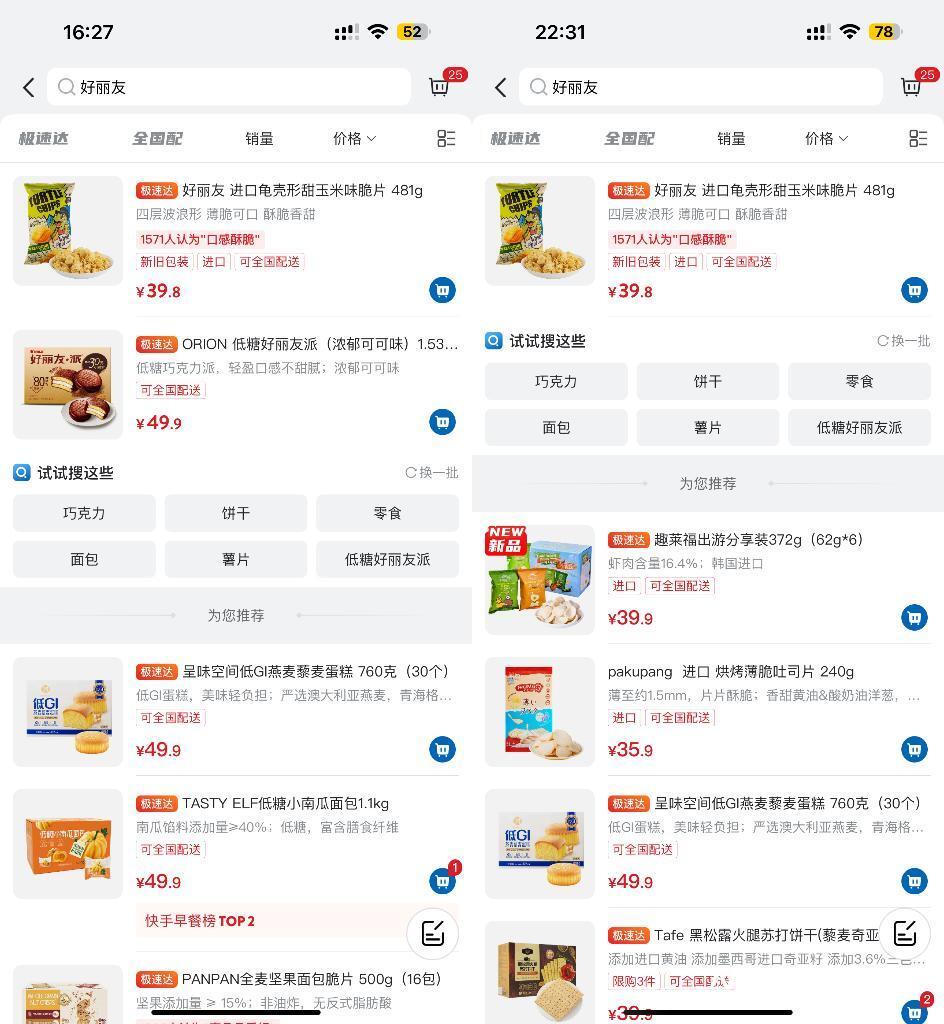
Core Viewpoint - The recent removal of "Low Sugar Orion Pie" from Sam's Club has sparked discussions among consumers regarding the selection strategy of the store, as many popular products have been replaced with items that are more commonly found in regular supermarkets [4][7][22]. Group 1: Product Removal and Consumer Reaction - Sam's Club has removed the "Low Sugar Orion Pie" from its app and shelves, despite it being recently introduced [1][8]. - Consumers expressed dissatisfaction on social media about the removal of high-repurchase-rate products and the introduction of more common items [4][22]. - The store's staff were unable to provide a clear reason for the product's removal or when it might return [8][12]. Group 2: Brand Strategy and Market Positioning - Several snack brands, including Orion, are leveraging Sam's Club to expand their market presence and target higher-end consumers, with some brands reporting significant sales through this channel [3][15]. - Snack brands are increasingly offering customized products for Sam's Club, which has led to substantial sales growth for some, such as Qiaqia Foods, which reported sales of approximately 200 million yuan through Sam's Club last year [15][19]. - The collaboration with Sam's Club is seen as a way for snack brands to enhance their market positioning, although there are concerns about the potential dilution of brand identity due to reliance on the retailer [22][23]. Group 3: Industry Trends and Insights - The snack food industry is undergoing a channel restructuring, with traditional supermarkets losing market share to membership-based retailers like Sam's Club, which are gaining traction among high-income consumers [21][22]. - Experts suggest that while partnerships with Sam's Club can provide growth opportunities, brands should avoid over-reliance on this channel to maintain their independent value [22][23]. - The legal perspective indicates that Sam's Club has the right to remove products based on market conditions and contractual agreements with suppliers, which does not necessarily harm consumer interests [27].
山姆风评下降,不怪好丽友
2 1 Shi Ji Jing Ji Bao Dao· 2025-07-16 12:28
Core Viewpoint - The controversy surrounding Sam's Club's product selection strategy has raised concerns among consumers regarding the quality and uniqueness of its offerings, leading to questions about the value of the membership fee paid by consumers [2][4]. Group 1: Product Selection and Quality Concerns - Sam's Club has faced criticism for replacing popular products with more mainstream brands like Haoliyou, leading to perceptions of homogenization in its product offerings [2][3]. - Consumers have reported quality issues with certain products, indicating a potential shift in supplier relationships that may affect product standards [3][6]. - The core of the controversy lies in the expectation that consumers pay a premium membership fee for unique and high-quality products, which may not be met if product differentiation diminishes [4][5]. Group 2: Membership Value Proposition - The membership fee is perceived as a "selection premium" that consumers expect to be matched with high-quality products and services [3][4]. - Sam's Club has emphasized its commitment to quality and member satisfaction, stating that it will consider member feedback in future product selection strategies [5][6]. - The trust established between Sam's Club and its members is crucial for its competitive advantage, as consumers believe they are getting quality products at competitive prices [3][5]. Group 3: Expansion and Financial Considerations - Sam's Club has been rapidly expanding in mainland China, opening 32 new stores from 2016 to 2023, with plans for continued growth in 2024 [6]. - Despite strong sales growth, the high cost of store openings and operational expenses poses challenges for maintaining cash flow and profitability [6][7]. - The overall performance of the supermarket sector in mainland China is underwhelming, raising questions about Sam's Club's ability to sustain its growth trajectory without facing increased competition and market saturation [7].
上架山姆的产品属“特供”?溜溜梅最新回应:不存在质量双标
Guan Cha Zhe Wang· 2025-07-16 09:41
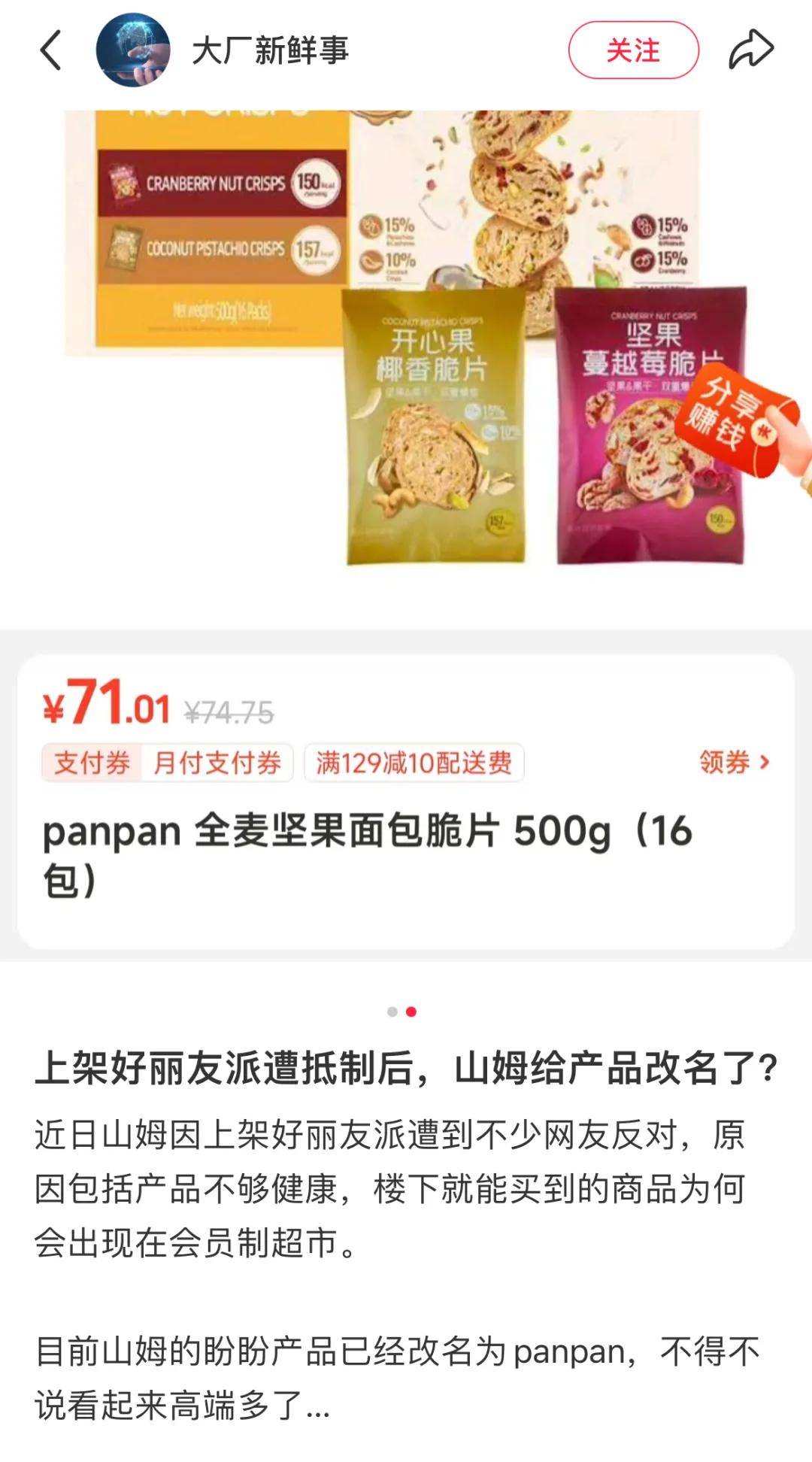
Group 1 - The core issue arises from the rebranding of well-known consumer products sold at Sam's Club, leading to consumer dissatisfaction and accusations of brand betrayal [1][4] - Brands like Wei Long and Panpan have introduced products with altered packaging and branding, causing confusion among consumers who expect familiar branding [1][4] - The controversy has sparked significant public discourse, with consumers expressing their frustrations over perceived quality discrepancies and branding changes [1][4] Group 2 - Panpan's representative stated that the special products differ from regular packaging, and any inquiries about the branding should be directed to Sam's Club [4] - Lu Lu Mei's official customer service clarified that their products at Sam's Club are exclusive channel items made with imported ingredients, emphasizing that they maintain the same food safety standards across all sales channels [4][6] - Lu Lu Mei acknowledged the need to rebuild consumer trust, which is often more challenging than losing it, indicating a commitment to improving products and services in response to public sentiment [6]
