
第一三共

Search documents
默沙东又踩了个雷
3 6 Ke· 2025-12-24 00:00
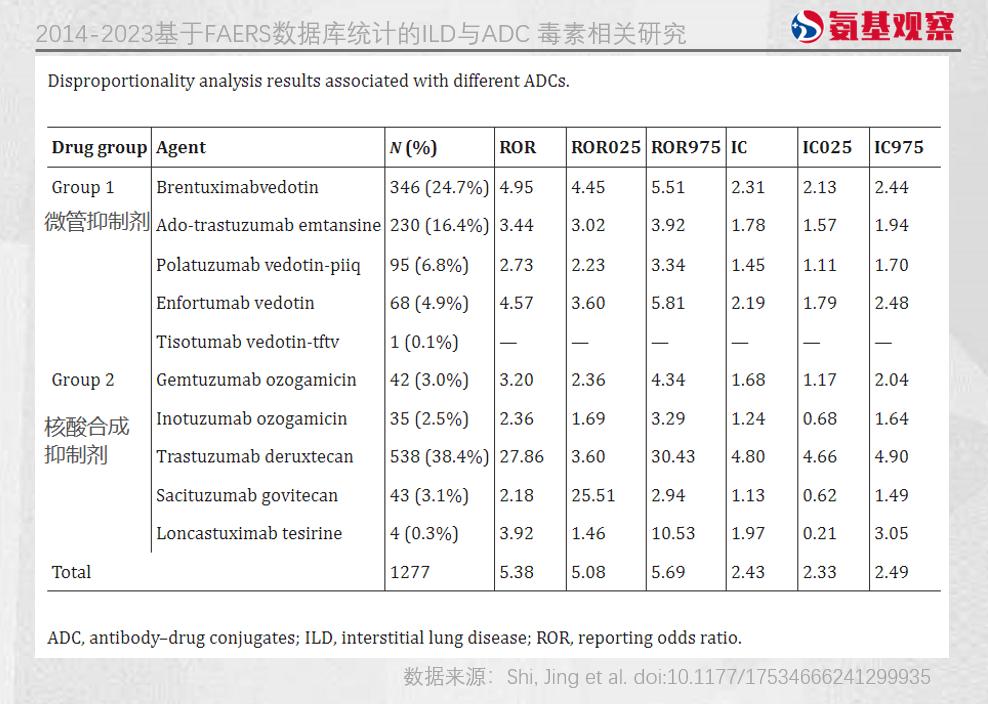
Core Viewpoint - The clinical trial for the B7-H3 ADC drug I-Dxd, developed by Merck and Daiichi Sankyo, has been globally suspended due to a higher-than-expected incidence of grade 5 interstitial lung disease (ILD), which corresponds to fatal outcomes in medical toxicity grading [1][2]. Group 1: Clinical Trial Outcomes - The suspension of the I-Dxd trial represents a significant setback for a $22 billion ADC collaboration project between Merck and Daiichi Sankyo, which had high expectations [2]. - Prior to this, another ADC, Patritumab deruxtecan, was withdrawn from the market due to poor overall survival data, with two patient deaths attributed to ILD during clinical trials [2][3]. - The increasing occurrence of severe ILD has led to a decrease in regulatory tolerance for ADCs, raising concerns about the safety of these therapies [3][7]. Group 2: ADC Safety Concerns - The FDA has begun to scrutinize ADC safety more closely, particularly in light of the recent clinical trial suspensions and the associated fatal adverse reactions [5][16]. - Previous studies indicated that I-Dxd had already shown ILD signals in earlier phases, with 36.5% of patients experiencing grade 3 or higher treatment-related adverse events (TRAEs) in the IDeate-Lung01 trial [5]. - The safety issues surrounding ILD are not isolated to a single drug or design but may be inherent risks associated with the Dxd toxin platform [10][11]. Group 3: Market Implications - Despite the safety concerns, ADCs remain a critical technology in oncology, capable of significantly improving efficacy in late-stage patients [14][15]. - The recent approval of Enhertu for a new indication demonstrates that regulatory bodies may allow for some flexibility in safety standards if the therapeutic benefits are substantial [15][16]. - The competitive landscape for ADCs is shifting, with a growing emphasis on balancing efficacy and safety, particularly in managing systemic exposure to minimize damage to normal cells [16].


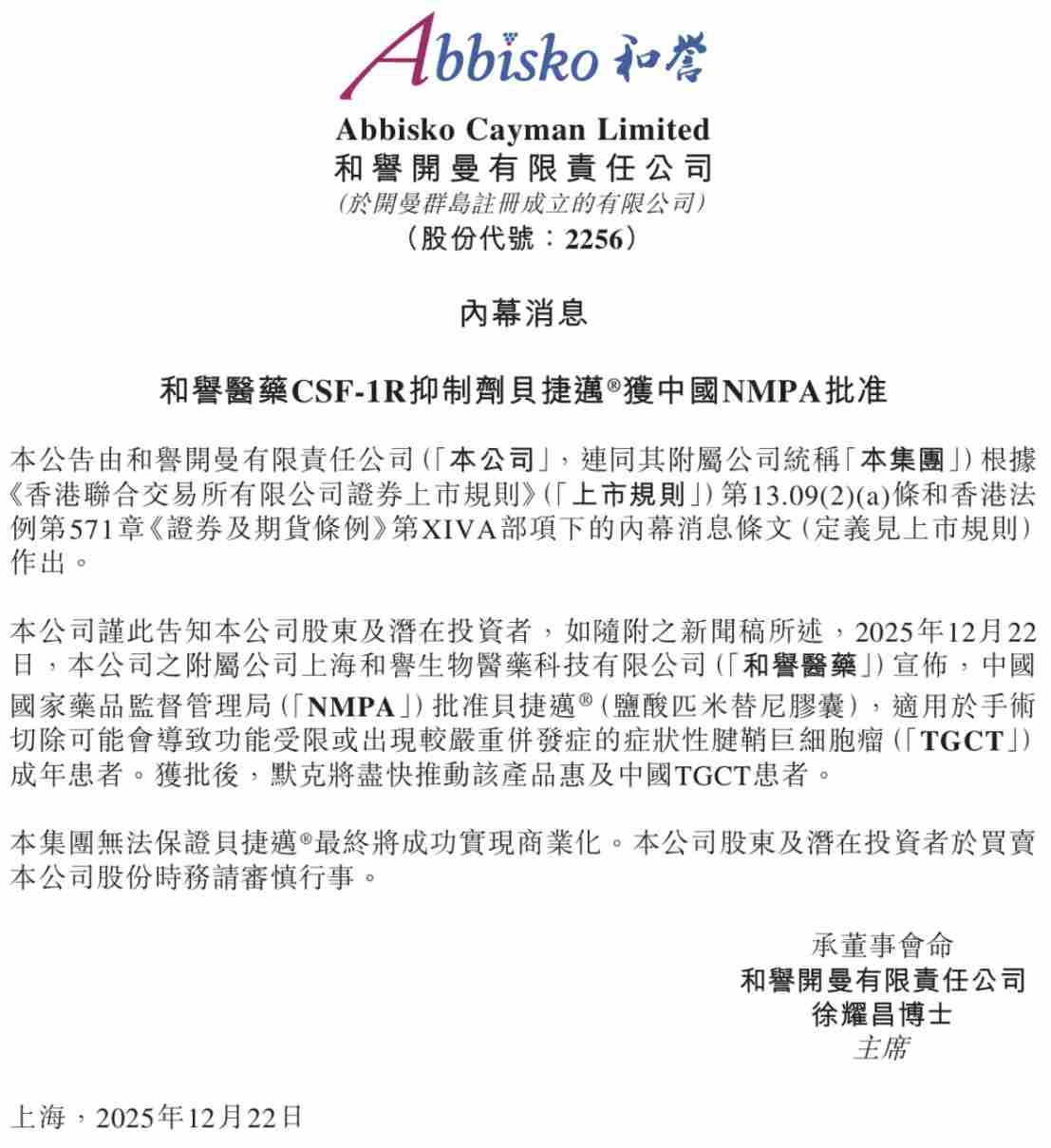
和誉-B:匹米替尼顺利获批,“十亿美元分子”价值加速兑现成配置关键
Zhi Tong Cai Jing· 2025-12-23 01:17
Core Viewpoint - The Hong Kong stock market has experienced a significant rise in innovative pharmaceuticals, with the Hang Seng Healthcare Index increasing by 102.76% from the beginning of the year to its peak in September, followed by a decline of 19.06% by December 22. Despite this, the company He Yu has seen a remarkable stock price increase of 370.95% this year, driven by the approval of its core product, Pimicotinib, in China [1][2][5]. Group 1: Product Approval and Market Impact - He Yu announced the approval of its drug Beijiemai (Pimicotinib) by the NMPA, marking it as the first systemic treatment for tenosynovial giant cell tumor (TGCT) in China [2][5]. - The approval process for Beijiemai was expedited, receiving priority review in May and being approved within six months after its NDA application was accepted [6][7]. - The drug has shown strong and durable tumor relief efficacy in clinical trials, providing significant evidence for its long-term safety and effectiveness [6][7]. Group 2: Financial and Market Potential - Pimicotinib is expected to generate substantial revenue, with estimates suggesting it could reach peak sales of approximately $1.5 billion globally [8][9]. - The company has secured a lucrative partnership with Merck, which includes an upfront payment of $70 million and potential total transaction value of up to $606 million, reflecting strong confidence in the drug's market potential [7][9]. - The approval of Pimicotinib is anticipated to enhance the company's cash flow, supporting further innovation and development of its oncology pipeline [9][10]. Group 3: Innovation Pipeline and Valuation - He Yu has established a robust pipeline of 22 differentiated innovative drugs, focusing on precision oncology and immunotherapy, with several candidates showing potential for being first-in-class or best-in-class [9][10]. - The company has been actively repurchasing shares, with a total of 39 buybacks this year, indicating a commitment to returning value to shareholders [10]. - Compared to other biopharma companies, He Yu's price-to-sales (P/S) ratio of 13.38 suggests significant upside potential in valuation, especially with the successful commercialization of Pimicotinib [10].
和誉-B(02256):匹米替尼顺利获批,“十亿美元分子”价值加速兑现成配置关键
智通财经网· 2025-12-23 01:13
Core Viewpoint - The Hong Kong stock market has experienced a significant rise in innovative pharmaceuticals, with the Hang Seng Healthcare Index increasing by 102.76% from the beginning of the year to its peak in September, followed by a decline of 19.06% by December 22. Despite this, the company He Yu has seen a remarkable stock price increase of 370.95% this year, driven by the approval of its core product, Pimicotinib, in China, marking a critical milestone for the company [1][4]. Group 1: Product Approval and Market Impact - He Yu's Pimicotinib, a first-in-class drug for treating tenosynovial giant cell tumors (TGCT), has received approval from the National Medical Products Administration (NMPA) in China, representing a significant step towards global commercialization [4][5]. - The approval process for Pimicotinib was expedited, with the drug being accepted for priority review in May and receiving approval just over six months later, highlighting the efficiency of He Yu's research and development system [5][6]. - The MANEUVER study presented at the European Society for Medical Oncology (ESMO) demonstrated Pimicotinib's strong and durable tumor relief efficacy, providing critical evidence for its long-term safety and effectiveness [6][7]. Group 2: Financial and Strategic Developments - He Yu has entered a lucrative partnership with Merck, which includes a high upfront payment and potential milestone payments, indicating strong confidence in Pimicotinib's market potential, with total deal value potentially reaching $606 million [6][8]. - The market for TGCT treatment is currently dominated by Pexidartinib, which has significant safety concerns, positioning Pimicotinib as a safer and more effective alternative, with expectations of substantial revenue growth [7][8]. - He Yu's innovative pipeline includes multiple promising candidates, with ongoing developments in various drug candidates that could further enhance the company's market position and revenue streams [8][9]. Group 3: Valuation and Investor Returns - He Yu has been actively repurchasing shares, with a total of 39 buybacks this year, reflecting a commitment to returning value to shareholders while maintaining a low price-to-sales (PS) ratio of 13.38, suggesting significant upside potential compared to peers [9]. - The successful commercialization of Pimicotinib is expected to generate stable revenue and cash flow, supporting further innovation and development within the company [8][9]. - The company is well-positioned to transition into a leading global biopharmaceutical player, leveraging its innovative capabilities and expanding its market presence [9].
百利天恒朱义:原始创新打造超级爆品,执掌全球话语权
2 1 Shi Ji Jing Ji Bao Dao· 2025-12-22 13:08
Core Insights - The oncology sector remains a hotbed for pharmaceutical innovation, with antibody-drug conjugates (ADCs) emerging as one of the most promising areas due to their dual advantages of precise targeting and potent cytotoxicity [1][2] - Chinese biotech companies have established themselves as key players in the global ADC innovation landscape, holding over 50% of the new drug pipeline in this category [1][2] - A significant strategic partnership between BaiLi TianHeng and Bristol-Myers Squibb (BMS) has set a record for the highest total transaction value for a single ADC asset, further intensifying industry innovation [1][2] Industry Trends - The ADC sector has become one of the fastest-growing segments in the global pharmaceutical industry, with projections estimating the market to reach $115.1 billion by 2032, and China's ADC market expected to reach 66.2 billion yuan by 2030 [2] - In the first eight months of 2025, ADC drugs accounted for 14 transactions, making it one of the hottest outbound technology sectors for Chinese companies [1][2] - Companies are expanding their focus beyond established targets like HER2 and TROP2 to explore "blue ocean" targets such as CDH6, CDH17, and DLL3, aiming for broader treatment windows and improved competitive landscapes [1][2] Strategic Collaborations - The partnership between BaiLi TianHeng and BMS is characterized by a unique model of "self-researched core assets + global rights collaboration" and "co-development + co-commercialization," which is relatively rare globally [4][5] - The collaboration is expected to face challenges related to team size and division of labor, prompting BaiLi TianHeng to expand its team and build a robust organizational structure [4][5] - The deal with BMS, valued at up to $8.4 billion, has revitalized the pharmaceutical market during a period referred to as a "capital winter" [2][3] Market Dynamics - Despite the growing trend of business development (BD) transactions, licensing out remains the mainstream model for domestic biotech companies, allowing them to focus on early-stage innovation while outsourcing later-stage development [6] - The increasing number of BD transactions reflects the rising competitiveness and value of Chinese pharmaceutical assets on a global scale, although concerns about undervaluation persist [7][8] - The need to create "super blockbuster" products is seen as essential for overcoming the challenges of being undervalued in the global market [7][8] Future Outlook - The competition in the ADC+IO (immune-oncology) space is intensifying, with both multinational and domestic companies racing to develop innovative therapies [8][9] - BaiLi TianHeng aims to leverage the cash flow from its partnership with BMS to enhance its R&D capabilities and build a comprehensive commercialization framework [9][10] - The company plans to address four core capability gaps essential for achieving global competitiveness: global R&D capabilities, clinical development capabilities, supply chain capabilities, and commercialization capabilities [10][11] Conclusion - The ADC sector's growth signifies a shift in China's pharmaceutical innovation from a follower to a leader, with a focus on original innovation and global capabilities as the pathway for domestic biotech companies to establish themselves as industry leaders [12]
多款新药获批上市,数百款新药正在临床开发!这类疗法正在为癌症患者带来新曙光
Xin Lang Cai Jing· 2025-12-22 10:56
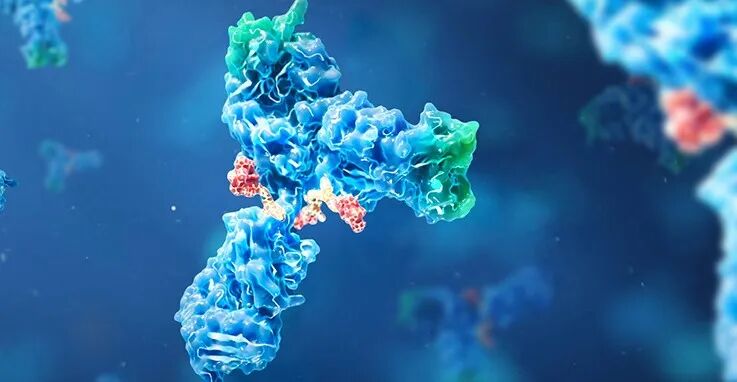
Core Insights - Antibody-drug conjugates (ADCs) are rapidly evolving as a targeted therapy in oncology, with numerous ADC therapies approved globally and hundreds in active clinical research, indicating a robust growth trend [1][13][15] - The complexity of ADC's multi-component structure presents challenges in efficacy and safety evaluation, as well as resistance prediction, necessitating comprehensive support for drug development [1][8][22] ADC Development Progress - Since 2025, several innovative ADCs have received regulatory approval, providing new treatment options for various cancers, including breast cancer and non-small cell lung cancer [15][16] - Notable approvals include Enhertu for HER2-positive breast cancer, Blenrep for relapsed multiple myeloma, and Emrelis for c-Met expressing non-small cell lung cancer [15][16] Clinical Trials and Data - Ongoing ADCs have reported promising clinical data, targeting various antigens such as CDH6 and EGFR/HER3, with indications covering ovarian cancer and endometrial cancer [18][19] - For instance, the CDH6-targeting ADC R-DXd showed a 50.5% objective response rate in platinum-resistant ovarian cancer patients [18] ADC Safety and Efficacy Evaluation - The evaluation of ADC efficacy relies on the synergistic interaction of its three core components: antibody, linker, and payload, which significantly affect drug stability and pharmacokinetics [20][21] - Safety assessments are critical, addressing potential risks such as payload release and immune responses, with comprehensive testing solutions provided to ensure quality and efficiency [21] Addressing Resistance Mechanisms - ADC resistance mechanisms, including antigen downregulation and altered payload metabolism, pose significant challenges, prompting the industry to focus on early-stage strategies to mitigate resistance [22][23] - Strategies include leveraging the "bystander effect" and exploring combinations with immunotherapy to enhance overall immune response [23] Comprehensive Support Solutions - WuXi AppTec has established a complete ADC research platform that integrates high-resolution mass spectrometry and targeted data analysis to address the complexities of ADC development [20] - The company has assisted partners in completing over 100 IND submissions, providing integrated solutions for efficacy evaluation, safety validation, and resistance analysis [23]
医药行业跟踪报告:蚂蚁阿福App上线带动“AI+大健康”投资热情,关注英矽智能新股发售
Shanghai Aijian Securities· 2025-12-22 08:07
Investment Rating - The report assigns an investment rating of "Outperform the Market" for the pharmaceutical sector, indicating a relative performance better than the benchmark index [8]. Core Insights - The pharmaceutical sector has shown resilience, with the SW Pharmaceutical Bio Index declining only 0.14% compared to the Shanghai and Shenzhen 300 Index's decline of 0.28% during the week of December 15-21 [2]. - The report highlights significant developments in AI healthcare, particularly with the launch of Ant Group's upgraded AI health app "Antifufu," which aims to enhance health management for users [2]. - Insilico Medicine's IPO is anticipated to drive innovation in drug development, with a focus on its AI-driven platform Pharma.AI and promising clinical results for its lead product Rentosertib [2]. - The approval of the Enhertu and trastuzumab combination therapy for HER2-positive breast cancer is expected to redefine first-line treatment standards in this area [2]. - The report emphasizes the potential of Chinese innovative drugs in international markets and suggests continued monitoring of key sectors such as ADCs, bispecific antibodies, and weight-loss drugs [2]. Summary by Sections Industry Performance - The pharmaceutical sector's weekly trading volume was 389.82 billion yuan, showing a slight decline compared to previous weeks, indicating a need for recovery in market sentiment [2]. AI Healthcare Developments - The "Antifufu" app connects users with 300,000 real doctors for online consultations and has over 15 million monthly active users, with 55% from lower-tier cities, showcasing the app's broad reach [2]. IPO and Drug Development - Insilico Medicine's IPO is set for December 30, with a total fundraising target of 2.277 billion HKD, primarily for clinical research of its drug pipeline [2][5]. Treatment Innovations - The Enhertu and trastuzumab combination therapy has shown a significant improvement in progression-free survival rates, marking a major advancement in treatment options for HER2-positive breast cancer [2].
国家医保局印发《病理类医疗服务价格项目立项指南(试行)》,有望推动医疗服务高质量发展
Ping An Securities· 2025-12-20 15:07
Investment Rating - The industry investment rating is "Outperform the Market" (预计6个月内,行业指数表现强于市场表现5%以上) [32] Core Insights - The National Healthcare Security Administration issued the "Guidelines for the Establishment of Pricing Projects for Pathological Medical Services (Trial)," which aims to systematically reshape existing pathological pricing projects, focusing on biopsy sampling, sample processing, slice replication, pathological staining, and diagnosis, establishing 28 pricing projects, 3 additional charges, and 2 expansion items. This refined pricing is expected to promote high-quality development in pathology and create new scenarios for the application of artificial intelligence-assisted technologies [4] - The guidelines will standardize the charging for digital pathological slices, solidifying the data foundation for large-scale applications of new scenarios. It includes "providing digital images of pathological slices" as an essential item for various pathological services, reflecting the costs of related resource consumption in pricing [4] - The guidelines also explore suitable forms to respond to the charging demands of artificial intelligence assistance, promoting the early application of AI in the pathology field by including "AI-assisted diagnosis" as an expansion item in the pricing structure [4] - The establishment of separate pricing projects for pathological diagnosis and sample testing emphasizes the value of technical services and supports precise medication guidance [4] Summary by Sections Investment Strategy - The report suggests focusing on innovative pharmaceutical companies with rich pipeline layouts, such as Heng Rui Medicine, BeiGene, and China National Pharmaceutical Group. It also highlights companies with significant single-product potential and price revaluation prospects, such as 3SBio, Kaineng Technology, and Qianhong Pharmaceutical. Additionally, it recommends companies leading in cutting-edge technology platform layouts, such as Dongcheng Pharmaceutical, Yuanda Pharmaceutical, and Kelun-Biotech [6] - In the CXO sector, it notes that R&D investment in pharmaceuticals is steadily increasing, and the innovation environment is expected to improve, suggesting attention to companies like WuXi AppTec, WuXi Biologics, and Boteng Co. [6] - For upstream companies, it indicates that quality enterprises are entering a harvest period with overseas layouts, recommending attention to Aopumai, Baipusais, and Baiyao [6] - In the medical device sector, it mentions that ongoing procurement will continue to advance, with equipment companies gradually digesting channel inventory, suggesting attention to Mindray Medical, United Imaging, and Kaili Medical [6] Industry News - The report highlights several key developments in the industry, including Takeda's TYK2 drug achieving positive results in Phase III studies, Baiyatai's anti-VEGF monoclonal antibody application for market approval, Sanofi's innovative therapy for hypertrophic cardiomyopathy receiving domestic approval, and Enhertu (Trastuzumab Deruxtecan) gaining FDA approval for a new indication [8][12][15][16]
日本股市没想到过去10年回报还行
集思录· 2025-12-14 14:17
Core Viewpoint - The article discusses the performance of the Japanese stock market and its relationship with the country's economic growth, highlighting the disparity between stock market returns and GDP growth rates [2][3]. Group 1: Japanese Stock Market Performance - The annualized return of the Japanese stock market over the past 10 years is approximately 7.8% [2]. - Major companies mentioned include Toyota with a market cap of over 2 trillion RMB and a PE ratio of 8.67, Fast Retailing with a market cap of 800 billion RMB and a PE of 39, and others like SoftBank, Mitsubishi, Sony, Hitachi, and Nintendo [2]. - The article notes that the performance of the stock market may not directly correlate with domestic economic growth, as many large companies operate internationally [6][11]. Group 2: Economic Growth Data - Japan's GDP growth rates from 2020 to 2023 show fluctuations: -4.3% in 2020, +2.1% in 2021, +1.0% in 2022, and +1.9% in 2023 [2]. - IMF forecasts for 2024 and 2025 predict GDP growth rates of 0.7% and 0.5%, respectively, citing factors like insufficient domestic demand and an aging population [2][4]. Group 3: Global Economic Context - Japan's share of the global GDP has significantly decreased from 17.7% in 1995 to an estimated 3.6% in 2024, indicating a substantial decline in its economic influence [3][4]. - The article suggests that the stock market's performance may not be a reliable indicator of the overall economy, as evidenced by the contrasting trends in GDP and stock market returns [3][10]. Group 4: Investment Strategies - The article mentions that the Bank of Japan has been actively buying Japanese stocks for over 15 years, contributing to market liquidity [12]. - Notable investors like Warren Buffett have shown interest in Japanese companies, focusing on valuation, fundamentals, and shareholder return mechanisms [7].



浦东引领区建设五周年:以先锋之勇开新路 以创新之势谋未来
Shang Hai Zheng Quan Bao· 2025-12-09 18:53
Economic Growth - In 2024, the GDP of Pudong New Area is projected to be 1.34 times that of 2020, with industrial output value at 1.27 times and total import-export volume at 1.25 times [1] - By 2025, Pudong is expected to maintain steady growth, with a GDP increase of 6% year-on-year in the first three quarters and a per capita GDP reaching $43,000, surpassing Italy [1] Investment and Foreign Capital - Pudong has completed 121 tasks outlined in the central government's opinions on supporting high-level reform and opening up, housing 25% of Shanghai's foreign enterprises and 50% of multinational company headquarters [2] - During the 14th Five-Year Plan, over 9,400 new foreign-funded enterprises were established in Pudong, with actual foreign investment reaching $45.3 billion, exceeding the previous five-year period [4] Innovation and Technology - Pudong has seen significant advancements in key industries, with the scale of integrated circuits, biomedicine, and artificial intelligence reaching 832.3 billion yuan, averaging an annual growth of 11.7% over three years [8] - The region has achieved breakthroughs in core technologies, including advanced processes and AI chips, with notable innovations such as the first domestically developed PD-1 drug and a four-arm laparoscopic surgical robot [8][10] Talent and Human Resources - Pudong is implementing a talent strategy to attract and retain high-level domestic and international talent, with initiatives like low-rent housing and entrepreneurial spaces for young innovators [11][12] - The "low-rent youth apartments" initiative has already attracted over 11,000 applicants, with an average age of 25 and 84% holding graduate degrees [12] Urban Development and Quality of Life - Pudong is focusing on improving living conditions by accelerating the renovation of urban villages and old neighborhoods, aiming to create more affordable rental housing [13] - The development of a comprehensive waterway system is underway to enhance urban connectivity and livability, promoting a vibrant community for residents and visitors [12][13]
宝济药业-B今日起招股 引入安科生物香港等3家基石投资者认购2.006亿港元发售股份
Zhi Tong Cai Jing· 2025-12-01 23:18
Company Overview - Baoji Pharmaceutical is set to launch an IPO from December 2 to December 5, 2025, offering 37.9117 million shares, with 10% allocated for Hong Kong and 90% for international sales. The maximum public offering price is HKD 26.38 per share, with an entry fee of approximately HKD 2,664, and shares are expected to begin trading on December 10, 2025 [1] - The company has attracted significant investment, with a total funding exceeding CNY 1.5 billion from various investors, including local industry capital and market-oriented funds, resulting in a post-investment valuation of approximately CNY 4.87 billion, which is 23 times the initial post-investment valuation [1] Investment and Partnerships - The IPO has secured a strong cornerstone investor lineup, including well-known institutions such as Anke Bio, DC Alpha SPC, and Guotai Junan Securities, with a total subscription of HKD 200.6 million, accounting for about 21.77% of the total fundraising [2] - The presence of cornerstone investors highlights market recognition of the company's technological capabilities and commercial potential, providing a solid foundation for the smooth progress of the issuance [2] Product Pipeline and Technology - Baoji Pharmaceutical focuses on four key areas: antibody-mediated autoimmune diseases, large-volume subcutaneous injections, reproductive medicine drugs, and transformative products replacing traditional biochemical extraction methods. The company has developed a robust pipeline with seven clinical-stage candidates and seven preclinical candidates [2] - The core pipeline includes KJ017, a recombinant hyaluronidase for large-volume subcutaneous delivery, which is currently under review for market approval; KJ103, an IgG degrading enzyme in Phase III clinical trials for autoimmune diseases; and SJ02, the first long-acting follicle-stimulating hormone approved in China, which received approval in August [3] Commercialization and Market Position - The commercialization of the hyaluronidase technology has led to partnerships with several antibody drug companies, and an exclusive sales agency agreement with Anke Bio for SJ02 in Greater China has been established [3] - The focus on large-volume subcutaneous injection technology positions Baoji Pharmaceutical as a key player in the biopharmaceutical sector, offering advantages over traditional intravenous administration by reducing adverse events and significantly shortening administration time from 30-180 minutes to 2-5 minutes [3] Industry Landscape - Halozyme is identified as a leading company in the global hyaluronidase subcutaneous injection technology, with its technology applied to several major antibody drugs. The trend of developing subcutaneous versions of various drugs, including oncology treatments, is gaining momentum [4] - Baoji Pharmaceutical aims to become the "Halozyme of China," leveraging its expertise in hyaluronidase technology and core pipeline to empower its products and assist other domestic antibody drugs in achieving subcutaneous delivery upgrades, thereby capturing a significant market position in the biopharmaceutical innovation wave [4]
