东风汽车

Search documents
深化河湖长制!长春汽开区生态环保再行动……
Xin Lang Cai Jing· 2025-06-10 03:46
Core Viewpoint - The article emphasizes the importance of community involvement in environmental protection, particularly in maintaining clean water ecosystems, through organized activities and awareness campaigns [1][7]. Group 1: Activities and Participation - On June 7, the Changchun Automobile Economic Development Zone launched a "River and Lake Chief System" campaign, marking the beginning of a month dedicated to promoting river and lake management [1]. - Various organizations, including the First Automobile Works Hongqi Manufacturing Center and Changchun Automotive Vocational Technical College, participated in cleaning activities along local rivers and lakes, removing trash and promoting environmental awareness [3][5]. - Over 300 participants, including community volunteers and local organizations, cleaned 6 kilometers of river, collecting more than 80 bags of various waste and addressing over 30 sanitation dead corners [5]. Group 2: Future Plans and Initiatives - The Changchun Automobile Economic Development Zone plans to continue regular "River and Lake Clean Days" and enhance daily inspections and management mechanisms [7]. - The initiative will leverage community volunteers and property management to conduct diverse awareness campaigns about river management [7]. - The zone aims to showcase exemplary actions of corporate river chiefs and maintain the momentum of the river chief system to create a more beautiful living environment for residents [7].


付于武:动力技术多元化发展要把握三大维度
Zhong Guo Qi Che Bao Wang· 2025-06-10 03:41
Core Viewpoint - The automotive power system is crucial for achieving carbon neutrality goals, and the industry must embrace diverse technological solutions to meet market demands [1][3]. Group 1: Industry Developments - In 2024, China's new energy vehicle production and sales are expected to exceed 12 million units, with charging infrastructure reaching every county [3]. - China's automobile exports are projected to reach 6.407 million units in 2024, marking a 22.7% year-on-year increase, maintaining its position as the world's largest automobile exporter for two consecutive years [3]. - The export of new energy vehicles is anticipated to hit 1.284 million units, driving significant changes in the global automotive market [3]. Group 2: Strategic Insights - The industry must adopt a systems thinking approach to drive the power revolution, recognizing hybrid technology as a key vehicle for integrating electric and zero-carbon energy [3]. - Companies like Geely, Changan, Dongfeng, SAIC, and BYD are advancing the deep electrification of efficient internal combustion engines and exploring various fuel applications [3]. - The competition in power systems is shifting from single pathways to system integration, focusing on user experience rather than just technical parameters [3]. Group 3: Innovation and Collaboration - The industry is encouraged to cultivate an innovative ecosystem through collaborative advancements in materials science, data science, and infrastructure [4]. - Breakthroughs in battery technology, such as solid-state batteries and fuel cell systems, are accelerating, with costs decreasing by 70% over the past five years [4]. - Establishing a technical research, scenario validation, and commercial closure ecosystem is essential for translating laboratory breakthroughs into market applications [4]. Group 4: Global Market Strategy - Chinese automakers have established over 50 factories overseas, necessitating a deeper understanding of regional market characteristics [4]. - The promotion of pure electric vehicles in Northern Europe and the growth of plug-in hybrid models in Southeast Asia highlight the need for localized innovation [4]. - The "global technology + localized innovation" model is seen as a strategic choice for the Chinese automotive industry to address carbon neutrality and internationalization [4]. Group 5: Future Directions - The industry should focus on four key areas: promoting diversified power development, enhancing supply chain resilience, building a new innovative ecosystem, and accelerating international expansion [5]. - The automotive sector is experiencing both opportunities and challenges, with a notable confidence among engineers and industry professionals [5][6]. - Concerns about price wars in the automotive market highlight the need for companies to balance consumer needs with social responsibility and product quality [6].

高安全性与性价比兼备:10-15万元价位内最值得购买的三款新能源轿车
Zhong Guo Chan Ye Jing Ji Xin Xi Wang· 2025-06-09 14:04
Core Viewpoint - The recent revision of the "GB 38031—2025" standard by the Ministry of Industry and Information Technology aims to incorporate existing safety technologies from mainstream automakers and battery suppliers into mandatory standards, effectively eliminating low-quality products from the market. This is expected to have minimal impact on brands that prioritize quality and safety [1] Group 1: Nissan N7 - The Nissan N7, priced between 119,900 and 149,900 yuan, has undergone over 7,400 R&D tests and more than 5,500 quality confirmations, ensuring a solid quality guarantee [2] - It features a four-needle puncture multi-cell ultra-safe battery that has passed 146 high-standard tests and meets the upcoming 2026 national standard requirements [2] - The vehicle is equipped with 16 active safety systems, including forward and rear collision warnings, and advanced intelligent driving features provided by Momenta, enhancing safety and convenience during travel [2] Group 2: Dongfeng Yipai eπ007 - The Dongfeng Yipai eπ007 boasts a cage-type ultra-high-strength structure with a high-strength steel ratio of 71.5% and a hot-formed steel ratio of 20.3%, achieving a score of 93.78% in C-NCAP evaluations [3][4] - Its Mah battery has passed extreme condition tests, demonstrating safety features such as resistance to punctures and drops, with no fire or explosion during a multi-needle puncture test [3] - The vehicle is priced between 115,900 and 149,900 yuan and offers various promotional benefits, enhancing its cost-performance ratio [4] Group 3: Xiaopeng MONA M03 - The Xiaopeng MONA M03 starts at 119,800 yuan and includes over 20 hardware perception devices, providing strong environmental awareness [5] - It features 12 active safety systems, including collision warnings and emergency braking assistance, along with the XNGP full-scene intelligent driving system [5] - The vehicle's body composition includes 73% high-strength steel and aluminum alloy, improving handling and safety during collisions, while its new generation lithium iron phosphate battery enhances overall safety [6] Group 4: Summary of Models - Each model has unique advantages: the Nissan N7 excels in overall quality and safety for family users; the Xiaopeng MONA M03 stands out in active safety features for tech-savvy young consumers; and the Dongfeng Yipai eπ007 offers comprehensive safety systems and high cost-performance for practical consumers [7] - All three models are considered reliable and safe options within the 100,000 to 150,000 yuan price range, allowing consumers to choose based on their specific needs [7]


贪婪与恐惧,分歧或共识:苦价格战久矣的车圈众生相
Di Yi Cai Jing· 2025-06-09 12:54
Group 1: Industry Challenges - The automotive industry is facing intense "price wars," leading to increased pressure on suppliers to lower prices and extend payment terms, resulting in a challenging financial environment for suppliers [2][3] - In 2024, the loss ratio for automotive dealers is projected to be 41.7%, with a significant reduction in the number of 4S dealerships, marking the first negative growth since 2021 [2] - The average accounts payable turnover days for major automotive companies have been rising, with Haima Automotive at approximately 206 days and BYD at about 146 days as of Q3 2024 [5] Group 2: Supplier Financial Strain - Suppliers are experiencing extended payment cycles, with some reporting payment terms ranging from 30 to 120 days, which is exacerbated by the competitive landscape [3][4] - Financial platforms promoted by automakers, such as BYD's DiChain, have extended payment cycles to six months, further straining supplier cash flow [4] - The new regulations effective June 1, 2023, aim to protect small and medium enterprises from forced acceptance of non-cash payment methods that could extend payment terms [6] Group 3: Dealer Dynamics - Dealers are facing high inventory levels and liquidity risks, with a reported increase in overall inventory by 12,000 vehicles in early 2025, breaking a five-year trend of inventory reduction [7][9] - The financial struggles of dealers are highlighted by the bankruptcy of several dealerships, including the Qiancheng Group, due to cash flow management issues exacerbated by manufacturer policies [7][8] - Only 35% of 4S stores met or exceeded their sales targets in the first half of the year, indicating significant pressure on dealer operations [9] Group 4: Market Response and Future Outlook - There is a growing consensus among industry leaders to move away from destructive price wars, with calls for a healthier competitive environment to stabilize the industry [11][13] - In Q1 2025, the number of models experiencing price reductions decreased significantly compared to the previous year, indicating a potential shift in market strategy [11] - Major brands are implementing substantial price cuts, with some models seeing reductions exceeding 100,000 yuan, reflecting the ongoing competitive pressures in the market [12]

以半固为阶 向全固而行
Zhong Guo Qi Che Bao Wang· 2025-06-09 01:31
Core Viewpoint - Solid-state batteries are a hot topic in the electric vehicle industry, but their commercialization faces significant challenges despite recent advancements by leading battery companies [2][6]. Group 1: Industry Trends - Leading battery companies are adopting a dual strategy of developing both solid-state and semi-solid-state batteries to accelerate technological breakthroughs and market positioning [3][6]. - CATL has launched a semi-solid-state battery with an energy density of 500Wh/kg and plans to achieve small-scale production of solid-state batteries by 2027 [3][4]. - BYD has been developing solid-state batteries since 2016, with plans to launch a 60Ah solid-state battery in 2024 and achieve mass production by 2030 [4][5]. - Guoxuan High-Tech has completed its first solid-state battery production line with a design capacity of 0.2GWh and a yield rate of 90% [4][5]. Group 2: Technical Challenges - The transition from laboratory samples to mass production of solid-state batteries is expected to take 8 to 10 years, with many current offerings being semi-solid or quasi-solid-state batteries [6][7]. - The industry lacks a clear and suitable production technology for solid-state batteries, with various technical routes each having distinct advantages and disadvantages [6][7]. - High production costs and low yield rates hinder the large-scale adoption of solid-state batteries, with significant modifications required for existing production lines [7][8]. Group 3: Market Outlook - Semi-solid-state batteries are projected to have a stronger commercial viability in the short term, with expectations that they will dominate the market in the next five years [8][9]. - The energy density of semi-solid-state batteries ranges from 350 to 450Wh/kg, supporting rapid charging and stable performance across a wide temperature range [8][9]. - Several automakers have already begun mass production of semi-solid-state batteries, indicating a growing acceptance and integration of this technology in the market [9][10]. Group 4: Strategic Implications - The dual approach of advancing semi-solid-state batteries while continuing to invest in solid-state technology is seen as a strategic advantage for companies in the industry [10][12]. - Solid-state batteries are viewed as a potential game-changer for the electric vehicle market, but their development is still in the early stages, requiring time for the industry to mature [11][12].





装备制造行业周报(6月第1周):工程机械5月景气度有所回落
Century Securities· 2025-06-09 01:13
Investment Rating - The report does not explicitly state an investment rating for the industry, but it provides insights into the performance of various sectors within the equipment manufacturing industry, indicating a mixed outlook for different segments [1][7]. Core Insights - The domestic engineering machinery market is experiencing a short-term decline in activity, with May 2025 data showing a 3.86% year-on-year decrease in average working hours and a 5.01 percentage point drop in operating rates [2][10]. - The automotive sector shows resilience, with a 6% year-on-year increase in daily retail sales of passenger cars during the last week of May 2025, supported by promotional strategies from manufacturers [2][10]. - In the photovoltaic sector, prices for battery cells and modules have stabilized, but demand remains weak, particularly for photovoltaic glass, which is experiencing price declines due to reduced purchasing from downstream component manufacturers [2][10]. Summary by Sections Market Overview - From June 3 to June 6, 2025, the indices for machinery equipment, power equipment, and automotive sectors changed by 0.93%, 1.38%, and 0.17% respectively, ranking 19th, 14th, and 25th among 31 primary industries [7][10]. Industry News and Key Company Announcements - As of April 2025, China's renewable energy generation capacity reached 2.017 billion kilowatts, a 58% year-on-year increase, with wind, solar, and nuclear power surpassing thermal power capacity [2][18]. - A humanoid robot manufacturer has completed a Series A financing round exceeding 100 million RMB, indicating growing investment in robotics [2][18]. - China National Power Engineering Group signed a 1GW project order in Azerbaijan, highlighting international expansion in renewable energy projects [2][20].


装备制造行业周报(6月第1周):工程机械5月景气度有所回落-20250609
Century Securities· 2025-06-09 00:48
Investment Rating - The report does not explicitly state an investment rating for the industry, but it provides insights into the performance of various sectors within the equipment manufacturing industry, indicating a mixed outlook for different segments [1][2]. Core Insights - The domestic engineering machinery market is experiencing a short-term decline in activity, with May 2025 data showing a 3.86% year-on-year decrease in average working hours and a 5.01 percentage point drop in operating rates [2]. - The automotive sector shows resilience, with a 6% year-on-year increase in daily retail sales of passenger vehicles in late May 2025, supported by promotional strategies from manufacturers [2]. - The photovoltaic sector is facing challenges, with a slowdown in demand for solar glass and a general decline in prices for various products, indicating a weak market outlook [2]. Summary by Sections Market Overview - From June 3 to June 6, 2025, the indices for machinery equipment, power equipment, and automotive sectors changed by 0.93%, 1.38%, and 0.17% respectively, ranking 19th, 14th, and 25th among 31 primary industries [7][10]. Engineering Machinery - The average working hours for major engineering machinery products in May 2025 were 84.5 hours, down 3.86% year-on-year and 6.25% month-on-month. The operating rate was 59.5%, reflecting a 5.01 percentage point year-on-year decline [2]. Automotive Sector - In the last week of May 2025, the average daily retail sales of passenger vehicles reached 95,000 units, a 6% increase compared to the same period last year, although it represented a 7% decrease from the previous month [2]. Photovoltaic Sector - The prices of photovoltaic cells and modules have seen a slowdown in their decline, but overall demand remains weak, particularly for solar glass, which is experiencing price pressure due to reduced purchasing needs from downstream component manufacturers [2]. Industry News - As of April 2025, China's renewable energy generation capacity reached 2.017 billion kilowatts, a 58% year-on-year increase, with wind, solar, and nuclear power surpassing thermal power capacity for the first time [2].
汽车行业周报:零跑汽车蝉联新势力销冠,小鹏和华为官宣合作-20250608
CMS· 2025-06-08 12:49
Investment Rating - The report maintains a "Recommendation" rating for the automotive industry, indicating a positive outlook for the sector [4]. Core Insights - The automotive industry experienced a slight decline of -0.1% during the week of June 1 to June 7, while the overall market indices showed positive growth [2][10]. - Notable sales performances were reported by several companies, with BYD achieving sales of 377,000 vehicles, a year-on-year increase of 14.1% [1]. - Leap Motor maintained its position as the top new force in vehicle sales, delivering 45,067 units in May, marking a year-on-year increase of 148.1% [20]. - NIO reported a revenue growth of over 20% in Q1 2025, although it faced a net loss of 6.89 billion yuan, which was an increase from the previous year's loss [21]. Market Performance Overview - The automotive sector's secondary segments mostly saw gains, with the motorcycle and other segments rising by 3.6% [10]. - The commercial vehicle segment, however, faced a significant decline of -5.4% during the same period [10]. - Individual stocks within the automotive sector showed varied performance, with notable gainers including Chaojie Co. (+28.4%) and Xiamen Xinda (+21.3%) [3][13]. Recent Developments - Xiaopeng Motors announced a collaboration with Huawei to launch an AR-HUD solution, enhancing the driving experience with AI integration [25]. - Xiaomi's automotive business is expected to narrow its losses and potentially achieve profitability by Q3 or Q4 of this year [22]. - Dongfeng Motor has entered the Polish market with three major brands, indicating a strategic move towards international expansion [23]. Investment Recommendations - The report recommends focusing on companies with strong sales performance or potential blockbuster vehicles, such as BYD, Seres, Great Wall Motors, and Jianghuai Automobile [7]. - In the commercial vehicle sector, it highlights Yutong Bus, China National Heavy Duty Truck Group, and Weichai Power as key investment opportunities [7]. - For auto parts, it suggests investing in companies with cost and product advantages, including Fuyao Glass and Top Group [7].


兵器装备集团汽车业务将分立为独立央企,鸿蒙智行尊界S800上市72小时订单破2600 台
Xinda Securities· 2025-06-08 05:45
Investment Rating - The industry investment rating is "Positive" [2] Core Insights - The State Council has approved the separation of the China Weapon Equipment Group, with its automotive business becoming an independent central enterprise, changing the controlling shareholder of Changan Automobile [3][8] - The Hongmeng Zhixing Zun Jie S800 has received over 2,600 orders within 72 hours of its launch, with a price range of 708,000 to 1,018,000 yuan [3][8] - Shenzhen has released the first nationwide open autonomous driving technology guidelines, establishing evaluation principles and requirements for road testing [3][8] - Xiaoma Zhixing has partnered with Shenzhen Xihu Group to create a fleet of 1,000 L4 autonomous vehicles [3][8] - The IM LS7, a flagship SUV from Zhiji Automobile, has officially launched in Mexico, targeting the high-end electric vehicle market [3][8] - Geely's Galaxy A7 has been unveiled, featuring a range of over 2,100 km and a hybrid system [3][8] - Yiwei Lithium Energy is making progress in solid-state battery production, aiming for breakthroughs by 2026 [3][8] - NIO plans to enter seven European markets between 2025 and 2026, launching five models [3][8] Market Performance - The A-share automotive sector underperformed the broader market, with a decline of 0.09% compared to a 0.88% increase in the CSI 300 index [5][12] - The passenger vehicle sector's PE ratio has slightly increased, while the commercial vehicle sector's PE ratio has decreased [16] Key Data Tracking - Steel prices have slightly decreased, while aluminum and natural rubber prices have shown slight increases [17][18] - The container shipping price index from China to North America has significantly increased [25]

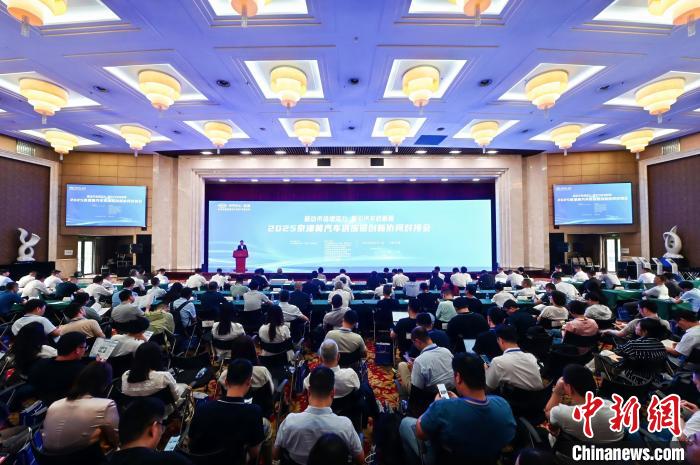
预计到2030年京津冀三地汽车产量将达430万辆
Zhong Guo Xin Wen Wang· 2025-06-07 10:35
Core Insights - The 2025 Beijing-Tianjin-Hebei Automotive Supply Chain Innovation and Coordination Conference was held in Tianjin, emphasizing the importance of the new energy and intelligent connected vehicle industry as a key driver for regional development [1][5] - The automotive production in the Beijing-Tianjin-Hebei region is projected to reach 4.3 million units by 2030, with an expected market growth of approximately 450 billion yuan in the automotive parts sector over the next five years [1][2] Group 1 - The conference featured participation from over 15 major automotive manufacturers and more than 400 parts suppliers, highlighting the collaborative efforts within the industry [2] - A joint innovation laboratory for automotive parts was inaugurated, aimed at enhancing collaborative innovation and resource sharing among participating companies [2] - A public service platform for testing and certification of intelligent connected new energy vehicles was also launched, providing integrated solutions to accelerate standardization and internationalization in the sector [2][3] Group 2 - Experts from various organizations presented on cutting-edge topics related to the automotive supply chain, including policies, innovative seating, intelligent chassis, and digital operations in the automotive industry [3] - The conference served as a strategic platform for fostering innovation and collaboration in the automotive supply chain, achieving consensus on technology cooperation, industry collaboration, and policy support [5]