
华帝股份

Search documents
低碳之旅,从你的厨房开始
3 6 Ke· 2025-04-28 07:36
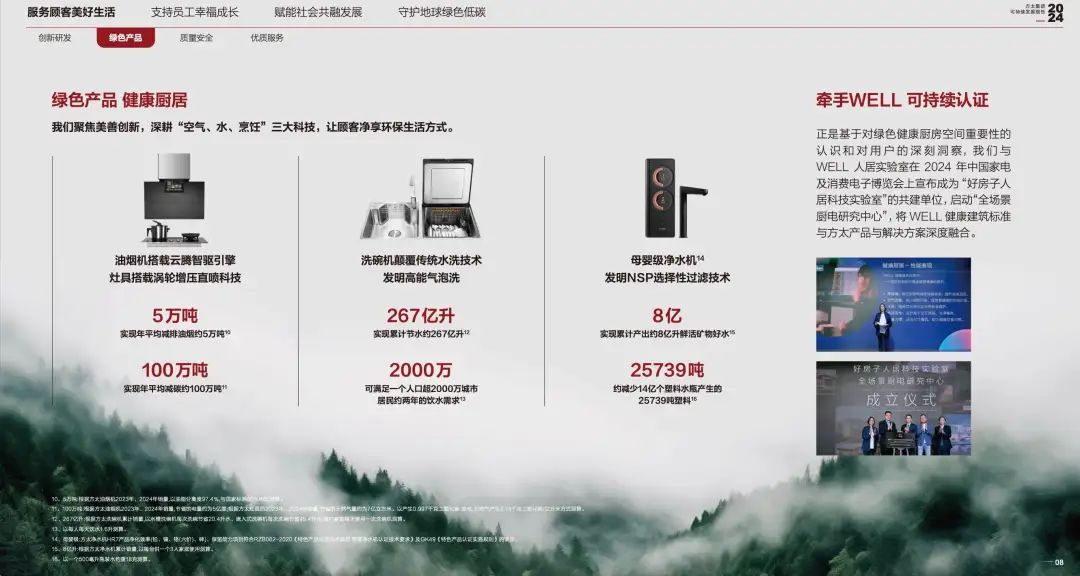
Core Viewpoint - The kitchen, often overlooked, is a significant source of indoor air pollution, with cooking emissions contributing to health risks and environmental concerns. This has led kitchen appliance companies to focus on providing sustainable and healthy living solutions through technological advancements [1][3][5]. Group 1: Health and Environmental Impact - Cooking generates harmful substances like CO and PM2.5, which are key contributors to health issues [1][2]. - Cooking is responsible for over 70% of indoor particulate matter, significantly increasing PM2.5 levels during cooking [3]. - Residential cooking emissions are comparable to industrial and vehicular pollution, being a major source of urban air pollution [4]. Group 2: Industry Response and ESG Strategies - Major kitchen appliance companies are enhancing their technology to improve product performance and reduce emissions [5]. - Companies like Haier and Hisense have established clear ESG strategies, focusing on sustainability and social responsibility [5]. - The trend of implementing and executing ESG metrics has become essential for Chinese appliance companies, especially publicly listed ones [5]. Group 3: Case Study - Fotile Group - Fotile Group released its first sustainability report, emphasizing its commitment to sustainable development and aligning with the UN's 2030 goals [6][7]. - The report highlights Fotile's efforts in reducing emissions, with its products achieving an average reduction of 100,000 tons of carbon annually [8]. - Fotile invests 5% of its sales revenue in R&D, significantly higher than the industry average, resulting in over 14,000 authorized patents [11]. Group 4: Broader Impact and Community Engagement - Fotile's initiatives extend to green factory construction and supply chain management, achieving a reduction of 1,280 tons of carbon emissions annually [12]. - The company promotes solar energy and has achieved significant waste recycling rates, contributing to environmental sustainability [14]. - Fotile's community engagement includes building over 4,100 "happy communities," impacting millions of residents [18].

低碳之旅,从你的厨房开始
36氪未来消费· 2025-04-28 07:20
方太成为中国厨电可持续标杆。 厨房,看似小小的一方烟火地,却是不可忽视的 "隐秘角落"。 一方面,烹饪会产生 CO 、 PM2.5 等有害物质 , 是影响人们健康的关键原因之一。 另一方面, 更多公开资料也显示,以家庭或餐饮门店为单位,在烹饪过程中, 厨房 会造成一定的大气污染。 厨房中常见的污染物有苯并芘,一氧化 碳,可吸入颗粒物,氮氧化物等。 这些 也 使得越来越多的厨电企业,将 ESG ,或是 可持续发展 的重点聚焦到为家庭提供绿色健康的生活方式上。科技进步的意义, 也 在这一刻尤为具 象化。当技术切实地为厨电 产品 带来改进,人们对生活的幸福体验也 更为直观。 来自厨房的隐患 实际上,厨房油烟对人体健康的影响早已不是新话题。 在更早前的国际肺炎日,钟南山院士就曾公开表示,除了吸烟外,厨房油烟已成为对肺造成损伤的关键因素。 钟南山院士提到,烹饪和吸烟均是居住环境颗粒物主要的室内来源。其中,烹饪的占比甚至达到 70% 以上。这是因为,油高温时会汽化,和食物混合 后,产生很多可吸入颗粒物。做饭时,厨房内的 PM2.5 平均浓度会升高几十倍甚至几百倍。 清华大学 也 有研究显示,烹饪是居住环境内颗粒物污染的主 ...
关税对家电行业影响全梳理
2025-04-17 15:41
Summary of Conference Call on the Impact of Tariffs on the Home Appliance Industry Industry Overview - The conference call discusses the home appliance industry, particularly focusing on the impact of tariffs imposed by the United States on imports from China [1][2][4]. Key Points and Arguments - **High Dependency on Imports**: The U.S. has a high dependency on home appliance imports, especially small appliances and televisions. The tariff aims to encourage manufacturing to return to the U.S., but achieving this in the short term is challenging, potentially leading to increased domestic inflation [1][2]. - **Limited Impact on Chinese Companies**: Major Chinese appliance manufacturers like Gree, Midea, and Haier have a low export ratio to the U.S., with peak exports not exceeding 6%. Therefore, the direct impact of the tariffs on these leading companies is likely overestimated [1][2]. - **Labor Cost Challenges**: The cost of labor in the U.S. is significantly higher than in China, with U.S. labor costs being nearly ten times higher. This disparity makes manufacturing in the U.S. less competitive, leading to potential doubling of retail prices if production were to shift back to the U.S. [1][2][9]. - **Overseas Production Strategies**: Chinese appliance companies are strategically increasing their overseas production capacities in regions like Southeast Asia and Mexico to mitigate the impact of tariffs. Companies like Haier and Hisense have sufficient capacity in these regions to adjust supply flexibly [1][3][12]. - **Performance of Major Appliance Companies**: White and black appliance leaders are less affected by U.S.-China tariffs and are expected to benefit from domestic consumption policies, with strong performance anticipated in Q1 2025 [1][14]. - **Small Appliance Sector Exposure**: Small appliance companies have a larger revenue exposure in the U.S. market but are actively expanding overseas production to reduce tariff impacts. Companies like Qianfeng Holdings and Stone Technology are increasing their production capabilities in Vietnam and Indonesia [1][12][13]. - **Cost Disparities in Production**: The labor cost difference for producing large appliances in the U.S. is about 50%, while for small appliances, it can reach 100%. This makes U.S. production of these products uncompetitive [5][9]. - **U.S. Market Dependency on Imports**: Approximately 55% of U.S. home appliance retail comes from imports, with a significant portion from China. The actual dependency could be as high as 70% when considering price differences [5][6]. - **Limited Recovery of U.S. Manufacturing**: Despite tariff imposition, there has been no significant improvement in U.S. manufacturing reliance on imports from 2017 to 2024, with overall import values increasing by over 10% [7][8]. - **Future Outlook for Chinese Companies**: Chinese companies are expected to manage tariff impacts effectively through global production strategies, with many maintaining low exposure to U.S. markets [10][11]. Other Important Insights - **Consumer Demand**: The domestic consumer demand in China is showing strong growth, with a year-on-year increase of 19% in retail sales of home appliances expected in Q1 2025 [14][15]. - **Policy Support**: The current domestic consumption policies in China are expected to further support the performance of home appliance companies, particularly those with a strong domestic market presence [14][15].
中金公司 关税背景下如何看家电
中金· 2025-04-08 15:42
Investment Rating - The report indicates a positive investment outlook for companies with strong domestic sales and flexible supply chains, particularly Haier and Hisense [2][9][10]. Core Insights - The impact of U.S. tariffs on Chinese home appliance companies varies significantly, with some companies like Haier benefiting from higher local production capacity [2][12]. - Chinese home appliance firms are leveraging their supply chain stability and scale advantages to maintain competitiveness despite tariff-induced price increases [6][15]. - The long-term changes in tariff policies are expected to reshape the competitive landscape of the home appliance industry, favoring larger companies with resilient production capabilities [15]. Summary by Sections U.S. Market Exposure - Midea's revenue from the U.S. market is approximately 20% of its total export revenue, while Haier's is close to 60%, with a significant portion sourced from local suppliers [2]. - Gree has minimal exposure to the U.S. market, with only about 2% of its revenue coming from there [2]. - Hisense's revenue from the U.S. market is around 10%-20%, primarily sourced from Mexico [2]. Strategies to Mitigate Tariff Impact - Companies are adopting various strategies such as price increases and shifting production to Southeast Asia to mitigate tariff impacts [4][15]. - Major OEMs like Dechang and Xinbao are relocating factories to countries like Vietnam and Indonesia to reduce tariff exposure [3][4]. Consumer Impact - The additional costs from tariffs will ultimately be passed on to U.S. consumers, leading to higher product prices and potential economic pressure [5][6]. Competitive Advantages - Haier's higher local production in the U.S. provides a competitive edge over rivals like Samsung and Electrolux [12]. - Hisense's production in Mexico allows it to effectively cover the U.S. market, potentially increasing market share despite overall demand decline [11]. Companies with Strong Domestic Market Focus - Gree Electric is well-positioned due to its low export ratio and strong domestic sales, which are less affected by U.S. tariffs [9]. - Other companies like Supor and Boss Electric also show resilience due to high domestic sales and cash dividend rates [9]. Future Areas of Interest - The report suggests monitoring the kitchen appliance sector and companies with global production capabilities that can adapt to tariff changes, such as Hisense [10].



向智向绿向高端 科技创新赋能家电换新
Zhong Guo Jin Rong Xin Xi Wang· 2025-04-06 08:17
Core Insights - The article highlights the trend of smart, green, and high-end home appliances driven by technological innovation and consumer demand in China [1][2][3] Group 1: Market Trends - The home appliance market in China is experiencing a recovery, with smart products becoming the preferred choice for consumers, projected to exceed 50% retail volume share in major categories by 2024 [1] - The "old-for-new" policy is boosting appliance consumption, encouraging consumers to adopt higher quality and lower energy consumption products [1][3] Group 2: Technological Integration - Companies are increasingly integrating AI, IoT, big data, and cloud computing into their products to meet consumer needs for comfort, convenience, and efficiency [1][2] - The introduction of AI technology in appliances is expected to enhance product offerings, with a focus on high-end smart products like AI refrigerators and adaptive air conditioners [2][3] Group 3: Economic Impact - The 2025 "old-for-new" initiative is anticipated to unleash over 100 billion in consumer potential, driving industrial upgrades and contributing to high-quality economic development [3] - The initiative is not only an economic policy but also a consumer benefit measure aimed at improving quality of life and consumer satisfaction [3]
国泰君安:传统家电嵌套AI大模型提升人机交互能力 期待企业布局机器人化方向
智通财经网· 2025-03-26 09:14
Group 1 - The core theme of AWE is "AI Technology, AI Life," highlighting the integration of visual technology with large models, leading to significant improvements in human-machine interaction capabilities for traditional products [1][2] - Major appliance companies are actively entering the robotics sector, leveraging their strong technical foundations and in-house component manufacturing capabilities to enhance their business structures and break through traditional business ceilings [1][4] - The introduction of new AI-driven products, such as AI glasses and toys, indicates a trend towards rapid iteration and innovation in the appliance sector, with companies like Haier and TCL showcasing advanced AI models [1][2] Group 2 - Large enterprises are expanding their product categories, with companies like Gree and Hisense launching innovative products such as a cooling range hood and a three-compartment washing machine, respectively [2] - The marketing strategies of traditional appliance brands are evolving to appeal to younger consumers, with a focus on product aesthetics, as seen in Gree's rose pink air conditioner and Vatti's colored water heaters [3] - The emergence of humanoid robot prototypes, such as the one from Midea Group, showcases the industry's commitment to advancing robotics and automation capabilities [2][4] Group 3 - Investment recommendations favor leading appliance companies that are well-positioned in the robotics growth sector, with a focus on long-term growth potential and a redefined valuation framework [4] - Companies like Midea Group, Boss Electric, Hisense Visual, and Vatti are highlighted as key players in the evolving market, alongside emerging sectors like smart home devices and AI companion toys [4]


存量时代竞争困局待破,方太集团发起“本土化”厨电革命
Hua Xia Shi Bao· 2025-03-25 11:07
存量时代竞争困局待破,方太集团发起"本土化"厨电革 命 本报(chinatimes.net.cn)记者石飞月 北京报道 历经多年高速发展后,中国厨电迈入存量时代。尽管受益于以旧换新"国补"政策,大多数厨电品类在2024年实现 增长,但政策红利也催生出"需求透支"的隐忧,于是,众多厂商纷纷将目光投向差异化竞争路线,试图在激烈的 市场竞争中开辟出属于自己的独特赛道。方太选择走本土化路线,近日,其集成烹饪中心的定位升级为"高端厨 房,中国方案"。业内人士认为,方太的探索不仅折射出中国厨电产业从"西化模仿"到"本土适配"的转型阵痛,同 时也为存量竞争时代的行业升级提供了新思路。 以"中国方案"作为卖点 在1月16日晚,在方太集团2024年度总结表彰暨第39届方太杯迎春晚会上,方太集团董事长兼总裁茅忠群透露: 2024年集团全年营收基本保持平稳,但并未透露具体的数字。不过据媒体援引内部人士的话,方太集团2024年营 收与2023年基本持平,2023年该公司销售收入为176.29亿元,同比增长8.53%。 存量市场下"内卷"加剧 事实上,和家电其它品类一样,厨电行业在这几年也进入由增量转向存量为主的新周期,尤其这一品类还 ...

从历史文化到现代科技:华帝如何用新中式语言讲述中国厨房故事
Zhong Guo Jing Ying Bao· 2025-03-24 13:24
Core Perspective - Vatti is redefining the narrative of modern Chinese kitchens through a blend of traditional culture and modern technology, exemplified by their new product launches and cultural events [3][4][5] Product Innovation - The highlight of the recent event was the launch of the "Mei Ji Bath Gas Water Heater," which integrates traditional aesthetics with modern functionality, aiming to balance practicality and comfort [3][7] - Vatti's "Three Good Kitchen Appliances" standard emphasizes products that are easy to use, aesthetically pleasing, and easy to clean, addressing consumer needs for a "clean kitchen" [6][9] - The GW6i Mei Ji Bath Water Heater features constant temperature control and a "Healthy Bath Water System," enhancing user experience and health standards in home water systems [7][8] Design and Aesthetics - Vatti's products, such as the Mei Ji Bath Water Heater, utilize high-quality materials and design elements that reflect Eastern aesthetics, enhancing both visual and tactile experiences for users [8] - The company aims to transform kitchen appliances into emotional carriers within kitchen spaces, merging functionality with artistic design [8][9] Market Positioning - Vatti's commitment to user-centered design is evident in their extensive R&D investments, exceeding 1.5 billion yuan from 2017 to 2023, with a 12.22% increase in R&D spending in the first three quarters of 2024 [12][13] - The company holds 4,512 effective patents, including 758 invention patents, which support its innovation and competitive edge in the kitchen appliance industry [13] Consumer Insights - Vatti's product development is driven by deep consumer insights, ensuring that innovations meet real user needs, such as the demand for low-fat yet delicious cooking options [10][12] - The company's approach to understanding user needs involves a "microscope-like" observation, allowing for precise translation of consumer demands into technical solutions [11][12]


家电行业2025W11周报:各地积极发布育儿补贴细则,政策超出预期-2025-03-17
Guotai Junan Securities· 2025-03-17 11:16
Investment Rating - The report maintains an "Overweight" rating for the home appliance industry, consistent with the previous rating [1]. Core Insights - Local governments are actively releasing childcare subsidy details, exceeding expectations, which is expected to benefit maternal and infant appliances as well as kitchen small appliances in the short term. In the long term, improvements in population size and structure will support consumption and real estate demand [3][9]. - The report highlights that the increase in birth rates will directly stimulate demand for maternal and infant appliances (e.g., milk warmers, complementary food machines, children's washing machines) and kitchen small appliances (e.g., multi-person cooking appliances, maternal and infant sterilizers) [10]. - The real estate market is showing signs of recovery, with marginal data improving, which is expected to stabilize the kitchen and white goods sectors that are closely related to the real estate cycle [25]. Summary by Sections Childcare Subsidies - Various regions are implementing childcare subsidy policies, with Hohhot offering the highest subsidies in the country, including a one-time payment of 10,000 yuan for the first child, 50,000 yuan for the second child, and 100,000 yuan for the third child, paid annually until the child reaches 10 years old [9][10]. Sales Data - The report notes a decline in cumulative sales growth for most home appliance categories, with online sales of air conditioners, dryers, and color TVs showing some recovery. However, sales growth for range hoods and robotic vacuums has narrowed significantly [12][19]. Investment Recommendations - The report recommends several companies based on the positive outlook for the industry: 1. For the kitchen and white goods sectors: Midea Group (PE: 12.9X), Boss Electric (12.6X), Hisense Visual (11.6X), and Vatti (11.4X) [25]. 2. For maternal and infant appliances and kitchen small appliances: Bear Electric (19.6X), Beiding (38.2X), Derma (24.5X), and Feike Electric (26.8X) [25]. 3. For AI and smart home segments: Stone Technology (20.8X), TCL Electronics (10.3X), Kangguan Technology (14.2X), Ninebot (25.3X), and Yingshi Network (43.1X) [25].
25W10周度研究:剖析智能家居系统:家用电器-2025-03-14
Tianfeng Securities· 2025-03-14 04:44
行业报告 | 行业研究周报 家用电器 证券研究报告 风险提示:房地产市场景气程度回落;汇率波动风险;原材料价格波动风 险;新品销售不及预期。 剖析智能家居系统:传感器——25W10 周度研究 【周度研究聚焦】剖析智能家居系统:传感器 智能家居系统能够根据家居环境的温度、湿度、亮度、人员活动、声音大 小、震动等因素,自动控制空调、灯光、影音系统等设备的运行;借助智能 音响等语音接口,用户可以通过语音指令与系统进行交互,实现对设备的控 制;同时用户还可以通过手机 APP 或网页等方式,在远程对家中的设备进 行操控。从系统结构的角度来讲,智能家居系统可以分为传感器、控制中 枢、执行器、通信网络和人机接口。 智能传感器是集传感单元、通信芯片、微处理器、驱动程序、软件算法等于 一体的系统级产品,具有信息采集、信息处理、信息交换、信息存储等功 能,其作为物联网技术的最底层和最前沿,对物联网产业发展有着十分重要 的意义。市场规模方面,据 Precedence Research 的报告,2024 年全球传感 器市场规模约 2460 亿美元,预计到 2034 年将达到 5510 亿美元(2024- 2034 年 CAGR 达 ...