小米

Search documents
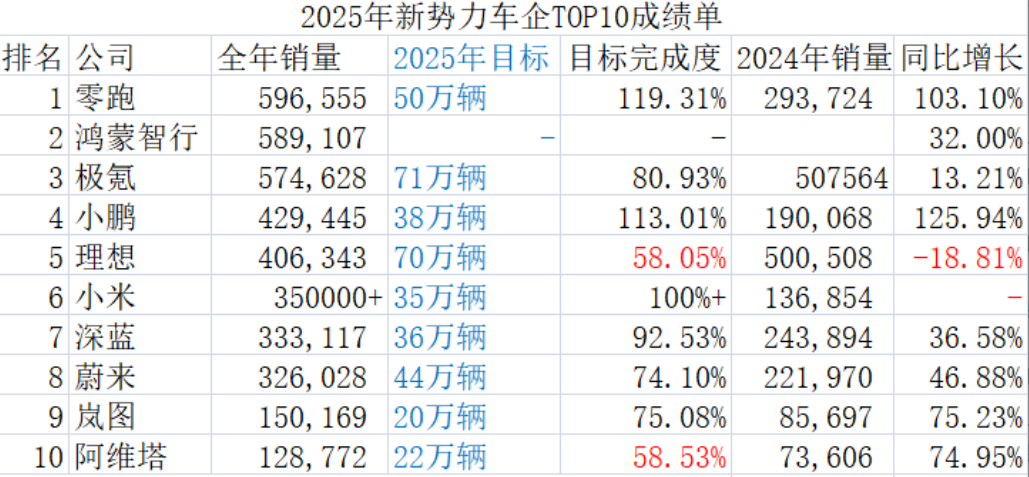
雷军:定制服务以往百万豪车才有,小米想让二三十万车主也享受到
Sou Hu Cai Jing· 2026-01-03 12:57
Group 1 - The core message of the news is that Xiaomi aims to provide customization services for its vehicles, traditionally available only for luxury cars, to a broader market of consumers with mid-range budgets [1][3] - Xiaomi's customization service was launched in September last year, offering 26 personalized configuration options covering various aspects such as exterior, interior, and detail branding [3] - The initial phase of the service includes high-end models, Xiaomi YU7 Max and Xiaomi SU7 Ultra, with a service deposit of 80,000 yuan and a limited trial run of 40 units per month for one year [3] Group 2 - The customization service emphasizes the pursuit of craftsmanship and taste, introducing more complex and expensive materials and employing exquisite techniques to achieve extraordinary visual effects under different lighting conditions [6] - Various color options for customization include Amethyst Purple, Tender Bud Yellow, Racing Red, Twilight Rose, Nightfall Rose, and Matte Dawn Pink [7]

智能手机2025年先扬后抑 2026年AI手机市占率或过半
Xin Lang Cai Jing· 2026-01-02 20:35
Core Insights - The Chinese smartphone market experienced a "first rise, then fall" pattern in 2025, driven by initial consumer demand from the "old-for-new" subsidy policy, followed by a market cooling due to tightening subsidy policies and rising costs [1][3][5] - Industry innovation continues with advancements in battery technology, imaging capabilities, and AI integration, shifting the competition from "parameter competition" to "experience competition" [1][8][10] Market Trends - The initial success of the smartphone market in early 2025 was marked by a significant sales surge during the Spring Festival, with over 4.5 million digital products sold, and smartphone sales reaching 14.1 billion yuan, a 182% year-on-year increase [3] - However, the market faced a 4% year-on-year decline in smartphone sales in Q2 2025 due to inventory adjustments by manufacturers and the diminishing effects of subsidy policies [3][5] - The global rise in storage chip prices, driven by AI demand, has significantly increased costs, with prices for Samsung LPDDR4X memory rising from approximately $6 to $25 per unit, a more than threefold increase [3][5] Pricing and Market Segmentation - Rising costs have led to increased retail prices for smartphones, with Xiaomi's Redmi K90 priced at 2,599 yuan, up 300 yuan from its predecessor [4] - High-end flagship models can better absorb cost increases, while the low-end market faces severe pressure, as price sensitivity among consumers can lead to reduced demand for new devices [4][6] - Forecasts for 2026 indicate a conservative outlook for smartphone production and shipment, with IDC predicting a 2.2% year-on-year decline in shipments to approximately 278 million units [5][6] Structural Changes in the Market - The high-end smartphone market (priced above $600) is expected to grow its market share by 5.4 percentage points to 35.9%, while the low-end market (below $200) is projected to shrink by 4.3 percentage points to 20% [6] - The second-hand smartphone market is anticipated to grow by 20% in 2026, reaching over 100 million units, as consumers may opt for second-hand devices due to rising new device prices [7] Technological Innovations - The industry is focusing on significant upgrades in battery capacity, with major brands adopting 6,000-7,000mAh batteries, and some models featuring batteries as large as 8,300mAh [8] - Imaging technology is advancing with new models featuring 200-megapixel cameras, while AI capabilities are being integrated into devices with high-performance chips [8][10] - The competition is shifting towards AI capabilities and ecosystem integration, with brands needing to differentiate themselves through innovation and emotional engagement with consumers [9][10] Future Outlook - The year 2026 is seen as critical for the Chinese smartphone market, where success will depend on manufacturers' ability to navigate cost pressures and establish emotional connections with consumers [2][5] - IDC forecasts that the shipment of AI-enabled smartphones will reach 147 million units in 2026, representing a 31.6% year-on-year growth and accounting for 53% of the overall market [10][11]
港股收评:恒指涨2.76% 科指涨4% 科网股普涨 电力设备股大涨 百度涨超9% 壁仞科技首日一度涨超118%
Xin Lang Cai Jing· 2026-01-02 08:11
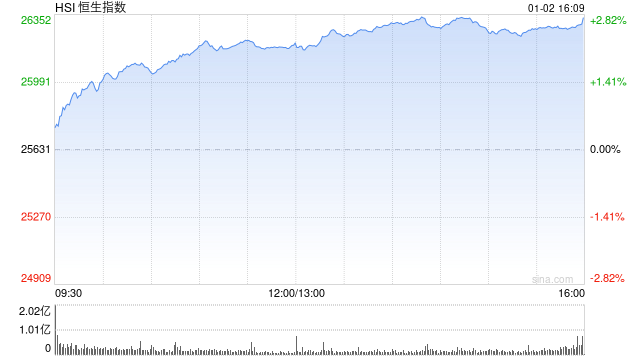
Market Overview - The Hong Kong stock market indices opened high and closed higher, with the Hang Seng Index rising by 2.76% to 26,338.47 points, the Hang Seng Tech Index increasing by 4%, and the National Enterprises Index up by 2.86% [1][7] Technology Sector - Technology stocks saw a broad increase, with Baidu rising over 9%, NetEase over 6%, and Alibaba and Tencent both up over 4% [1][7] - Wall Street's semiconductor sector was strong, with Hua Hong Semiconductor increasing by over 9% [1][3] Electric Equipment Sector - Electric equipment stocks surged, with Goldwind Technology rising over 20% [1][3] - Goldwind Technology's subsidiary, Jianghan Asset, holds a 4.14% stake in Blue Arrow Aerospace, which is currently undergoing IPO review [3][9] Semiconductor Sector - Hua Hong Semiconductor announced plans to acquire 97.4988% of Huali Micro through a share issuance, with a transaction value of 8.268 billion RMB and intended fundraising of 7.556 billion RMB [3][11] - The semiconductor sector experienced a structural rally driven by price increases in the supply chain, sustained AI demand, and the strengthening of domestic substitution logic [3][11] Robotics Sector - The robotics concept continued to rise, with Lijiang Technology increasing by over 6% amid rumors of suppliers visiting North America for Tesla's Optimus project [4][11] - Tesla's third-generation Optimus robot is expected to be released in 2026, with mass production anticipated next year [4][11] IPO Highlights - Bilan Technology's stock surged over 75% on its first trading day, with an intraday increase of over 118% [6][12] - The IPO price was set at 19.60 HKD per share, with a total fundraising of approximately 5.583 billion HKD, marking the largest fundraising for a specialized technology project under Hong Kong's listing rules [6][12] - The public offering was highly sought after, with an oversubscription rate of 2,347.53 times, receiving about 471,116 valid applications [6][12]
中银国际:预计中国汽车行业今年开门红 首季或进入去库存阶段
Ge Long Hui· 2026-01-02 07:31
责任编辑:小讯 股票频道更多独家策划、专家专栏,免费查阅>> 中银国际发表研究报告指,国务院早前联合多部委发布《2026年大规模设备更新和消费品以旧换新补贴 政策通知》,延续对汽车、家电及数码产品的激励措施,并通过针对性优化提升政策效能。该行认为, 虽然补贴财政预算规模如预期减少,但新政明显向中高端市场倾斜,对应车型补贴退坡幅度远低于市场 忧虑。数码产品补贴维持为售价的15%、上限500元,优于市场预期;家电补贴收紧,受众收窄至6大核 心品类,且只补贴一级能源效益标准,补贴比例由售价20%降至15%。该行指,随着补贴细则提前落地 与补贴资金的及时拨付,预期汽车行业有望在2026年实现开门红。但鉴于第四季消费者观望情绪导致年 底渠道库存高企,2026年首季或将进入去库存阶段。个股层面,该行认为理想汽车、小米、蔚来、问界 及极氪品牌受以旧换新补贴调整影响极小。 ...
大行评级|中银国际:预计中国汽车行业今年开门红 首季或进入去库存阶段
Ge Long Hui· 2026-01-02 07:15
Core Viewpoint - The report from Zhongyin International indicates that the recent policy notification from the State Council regarding the 2026 large-scale equipment update and consumer goods trade-in subsidy will continue to incentivize the automotive, home appliance, and digital product sectors, with targeted optimizations to enhance policy effectiveness [1] Group 1: Subsidy Policy Details - The fiscal budget for subsidies is expected to decrease, but the new policy is clearly tilted towards the mid-to-high-end market, with the corresponding subsidy reduction for eligible models being much lower than market concerns [1] - Digital product subsidies will remain at 15% of the selling price, with a cap of 500 yuan, which is better than market expectations [1] - Home appliance subsidies will be tightened, focusing on six core categories and only subsidizing products that meet the first-level energy efficiency standard, with the subsidy rate reduced from 20% to 15% of the selling price [1] Group 2: Industry Outlook - With the early implementation of subsidy details and timely allocation of subsidy funds, the automotive industry is expected to achieve a strong start in 2026 [1] - However, due to consumer hesitation in the fourth quarter leading to high channel inventory at year-end, the first quarter of 2026 may enter a destocking phase [1] Group 3: Company Impact - Companies such as Li Auto, Xiaomi, NIO, Wenjie, and Zeekr are expected to be minimally affected by the adjustments to the trade-in subsidy [1]
土耳其,突然对中国免签了
虎嗅APP· 2026-01-02 03:16
以下文章来源于地球知识局 ,作者地球知识局 地球知识局 . 人文+地理+设计,全球视野新三观。 合作请联系:xiaobaibai_9999(注明品牌和需求) 本文来自微信公众号: 地球知识局 ,作者:地球知识局,原文标题:《土耳其,突然对中国免签了!》 免签适用于旅游和过境目的,在每180天内,免签停留时间累计不超过90天。 原本土耳其对我国是电子签,虽说几乎交钱秒出,但如今实行免签,实打实地省下了将近500块。 最近几年,土耳其一直是中国人出境游的热门目的地。这里不仅拥有众多文化遗产,海景更是一绝。 现在在土耳其的最大城市伊斯坦布尔,街头巷尾都能听见中文。甚至在许多景点,如卡帕多西亚、伊斯坦布尔考 古博物馆里,有些时段能看到中国人占所有游客过半的比例。 土耳其,要被中国人"挤爆"了! 中国游客,将越来越多 从伊斯坦布尔的街头和爱琴海沿岸来看,中国人确实很多。 土耳其文化和旅游部发布的数据显示,在2024年前五个月,造访土耳其的中国旅客就已经超过了15万人次,同比 增长125%,增长非常迅猛。 中国人对于出国旅游的需求是庞大的,根据中国旅游研究院近两年发布的《中国出境旅游发展年度报告》,2023 年中国人出境 ...
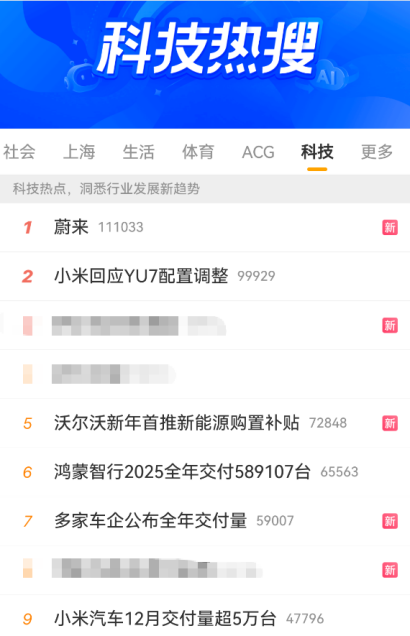
多家车企冲上微博科技热搜,蔚来、小米等销量均创新高
Zhong Guo Ji Jin Bao· 2026-01-02 01:37
2026年1月1日,微博科技热搜一度被车企霸榜,主要与车企交付量(销量)有关。 车企月度竞争仍是"你追我赶"的态势。2025年12月,蔚来、小米等车企的交付量(销量)均创新高,而 在此前多个月份是零跑等车企遥遥领先。 多家车企人士向记者表示,基于年底车企冲刺销量的需求,以及2026年新能源汽车购置税减半等政策变 化,大部分车企在2025年12月的销量会比较高。 对比全年交付量(销量),更能凸显汽车市场竞争的激烈。比亚迪、理想作为2024年的"大赢家",2025 年的增长势头落后于吉利汽车、零跑、小米等车企。 多家车企掌门人在受访时表示,汽车行业就像是一场没有尽头的马拉松,一时的领先很正常,困难的是 持续能赢,或者退一步后要一直能在"牌桌"上。 | 车企 | 2025年全年(辆) | 同比 | 2024年全年(辆) | | --- | --- | --- | --- | | 比亚迪 | 460. 24万 | 7.73% | 427.21万 | | 吉利汽车 | 302. 46万 | 38. 96% | 217.66万 | | 奇瑞集团 | 280.64万 | 7.80% | 260. 39万 | | 长城汽车 ...




马斯克“自动驾驶狂热”难掩销量寒冬,特斯拉2026年面临更严峻考验
Zhi Tong Cai Jing· 2026-01-02 00:17
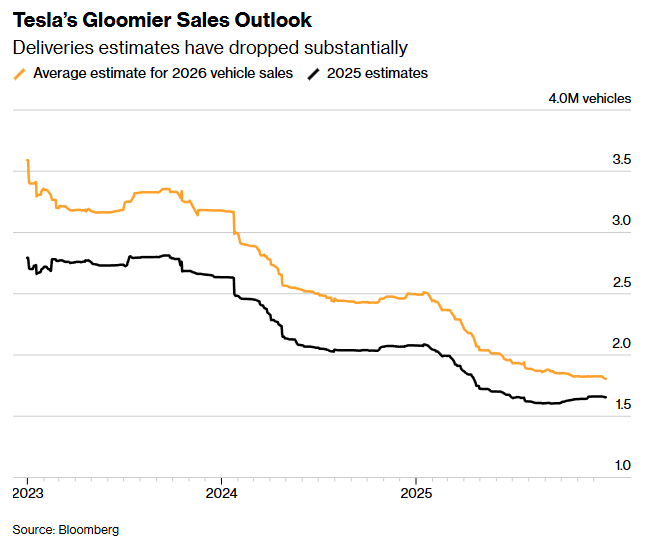
Core Viewpoint - Tesla's stock surged over 11% by the end of 2025, driven by investor confidence in Elon Musk's vision for autonomous vehicles, despite disappointing sales figures and a projected decline in deliveries [1][4]. Group 1: Sales Performance - Tesla is expected to announce approximately 440,900 vehicle deliveries for Q4, representing an 11% year-over-year decline, with a more pessimistic forecast suggesting a 15% drop [1]. - Analysts have drastically reduced their 2026 delivery forecasts for Tesla from over 3 million vehicles two years ago to around 1.8 million [1]. Group 2: Investor Sentiment - Investors are focused on Tesla's long-term prospects rather than short-term performance, although concerns about financial headwinds are growing [2]. - Despite the challenges, some investors remain optimistic that maintaining stability in the automotive business could satisfy market expectations [10]. Group 3: Market Challenges - Tesla's sales have been impacted by production line upgrades for the Model Y and backlash against Musk's political actions [4]. - The cessation of federal tax credits for electric vehicle purchases in the U.S. is expected to create further challenges for Tesla in 2026 [10]. Group 4: Competition - Competitors like BYD are outpacing Tesla in sales, particularly in China, where Tesla's Full Self-Driving (FSD) system has not gained regulatory approval [6]. - Analysts predict that BYD's electric vehicle sales will surpass Tesla's globally for the fifth consecutive quarter [6].

2026年“国补”新鲜出炉:家电数码补贴15%,智能眼镜首次入围!
Xin Lang Cai Jing· 2026-01-01 17:42
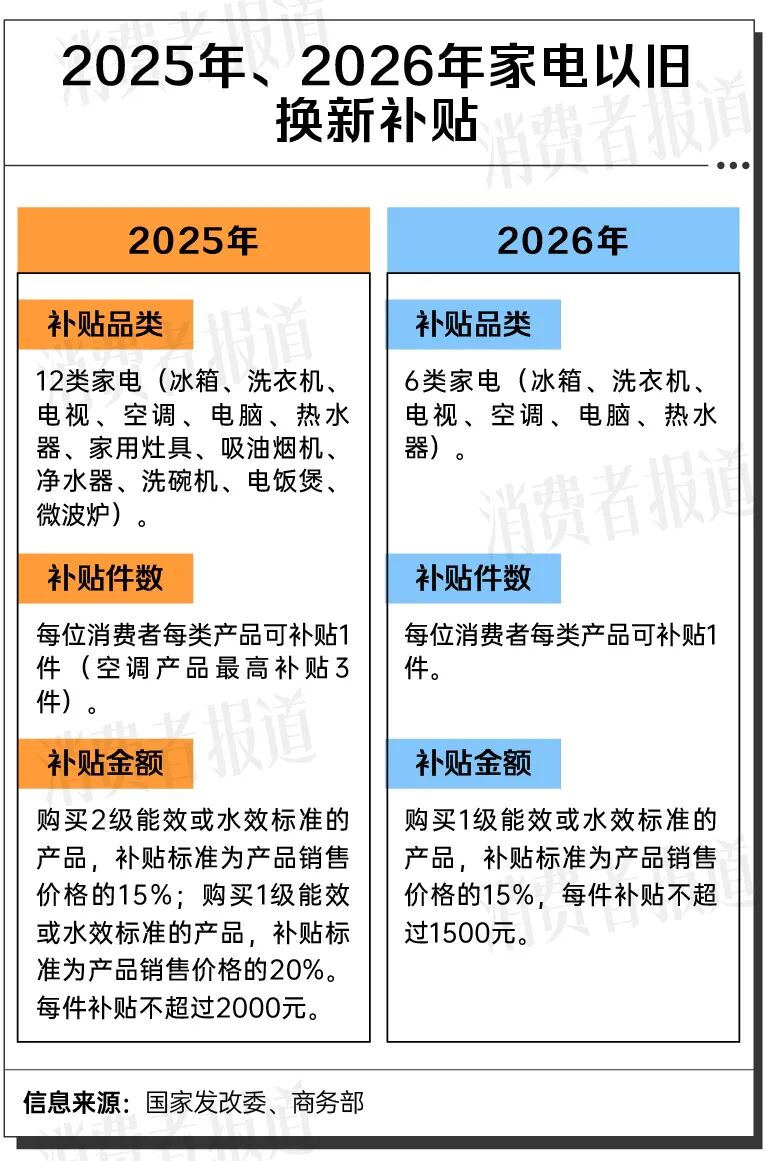
Core Insights - The 2026 "National Subsidy" policy has been officially implemented, focusing on optimizing and adjusting the categories and requirements for subsidies on home appliances and digital products [1][3]. Group 1: Home Appliance Subsidies - The new policy supports the replacement of home appliances, specifically targeting products with 1st-level energy efficiency or water efficiency standards, including refrigerators, washing machines, televisions, air conditioners, computers, and water heaters [1][4]. - The subsidy rate has been reduced from 20% to 15%, with a cap of 1,500 yuan per item, down from the previous 2,000 yuan limit. The number of supported categories has decreased from 12 to 6, excluding items like gas stoves and water purifiers from the subsidy [3][4]. Group 2: Digital and Smart Product Subsidies - The policy introduces subsidies for digital and smart products, including smartphones, tablets, smartwatches, and for the first time, smart glasses, with a subsidy of 15% on products priced up to 6,000 yuan, capped at 500 yuan per item [6][8]. - The inclusion of smart glasses signals a strong governmental support for the integration of artificial intelligence and consumer technology, aiming to stimulate consumption and promote industry growth [8][10]. Group 3: Market Implications - The adjustments in the subsidy policy are seen as a strategic move to enhance the quality of products rather than merely increasing sales volume, promoting green consumption and energy efficiency [4][10]. - The market for smart glasses is projected to grow significantly, with sales in China increasing from 452,000 units in 2025 to an estimated 1.37 million units in 2026, reflecting a growth rate of 215.7% [8].
造车新势力仅3家完成年度目标 零跑汽车跃升为新势力销冠
Xin Lang Cai Jing· 2026-01-01 15:40
格隆汇1月1日|据一财,随着12月份结束,新势力也交出了2025年的年度成绩单,总体而言,只有零跑、小米和小鹏三个品牌完成了全年的销量 目标。零跑汽车是2025年新势力最大的"黑马",全年销量近60万辆,跃升为新势力销冠,年目标达成率超119%。 | 排名 公司 | 全年销量 | 2025年目标 | | 目标完成度 2024年销量同比增长 | | | --- | --- | --- | --- | --- | --- | | 1 零跑 | 596. 555 | 50万辆 | 119. 31% | 293, 724 | 103. 10% | | 2 鸿蒙智行 | 589, 107 | | | | 32.00% | | 3 极氪 | 574, 628 | 71万辆 | 80. 93% | 507564 | 13.21% | | 4 小鹏 | 429, 445 | 38万辆 | 113.01% | 190, 068 | 125. 94% | | 5 理想 | 406, 343 | 70万辆 | 58. 05% | 500, 508 | -18.81% | | 6 小米 | | 350000+ 35 万辆 | 100 ...