OPPO

Search documents
央视主持人撒贝宁打卡东莞制造,解锁东莞“智创优品”美学价值
2 1 Shi Ji Jing Ji Bao Dao· 2026-01-11 10:07
Core Insights - The article highlights the transformation of Dongguan from a "world factory" to a "city of manufacturing aesthetics," showcasing the integration of design and manufacturing to enhance product value and quality [2][5][9] Group 1: Event Overview - The program "Aesthetic Journey of Dongguan Manufacturing" was broadcasted across various media platforms, featuring brands like OPPO, vivo, and Marco Polo, emphasizing the aesthetic value of Dongguan manufacturing [2] - Well-known host Sa Beining served as the "chief curator," engaging in challenges that explored the city's evolution in manufacturing aesthetics over a 120-minute live stream [2][3] Group 2: Design and Innovation - The event included discussions on "the beauty of design" and "the beauty of concepts," with examples such as Marco Polo tiles reflecting local culture and OPPO's innovative phone designs [3][5] - Dongguan's industrial ecosystem supports over 60,000 products across 34 categories, with a significant focus on precision manufacturing and smart robotics [5][8] Group 3: Strategic Goals - The city aims to implement a strategy centered on "intelligent and creative products" and "harmonious living," which reflects a commitment to merging industrial aesthetics with humanistic values [8] - The local government has outlined nine major actions to kickstart the "14th Five-Year Plan," focusing on enhancing both product design and cultural narratives [8] Group 4: Market Positioning - Dongguan is recognized as a major hub for various products, including one-quarter of the world's animation derivatives and 85% of China's trendy toys, indicating its significant role in the global market [8] - The narrative emphasizes that the evolution of manufacturing in Dongguan is not just about functionality but also about creating emotional connections and stories through products [8][9]




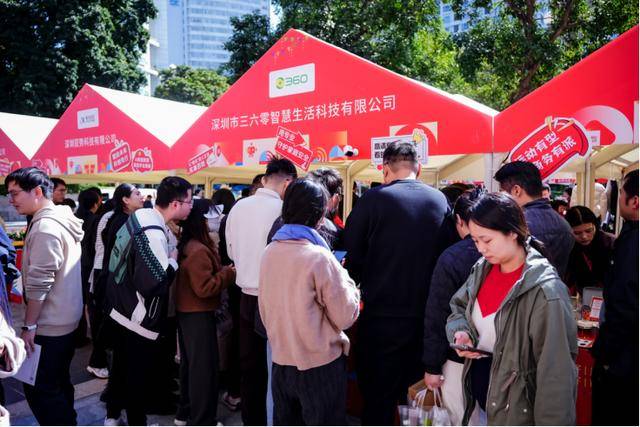
4115笔成交、1354对供需建联!南山年货节点燃新年消费热潮
Sou Hu Cai Jing· 2026-01-11 08:19
Core Insights - The "Nanshan Good Market" New Year Festival successfully facilitated 1,354 supply-demand connections and 4,115 transactions, showcasing a vibrant start to the new year's consumer activities [1][10] - The event emphasized "precise matching" rather than traditional broad-based sales, allowing for significant discounts and fostering a collaborative ecosystem among enterprises, government, and financial institutions [1][6] Group 1: Event Highlights - The festival featured over 40 quality enterprises, including OPPO and Nubia, and was characterized by a high volume of transactions and strong participation from local businesses [1][3] - The event created a "green channel" for small and medium enterprises to connect with larger companies, enabling them to integrate into established supply chains [3][10] Group 2: Consumer Engagement - The festival combined traditional cultural elements with modern technology, creating immersive shopping experiences across various sectors such as consumer electronics, beauty products, and cultural creations [4][6] - The event's design focused on interaction and experience, leading to higher-than-expected brand exposure and customer engagement for participating companies [4][6] Group 3: Support Services - A comprehensive support service framework was established, including a business negotiation area and a scene connection area, to facilitate effective communication and collaboration among enterprises [6][8] - The introduction of a "Legal Consultation Room" provided legal advice and policy interpretation, enhancing the business environment and supporting stable operations for companies [8][10] Group 4: Future Outlook - The festival's success is seen as a model for activating market vitality through precise services, with plans for continued support and optimization of enterprise services in the Nanshan District [10]
从“猎奇”到“信赖”:折叠屏手机用户发展洞察报告
艾瑞咨询· 2026-01-11 00:05
Core Insights - The global foldable smartphone market is experiencing continuous growth, particularly in China, driven by technological advancements and an improved supply chain, leading to product diversification [1] - China has emerged as the main growth engine for the global foldable smartphone market, with Huawei maintaining a significant market share [1][18] - User willingness to purchase foldable smartphones is increasing, with higher expectations for product functionality and experience [1] - The transition from niche to mainstream market for foldable smartphones is anticipated, with sustained demand growth and a focus on hardware optimization and software ecosystem development [1] Market Overview - The global smartphone market has entered a phase of stock competition since 2017, with annual shipment volumes declining by approximately 2.52%, projected to reach 1.22 billion units by 2024 [2] - The flat smartphone market has become saturated, prompting manufacturers to innovate product forms to explore the high-end market [5] Competitive Landscape - The foldable smartphone industry chain includes upstream raw material supply, midstream design and manufacturing, and downstream sales [7] - Chinese foldable smartphone manufacturers, such as Huawei and Samsung, are leading the industry chain with strong technological capabilities [7][8] User Behavior and Preferences - The majority of foldable smartphone users are male and female, with a higher preference among first-tier and new first-tier city users [20] - Users with higher education levels, particularly those with a bachelor's degree or above, show a greater preference for foldable smartphones [20] - The price range for most users of foldable smartphones is between 5,000 to 9,000 yuan, with Huawei being the most used brand [22] Purchase Motivations - The key reason for purchasing foldable smartphones is the stronger sense of technology and futurism, accounting for 44.7% of responses [24] - Users have a substantial budget for purchasing foldable smartphones, with 28.4% willing to spend between 8,000 to 10,000 yuan [24] Brand Recognition and Image - Huawei leads in brand recognition across various dimensions, including high-end perception, business style, and innovation [26][28] - User satisfaction is highest for Huawei, followed by Xiaomi and Samsung, indicating strong user approval [30] Future Trends - Over 90% of consumers are considering purchasing a foldable smartphone for their next device, focusing on reliability, battery life, and hardware specifications [41] - The foldable smartphone market is transitioning from a niche to a mainstream product, with 95.5% of consumers willing to switch to a foldable device in the future [47]

真心劝雷军退出小米直播,这关乎小米未来
Sou Hu Cai Jing· 2026-01-10 16:11
Core Viewpoint - The article emphasizes the need for Lei Jun to reconsider his approach to fan and traffic marketing, suggesting that he should step back from frontline marketing efforts to focus on strategic management of Xiaomi [1][4][20] Group 1: Issues with Current Marketing Strategy - Lei Jun's recent live stream aimed at clarifying misunderstandings has not effectively mitigated negative public sentiment towards Xiaomi, indicating that the "debunking" efforts have led to new issues rather than resolving existing ones [3][8] - The over-reliance on Lei Jun's personal brand has resulted in a negative impact on Xiaomi's overall brand image, highlighting the risks of equating the company too closely with its founder [8][12] - The article argues that successful companies do not depend solely on the personal brand of their founders but rather on their organizational structure, brand, and product quality [5][15] Group 2: Comparison with Other Companies - Historical examples from the tech industry, such as Apple and Microsoft, illustrate that companies can thrive post-founder leadership, emphasizing the importance of succession planning and organizational resilience [6][10] - The article contrasts Xiaomi's current situation with other tech companies where founders have stepped back from public roles, allowing for a focus on strategic growth and innovation [10][11] Group 3: Recommendations for Future Strategy - It is suggested that Lei Jun should reduce his public presence and allow other executives to take on marketing roles, thereby enabling him to concentrate on long-term strategic planning for Xiaomi [12][18] - The article advocates for a shift away from short-term traffic-driven marketing strategies towards a more sustainable approach that prioritizes brand and product development [19][20]


内存太贵了?国产手机从淘汰8GB到重回8GB
Guan Cha Zhe Wang· 2026-01-10 08:49
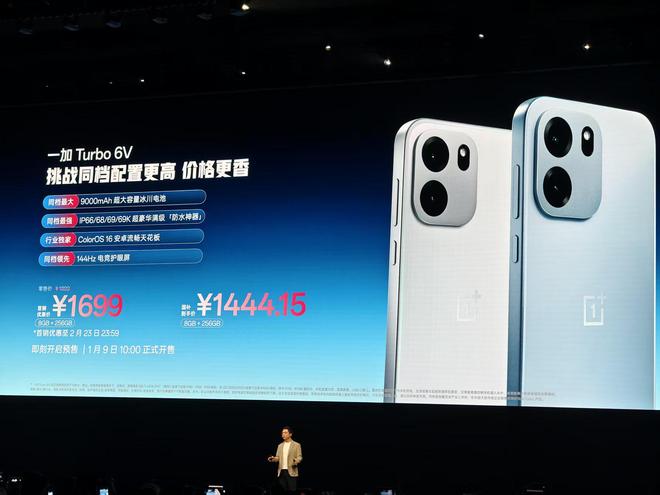
Group 1 - OnePlus has launched the Turbo 6 series smartphones, priced starting at 1699 yuan, marking its entry into the 1000-2000 yuan segment after the digital and Ace series [1] - The Turbo 6 series features notable specifications, including the fourth-generation Snapdragon 8s chip, a 9000mAh battery, and a unique 165Hz gaming experience [1] - The introduction of the 8GB+256GB version of the Turbo 6V highlights the pressure on OnePlus to maintain competitive pricing amid rising memory costs [1][5] Group 2 - The memory price surge is affecting multiple industries, with DRAM prices expected to rise by 55%-60% and NAND flash prices by 33%-38% in Q1 2026 [3] - Major companies like Samsung and SK Hynix are planning significant price increases for server DRAM, which will impact the pricing strategies of PC and smartphone manufacturers [3] - The trend of reducing specifications or delaying upgrades is becoming necessary for balancing costs in the smartphone and laptop markets [4] Group 3 - The merger of realme back into OPPO will impact OnePlus's product strategy, as realme will operate under the same umbrella, potentially leading to resource optimization [8][9] - OnePlus is expected to focus on the domestic and select overseas online markets, while realme and OPPO will handle other international markets [8] - The integration aims to streamline operations and reduce overlap in product lines, which has been a challenge in the competitive smartphone market [9][10]
雷军今天真忙!vivo展实力,OPPO迎喜讯
Sou Hu Cai Jing· 2026-01-10 05:57
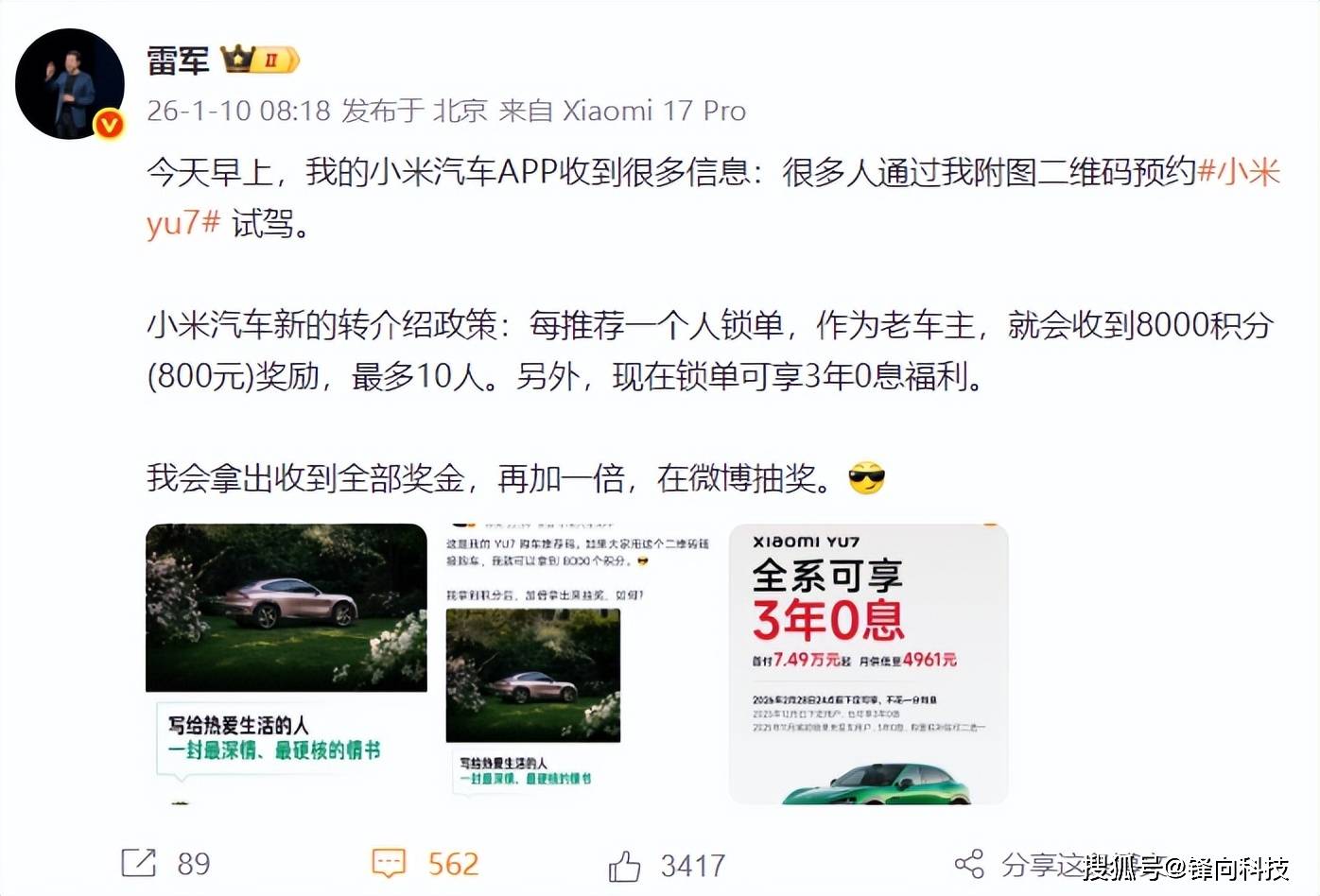
Group 1 - Lei Jun is actively promoting the Xiaomi YU7, receiving numerous inquiries after sharing his purchase recommendation code, and plans to double any bonuses received from successful purchases for a lottery [3][4] - Lei Jun congratulated XPeng Motors on the production of the 100,000th unit of the XPeng P7+ and shared a video of the Xiaomi YU7 winter testing, encouraging public participation [3] - Competitors are also active, with Honor set to release the Magic8 Pro Air on January 19, which is positioned as a stronger alternative to the iPhone Air, featuring a 5500mAh battery and superior camera capabilities [6] Group 2 - The vivo X300 series is gaining attention for its impressive imaging capabilities, with reports of its Pro-level performance despite being marketed as a standard model [8] - OPPO's recent success is attributed to the return of the realme brand, which has helped the combined ranking of OPPO, realme, and OnePlus surpass vivo in the domestic market [8]
从联网设备到智能体终端,阿里云开启AI硬件的普惠元年
3 6 Ke· 2026-01-09 13:26
Core Insights - The CES 2026 event highlights the significant presence of Chinese companies, which account for one-quarter of all exhibitors, signaling a shift in AI hardware from novelty to independent intelligent agents [1][3] - Alibaba Cloud is playing a crucial role in this transformation, providing foundational support for hardware innovation without pursuing independent hardware development [4][13] - The evolution of AI hardware is marked by a transition from "functional intelligence" to "system-level intelligence," driven by advancements in underlying technologies and business models [5][6] Group 1: Industry Transformation - The AI hardware industry is entering a phase of explosive growth, moving away from "pseudo-intelligence" to devices capable of understanding complex human interactions [5][6] - The collaboration between cloud computing and edge computing is becoming the industry standard, with Alibaba Cloud offering tailored intelligence solutions for various hardware needs [7][8] - The integration of AI capabilities into hardware is redefining user interactions, allowing devices to respond to more abstract user requests and adapt to human habits [8][10] Group 2: Alibaba Cloud's Role - Alibaba Cloud is recognized as an "emerging leader" in key areas such as cloud infrastructure and model capabilities, positioning itself alongside top global AI companies [9] - The company emphasizes the importance of making technology accessible and affordable, ensuring that AI hardware becomes a common tool rather than an expensive luxury [4][24] - By providing extensive model capabilities, Alibaba Cloud enables over 150,000 hardware manufacturers to innovate without the need for substantial resources [27][28] Group 3: Market Dynamics - The market for AI consumer hardware is shifting towards a more discerning consumer base that values stability, experience, and real-world application [10][12] - Users are increasingly willing to pay for perceived value, with a notable rise in subscription models for AI functionalities, particularly in health-related applications [12][10] - The relationship between large tech companies and smaller manufacturers is evolving from competition to collaboration, fostering a more symbiotic ecosystem [24][28] Group 4: Product Innovations - New AI products, such as the Mooni M1 for children, demonstrate how AI can enhance user interaction by focusing on individual needs and preferences [14][16] - In the smartphone sector, companies like OPPO and Honor are integrating advanced AI capabilities to improve user experience and interaction [18][19] - The automotive industry is also seeing significant advancements, with AI systems transforming vehicle interfaces into intelligent hubs that understand and respond to user needs [19][21]

希荻微:公司智能视觉感知系列产品已导入vivo、荣耀等品牌客户的供应链体系
Zheng Quan Ri Bao Wang· 2026-01-09 13:20
Core Viewpoint - The company has successfully integrated its intelligent visual perception products into the supply chains of major brands, indicating strong market demand and potential for growth [1] Group 1: Product Offerings - The company's intelligent visual perception series products, including autofocus chips and optical image stabilization chips, are widely used in smartphones, learning tablets, handheld computers, and video conferencing devices [1] - The company has launched automotive-grade PMIC products that provide compact, low-noise, and high-efficiency power solutions for camera module components such as MCUs, SerDes, and image sensors [1] Group 2: Market Expansion - The company is actively expanding its downstream customer base, indicating a strategic focus on increasing market penetration and diversifying its client portfolio [1]

从联网设备到智能体终端,阿里云开启AI硬件的普惠元年
36氪· 2026-01-09 13:09
Core Viewpoint - The article emphasizes that AI hardware has evolved from being mere gimmicks to becoming independent intelligent entities, showcasing significant innovation from Chinese manufacturers at CES 2026 and the role of Alibaba Cloud in this transformation [3][6][19]. Group 1: AI Hardware Evolution - AI hardware has crossed the threshold from being toys to independent intelligent agents, indicating a major shift in the industry [3][6]. - The transition from "China manufacturing" to "China creation" is highlighted, with Alibaba Cloud playing a crucial role in providing the necessary technological support for hardware innovation [7][19]. - The year 2026 marks the beginning of a "species explosion" in AI hardware, driven by continuous technological advancements and a shift in business logic [9][10]. Group 2: Technological Advancements - AI hardware is undergoing a transformation from "functional intelligence" to "system-level intelligence," with the ability to understand complex environments [10][11]. - The collaboration between cloud computing and edge computing is becoming the industry standard, allowing for a balance between performance and power consumption [11][12]. - Alibaba Cloud's models, ranging from 0.5 billion to 480 billion parameters, provide tailored intelligence solutions for various hardware needs [11][12]. Group 3: Market Dynamics - The market for AI consumer hardware is shifting from an "enlightenment market" to a more mature one, where users demand stable performance and real-life value [13][14]. - Users are increasingly willing to pay for AI functionalities, particularly in health-related applications, indicating a significant change in consumer behavior [14][16]. - The evolution of payment models from one-time purchases to subscription services reflects a deeper integration of AI into everyday life [16]. Group 4: Role of Alibaba Cloud - Alibaba Cloud is positioned as a silent innovator, supporting over 150,000 hardware manufacturers without competing directly in the hardware market [19][34]. - The company’s approach fosters trust among manufacturers, allowing them to innovate collaboratively rather than defensively [19][34]. - By providing a robust AI infrastructure, Alibaba Cloud enables Chinese manufacturers to transition from low-margin assembly to high-value innovation [39][40]. Group 5: New Product Innovations - New AI products, such as the Mooni M1 for children, demonstrate how AI capabilities are integrated into hardware, enhancing user interaction [22][28]. - The collaboration with various companies has led to significant advancements in wearable technology and creative hardware, showcasing the versatility of AI applications [24][26]. - The smartphone industry is also experiencing a transformation, with enhanced interaction capabilities through AI, making devices more intuitive and responsive [29][30]. Group 6: Global Market Position - Chinese hardware is evolving from being a follower in the global tech landscape to becoming a leader in defining new standards [36][38]. - The collaboration between Alibaba Cloud and hardware manufacturers is reshaping the global value chain, allowing for a more competitive stance in the international market [39][40].

realme确认回归,OPPO与子品牌进入“组团作战”新阶段
3 6 Ke· 2026-01-09 12:44
Core Viewpoint - The mobile brand realme, which has been independent for nearly eight years, has decided to return to OPPO as a sub-brand to enhance resource integration and collaboration in a competitive market environment [1][7][22]. Group 1: Strategic Shift - Realme will operate under OPPO, allowing for a unified approach with OPPO and OnePlus to provide innovative and differentiated products and services to global users [1][2]. - The decision reflects a broader trend in the industry where brands are consolidating to combat market saturation and internal competition [2][15]. Group 2: Market Context - The smartphone market in China has shown signs of saturation, with a reported decline in shipments since 2017, and only a slight growth of 0.9% expected in 2025 [7][18]. - Realme's return to OPPO comes at a time when the competition is intensifying, and the need for a strong supply chain and after-sales service is critical for its growth [4][18]. Group 3: Historical Performance - Realme was established in May 2018 as a sub-brand of OPPO and quickly gained traction, becoming the fourth largest smartphone brand in India by Q4 2018 [9][10]. - The brand achieved over 200 million global sales by November 2023 and aims to reach 300 million by August 2025 [10][12]. Group 4: Operational Challenges - The integration of realme into OPPO's ecosystem may dilute its unique brand identity and market positioning, which has been characterized by a focus on youth and internet-driven marketing [4][28]. - Realme faces the challenge of maintaining its distinctiveness while collaborating with OPPO and OnePlus, especially as their product lines may overlap [29][30]. Group 5: Future Outlook - The collaboration aims to enhance market competitiveness across different segments, with OPPO leveraging realme's established presence in overseas markets, particularly in India [22][27]. - The success of this integration will depend on how well realme can retain its unique characteristics while complementing OPPO's offerings [30][34].