xAI

Search documents
马斯克掀起“风浪”搅动A股市场!他的故事很“贵”,中国光伏真正底气是产业化能力
Mei Ri Jing Ji Xin Wen· 2026-02-05 11:02
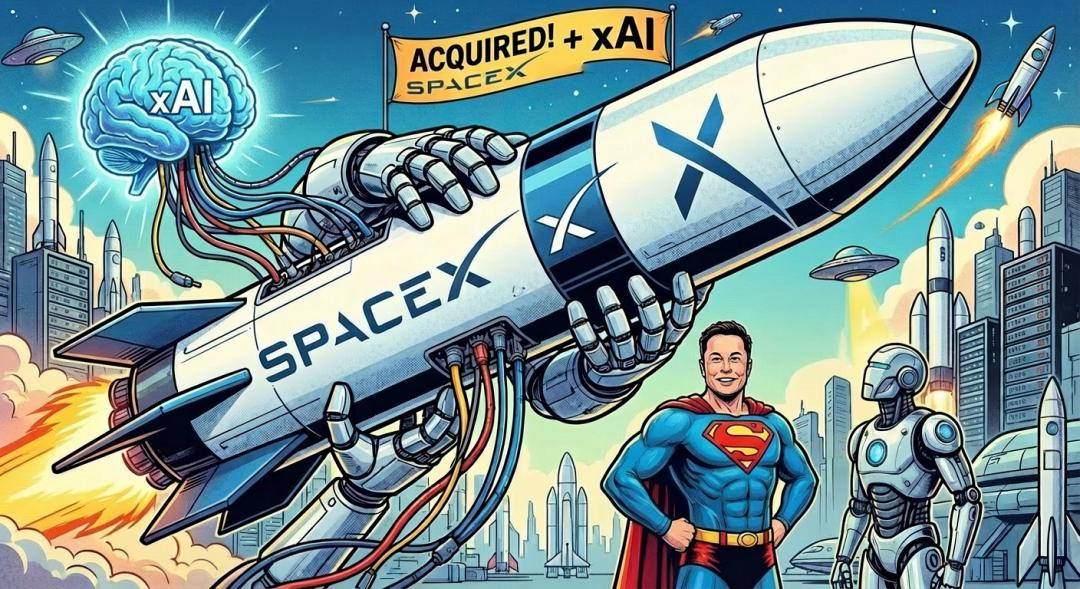
每经编辑|段炼 埃隆·马斯克每开一次"脑洞",似乎都能在资本市场激起层层涟漪。 2026年伊始,SpaceX以2500亿美元估值并购AI(人工智能)公司xAI的消息刚刚出炉,紧接着就是马斯克旗下SpaceX团队走访中国光伏企业的消息不胫而 走。 图片来源:视觉中国(资料图) 然而,在理性地观察后,我们须分清"理论上限"与"工程下限"的区别。一方面是散热的难题,要在太空维持GPU(图形处理器)集群的高负荷运转,卫星 可能需要拖曳着面积惊人的散热阵列;另一方面是环境的残酷,太空中的高能粒子辐射、超过200摄氏度的极致温差,对光伏组件和芯片的稳定性提出了 极为严苛的要求。这意味着,目前的技术储备距离马斯克所描绘的"每年100GW(吉瓦)太空算力"的商业化落地,可能还有5年、10年甚至更长的路要 走。 第二,中国光伏产业之所以能引起马斯克的注意,恰恰不是因为我们善于讲故事,而是因为我们在泥泞中练就了极致的"落地能力"。 马斯克团队为何在这个时间点考察中国光伏?答案很简单:他的故事太贵了,只有中国制造能让它变得便宜。 中国光伏产业的崛起从来不是靠PPT画出来的,而是在残酷的市场竞争中杀出来的。在过去二十年里,中国企业在 ...

为何科技巨头们都要斥巨资投OpenAI?
华尔街见闻· 2026-02-05 09:56
Core Viewpoint - OpenAI is seeking to raise up to $100 billion in funding, with major contributions expected from Nvidia, Amazon, SoftBank, and Microsoft, amidst a valuation of $730 billion, raising questions about the rationale behind such investments [1][2]. Group 1: Financing Dynamics - Major tech companies are stepping in to provide funding to OpenAI as traditional financing sources tighten, indicating a shift in strategy where these companies act as "backers" to ensure OpenAI's operational continuity [9][10]. - The financing from these tech giants is seen as a way to secure their own business interests, such as maintaining cloud service contracts and ensuring the supply of GPUs [10][11]. - The current market sentiment has shifted, with investors becoming wary of lending to companies reliant on OpenAI for future payments, leading to increased financing costs for partners like Oracle [5][6]. Group 2: Market Implications - The potential collapse of OpenAI poses systemic risks to the tech industry, as a failure could significantly impact the valuations of major tech companies, which are heavily influenced by AI-related growth expectations [12][13]. - The situation is likened to a "musical chairs" game, where the failure to secure funding for OpenAI could lead to substantial losses in market value for tech giants, estimated at 50% to 80% [12][13]. - The article highlights that the funding dynamics are not just about supporting OpenAI but also about protecting the broader market interests of the tech giants involved [10][11].

计算机行业2月投资策略展望:云计算提价印证高景气,AI应用迎来多点催化
BOHAI SECURITIES· 2026-02-05 09:08
Core Insights - The report highlights the high demand for AI computing power, as evidenced by recent price increases in cloud services from major providers like Google and Amazon, indicating a robust market environment for AI applications [2][5][15] - The introduction of new AI models, such as DeepSeek V4, is expected to drive technological advancements in domestic AI capabilities, potentially leading to a new wave of innovation in the industry [5][46] - The report maintains a "neutral" rating for the computer industry while recommending an "overweight" position on Hongsoft Technology, indicating a cautious but optimistic outlook for select companies within the sector [6][48] Industry Data - In 2025, China's software industry reported a business revenue of 154,831 billion yuan, reflecting a year-on-year growth of 13.2%, while total profits reached 18,848 billion yuan, up 7.3% [3][24] - The Producer Price Index (PPI) for the computer industry in December 2025 decreased by 0.2% month-on-month and 0.7% year-on-year, indicating some pricing pressures in the sector [3][16] - The total export value of the software industry was 62.73 billion USD in 2025, marking a 7.7% increase compared to the previous year [24] Company Announcements - Zhisheng Information announced a significant contract worth 63.7183 million yuan for the supply of server and software integration services, which is expected to positively impact its market presence and performance [4][37] - Shiji Information signed a major service agreement with Okura Nikko Hotel, providing a new generation of cloud-based hotel management systems, which enhances its brand recognition in the high-end hotel sector [4][39] Market Review - From January 1 to January 31, the Shenwan Computer Industry Index rose by 6.94%, with most sub-sectors experiencing gains, particularly horizontal general software, which increased by 16.97% [4][40] - As of January 31, 2026, the price-to-earnings ratio (TTM) for the Shenwan Computer Industry was 219.14 times, with a valuation premium of 1515.01% compared to the CSI 300 index [41][43] Monthly Strategy - The report emphasizes the acceleration of AI application penetration and the importance of companies that demonstrate strong capabilities in AI technology implementation and scene adaptation [5][46][48] - The anticipated launch of DeepSeek V4 and the introduction of Google's Project Genie are expected to catalyze further advancements in AI applications, potentially leading to an earlier-than-expected commercialization turning point in the industry [5][46]

马斯克的故事很“贵”,中国光伏真正底气是产业化能力
Mei Ri Jing Ji Xin Wen· 2026-02-05 08:09
Core Viewpoint - The recent news surrounding Elon Musk's SpaceX and its acquisition of AI company xAI, along with the exploration of solar power companies in China, has sparked significant interest in the market, particularly regarding the concept of "space solar power" and "space computing" [1][2]. Group 1: SpaceX and AI Acquisition - SpaceX has a valuation of $250 billion following its acquisition of xAI, indicating a strategic move towards integrating AI into its operations [1]. - The narrative of "space computing" aims to transform SpaceX from a traditional space transportation company into a "interstellar technology infrastructure giant," potentially leading to a higher valuation premium [3]. Group 2: Solar Power Industry in China - The interest from Musk's team in Chinese solar companies is driven by the cost-effectiveness of Chinese manufacturing, which is essential for making ambitious projects financially viable [2]. - The Chinese solar industry has achieved significant advancements in reducing the cost of solar power generation, making it cheaper than coal power, through rigorous competition and innovation over the past two decades [2]. Group 3: Investment Considerations - Investors are advised to differentiate between Musk's visionary concepts and the current performance of companies, as the realization of "space solar power" may take 5 to 10 years or longer [2]. - The focus for investors should be on companies that can deliver stable performance in technology development, cost control, and market expansion, regardless of Musk's influence [3].
美股科技软件板块大崩盘,罪魁祸首竟是这家公司?
阿尔法工场研究院· 2026-02-05 07:48
Core Viewpoint - The emergence of native AI models, exemplified by Anthropic's new automation tools, poses a significant threat to traditional software companies, raising questions about the sustainability of their business models and competitive advantages [2][3]. Group 1: Impact of Anthropic's Tools - Anthropic's release of a legal tool plugin for its Claude Cowork platform has triggered panic selling in the software sector, particularly affecting legal software and data service companies [2]. - Major companies like Thomson Reuters and LegalZoom saw their stock prices plummet by 21% and over 20% respectively, as their core business models were directly challenged by the cost-effective and integrated solutions offered by AI [3]. - The market fears that if companies can use a single AI plugin to handle legal compliance tasks that previously required multiple expensive software subscriptions, the subscription value of traditional SaaS companies will be severely undermined [3]. Group 2: Subscription Model Crisis - The term "SaaSpocalypse" reflects the growing concern that AI advancements may not just assist growth but could potentially replace traditional subscription models entirely [5]. - The traditional software industry's reliance on high-margin recurring revenue from seat-based billing is threatened as AI agents can perform tasks that previously required multiple personnel [5]. - This shift in expectations regarding future growth is a key driver behind the current wave of panic selling in the software sector [5]. Group 3: Performance Discrepancies - Among S&P 500 software stocks, only 69% reported revenues above expectations, significantly lower than the tech sector's overall 85% success rate, indicating a weak position in the AI-driven market [6]. - Even strong performers like Microsoft are under scrutiny as their Azure cloud business shows signs of slowing growth, leading to a decline in stock price over four consecutive trading days [6]. - In contrast, Palantir emerged as a rare "safe haven" with a 70% revenue increase in Q4, suggesting that the market is selectively favoring companies that can effectively leverage AI to enhance productivity [6]. Group 4: Market Reallocation - Despite the Nasdaq's poor performance, the S&P 500 shows a "seesaw" effect, with companies like FedEx and Walmart gaining market value, indicating a shift of funds from vulnerable software stocks to more defensively positioned sectors [7]. - The selling pressure on software stocks is characterized by a "surrender" mentality among investors, who are eager to exit positions regardless of price [7]. - From an investment perspective, extreme panic often creates opportunities, as evidenced by Microsoft's valuation dropping to a three-year low with a forward P/E ratio around 25 [7]. Group 5: Future Outlook - The year 2026 is anticipated to be a pivotal moment for the software industry, as AI programming and automation lower development barriers and diminish traditional business moats [8]. - The consensus on Wall Street has shifted fundamentally, with software no longer seen as a guaranteed profit generator in the face of competition from companies like Anthropic that possess foundational AI models [8]. - Investors are advised to focus on identifying companies with core competencies that are not easily replaceable by automation, rather than blindly attempting to catch falling stocks [8].




SpaceX与xAI合并后,马斯克成首位身价超8000亿美元的首富
Xin Lang Cai Jing· 2026-02-05 05:51
Core Insights - Elon Musk's wealth has reached a record-breaking $852 billion following the merger of SpaceX and xAI, making him the first person to surpass $800 billion in net worth [1][3] - The merger has significantly increased Musk's wealth by $84 billion, with a current estimated wealth of $8,411 billion, while the second richest person, Larry Page, has a wealth of $2,724 billion, creating a gap of over $500 billion between them [1][3] Company Overview - SpaceX, founded by Musk in 2002, has merged with xAI, an AI company established by Musk in 2023, to integrate artificial intelligence, rocket technology, satellite internet, and mobile communication [3] - The merger has resulted in a combined company valuation of $1.25 trillion, with SpaceX valued at $1 trillion and xAI at $250 billion [3][4] Financial Milestones - Musk's wealth has crossed four $100 billion thresholds in just four months, starting from a net worth of $500 billion in October 2022, driven by Tesla's stock performance [3][4] - Following the merger, Musk holds approximately 43% of the new company's shares, valued at around $542 billion [3] - SpaceX's valuation increased from $400 billion in August to $800 billion by December, contributing to Musk becoming the first person to exceed $600 billion in net worth [4] IPO Plans - SpaceX is pursuing an initial public offering (IPO) and is in discussions with major index providers, including Nasdaq, to expedite its inclusion in major indices [4] - The IPO strategy aims to provide liquidity to shareholders while circumventing traditional rules for a quicker market entry [4]

2500亿!马斯克团队秘密访华,美国太空光伏梦,只有中国能“接单”
Sou Hu Cai Jing· 2026-02-05 05:19
Group 1 - Elon Musk has become the world's first billionaire with a net worth exceeding $800 billion while facing scrutiny over past communications with Jeffrey Epstein [1] - Musk's companies, SpaceX and Tesla, are reportedly expanding their business by sourcing materials in China, particularly in the booming sector of space photovoltaics [3][16] - The core challenge for Musk's ambitious plans, including sending humans to Mars and establishing a satellite network, is the need for reliable energy sources in space, which solar energy can provide [5] Group 2 - Musk has announced a goal to achieve 100 gigawatts of solar energy capacity within three years, equivalent to the output of several large nuclear power plants, to power AI data centers and future extraterrestrial bases [7] - The merger of Musk's AI company xAI with SpaceX has resulted in a valuation exceeding $1 trillion, aimed at addressing the energy demands of AI operations in space [7] - The production of "space-grade" solar cells is limited, and the most viable manufacturing capabilities are found in China, which has a complete and efficient solar industry supply chain [9][13] Group 3 - Chinese companies are leading in the production of advanced solar technologies, such as heterojunction (HJT) and perovskite solar cells, which are essential for space applications due to their high efficiency and durability [11] - The U.S. lacks the manufacturing capacity to meet Musk's ambitious solar energy production goals, making reliance on Chinese manufacturing necessary for the success of his space photovoltaic plans [13][15] - Chinese solar firms are not only focused on terrestrial applications but are also proactively developing technologies for space photovoltaics, aligning with SpaceX's requirements [15][16]

为何科技巨头们都要斥巨资投OpenAI?
美股IPO· 2026-02-05 04:59
英伟达、亚马逊等相继参与OpenAI的千亿美元融资。分析认为,OpenAI已成为科技巨头估值的命门,若不持续供血或将引发AI逻辑崩塌,科技巨头们 或面临50%-80%的市值缩水。"如果OpenAI减少对超大规模云厂商的承诺支出,他们会损失1万亿美元市值,那朋友之间100亿美元算什么?" 所谓的千亿美金融资,本质上是科技巨头们为了防止AI泡沫破裂而不得不进行的一场自救式"供血"。 当下讽刺的现实是,甲骨文为了筹钱,甚至被迫宣布要卖股票来凑数, 直接把市场焦虑拉满了 。Janus Henderson的信贷研究主管Mike Talaga直言: 2月4日,据The Information资深记者Ken Brown报道,OpenAI正在筹集一笔高达1000亿美元的融资。英伟达可能打算投300亿,亚马逊200亿,软银 300亿,微软也得跟100亿。 在OpenAI 7300亿美元的离谱估值下,这些聪明人为什么抢着送钱,在Brown看来,逻辑非常直白。 银行不信OpenAI了,巨头只能自己上 以前OpenAI很聪明,它自己不借钱,而是让甲骨文(Oracle)、CoreWeave、Vantage数据中心在内的合作伙伴利用自身 ...





国防军工行业空天系列:SpaceX宣布收购xAI,擘画太空数据中心愿景
GF SECURITIES· 2026-02-05 04:48
Investment Rating - The report provides a "Buy" rating for the defense and aerospace industry, indicating an expected performance that will exceed the market by more than 10% over the next 12 months [8]. Core Insights - SpaceX announced the acquisition of AI startup xAI to integrate rocket, satellite internet, AI technology, and social media platforms, aiming to create a comprehensive technology chain from Earth to space. This move is driven by the increasing demand for advanced AI systems, which is approaching the limits of traditional ground data centers [4]. - SpaceX plans to deploy up to 1 million satellites to establish an orbital data center system, which will support large-scale AI reasoning and data center applications. The satellites will be positioned in orbits ranging from 500 to 2000 kilometers, utilizing solar energy to reduce reliance on traditional batteries [4]. - The report emphasizes the importance of focusing on leading companies in the supply chain, such as Ruichuang Micro-Nano, Minshida, Guobo Electronics, and others, as potential investment opportunities [4]. Summary by Sections Industry Overview - The report highlights the significant advancements in commercial aerospace, particularly through SpaceX's integration of AI and satellite technology, marking a new phase in global satellite internet [4]. Company Valuation and Financial Analysis - Key companies in the industry are evaluated with their respective stock prices, expected earnings per share (EPS), price-to-earnings (PE) ratios, and return on equity (ROE) metrics. For instance, Ruichuang Micro-Nano has a target price of 141.24 CNY per share for 2025E, with an EPS of 2.40 CNY and a PE ratio of 47.05 [5]. - Other companies such as Minshida and Guobo Electronics also show promising valuations, with target prices of 54.34 CNY and 75.93 CNY respectively, indicating strong growth potential [5]. Investment Recommendations - The report suggests a focus on key players in the rocket, satellite, and terminal sectors, recommending investments in companies like Ruichuang Micro-Nano, Minshida, and Guobo Electronics, among others, due to their strong market positions and growth prospects [4].
太空数据中心,如何散热?
3 6 Ke· 2026-02-05 04:47
Core Viewpoint - Elon Musk's plan to integrate SpaceX, Tesla, and xAI to deploy one million satellites for a "orbital data center system" aims to provide computational power for future artificial intelligence [1][3]. Group 1: Feasibility and Challenges - The concept of space computing is not new, with similar projects proposed in the US, Europe, and China, but Musk's plan is significantly larger in scale [3]. - Space data centers can utilize solar energy, greatly reducing energy costs, but face numerous engineering and commercialization challenges, including rocket launch capabilities, satellite lifespan (approximately 5 years), radiation issues, on-orbit maintenance, communication bandwidth, and business model concerns [3][19]. - A critical challenge is heat dissipation, as a large-scale data center will generate substantial heat, requiring advanced thermal management solutions [3][5]. Group 2: Thermal Management Techniques - Heat collection at the chip level involves using high-performance thermal interface materials and microchannel liquid cooling to efficiently transfer heat away from chips [6][10]. - Internal heat transfer can utilize heat pipes for passive heat transfer, while active thermal control systems like mechanical pump fluid loops (MPFL) are necessary for managing large thermal loads [11][13]. - Heat radiation is the final method for heat dissipation, relying on radiators that emit heat as infrared electromagnetic waves, with efficiency dependent on the radiator's area and surface properties [14][16]. Group 3: Innovative Cooling Solutions - New thermal management technologies proposed for space data centers include phase change materials for thermal buffering, spectrally selective radiators to enhance radiation efficiency, and evaporative cooling methods for extreme conditions [20][21][22]. - AI-driven systems can optimize thermal management by predicting heat loads and dynamically adjusting cooling mechanisms [23]. - The potential scale of Musk's space data center could provide 100 gigawatts (GW) of AI computing power, equivalent to the capacity of approximately 4.5 Three Gorges Dam power stations, presenting significant engineering challenges for heat dissipation [19]. Group 4: Industry Implications - As space computing becomes a trending topic, thermal control technologies for space data centers are expected to gain more attention, leading to accelerated innovation and development in this field [30].