万科

Search documents
租售同权概念下跌0.08%,主力资金净流出24股
Zheng Quan Shi Bao Wang· 2026-01-12 09:23
Group 1 - The rental and sales rights concept declined by 0.08%, ranking among the top declines in concept sectors, with notable declines in companies such as Sanxiang Impression, Caixin Development, and Jinheng Business Management [1] - The top gainers in the rental and sales rights concept included Mingpai Jewelry, 365 Network, and Yueshen Health, with increases of 10.05%, 5.17%, and 4.04% respectively [1] - The Sora concept (text-to-video) led the market with a gain of 10.43%, followed by MLOps at 9.88% and AI corpus at 9.18% [1] Group 2 - The rental and sales rights concept experienced a net outflow of 1.146 billion yuan, with 24 stocks seeing net outflows, and 7 stocks exceeding 50 million yuan in outflows [1] - Zhangjiang Hi-Tech had the highest net outflow of 486.1 million yuan, followed by Poly Development, Vanke A, and Shoukai Shares with net outflows of 168.9 million yuan, 99.1 million yuan, and 81.4 million yuan respectively [1] - The top net inflows in the concept stocks were seen in Mingpai Jewelry, Tianfu Cultural Tourism, and Huangting International, with net inflows of 61.8 million yuan, 13.2 million yuan, and 2.0 million yuan respectively [2]



环球房产周报:房地产融资协调机制调整,万科郁亮退休,多家房企发布2025年销售业绩……
Huan Qiu Wang· 2026-01-12 02:10
Policy News - The State Council held a meeting on January 9 to implement a package policy for fiscal and financial coordination to boost domestic demand, emphasizing the need to guide social capital in promoting consumption and expanding investment, particularly in supporting resident consumption upgrades and private investment development [1] - The People's Bank of China emphasized the continuation of moderately loose monetary policy during its 2026 work meeting, aiming to support stable growth in the real economy and financial market, while also addressing financial risks in key areas [1] - Recent adjustments to the real estate financing coordination mechanism allow projects on the "white list" to extend loans for up to five years, compared to the previous maximum of two and a half years [1] Market News - In 2025, the total land transfer fees for residential land in 300 cities decreased by 10.6% year-on-year, with a total of 2.3 trillion yuan, and the planned building area for residential land transactions fell by 13.5% to 620 million square meters [4] - The top 20 cities accounted for 52% of the national residential land transfer fees, indicating a concentration of land acquisition by major enterprises in core cities [4] Real Estate Company News - Vanke announced that Yu Liang has retired due to age, resigning from his positions as director and executive vice president, with no impact on the board's operation [8] - Country Garden's four bonds resumed trading on January 9 after early cash repayment was completed on December 26, 2025 [12] - Sunac China reported three new overdue debts totaling approximately 640 million yuan, with the main reasons being unpaid principal [13] - R&F Properties disclosed that as of November 30, 2025, the total overdue debt reached 38.7 billion yuan, primarily due to various financial obligations not being repaid [14] - Several real estate companies reported their 2025 sales performance, with Poly Developments achieving a signed sales amount of 253.03 billion yuan and China Overseas Development reaching 251.23 billion yuan [15]


预见2025:《2025年中国全屋智能行业全景图谱》(附市场现状和发展趋势等)
Qian Zhan Wang· 2026-01-12 01:35
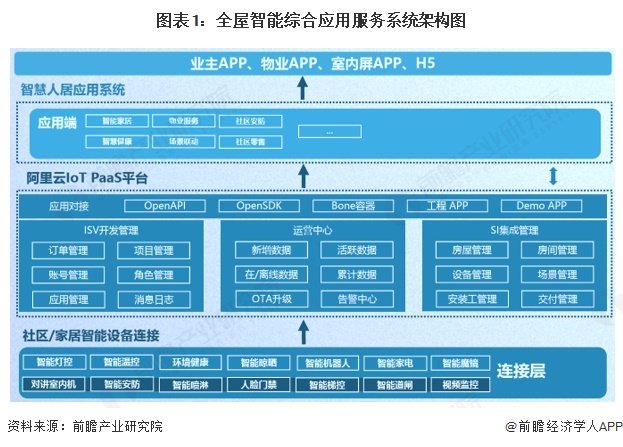
Industry Overview - The concept of "whole-house intelligence" refers to an integrated smart home system that combines smart lighting, security, audio-visual, and appliance control into a comprehensive home solution. This system allows for automated operations based on environmental and personal needs, enabling connectivity between individual smart products for a more personalized home experience [1][2] - The whole-house intelligent system relies on cloud platform capabilities and channel resources to create mature smart home applications, smart community applications, and market solutions, forming an IoT ecosystem that includes home device connectivity, automated control, data analysis, health care, community services, and new retail [1] Industry Chain Analysis - The whole-house intelligent field has developed a complete industrial chain, with upstream consisting of component suppliers, middleware suppliers, and software technology providers. The midstream includes whole-house smart home brand manufacturers that sell products directly to consumers and provide solutions to real estate and home decoration companies [2][5] Industry Development Status - The global whole-house intelligent industry is in a rapid development phase, supported by the maturity and integration of IoT, AI, and 5G technologies. This has facilitated easier interconnectivity between devices and enhanced system intelligence and interactivity. Market demand for convenient, healthy, and safe home environments is driving the transition from niche to mass markets [13][15] - In China, the whole-house intelligent industry is experiencing rapid growth driven by both policy and market forces, with a projected market size of approximately 222.4 billion yuan in 2024 [15][25] Competitive Landscape - The competitive landscape of China's whole-house intelligent industry can be categorized into three factions: traditional home appliance companies (e.g., Haier, Midea, Gree), internet companies (e.g., Xiaomi, Huawei), and other specialized firms. Traditional companies leverage supply chain and brand advantages, while internet firms possess strong technological and financial capabilities [17][19] Industry Development Trends - The Chinese whole-house intelligent industry is moving towards standardization in technology, market scenario development, and ecological competition. The combined push from policies, technology, and consumer demand is expected to facilitate a transition from rapid expansion to high-quality development, gradually building a more complete smart living ecosystem [23][25] - The market is expected to see a compound annual growth rate of 9.8%, with the market size projected to reach approximately 390 billion yuan by 2030 [25]

“地产吹哨人”郁亮退休公告无感谢引关注 深铁308亿输血助力万科有序脱困
Chang Jiang Shang Bao· 2026-01-11 23:31
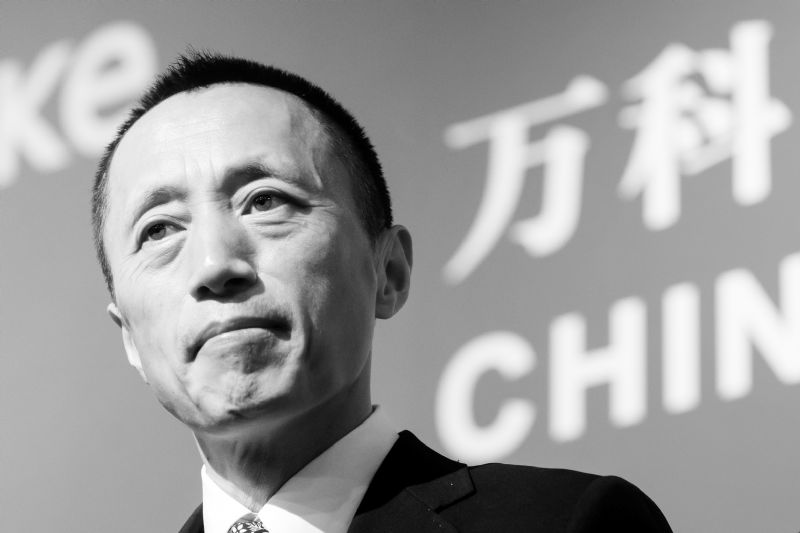
Core Viewpoint - The resignation of Yu Liang, known as the "whistleblower" of the real estate market, marks a significant transition for Vanke, a leading player in China's real estate sector, as it faces ongoing financial challenges and a changing market landscape [2][3][29]. Group 1: Yu Liang's Career and Resignation - Yu Liang announced his retirement due to age on January 8, after 36 years with Vanke, where he served as a key figure for 25 years [3][5]. - Under Yu's leadership, Vanke transformed from a billion-yuan company to a trillion-yuan enterprise, becoming a benchmark in the industry [3][14]. - Yu's departure was noted for its lack of emotional acknowledgment in the company's announcement, which surprised the market [24][25]. Group 2: Financial Challenges Facing Vanke - As of September 2025, Vanke's debt-to-asset ratio stood at 73.51%, with interest-bearing liabilities amounting to 339.18 billion yuan, while cash reserves were only 65.68 billion yuan [26]. - The company reported a net loss attributable to shareholders of 28.02 billion yuan for the first three quarters of 2025, with a significant decline in operating cash flow [26][27]. - Vanke's financial difficulties have led to a reliance on its major shareholder, Shenzhen Metro Group, which has provided loans totaling 30.80 billion yuan [28]. Group 3: Market Context and Future Outlook - The real estate market in China is currently in a downturn, with Vanke's financial health under scrutiny as it attempts to navigate through this challenging environment [29]. - Yu Liang's earlier warnings about the market's transition from a "golden era" to a "black iron era" have gained relevance as the industry faces deeper adjustments [20][21]. - Vanke is exploring debt restructuring options, including extending the maturity of its bonds, but has faced challenges in gaining investor confidence [28][29].
每日债市速递 | 一季度地方债券计划发行规模超2万亿元
Wind万得· 2026-01-11 22:42
Group 1: Open Market Operations - The central bank conducted a 340 billion yuan 7-day reverse repurchase operation on January 9, with a fixed rate of 1.40%, resulting in a net injection of 340 billion yuan for the day [1] - From January 5 to 9, the central bank had a net withdrawal of 12,214 billion yuan, indicating a tightening of liquidity [1] - Upcoming reverse repos totaling 1,387 billion yuan are set to mature from January 12 to 16, along with 6,000 billion yuan of buyout reverse repos maturing on Tuesday [1] Group 2: Funding Conditions - The interbank market remains stable, with the D R001 weighted average interest rate slightly rising to around 1.27% [3] - Overnight rates in the anonymous click (X-repo) system are reported at 1.25%, with supply exceeding 100 billion yuan [3] - The latest overnight financing rate in the U.S. stands at 3.65% [3] Group 3: Interbank Certificates of Deposit - The latest transaction rate for one-year interbank certificates of deposit among major banks is approximately 1.63%, up by 1 basis point from the previous day [7] Group 4: Government Bond Futures - The closing prices for government bond futures show a decline: 30-year main contract down 0.07%, 10-year down 0.02%, 5-year down 0.03%, and 2-year down 0.03% [11] Group 5: Economic Indicators - The National Bureau of Statistics reported that the CPI rose by 0.8% year-on-year in December 2025, the highest increase since March 2023, driven mainly by rising food prices [12] - The core CPI increased by 1.2%, maintaining above 1% for four consecutive months [12] - The PPI also saw a month-on-month increase of 0.2%, marking three consecutive months of growth [12] Group 6: Real Estate Financing Policies - Recent policy guidance from regulatory authorities allows projects on the financing coordination mechanism "white list" to extend loans with certain conditions, potentially allowing for a 5-year extension [12] Group 7: Land Transaction Data - The China Index Academy reported that the planned building area for residential land transactions in 300 cities for 2025 is 620 million square meters, a year-on-year decrease of 13.5%, with the total land transfer fees at 2.3 trillion yuan, down 10.6% [13] - Despite the overall decline, high-value land parcels in cities like Shanghai, Beijing, and Hangzhou continue to see competitive bidding, with the top 10 real estate companies accounting for 50.5% of land acquisition amounts [13] Group 8: Global Economic Developments - U.S. President Trump announced a plan to purchase 200 billion dollars in mortgage-backed securities through Fannie Mae and Freddie Mac, aimed at lowering mortgage rates [15] - The Bank of Japan may adjust its economic growth forecast due to government stimulus measures, with officials indicating no preset stance on interest rate hikes [16]

外资机构开年唱多做多中国资产
Zheng Quan Ri Bao· 2026-01-11 17:03
Core Viewpoint - Global capital is increasingly enthusiastic about allocating to Chinese assets, driven by a combination of fundamental stability, valuation advantages, and ongoing policy benefits [1] Group 1: Foreign Investment Actions - Foreign capital, represented by firms like JPMorgan and BlackRock, has actively increased holdings in Chinese assets since the beginning of 2026, with JPMorgan investing over 1 billion HKD in various sectors including renewable energy and biomedicine [2] - The Invesco China Technology ETF has seen significant inflows, growing from 2.818 billion USD at the end of last year to 3 billion USD by January 8, 2026, reflecting strong interest in technology-related investments [2] Group 2: Sector Focus and Market Dynamics - Foreign capital is particularly attracted to advanced industries such as biomedicine and renewable energy, which are seen as competitive sectors for investment [3] - The bond market is also becoming a new focus for foreign investment, with the issuance of panda bonds by international firms like Henkel and Barclays, indicating recognition of RMB-denominated assets [3] Group 3: Institutional Outlook - Major financial institutions like Goldman Sachs and Morgan Stanley have raised their economic growth forecasts for China, with Goldman Sachs predicting a 4.8% GDP growth for 2026 and significant increases in major indices [4] - The recovery in corporate earnings is a key factor supporting the positive outlook for Chinese assets, with expected earnings growth of 14% and 12% for 2026 and 2027, respectively [4][5] Group 4: Valuation and Policy Support - The current valuation of the Hang Seng Index at approximately 8.2 times earnings is significantly lower than that of the S&P 500 and Nasdaq, suggesting substantial room for valuation recovery [5] - New policies aimed at encouraging foreign investment, including an expanded list of encouraged industries and improved access for foreign investors, are expected to enhance the attractiveness of Chinese markets [5]


湾财周报 人物 郁亮退休;毛戈平家族减持“毛戈平”
Nan Fang Du Shi Bao· 2026-01-11 14:27
Group 1 - The 2025 Chinese capital market is characterized by the rise of new players amidst deep adjustments in traditional industries, highlighting a trend where both veteran leaders and new generations must embrace innovation and risk management to thrive [13][12] - Notable figures in the capital market include Zhu Jiusheng, Lei Jun, Wang Chuanfu, and others, whose experiences reflect personal turning points and broader industry cycles [13] - The ongoing power struggle within the Double Star Group, marked by the founder's public declaration to sever ties with his son, exposes governance crises and challenges for the century-old brand [14] Group 2 - The 毛戈平 family plans to cash out over 1.4 billion HKD through a collective share reduction, indicating significant financial maneuvers within the company [15] - Huawei and GAC Group have signed a comprehensive cooperation framework agreement to jointly innovate in areas like AI and smart vehicles, aiming to enhance competitiveness in the global automotive market [18] - The real estate sector is entering a critical transformation phase, with experts emphasizing the need for policies that stabilize market expectations and improve conditions for second-hand housing [19] Group 3 - The appointment of seasoned executives at 招商银行 reflects a strategy focused on stability and internal talent development, as the bank promotes experienced individuals to its leadership team [24] - The recent passing of Liu Hui, a prominent fund manager at 银华基金, marks a significant loss for the investment community, highlighting the impact of individual contributions to the industry [25]

预警“活下去”的郁亮谢幕,万科仍困“深渊”
商业洞察· 2026-01-11 09:23
Core Viewpoint - The retirement of Yu Liang marks the end of an era for the Chinese real estate industry, symbolizing the transition from a period of rapid growth to a more uncertain future for the sector [5][23]. Group 1: Yu Liang's Career and Impact - Yu Liang, known as the "whistleblower" of the real estate industry, has been a pivotal figure in the development of Vanke, demonstrating keen insight into industry trends [7]. - He joined Vanke in 1990 and rose through the ranks, becoming the general manager in 2001 and later the chairman in 2017, leading the company to significant milestones, including surpassing 100 billion yuan in sales in 2010 [10][8]. - Yu Liang's cautious approach, influenced by his financial background, led him to predict industry downturns, coining terms like "silver age" and "black iron age" to describe the evolving market conditions [11][12]. Group 2: Vanke's Challenges and Management Changes - Vanke has faced severe challenges, with total interest-bearing liabilities reaching 362.93 billion yuan by Q3 2025, and a cash short-term debt ratio of only 0.43, indicating liquidity issues [19]. - In January 2025, significant management changes occurred, with Yu Liang stepping down as chairman and the introduction of new executives from the Shenzhen state-owned enterprise system, marking a shift to a dual management model [15][13]. - The company has been actively seeking to address its debt crisis, with the major shareholder, Shenzhen Metro Group, providing nearly 30 billion yuan in financial support and engaging in debt restructuring efforts [20][23]. Group 3: Industry Context and Future Outlook - The retirement of Yu Liang signifies the end of the "wild growth" era in the Chinese real estate sector, as the industry faces a deep adjustment phase characterized by management upheavals and financial distress [23][24]. - The ongoing debt crisis has led to a decline in Vanke's revenue, with a reported 26.61% year-on-year decrease in revenue for the first three quarters of 2025 [19]. - The future of Vanke and the broader real estate industry remains uncertain, as the sector grapples with the consequences of past growth strategies and the need for sustainable development [24].

——地产及物管行业周报(2026/1/3-2026/1/9):基本面仍在继续磨底中,政策面积极因素在积累-20260111
Shenwan Hongyuan Securities· 2026-01-11 04:57
Investment Rating - The report maintains a "Positive" rating for the real estate and property management sectors, highlighting the potential for quality real estate companies and commercial properties [2][24]. Core Insights - The real estate sector is experiencing a bottoming out phase, with positive policy factors accumulating. Recent central government directives emphasize stabilizing the real estate market, indicating a potential shift in policy support [2][24]. - The report notes that the current valuation levels for some quality companies are at historical lows, making them attractive investment opportunities [2][24]. Industry Data Summary New Home Transaction Volume - In the week of January 3-9, 2026, new home transactions in 34 key cities totaled 1.784 million square meters, a decrease of 57.3% week-on-week. First and second-tier cities saw a 58.2% decline, while third and fourth-tier cities experienced a 40.2% drop [3][4]. - Year-on-year, new home transactions in January (up to January 9) decreased by 40.9% compared to the same period last year, with first and second-tier cities down 40.6% and third and fourth-tier cities down 44.2% [4][6]. Second-Hand Home Transaction Volume - In the same week, second-hand home transactions in 13 cities totaled 1.26 million square meters, reflecting a 12.6% increase week-on-week. However, year-to-date transactions are down 23.3% compared to the same period last year [10][12]. Inventory and Sales Ratio - In the week of January 3-9, 2026, 15 cities launched 770,000 square meters of new homes, with total sales of 640,000 square meters, resulting in a sales-to-launch ratio of 0.83. The average monthly inventory turnover for the last three months is 21.6 months, a decrease of 0.24 months [18][24]. Policy and News Tracking - Recent policy updates include an extension of loan financing for white-listed projects from 2 years to 5 years, aimed at stabilizing the real estate market [2][24]. - Local governments are implementing various supportive measures, such as tax relief for property taxes in Shanghai and talent attraction policies in Nanjing, which include living subsidies and expanded housing rental support [24][27].




中国房地产行业企业监测报告(2025年11月)
中指研究院· 2026-01-11 01:35
Investment Rating - The report does not explicitly state an investment rating for the real estate industry in November 2025 Core Insights - The performance of leading real estate companies has declined significantly, with a 32.4% year-on-year decrease in sales revenue and a 7.2% month-on-month decline, primarily due to high base effects from the previous year [5][39] - The average transaction area for new residential properties in first-tier cities fell by 42.42% year-on-year, while second-tier cities saw a 45.70% decline [10][11] - The total bond financing in the real estate sector reached 620.4 billion yuan in November 2025, marking a year-on-year increase of 28.5% [7][41] Summary by Sections 1. Overall Industry Performance in November 2025 - **Market Demand**: In November, the average transaction area for new residential properties in first-tier cities was 198.60 million m², down 42.42% year-on-year, while second-tier cities recorded 757.70 million m², down 45.70% [10][11] - **Sales Situation**: The sales revenue of monitored brand real estate companies decreased by 32.4% year-on-year and 7.2% month-on-month, with only a few companies like Greentown and China Resources showing month-on-month growth [5][39] - **Land Acquisition**: The total land acquisition cost for monitored brand real estate companies was 11.99 billion yuan, with a total land area of 534,000 m² acquired [6][38] 2. Key Company Performance - **Vanke**: In November, Vanke acquired 3 plots of land with a total acquisition cost of 9.2 billion yuan and a planned building area of 190,000 m² [46] - **Poly Developments**: Poly Developments acquired 2 plots of land for a total cost of 1.74 billion yuan, with a planned building area of 111,600 m² [58] - **Sales Performance**: Poly Developments reported a sales revenue of 18.02 billion yuan in November, down 24.9% year-on-year, while Vanke's sales revenue was 9.42 billion yuan, down 53.2% year-on-year [61][48] 3. Financing Situation - **Bond Financing**: The total bond financing in the real estate sector was 620.4 billion yuan, with credit bonds accounting for 262.2 billion yuan, down 1.6% year-on-year [7][41] - **Financing Structure**: Asset-backed securities (ABS) financing reached 294.0 billion yuan, up 36% year-on-year, making up 47.4% of the total financing [7][41]