中国海洋石油

Search documents
石油ETF鹏华(159697)连续8天获净流入,累计申购2.23亿份
Xin Lang Cai Jing· 2026-01-20 07:28
Group 1 - The core viewpoint of the news is that domestic refined oil retail prices are expected to increase for the first time in 2026 due to rising international oil prices influenced by geopolitical tensions in the Middle East and South America [1] - East China Securities forecasts that global oil supply and demand will recover in 2026, with Brent crude oil prices expected to fluctuate between $55 and $75 per barrel [1] - As of January 20, 2026, the National Petroleum and Natural Gas Index (399439) rose by 0.42%, with significant increases in constituent stocks such as Thai Holdings (up 9.37%) and Blue Sky Gas (up 4.21%) [1] Group 2 - The top ten weighted stocks in the National Petroleum and Natural Gas Index (399439) as of December 31, 2025, include major companies like China National Petroleum, Sinopec, and China National Offshore Oil, collectively accounting for 67.11% of the index [2] - The Penghua Oil ETF (159697) closely tracks the National Petroleum and Natural Gas Index and has seen a net inflow of 140 million units over the past eight days, with the latest price at 1.25 yuan [1][3]
区域风险升温+美元走低,石油ETF鹏华(159697)冲刺连续8天净流入
Sou Hu Cai Jing· 2026-01-20 03:12
Group 1 - The overall performance of the US dollar is weak, with the dollar index falling to around 99, leading to decreased investor confidence in dollar assets due to regional tensions [1] - Key variables affecting oil prices in 2026 include OPEC+ production cuts, macroeconomic policy shifts such as potential Federal Reserve interest rate cuts, and escalating regional political risks that could trigger short-term oil price spikes [1] - The projected core price range for Brent crude oil in 2026 is $55-75 per barrel, while WTI is expected to be $50-70 per barrel, with volatility expected to narrow compared to 2025 [1] Group 2 - As of December 31, 2025, the top ten weighted stocks in the National Petroleum and Natural Gas Index (399439) include major companies such as China National Petroleum, Sinopec, and CNOOC, collectively accounting for 67.11% of the index [2] - The Penghua Oil ETF (159697) closely tracks the National Petroleum and Natural Gas Index, reflecting the price changes of listed companies in the oil and gas sector on the Shanghai and Shenzhen stock exchanges [1][2]



【石油化工】地缘局势动荡驱动油价上行,原油供给过剩预期有望改善——行业周报第436期(20260112—20260118)(赵乃迪/蔡嘉豪/王礼沫)
光大证券研究· 2026-01-19 23:06
Group 1 - The geopolitical tensions in Iran have led to significant fluctuations in oil prices, with Brent and WTI crude oil futures rising by 1.9% and 0.7% respectively as of January 16, 2026 [2] - OPEC+ has increased production by 2.21 million barrels per day in 2025, but plans to slow down production increases in 2026 to balance oil prices [3] - The International Energy Agency (IEA) has revised its forecast for global oil demand growth in 2026 to 860,000 barrels per day, driven primarily by the chemical sector [4] Group 2 - The "Big Three" Chinese oil companies have demonstrated resilience during the recent oil price fluctuations, with performance exceeding historical levels due to increased production and effective cost control [5] - The ongoing capital expenditure by the "Big Three" is expected to support their long-term growth and adaptation to changing market conditions [5]

广东能源转型加速:清洁能源占比近48% 布局“零碳细胞”
2 1 Shi Ji Jing Ji Bao Dao· 2026-01-19 15:11
Core Insights - The National Energy Administration of China projects that by 2025, the total electricity consumption in China will reach 10.4 trillion kilowatt-hours, marking a 5% year-on-year increase, with Guangdong province leading at 958.973 billion kilowatt-hours, a 4.93% increase [1] - Guangdong's clean energy share in the power grid is expected to approach 48% by 2025, reflecting a significant shift in the energy structure towards renewable sources [1] - The province's energy transition is accelerating, with a notable decrease in coal-fired power generation from approximately 75.69% in late 2021 to 71.03% by late 2025, while the shares of hydropower, wind, and solar energy have increased significantly [1][4] Energy Structure Transformation - Guangdong's total power generation reached 646.83 billion kilowatt-hours from January to November 2025, with coal, hydropower, wind, nuclear, and solar power contributions being 459.45 billion, 20.56 billion, 34.2 billion, 115.6 billion, and 17.014 billion kilowatt-hours respectively [4] - Wind power generation has doubled from 11.41 billion kilowatt-hours in 2021 to 34.2 billion by late 2025, while solar power surged from 4.703 billion to 17.014 billion kilowatt-hours [4] - The share of non-fossil energy consumption in Guangdong is projected to reach 28.7% by 2024, with electricity accounting for 39% of total energy consumption, exceeding national averages by approximately 9 and 10 percentage points respectively [6] Clean Energy Projects - Guangdong has launched several clean energy projects, with wind and solar energy surpassing coal as the largest installed capacity source since April 2025 [5] - The National Energy Investment Corporation has commissioned three offshore wind projects in Guangdong, with a total installed capacity exceeding 900,000 kilowatts and a total investment of 18.8 billion yuan [5] - By June 2025, the total installed capacity of renewable energy in Guangdong exceeded 78.5 million kilowatts, accounting for nearly 33% of the province's total installed capacity [5] Zero Carbon Park Initiatives - Guangdong is initiating the "Zero Carbon Park Construction Plan," aiming to establish around 25 zero-carbon parks by 2027 to accelerate the green transition of energy consumption structures [1][8] - The first batch of national-level zero-carbon parks includes the Zhanjiang Lingang Economic Zone, which aims to leverage local renewable energy resources for sustainable development [2][9] - The plan encourages the development of renewable energy, energy storage, and the use of alternative fuels, with a focus on integrating various energy sources to enhance sustainability [8][10]
石油ETF鹏华(159697)涨超1.4%,2025年规上工业原油产量同比增长1.5%
Xin Lang Cai Jing· 2026-01-19 07:05
Group 1 - The core viewpoint of the articles indicates that crude oil production in China has shown a slight decline in December 2025, while the overall production for the year has increased modestly, reflecting ongoing market dynamics influenced by geopolitical tensions and supply concerns [1] - In December 2025, the industrial crude oil output was reported at 17.8 million tons, a year-on-year decrease of 0.6%, with an average daily production of 574,000 tons [1] - For the entire year of 2025, the industrial crude oil output reached 216.05 million tons, marking a year-on-year growth of 1.5% [1] Group 2 - Guojin Securities noted a significant rebound in oil prices, primarily driven by market concerns over escalating regional tensions that could lead to potential supply losses, resulting in a rapid increase in regional risk premiums [1] - As of January 19, 2026, the Guozheng Oil and Gas Index (399439) rose by 1.58%, with notable increases in constituent stocks such as Tai Holdings (up 8.13%), Houpu Co. (up 4.08%), and Jiufeng Energy (up 3.92%) [1] - The Oil ETF Penghua (159697) increased by 1.48%, with the latest price reported at 1.24 yuan, closely tracking the Guozheng Oil and Gas Index, which reflects the price changes of listed companies in the oil and gas sector on the Shanghai and Shenzhen stock exchanges [1] Group 3 - As of December 31, 2025, the top ten weighted stocks in the Guozheng Oil and Gas Index included major companies such as China National Petroleum, Sinopec, and China National Offshore Oil Corporation, collectively accounting for 67.11% of the index [1]
液化石油气(LPG)投资周报:地缘溢价回落,PG价格周尾跳水-20260119
Guo Mao Qi Huo· 2026-01-19 05:21
1. Report Industry Investment Rating No relevant content provided. 2. Core Viewpoints of the Report - The short - term supply in the Middle East is tight, the domestic PDH operation rate remains high, and the demand supports the market. The domestic port inventory is decreasing. Recently, the EIA C3 inventory has turned to decline, the domestic civil LPG price has risen, and with the increase in risk premium and contract price, the PG price still shows a wide - range volatile and upward trend [4]. 3. Summary According to Related Catalogs 3.1 Energy Product Price Monitoring - Various energy products have different price changes. For example, the current price of LPG is 4137 yuan/ton, with a daily decline of 2.27%, a weekly decline of 1.99%, a monthly increase of 0.93%, and an annual decline of 8.03% [3]. 3.2 LPG Market Analysis 3.2.1 Supply - Last week, the total LPG commercial volume was about 518,700 tons (a 0.12% increase). Among them, the civil LPG commercial volume was 216,500 tons (a 0.14% decrease), the industrial LPG was 189,300 tons (a 0.11% decrease), and the ether - after C4 was 167,100 tons (a 0.12% decrease). The LPG arrival volume last week was 540,000 tons (a 2.08% increase). In Xinjiang, enterprise out - put increased, while in Shandong, some enterprises reduced device loads or used resources internally [4]. 3.2.2 Demand - In winter, the heating demand remains, and the LPG combustion demand is gradually improving, reaching a relatively high level. PDH devices are operating at a high load, but the device profit loss is intensifying. The propane purchase demand of port chemical enterprises is relatively rigid, but there are news of device reduction, and the expected operating rate will gradually decline, and the propane chemical demand will fall. MTBE profit is in loss, the overseas olefin blending oil demand slows down, the domestic export window closes, and most orders have been executed, which restricts the civil LPG price trend [4]. 3.2.3 Inventory - Last week, the LPG factory inventory was 156,700 tons (a 1.20% decrease), and the port inventory was 2,027,800 tons (a 4.89% decrease). The low - supply situation of refineries continues, the market trading atmosphere is mild, and the shipment of manufacturers in many places is smooth, so the storage capacity rate continues to decline. The port arrival volume has a slight increase but is still at a low level, the import resources are insufficiently replenished, and the inventory still shows a downward trend [4]. 3.2.4 Basis and Position - The weekly average basis is 288.80 yuan/ton in East China, 763.60 yuan/ton in South China, and 196.60 yuan/ton in Shandong. The total LPG warehouse receipt volume is 5977 lots, a decrease of 36 lots, and the lowest deliverable area is Shandong [4]. 3.2.5 Chemical Downstream - The operating rates of PDH, MTBE, and alkylation are [not fully provided in the text]. The profits of PDH to propylene, MTBE isomerization, and alkylation in Shandong are also [not fully provided in the text] [4]. 3.2.6 Valuation - The PG - SC ratio is [not fully provided in the text] (a 3.35% decrease), and the PG secondary - to - primary month spread is - 242 yuan/ton (a 26.04% increase). In the fourth quarter, the LPG price is firm, the crude oil shows a bearish trend, and the oil - gas cracking spread has a weakening trend [4]. 3.2.7 Other Factors - China's CPI year - on - year growth rate in December 2025 reached the fastest in the past three years; the US ADP employment data in December showed weak labor demand. Sinopec and China National Aviation Fuel Group have implemented a restructuring. Trump's remarks have led to repeated fermentations of risk events in the US - Venezuela, Middle East, and Russia - Ukraine regions, greatly increasing the volatility of crude oil prices and driving up the price fluctuations of oil - chemical products [4]. 3.3 Trading Strategies - Unilateral: Temporarily wait and see. - Arbitrage: Pay attention to PG2 - 3 positive arbitrage, PG3 - 4 reverse arbitrage, long SC and short PG, long PP and short PG [4].
【基础化工】“AI+”赋能化工研发制造,26年小核酸药物迎快速增长期——行业周报(20260112-20260116)(赵乃迪/周家诺/蔡嘉豪/王礼沫)
光大证券研究· 2026-01-18 23:04
Core Viewpoint - The article emphasizes the ongoing integration of artificial intelligence (AI) in various industries, particularly in manufacturing and pharmaceuticals, driven by government policies and technological advancements [4][5][6]. Group 1: AI Integration in Manufacturing - The Chinese government has issued policies to promote the integration of AI in manufacturing, focusing on quality improvement and efficiency through technologies like large models and digital twins [4]. - Key players in the chemical industry, such as China National Petroleum, China Petroleum & Chemical, and China National Offshore Oil Corporation, are developing industry-specific AI models to enhance core business operations [5]. - Companies like Wanhua Chemical are leveraging third-party AI platforms to achieve cost reduction and efficiency in production management and material research [5]. Group 2: Growth of Small Nucleic Acid Drugs - The global market for small nucleic acid drugs has seen significant growth, with a compound annual growth rate (CAGR) of 217.8%, increasing from $0.1 billion in 2016 to $3.25 billion in 2021 [6]. - Projections indicate that the market for oligonucleotide drugs will exceed $15 billion by 2026, with a CAGR of 35% from 2020 to 2025 [6]. - The industry is expected to transition from technological breakthroughs to large-scale commercialization, indicating a promising future for the small nucleic acid drug sector [6]. Group 3: Key Players in Small Nucleic Acid Development - Bluestar Technology has established a comprehensive technology platform for small nucleic acids and peptide drugs, being one of only two global suppliers capable of providing integrated solutions for complex oligonucleotide synthesis [7]. - Lonza Technology is expanding its CDMO services globally, achieving significant progress in partnerships with leading pharmaceutical companies and enhancing its domestic collaborations [7].


【石油化工】踏上“十五五”新征程,打造具有鲜明海洋特色的世界一流能源集团——中国海油集团跟踪报告之七(赵乃迪/蔡嘉豪/王礼沫)
光大证券研究· 2026-01-18 23:04
Core Viewpoint - China National Offshore Oil Corporation (CNOOC) aims to become a world-class energy resource group with distinct marine characteristics during the 14th Five-Year Plan and is setting ambitious goals for the 15th Five-Year Plan [4]. Group 1: Achievements and Future Goals - During the 14th Five-Year Plan, CNOOC made significant progress in energy security, quality improvement, and technological advancements, successfully completing major objectives [4]. - For the 15th Five-Year Plan, CNOOC will focus on high-quality development, enhancing core competitiveness, and ensuring energy security while addressing the challenges posed by international oil price fluctuations [4][5]. Group 2: Strategic Initiatives for the 15th Five-Year Plan - CNOOC plans to strengthen its oil and gas core business, enhance exploration and production capabilities, and accelerate overseas production [5]. - The company will refine its refining, chemical, and new materials sectors, optimize product structures, and improve fertilizer production [5]. - CNOOC aims to strategically develop "electricity-hydrogen-carbon" businesses and explore marine mineral resources [5]. Group 3: Operational Focus for 2026 - In 2026, CNOOC will prioritize domestic oil and gas production, enhance investment efficiency, and promote innovation through AI applications [6]. - The company will implement reforms to improve organizational management and ensure safety and environmental protection [7]. - CNOOC will strengthen compliance management and risk prevention measures, particularly in overseas operations [7].
石油化工行业周报第 436 期(20260112—20260118):地缘局势动荡驱动油价上行,原油供给过剩预期有望改善-20260118
EBSCN· 2026-01-18 11:48
Investment Rating - The report maintains an "Overweight" rating for the oil and petrochemical industry [5] Core Views - Geopolitical tensions, particularly regarding Iran, have driven significant fluctuations in oil prices, providing a favorable backdrop for oil price recovery [1] - OPEC+ is expected to cautiously increase production in 2026, which may help alleviate the oversupply situation in the oil market [2] - Global oil demand is projected to improve, with the chemical raw material demand expected to dominate the growth in 2026 [3] - The report expresses a positive long-term outlook for major Chinese oil companies and the oil service sector, emphasizing their resilience during price fluctuations [4] Summary by Sections Oil Supply and Demand - OPEC forecasts a demand increase of 1.38 million barrels per day in 2026, with a cautious production increase expected to improve the supply-demand balance [2] - The IEA has raised its 2026 global oil demand growth forecast to 860,000 barrels per day, attributing this to improved macroeconomic conditions [3] Price Trends - As of January 16, 2026, Brent and WTI crude oil futures closed at $64.20 and $59.22 per barrel, reflecting increases of 1.9% and 0.7% respectively from the previous week [1] Investment Recommendations - The report recommends focusing on major Chinese oil companies, including China National Petroleum Corporation, Sinopec, and CNOOC, as well as their associated oil service engineering firms [4]
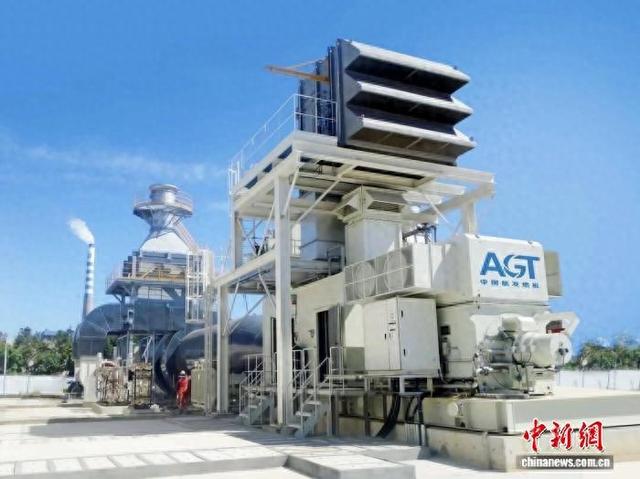
中国航发“太行”系列燃气轮机创新发展示范项目完成评估验收
Zhong Guo Xin Wen Wang· 2026-01-18 05:47
Core Viewpoint - China Aviation Engine Group (China Aviation) has successfully completed the evaluation and acceptance of its gas turbine innovation development demonstration projects, marking a significant advancement in the independent research, design, manufacturing, testing, and operational maintenance capabilities of gas turbines in China [1][3]. Group 1: Project Achievements - The "Taihang 7" gas turbine has accumulated over 25,000 operating hours, filling the gap in the application of domestic gas turbines for offshore platforms, thus enhancing oil and gas exploration and development capabilities [2][3]. - The "Taihang 15" gas turbine demonstration unit has run for over 6,300 hours, utilizing associated gas resources from offshore oil fields to provide autonomous power supply for microgrid systems, validating the unit's stability and reliability [5]. - The "Taihang 110" heavy gas turbine has operated for over 8,400 equivalent hours, achieving 100% domestic production and filling the gap in the domestic market for 110 MW heavy gas turbine products, which is currently the largest commercial heavy gas turbine in China [7]. Group 2: Strategic Implications - The demonstration projects are part of a strategic collaboration between China Aviation and China National Offshore Oil Corporation (CNOOC), aimed at establishing a national-level testing and demonstration base for autonomous gas turbines in the marine engineering sector [5][7]. - China Aviation aims to leverage the successful evaluation and acceptance of these projects as a new starting point to deepen technological innovation, accelerate product iteration and upgrades, and promote the large-scale application of these technologies to enhance national energy security and drive high-quality development in the equipment manufacturing industry [1][7].