吉利

Search documents
群友分析售价20万元以上品牌/车型销量市场
理想TOP2· 2025-07-18 14:10
Core Viewpoints - The main competitors in the new energy vehicle market over the next five years will still be fuel vehicles, with the core competitive point being the differentiated product matrix supply capability for models priced above 200,000 yuan, which currently has significant room for improvement in supply [2][3] - The market share of vehicles priced above 200,000 yuan is expected to exceed 60% in the next 5-10 years, up from the current 30%. The leading brand in this price segment is likely to exceed a 25% market share, potentially surpassing 30%, indicating annual sales exceeding 3 million units [2][3] - The new energy vehicle market is awaiting its "iPhone 4 moment," where technology and blockbuster products mature, leading to a significant increase in market concentration [2][4] Market Analysis - In 2024, the domestic passenger car sales are projected to be approximately 22.6 million units, with fuel vehicles accounting for about 11.5 million units, representing a market share of around 51%. The sales of models priced above 200,000 yuan are estimated at about 6.6 million units, making up 30% of total sales, with fuel vehicles contributing approximately 4.2 million units [3][6] - The market share of fuel vehicles in the 200,000 yuan price range remains substantial, currently at 64%. Despite significant price reductions in the past year to maintain market share, the trend is set, and the market is awaiting the arrival of the "iPhone 4 moment" [3][4] iPhone 4 Moment - The "iPhone 4 moment" refers to two key turning points: the maturity of 3G technology, which allowed smartphones to surpass traditional computers in user experience, and the decline of traditional phone brands' flagship models, which led to a loss of cash flow for R&D and ultimately market exit. This parallels the potential decline in sales of fuel vehicles priced above 200,000 yuan [4][5] Price Segment Analysis - The market share of vehicles priced above 200,000 yuan has increased from 9% in 2019 to 30% in 2023. It is anticipated that this segment will exceed 60% in the next five years, corresponding to sales of at least 12 million units domestically [6][7] - The brands and products in this price segment are crucial for generating sufficient profits to support R&D, branding, and market promotion, creating a flywheel effect. Additionally, this price segment attracts a broad customer base, enhancing brand momentum [6][7] Brand Market Share - In the segment of vehicles priced above 200,000 yuan, the top six fuel vehicle brands hold a market share of approximately 55%, while the top four new energy brands account for about 26-27% [16][17] - The future market structure is expected to resemble the smartphone industry, where a few brands dominate the high-end market. The leading brand in the new energy vehicle segment could capture around 25% of the market share, with annual sales exceeding 3 million units if the overall passenger car sales reach 20 million [17][29] Sales Performance - The average monthly sales of models priced above 200,000 yuan that exceed 10,000 units are defined as "blockbuster products." Currently, only six major fuel vehicle brands and four new energy brands have this capability, with these models accounting for 65% of the overall sales in this price segment [18][19] - The performance of Li Auto is particularly notable, as achieving a market share of 25-30% in the SUV segment priced above 200,000 yuan would significantly enhance its market position before expanding into the sedan market [29][30]


纯电还是增程/插混,用户都是怎么选择的?
车fans· 2025-07-18 00:29
Core Viewpoint - The article discusses the current market dynamics of electric vehicles (EVs), range-extended vehicles, and plug-in hybrids, focusing on consumer preferences and the long-term viability of these technologies. Group 1: Consumer Preferences - Consumers are increasingly choosing pure electric vehicles (EVs) over range-extended and plug-in hybrid models due to better technology and practicality, such as the 800V silicon carbide technology offered by brands like Leap Motor [3]. - Range anxiety drives some consumers to opt for range-extended vehicles, as they provide the flexibility of both electric and gasoline power [4]. - The cost-effectiveness of pure electric vehicles is a significant factor, with lower operating costs compared to traditional fuel vehicles, especially when charging during off-peak hours [9]. Group 2: Market Trends - The sales of pure electric and plug-in hybrid vehicles are showing a balanced trend, with some brands reporting nearly equal sales ratios of 1:1 between the two types [12]. - The development of charging infrastructure and advancements in battery technology are expected to alleviate range anxiety, making pure electric vehicles more appealing in the future [5][12]. - The design and performance advantages of pure electric vehicles, such as better platform and aesthetics, are influencing consumer choices, particularly for urban commuting [12][15]. Group 3: Brand Insights - Leap Motor is focusing on both pure electric and range-extended models, with a noted preference for pure electric among consumers [3]. - Geely's sales indicate a preference for pure electric vehicles, with plug-in hybrids being chosen primarily for long-distance travel needs [9]. - BYD's offerings show that pure electric models are perceived as having better performance and design, while plug-in hybrids are seen as more economical [12].
欧洲汽车巨头抱团补“软肋” 开源联盟能否挽救转型之困?
Jing Ji Guan Cha Wang· 2025-07-17 15:22
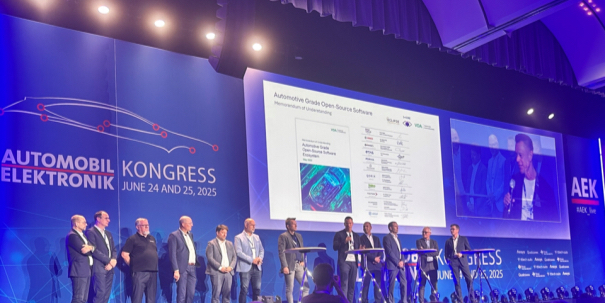
Core Insights - A significant automotive collaboration agreement has been signed in Europe, aiming to enhance the region's "soft power" through the development of a shared automotive software platform called "S-CORE" [2][3] - The alliance includes major automotive players such as Volkswagen, BMW, and Mercedes-Benz, and aims to accelerate the transition to software-defined vehicles (SDVs) by creating an independent and open software ecosystem [2][4] - The initiative is a response to Europe's lagging software ecosystem and aims to address the challenges faced by European automakers in software development [7][10] Group 1: Collaboration and Objectives - The S-CORE project is based on an open-source model, differing from traditional standards-based approaches, and aims to reduce basic software development costs by 30% [3][5] - The alliance plans to release a production-ready software architecture by 2026 and achieve full vehicle-level open-source software integration by 2030 [2][5] - The collaboration seeks to establish a unified software foundation for European automakers, enhancing their competitive edge against U.S. and Chinese companies [10][12] Group 2: Challenges and Concerns - Despite the potential benefits, there are concerns regarding the efficiency of collaboration among major automakers and the risk of stifling innovation due to the complexity of the software issues [10][11] - The software development landscape in Europe has been marked by failures, such as Volkswagen's Cariad, which has faced significant delays and challenges in delivering software solutions [7][8] - The alliance's success may be hindered by the long-standing hardware-centric approach of European automakers and the shortage of software talent [10][11] Group 3: Market Implications - The establishment of the S-CORE alliance reflects a growing consensus that digital services and software revenues will become a primary source of profit for automakers [8][9] - The alliance's outcomes may not significantly impact the Chinese market, as many European automakers have already begun developing independent software ecosystems tailored to local needs [12][13] - In contrast to Europe's approach, China's automotive industry is rapidly advancing in software open-source initiatives, focusing on market-driven solutions and faster implementation [13][14]
中国人形机器人爆发:资本、技术与商业化三重突破中
2 1 Shi Ji Jing Ji Bao Dao· 2025-07-17 08:30
Capital Inflow - The humanoid robot sector is experiencing unprecedented capital influx, with 114 investment events in the first five months of 2025, surpassing the total of 77 events in the previous year, and raising 23.2 billion yuan, exceeding the total of 20.9 billion yuan in 2024 [4][6] - Government-led funds are entering the market, with over 70 billion yuan allocated to humanoid robots from local government funds [6][7] - The competition among local governments to establish 10 billion yuan funds for the humanoid robot industry has intensified, with cities like Beijing, Shanghai, and Shenzhen joining the "10 billion fund club" [6][7] Technological Breakthroughs - 2025 is marked as a pivotal year for advancements in humanoid robot motion control technology, with significant progress in hardware capabilities such as high-torque motors and tactile sensing systems [8][9] - The market for dexterous hands, a key interface for human-robot interaction, is projected to grow from 1.7 billion USD in 2024 to over 3 billion USD by 2030 [8] - Software advancements have enabled humanoid robots to achieve human-like decision-making capabilities, integrating AI-driven task planning and data-driven execution [9] Commercialization Progress - The commercialization of humanoid robots is accelerating, highlighted by a major procurement order from China Mobile worth 124 million yuan, marking a significant milestone [11][12] - Industrial applications are becoming the primary battleground for commercialization, with numerous automotive companies placing orders for humanoid robots [12] - Despite the surge in orders, approximately half are focused on public demonstrations and data collection, indicating a structural contradiction in the market [13]

弘景光电(301479) - 2025年7月16日投资者关系活动记录表
2025-07-16 10:02
Business Overview - The company operates in three main business areas: smart automotive, smart home, and panoramic/sports cameras, with emerging fields like AI hardware, machine vision, industrial inspection, and medical technology driving growth [1]. - The overall business structure has not shown significant changes in the first half of 2025, with detailed operational performance to be disclosed in future reports [1]. Financial Performance - The gross margin for the camera module business in 2024 is reported at 19.92%, which is considered reasonable [2]. - The company aims to maintain this gross margin by controlling material costs and improving product yield rates as it scales its operations [2]. Clientele and Market Position - Major clients for the smart automotive products include Tier 1 manufacturers such as Desay SV, Baolong Technology, and Hikvision, with end customers like Chery, Geely, and Xpeng [3]. - The company currently supplies panoramic camera modules, which are technically more challenging to manufacture compared to sports camera modules due to the need for seamless stitching and minimal distortion [4]. Production Capacity and Market Outlook - The company maintains a high capacity utilization rate in the first half of 2025, with ongoing projects to expand optical lens and module production capacity [5]. - The global retail market for consumer-grade panoramic cameras is projected to reach ¥5.37 billion in 2024, which is only one-seventh of the global sports camera market valued at ¥36.6 billion [5]. - The compound annual growth rate (CAGR) for the consumer-grade panoramic camera market from 2023 to 2027 is forecasted at 11.5%, indicating significant growth potential driven by technological advancements and increased consumer awareness [5].
汽车行业:25年数据点评系列之八:如何看待EV及PHEV渗透率提升斜率分化
2025-07-16 06:13
Summary of Conference Call Notes Industry Overview - The conference call primarily discusses the electric vehicle (EV) and hybrid vehicle market in China, focusing on sales performance and market dynamics in the first four months of the year [1][2][3]. Key Points and Arguments Electric Vehicle Sales Growth - In the first four months of the year, pure electric vehicle sales increased by 600,000 units year-on-year, with three main contributing factors: - Vehicles priced below 100,000 CNY contributed 43% of the growth [1] - New quality supply in the 100,000 to 150,000 CNY range contributed 30% [1] - Xiaomi's contribution accounted for 15% [1] - The growth in vehicles priced below 100,000 CNY is primarily driven by the "old-for-new" policy, which offers incentives of 20,000 CNY for scrapping old vehicles or 15,000 CNY for other incentives [1][2]. Hybrid Vehicle Market Performance - Hybrid vehicle sales saw a modest year-on-year increase of 2.2 percentage points, with an absolute increase of only 200,000 units in the first four months [3]. - Key factors affecting hybrid sales include: - BYD's significant market share in the plug-in hybrid segment, which experienced negative sales growth due to consumer hesitance towards paid features in smart driving [3]. - The transition of models at Seres, leading to a decline of 40,000 units in sales [3]. Supply Dynamics - The supply of electric vehicles is expected to be concentrated, particularly in the 200,000 CNY and above segment, with new models from Xiaomi and the Ideal A series expected to launch in July [4]. - The market is seeing a concentration of new supply in both the below and above 200,000 CNY segments, with several new models from brands like Geely and Great Wall Motors expected to enter the market [5]. Market Demand and Inventory - Overall vehicle sales in the first four months showed a positive growth of 5.5% year-on-year, with a projected annual growth rate of approximately 7.6% based on historical data [6]. - The industry inventory level is around 2.2 months, which is considered reasonable. BYD has a slightly higher inventory of 2.5 months compared to other brands [6]. Export Performance - Chinese brands experienced a 10% increase in export growth in the first four months, driven mainly by BYD's performance in the plug-in hybrid segment [7]. - Future export growth will depend on demand in markets like Russia and BYD's continued expansion in overseas markets [7]. Additional Important Insights - The "old-for-new" policy is a significant driver for the growth of lower-priced electric vehicles, indicating a strong government influence on market dynamics [1][2]. - The hybrid vehicle segment is facing challenges due to consumer behavior and inventory issues, which may affect future growth [3][6]. - The concentration of new vehicle supply in both segments suggests a competitive landscape that could impact pricing and market share dynamics [5].

中泰国际每日晨讯-20250716
ZHONGTAI INTERNATIONAL SECURITIES· 2025-07-16 01:49
Market Overview - The Hong Kong stock market saw a significant rise on July 15, with the Hang Seng Index increasing by 386 points or 1.6%, closing at 24,590 points, marking a four-month high [1] - The Hang Seng Tech Index rose by 2.8%, closing at 5,431 points, indicating a potential breakout from a sideways trend since May [1] - The total market turnover increased to over 288.4 billion HKD, signaling positive market sentiment with rising prices and volumes [1] - Notable inflows were observed in the Hong Kong Stock Connect, with a net inflow of 3.82 billion HKD [1] Macroeconomic Dynamics - In Q2 2025, China's GDP grew by 5.2% year-on-year, with a 5.3% growth in the first half, exceeding expectations and suggesting a potential shift in policy focus towards structural support rather than short-term stimulus [2] - The nominal GDP growth rate for Q2 was only 3.9%, with a deflationary pressure indicated by a -1.3% GDP deflator, marking nine consecutive quarters of negative inflation [2] - Investment contribution to GDP rose to 24.7%, while consumption contributed 52.3%, reflecting a slight increase of 0.6 percentage points [2] Industry Dynamics - The new energy vehicle sector led the market gains recently, with companies like Li Auto and NIO seeing stock increases of 1%-4% [5] - The healthcare sector also performed well, with the Hang Seng Healthcare Index rising by 2.9% following the announcement of a new commercial health insurance drug list by the National Healthcare Security Administration [5] - The photovoltaic sector faced declines, with major companies like Xinyi Solar and LONGi Green Energy dropping by 2.9%-3.9% due to a U.S. investigation into imported polysilicon [6] Real Estate Sector Insights - The new housing transaction volume in 30 major cities fell by 26.5% year-on-year, contrasting with a previous week’s increase of 5.8% [10] - In first-tier cities, cumulative new housing transaction volumes showed mixed results, with Beijing down 0.2% and Shanghai up 2.9% year-on-year [11] - The land transaction volume in 100 major cities dropped by 44.9% year-on-year, indicating a significant slowdown in real estate activity [13] Company-Specific Insights - WuXi AppTec (2359 HK) is expected to exceed earnings expectations for the first half of 2025, with projected revenue growth of 20.6% to 20.79 billion RMB and a 44.4% increase in adjusted net profit [7] - The company’s second-quarter revenue is anticipated to rise by 15.4% to 11.14 billion RMB, driven by improved operational efficiency [7] - The target price for WuXi AppTec has been raised to 98.20 HKD, reflecting an upward revision in earnings forecasts [9]
2025年6月社零数据解读
2025-07-16 00:55
Summary of Conference Call Records Industry or Company Involved - Retail Industry - E-commerce Sector - Home Appliances Industry - Catering Industry - Gold and Jewelry Market - Light Industry and Home Furnishing Sector - Automotive Industry - Textile and Cosmetics Industry Core Points and Arguments Retail Industry Insights - In June 2025, the total retail sales of consumer goods grew by 4.8% year-on-year, down from 6.4% in May, primarily due to the timing of e-commerce promotions which were moved to mid to late May, leading to a spike in May sales with a month-on-month growth of 11.5% compared to 8.4% in previous years [3][6] - Excluding seasonal factors, categories like home appliances and communication equipment maintained high growth rates, with home appliances growing at around 30% [3][6] Catering Sector Performance - June saw a significant decline in catering revenue, attributed to promotional activities reducing actual consumer spending rather than a decrease in demand [4][5] - The overall service retail sector showed improvement, with cumulative year-on-year growth rising from 5.2% to 5.3% [4] E-commerce and AI Development - Strong recommendation for the internet e-commerce sector, particularly with AI-driven advancements. NVIDIA's H20 card is expected to enhance computational power for AI applications in China [7] - Increased competition in instant retail is anticipated, with major platforms like Alibaba and Meituan being highlighted for investment [7] Gold and Jewelry Market Trends - Recent corrections in the gold and jewelry market are due to previously high expectations. However, the trend towards domestic gold jewelry remains strong, with brands that excel in craftsmanship and design expected to grow significantly [8] Light Industry and Home Furnishing Sector - The light industry and home furnishing sector benefited from the "old-for-new" policy, with June residential construction area declines narrowing and home furnishing retail sales showing strong growth [10] - The sector is viewed as having long-term investment value due to low valuations and structural opportunities in AI mattresses and design software [10] Home Appliances Industry Growth - The home appliances sector experienced a robust growth of 32.4% year-on-year in June, with total retail sales exceeding 140 billion yuan [11] - The "old-for-new" policy and the 618 promotion significantly boosted sales across various product categories, with air conditioners and kitchen appliances seeing substantial growth [11] New Consumer Categories in Home Appliances - New consumer categories, particularly cleaning appliances, are seeing increased market penetration. Companies like Ousheng Electric, Dechang, and Roborock are recommended for investment [12] Automotive Market Performance - The automotive market grew by 4.8% year-on-year in June, with new energy vehicle sales reaching 1.1 million units, a nearly 30% increase [16] - Domestic brands are gaining market share, with a 30% increase in sales, while luxury vehicle sales declined by 7% [16][17] Textile and Cosmetics Industry Overview - The textile and apparel sector grew by 1.9% in June, while cosmetics saw a decline of 2.3%. Notable growth in sportswear and specific brands like Haier and An Ta was observed [18] - Companies like Mao Ge Ping and Shangmei are highlighted for their strong growth potential in the cosmetics sector [18] Other Important but Possibly Overlooked Content - The shift towards smaller, specialized retail formats is evident, with convenience stores and specialty shops outperforming larger formats, indicating a trend towards professionalization and miniaturization in consumer behavior [6] - The IP cultural tourism sector is also noted for its potential, especially with the upcoming peak travel season and active IP collaborations [9]
小摩:中国汽车行业 2025 年业绩前瞻
Zhi Tong Cai Jing· 2025-07-15 10:59
编者按:随着时间进入2025年第二季度财报季,摩根大通分析师尼克赖(Nick Lai)对中国汽车行业2025 年业绩进行了前瞻,将零跑汽车列入积极催化剂观察名单,因其有望比预期提前一个季度实现盈利,同 时将比亚迪(002594)/吉利2025年的盈利预期下调约10%。 将零跑汽车列入积极催化剂观察名单:预计零跑汽车将在7月中旬发布正面盈利预警,因其很可能在 2025年第二季度/上半年实现盈利,比预期提前一个季度。基于与Stellantis的协议,潜在的碳积分收益入 账,加之销量环比强劲增长53%,有望进一步提振盈利。 摩根大通将零跑汽车2025/2026年盈利预期分别上调16%/13%,目标价上调至90港元,并将其列入积极 催化剂观察名单。 给与理想汽车增持评级 2025年上半年业绩公布后有望表现强劲:预计受促销活动影响,理想汽车2025年第二季度毛利率将下滑 (第二季度预期毛利率从第一季度的21%降至20%,汽车业务毛利率从20%降至19%)。 不过,摩根大通认为即将推出的两款全新纯电动汽车(8月29日上市的车型,摩根大通预期售价35万元; 9月上市的i6,售价约25万元)将从2025年第三季度起提振销量和 ...



现在自动驾驶领域的行情怎么样了?都有哪些方案?
自动驾驶之心· 2025-07-14 11:30
Core Insights - The article discusses the current state of the autonomous driving industry, including job opportunities and technological advancements [1][10]. Autonomous Driving Levels and Applications - Main functions of autonomous driving include driving, parking, cabin interaction, and V2X (Vehicle-to-Everything) communication [1]. Key System Components - The core systems consist of chips, software, and sensors [3]. Technology Trends Overview - Traditional autonomous driving pipeline is being complemented by end-to-end autonomous driving and various algorithmic solutions like VLM (Vision-Language Model) and VLA (Vision-Language Alignment) [5][6][7]. Major Players in the Industry - New entrants in the market include companies like Xpeng, Li Auto, NIO, Huawei, and others, while established manufacturers include BYD, Geely, and international brands like Mercedes and Volkswagen [7]. - Suppliers in the industry include listed companies such as Horizon Robotics and Momenta, as well as major tech firms like Baidu and Didi [7]. Job Positions and Directions - Traditional roles focus on localization and mapping, perception layers, and post-fusion techniques, while new roles emphasize end-to-end algorithms, reinforcement learning, and data loop experience [8]. Community and Resources - The AutoRobo Knowledge Planet serves as a hub for job seekers in autonomous driving and related fields, offering interview questions, industry reports, and resume optimization services [10][11][22].