
红旗连锁

Search documents
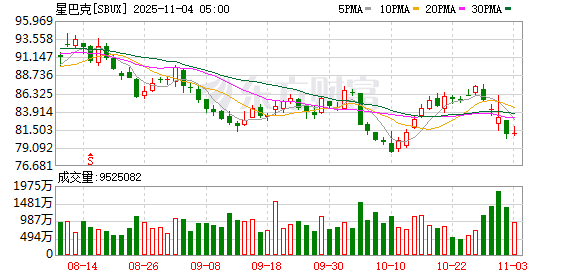
星巴克中国“让贤”仅保留40%股权,借力博裕投资坐望2万家门店
Sou Hu Cai Jing· 2025-11-04 06:13
Core Insights - Starbucks has announced a strategic partnership with Boyu Capital to establish a joint venture for its retail operations in China, with Boyu holding up to 60% equity and Starbucks retaining 40% [1] - The estimated enterprise value of the joint venture is approximately $4 billion, and Starbucks anticipates the total value of its retail business in China to exceed $13 billion [1] - The new joint venture will be headquartered in Shanghai and aims to expand the number of Starbucks stores in China from 8,000 to 20,000 in the future [1] Company Strategy - Starbucks CEO Brian Niccol emphasized that Boyu's local market expertise will accelerate Starbucks' expansion in China, particularly in smaller cities and emerging regions [2] - The company reported significant growth in its retail presence, with 8,011 stores in 1,091 county-level cities by the end of fiscal year 2025 [2] - In response to market competition, Starbucks implemented its largest price adjustment in 26 years, reducing prices on key products by an average of 5 yuan, which contributed to revenue growth [2] Market Challenges - Despite the positive results from its expansion strategy, Starbucks faces challenges in penetrating the lower-tier markets, where competitors like Luckin Coffee have a significant presence [3][5] - Data indicates that the majority of coffee shop locations are concentrated in new first-tier and second-tier cities, while brands targeting lower-tier markets have a higher percentage of their stores in those areas [3] - The entry of various tea brands into the coffee market poses additional challenges for Starbucks as it seeks to establish a foothold in non-first and second-tier cities [5] Investment Landscape - The sale of Starbucks' equity in China has attracted interest from over 20 private equity firms, with potential valuations reaching $10 billion [6] - Boyu Capital, founded in 2011, has a strong investment track record in the consumer market, managing a fund size of $10 billion and holding stakes in over 200 companies [7] - Boyu's recent acquisition of a significant stake in Beijing SKP, a leading luxury department store, highlights its strategic investment approach in the evolving Chinese consumer market [8] Industry Transformation - The coffee market in China is undergoing significant changes, with high-end brands like Starbucks needing to adapt to the competitive landscape dominated by local brands [10] - The shift in consumer preferences and market dynamics necessitates a transformation for mid-to-high-end foreign brands, which must navigate the challenges of maintaining their brand identity while appealing to a broader audience [10]


剑指20000家店!博裕资本控股星巴克中国 上半年“扫货”北京SKP、入股蜜雪冰城
Mei Ri Jing Ji Xin Wen· 2025-11-04 03:38
Core Insights - Starbucks has established a strategic partnership with Boyu Capital to form a joint venture for its retail operations in China, with Boyu holding up to 60% equity and Starbucks retaining 40% [2][3] - The total value of Starbucks' retail business in China is expected to exceed $13 billion, comprising the equity transferred to Boyu, Starbucks' retained equity, and ongoing licensing revenue [2] - The joint venture will be headquartered in Shanghai and aims to expand the number of Starbucks stores in China from 8,000 to 20,000 [2] Company Overview - Starbucks' CEO Brian Niccol emphasized that Boyu's local market expertise will accelerate Starbucks' expansion, particularly in smaller cities and emerging regions [3] - Boyu Capital, founded by former executives from Ping An Group and TPG Capital, has a strong presence in the Chinese market and manages a portfolio of over 200 companies [4] - Boyu has been involved in significant investments in various sectors, including consumer goods and retail, showcasing its capability in large-scale acquisitions [6] Market Context - Starbucks reported a net income of 22 billion RMB in the Chinese market for the fiscal year 2025, reflecting a nearly 5% growth, with same-store sales increasing by 2% and transaction volume by 9% in Q4 [7] - The partnership aligns with Starbucks' strategy to enhance localization and adapt to the competitive coffee market in China [8] - Historical precedents from McDonald's and Yum China indicate that local partnerships can significantly accelerate store expansion in the Chinese market [9][10]
滨江区块打造全球数字变革策源地与数字贸易创新高地
Hang Zhou Ri Bao· 2025-11-04 03:34
Core Insights - The company has successfully transformed from a traditional software enterprise to a digital trade platform, benefiting from the integration of free trade zone innovations and digital trade ecosystems [1] - The Hangzhou Free Trade Zone has shown strong vitality, contributing significantly to foreign investment, import-export volume, and tax revenue over the past five years [1] - The eSignGlobal platform has drastically reduced the time required for cross-border contract signing from an average of 14 days to just 2 days, enhancing efficiency by over 85% [2] - The "Three Data One Chain" framework has been established to address challenges in cross-border data flow, promoting a secure and efficient data circulation environment [5][4] Company Developments - eSignGlobal has served over 3,000 Chinese enterprises going abroad and more than 5,000 foreign institutions, expanding its electronic signature services to 97 countries and regions [2] - The company has developed a comprehensive service platform for foreign e-commerce talent and has implemented innovative customs inspection models to enhance trade facilitation [3] - The company has benefited from the "Bingyang Overseas" service alliance, which has established 30 service stations overseas, supporting over 70 enterprises in their internationalization strategies [5] Industry Trends - The Hangzhou Free Trade Zone is focusing on a dual-driven strategy of "digital trade + technological innovation" to promote open innovation across the entire digital trade industry chain [1] - The region is expected to become a source of global digital trade rules and a testing ground for digital technology applications, contributing to the construction of an international new-type free trade zone [6] - The ongoing reforms and innovations in the free trade zone are aimed at creating a favorable business environment and enhancing the overall competitiveness of the digital economy [5]
第十八届中国—拉美企业家高峰会丨跨越山海 共赴开放新图景——第十八届中国—拉美企业家高峰会开幕式及全体会议侧记
He Nan Ri Bao· 2025-11-04 00:01
Group 1 - The 18th China-Latin America Entrepreneurs Summit was held in Zhengzhou, emphasizing the importance of cooperation and mutual opportunities between China and Latin America [1] - Attendees expressed enthusiasm for new investment opportunities, particularly in renewable energy sectors, highlighting the potential for collaboration in wind power projects [1] - The summit's theme "Towards New Intelligence, Win-Win Future" resonated with participants, showcasing a strong desire for development through cooperation and exchange [1] Group 2 - iFlytek presented new products and a collaborative project for smart coffee farms, aiming to enhance educational opportunities in AI for youth in both regions [2] - The "Zhengzhou Initiative for China-Latin America and Caribbean Business Cooperation" was launched, promoting practical economic cooperation and industrial collaboration among participants [2] - The event highlighted Henan's proactive approach to exploring new markets and partnerships, with significant potential remaining in the Latin American and Caribbean markets [2] Group 3 - Henan's commitment to high-level opening up is reflected in its rapid development of the "Silk Road" initiative, connecting global markets [3] - A series of international events hosted in Henan this year demonstrate the region's determination to integrate into the global economy and enhance its development through openness [3] - The collaboration between Yellow River civilization and Latin American culture is expected to enrich Henan's narrative of openness and development [3]
超市“调改”步入深水区
Bei Jing Shang Bao· 2025-11-03 16:24
Core Insights - The supermarket industry is experiencing revenue growth pressure and a divergence in profitability among listed companies, with a need for refined operations and differentiated competition to find breakthroughs [1][3] Revenue Performance - Supermarkets are entering a "stock competition" phase, facing stagnant or declining revenue growth, with significant divergence in net profit performance among companies [3] - Yonghui Supermarket reported a cumulative revenue of 42.434 billion yuan for the first three quarters, a year-on-year decline of 22.21%, with Q3 revenue at 12.486 billion yuan, down 25.55%, and a net loss of 469 million yuan [3] - Zhongbai Group also saw revenue decline, with 6.552 billion yuan for the first three quarters, down 19.41%, and a net loss of 580 million yuan [3] - Hongqi Lianchained reported revenue of 7.108 billion yuan, down 8.48%, but achieved a net profit of 383 million yuan, with a net profit margin increase of 7.21% [3] - Bubu Gao's revenue was 3.194 billion yuan, ranking fifth in the industry with a net profit of 238 million yuan [3] - Sanjiang Shopping reported revenue of 2.988 billion yuan and a net profit of 114 million yuan [3] Industry Transformation - The industry is undergoing a collective transformation with various new models emerging, such as "Fat Donglai model adjustment" and "24-hour cloud service" by Hongqi Lianchained, indicating a shift towards differentiated products and innovative business formats [4][5] - Yonghui Supermarket has completed adjustments in 222 stores, resulting in an average customer flow increase of 80% and over 60% of stores surpassing their highest profitability in the past five years [4] - Bubu Gao's store adjustments have led to increased sales and improved employee benefits, achieving a 90% alignment with the Fat Donglai model [4] E-commerce and Digitalization - Walmart China reported a significant 96% increase in e-commerce net sales in Q3, with Sam's Club membership exceeding 4 million [5] - The transformation in the supermarket industry is systemic, with major players like Wumart also advancing deep transformations [5] - The focus on self-owned brand development, fresh direct sourcing, and regional specialty products is emphasized as a strategy for profit growth [6] Market Demand Response - The core of the transformation lies in enhancing product strength and optimizing supply chains, with companies increasingly relying on operational efficiency and innovative business models [6] - The emergence of membership stores, hard discount stores, and community stores reflects a response to market demand for segmentation [6] - Digital channels such as e-commerce, live streaming, and instant delivery are becoming standard configurations for supermarket operations, with examples from Walmart China and Hongqi Lianchained [6]


超市三季报:行业步入转型深水区 注重细分与差异化运营
Bei Jing Shang Bao· 2025-11-03 10:45
Core Insights - The supermarket industry is experiencing revenue growth pressure and a divergence in profitability among companies as they navigate a phase of deep adjustment and transformation [1][3] - Companies are focusing on refined operations and differentiated competition to find breakthroughs in a challenging market environment [1] Revenue Performance - The supermarket sector has entered a "stock competition" phase, with many companies facing stagnant or declining revenue [3] - Yonghui Supermarket reported a cumulative revenue of 42.434 billion yuan for the first three quarters, a year-on-year decline of 22.21%, with a net loss of 469 million yuan [3] - Zhongbai Group's revenue also decreased, with a total of 6.552 billion yuan, down 19.41%, and a net loss of 580 million yuan [3] - Hongqi Chain's revenue was 7.108 billion yuan, down 8.48%, but it achieved a net profit of 383 million yuan, with a net profit margin increase of 7.21% [3] - Bubu Gao's revenue was 3.194 billion yuan, ranking fifth in the industry, with a net profit of 238 million yuan [3] - Sanjiang Shopping reported revenue of 2.988 billion yuan and a net profit of 114 million yuan [3] Industry Transformation - Various new operational models are emerging, indicating a collective transformation within the industry, focusing on differentiated products, experiential scenarios, and innovative business formats [4][5] - Yonghui Supermarket has completed the transformation of 222 stores under the "Fat Donglai model," resulting in an average customer flow increase of 80% and over 60% of stores exceeding their highest profitability in the past five years [4] - Bubu Gao has completed its "Store Transformation 1.0," improving sales and employee benefits, with a product structure alignment of 90% with the Fat Donglai model [4] - Hongqi Chain is expanding its 24-hour cloud service stores to 300 by the end of the year, enhancing product offerings through live broadcasts and joint product development [4] Strategic Focus - Companies are emphasizing the development of private labels, direct sourcing of fresh products, and regional specialty items to enhance profitability [6] - The emergence of membership stores, hard discount stores, cloud warehouses, and community stores reflects a trend towards smaller, specialized formats [6] - Digital channels such as e-commerce, live streaming, and community operations are becoming standard in supermarket operations, with Walmart China reporting a 96% increase in e-commerce net sales [6] - The future of the retail market is expected to be diverse and differentiated, requiring supermarkets to continuously explore new business models and technological applications to adapt to changing consumer demands [6]
一周新消费NO.333|「瑞幸咖啡」x鬼灭之刃联名即将上线;Keep官宣孙颖莎出任品牌代言人
新消费智库· 2025-11-02 13:04
New Product Launches - Sanquan has launched new organic "Yami" wontons and dumplings, featuring 8 organic ingredients and a protein content of 7.8g per 100g, ready in 4 minutes without thawing [5][3] - Mengniu has introduced a new lemon-flavored drink under its "True Fruit" brand, made with Yuleke lemon pulp and real lemon juice [7][3] - Luckin Coffee has released its first savory milk tea, inspired by traditional Xilin Gol tea, featuring roasted rice and authentic milk skin flavor [5][3] - Kang Shifu has collaborated with "Zootopia" to launch a jelly drink with iced black tea flavor, offering two consumption methods [5][3] - Huayuan has launched a new jujube juice product, targeting the new Chinese health market with a juice content of 30% [9][3] Industry Events - V Rum has introduced a new pentagonal bottle made from 100% recycled glass, setting a sustainability standard in the spirits industry [10] - Taobao has announced the launch of a new convenience store brand, aiming for a 24-hour operation and 30-minute delivery service [10] - The first store of "Ruyi Sushi," a new sushi brand under Haidilao, has opened in Hangzhou, focusing on fresh and immediate dining experiences [26][10] - Miniso has opened its first MINISO LAND in Thailand, combining shopping and social experiences [35][10] Investment and Financing Trends - Keurig Dr Pepper has secured $7 billion in financing for its acquisition of JDE Peet's, valued at $18 billion [18] - Upcycled Plant Power, a UK food tech company, has raised £2.5 million in funding, including £1.5 million from a climate-focused investment firm [20] - Duck Duck Water has completed a RMB 10 million angel round financing to enhance its brand and digital systems [21] - Bryan Johnson's anti-aging company Blueprint has raised $60 million in funding [21] Food Industry Developments - Yuanqi Forest has established a dairy company with a registered capital of RMB 166 million, focusing on dairy product production [24] - Xinjiang Tianrun Dairy has launched a 200,000-ton dairy processing project, marking a significant step in its industrial development [25] - "Guozi Shule" has introduced fruit beer products, marking its first entry into the beer market with high fruit juice content [26] - Luckin Coffee is set to launch a collaboration with "Demon Slayer" on November 3, 2023, featuring themed merchandise [29]


咖啡豆价格暴涨:普洱咖农皮卡换奔驰
2 1 Shi Ji Jing Ji Bao Dao· 2025-11-01 01:33
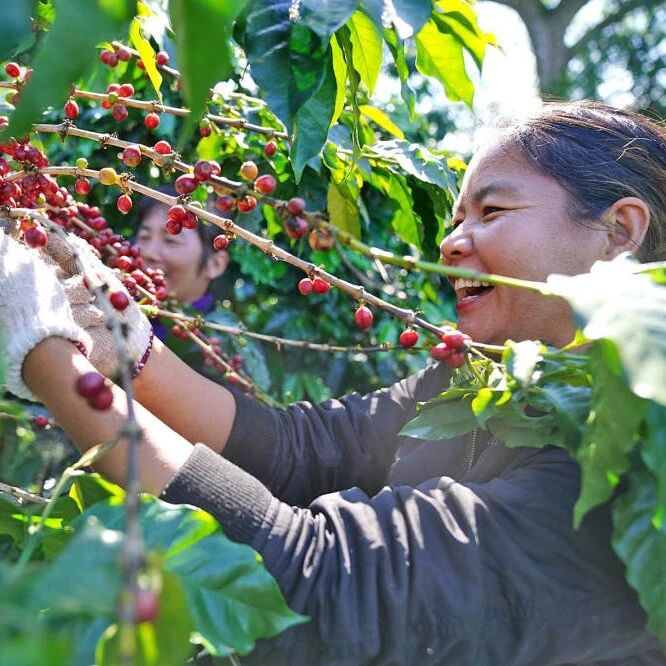
咖啡豆价格暴涨:普洱咖农皮卡换奔驰 云南咖农的心情正变得跟当地天气一样晴朗。 "过去,冬天来的时候,他们基本上有统一装束。就是开着一辆开了不知道多少年的皮卡,脚底穿一双 露趾的凉鞋。现在,咖农们开着奔驰、宝马,开着(丰田)霸道,穿锃亮的大皮鞋来了。"当谈到咖农收 入变化时,有在云南普洱的相关企业负责人说。 在南北纬25°之间的热带亚热带是世界咖啡黄金种植带,拉丁美洲咖啡产区、亚洲咖啡产区、非洲咖啡 产区均处于这一咖啡带内。云南省是中国唯一位于咖啡黄金种植带内的区域,拥有适宜咖啡生长的自然 资源条件,是产出高品质咖啡最适宜的优势区域。 其中,普洱市是云南产量最大、种植面积最广的核心区域。云南省咖啡业协会数据显示,普洱市咖啡种 植面积和产量约占全省的60%以上,是名副其实的"中国咖啡之都"。 咖农富裕起来的故事,在这里最为明显。 暴涨周期 鑫瑞农场的负责人普凤辉谈起当下生活,就笑得合不拢嘴。 他种植咖啡已达14年,最早是从收购咖啡豆开始入行。 普凤辉经历了市场行情的多轮起伏。创业时,家人对他投资种植咖啡是有反对意见的。"卖咖啡赔钱的 时候,心里就最不好受,家里生活开支很大,小孩还要上学,各方面都有压力。用现在话来 ...
咖啡豆价格狂飙,中国咖啡总消费量20年暴增33倍,咖农皮卡换宝马
21世纪经济报道· 2025-10-31 13:17
Core Insights - The article highlights the significant transformation in the coffee farming industry in Yunnan, China, particularly in Pu'er City, where coffee farmers have seen substantial increases in income due to rising coffee prices and demand [1][4][5]. Group 1: Market Dynamics - Yunnan is the only region in China located within the coffee "golden growing belt," making it ideal for high-quality coffee production [1]. - The average purchase price of Yunnan coffee beans rose from 23.94 yuan/kg in 2021 to 31.6 yuan/kg in 2022, marking a 32% increase [5]. - By 2024, coffee bean prices continued to surge, with Arabica coffee futures exceeding 430 cents per pound, a 118.57% increase over the previous year [6]. Group 2: Farmer Experiences - Farmers like Pu Fenghui have transitioned from struggling with low prices to thriving, with some reporting annual incomes of over 200,000 yuan [4][6]. - The rise in coffee prices has led many farmers to upgrade their lifestyles, purchasing luxury vehicles and expanding their coffee plantations [4][7]. - The introduction of brands like Xin Coffee by farmers indicates a shift towards direct consumer engagement [6]. Group 3: Quality and Production Challenges - Despite the price increases, Yunnan's coffee production remains a small fraction of the global market, accounting for less than 1.5% of total coffee production [9]. - Issues such as poor management practices and inadequate quality control have historically hindered Yunnan's coffee industry [9][10]. - The region's coffee planting area has decreased by 37% from its peak in 2014, influenced by fluctuating international prices and environmental factors [9]. Group 4: Support and Growth Potential - Major companies like Nestlé and Starbucks have played a crucial role in supporting Yunnan's coffee industry through technology and market access [10][12]. - China's coffee consumption has skyrocketed from 16,700 bags in 2003/2004 to an estimated 576,500 bags in 2023/2024, indicating a massive growth potential [12]. - The per capita coffee consumption in China is only about 0.24 kg, compared to 5.3 kg in the EU and 4.2 kg in the US, suggesting significant room for growth [12][13]. Group 5: Market Position and Future Outlook - China's coffee imports reached 329,100 tons in 2023/2024, with domestic production unable to meet demand, leading to over 80% dependency on imports [13]. - The pricing dynamics have shifted towards a competitive market where local coffee beans are increasingly valued, with prices surpassing those offered by international traders [13]. - Despite the growth, Yunnan coffee still faces challenges in achieving global market prominence due to quality and production scale issues [14].
重庆啤酒总裁李志刚:高端化与非现饮渠道共筑业绩韧性
Zheng Quan Ri Bao Wang· 2025-10-31 12:37
Core Viewpoint - Chongqing Beer reported strong performance in Q3 2023, with sales of 2.6681 million kiloliters, revenue of 13.059 billion yuan, and net profit of 1.241 billion yuan, despite increasing competition in the beer industry [1] Group 1: Financial Performance - In the first three quarters, the company's high-end products accounted for 59.08% of revenue, with high-end product revenue reaching 7.715 billion yuan, a year-on-year increase of 1.18% [3] - The overall profitability improved due to cost-saving measures and a decline in raw material costs, leading to an increase in gross margin [1][2] Group 2: Product Strategy - The company is focusing on optimizing its product structure and expanding its non-traditional beverage channels, which have driven double-digit growth in bottled and canned products [2][3] - New product launches include large-capacity offerings and innovative flavors, such as "Ushu Craft Red Robe Beer" and "Shancheng Longjing Green Tea Craft Beer," aimed at meeting changing consumer demands [2][3] Group 3: Market Competition - The beer industry is experiencing structural adjustments and intensified competition, with new players entering the market, including brands from other beverage sectors [4][5] - Despite the increased competition, the company believes that the entry of new players will invigorate the market and enhance innovation [4][5] - The company plans to continue investing in non-traditional channels and accelerate its O2O expansion to capture growth opportunities in instant retail [5]
