极氪

Search documents
寒武纪回应原CTO索赔42.87亿元;泰州队夺得首届苏超冠军;王腾称将离开手机行业;段永平回应向一高校捐赠1万股茅台股票丨邦早报
创业邦· 2025-11-02 01:35
Group 1: New Energy Vehicle Deliveries - Xiaopeng Motors delivered 42,013 vehicles in October, setting a new monthly record and achieving a total of 355,209 deliveries from January to October, a year-on-year increase of 190% [1] - NIO delivered 40,397 vehicles in October, a year-on-year increase of 92.6%, with a total of 241,618 vehicles delivered year-to-date, up 41.9% [1] - Leap Motor delivered 17,342 vehicles in October, marking a year-on-year increase of 301.5% and a month-on-month increase of 13.7% [1] - Li Auto delivered 31,767 vehicles in October, with a cumulative total of 1,462,788 vehicles delivered as of October 31, 2025 [1] - Xiaomi Motors continued to deliver over 40,000 vehicles in October [1] - Zero Run delivered 70,289 vehicles in October, a year-on-year increase of over 84% [1] - Zeekr delivered 61,636 vehicles in October, a year-on-year increase of 9.8% [1] - BAIC New Energy sold 30,542 vehicles in October, with Arcfox sales exceeding 23,000 vehicles, a year-on-year increase of 110% [1] - Lantu delivered 17,218 vehicles in October, with a year-on-year increase of 82% for the January-October period [1] - Avita sold 13,506 vehicles in October [2] - Zhijie Motors surpassed 10,000 vehicle deliveries in October [2] Group 2: Xiaomi Automotive Developments - Xiaomi's vehicle delivery cycle has been shortened again, with the YU7 model expected to be delivered in 35-38 weeks, a reduction of 10 weeks from the original timeline [4][5] - The YU7 Pro is expected to be delivered in 34-37 weeks, shortened by 8 weeks, while the YU7 Max is expected in 32-35 weeks, shortened by 4 weeks [5] Group 3: Global Automotive Market Insights - By September 2025, China's share of the global automotive market is projected to reach 38%, with a total global sales volume of 8.55 million vehicles, a year-on-year increase of 10% [23] - From January to September 2025, global automotive sales reached 70.53 million units, a year-on-year increase of 6%, with China contributing 24.32 million units, up 13% [23] - The U.S. automotive market saw sales of 12.58 million units, an increase of 4%, while the Indian market grew by 2% to 4 million units [23]




黄金有关税收新政发布;伯克希尔现金储备再创新高|南财早新闻
2 1 Shi Ji Jing Ji Bao Dao· 2025-11-01 23:19
Company Developments - Xpeng Motors reported a record high delivery of over 40,000 vehicles in October, marking two consecutive months of exceeding this figure [5] - Xiaomi Motors also maintained a delivery volume of over 40,000 vehicles in October [5] - Li Auto achieved a total delivery of 70,289 vehicles in October, representing a year-on-year growth of over 84% [9] - NIO delivered 40,397 vehicles in October, achieving a historical high for three consecutive months, with a year-on-year growth of 92.6% and a month-on-month increase of 16% [9] - Zeekr delivered 61,636 vehicles in October, marking a year-on-year growth of 9.8% and surpassing 60,000 units for the first time in a single month [9] - BYD achieved sales of 441,706 vehicles in October, setting a new high for the year [9] Investment News - As of October 31, 279 companies listed on the Beijing Stock Exchange have disclosed their Q3 reports, with an average revenue of 520 million yuan, reflecting a year-on-year growth of 5.99% [4] - Over 80% of the 230 companies reported profits, indicating a strong performance in the market [4] - The confidence of international capital in the Chinese market has notably increased, with new foreign investors appearing in the top shareholder lists of A-share companies [4] - The A-share market has shown significant recovery this year, leading to a resurgence in the profitability of public equity funds, with 705 active equity funds reporting a net asset value growth rate exceeding 50% [4] - 34 funds have seen their net asset value growth rate surpass 100%, with the best-performing fund achieving over 200% growth [4]
陆家嘴财经早餐2025年11月2日星期日
Wind万得· 2025-11-01 22:17
1、 国家主席习近平出席亚太经合组织第三十二次领导人非正式会议东道主交接环节,宣布中方将于明年11月在广东省深圳市举办亚太经合 组织第三十三次领导人非正式会议。 2026年,中国将第三次担任亚太经合组织东道主。中方愿以此为契机,同各方携手构建亚太共同体,促进亚太地 区增长和繁荣,着力推进亚太自由贸易区、互联互通、数字经济、人工智能等务实合作。 2、 韩国总统李在明同中国国家主席习近平在庆州博物馆举行会谈。 习近平指出,中方重视中韩关系,对韩政策保持连续性、稳定性,愿同韩方加 强沟通,深化合作,拓展共同利益,携手应对挑战,推动中韩战略合作伙伴关系行稳致远,为地区和平与发展提供更多正能量。会谈后,两国元首共同见 证双方经贸、金融、农业、执法、科技等领域合作文本交换仪式。韩国总统李在明表示,中韩经济合作至关重要,韩方将致力于在多个方面加强与中国的 合作,特别是在经济、民间交流领域,并将进一步探讨如何在维护东北亚和平与稳定方面发挥作用,创造更多沟通与合作的契机。 3、 商务部新闻发言人就安世半导体相关问题应询答记者问:荷兰政府对企业内部事务的不当干预,导致了目前全球产供链的混乱。 中国作 为负责任的大国,充分考虑国内 ...

瑞声科技与“极氪们”平等对话,汽车供应链企业走到聚光灯下
Jing Ji Guan Cha Wang· 2025-11-01 17:49
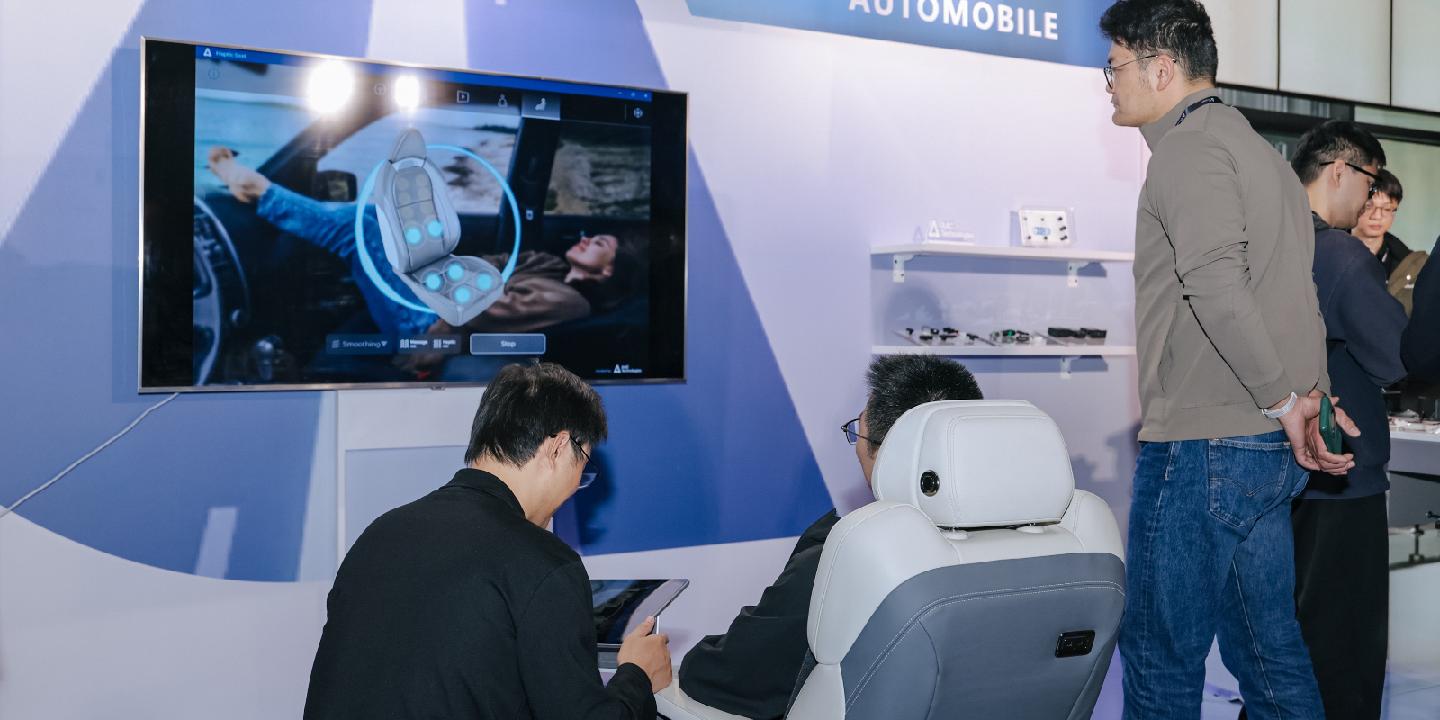
Core Insights - AAC Technologies (瑞声科技) has transitioned from being a traditional supplier of components to a provider of comprehensive system solutions in the automotive sector, showcasing its capabilities at the "Imagine Exception" AAC Perception Technology Summit [2][3] - The automotive industry is undergoing a significant transformation towards smart technology, where in-car acoustics are becoming a core component of the user experience rather than just an add-on feature [2][5] - The integration of hardware, software, and algorithms is essential for creating immersive experiences in smart vehicles, necessitating a shift from merely supplying parts to offering holistic solutions [3][4][6] Group 1: Company Strategy - AAC Technologies has adopted an ecosystem integration strategy to enhance its capabilities and build industry barriers, including acquiring 80% of Premium Sound Solutions (PSS), a leading acoustic component supplier [3][4] - The collaboration with ZEEKR (极氪) has led to the development of an innovative multi-dimensional acoustic system, demonstrating AAC's ability to define user experience through tailored solutions [4][7] - The company emphasizes the importance of combining hardware with software and tuning to provide a complete solution, moving beyond traditional component supply [4][6] Group 2: Industry Trends - The demand for advanced acoustic systems in smart vehicles is rising, with sound becoming a critical factor in defining luxury and comfort in automobiles [5][6] - Traditional automakers are increasingly reliant on suppliers like AAC Technologies to provide integrated solutions that enhance the overall user experience, as the complexity of modern systems exceeds their in-house capabilities [6][7] - The concept of branding through technology, such as "AAC Inside," is emerging, similar to previous trends in the digital industry, indicating a shift in how automotive brands position themselves in the market [6][7]
三个央企新能源品牌,销量加起来不如一个新势力
第一财经· 2025-11-01 12:19
Core Insights - The article highlights the significant differentiation in sales performance among new energy vehicle (NEV) companies during October, with Li Auto facing notable declines while others like Leap Motor and Xiaopeng achieve record deliveries [3][4][5]. Sales Performance - Leap Motor delivered over 70,000 vehicles in October, achieving a year-on-year growth of over 84% with total deliveries reaching 70,289 units [3][5]. - Xiaopeng and NIO both surpassed 40,000 deliveries, marking their historical highs with deliveries of 42,013 and 40,397 units respectively [4][5]. - Li Auto's deliveries fell to 31,767 units, a decrease of 6.43% month-on-month and 38.25% year-on-year, making it the only NEV company with a delivery progress below 50% of its annual target [5][6]. Market Positioning - The new energy vehicle market's first tier now has a monthly sales threshold of 40,000 units, which includes Leap Motor, Hongmeng Zhixing, Xiaopeng, NIO, and Xiaomi, while Li Auto has been excluded from this group [5][6]. - Traditional automakers' NEV brands, such as Zeekr and Deep Blue, also showed strong performance, with Zeekr's monthly sales exceeding 60,000 units for the first time [9][10]. Industry Trends - The article notes that as subsidies for new energy vehicles decline, companies that have not gained competitive advantages in scale will face tougher challenges in the coming year [10]. - Leap Motor's CEO emphasized the long-term nature of the automotive industry, indicating that continuous improvement and leveraging strengths are essential for success [10].




购置税新规将近,新势力们抢占窗口期
Xin Lang Cai Jing· 2025-11-01 12:16
Core Viewpoint - The new policy regarding the purchase tax for electric vehicles (EVs) in China marks a significant shift, transitioning from full exemption to a 50% reduction starting in 2026, which indicates a gradual reduction in government support for the EV sector after a decade of incentives [1][4]. Policy Changes - The Ministry of Industry and Information Technology, the Ministry of Finance, and the State Taxation Administration announced that from 2026, the purchase tax for EVs will be halved, with a maximum tax reduction of 15,000 yuan per vehicle [1]. - This change signifies the end of the full exemption policy that has been in place since 2014, reflecting a broader trend of decreasing government support for the EV industry [1][4]. Market Performance - In the first nine months of this year, China's retail sales of new energy vehicles grew by 24.4%, with a retail penetration rate reaching 57.8% in September [2]. - The data indicates that the EV industry has crossed the critical threshold of market cultivation and is entering a period of mainstream consumer adoption [4]. Company Strategies - In anticipation of the new tax policy, over ten car manufacturers, including Xiaomi, NIO, and Li Auto, have announced plans to cover the tax difference for customers to retain users during this transition period [4][6]. - Xiaomi has committed to fully covering the tax difference for orders placed by November 30, 2025, if delivery is delayed due to the company’s reasons, with a maximum subsidy of 15,000 yuan [6][7]. Competitive Landscape - The competition among new energy vehicle manufacturers remains intense, with companies like Li Auto and NIO also introducing tax subsidy policies for their new models launched in September [7][8]. - The introduction of tax subsidies for new models is seen as a strategy to maintain competitiveness and build market presence ahead of the upcoming sales season [8][9]. Production and Delivery Challenges - Many manufacturers are facing production ramp-up challenges, particularly for new models launched recently, which necessitates the implementation of tax subsidies to secure customer orders [9][10]. - Companies like Xiaomi are experiencing long delivery times, with some customers needing to wait until 2026 for their vehicles, prompting the need for subsidies to alleviate customer concerns about increased costs [9][10]. Future Outlook - As the policy support diminishes, new energy vehicle manufacturers will need to enhance their competitiveness through core technology, product excellence, and efficient cost control to thrive in the evolving market landscape [13][14]. - The industry is expected to shift from being policy-driven to market-driven, with a focus on technological innovation and service quality becoming critical for long-term success [13][16].


崔东树:2025年9月中国占世界汽车份额38%;比亚迪在日本推出本地化定制车型丨汽车交通日报
创业邦· 2025-11-01 10:06
更多汽车出行资讯 …… 1. 【小米汽车交付周期再次缩短,部分车型有望较原定周期提前10周】记者从多位接近小米汽车人 士处获悉,小米汽车交付周期较原定周期再次缩短:YU7锁单后预计35~38周,较原定周期缩短10 周,YU7 Pro锁单后预计34~37周,较原定周期缩短8周,YU7 Max锁单后预计32~35周,较原定周 期缩短4周。前述人士表示,"本次交付周期大幅缩短,主要是产能提升所致。"(蓝鲸新闻) 2.【崔东树:2025年9月中国占世界汽车份额38%】乘联分会秘书长崔东树发文表示,2025年9月的 世界汽车销量达到855万台,同比增10%,环比8月增12%。随着中国和美国车市的持续走强,2025 年9月世界车市超越2017年9月峰值,处历年的峰值水平。2025年1-9月销量7053万台,同比增长 6%。 2025年1-9月的全球汽车销量增长6%,其中中国汽车销量2432万台、增长13%,美国销量1258万 台增4%,印度销量400万台增2%,日本销量346万台增5%,德国销量233万台降1%。目前看中国 市场最有活力,增速快。俄罗斯市场下滑严重,墨西哥的增速放缓,而南美的阿根廷等市场表现较 好。 中国 ...

蔚来交付第10000辆全新ES8,欧摩威与华为引望达成合作|一周车闻
Di Yi Cai Jing· 2025-11-01 05:44
Core Insights - The automotive industry is actively launching new models to achieve annual sales targets during the peak sales months of September and October [1] New Collaborations - Omowei and Huawei signed a partnership agreement to deepen collaboration in smart vehicle control product development and digital ecosystem construction, aiming to innovate and commercialize the next generation of smart automotive architecture [2] - Omowei's strategic upgrade reflects its commitment to local responsiveness and cost competitiveness in the Chinese market [2] New Product Launches - Sainlingdong launched the new generation 4D imaging radar system, achieving a 100% performance improvement while reducing costs by 30%, with mass production set for next year [3] - NIO delivered its 10,000th new ES8 vehicle, with production capacity expected to increase by 70% in November [4] - Chery's new flagship SUV, the Wind Cloud T11, was launched with a starting price of 179,900 to 239,900 yuan, achieving 38,169 pre-orders within 24 hours [5] - Deep Blue's L06 model began pre-sales at a starting price of 139,900 yuan, featuring high-end configurations aimed at mainstream markets [6] - Cadillac launched the new CT6 with aggressive pricing strategies to compete in the luxury sedan market [7] - Zeekr's refreshed 7X SUV was launched, featuring high-end technology at competitive prices [8] - Geely's Galaxy Star 6 was launched with a price range of 68,800 to 99,800 yuan, targeting the competitive A-class electric vehicle market [9] - GAC Trumpchi's new M8 series was launched with advanced driver assistance features, enhancing its competitive position in the MPV market [10][11] - Tengshi's N8L SUV was launched with advanced safety features and a price range of 299,800 to 329,800 yuan [12] - Dongfeng Yipai launched two new models, targeting the mainstream market price range [13]
李想厌恶万分之一的风险,黑公关舆论混战、诅咒购车者……谁在裸泳?
汽车商业评论· 2025-11-01 01:43
Core Viewpoints - The automotive industry is facing significant safety concerns, highlighted by recent incidents involving major brands like Li Auto and Xiaomi, prompting calls for accountability and transparency [3][19][45] - There is a growing emphasis on the importance of safety and reliability in automotive manufacturing, with industry leaders advocating for a shift away from a fast-consumer mentality towards a focus on long-term quality and experience [10][14][15][37] Group 1: Safety and Accountability - Li Auto has decided to proactively recall all 11,411 units of the 2024 MEGA model due to safety concerns following a fire incident, demonstrating corporate responsibility [3][45] - Xiaomi's recent accident involving the SU7 model has raised public safety concerns, leading to calls for the company to address these issues rather than deflecting criticism towards "black public relations" [19][24][25] - Industry leaders, including executives from Volkswagen and Lantu, have emphasized the need for a culture of safety and reliability, urging companies to prioritize consumer trust over rapid marketing tactics [10][28] Group 2: Industry Culture and Long-term Vision - The automotive sector is urged to resist the "fast consumer" mindset, with leaders like Lantu's CEO stressing that car manufacturing requires time, experience, and attention to detail [14][15][18] - The concept of "intelligent cars" should focus on safety and reliability, rather than merely technological novelty, reflecting a deeper understanding of consumer needs [17][18] - Li Auto's CEO envisions a future where the automotive market could see explosive growth, aiming for a significant increase in revenue by 2030, indicating a long-term strategic outlook [47][48] Group 3: Industry Dynamics and Competition - The competitive landscape is shifting, with predictions that companies like Tesla may face challenges from Chinese manufacturers due to efficiency and cost advantages [33][34] - The automotive industry is experiencing a price war that could lead to the elimination of brands lacking core competitiveness, highlighting the need for collaboration and openness among manufacturers [10][34] - Recent marketing tactics in the industry have been criticized for prioritizing hype over substance, with calls for a return to focusing on product quality and consumer trust [37][38]

【瑞声科技(2018.HK)】平台型公司迎双轮驱动,北美大客户升级与AI硬件新周期共振——感知技术峰会点评(付天姿/王贇)
光大证券研究· 2025-11-01 00:05
Core Viewpoint - 瑞声科技 is positioned as a global leader in perception experience solutions, showcasing advancements in technology and product development across five major sectors: acoustics, electromagnetic transmission, optics, sensors, and automotive [4][5]. Group 1: Acoustics and Electromagnetic Transmission - The summit highlighted the new generation of high energy density speakers and innovative coaxial speaker 2.0 products, which enhance low-frequency performance by 2.5dB and improve diaphragm extensibility [4]. - The company presented a fully self-developed micro motor solution, including a customized ultra-vibration motor for vivo X300 Pro, with steady and transient vibration increases of 30% and 68% respectively [4][5]. Group 2: Optical and Thermal Management - In optics, the WLG (wafer-level glass) technology has achieved key breakthroughs, with yield and capacity steadily improving, and flagship models now featuring hybrid glass-plastic lenses [4]. - The thermal management product line showcased various materials for VC uniform heat dissipation plates and active cooling solutions, meeting the upgraded thermal performance demands of high-end models [4]. Group 3: Microphones and Automotive Acoustics - The company launched an 80dB high signal-to-noise ratio optical microphone, enhancing audio resolution by 20 times [5]. - In the automotive acoustics sector, 瑞声科技 integrates capabilities from PSS and Hebei Chuguang to provide comprehensive acoustic solutions for vehicles, currently working on solutions for the Zeekr 9X [5]. Group 4: Growth Drivers - The growth outlook for 瑞声科技 is driven by both "traditional business upgrades" and "emerging market layouts," with North American client product iterations being a cornerstone for steady revenue growth [5]. - The AI hardware wave is emerging as a new engine for value reassessment, with the company well-positioned to benefit from the demand for AI edge devices [6][7].