洋河股份

Search documents
不为广告停留,只为故事买单,一文解构白酒短视频内容营销方法论丨谏策观酒
Sou Hu Cai Jing· 2025-12-26 17:27
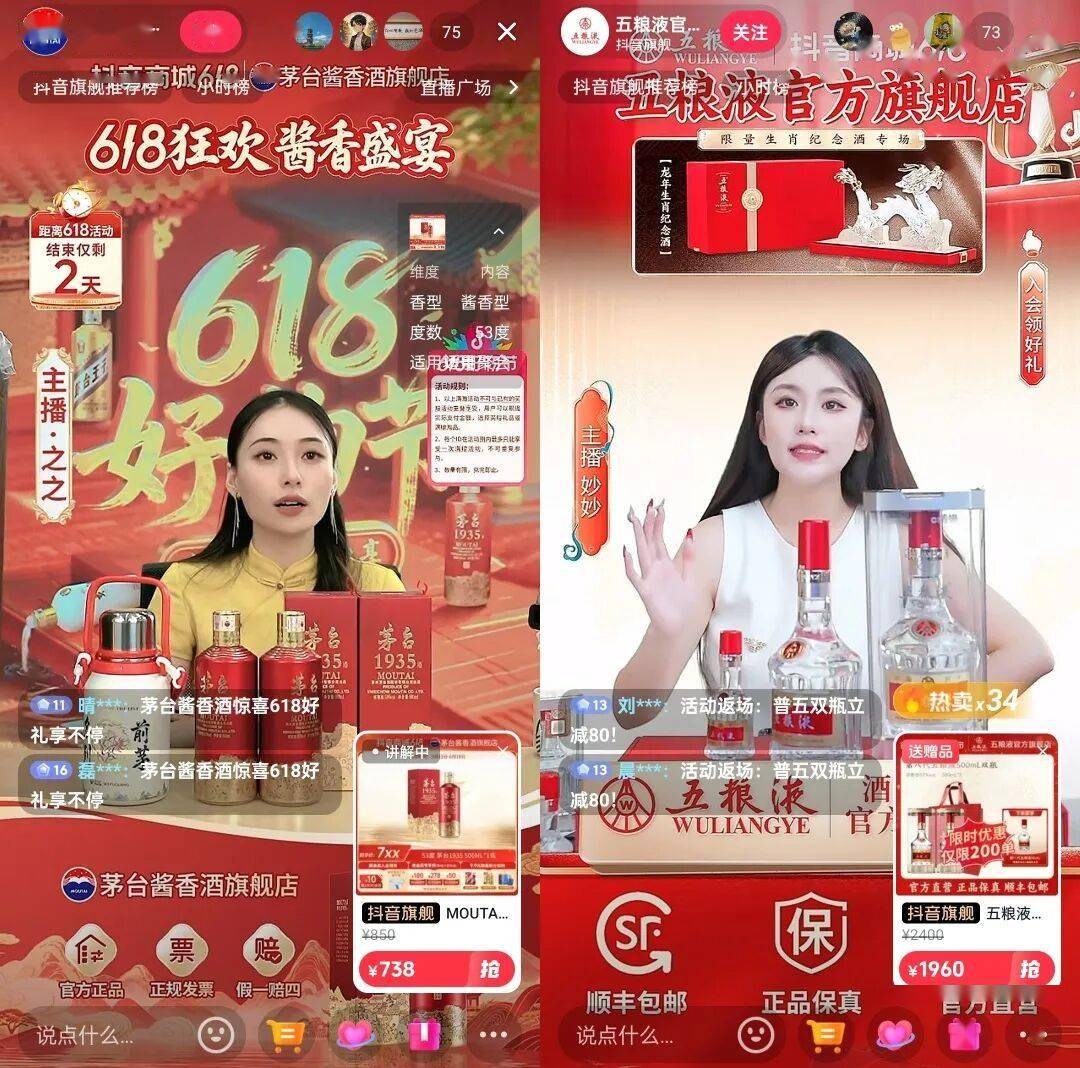
Core Insights - The Chinese liquor industry is undergoing a paradigm shift from channel marketing to content marketing, with a significant increase in GMV for liquor categories on platforms like Douyin, which is projected to grow by 320% year-on-year in 2024, with over 60% attributed to liquor [1][3] Group 1: Public Domain Explosion - Public domain platforms such as Douyin, Kuaishou, and Bilibili are the main battlegrounds for liquor brands to acquire incremental traffic, yet 80% of brands face a "high investment, low conversion" dilemma due to mismatches between industrial content production and platform traffic rules [5][6] - Brands need to build a "content arsenal" under algorithmic logic, testing massive content to identify high-conversion materials for traffic investment [6][8] - Successful examples include Jiangxiaobai's "racehorse mechanism" with over 80 million views for a cocktail video, and Moutai's cultural IP strategy that generated 2 million exposures through seasonal cultural content [9][11] Group 2: Private Domain Extraction - With an average public domain traffic loss rate exceeding 95%, private domain becomes crucial for liquor companies to transform users into assets, requiring a shift from promotional group logic to deep user value exploration [19] - The three-layer funnel model exemplified by Yanghe's "Drunken Research Institute" includes lead generation through low-cost tasting experiences, nurturing with professional content, and high-value user conversion events [19][20][21] - User segmentation and precise targeting are essential, as demonstrated by Wuliangye's RFM model, which tailors offerings based on user value [22][24] Group 3: Full Domain Resonance - When public domain traffic and private domain user accumulation reach a critical point, brands must leverage full-domain synergy to convert communication momentum into consumption energy [26] - Content IP creation is vital for reusable communication assets, as seen in Jiananspring's campaign linked to cultural themes, achieving over 600 million views [28] - Data platforms drive precise operations across channels, with examples like Luzhou Laojiao's user behavior monitoring leading to targeted product recommendations [30] Group 4: Challenges and Solutions - Despite breakthroughs in short video content marketing, the industry faces challenges such as content inflation and channel conflicts, necessitating differentiated content strategies and product segmentation to avoid price comparisons [33][35] - Collaborative channel strategies, like Yanghe's "cloud store system," allow users to pick up online orders at local distributors, sharing profits to mitigate conflicts [35][36]



湾区白酒半年图谱:名酒价格频频失守,行业陷深度博弈
Nan Fang Du Shi Bao· 2025-12-26 15:00
Core Insights - The Chinese liquor industry is undergoing significant transformation in 2025, facing challenges such as high channel inventory and weak terminal sales, while also experiencing new opportunities driven by changing policies, consumption patterns, and market scenarios [1][14] Market Trends - The white liquor market in the Guangdong-Hong Kong-Macao Greater Bay Area has seen a decline in retail prices, with a notable shift in consumer behavior and pricing strategies [2][3] - The market is characterized by overall price declines, with traditional peak seasons losing their effectiveness, and the penetration of instant retail channels impacting pricing dynamics [3][6] Price Dynamics - Over half of the monitored products in the Greater Bay Area have experienced price declines, including high-end brands like Moutai and Wuliangye, indicating a weakening of price defenses across various segments [4][6] - The price range for products priced at 1,000 yuan and above has collectively cooled, with significant discrepancies between listed prices and actual transaction prices [4][9] Consumer Behavior - Mid-range and mass-market products have shown relative price stability, reflecting their essential demand despite overall market contraction [5][9] - The impact of online channels on pricing is significant, with online prices often dropping while offline prices remain stable, particularly in Shenzhen [8][10] Regional Insights - In Dongguan, the white liquor market has shown structural price differentiation, with high-end products facing downward pressure while mid-range brands adopt varied pricing strategies to maintain market positioning [13][14] - In Foshan, the market is characterized by stable prices for certain products, with local brands influencing consumer preferences and sales dynamics [11][12] Future Outlook - The industry is expected to continue facing low-price conditions in the short term, with the upcoming Spring Festival seen as a potential opportunity for temporary sales improvement [16] - The competition is anticipated to shift from price wars to a focus on brand strength, product innovation, and refined channel management as companies seek to adapt to evolving consumer habits [16]




洋河梦之蓝M6+首席献映《奇迹》热播,网友:“短剧天花板!”
Zhong Jin Zai Xian· 2025-12-26 09:44
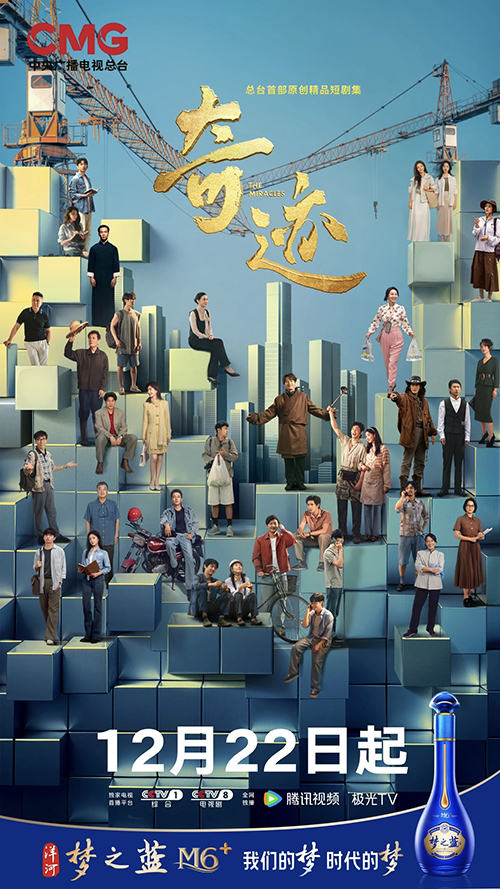
Core Insights - The original short drama series "Miracle," produced by the Central Radio and Television Station, has gained significant popularity since its premiere on December 22, showcasing the transformation of Shenzhen over 45 years from a fishing village to an international city [1][3]. Group 1: Show Format and Reception - "Miracle" employs an innovative anthology format with 15 distinct themes, comprising a total of 24 episodes, each lasting approximately 15 minutes, highlighting the stories of ordinary people against the backdrop of significant historical changes [3]. - The show achieved a peak viewership rating of 2.1858%, ranking second among all channels during its broadcast time, and received a high score of 9.5 on Tencent, frequently topping the platform's anticipated drama list [6]. - The series generated substantial online engagement, with over 135 trending topics on Weibo on its premiere day and more than 190 million views on the main topic on Douyin [6]. Group 2: Cast and Production Quality - The cast features prominent actors such as Hu Ge, Song Jia, Lei Jiayin, and Yan Ni, whose performances have significantly enhanced the quality and emotional depth of the series [4]. - "Miracle" is regarded as a benchmark for domestic short dramas in China, praised for its innovative exploration and high production quality [6]. Group 3: Themes and Audience Connection - The episodes explore various themes, including resilience and hard work of ordinary people, regional coordinated development, cultural exchange, and the warmth of everyday life, resonating deeply with viewers [9]. - Audience feedback indicates a strong emotional connection, with many viewers expressing that the stories reflect their own experiences, enhanced by the presence of the brand Yanghe Dream Blue M6+ [9]. Group 4: Brand Partnership and Cultural Significance - Yanghe Dream Blue M6+ serves as the chief brand partner for "Miracle," aligning its brand message of "Our Dream, The Era's Dream" with the spirit of Shenzhen, emphasizing the importance of dreams and perseverance [7][13]. - The collaboration between Yanghe and "Miracle" not only celebrates the city of Shenzhen but also resonates with the show's themes of ambition and innovation, reflecting the city's spirit over the past 45 years [13].
酒业年度盘点:2025热榜事件简述,你最关注的是哪件事?
Sou Hu Cai Jing· 2025-12-26 03:11
Core Insights - The Chinese liquor industry in 2025 is undergoing significant transformation amidst challenges such as a sluggish macro environment, consumption differentiation, production contraction, and weak sales, leading to a reshaping of the industry landscape [2] - The industry is encouraged to innovate and break old rules to find new growth paths, reflecting a mix of pressure and hope [2] Group 1: Industry Developments - The Ministry of Industry and Information Technology has classified liquor production as a "historical classic industry," elevating its status and marking a shift towards high-quality development [3] - A stringent "ban on alcohol" was introduced, impacting high-end liquor sales and indicating a shift from government consumption to market-driven consumption [4] - The launch of "Da Zhen·Zhen Jiu" by Zhen Jiu represents a strategic move towards creating a "super product" in the liquor market, emphasizing quality and innovative packaging [5] Group 2: Market Strategies - The establishment of two platform companies by Wuliangye's distributors aims to enhance market control and stabilize high-end product prices, reflecting a shift towards a dual-driven model of channels and capital [7] - Sichuan Province has released a 21-point action plan to promote the high-quality development of the liquor industry, focusing on production capacity and market expansion [8] - Wuliangye's 12·18 conference emphasized the importance of quality, cultural heritage, and innovation in navigating market changes [9] Group 3: Consumer Engagement - The return of the white liquor milk tea "Drunk Step on the Road" by Tea Baidao highlights the growing trend of "micro-drunk" consumption among younger consumers [13] - The fifth live broadcast by Zhen Jiu's chairman garnered significant attention, showcasing innovative business models and strong consumer engagement [10] Group 4: Awards and Recognition - The 16th China (Dalian) Light Industry Commodity Expo featured a wine exhibition and quality competition, showcasing the strength and cultural appeal of Chinese liquor brands [16] - The announcement of the first batch of Chinese consumer brands included notable liquor brands, indicating recognition of quality and market position [5][6] Group 5: Future Outlook - The liquor industry is expected to continue evolving with a focus on quality, cultural integration, and innovative marketing strategies, as seen in the initiatives from various companies and government bodies [18][19]



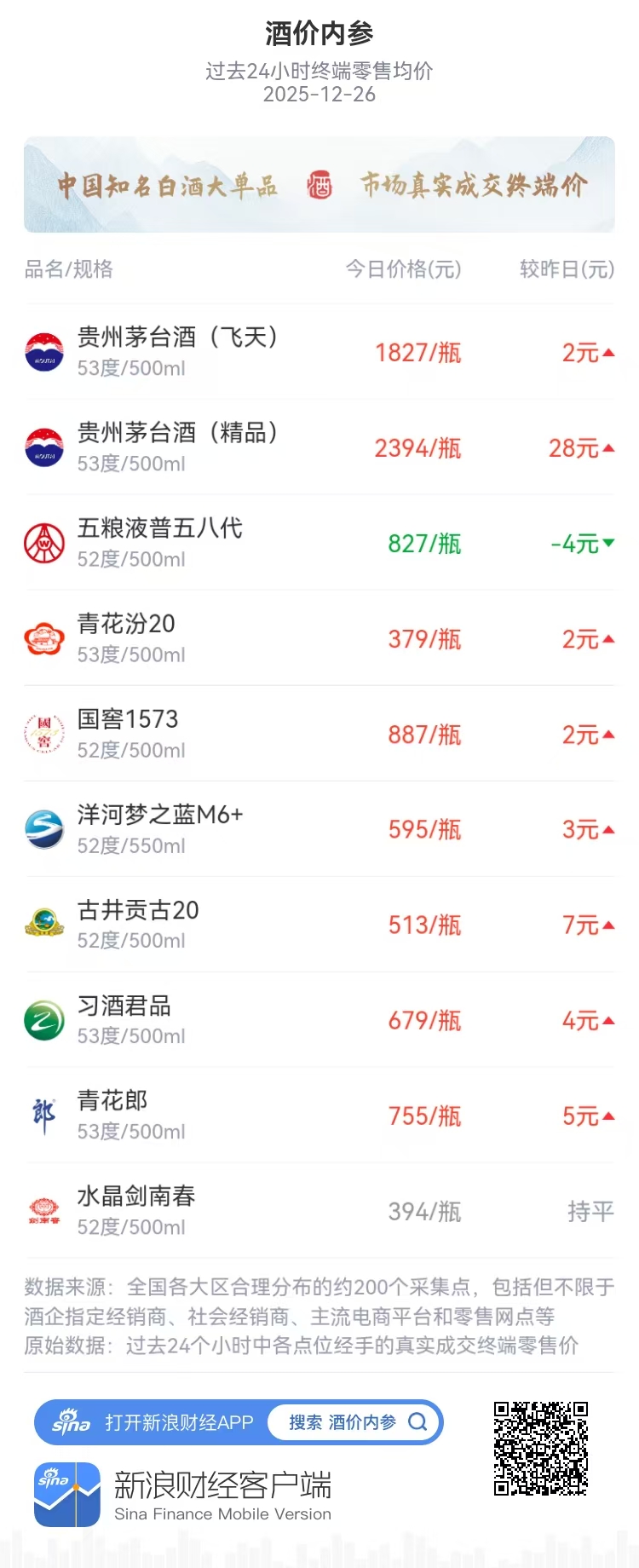
酒价内参12月26日价格发布 五粮液普五八代下跌4元
Xin Lang Cai Jing· 2025-12-26 01:33
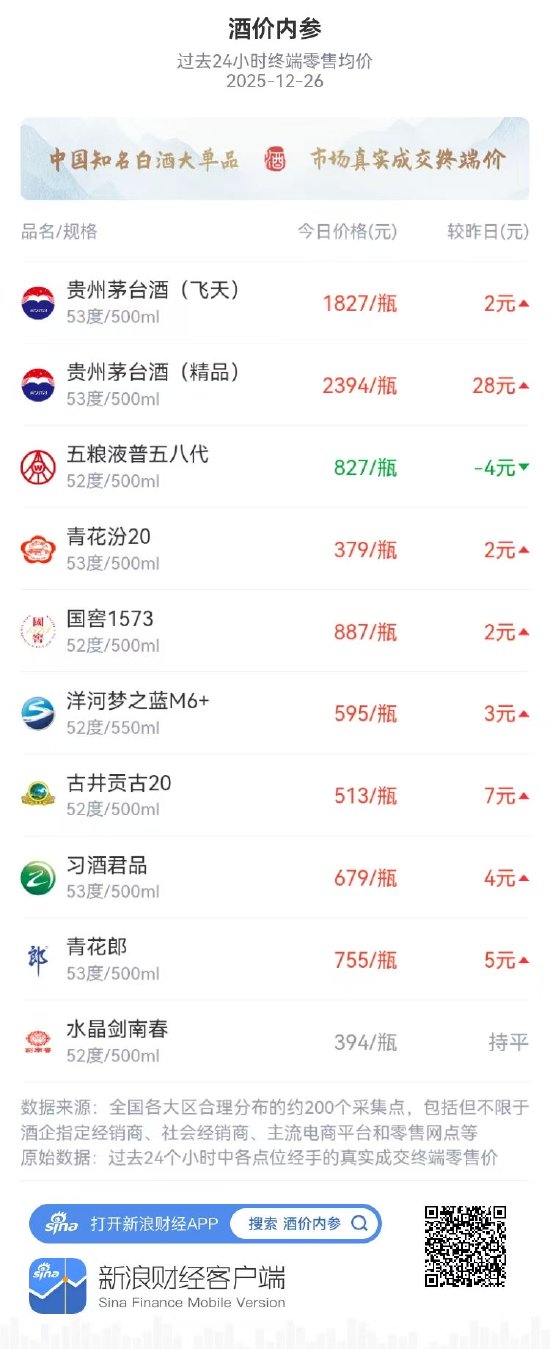
Core Insights - The article highlights the continuous upward trend in the retail prices of China's top ten liquor products, with a total price reaching 9,250 yuan, an increase of 49 yuan from the previous day, marking a new high in the past month [1][7]. Price Trends - The market is driven by the leading products from Guizhou Moutai, with most brands experiencing price increases, showing a strong structure of eight rising, one stable, and one declining [1][7]. - The price of Guizhou Moutai (premium) rose by 28 yuan per bottle, achieving a cumulative increase of over 110 yuan over three days [1][7]. - Guizhou Moutai (Feitian) saw a stable increase of 2 yuan per bottle [1][7]. - Other notable price increases include: - Guqingong Gu20: +7 yuan - Qinghualang: +5 yuan - Xijiu Junpin: +4 yuan - Yanghe Dream Blue M6+: +3 yuan - Guojiao 1573 and Qinghualang 20: +2 yuan each - The only product with a price decline was Wuliangye Pu 58th generation, which fell by 4 yuan [1][7][9]. Market Data Collection - The data for the "Liquor Price Reference" is sourced from approximately 200 collection points across various regions, including designated distributors, social distributors, mainstream e-commerce platforms, and retail outlets, aiming to provide objective and traceable market price data [2][8]. Industry News - On the afternoon of the 25th, the A-share liquor sector saw a rise, with Shuijingfang hitting the limit, attracting investor attention due to rumors of Jiananspring planning to acquire Shuijingfang. However, both parties denied any acquisition discussions, and Shuijingfang confirmed its operations are normal [9]. - A broker analyst suggested that the collective rise in the liquor sector may be related to year-end capital rotation [9].

酒价内参12月26日价格发布 茅台系大涨引领市场整体价格创1个月新高
Xin Lang Cai Jing· 2025-12-26 01:07
Core Viewpoint - The Chinese liquor market, particularly the top ten baijiu products, continues to show a strong upward trend in retail prices, with a total price reaching 9,250 yuan, marking a 49 yuan increase from the previous day and setting a new monthly high after four consecutive days of price increases [1]. Price Trends - The leading product, Guizhou Moutai, has significantly influenced the market, with most brands experiencing price increases, resulting in a strong market structure of eight products rising, one stable, and one declining [1]. - The price of Guizhou Moutai's premium product rose by 28 yuan per bottle, achieving a cumulative increase of over 110 yuan per bottle over three days [1]. - Guizhou Moutai's Feitian product saw a stable increase of 2 yuan per bottle [3]. - Other notable price increases include: - Gujing Gongjiu 20: +7 yuan/bottle - Qinghua Lang: +5 yuan/bottle - Xijiu Junpin: +4 yuan/bottle - Yanghe Dream Blue M6+: +3 yuan/bottle - Guojiao 1573 and Qinghua Fen 20: +2 yuan/bottle - Shuijing Jian'nan Chun remained stable [1][4]. - The only product to experience a price decline was Wuliangye Pu 58th generation, which dropped by 4 yuan per bottle [1].
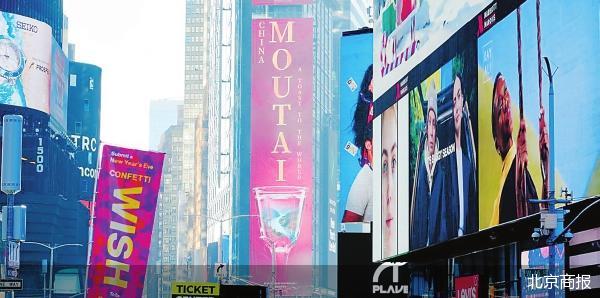
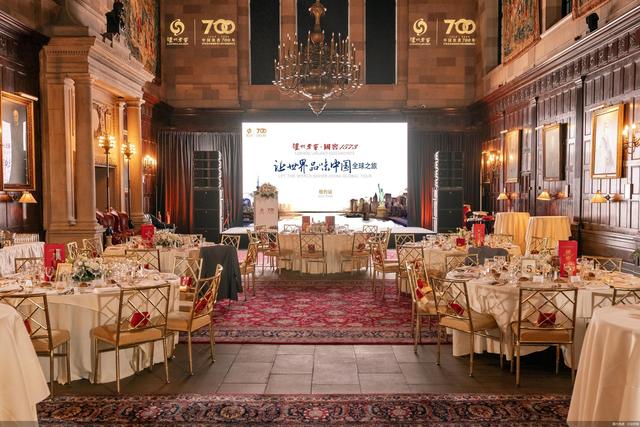
从“卖产品”到“卖文化”:营销变革下酒企出海新征程
Bei Jing Ri Bao Ke Hu Duan· 2025-12-25 16:28
Core Viewpoint - The Chinese liquor industry is increasingly focusing on international markets as domestic competition intensifies, with a significant number of companies expanding overseas to seek new growth opportunities [1][7]. Group 1: Market Expansion Strategies - A report indicates that by 2025, 63.9% of Chinese liquor companies will have established or are in the process of expanding into international markets, highlighting a collective shift towards seeking new growth avenues [1]. - Companies like Moutai and Wuliangye are launching products specifically designed for overseas markets, while others are exporting established domestic bestsellers [3][4]. - The export of Chinese liquor is experiencing a "volume and price increase," with total exports reaching $704 million in the first three quarters of the year, a 5.3% year-on-year increase [7]. Group 2: Cultural Integration - The industry recognizes that successful internationalization involves not just product export but also cultural integration, with many companies engaging in cultural activities to tell the story of Chinese liquor [5][6]. - Events like "He Mei Global Tour" by Wuliangye and "Chinese Banquet" by Yanghe are examples of how companies are using cultural narratives to enhance their international presence [5]. Group 3: Challenges and Opportunities - Despite the enthusiasm for international expansion, challenges remain, such as the need to adapt products to local tastes and cultural preferences, particularly in regions with significant Chinese populations like Southeast Asia [8][9]. - The industry is still in the early stages of internationalization, primarily serving Chinese consumers abroad, and must develop strategies to engage with local markets more effectively [8][9].
剑南春收购水井坊?双方火速回应“不知情”|公司舆情哨
Sou Hu Cai Jing· 2025-12-25 16:15
Core Viewpoint - The recent acquisition rumor involving Jian Nan Chun and Shui Jing Fang has sparked significant movement in the Chinese liquor market, particularly in the A-share market, despite both companies denying any knowledge of the acquisition [1][3][4]. Group 1: Market Reaction - On December 25, the A-share liquor sector saw a notable increase, with Shui Jing Fang's stock price hitting the daily limit at 39.80 yuan per share, driven by substantial capital inflow [1]. - Other leading liquor companies, including Kweichow Moutai, Wuliangye, Luzhou Laojiao, Yanghe, and Shanxi Fenjiu, also experienced stock price increases, indicating a collective market response [5]. Group 2: Company Responses - Both Shui Jing Fang and Jian Nan Chun have publicly stated they are unaware of any acquisition discussions, with Shui Jing Fang emphasizing that its operations remain normal [4][5]. - This is not the first time Shui Jing Fang has faced acquisition rumors; previous claims regarding a potential acquisition by Xijiu were also denied by the company [4]. Group 3: Historical Context - Jian Nan Chun and Shui Jing Fang have a historical connection, both being part of the "Six Golden Flowers" of Sichuan liquor, which adds to the speculation around potential synergies [5][6]. - The historical context includes past foreign investments in Shui Jing Fang by Diageo, which highlights the interest of international players in the Chinese liquor market [5]. Group 4: Industry Dynamics - The rumor reflects deeper market dynamics, including an ongoing adjustment period in the liquor industry, where increased competition has led to heightened expectations for mergers and acquisitions [6]. - The potential for integration between Jian Nan Chun and Shui Jing Fang is seen as feasible due to their cultural and regional similarities, although the complexity of Shui Jing Fang's current ownership structure makes such a merger unlikely in the short term [6].

食品饮料行业 2026 年度投资策略报告(二):白酒:底部信号夯实,重视优质酒企配置机会-20251225
Guoxin Securities· 2025-12-25 13:59
Group 1 - The report indicates that the liquor industry is currently facing supply-demand imbalances, with companies reducing growth expectations and releasing channel pressures. The white liquor index has dropped by 12% since the beginning of 2025, underperforming the CSI 300 index by 33% [1][11] - The report highlights that the overall market demand for white liquor has shown slight recovery, but actual demand remains weak, with mainstream product prices in a downward trend. Companies like Wuliangye and Gujing Gongjiu are reducing growth expectations, leading to significant declines in Q3 performance [1][22] - The report suggests that the white liquor sector is entering a configuration phase, with leading companies like Kweichow Moutai improving their price-volume relationship and showcasing dividend asset attributes, with a projected dividend yield of 4% in 2026 [3][4] Group 2 - Looking ahead to 2026, the report anticipates that supply-side optimization and channel clearing will occur, with a focus on quality company configurations. The industry is expected to see gradual recovery in demand, particularly during the Spring Festival sales period [2][29] - The report notes that channel inventory has decreased since Q3 2025, and companies are focusing on maintaining dynamic profits for distributors. Leading companies are gradually relaxing channel policies, indicating a stabilization trend in product prices post-holiday [2][42] - The competitive landscape is shifting from price differentiation to brand and organizational capabilities, with companies that can establish pricing power in specific regions or demographics likely to emerge from the adjustment cycle first [2][29] Group 3 - Investment recommendations suggest that the white liquor sector is now in a configuration zone, with a focus on brands that can navigate through cycles, such as Kweichow Moutai and Shanxi Fenjiu, which are expected to see valuation improvements as market liquidity increases [3][4] - The report emphasizes the importance of companies that have established advantages in pricing and regional market share during the adjustment phase, such as Luzhou Laojiao, Gujing Gongjiu, and Jinhui Liquor [3][4] - The report also highlights companies with strong shareholder returns and cash flow safety margins, such as Wuliangye, as potential investment opportunities [3][4]

从“卖产品”到“卖文化” 酒企出海新征程
Bei Jing Shang Bao· 2025-12-25 13:52
Core Viewpoint - The Chinese liquor industry is increasingly focusing on international markets as domestic competition intensifies, with a significant number of companies expanding overseas to seek new growth opportunities [1][8]. Group 1: Market Expansion - As of December 25, 2023, 63.9% of Chinese liquor companies are either expanding or have already established a presence in overseas markets, indicating a collective shift towards internationalization [1]. - Major brands like Moutai, Wuliangye, and Luzhou Laojiao are actively entering global markets, while Huangjiu brands such as Guyue Longshan and Kuaijishan are also leveraging traditional culture alongside their products [1][3]. Group 2: Product Strategy - Companies are adopting two distinct strategies for internationalization: "cultural integration" with tailored products for foreign markets, and "value output" by exporting established domestic products [3]. - Moutai has launched a series of products specifically designed for international markets, while other brands like Luzhou Laojiao and Wuliangye are exporting their star products that have already gained traction in China [3][4]. Group 3: Cultural Integration - The cultural aspect of product export is becoming increasingly important, with companies recognizing that successful internationalization involves not just product sales but also cultural storytelling [6]. - Initiatives such as Wuliangye's "He Mei Global Tour" and various cultural exchange activities by other brands aim to promote Chinese liquor culture globally [6][7]. Group 4: Market Challenges - Despite the enthusiasm for international expansion, challenges remain, including the need for localization and the predominance of Chinese consumers in overseas markets [8][9]. - The Southeast Asian market is currently the primary focus for many companies, supported by a significant Chinese diaspora, but broader acceptance among local consumers is still a hurdle [8][9]. Group 5: Future Directions - To penetrate mainstream overseas markets, companies must innovate and adapt their products to local tastes, particularly through the integration of liquor with Chinese cuisine [9].