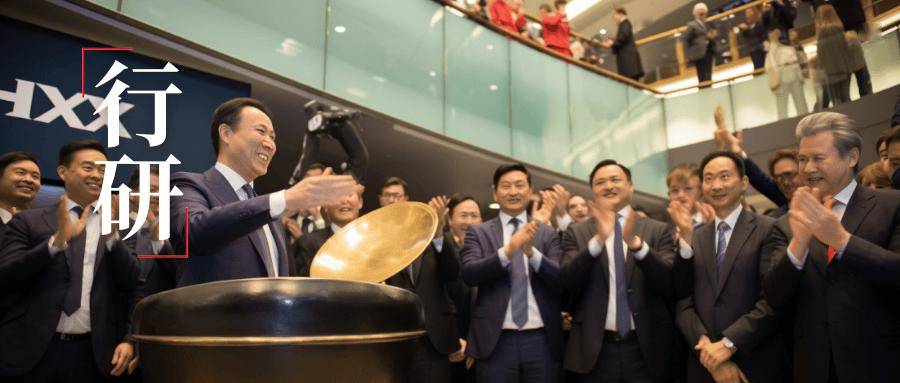
鸣鸣很忙

Search documents
消费企业密集境外上市 “新消费”概念站到资本风口丨港美股看台
证券时报· 2025-05-12 00:38
对于这一轮消费类企业赴境外上市的热潮,分析人士指出,在契合促消费的政策纲领下,一方面前几年是消费类股权投资高潮期,在当前时点其背后的机构 有着退出需求,尤其对赌协议带来了迫切的上市需求;而另一方面,则是目前头部消费类企业面临着国际化需求,上市对其国际化扩张以及品牌提升均有相 应助力,以整合更多资源。此外,消费类企业尤其是新消费企业上市,更是顺应消费趋势变化的必然举措。 2024年下半年以来,消费企业赴境外上市已蔚然成风。 据了解,2025年以来,消费类企业如茶饮品牌中的蜜雪冰城、古茗、沪上阿姨、霸王茶姬纷纷在港股和美股上市,同时还有老乡鸡、遇见小面、绿茶、鸣鸣 很忙等众多消费类企业正在上市进程中。值得注意的是,这里面有不少是新消费企业。 消费企业密集上市 消费类企业正在迎来上市高潮。以新式茶饮品牌为例,今年2月古茗、3月蜜雪集团赴港上市,4月霸王茶姬赴美上市,5月沪上阿姨在港上市,在短短4个月内 就有4家同行业公司上市。 不仅如此,2025年以来,港股市场还有纽曼思、布鲁可、舒宝国际等消费类企业已经上市,目前,另一家餐饮企业绿茶正处于招股期,即将登陆港股市场。 而港股还有众多消费企业已经递表,如老乡鸡、遇见小 ...


四大证券报精华摘要:5月12日
Xin Hua Cai Jing· 2025-05-12 00:25
·近半数新三板挂牌公司去年净利润增长 全国股转公司近日发布2024年业绩总结,截至2025年4月30日,共有5844家挂牌公司披露去年年报,共 实现营业收入1.71万亿元,同比增长0.88%,净利润655.81亿元。近半数挂牌公司净利润增长,超两成 增速50%以上。总体来看,挂牌公司业绩表现韧性较足,专精特新特点鲜明。据统计,截至目前,78家 挂牌公司披露2025年一季度报告,共实现营业收入89.39亿元,其中45家公司实现营收增长;共实现净 利润10.03亿元,其中44家公司实现净利润增长。 ·深圳印发建设产业金融中心行动方案推动长期资本精准服务"硬科技"发展 日前,深圳市地方金融管理局、深圳证监局联合印发《深圳市关于发挥资本市场作用建设产业金融中心 行动方案(2025-2026年)》。《行动方案》明确,"十五五"期间,深圳力争构建形成适配经济社会高质量 发展需求、优质创新资本集聚的高质量资本市场,以一流的创新资本形成机制、一流的标杆企业、一流 的行业机构、一流的市场发展生态、一流的风险防控体系,助力推进中国式现代化深圳新样本、新实 践,并推出20项具体举措。 ·大厂各显神通 AI人才争夺战打响 新华财经北 ...


消费企业密集境外上市 “新消费”概念站到资本风口
Zheng Quan Shi Bao· 2025-05-11 18:37
2024年下半年以来,消费企业赴境外上市已蔚然成风。 据了解,2025年以来,消费类企业如茶饮品牌中的蜜雪冰城、古茗、沪上阿姨、霸王茶姬纷纷在港股和 美股上市,同时还有老乡鸡、遇见小面、绿茶、鸣鸣很忙等众多消费类企业正在上市进程中。值得注意 的是,这里面有不少是新消费企业。 对于这一轮消费类企业赴境外上市的热潮,分析人士指出,在契合促消费的政策纲领下,一方面前几年 是消费类股权投资高潮期,在当前时点其背后的机构有着退出需求,尤其对赌协议带来了迫切的上市需 求;而另一方面,则是目前头部消费类企业面临着国际化需求,上市对其国际化扩张以及品牌提升均有 相应助力,以整合更多资源。此外,消费类企业尤其是新消费企业上市,更是顺应消费趋势变化的必然 举措。 消费企业密集上市 消费类企业正在迎来上市高潮。以新式茶饮品牌为例,今年2月古茗、3月蜜雪集团赴港上市,4月霸王 茶姬赴美上市,5月沪上阿姨在港上市,在短短4个月内就有4家同行业公司上市。 不仅如此,2025年以来,港股市场还有纽曼思、布鲁可、舒宝国际等消费类企业已经上市,目前,另一 家餐饮企业绿茶正处于招股期,即将登陆港股市场。而港股还有众多消费企业已经递表,如老乡鸡、 ...
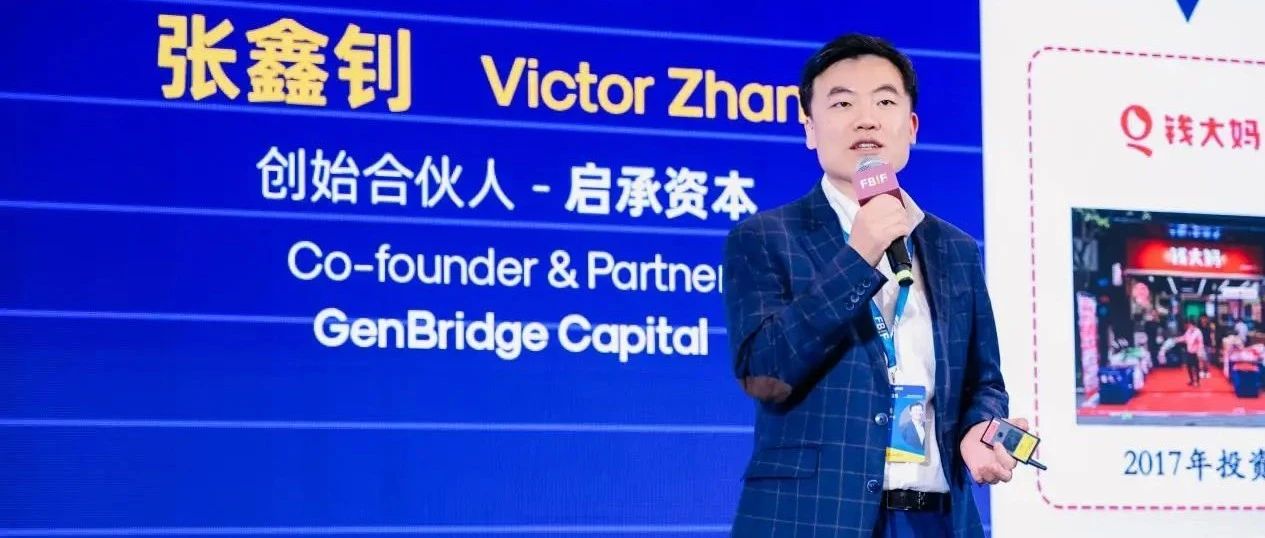
启承资本张鑫钊:30年一遇的中国零售变革,食品饮料渠道突破的新机遇
FBIF食品饮料创新· 2025-05-11 16:14
Core Viewpoint - The Chinese retail industry is undergoing a significant generational transformation, particularly in the food and beverage sector, where traditional supermarkets are facing challenges and new retail formats are emerging [1][2][8]. Group 1: Market Transformation - The traditional supermarket model, which thrived for three decades, is nearing its end, with many leading supermarkets exiting the market in recent years [1][8]. - The shift from an incremental market to a stock market is fundamentally changing the competitive landscape, with a focus on efficiency improvement and market share competition [1][8]. - The future may see a landscape with over 2,000 super-large stores, 30,000 large stores, 200,000 medium stores, and 3 million small stores in China [1][2]. Group 2: Value Chain Restructuring - The value chain in the food and beverage industry is being restructured, moving away from a brand-led model to one where channel power is shifting towards the end consumer [1][9][12]. - The previous model of "big brands + big products + deep distribution" is becoming ineffective, as the market is now characterized by an oversupply of products [9][10]. - The emergence of "buyer solutions" is changing the dynamics of competition, where retailers and brands must adapt to consumer needs more effectively [12][14]. Group 3: Consumer Behavior and Market Dynamics - Consumer decision-making is becoming more complex, with a multitude of options available for similar products, leading to increased competition among brands [12][32]. - The relationship between retail and consumer preferences is evolving, with a focus on understanding consumer needs through various contexts and scenarios [25][26]. - The market is witnessing a trend towards the integration of different product categories, leading to the emergence of new retail formats that cater to diverse consumer demands [30][31]. Group 4: Future Opportunities - The ongoing transformation presents opportunities for food and beverage companies to innovate and adapt to the changing retail landscape [31][32]. - Companies must focus on niche markets and establish long-term collaborative relationships with retailers to succeed in this new environment [34][35]. - The ability to understand and respond to consumer insights will be crucial for brands to thrive in the increasingly competitive market [34][33].
美护商社行业周报:4月CPI环比转增,五一出行消费表现亮眼-20250511
Guoyuan Securities· 2025-05-11 13:42
[Table_Main] 行业研究|可选消费 证券研究报告 可选消费行业周报、月报 2025 年 05 月 11 日 4 月 CPI 环比转增,五一出行消费表现亮眼 ——美护商社行业周报 [Table_Summary] 报告要点: 市场表现 本周(2025.05.06-2025.05.09),申万商贸零售/社会服务/美容护理分 别+0.88%/+1.12%/+1.71%,在 31 个一级行业中排名第 29/25/22;同 期上证综指+1.92%,深证成指+2.29%,沪深 300 指数+2.00%。 细分子板块来看,本周商贸零售/社会服务/美容护理多数子版块均实 现 上 涨 。 化 妆 品 / 专 业 服 务 / 个 护 用 品 分 别 同 比 +2.79%/+2.47%/+2.30%,旅游及景区板块回调 1.30%。 本周行业重点事件及资讯 2025 年 4 月,全国居民消费价格指数(CPI)环比由上月下降 0.4% 转为上涨 0.1%;同比下降 0.1%,降幅与上月相同。其中,城市上 涨 0.2%,农村持平;食品价格上涨 0.2%,非食品价格上涨 0.1%; 消费品价格持平,服务价格上涨 0.3%。核心 ...
一周新消费NO.308|外星人电解质水与《大侦探》推出限定款产品;Nike首家力量训练工作室开业
新消费智库· 2025-05-11 11:58
Group 1 - Jin Xing Beer launched two new products: Jin Xing Ice Sugar Hawthorn Chinese Craft Beer and Jin Xing Qing Jiao Chinese Craft Beer, combining unique flavors with traditional elements [4] - Minor Figures introduced Hyper Oat, a new line of oat drinks focusing on both taste and functionality, available in four unique flavors [4] - Birkenstock 1774 launched the Arizona CosNy new product series, featuring minimalist designs and durable materials [4] Group 2 - Luzhou Laojiao unveiled two new products during the Jiao Zhu Festival, emphasizing the integration of traditional liquor culture with modern healthy lifestyles [5] - Yuanqi Forest launched a new plant-based drink called "Slow Boil," developed over two years in collaboration with young consumers [5] - Lay's relaunched its spicy series of potato chips with three levels of spiciness, catering to diverse consumer preferences [7] Group 3 - The first shared store between Lianjia and Luckin Coffee opened, allowing customers to handle real estate transactions while enjoying popular coffee products [10] - Alien Electrolyte Water collaborated with the show "Big Detective" to launch a limited edition product, featuring low-sugar coconut-flavored electrolyte water [10] - Michael Kors opened a limited-time tea and alcohol shop in Hangzhou, showcasing its new spring-summer collection [10] Group 4 - Bobbie launched an organic whole milk infant formula, certified by the USDA, emphasizing quality and safety [22] - Suntory released a limited edition "Master's Dream" beer with an alcohol content of 4.5%, themed around Japan's seasonal changes [23] - Panpan Beverage introduced a new Chenpi water product, combining traditional ingredients for digestive health [24] Group 5 - KIKO Milano appointed Patricia Ho as the new head for the Asia-Pacific region, following a majority stake acquisition by L Catterton [27] - Charlotte Tilbury's founder made a live debut in China, promoting new products in collaboration with influencer Li Jiaqi [30] - Proya became the first beauty group in China to achieve over 10 billion yuan in revenue, reporting a 21.04% year-on-year growth [31]
一年入账106亿,安徽前首富带芜湖公司二次冲上市
Sou Hu Cai Jing· 2025-05-11 00:11
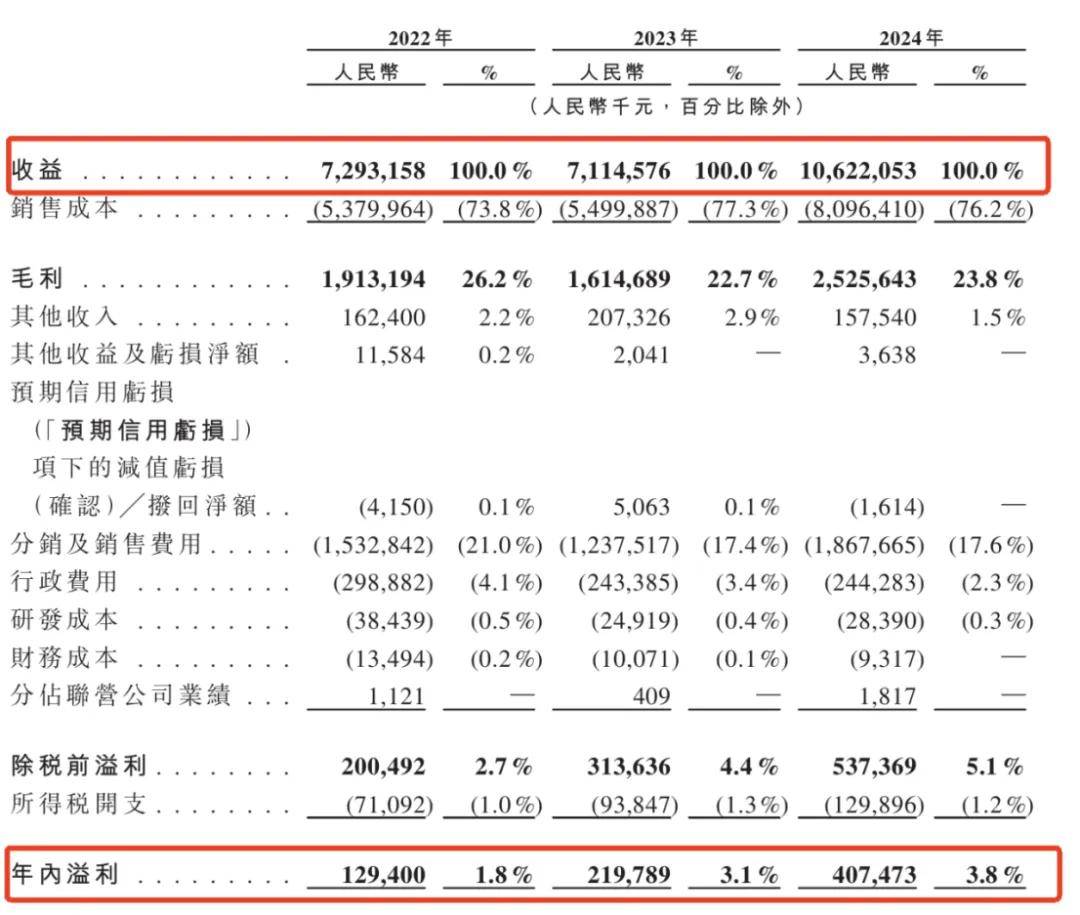
Core Viewpoint - After four consecutive years of revenue decline, Three Squirrels is set to return to the "100 billion club" in 2024, bolstered by its upcoming IPO in Hong Kong, which would make it the first Chinese snack company to achieve dual listing in A+H shares [1][3]. Financial Performance - Three Squirrels reported revenues of approximately 72.93 billion RMB, 71.15 billion RMB, and 106.22 billion RMB for the years 2022, 2023, and 2024, respectively, with corresponding net profits of approximately 1.29 billion RMB, 2.2 billion RMB, and 4.07 billion RMB [1][2]. - The overall gross margins for the years 2022, 2023, and 2024 were 26.2%, 22.7%, and 23.8%, respectively, with a noted decline in 2023 attributed to rising raw material and logistics costs, while a recovery is expected in 2024 due to supply chain optimization [6][12]. Market Position - In the Chinese snack market, Three Squirrels ranked fourth in sales last year, trailing behind international giants Mars, Mondelez, and Pepsi, while being the top domestic snack brand [2][3]. - The company has diversified its product offerings, with nuts accounting for 50.5% of revenue in 2024, followed by fast-growing categories like comprehensive snacks, which increased from 12% in 2022 to 19% in 2024 [5][6]. Strategic Transformation - The company has undergone a strategic transformation under founder Zhang Liaoyuan, focusing on high-end cost performance and a "full-channel + full-category" operational model, which includes restructuring the supply chain and entering new sales channels [3][12]. - Three Squirrels is shifting from an OEM model to a self-owned brand model, enhancing control over product quality and cost management, which is expected to improve profitability [12][13]. Channel Strategy - The company has implemented a "D+N" strategy, combining short video platforms with traditional e-commerce, resulting in significant revenue growth from platforms like Douyin, which saw a compound annual growth rate of 99.27% from 2022 to 2024 [14][16]. - Despite challenges in offline retail, Three Squirrels aims to increase its presence in physical stores, planning to adjust its revenue structure from a 7:3 online-to-offline ratio to a 5:5 ratio over the next 2-3 years [21][22]. Future Outlook - The upcoming IPO is expected to provide the necessary capital for further expansion and to strengthen the company's supply chain and offline presence, as well as to explore new product categories such as beverages and pet food [11][23]. - The company plans to build new processing plants across various regions in China and Southeast Asia, aiming to enhance production capacity significantly [11][12].
县城零食大王联姻,一年卖出500多亿
FBIF食品饮料创新· 2025-05-10 15:07
Core Viewpoint - The article discusses the emergence and growth potential of "poor people's supermarkets" in China, exemplified by the listing application of Hunan Mingming Henbang Commercial Chain Co., Ltd. on the Hong Kong Stock Exchange, highlighting its rapid expansion in lower-tier markets and significant revenue growth projections [1][4]. Group 1: Company Overview - Hunan Mingming Henbang has approximately 58% of its stores located in county towns and rural areas, indicating a deep penetration into the lower-tier market [1]. - The company reported revenue figures of RMB 4.285 billion, RMB 10.295 billion, and RMB 39.343 billion for the years 2022, 2023, and 2024 respectively, with a compound annual growth rate (CAGR) of 203.0% [2]. - The total Gross Merchandise Value (GMV) for 2024 is projected to reach RMB 55.5 billion [1]. Group 2: Industry Trends - The retail sector in China is experiencing a transformation, with a notable shift towards discount retailing and the emergence of hard discount models, as seen with companies like Aldi and the rise of discount supermarkets [4][19]. - The discount retail market is expected to grow to RMB 2.28 trillion by 2025, with a CAGR of 11.0% from 2022 to 2025 [19]. - The trend of "quality-price ratio" is becoming prominent, where consumers seek high-quality products at lower prices, reflecting a shift in consumer behavior towards value [8][12]. Group 3: Competitive Landscape - The competitive landscape is intensifying, with major players like Three Squirrels and Yonghui Supermarket facing challenges, including significant shareholder losses and strategic shifts [14][16]. - The concept of private labels is gaining traction, with companies like Aldi achieving over 90% of their product offerings as private labels, which allows for lower prices and higher quality control [27]. - The article highlights the importance of supply chain optimization and operational efficiency as key competitive advantages in the discount retail space [20][22].
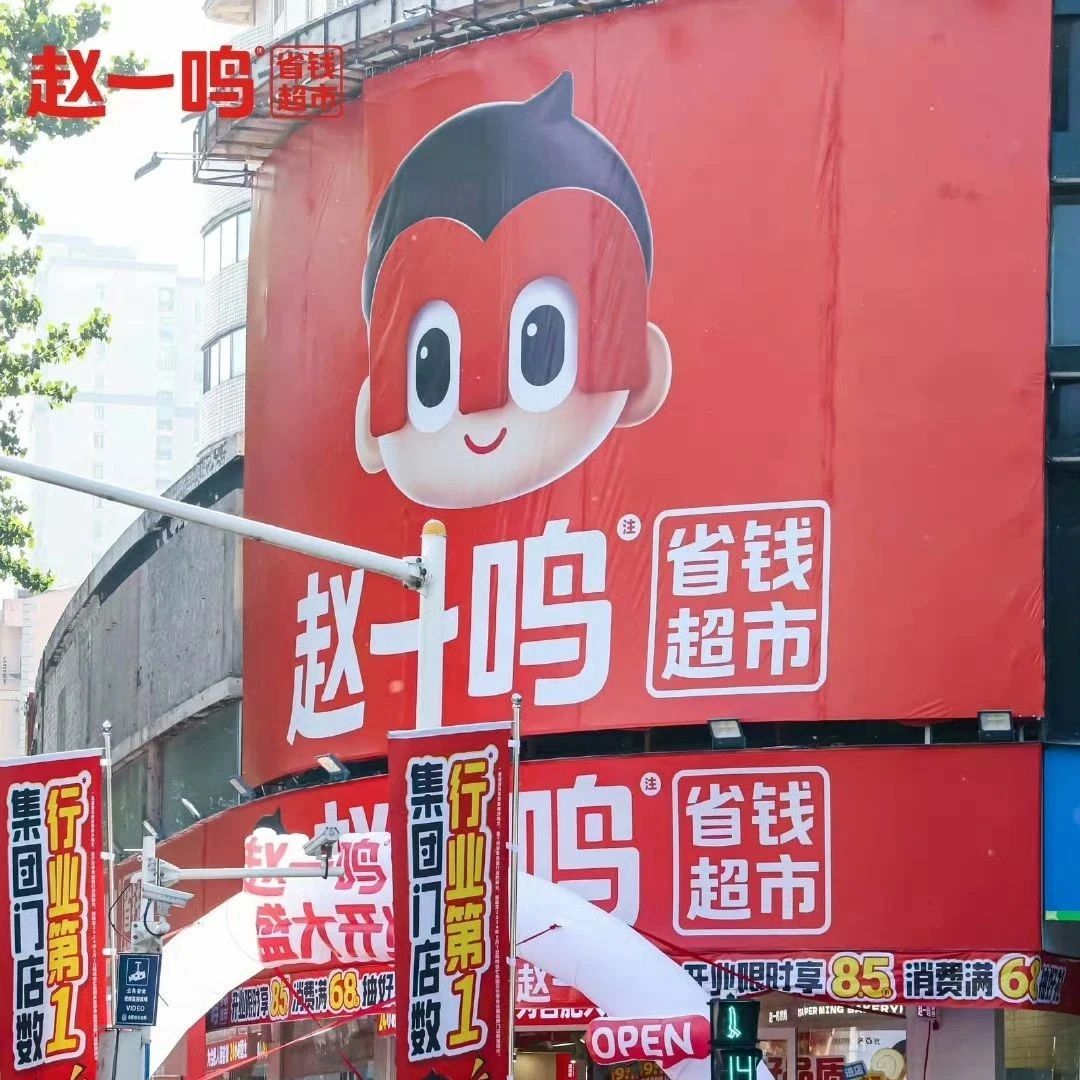
鸣鸣很忙冲港股:在万店、低价、品牌间寻找新的护城河
Hua Er Jie Jian Wen· 2025-05-10 08:29
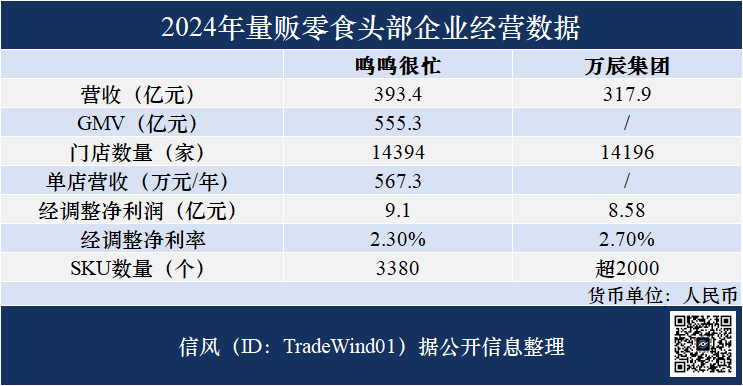
Core Viewpoint - The two major players in the snack retail industry are expected to fully enter the capital market, with Mingming Hen Mang officially submitting its prospectus for a Hong Kong listing, potentially positioning itself alongside Wancheng Group as a leading snack giant in both the Hong Kong and A-share markets [2][8]. Group 1: Company Performance and Market Position - Mingming Hen Mang's revenue projections for 2022 to 2024 are 4.28 billion, 10.29 billion, and 39.34 billion RMB, respectively, with a compound annual growth rate of 203.0% [2]. - By the end of 2024, Mingming Hen Mang is expected to have 14,400 stores and 120 million members, with a total GMV exceeding 55.5 billion RMB [2]. - The market share of Mingming Hen Mang in the leisure food and beverage sector has surpassed Walmart, reaching 1.5% [3]. - The company has achieved a significant increase in store efficiency, with average daily sales per store rising from 38,800 RMB to 45,200 RMB, and daily sales exceeding 15,000 RMB [12]. Group 2: Industry Dynamics and Competition - The snack retail sector has rapidly expanded, with the number of snack retail stores in China increasing from approximately 2,500 at the end of 2021 to 37,500 in just three years [5]. - The merger between "Zero Snacks Very Busy" and "Zhao Yiming Snacks" is seen as a strategic move to counter competition, especially as Wancheng Group has been acquiring multiple snack brands [8][10]. - The competitive landscape is intensifying, with both Mingming Hen Mang and Wancheng Group achieving a combined market share of over 70% by the end of 2024 [28]. Group 3: Financial Metrics and Operational Efficiency - In 2024, Mingming Hen Mang's adjusted net profit is projected to reach 910 million RMB, with an adjusted net profit margin of 2.3% [31]. - The company maintains a stable gross margin of 7.5% to 7.6%, while its net profit margin has improved from 1.7% to 2.1% [23]. - The average inventory turnover days for Mingming Hen Mang is 11.6 days, consistent with two years prior [27]. Group 4: Strategic Initiatives and Future Outlook - Mingming Hen Mang is diversifying its product offerings by introducing a new store model that includes daily necessities, aiming to increase customer frequency and average transaction value [39]. - The company has launched several self-branded products, maintaining a focus on cost-effectiveness [40]. - Marketing efforts have intensified, with partnerships with celebrities and the introduction of innovative store concepts to enhance brand recognition [45][46].
4月,这些消费企业集体提交招股书
Sou Hu Cai Jing· 2025-05-08 08:13
Group 1: Market Trends and Company Strategies - A significant number of consumer companies have submitted IPO applications to list on the Hong Kong Stock Exchange, showcasing common traits such as early market opportunity capture and a focus on digital and intelligent production layouts [2] - Companies like Dongpeng Beverage and Kaway have successfully differentiated themselves in their respective markets, with Dongpeng focusing on functional beverages and Kaway on emotional consumption through popular IPs [5][8] - The food and beverage industry faces challenges such as declining brand loyalty and health consumption trends, while entertainment consumption relies heavily on IP popularity and is subject to policy risks [2] Group 2: Dongpeng Beverage - Dongpeng Beverage, founded in 1987, has seen significant revenue growth, with projected revenues of 85 billion, 112.57 billion, and 158.30 billion yuan for 2022-2024, representing year-on-year growth rates of 21.9%, 32.5%, and 40.6% respectively [5] - The company has a market share of 26.3% in functional beverage sales for 2024, ranking first, and a retail market share of 23%, ranking second [5] - Despite its success, Dongpeng relies heavily on its flagship product, which accounts for over 84% of its revenue, posing risks as consumer preferences shift towards healthier options [6] Group 3: Kaway - Kaway, established in 2011, has rapidly grown by focusing on anime IPs and blind box trading cards, with projected sales of 48.11 billion packages in 2024 [8] - The company experienced a revenue drop in 2023 due to regulatory impacts but is expected to rebound to 100.57 billion in 2024, with a net profit surge of 378% [8] - Kaway's revenue is heavily dependent on a few popular IPs, which could pose risks as these licenses expire or if the IP owners shift to self-management [8] Group 4: Yujian Xiaomian - Yujian Xiaomian has implemented a digital tracking system for supply chain management, achieving extensive channel penetration with nearly 4 million terminal points across the country [9][10] - The company has adopted a pricing strategy to increase volume, resulting in a decrease in average customer spending from 36.1 yuan in 2022 to 32.0 yuan in 2024, while maintaining a high table turnover rate [12] - Yujian Xiaomian's rapid expansion has raised concerns about maintaining brand quality and customer satisfaction amidst competitive pressures [12] Group 5: Liuliu Guoyuan - Liuliu Guoyuan has focused on a single product strategy, achieving a revenue compound annual growth rate of 17% from 2022 to 2024, with projected revenues of 16.16 billion yuan in 2024 [16] - The company has faced challenges due to changing consumer preferences and increased competition, leading to a decline in profit margins [16] - Liuliu Guoyuan's reliance on a single product category has raised concerns about sustainability and adaptability in a rapidly evolving market [20] Group 6: Three Squirrels - Three Squirrels, founded in 2012, has experienced revenue declines from 97.94 billion in 2020 to 71.15 billion in 2023, but is projected to rebound to 106.22 billion in 2024 [18][19] - The company has shifted its strategy to focus on high-end products and full-category offerings, but faces challenges from changing consumer loyalty and preferences [19] - Three Squirrels must enhance its offline presence and brand loyalty programs to combat market fatigue and price wars [19] Group 7: Bersi - Bersi, established in 2012, has rapidly grown to become one of the top domestic outdoor brands, with projected revenues of 17.66 billion in 2024 and a market share of 5.2% [23] - The company faces risks due to its high reliance on online channels, which could be impacted by changes in platform rules and competition [23] - Bersi's growth strategy should focus on brand evolution and user loyalty while optimizing supply chain digitalization [23] Group 8: Sailis - Sailis has transformed from a traditional auto parts manufacturer to a leading player in the new energy vehicle market, with revenues projected to reach 1451.76 billion in 2024, a 305% increase [26] - The company has faced challenges such as declining brand loyalty among consumers and increased competition in the price war within the new energy sector [26] - Sailis must adapt its market entry strategies and consider local production to mitigate risks from global regulatory changes [26] Group 9: Mingming Hen Mang - Mingming Hen Mang has rapidly expanded its presence in the county market, with 14,394 stores and a GMV of 555 billion by 2024 [29] - The company has seen significant revenue growth from 42.86 billion in 2022 to 393.44 billion in 2024, but faces challenges in maintaining profitability and strategic adaptability [29] - The evolving market landscape necessitates a focus on health-oriented products and effective brand management to sustain competitive advantages [29]