
曙光数创

Search documents
数据中心的下一个胜负手:跳出AI芯片
3 6 Ke· 2026-01-25 06:05
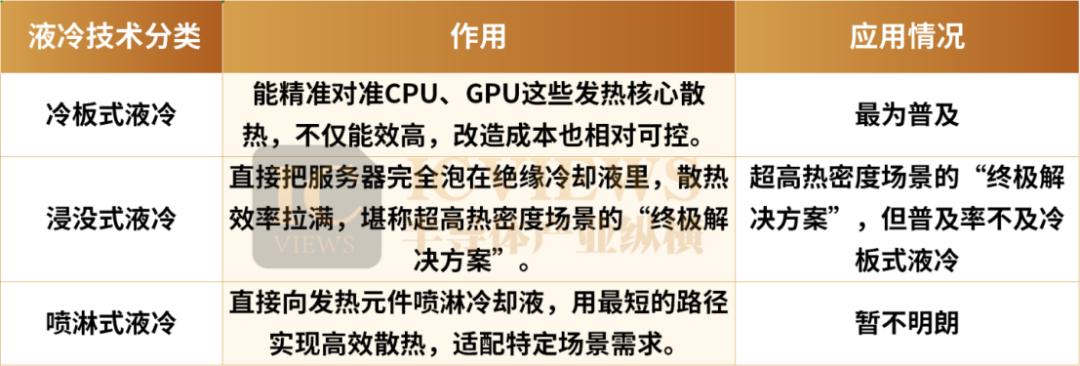
Core Insights - The current reality of AI chips in data centers reveals that significant investments may yield less than 60% of their theoretical value due to power consumption issues [1] - The expansion of computing power is outpacing electricity supply, reshaping the development logic of the data center industry [1] Group 1: Power Consumption Challenges - The disconnection between AI chip technology and actual data center usage is a core issue leading to high power consumption [2] - Many AI chips focus on peak computing power rather than balancing efficiency and power usage, resulting in wasted energy [2] - The rapid increase in computing demand, with a growth rate of 74.1% in 2024, exacerbates the power consumption problem, turning data centers into "power black holes" [3] Group 2: Cooling Technology Innovations - Data centers rely heavily on cooling systems, which account for over 38% of total power consumption, with some cases exceeding 50% [4] - Liquid cooling technology is emerging as a key solution, with three main types: cold plate liquid cooling, immersion cooling, and spray cooling [5][6] - Despite being the most efficient, liquid cooling technology has a low adoption rate of about 10% in the industry [7] Group 3: Market Dynamics and Competitive Landscape - Companies like NVIDIA and AMD are developing customized liquid cooling solutions to enhance cooling efficiency and adapt to high-density computing environments [8] - In China, Shuguang Shuchuang leads the liquid cooling infrastructure market with a 56% share, providing solutions to major internet firms [9] - The overall manufacturing advantage of China is becoming evident in the transformation of data centers, with the manufacturing sector's value surpassing that of the US [10][11][12] Group 4: Future Directions - The future of data centers will prioritize intelligent design over sheer size, focusing on efficient power usage and effective cooling solutions [13]


北交所周报(1.12-1.16):北交所本周量能放大,指数冲高回落
ZHONGTAI SECURITIES· 2026-01-21 07:25
北交所本周量能放大,指数冲高回落 ——北交所周报(1.12-1.16) 评级: 增持(维持) 分析师:冯胜 执业证书编号:S0740519050004 Email:fengsheng@zts.com.cn 分析师:宋瀚清 执业证书编号:S0740524060001 报告摘要 北交所行情概览: 1)整体行情:截至 2026 年 1 月 16 日,北证成份股 288 个,平均市值 32.69 亿元。 本周(2026 年 1 月 12 日-2026 年 1 月 16 日,下同)北证 50 指数涨跌幅 1.58%,收 盘 1548.32 点;同期沪深 300 和上证指数涨跌幅分别为-0.57%和-0.45%。本周北交 所日均成交额为 409.81 亿元,较上周(2026 年 1 月 5 日-2025 年 1 月 9 日,下同) 上升 55.52%;本周日均换手率为 7.89%,较上周增加 2.82pcts。 Email:songhq01@zts.com.cn 北交所基本状况 | 上市公司数 | 288 | | --- | --- | | 行业总市值(亿元) | 9,285.86 | | 行业流通市值(亿元) | 5, ...
A股CPO概念股走强,通富微电、可川科技涨停
Ge Long Hui· 2026-01-21 05:57
Core Viewpoint - The CPO concept stocks in the A-share market have shown strong performance, with several companies experiencing significant price increases [1] Group 1: Stock Performance - Robotech and Lantech both surged over 14% [1] - Huada Technology, Woge Optoelectronics, Tongfu Microelectronics, and Kechuan Technology reached the 10% daily limit up [1] - Benkawa Intelligent increased by over 8% [1] - Changdian Technology, Huamao Technology, and Hengtong Optoelectronics rose over 6% [1] - Tiantong Co., Shuguang Digital Creation, Cambridge Technology, Juguang Technology, and Taicheng Technology all gained over 5% [1]





北交所周报(1.12-1.16):北交所本周量能放大,指数冲高回落-20260121
ZHONGTAI SECURITIES· 2026-01-21 05:25
北交所本周量能放大,指数冲高回落 ——北交所周报(1.12-1.16) 评级: 增持(维持) 分析师:冯胜 执业证书编号:S0740519050004 Email:fengsheng@zts.com.cn 分析师:宋瀚清 执业证书编号:S0740524060001 Email:songhq01@zts.com.cn 北交所基本状况 | 上市公司数 | 288 | | --- | --- | | 行业总市值(亿元) | 9,285.86 | | 行业流通市值(亿元) | 5,789.95 | 最近一年北证 50 VS 沪深 300 北交所 证券研究报告/行业定期报告 2026 年 01 月 21 日 报告摘要 北交所行情概览: 1)整体行情:截至 2026 年 1 月 16 日,北证成份股 288 个,平均市值 32.69 亿元。 本周(2026 年 1 月 12 日-2026 年 1 月 16 日,下同)北证 50 指数涨跌幅 1.58%,收 盘 1548.32 点;同期沪深 300 和上证指数涨跌幅分别为-0.57%和-0.45%。本周北交 所日均成交额为 409.81 亿元,较上周(2026 年 1 月 ...
北交所双周报(1.5-1.16):北交所开年持续上涨,三大交易所上调融资保证金比例
ZHONGTAI SECURITIES· 2026-01-20 07:30
Investment Rating - The report maintains an "Accumulate" rating for the industry [1] Core Insights - The overall market performance of the North Exchange shows a significant increase, with the North 50 Index rising by 7.49% during the period from January 5 to January 16, 2026, closing at 1548.33 points. In comparison, the Shanghai and Shenzhen 300, ChiNext, and Sci-Tech 50 indices increased by 2.20%, 4.93%, and 12.64%, respectively [4][10] - The average market capitalization of the 288 constituent stocks in the North Exchange is 32.69 billion yuan, with a total market value of 941.449 billion yuan and a circulating market value of 573.460 billion yuan [1][4] - The daily average trading volume during this period reached 331.61 billion yuan, representing a 67.96% increase compared to the previous period [4][12] Summary by Sections North Exchange Market Overview - As of January 16, 2026, the North Exchange has 288 listed companies, with an average market capitalization of 32.69 billion yuan. The North 50 Index increased by 7.49% during the specified period [4][10] - The daily average trading volume was 331.61 billion yuan, with a turnover rate of 6.62%, which is an increase of 2.30 percentage points from the previous period [12][13] North Exchange Sector Performance - The top five performing sectors in the North Exchange during this period were Media (45.09%), Oil and Petrochemicals (22.23%), Non-ferrous Metals (16.87%), Automotive (14.64%), and Communications (13.47%) [4][15] North Exchange New Stocks - Three new stocks were issued during this period: Kema Materials (920086.BJ), Aisheren (920050.BJ), and Guoliang New Materials (920076.BJ) [5][23] North Exchange Key News - On January 5, 2026, the company Guangdao Tui (920680) was officially delisted, marking the first forced delisting due to major violations since the establishment of the North Exchange [7][24] - On January 14, 2026, the financing margin ratio for investors was adjusted from 80% to 100%, aimed at reducing leverage and protecting investors' rights [7][24] North Exchange Investment Strategy - The report suggests focusing on sectors expected to perform well in 2026, including Data Centers, Robotics, Semiconductors, Consumer Goods, and Military Information Technology [7][26]
117只北交所股票获融资净买入
Zheng Quan Shi Bao Wang· 2026-01-19 01:58
Summary of Key Points Core Viewpoint - As of January 16, the total margin financing and securities lending balance on the Beijing Stock Exchange (BSE) was 8.981 billion yuan, a decrease of 157 million yuan from the previous trading day, marking a continuous decline for two consecutive trading days [1]. Financing and Margin Data - The margin balance on January 16 was 8.981 billion yuan, down by 157 million yuan from the previous day, while the securities lending balance was 84.6 thousand yuan, an increase of 0.08 thousand yuan [1]. - The stocks with the highest margin balances included Jinbo Biological (4.08 billion yuan), Better Ray (3.28 billion yuan), and Shuguang Shuchuang (2.95 billion yuan), with an average margin balance to market capitalization ratio of 1.44% [1]. Net Buying and Selling Trends - On January 16, 117 stocks had net margin purchases, with 32 stocks having net purchases exceeding 1 million yuan. The top net purchase was for Hengdongguang at 34.8645 million yuan, followed by Naconoer and Guangxin Technology with net purchases of 13.9741 million yuan and 12.1128 million yuan, respectively [1]. - The stocks with the highest net margin sales included Meideng Technology, Xingtou Measurement Control, and Kaihua Materials, with net sales of 44.2609 million yuan, 18.6269 million yuan, and 17.1534 million yuan, respectively [1]. Industry Performance - In terms of industry statistics, the sectors with the most stocks exceeding 1 million yuan in net margin purchases were power equipment, machinery, and computers, with 9, 7, and 2 stocks respectively [2]. - The average increase for stocks with net margin purchases exceeding 1 million yuan on January 16 was 11.28%, with notable increases from Kema Materials (371.27%), Tietuo Machinery (10.16%), and Hualing Co. (5.76%) [2]. Trading Activity - The weighted average turnover rate for stocks with net margin purchases exceeding 1 million yuan was 7.95%, with Kema Materials, Tietuo Machinery, and Caneng Power leading in turnover rates at 96.14%, 34.91%, and 29.65% respectively [2]. - The average daily turnover rate for BSE stocks on January 16 was 4.73% [2].
北交所策略专题报告:开源证券融资杠杆适度收敛,聚焦北交所的“水位”提升空间
KAIYUAN SECURITIES· 2026-01-18 08:12
Group 1 - The financing balance of the North Exchange is approximately one-third of that of the ChiNext, indicating lower investor sentiment and market activity [1][11] - The North Exchange's financing balance reached a historical high of 92.85 billion yuan as of January 14, 2026, with a financing balance of 92.84 billion yuan [11][12] - The North Exchange's financing balance as a percentage of market capitalization was 1.25% in 2025, significantly lower than the ChiNext (3.57%) and the Sci-Tech Innovation Board (2.97%) [15][18] Group 2 - The North Exchange 50 Index reported 1,548.33 points, with a P/E ratio of 64.92X, while the North Exchange specialized and new index reached 2,666.88 points with a P/E ratio of 83.81X [2][32] - The average P/E ratios for key sectors in the North Exchange are as follows: high-end equipment (42.38X), information technology (96.48X), new chemical materials (47.82X), consumer services (49.03X), and biomedicine (37.32X) [39][44] - The North Exchange has seen a significant increase in daily trading volume, with an average of 409.81 billion yuan, up 55.52% from the previous week [31][33] Group 3 - The report recommends focusing on high-performing stocks within the North Exchange 50 and technology growth companies, particularly those with strong new production capabilities and scarcity attributes [46] - Recent IPOs have shown strong performance, with the first new stock of 2026, Kema Materials, experiencing a first-day increase of 371.27% [2][24] - The report highlights the active trading of North Exchange 50 constituent stocks, which generally show higher activity levels in financing and margin trading compared to non-constituent stocks [19][20]
液冷深度:行业前景、技术路线、产业链及公司(附39页PPT)
材料汇· 2026-01-12 13:52
Industry Overview - Liquid cooling is a heat dissipation technology that uses liquid to carry away heat from heating devices, replacing traditional air cooling. It leverages the high thermal conductivity and heat capacity of liquids, making it a new cooling solution essential for addressing data center cooling pressures and energy-saving challenges [6][8]. Industry Outlook - The demand for AI infrastructure is surging due to the rapid release of large AI models, significantly driving the need for cooling solutions. Liquid cooling is becoming the mainstream cooling solution in data centers due to its efficiency and deployment advantages [12][14]. - The global data center market is projected to grow from approximately $400 billion in 2025 to over $1 trillion by 2034, with a CAGR of 11% over ten years [25]. - Liquid cooling is expected to replace air cooling as the primary cooling solution, driven by increasing chip power consumption and the limitations of air cooling [28]. Liquid Cooling System Architecture and Technology Route - The main liquid cooling technologies include cold plate cooling and immersion cooling, with cold plate cooling being more prevalent due to its maintenance and space utilization advantages, despite higher costs [44][46]. - Cold plate cooling can be categorized into single-phase and two-phase systems, with two-phase systems offering higher cooling efficiency due to the phase change of the cooling liquid [68]. Industry Status and Market Space - The rapid increase in chip power consumption, such as NVIDIA's GPUs reaching TDPs of 1400W, necessitates the adoption of liquid cooling solutions as air cooling becomes inadequate [28][30]. - The ASIC chip market is expanding, with major cloud service providers accelerating their ASIC chip and liquid cooling solution deployments, further driving liquid cooling demand [34][35]. Industry Chain Analysis - The liquid cooling industry is supported by various policies promoting energy efficiency and carbon reduction in data centers. The Chinese government has issued guidelines to encourage the adoption of advanced cooling technologies, including liquid cooling [39][40]. Domestic Companies Expected to Accelerate Overseas Expansion - Domestic companies are increasingly entering the global market for liquid cooling solutions, driven by advancements in AI and data center technologies [38]. Related Companies - Major cloud service providers, including Alibaba and ByteDance, are announcing significant investments in AI and cloud infrastructure, with Alibaba planning to invest over 380 billion yuan in the next three years [23][20].
北交所科技成长产业跟踪第五十九期(20260111):2026CES展亮相多款AI产品展示AI应用多元化,关注北交所AI+产业链标的
Hua Yuan Zheng Quan· 2026-01-12 01:50
Group 1 - The AI application market in China is projected to grow from CNY 282 billion in 2021 to CNY 639 billion in 2024, with a compound annual growth rate (CAGR) of 31.35%, and is expected to reach CNY 1,148 billion by 2026 [3][38][39] - The number of AI companies listed on the Beijing Stock Exchange (BSE) is 28, covering various segments of the AI industry [57] - The AI application industry is segmented into upstream, midstream, and downstream, with upstream providing computing power infrastructure and data services, midstream developing solutions for various fields, and downstream targeting sectors like internet, finance, education, healthcare, and industry [35][38] Group 2 - The electronic equipment industry on the BSE has seen a median price-to-earnings (P/E) ratio increase from 54.6X to 59.7X, with a median market capitalization rise from CNY 2.35 billion to CNY 2.48 billion [3][25] - The mechanical equipment industry on the BSE has experienced a median P/E ratio increase from 41.1X to 43.6X, with a median market capitalization increase from CNY 2.17 billion to CNY 2.29 billion [3][29] - The information technology industry on the BSE has seen a median P/E ratio increase from 66.7X to 72.9X, with a median market capitalization rise from CNY 2.32 billion to CNY 2.53 billion [3][33] Group 3 - The automotive industry on the BSE has maintained a median P/E ratio of 31.9X, with a median market capitalization increase from CNY 2.07 billion to CNY 2.09 billion [3][37] - The new energy industry on the BSE has seen a median P/E ratio increase from 33.2X to 34.5X, with a median market capitalization rise from CNY 2.22 billion to CNY 2.34 billion [3][41] - The report highlights several companies in the AI+ industry chain, including those providing computing power services, AI applications, and AI-powered products across various sectors [58][59]
通信行业:2025回顾和展望,2026关注海外光通信、国产算力、商业航天高低切行情
Shanxi Securities· 2026-01-07 11:42
Investment Rating - The communication industry is rated as "Leading the Market - A" and is expected to outperform the benchmark index by over 10% [1][37]. Core Insights - The communication industry showed strong performance in 2025, with a cumulative increase of 84.8%, ranking second among major industry indices. Key segments such as optical modules, liquid cooling, optical fibers, and satellite communications led the market [3][13]. - For 2026, the report highlights three main investment themes: overseas optical communications, domestic computing power, and commercial aerospace, which are expected to present high-low trading opportunities driven by event catalysts [3][13]. - The demand for 800G optical modules is projected to double in 2026, with an estimated requirement of 45 million units, indicating a significant growth trajectory for the optical communication sector [4][14]. - The acceleration of IPOs in the domestic computing power sector is expected to enhance supply capabilities, with notable companies preparing for public offerings, which will likely lead to a revaluation of comparable companies [5][15][16]. - The commercial aerospace sector is gaining attention, particularly with SpaceX's anticipated IPO, which could set a new valuation benchmark for the industry [7][17]. Summary by Sections Industry Dynamics - The communication industry is experiencing a robust market performance, with significant growth in segments like optical modules (357.2%), optical cables (221.4%), and satellite communications (160.2%) in 2025 [3][13]. - The report anticipates that the increase in overseas AI computing orders will continue to drive the optical communication supply chain [3][13]. 2026 Outlook - The report forecasts a clear demand for 800G optical modules, with predictions of 63 million units globally, marking a 2.6 times increase from 2025 [4][14]. - The report emphasizes the importance of CPO (Coherent Photonic Optics) technology in the upcoming years, with expectations of significant market growth and technological advancements [4][14]. Domestic Computing Power - The report notes a rapid acceleration in the IPO rhythm within the domestic computing power industry, with several key players set to enter the market, enhancing the overall supply chain [5][15][16]. - Companies like Wallen Technology and Tianzuo Zhixin are highlighted for their upcoming IPOs, which are expected to significantly boost domestic computing capabilities [5][15][16]. Commercial Aerospace - SpaceX's IPO is projected to reach a valuation of $1.5 trillion, reflecting strong market confidence in the commercial aerospace sector [7][17]. - The report suggests that the IPOs of domestic companies like Blue Arrow Aerospace will create investment opportunities in upstream components [7][17]. Recommended Companies - The report recommends focusing on companies in the Scaleup CPO segment such as Tianfu Communication and Taicheng Technology, as well as domestic supernode companies like Inspur Information and Unisplendour [18].