地平线

Search documents
余凯的狗屎运
是说芯语· 2025-08-07 00:49
Core Viewpoint - The article discusses the journey and achievements of Horizon Robotics, founded by Yu Kai, highlighting the importance of social intelligence and unique business strategies in the company's success [3][5][14]. Company Achievements - Horizon Robotics was established in 2015 after Yu Kai left Baidu, focusing on developing AI chips independently [5]. - The company launched its first domestic automotive-grade AI chip in 2019, marking a significant milestone for China [5]. - Over the past decade, Horizon has delivered more than 7.7 million intelligent driving solutions, with a market share exceeding 40% in China's OEM ADAS market [5]. Strategic Partnerships - Key partnerships with Changan Automobile starting in 2018 and with Li Xiang in 2019 were pivotal for Horizon's growth [5][11]. - These collaborations have significantly influenced the company's trajectory and market positioning [11]. Social Intelligence - Yu Kai emphasizes the importance of social intelligence, which involves understanding and navigating the implicit rules of various social fields [9][11]. - The article references Pierre Bourdieu's theory of social fields, suggesting that social intelligence is not merely innate but also shaped by one's environment [9][10]. Business Philosophy - Yu Kai advocates for a business strategy of differentiation, stating, "When others go right, I go left," which reflects a unique approach to competition [14]. - He also stresses the importance of understanding customer needs and pain points as a key to differentiation in business [15].


中金 | AI“探电”(八):景气度+算力升级+技术迭代多轮驱动,全球液冷产业链有望加速放量
中金点睛· 2025-08-06 23:45
Core Viewpoint - The development of AI is driving a significant increase in chip power consumption, leading to an accelerated shift from air cooling to liquid cooling solutions in data centers [5][6][10]. Group 1: Market Dynamics - The global liquid cooling market is expected to exceed 150 billion yuan, with a projected CAGR of 33.2% from 2025 to 2032, reaching approximately 211.4 billion USD (about 1517.7 billion yuan) by 2032 [3][38]. - The current liquid cooling market is primarily dominated by foreign and Taiwanese manufacturers, with a potential shift towards a more decentralized decision-making process as ODM manufacturers enter the market [3][35][36]. Group 2: Technological Advancements - The transition to liquid cooling is driven by the increasing power demands of AI chips, with NVIDIA's GB300 chip reaching a power consumption of 1400W, necessitating advanced cooling solutions [6][17]. - The liquid cooling architecture consists of a primary side (heat transfer) and a secondary side (IT equipment cooling), which are crucial for effective thermal management in high-density computing environments [11][30]. Group 3: Investment Opportunities - Investment opportunities are anticipated in the AIDC liquid cooling sector, particularly as domestic liquid cooling chains are expected to penetrate the market due to breakthroughs in domestic chip technology [2][3]. - Companies are encouraged to focus on segments benefiting from the rising capital expenditures in North America and the upgrade of GB300 liquid cooling solutions [3][40]. Group 4: Industry Trends - The demand for liquid cooling solutions is expected to grow significantly as data centers face stricter energy efficiency regulations globally, with PUE targets becoming increasingly stringent [8][9]. - The liquid cooling supply chain is currently characterized by a low concentration of market share, with no single company exceeding 15% market share, indicating a fragmented market landscape [31][34].


“换下英伟达芯片,中企集体加速”
Guan Cha Zhe Wang· 2025-08-06 08:10
Core Viewpoint - The U.S. government's increasing export controls on high-tech products, particularly chips, is prompting Chinese automotive manufacturers and chip companies to accelerate the development and adoption of domestic solutions to replace foreign chip suppliers like NVIDIA [1][2]. Industry Trends - Chinese automotive manufacturers, including XPeng and NIO, are now integrating self-developed chips into their latest models, moving away from reliance on NVIDIA [1]. - At least 10 Chinese chip companies are focusing on the automotive market, with firms like Horizon Robotics, Huawei HiSilicon, and others rapidly emerging to serve domestic automakers [1]. - Major Chinese chip foundries, such as SMIC, are benefiting from this trend, with automotive and industrial application chips now accounting for 10% of their revenue, up from less than 3% three years ago [1]. Market Share and Projections - According to estimates, the share of domestic brands in the total supply of automotive chips in China is expected to rise from approximately 9% in 2024 to between 15% and 20% in 2025, potentially reaching 50% within five years when including self-developed chips [5]. - Horizon Robotics is emerging as a significant competitor to NVIDIA in the smart driving market, currently serving over 40 automakers and covering more than 310 vehicle models [5][7]. Competitive Landscape - The competition in the automotive chip market is intensifying, with companies like NXP, Renesas, and Infineon facing challenges from the rise of domestic players [7]. - Horizon Robotics has gained a leading market share of 33.97% in the L0 to L2 level smart driving solutions market in China, surpassing competitors like Mobileye and NVIDIA [7]. Technological Advancements - Chinese companies are making strides in producing advanced automotive chips, with products like the "Starry Sky No. 1" high-level auxiliary driving chip achieving mass production and meeting international standards [8]. - The self-sufficiency rate of microcontroller (MCU) chips in China is projected to increase significantly, from 19% in 2024 to 67% by 2030, indicating a strong trend towards domestic production [9][11]. Future Opportunities - The rapid electrification and digitalization of Chinese automobiles are creating opportunities for new companies focused on designing logic chips for infotainment systems and autonomous driving features [11].
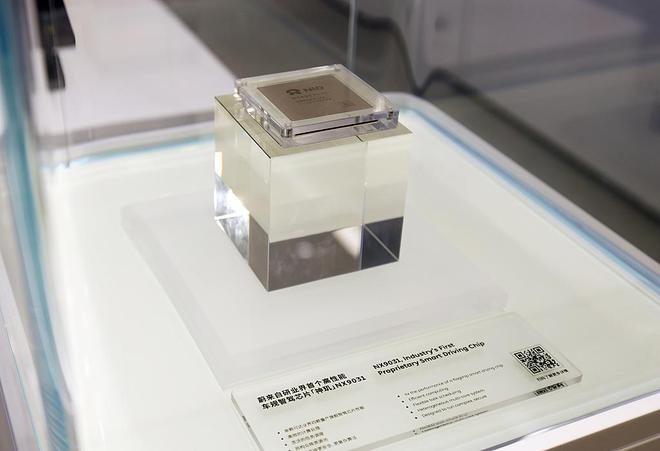
日媒关注:中国车企和半导体企业加速替换英伟达芯片,本土采用率上升
Guan Cha Zhe Wang· 2025-08-06 08:03
Core Viewpoint - The article discusses the increasing efforts of Chinese automotive manufacturers and chip companies to develop and adopt domestic products in response to the U.S. government's tightening export controls on high-tech products, particularly in the automotive chip sector [1][3]. Group 1: Industry Trends - Chinese automotive manufacturers, including XPeng and NIO, are replacing NVIDIA chips with self-developed chips in their latest models [2]. - At least 10 Chinese chip companies are focusing on the automotive market as a core development area, with companies like Horizon Robotics, Huawei HiSilicon, and others rapidly emerging [2]. - The market share of domestic brands in the total supply of automotive chips is projected to rise from approximately 9% in 2024 to 15-20% in 2025, potentially reaching 50% within five years when including self-developed chips [4]. Group 2: Competitive Landscape - Companies like BYD, GAC, FAW, Great Wall, and Geely are increasingly investing in chip research, manufacturing, and packaging, posing a challenge to NVIDIA [3]. - Horizon Robotics is emerging as a significant competitor to NVIDIA in the smart driving market, providing optimized AI chips and software to over 40 automotive companies [5]. - In the L0 to L2 level smart driving solutions market, Horizon Robotics leads with a 33.97% market share, followed by Mobileye at 20.35% and NVIDIA at 14.71% [8]. Group 3: Technological Developments - The "Starry Sky One" chip developed by a Chinese company has achieved AI computing power of 512 TOPS, filling a gap in the domestic market for advanced autonomous driving chips [9]. - Chinese companies are making significant strides in producing mature process semiconductors, with expectations for rapid increases in self-sufficiency rates for microcontrollers and silicon carbide power switch chips from 19% to 67% and 5% to 74%, respectively, by 2030 [9][12]. - The rapid electrification and digitalization of Chinese automobiles are creating opportunities for new companies focused on designing logic chips for infotainment systems and autonomous driving features [12].
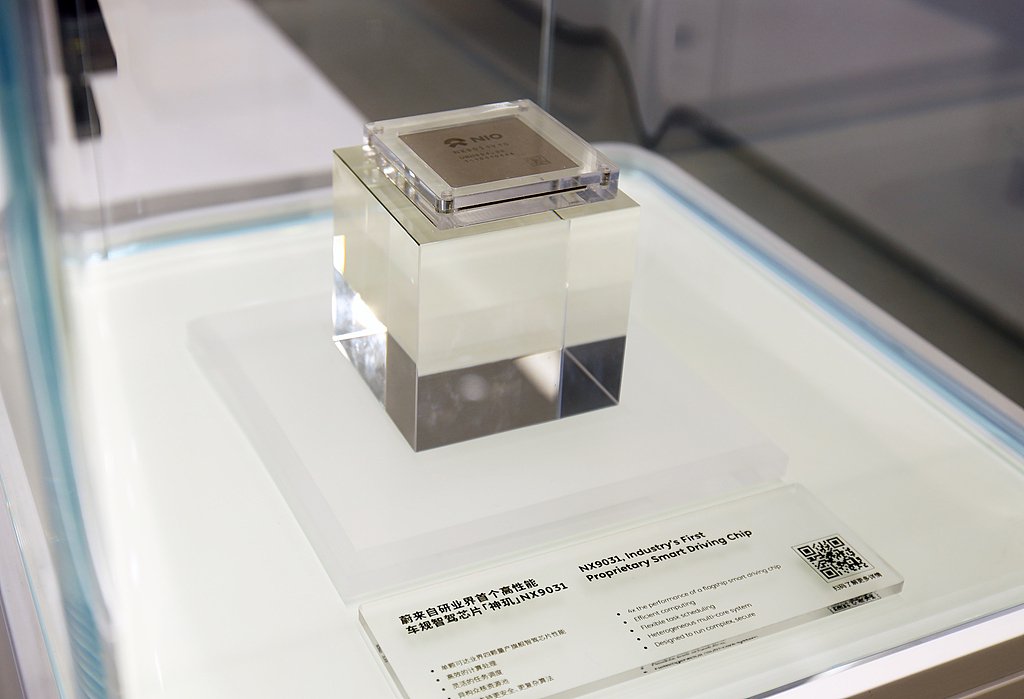
高阶智驾免费风潮,汽车业未来靠什么挣钱
3 6 Ke· 2025-08-06 00:25
Group 1 - The automotive industry is facing challenges in monetizing software subscription models, with many companies unable to provide a clear timeline for profitability through this approach [1][2][3] - The emergence of a "free alliance" among domestic automakers, offering advanced driver assistance systems (ADAS) as standard features, has raised concerns about the sustainability of the software subscription model [1][8] - Bosch's call for not promoting high-level intelligent driving systems for free highlights the potential risks to the future profitability of the automotive sector [1][7] Group 2 - Global automakers initially viewed software subscriptions as a key revenue model, but the trend towards free offerings in China has led to a reevaluation of this strategy [2][5] - Companies like Tesla and Huawei remain committed to charging for software, with Tesla's Full Self-Driving (FSD) priced at 64,000 yuan, indicating a willingness to pay for advanced technology [2][13] - The competitive landscape has shifted, with many Chinese automakers adopting a model of embedding hardware and offering software for free, aiming to increase usage and data collection [9][10] Group 3 - The feasibility of subscription models is questioned due to consumer expectations for free access to intelligent driving features, making it difficult for companies to charge for software [3][12] - The hardware subscription model has seen limited success, with luxury brands experimenting but facing backlash from consumers who feel they should not pay extra for features already included in the vehicle [4][5] - The potential for a successful subscription model may depend on the development of higher-level autonomous driving technologies, which could change consumer willingness to pay [12][13] Group 4 - The automotive industry is experiencing a shift towards standardizing high-level intelligent driving systems, with many new models offering these features at no additional cost [8][9] - Companies are exploring various pricing strategies, including limited-time free access and one-time buyouts, to encourage adoption of intelligent driving technologies [9][10] - The long-term viability of subscription models remains uncertain, with industry experts suggesting that only a few companies may successfully implement them due to ongoing price competition [12][14]



车载SOC芯片深度报告:智能汽车引领进化,SOC芯片加速国产化
Guoyuan Securities· 2025-08-05 10:15
Investment Rating - The report rates the smart driving industry as "Recommended" [1] Core Insights - The evolution of smart cars is being led by intelligent driving, with SOC chips accelerating domestic production [1] - The demand for SOC chips is surging due to advancements in smart cockpits, intelligent driving, and autonomous driving technologies [4][9] - The market is highly concentrated, with domestic alternatives gaining traction, and leading domestic companies are expected to continue breakthroughs leveraging industry trends [5] Summary by Sections 1. Evolution from ECU to SOC Chips - The automotive industry is experiencing a shift from distributed electronic control units (ECUs) to centralized SOC chips, driven by the increasing complexity of electronic and electrical architectures [15][16] - SOC chips are becoming essential components for smart vehicles, facilitating the integration of various systems and enhancing performance [23][24] 2. Explosive Demand for SOC Chips - The market for SOC chips is expanding rapidly, particularly in high-level autonomous driving applications such as unmanned delivery and robotaxis [9] - The integration of AI models and the push for high-performance SOC chips are accelerating the domestic production of cockpit SOCs [9][50] 3. Investment Recommendations - The report suggests that investors should focus on leading domestic SOC chip manufacturers that are well-positioned to benefit from the ongoing trends in the smart driving sector [5][9] - Key domestic companies in the SOC chip market include Horizon Robotics, Black Sesame, and others, which are capitalizing on the opportunities presented by intelligent driving [9][47]
智能化零部件框架培训
2025-08-05 03:16
Summary of Conference Call Records Industry Overview - The automotive industry is experiencing a shift in core competitiveness towards upstream components such as chips, algorithms, and battery systems, creating new opportunities for suppliers in these areas [1][2] - The transition from distributed to centralized electrical architecture is noted, with software functions being controlled by OEMs while hardware increments are managed by the supply chain, leading to a separation of software and hardware value [1][2] Key Insights and Arguments - The intelligent component sector can be divided into technology and consumer attributes, with autonomous driving, chips, and battery systems leaning towards technology, while cockpit and lighting systems are more consumer-oriented [1] - The penetration rate for mature sectors like cockpits is at 100%, while chips and algorithms are rapidly increasing with a current penetration of about 10% [1][6] - Future growth potential is significant in areas such as chips and algorithms, autonomous driving domain controllers, chassis control, steering systems, and air suspension, all of which have high average selling price (ASP) enhancement potential [1][8] Competitive Landscape - The intelligent driving sector is highly competitive, with third-party chips and algorithms holding over 30% market share. Leading companies in this space have market shares below 30% [1][9] - Domestic companies like Horizon Robotics and Desay SV are emerging as key players across various tracks [1][9] Market Projections - By 2025, the penetration rate for high-level urban Navigation on Autonomous (NOA) is expected to rise from 11% in 2024 to 27% in 2025, driven by domestic automakers [1][10] - The Robo TAXI market is projected to commercialize by 2025, with an expected market size exceeding 200 billion yuan by 2030, accounting for over 30% of shared mobility [3][18] Technological Developments - The upgrade of electrical architecture has led to significant changes in the intelligent component industry, with a shift towards System on Chip (SoC) designs that consolidate multiple functions into a single chip [4] - The development of modular algorithms offers strong interpretability and safety, while end-to-end algorithms are simpler but require more data and computational power [15][16] Emerging Trends - The intelligent detection sector is evolving, with mandatory and non-mandatory testing components. The rise in intelligent vehicle technology is driving up single vehicle testing prices [21] - By 2026, every L2 level vehicle will require national standard certification, potentially expanding the market by 50% to 100% [22] Recommended Companies - Key investment targets include chip and algorithm sectors, intelligent detection, and domain control. Recommended companies are Horizon Robotics, Desay SV, Bosch Rexroth, and Huayang Group due to their technological strength and market performance [30][31]
高阶智驾免费狂奔 “靠软件挣钱”无望?
Jing Ji Guan Cha Wang· 2025-08-05 03:04
Group 1 - The core viewpoint of the articles highlights the concern that free promotion of advanced driving assistance systems (ADAS) could undermine the profitability of the automotive industry, as emphasized by Bosch's president in China, Wu Yongqiao [2][7] - The trend of "free high-level intelligent driving" is gaining traction among domestic automakers, with companies like Chery, Leap Motor, BYD, and Xpeng announcing that their entire model ranges will be equipped with advanced ADAS, leading to over a hundred models being offered [2][8] - The expectation of profitability through software subscription models has become uncertain, with industry insiders stating that discussions on software subscription profitability are currently not feasible [2][5] Group 2 - International automakers are prioritizing "sustainable revenue" and have begun charging subscription fees for embedded hardware features, although this approach has faced backlash from domestic consumers [3][5] - Tesla and Huawei are strong proponents of software charging, with Tesla's Full Self-Driving (FSD) priced at 64,000 yuan, while Huawei has increased the price of its Qian Kun intelligent driving system by 2,000 yuan [3][12] - The consensus among industry experts is that the realization of a paid subscription model is more challenging than anticipated due to intense price competition and consumer expectations for free features [3][11] Group 3 - The feasibility of hardware subscription models has diminished significantly, with luxury brands still experimenting with them despite low consumer uptake [4][5] - BMW and Mercedes-Benz have faced criticism for charging fees for features that are standard in many domestic vehicles, leading to adjustments in their subscription strategies [4][5] - The trend of free high-level intelligent driving features is seen as a way to build consumer habits and dependencies, but there is skepticism about the potential for high subscription rates post-free periods [9][10] Group 4 - The articles suggest that the subscription model for software may be collapsing, with experts indicating that a successful implementation would require overcoming fierce competition and establishing significant technological barriers [11][12] - The potential for consumers to pay for advanced driving technologies may increase with the advent of Level 3 autonomous driving, but achieving a consensus among automakers on subscription models remains challenging [11][12] - The automotive industry is experiencing a shift where hardware upgrades are seen as the foundation for profitability, with companies like Horizon predicting a profitability turning point by 2027 [12][13]
智驾≠自动驾驶!新能源车不敢说的秘密,智驾宣传话术将迎史上最严监管
Jin Rong Jie· 2025-08-04 07:36
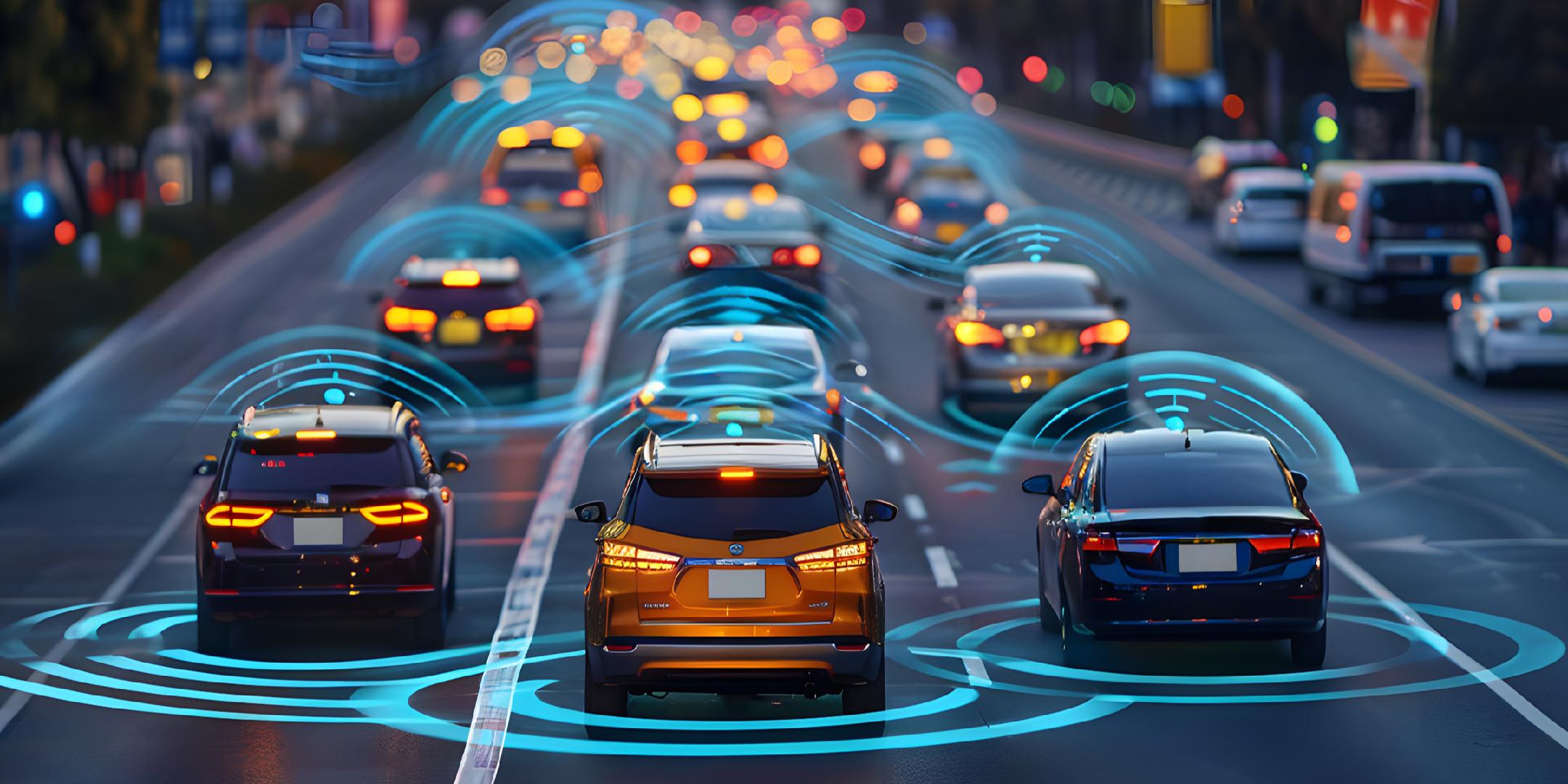
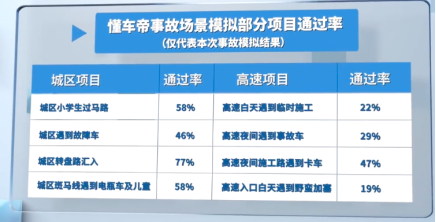
Core Insights - The Chinese smart driving market is currently facing both challenges and opportunities [1] - A recent simulation test revealed that the pass rate for advanced driver-assistance systems (ADAS) is below 60%, highlighting significant safety shortcomings [2][3] - The test results have prompted industry leaders to acknowledge the need for improvements in technology, particularly in extreme scenarios [2][5] Group 1: Test Results and Industry Response - In a simulation of various driving scenarios, the pass rates were alarmingly low, with only 47% of vehicles able to safely navigate a construction zone at night and 58% able to stop for a child unexpectedly crossing the road [2][3] - Industry executives, including those from Lantu Motors and Tesla, have commented on the test results, emphasizing the need for better technology and safety measures [2][5] - The test has sparked a debate about the marketing language used by car manufacturers, with many downplaying the necessity for driver intervention [4][6] Group 2: Regulatory Actions and Industry Standards - Following a serious accident involving an ADAS vehicle, the Ministry of Industry and Information Technology (MIIT) has mandated stricter regulations on the terminology used in marketing, prohibiting terms that may mislead consumers about the capabilities of these systems [5][7] - The MIIT's actions aim to address two main issues: exaggerated technical claims and the ambiguous assignment of safety responsibilities [7] - The automotive industry is now urged to focus on transparent communication regarding the limitations of their technology and to prioritize user safety [9] Group 3: Market Trends and Future Outlook - The rapid growth of the autonomous driving sector since 2015 has led to an influx of new companies, with many seeking public listings [8] - The evolution of terminology from L2 to "smart driving" has contributed to consumer confusion and misrepresentation of the technology's capabilities [8] - The recent testing and regulatory developments may encourage a more rational approach within the industry, steering focus back to genuine safety improvements rather than marketing gimmicks [9]
全场景创富方案落地!江淮1van定义新能源物流车2.0时代
第一商用车网· 2025-08-04 07:19
Core Viewpoint - The article emphasizes the imminent explosion of the new energy logistics vehicle market driven by the "dual carbon" strategy and the transformation of urban transportation by e-commerce and instant delivery services, highlighting the need for a comprehensive, all-scenario new energy logistics solution [1][3]. Group 1: Market Dynamics - The domestic economy is at a significant strategic opportunity, with dual circulation and supply-side reforms creating favorable conditions for the large-scale entry of new energy vehicles into the market [3]. - The logistics industry is undergoing profound changes, including cost reduction, efficiency enhancement, digitalization, and intelligence, driven by high penetration rates of new energy and the demands of community group buying [5]. Group 2: Product Offering - Jianghuai 1van has launched a complete product matrix consisting of three series: card series, VAN series, and unmanned vehicles, targeting different operational pain points and marking the entry into a new era of comprehensive solutions for new energy urban logistics vehicles [1][7]. - The card series focuses on the core demand for "more load and faster delivery," while the VAN series aims to be an expert in efficient urban distribution [7]. Group 3: Technological Innovation - Jianghuai 1van leverages over 160 lightweight technologies to reduce vehicle weight by 5%-12%, significantly enhancing energy efficiency [9]. - The integration of smart chassis technology and advanced battery management systems supports the development of intelligent logistics solutions [9][11]. Group 4: Collaborative Ecosystem - Jianghuai 1van emphasizes high-quality co-creation with industry giants, collaborating with companies like CATL, Huawei, and Horizon Robotics to enhance product capabilities and user experience [13]. Group 5: Value Proposition - The pricing strategy for the card series starts at 85,800 yuan and for the VAN series at 87,800 yuan, making it competitive and lowering the entry barrier for new energy logistics vehicles [17]. - Jianghuai 1van has introduced a user rights system, including a 1 billion yuan fund and various guarantees for first-time buyers, to ensure customer satisfaction and loyalty [15][17]. Group 6: Future Outlook - Jianghuai 1van aims to redefine the value of new energy logistics vehicles by enhancing operational efficiency, reducing user concerns, and invigorating industry development, positioning itself to lead the Chinese new energy commercial vehicle market [18].